
American Registry of Radiologic Technologists (ARRT): Complete 2026 September Training Guide & Certification Requirements
🧠 American Registry of Radiologic Technologists ARRT guide: eligibility, exam format, costs, study plan, and pass strategies to earn your 2026 September credential.

The american registry of radiologic technologists arrt is the gold-standard credentialing body for medical imaging professionals across the United States. Founded in 1922, the ARRT certifies more than 350,000 technologists in radiography, computed tomography, magnetic resonance imaging, mammography, and other disciplines. Earning this credential signals to employers, state licensing boards, and patients that you have met rigorous educational, ethical, and clinical standards. For anyone entering radiologic science, understanding the ARRT pathway is the single most important step toward a stable, well-paid healthcare career.
This complete training guide walks you through every requirement you need to satisfy before sitting for the certification examination. The american registry of radiologic technologists arrt sets strict standards covering accredited education, documented clinical competencies, and an ethics review that examines your background. Whether you are a high school graduate exploring imaging programs or a working professional adding a post-primary credential, the structure described here applies to your situation. We break down the timeline, the costs, and the realistic effort required to pass on your first attempt.
The ARRT operates on a three-pillar model: education, ethics, and examination. Each pillar must be satisfied independently, and you cannot skip ahead. Education means graduating from a program accredited by a mechanism the ARRT recognizes, such as the JRCERT. Ethics means passing a character review that screens for felony convictions, misdemeanors, and disciplinary actions. Examination means scoring at or above 75 on a scaled 1-to-99 system administered through Pearson VUE testing centers nationwide. Missing any pillar halts your certification entirely.
Demand for credentialed technologists continues to climb. The U.S. Bureau of Labor Statistics projects radiologic and MRI technologist roles growing roughly 6 percent through the early 2030s, faster than the average for all occupations. An aging population, expanded imaging utilization, and the retirement of experienced staff create thousands of openings each year. Hospitals, outpatient imaging centers, physician offices, and mobile units all compete for ARRT-registered talent, and many will not interview candidates who lack the credential at all.
Salary outcomes reinforce why the credential is worth pursuing. Median annual wages for radiologic technologists sit near $73,000 nationally, with top earners in metropolitan markets and advanced modalities like MRI and interventional radiology exceeding $95,000. Adding post-primary certifications in CT or mammography routinely lifts pay by several thousand dollars per year. The return on investment for an ARRT credential, relative to the cost of an associate degree program, is among the strongest in allied health.
Beyond pay, the credential unlocks geographic and professional mobility. Most states tie their licensing requirements directly to ARRT certification, meaning your credential transfers when you relocate. The ARRT also maintains a structured ladder of advanced credentials, so a radiographer can build toward CT, MRI, mammography, bone densitometry, or a leadership track without starting over. This guide gives you the foundation, and the sections below detail eligibility, exam content, study schedules, costs, and the practical habits that separate first-time passers from repeat testers.
By the end of this article you will know exactly what to study, how to budget your time and money, and which mistakes derail otherwise qualified candidates. We pair the official requirements with field-tested preparation advice drawn from how successful technologists actually approach the registry exam. Treat each section as a checklist item: satisfy education, clear ethics, master the content domains, and walk into the testing center confident. The credential is demanding, but it is entirely achievable with a disciplined, informed plan.
ARRT Certification by the Numbers
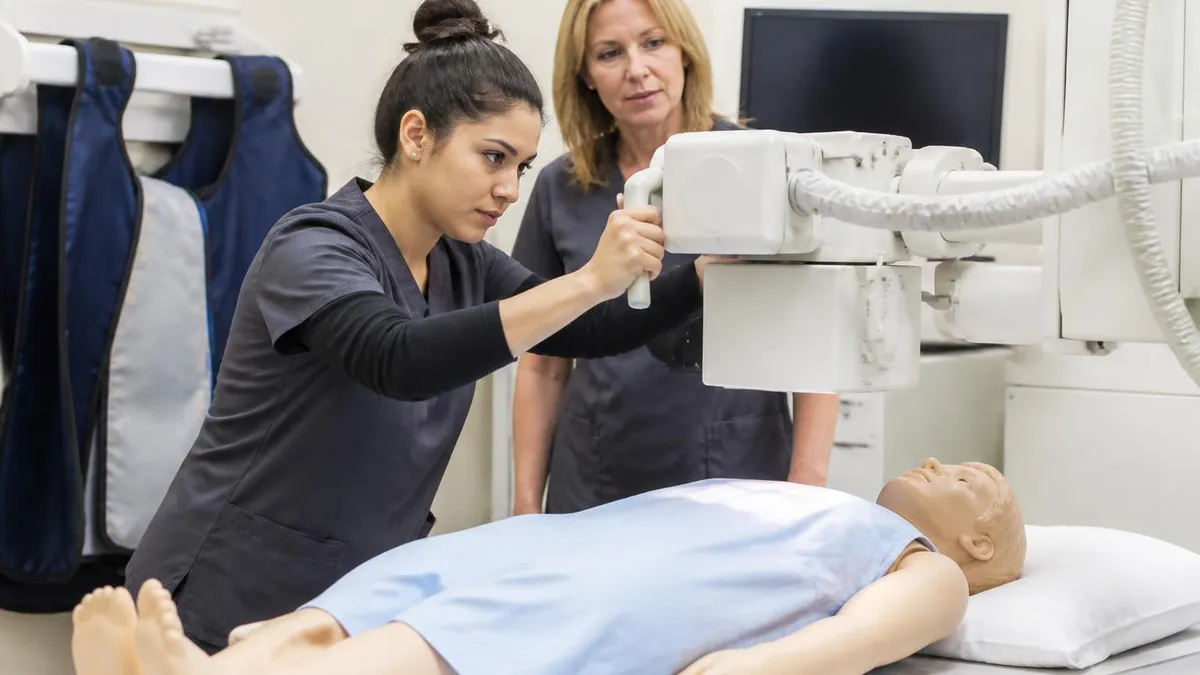
Eligibility & Education Requirements
Graduate from a radiography program accredited by a recognized body such as the JRCERT. The program must award at least an associate degree and include didactic coursework plus supervised clinical rotations.
Complete required courses in anatomy, physiology, radiation physics, patient care, image production, and radiation protection. Your program documents these on a competency form the ARRT reviews before approval.
Demonstrate hands-on mastery of mandatory and elective imaging procedures under supervision. Programs verify each competency, covering positioning, exposure factors, and patient management across multiple anatomical regions.
Pass the ARRT character review, which screens for felonies, misdemeanors, and professional disciplinary actions. Candidates with concerns can request a pre-application ethics review before investing in the exam.
Submit your application within the eligibility window your program designates, typically near graduation. Once approved, you receive a 90-day window to schedule and complete the certification exam.
Certification through the american registry of radiologic technologists arrt follows a deliberate sequence, and understanding the order keeps you from wasting time or money. The process begins long before you schedule an exam: it starts the day you enroll in an accredited program. Programmatic accreditation is non-negotiable, because the ARRT will not accept candidates from unaccredited schools. Verify your program's status with the JRCERT directory before committing tuition, as transferring later is costly and sometimes impossible.
Once enrolled, your responsibility shifts to documentation. The ARRT requires proof that you completed specific didactic hours and clinical competencies. Your program coordinator tracks these on official forms, but you should keep your own records. Many candidates lose momentum near graduation because a single missing competency signature delays their application. Treat your competency checklist as seriously as your transcripts, and confirm every required and elective procedure is signed off well before your final clinical rotation ends.
The ethics pillar runs parallel to education and deserves early attention. If you have any criminal history or academic disciplinary record, you can submit a pre-application ethics review while still in school. This optional step gives you an advance ruling from the ARRT so you are not surprised after graduation. Waiting until the final application to disclose an issue can stall certification for months. Honesty is mandatory; the ARRT cross-references court and licensing records, and concealment is itself an ethics violation.
After your program verifies completion, you submit the formal certification application through the ARRT website. The application confirms your education, attests to the ethics standards, and pays the examination fee. Upon approval you receive a Candidate Status Report and a 90-day window to test. This window is firm. If you fail to schedule within it, you may need to reapply and pay again, so book your Pearson VUE appointment as soon as your window opens to secure a convenient date and location.
The examination itself is the final gate. It is computer-based, adaptive in difficulty distribution, and delivered at secure Pearson VUE centers. You receive a preliminary pass or fail result before leaving the testing room, with official scores following within a few days. A scaled score of 75 or higher earns certification. If you do not pass, the ARRT permits retakes, but you must wait a minimum interval and submit a new application and fee for each attempt, which makes thorough first-attempt preparation financially smart.
Once you pass, certification is not permanent on its own. The ARRT converts your status to registered, and you maintain that registration through annual renewal and biennial continuing education. New requirements such as Continuing Qualifications Requirements may apply to certain credentials over ten-year cycles. Understanding this lifecycle early helps you build CE habits from day one rather than scrambling before a renewal deadline. The credential is a career-long commitment, not a one-time achievement.
Finally, remember that state licensure often layers on top of ARRT certification. The majority of states require a license to operate imaging equipment, and most accept ARRT certification as the qualifying credential. Some states impose additional fees, fingerprinting, or jurisprudence exams. Research your state's radiologic licensing board alongside your ARRT preparation so that you can begin practicing immediately after passing, rather than discovering a separate state hurdle weeks into your job search.
ARRT Exam Content Domains
The patient care domain covers roughly 14 percent of the radiography exam and tests your ability to manage patients safely throughout an imaging procedure. Topics include patient assessment, infection control, body mechanics, medical emergencies, contrast media administration, and documentation. You must understand vital signs, transfer techniques, and how to recognize reactions to iodinated contrast.
Expect scenario-based questions that present a patient situation and ask for the correct response. For example, you might identify the first action when a patient shows signs of an allergic reaction, or select the proper isolation precautions for a specific pathogen. Strong performance here requires memorizing normal vital ranges, standard precautions, and the rights of medication administration.
Is the ARRT Credential Worth Pursuing?
- +Nationally recognized credential accepted by nearly every state licensing board
- +Strong median salary near $73,000 with clear paths to higher pay
- +Faster-than-average job growth projected through the early 2030s
- +Portable credential that transfers when you relocate between states
- +Structured ladder to advanced credentials in CT, MRI, and mammography
- +Employers across hospitals, clinics, and imaging centers actively recruit ARRT holders
- −Requires graduation from an accredited program, which takes about two years
- −Strict ethics review can delay candidates with criminal or disciplinary history
- −Exam fees and retake costs add up if you do not pass the first attempt
- −Ongoing continuing education and renewal fees are required indefinitely
- −Demanding content spanning physics, anatomy, and patient care
- −Some states impose additional licensing exams and fingerprinting on top of ARRT
Pre-Exam Preparation Checklist for the ARRT Registry
- ✓Confirm your program holds current JRCERT accreditation before applying
- ✓Verify every required and elective clinical competency is signed and documented
- ✓Submit a pre-application ethics review if you have any legal or disciplinary history
- ✓File your ARRT certification application as soon as your program verifies completion
- ✓Schedule your Pearson VUE appointment immediately when your 90-day window opens
- ✓Build a 10-to-12 week study plan covering all content domains
- ✓Take at least three full-length timed practice exams before test day
- ✓Master radiation physics formulas including the inverse square law and 15 percent rule
- ✓Review positioning landmarks and central ray angulation for every projection
- ✓Confirm your state licensing requirements separate from ARRT certification
Lock in your exam date the day your window opens
Your ARRT eligibility window is only 90 days, and popular Pearson VUE centers book weeks in advance. Candidates who delay scheduling often face inconvenient locations, awkward times, or a missed window that forces reapplication and another fee. Treat scheduling as the first task after approval, not the last.
Budgeting for ARRT certification means looking beyond the headline exam fee, because the true cost spans education, application, and a lifetime of renewal. The initial radiography certification and registration application fee is $225, paid when you apply through the ARRT. That figure does not include your degree program, which represents the largest investment by far. Associate degree radiography programs at community colleges typically range from $6,000 to $20,000 in tuition, while private institutions can cost considerably more, so plan accordingly.
If you do not pass on the first attempt, each retake requires a new application and the same fee. This is why preparation directly protects your wallet. Two or three failed attempts can add hundreds of dollars plus weeks of lost income from delayed employment. Investing in quality study resources and disciplined practice up front is almost always cheaper than absorbing retake fees, making thorough preparation a financial decision as much as an academic one.
After you pass, the credential carries recurring costs. Annual registration renewal currently runs around $50, due each year in your birth month. Failing to renew on time triggers late fees and, eventually, lapse of your registration, which can jeopardize your job. Set a calendar reminder and treat renewal as a fixed annual expense, similar to a professional membership. Many employers reimburse this fee, so ask your human resources department whether renewal and CE costs are covered.
Continuing education is the other ongoing requirement. The ARRT mandates 24 CE credits every two years to maintain registration. CE can come from approved courses, conferences, online modules, and academic coursework. Some activities are free through employers or professional societies, while others charge per credit. Budget modestly for CE, but recognize that many hospitals provide in-house opportunities. Tracking your credits carefully prevents a last-minute scramble before your biennium closes and your renewal is at risk.
Certain credentials also fall under the Continuing Qualifications Requirements, a ten-year structured self-assessment and CE process designed to keep skills current. Not every technologist is subject to CQR, and the requirement depends on when you earned your credential. Review the ARRT's guidance to determine whether you must complete a CQR cycle. Planning for it over a full decade, rather than discovering it late, keeps the process manageable and inexpensive across the long arc of your career.
State licensing introduces a final cost layer that varies widely. Some states charge an initial license fee of $50 to $150 plus periodic renewals, and a few require fingerprinting and background checks that add their own fees. Because most states accept ARRT certification as the qualifying credential, the state process is usually straightforward, but it is rarely free. Research your specific state board early so these costs do not surprise you when you accept your first position.
When you total everything, the lifetime cost of maintaining the credential is modest relative to the salary it commands. A technologist earning a median wage recovers the entire application and renewal expense within days of work each year. Framed against six-figure earning potential in advanced modalities, the credential is one of the highest-return investments in allied health. The key is planning for each cost in advance so none of them derails your progress toward certification and steady employment.

The ARRT screens every candidate for felonies, misdemeanors, and disciplinary actions. If you have any legal history, request a pre-application ethics review while still in school. Disclosing late or concealing an issue can stall certification for months and is itself a violation.
Passing the registry exam is the beginning of your relationship with the american registry of radiologic technologists arrt, not the end. Once you hold the primary radiography credential, a structured ladder of advanced opportunities opens up. The ARRT offers post-primary certifications in computed tomography, magnetic resonance imaging, mammography, bone densitometry, cardiac-interventional radiography, vascular-interventional radiography, and more. Each advanced credential lets you specialize, command higher pay, and move into roles that primary radiographers cannot fill, dramatically expanding your career options over time.
Computed tomography is among the most popular post-primary paths because demand is high and the transition from radiography is natural. To earn the CT credential you accumulate documented clinical experience performing CT procedures, complete required structured education, and pass a focused CT certification exam. Many radiographers cross-train into CT within their first few years of employment, often with employer support, because hospitals constantly need credentialed CT technologists for emergency and routine imaging across day and night shifts.
Magnetic resonance imaging represents another rewarding specialty, frequently among the highest-paid modalities. MRI requires its own structured education in safety, physics, and procedures, plus clinical competencies and a dedicated exam. Because MRI safety is uniquely critical, the credential emphasizes screening, zoning, and managing the powerful magnetic field. Technologists who earn the MRI credential often find strong job security and premium compensation, particularly in outpatient imaging centers and specialized neurological or orthopedic practices.
Mammography is a focused, in-demand specialty governed additionally by federal MQSA regulations. The ARRT mammography credential requires specific clinical experience and continuing education tied to those federal standards. Because breast imaging is heavily regulated and screening volumes are enormous, mammographers enjoy steady demand. The credential pairs technical skill with patient communication, since the role involves direct, sensitive interaction during screenings. For technologists who value patient connection, mammography offers a meaningful and stable career direction.
Beyond clinical specialties, the ARRT supports advancement into education, administration, and quality management. Experienced technologists can pursue roles as clinical instructors, program directors, lead technologists, and imaging department managers. These positions reward the credibility your ARRT credential provides plus accumulated experience. Many move into applications specialist roles with equipment vendors or into informatics, bridging imaging and information technology. The credential is the foundation, but your trajectory afterward is genuinely flexible across clinical and non-clinical tracks. You can explore the broader pathway in our american registry of radiologic technologists arrt overview.
Multi-credentialing is a common strategy for maximizing earning power and employability. A technologist who holds radiography plus CT plus MRI is extraordinarily marketable, able to staff multiple departments and command premium pay or per-diem rates. Each additional credential builds on your existing registration and continuing education, so the incremental effort decreases over time. Hospitals frequently prioritize candidates who can flex across modalities, especially in smaller facilities where one person may cover several imaging functions during a single shift.
Planning your advancement early shapes the choices you make as a new graduate. Seeking a first job in a facility that performs varied modalities exposes you to cross-training opportunities and the clinical hours required for post-primary credentials. Building continuing education around your intended specialty, mentoring under experienced technologists, and tracking competencies from day one all accelerate your climb. The ARRT framework rewards deliberate, long-term thinking, so map your ambitions now and let each credential compound into a durable, well-compensated career.
With the requirements and career landscape clear, the decisive factor becomes how you prepare in the final weeks before test day. Begin by building a realistic study schedule spanning ten to twelve weeks, allocating more time to the heavily weighted image production and procedures domains. Break each week into focused blocks rather than marathon cramming sessions. Spaced repetition, where you revisit material across multiple short sessions, cements knowledge far more effectively than last-minute all-nighters that leave you fatigued and anxious on exam morning.
Practice questions are the single most valuable preparation tool. Working through hundreds of registry-style questions trains you to recognize how the ARRT phrases scenarios and which distractors appear most often. After each practice set, review every question you missed and, importantly, every one you guessed correctly. Understanding why an answer is right matters as much as memorizing it. Targeted review of your weak domains, guided by practice-test analytics, delivers the fastest improvement in your projected scaled score.
Simulate real exam conditions at least three times before the actual date. Take full-length, timed practice exams in a quiet room without notes, mirroring the 3.5-hour limit and roughly 200-question count. This builds the mental stamina the registry demands and exposes pacing problems early. Many capable candidates underperform simply because they ran out of time or fatigued in the final hour. Practicing under realistic constraints turns the format itself from a threat into a familiar routine.
For the physics and exposure portions, drill the core formulas until recall is automatic. The inverse square law, the 15 percent rule, mAs and reciprocity, grid conversions, and density and contrast relationships all appear repeatedly. Create a one-page formula sheet, rewrite it from memory each day, and work numeric problems until the calculations feel routine. On the procedures side, use positioning atlases and your own clinical memory to lock in central ray angles, landmarks, and evaluation criteria for every projection.
Manage the logistics and mindset around test day deliberately. Confirm your Pearson VUE location, required identification, and arrival time the week before. Sleep well the two nights prior rather than cramming, eat a balanced meal, and arrive early to reduce stress. During the exam, flag uncertain questions and move on rather than stalling, then return with remaining time. A calm, methodical pace protects the easy points you have already earned and prevents one hard question from derailing your rhythm.
Use the support resources around you to reinforce learning. Form a small study group with classmates to quiz one another, because explaining concepts aloud reveals gaps in your understanding. Lean on instructors and clinical mentors for the nuances that textbooks gloss over. Many candidates also benefit from reviewing broader certification guides, which contextualize the exam within the full career pathway. Combining structured self-study, active practice, and peer support produces the confidence that translates into a first-attempt pass.
Finally, keep perspective on the goal. The registry exam is challenging, but tens of thousands of technologists pass it every year through ordinary, consistent effort. Trust your accredited education and clinical rotations, which have already prepared you more than you may realize. Approach preparation as steady skill-building rather than a single high-stakes hurdle, and the credential becomes a milestone you reach methodically. With a disciplined plan and honest self-assessment, certification is firmly within your reach, opening the door to a rewarding imaging career.
ARRT Questions and Answers
ARRT Exam 2026: Complete Guide to Radiography Certification, Format, Eligibility & Pass Strategy

ARRT Certification Online: Complete 2026 Training Guide & Requirements

American Registry of Radiologic Technologists: Complete Training Guide & Requirements
ARRT Certification: Requirements, Exam & How to Get Certified

ARRT Certification 2026–2026 — How to Get Certified as a Radiologic Technologist
About the Author

Medical Laboratory Scientist & Clinical Certification Expert
Johns Hopkins UniversityDr. Sandra Kim holds a PhD in Clinical Laboratory Science from Johns Hopkins University and is certified as a Medical Technologist (MT) and Medical Laboratory Scientist (MLS) through ASCP. With 16 years of clinical laboratory experience spanning hematology, microbiology, and molecular diagnostics, she prepares candidates for ASCP board exams, MLT, MLS, and specialist certification tests.