
Air Brake Valve: Complete Guide for CDL Drivers and the Air Brake Test
Learn how the air brake valve works, types, CDL test tips, and inspection steps. ✍🏼 Master air brake valve knowledge to pass your CDL air brake test.

The air brake valve is the control heart of every commercial vehicle braking system. When you press the brake pedal on a tractor-trailer, school bus, or city transit coach, you are not mechanically pushing brake shoes against a drum the way a passenger car does. Instead, you are signaling a network of precisely engineered valves that route, regulate, and release compressed air to apply friction at each wheel end. Understanding how each valve functions is essential not only for safe driving but also for passing your cdl air brake test on the first attempt.
Air brakes have been standard equipment on heavy commercial vehicles since the mid-twentieth century because compressed air provides far greater stopping force than hydraulic fluid alone could generate across dozens of wheel positions on long combination vehicles. Modern systems operating between 90 and 120 pounds per square inch can stop an 80,000-pound loaded semi in roughly the same distance as a fully loaded passenger SUV — but only when every valve in the circuit is functioning correctly, properly adjusted, and free of contamination.
The primary types of air brake valves you will encounter in CDL training and real-world driving include the foot valve (treadle valve), relay valves, quick-release valves, check valves, spring brake control valves (also called the yellow diamond knob), trailer supply valves (the red octagon knob), and various safety valves including the governor and the safety pressure relief valve. Each of these components has a specific job, and failure of any single valve can compromise total stopping power — sometimes with catastrophic consequences on open highways.
For drivers preparing for the CDL knowledge exam, valve questions appear throughout the air brakes section and routinely account for a significant portion of the items that first-time test-takers miss. Examiners test whether candidates understand pressure thresholds, valve sequencing, emergency activation, and pre-trip inspection procedures at a level deep enough to make real-world safety decisions — not just memorize definitions from a handbook.
This guide breaks down every major air brake valve type in plain language, explains the real physics behind each component, connects valve knowledge to specific cdl air brake test question patterns, and provides actionable inspection checklists. Whether you are a new CDL candidate studying for the written knowledge test, a seasoned driver refreshing your endorsement, or a fleet safety manager building a training curriculum, the information here will give you a thorough, exam-ready understanding of air brake valve systems.
We also cover specialty topics that frequently appear in commercial driver testing and real-world operations: air brake antifreeze alcohol evaporators, New York Air Brake proprietary systems used on many transit vehicles, and the specific pressure readings at which each valve type activates or de-activates. Air brake knowledge is not optional for CDL holders — it is a federally mandated requirement under FMCSA regulations, and insufficient knowledge is one of the top cited violations during roadside DOT inspections nationwide.
By the end of this guide you will be able to identify each valve by name and function, describe what happens in the brake circuit when any single valve fails, list the correct pressure ranges and warning thresholds from memory, and walk through a legally compliant pre-trip inspection of the entire air brake valve system. That comprehensive understanding will serve you on test day and every mile you drive afterward.
Air Brake Valve System by the Numbers
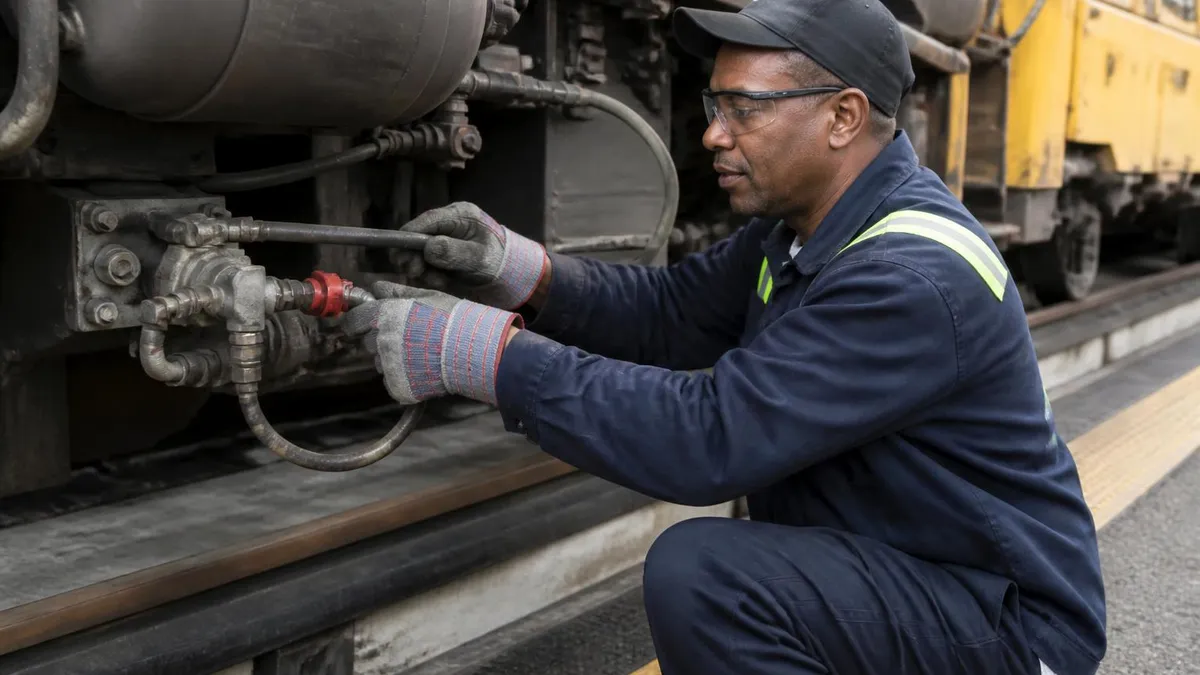
Main Types of Air Brake Valves
The driver-operated brake pedal valve that controls service brake application pressure to all axles. Modulating pedal pressure modulates braking force — a critical skill tested on both the CDL knowledge and skills exams.
Speeds up brake application and release on distant axles by using local reservoir air instead of routing all air from the cab. Dramatically reduces brake lag on long combination vehicles with multiple trailer axles.
Allows air to exhaust rapidly from the brake chambers when the driver releases pedal pressure, speeding up brake release so wheels spin freely again. Typically located close to the brake chambers for fastest response.
The yellow diamond-shaped push-pull knob in the cab that controls the parking and emergency brakes. Pushing it in releases the powerful coil springs; pulling it out locks the vehicle securely via spring tension.
The red octagon-shaped knob that supplies air to the trailer's brake system. Must be pushed in (open) before driving. When pulled out, it cuts trailer air and automatically applies the trailer spring brakes.
The foot valve — formally called the treadle valve — is the most critical operator-controlled component in any air brake system, and it deserves a deep-dive explanation beyond a simple definition. When the driver depresses the brake pedal, the treadle valve opens a passage that allows service reservoir air to flow downstream toward the brake chambers at each wheel end. The amount of pressure delivered is proportional to how far the pedal is pressed, which gives the driver precise modulation capability. This proportionality is exactly what the f-750 air brake treadle valve is designed to deliver in medium-duty truck applications.
The treadle valve contains two distinct circuits in most modern designs: a primary circuit serving the rear axle brakes and a secondary circuit serving the front axle brakes. This dual-circuit design means that if one circuit fails — due to a broken air line, failed fitting, or damaged brake chamber — the other circuit still delivers partial braking ability.
Federal Motor Carrier Safety Administration regulations require this redundancy on all vehicles manufactured after 1975. On the CDL written exam, candidates must know that a dual-circuit failure does NOT leave the driver with zero braking — it leaves them with reduced braking, which still must be controlled carefully.
Understanding treadle valve operation also means understanding brake lag. Unlike hydraulic brakes in passenger vehicles where fluid pressure travels almost instantaneously to caliper pistons, compressed air must physically travel through lines, fittings, relay valves, and into brake chambers before the brake shoes contact the drum. At highway speeds this lag — typically 0.4 to 0.5 seconds in a well-maintained system — translates to significant additional stopping distance. Drivers who do not account for brake lag and instead squeeze the pedal in a panic stop often over-apply pressure, leading to wheel lockup and loss of directional control.
Modern air brake systems increasingly include anti-lock braking system (ABS) modulators that work in conjunction with the treadle valve. When ABS sensors detect wheel lockup during a panic stop, solenoid valves cycle rapidly to modulate chamber pressure below lockup threshold. The treadle valve still controls overall system pressure, but the ABS modulator overrides individual wheel pressure several times per second. CDL candidates must know that ABS does not shorten stopping distance — it preserves steering control during hard braking, which is a distinctly different benefit that appears repeatedly in cdl air brake test question banks.
The treadle valve also houses the exhaust port system. When the driver releases the pedal, air that was pressurizing the brake chambers must escape rapidly so the brakes release completely. Slow or incomplete exhaust causes brake drag, overheated drums, glazed linings, and dramatically reduced brake life. If a driver notices that the vehicle pulls to one side during braking or that wheel ends are unusually hot after a run, a sticking treadle exhaust port or downstream quick-release valve is a primary suspect during the diagnostic process.
Pressure delivery from the treadle valve feeds through relay valves on combination vehicles before reaching the rear axle and trailer brake chambers. A relay valve uses a signal line from the treadle valve as a pilot signal, then opens a direct path from a local reservoir to the brake chambers — bypassing the long air lines that would otherwise cause unacceptable brake lag across the full length of a 53-foot trailer.
The relay valve response is so rapid that the time difference between front and rear brake application on a properly maintained system is less than 0.1 seconds, keeping all axles working together as an integrated stopping system.
For the air brake endorsement examination, test-takers are frequently asked to identify what happens when a relay valve fails open versus fails closed. If a relay valve fails open, air continuously flows into the brake chambers even when the driver is not pressing the pedal, resulting in severe brake drag that can ignite wheel-end fires.
If a relay valve fails closed, those axles receive no braking pressure, dramatically extending stopping distance. Both failure modes are dangerous, which is why pre-trip inspection procedures require verifying that the brake pedal delivers appropriate response and that brakes release completely within the required time after pedal release.
Air Brake Valve Types: Emergency, Safety & Control
Spring brake control valves (the yellow diamond knob) use powerful coil springs compressed inside a piggyback chamber to apply the parking brakes when air pressure is released. When system pressure drops below approximately 20 to 45 PSI, the spring overcomes the air cushion holding it back and mechanically drives the push rod into the brake shoe, applying the brake with several thousand pounds of mechanical force. This design ensures the vehicle cannot roll if air pressure bleeds off overnight or during an emergency air loss event on the highway.
The FMCSA requires that drivers never attempt to hold the vehicle on a hill using only the service brake pedal for extended periods — the parking spring brakes exist precisely for this scenario. On the CDL knowledge exam, candidates must know the correct procedure: set the spring brakes using the yellow knob, verify the vehicle does not roll, then chock the wheels on steep grades. Spring brake valves also activate automatically during certain emergency situations, which is why understanding their pressure thresholds is mandatory knowledge for every commercial driver.
Air Brake Valves vs. Hydraulic Brake Systems: Key Differences
- +Air systems provide virtually unlimited braking force scaled to vehicle weight without hydraulic fluid volume limits
- +Spring brake valves automatically apply parking brakes during air pressure loss, preventing runaway situations
- +Relay valves eliminate dangerous brake lag across long combination vehicles with multiple trailer axles
- +Dual-circuit treadle valve design provides redundant braking if one circuit is compromised
- +Air dryers and check valves protect the system from moisture contamination and cross-circuit pressure loss
- +System pressure gauges give drivers real-time visibility into brake readiness before and during trips
- −Air systems require a build-up period of 45 to 120 seconds before reaching minimum operating pressure at startup
- −Compressed air carries moisture that corrodes valves and lines if drain valves are not opened daily
- −Brake lag of 0.4 to 0.5 seconds increases stopping distance compared to hydraulic systems at highway speeds
- −More components (valves, chambers, lines, compressor) mean more potential failure points requiring regular inspection
- −Air brake antifreeze must be maintained in cold climates or valves can freeze and fail during operation
- −CDL air brake endorsement requires separate written knowledge testing beyond the standard CDL knowledge exam
Air Brake Valve Pre-Trip Inspection Checklist
- ✓Build system pressure to between 90 and 120 PSI before beginning any valve inspection steps.
- ✓Fan the brake pedal to drop pressure to the warning buzzer threshold — confirm alarm activates between 55 and 75 PSI.
- ✓Continue fanning to approximately 20–45 PSI and confirm spring brakes automatically apply without cab input.
- ✓Check that the low-pressure warning light illuminates at or above 60 PSI on the dashboard gauge.
- ✓With engine off and brakes released, time the pressure drop — loss should not exceed 3 PSI per minute for single vehicles.
- ✓Inspect the treadle valve for cracked housings, corroded fittings, and smooth pedal return with no sticking.
- ✓Pull the yellow spring brake knob fully out and verify the vehicle does not roll when transmission is in neutral.
- ✓Push the red trailer supply valve knob in and confirm the trailer brake light extinguishes on the dashboard.
- ✓Drain each air reservoir via the drain petcock valve and check that only clean, dry air or minimal moisture exits.
- ✓Verify the safety relief valve on each tank is intact, not leaking continuously, and seated flush against the tank fitting.
The 3-PSI Rule Every CDL Candidate Must Memorize
Federal regulations require that with the engine off and brakes fully released, a single commercial vehicle must not lose more than 3 PSI per minute from its air system. A combination vehicle (tractor-trailer) must not lose more than 4 PSI per minute. Exceeding these limits during a roadside inspection is an out-of-service violation. This threshold tests every valve in the system simultaneously — a leaking treadle valve, cracked brake chamber, or failed check valve will all cause excessive pressure drop and must be repaired before the vehicle legally returns to service.
The CDL air brake test dedicates a significant portion of its questions specifically to valve identification, pressure thresholds, and failure scenarios — areas where many first-time candidates lose critical points. Understanding what the exam is actually testing, and why, transforms valve knowledge from abstract memorization into intuitive comprehension. State CDL examiners are not trying to trick you; they are verifying that you understand the real-world safety consequences of each valve function well enough to make correct decisions during an emergency on a public highway.
One of the most frequently missed question categories involves the sequence of events when air pressure drops in a moving vehicle. The correct sequence — which candidates must know in order — is: (1) the low-pressure warning light and buzzer activate when system pressure falls to approximately 60 PSI; (2) the driver should immediately pull safely off the road; (3) if pressure continues falling to between 20 and 45 PSI, the spring brakes automatically apply.
Many candidates incorrectly believe the spring brakes apply at 60 PSI, confusing the warning threshold with the spring brake engagement threshold. This single error causes a disproportionate number of test failures.
Governor valve questions are another high-frequency topic on the air brake test. The governor controls the air compressor cut-in and cut-out pressures. It cuts out — stops pumping air — when pressure reaches approximately 125 PSI (the exact value varies by manufacturer, typically 120–135 PSI). It cuts back in — restarts the compressor — when pressure falls to approximately 100 PSI.
During a pre-trip, the driver should verify governor operation by fanning the brakes until the compressor kicks in and noting both cut-in and cut-out pressure on the dash gauge. If the governor cuts out below 100 PSI or above 135 PSI, the system requires inspection before the vehicle is operated.
Double-check valve questions also appear regularly on the cdl practice test air brakes section. A double-check valve selects the higher of two incoming air pressures and passes it to a downstream component — most commonly the brake lights or the trailer supply circuit. This ensures that whether the service brakes or the emergency/parking system triggers brake light activation, the driver behind you sees the warning signal. Candidates who understand the double-check valve's role in maintaining brake light continuity during partial system failures demonstrate a safety-oriented understanding that examiners reward.
The cdl air brakes practice test questions about combination vehicle brake systems are among the most complex because they involve understanding how the trailer control valve (hand valve) interacts with the treadle valve during normal and emergency operations. The hand valve — sometimes called the trolley valve — applies only the trailer brakes when moved, without affecting the tractor brakes. It should never be used as a parking brake because applying only the trailer brakes while the tractor brakes are free can cause the trailer to push the tractor in a dangerous jackknife configuration, especially on slippery surfaces.
Stab braking and controlled braking are two techniques that CDL candidates must understand in the context of valve operation. Stab braking — used on vehicles without ABS — involves pressing the pedal hard until wheels begin to lock, then fully releasing, then re-applying. This cycles the treadle valve rapidly to prevent sustained lockup while still delivering maximum braking force. Controlled braking involves maintaining constant pedal pressure just below lockup threshold. ABS-equipped vehicles handle this modulation electronically through solenoid valves, so drivers of ABS vehicles should apply steady, firm pressure and let the system manage individual wheel pressure.
For candidates pursuing their air brake endorsement specifically rather than a full CDL, the testing focus narrows to system knowledge rather than combination vehicle operation. Endorsement candidates must still demonstrate understanding of all major valve types, pressure thresholds, pre-trip procedures, and emergency responses. The air brake endorsement removes the air brake restriction (indicated as an L restriction on some CDL licenses) and is required before operating any vehicle equipped with air brakes — including many straight trucks, school buses, and motor coaches that do not require a combination vehicle CDL classification.
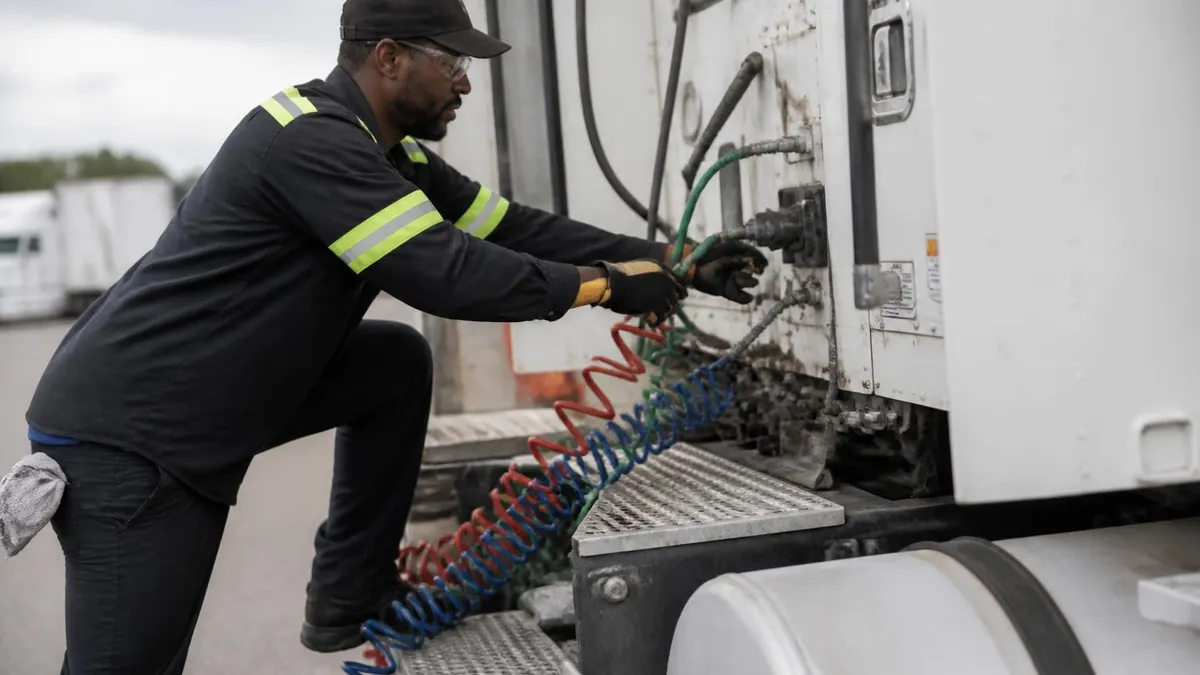
Opening reservoir drain valves while the engine is running and the compressor is actively charging the system can cause sudden, uncontrolled pressure release that can injure bystanders and may contaminate the valve seat with debris, causing a permanent slow leak. Always shut down the engine, allow pressure to drop to safe levels, then open the petcock slowly to drain accumulated moisture. On vehicles with automatic drain valves, verify the valve cycles properly during cold-weather pre-trips — frozen automatic drains are a leading cause of winter air brake contamination failures.
Air brake valve failure modes are a critical study area for both CDL exam candidates and experienced drivers responsible for daily pre-trip inspections. Understanding how a valve fails — and what observable symptoms indicate that failure — transforms a driver from someone who simply reports brake problems after they occur into a professional who prevents brake failures before they happen. This proactive approach is the difference between a safe driving record and a catastrophic incident that ends a career or causes irreparable harm to other road users.
The most common air brake valve failure is air leakage past worn or damaged rubber seals and O-rings inside the valve body. Air leaks produce an audible hiss that can often be detected during pre-trip inspection by walking around the vehicle while a helper fans the brakes.
A leak at the treadle valve exhaust port, for example, produces a continuous hiss even when the driver's foot is off the pedal — indicating the exhaust mechanism is not seating fully after brake release. This symptom, if ignored, leads to brake drag, overheating, and eventual brake fire that is extraordinarily difficult to extinguish while driving at highway speeds.
Contamination is the second leading cause of air brake valve failure in fleet operations. Compressor oil that bypasses worn piston rings enters the air stream, coats valve internals with a varnish-like residue, and ultimately causes valves to stick in the open or closed position.
Water contamination from inadequate draining causes corrosion inside precision valve bores, making the valve spool bind rather than slide freely. Air brake antifreeze contamination from using the wrong fluid type — automotive coolant instead of isopropyl alcohol — swells rubber seals and permanently damages every valve in the downstream circuit simultaneously, typically requiring a complete system rebuild.
The trailer supply valve (red octagon) is a particularly vulnerable component in combination vehicle operations because it cycles every time the driver hooks and unhooks a trailer. Each cycle subjects the valve body to vibration shock as trailer glad hands connect and disconnect, and the sealing faces inside the valve body gradually wear over tens of thousands of cycles.
A partially failed trailer supply valve may appear to function correctly during the pre-trip but develop a slow leak during highway operation, gradually reducing trailer reservoir pressure until the trailer spring brakes partially apply — a condition that feels like mysterious brake drag and is notoriously difficult to diagnose without a trained eye.
The cdl air brake test specifically tests knowledge of what happens when the trailer supply valve is pulled out (opened) versus pushed in (closed) because this is a real-world emergency response skill. If a trailer breaks away from the tractor — a rare but serious event called a breakaway — the emergency glad hand disconnects, cutting air supply to the trailer.
The trailer's emergency reservoir holds enough pressure to keep the trailer service brakes released for a brief period, after which the spring brakes automatically apply and stop the runaway trailer. This automatic emergency braking response depends entirely on the trailer supply and emergency relay valve circuits functioning correctly — which is why inspection of these valves is not optional but federally mandated.
New York Air Brake (NYAB) is a major manufacturer of specialized air brake valve assemblies used extensively in transit buses, rail vehicles, and refuse trucks. While NYAB systems follow the same fundamental physics as standard highway air brake valves, they often incorporate more sophisticated electronic control modules and proprietary valve body designs that require manufacturer-specific training for diagnosis and repair. Fleet mechanics working on transit systems with NYAB equipment should be aware that standard CDL knowledge about pressure thresholds and valve sequencing applies equally, but disassembly procedures and part sourcing differ significantly from standard highway-spec components found on over-the-road trucks.
Preventive maintenance intervals for air brake valves vary by manufacturer and operating environment but generally follow a pattern of quarterly or semi-annual inspection for heavy-cycle operations like urban transit and refuse collection, and annual inspection for long-haul highway operations with lower daily brake cycles. During scheduled maintenance, technicians should disassemble, inspect, and lubricate treadle valves with manufacturer-approved lubricant, replace any O-rings showing compression set or surface cracking, verify relay valve piston free movement, and bench-test safety relief valves to confirm they open at the correct pressure setting before reinstalling them on the vehicle.
Practical preparation for the cdl air brake test requires more than reading — it requires active recall practice using realistic test questions that mirror the phrasing and scenario structure used by state CDL examiners. The most effective study strategy combines reading conceptual material like this guide with timed practice tests that force you to retrieve information under realistic pressure. Research in cognitive science consistently shows that retrieval practice — testing yourself rather than re-reading — produces retention rates three to four times higher than passive review of the same material over the same time period.
When practicing air brake valve questions, pay particular attention to questions that describe a symptom and ask you to identify the cause. These scenario-based questions test whether you truly understand valve function or merely recognize valve names. For example: "During your pre-trip inspection you notice the brake pedal continues to slowly sink toward the floor when held down at highway pressure. What is the most likely cause?" The answer — a treadle valve internal leak or a downstream circuit leak — requires understanding valve function, not just knowing the valve's name and location.
Pressure threshold questions are among the highest-value study topics because they appear frequently and require precise numerical knowledge. Practice until the following numbers are automatic: 90–120 PSI normal operating range; 125 PSI governor cut-out; 100 PSI governor cut-in; 60 PSI low-pressure warning activation; 20–45 PSI spring brake automatic application range; 150 PSI safety relief valve opening pressure; 3 PSI per minute maximum allowable pressure loss for single vehicles; 4 PSI per minute maximum for combination vehicles. These seven data points account for a disproportionate share of the numerical questions on every state air brake knowledge exam.
Hands-on practice with actual vehicles and valves reinforces knowledge that written study cannot fully deliver. If you have access to a CDL training vehicle, practice the full pre-trip brake inspection procedure outlined in your state's CDL manual until you can perform it from memory without consulting notes. Know where each valve is physically located, what color and shape each cab control is, and what the expected response should be at each step. Examiners conducting pre-trip skills tests often focus heavily on the air brake inspection because it demonstrates both knowledge and procedural discipline simultaneously.
Study partners and group review sessions can significantly accelerate air brake valve mastery by exposing you to questions from multiple perspectives. Have a partner read exam questions aloud while you explain your reasoning process rather than simply answering yes or no. Verbally explaining why a particular valve responds in a certain way at a specific pressure solidifies neural pathways more effectively than silent reading. This technique — called elaborative interrogation — is particularly effective for technical systems where understanding the mechanism is more valuable than memorizing isolated facts.
Time management on the actual CDL air brake knowledge exam deserves specific attention. Most state exams for the air brake endorsement consist of 25 questions with a passing threshold of 80 percent, meaning you can miss no more than five questions.
Allocate approximately 90 seconds per question on average, flag any questions you are uncertain about, and return to them after completing questions you answer with confidence. Rushing through easy questions to save time for hard ones is a sound test-taking strategy, but do not skip questions — an unanswered question counts as an incorrect answer in most state scoring systems.
After passing the written knowledge exam, the practical skills test for CDL candidates includes a pre-trip inspection component where examiners specifically watch for air brake valve identification and inspection procedure compliance. Candidates who can point to each valve, state its function, describe the correct pressure response, and explain what a failed inspection reading means demonstrate the kind of operational knowledge that examiners are mandated to confirm. Treating the pre-trip inspection as a genuine safety verification rather than a performance for the examiner will show in your precision, your confidence, and ultimately your passing score.
Air Brake Questions and Answers


About the Author

Educational Psychologist & Academic Test Preparation Expert
Columbia University Teachers CollegeDr. Lisa Patel holds a Doctorate in Education from Columbia University Teachers College and has spent 17 years researching standardized test design and academic assessment. She has developed preparation programs for SAT, ACT, GRE, LSAT, UCAT, and numerous professional licensing exams, helping students of all backgrounds achieve their target scores.