
ACLS Recertification Course — Complete Guide (2026 October)
🆕 ACLS recertification course: HeartCode online+skills (~4-5 hrs), 84% passing score, $150-$250 cost. What to expect, expired card rules, and where to

Your ACLS card expires every two years — and renewing it isn't just a box to check. For nurses, paramedics, respiratory therapists, and physicians working in high-acuity settings, a lapsed card can mean being pulled from the schedule. Most employers require renewal before expiration or within 30 days of the expiry date. Don't wait until the last week.
An ACLS course for initial certification is one thing, but recertification is a different beast. You're not starting from scratch. The assumption is that you've run codes, managed airways, and pushed meds in the real world. The renewal course builds on that experience — it's faster, it focuses on the gaps, and it expects you to already know the algorithms.
Advanced Cardiovascular Life Support is the standard resuscitation credential for anyone involved in acute care. It covers cardiac arrest response, rhythm recognition, airway management, pharmacology, and post-resuscitation care — the skills that separate a code that runs well from one that doesn't. Initial certification can take 8–16 hours. The recertification course is designed to be shorter, assuming you've maintained those skills in practice. But shorter doesn't mean easy — and 'easier' is relative if you haven't reviewed the algorithms recently.
The two-year recertification requirement exists for a reason. AHA guidelines evolve, evidence on compression quality and drug protocols shifts, and clinical skills atrophy without use. The renewal course gives you a structured checkpoint — a moment to verify that you still know what to do when someone loses a pulse in front of you. That's the actual point of it.
There are two main paths: the AHA HeartCode ACLS option (online cognitive portion plus an in-person skills check) and the traditional classroom renewal. Both end with the same result — an AHA eCard. The right choice depends on your schedule, your employer's requirements, and honestly, how you learn best. HeartCode lets you knock out the online piece on your own time. The classroom version keeps everything in one room.
You can complete the online portion of ACLS recertification online with HeartCode, then schedule the hands-on skills session at any AHA Training Center. Total time is roughly 4–5 hours. Classroom renewal runs 4–8 hours depending on the provider and group size.
This guide covers everything you need to know: what format to choose, what's tested, how long it takes, what it costs, and what happens if your card has already lapsed. Read through before you register — it'll save you surprises on the day.
- Validity: ACLS certification is valid for 2 years from the date issued
- HeartCode renewal: approximately 4–5 hours total (online portion + in-person skills check)
- Written test passing score: 84% — retake allowed immediately if you miss it
- Lapsed card: more than 30 days expired? Most providers require the full initial ACLS course, not renewal
- eCard delivery: AHA eCard issued same day after passing the skills station
ACLS Recertification Course Formats
Complete the cognitive (written) portion online at your own pace, then schedule a skills session at any AHA Training Center. The most flexible option for working clinicians.
- Length: ~2-3 hrs online + ~2 hrs skills = ~4-5 hrs total
- Cost: $150–$250 (varies by Training Center)
- AHA Approved: Yes — official AHA pathway
Traditional instructor-led renewal held entirely in person. Cognitive content and skills stations are completed back-to-back in one session. Good if you prefer group learning or your employer mandates classroom format.
- Length: 4–8 hours (varies by group size)
- Cost: $100–$200 (often cheaper than HeartCode)
- AHA Approved: Yes — through AHA Training Centers
Many large hospitals run their own AHA Training Centers and provide ACLS renewal to staff at no cost. Check with your educator or education department — this is the best deal if it's available to you.
- Length: 4–8 hours depending on format
- Cost: $0 for employees (employer-paid)
- AHA Approved: Yes — same eCard outcome
The HeartCode blended format — online cognitive modules plus a brief in-person skills verification — is now the AHA's preferred renewal pathway. It's the fastest option for most clinicians with time constraints.
- Length: Online: flexible; Skills: ~2 hrs
- Cost: $150–$250 bundled
- AHA Approved: Yes — eCard issued same day
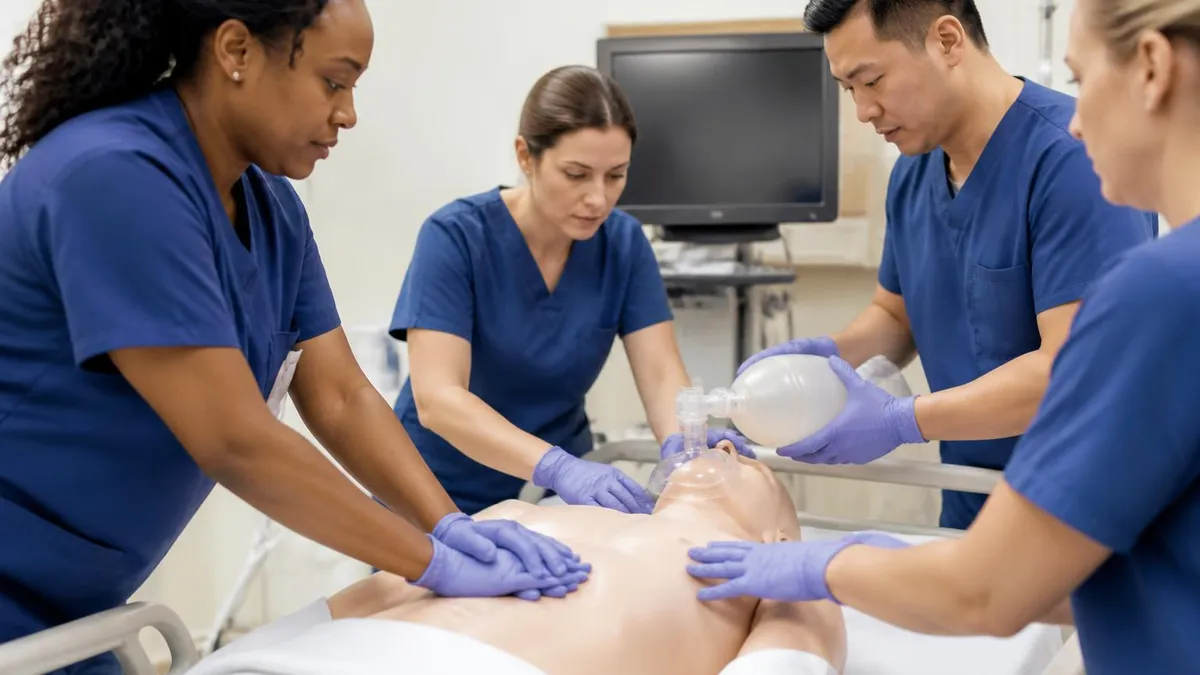
HeartCode ACLS Recertification: What to Expect
HeartCode ACLS is the AHA's online blended learning platform. For renewal, you'll purchase access through the AHA website or an authorized Training Center, then work through a series of adaptive modules at your own pace. The platform tracks your progress — you can stop and restart without losing your place. Most providers hold access open for 30–90 days after purchase.
The online portion of ACLS certification online via HeartCode covers the core cognitive content: cardiac arrest algorithms, rhythm recognition, pharmacology, post-cardiac arrest care, and team dynamics. Expect around 2–3 hours of active learning time, though the platform's adaptive branching means that if you demonstrate mastery quickly, some modules shorten. There's a written test at the end — you need 84% to pass. You can retake it immediately if you fall short, and the system highlights which areas to review.
The HeartCode modules walk you through case scenarios step by step. You'll see a patient presentation — vital signs, rhythm strip, clinical context — and answer decision-point questions about what to do next. Some modules are purely didactic (video-based teaching). Others are simulation-style, where you choose interventions and the patient responds accordingly. The adaptive design means the software adjusts difficulty based on your answers. Strong performers move through faster. People who struggle with pharmacology or rhythm interpretation get extra practice on those areas before the written test.
Once you've completed and passed the online portion, you get a completion code. Take that code — along with your current ACLS card — to a HeartCode-authorized Skills Center for the hands-on portion. The skills session runs about 2 hours and includes a megacode simulation and a BLS skills check. An AHA-certified instructor evaluates your performance in real time.
The skills session isn't a lecture. You show up, warm up on the manikin, and run through the scenarios. The instructor watches and evaluates. You'll demonstrate high-quality CPR, manage an airway, call for and deliver shocks using an AED, direct team communication, and administer medications in the correct sequence. It's less stressful than it sounds if you've prepared — but it's hands-on assessment, not passive learning.
Pass the skills session and your new eCard is issued the same day. It's delivered to your email and accessible through the AHA's Wallet Card system. There's no waiting for a physical card to arrive in the mail — you can show it on your phone or print it immediately. The eCard is accepted by virtually all credentialing bodies and employers that recognize AHA certification.
One thing to sort out before you book: not every Training Center that offers the classroom renewal also offers HeartCode skills sessions. Check the AHA course finder (heart.org) to confirm the site lists "HeartCode ACLS" as a course type. If you book a classroom-renewal site by mistake, they may not accept your online completion code.
If your employer or hospital uses HeartCode, they may provide access codes directly. Ask your educator before purchasing from the AHA website — you could end up paying twice. For a full comparison with the in-person ACLS renewal class, weigh flexibility against cost. HeartCode typically runs slightly more expensive than a classroom-only renewal, but the convenience factor is real for shift workers.
Renewal Format Comparison
What's Tested in ACLS Recertification
The renewal course tests three core competencies: written knowledge, megacode performance, and BLS skills. You can't skip any of them — and you need to pass each one before the eCard is issued.
Written Test. The cognitive exam in ACLS recertification covers the same material as the initial course, but at a faster pace. You're expected to know the adult cardiac arrest algorithm, the bradycardia and tachycardia algorithms, ROSC management, and ACS/stroke pathways. The passing threshold is 84% — meaning you can miss roughly 1 in 6 questions and still pass.
Most providers allow an immediate retake if you fall short, though some require remediation first. Review your weak areas using an ACLS cheat sheet before class — the H's and T's, reversible causes of cardiac arrest, and drug dosages trip up a lot of candidates.
The written content in a renewal course reflects the current AHA guidelines. As of 2026, the 2020 AHA Guidelines for CPR and Emergency Cardiovascular Care remain the governing framework, with an updated guidelines release expected in 2026. Your renewal course should incorporate any updates that have been published. If your provider's materials are more than two years old, that's worth flagging — ask whether they've incorporated recent guideline changes.
Megacode Skills Station. This is the practical simulation that matters most. You'll lead or participate in a simulated cardiac arrest scenario — typically running through shockable and non-shockable rhythms, managing airway, directing team members, and administering correct medications in sequence. Evaluators look for rhythm recognition accuracy, appropriate drug choices, clear team communication, and correct timing on compressions and shocks. You don't need to be perfect. You do need to be systematic and safe.
The megacode runs as a branching scenario: the manikin presents in cardiac arrest, you assess and begin CPR, a rhythm is displayed, and you make treatment decisions from there. A shockable rhythm (V-fib or pulseless V-tach) requires immediate defibrillation. Non-shockable rhythms (PEA, asystole) require high-quality CPR and addressing reversible causes — the H's and T's: Hypovolemia, Hypoxia, Hydrogen ion (acidosis), Hypo/Hyperkalemia, Hypothermia, Tension pneumothorax, Tamponade, Toxins, Thrombosis (pulmonary), and Thrombosis (coronary). Know all ten cold.
BLS Skills Check. Even though you're renewing ACLS, most providers include a BLS verification. You'll demonstrate high-quality CPR — correct hand placement, rate (100–120/min), depth (at least 2 inches), full chest recoil, and minimal interruptions. If your BLS certification is current, this is usually a formality. If it's lapsed, get it renewed before your ACLS renewal date — some centers won't complete your ACLS eCard without a valid BLS credential.
The overall pass rate for ACLS renewal is high among people who actually prepare. Walking in cold — especially if your clinical practice doesn't involve frequent code calls — is where people struggle. A quick review the week before makes a measurable difference. Even 30 minutes with a reference card covers most of what the written test focuses on. Don't skip it.
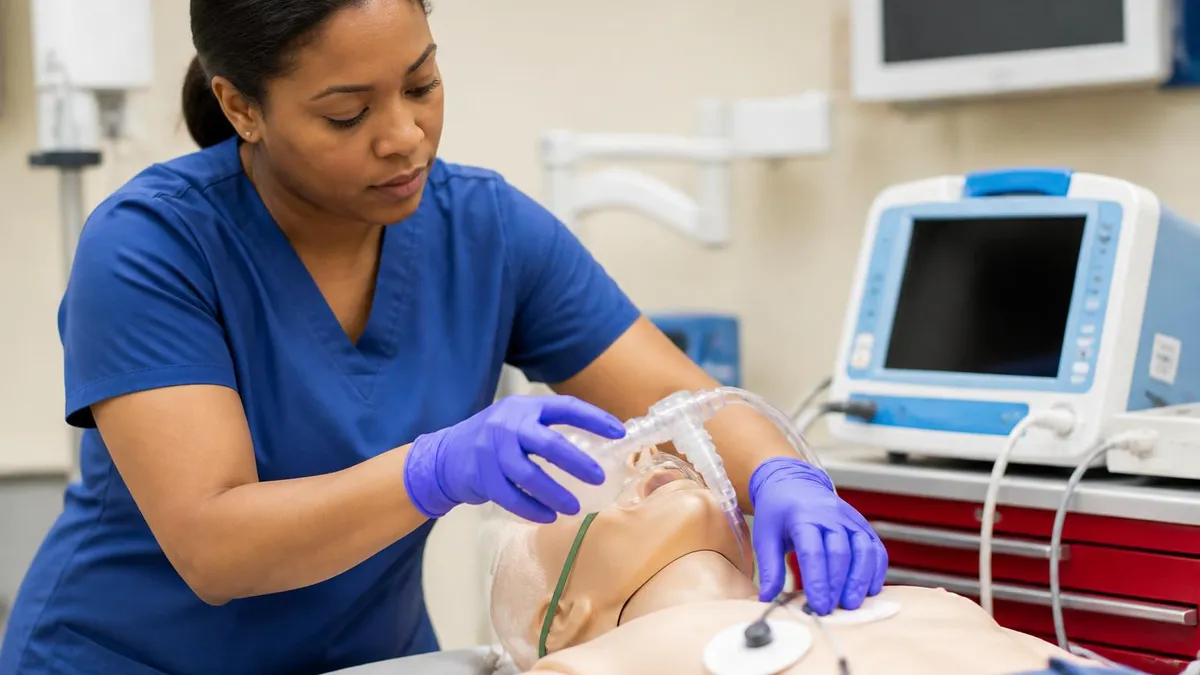
ACLS Recertification Checklist
- ✓Check your card expiration date — book at least 60–90 days before it expires
- ✓Confirm your BLS certification is current (preferred before ACLS renewal)
- ✓Choose your format: HeartCode blended or traditional classroom
- ✓Find an AHA Training Center using the course finder at heart.org
- ✓Purchase HeartCode access or register for a classroom renewal date
- ✓Complete the HeartCode online portion before your skills appointment (if using HeartCode)
- ✓Review the algorithms: adult cardiac arrest, bradycardia, tachycardia, ROSC
- ✓Review H's and T's (reversible causes) and key drug dosages
- ✓Bring a valid photo ID and your current ACLS card (or proof of recent certification)
- ✓After passing: confirm eCard delivery to your email within 24 hours
ACLS Recertification Cost and Where to Take It
Cost varies considerably depending on your path. HeartCode renewal — purchased directly from the AHA — runs $150–$250 when you bundle the online access with the skills session fee at a Training Center. Some Training Centers charge separately for the skills check (~$50–$100 on top of the HeartCode access cost), so confirm pricing before you register. Check the ACLS renewal cost breakdown before budgeting — it's easy to overpay if you don't compare providers.
Traditional classroom renewal is usually cheaper: $100–$200 through an independent AHA Training Center. Hospital-employed clinicians often pay nothing — employer-sponsored renewal is common at large health systems, and it's worth checking before you book anything external. Group rates for smaller facilities run $80–$150 per person when 5+ staff renew together. If your unit or department has several renewals coming up around the same time, contact a Training Center directly and ask about group pricing. Most will negotiate.
To find a course, the AHA's official course finder (heart.org) lets you filter by course type (ACLS Renewal vs HeartCode ACLS), zip code, and date. Most metro areas have multiple Training Centers with monthly renewal sessions. Rural areas may have fewer options — which makes HeartCode's online-first format more practical if the nearest Training Center is 90 minutes away. You still have to attend the skills check in person, but you're only committing to a 2-hour trip rather than a full-day classroom session.
Hospitals, fire departments, community colleges, and freestanding urgent care chains all run AHA Training Centers. The quality of instruction varies more than you'd expect — some centers are run by experienced resuscitation faculty, others by instructors who only teach a few classes per year. Reviews and word of mouth from colleagues help here. If a center seems disorganized during registration, that's usually a preview of the class itself.
If you're traveling or in a new city and need to find a class quickly, use the ACLS certification near me search on the AHA site. Walk-in availability is rare — most centers require advance registration, and popular dates fill quickly in large cities. Plan at least 30 days out from your expiration date. 60–90 days is safer.
What happens when your card is already expired? Plan for a full initial certification rather than a renewal. That means more time (8–16 hours), more money ($200–$350), and starting essentially from scratch. A handful of providers offer a lapsed-provider refresher that's shorter than full initial — but it's not universal and it's not the standard AHA pathway. Call ahead and ask specifically whether a lapsed-provider option is available before you assume you can just walk in for renewal. Most of the time, you can't.
ACLS Recertification Workflow
90 Days Before Expiry
Enroll in a Course
Complete HeartCode Online Portion
Schedule Skills Session
Pass Skills + Written
Receive eCard
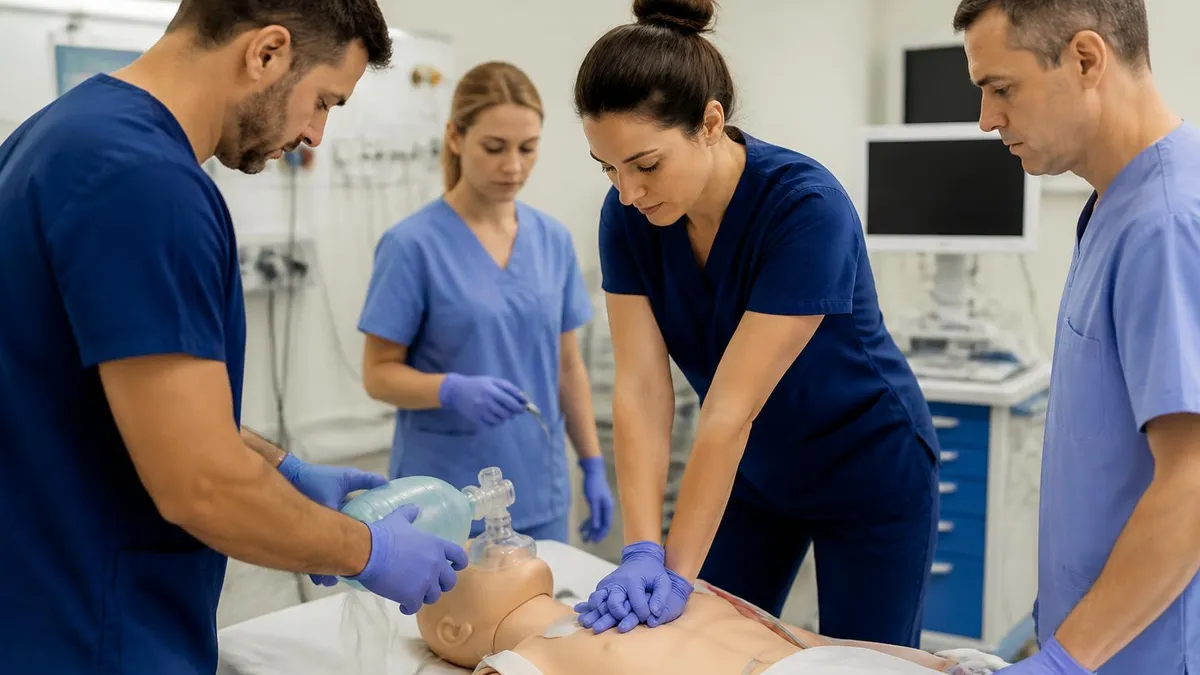
ACLS Recertification Cost Breakdown
ACLS Recertification at a Glance
Key Facts at a Glance
| Item | Value | Details |
|---|---|---|
| ACLS certification validity period | 2 Years | |
| Minimum passing score on written test | 84% | |
| HeartCode renewal total time | 4–5 hrs | |
| Lapse window before full course required | 30 Days | |
| AHA eCard delivery after passing skills | Same Day |
Tips to Pass Your ACLS Recertification
Walking into the renewal course without preparation is the most common reason people struggle — not lack of clinical skill, but lack of recent review. Here's what actually makes the difference.
Review the algorithms before class. The adult cardiac arrest algorithm, the bradycardia algorithm, and the tachycardia algorithm are the backbone of the skills stations. Know which rhythms are shockable, which aren't, what energy settings to use, when to push epinephrine vs amiodarone, and how to manage ROSC. If you have a laminated reference card from your initial certification, pull it out. If you don't, use an ACLS cheat sheet the night before. A 30-minute review the evening before class covers most of the written test content.
Know your H's and T's cold. The reversible causes of cardiac arrest come up in the megacode and on the written test. Hypovolemia, Hypoxia, Hydrogen ion (acidosis), Hypo/Hyperkalemia, Hypothermia — and Tension pneumothorax, Tamponade (cardiac), Toxins, Thrombosis (pulmonary), Thrombosis (coronary). Ten causes. Know them in order. The evaluator will ask you to verbalize your differential during the megacode scenario.
Practice BLS compressions. High-quality CPR is evaluated directly. Rate 100–120 per minute. Depth at least 2 inches on an adult. Full chest recoil after every compression — don't lean. Minimize interruptions. If you haven't done hands-on CPR recently, get in front of a practice manikin at your facility before the renewal date. It's easy to drift on technique when you're not doing it regularly.
Complete HeartCode online before the skills day. If you're using the blended format, don't show up to the skills session without finishing the online modules. The instructor will check your completion status. Some centers won't let you continue without proof of completion. Finish the online portion at least 24 hours before your skills appointment — it gives you time to retake the written test if needed.
Ask your employer about content updates. The 2026 AHA guideline update may incorporate new recommendations for epinephrine timing, vasopressor use, or post-ROSC care. If your renewal date falls after any major guideline release, confirm that your Training Center is using updated materials. The AHA publishes guideline updates at heart.org — worth a quick check before you sit down in class.
Thinking about other credentials alongside ACLS? An ACLS PALS certification combination is common for pediatric nurses and transport teams. Some Training Centers offer combined ACLS/PALS renewal days that cover both in a single session, which can simplify your scheduling and reduce time away from the unit.
HeartCode Online+Skills vs Traditional Classroom Recertification
- +Complete online portion on your own schedule — no set class day for cognitive content
- +Shorter skills session (~2 hrs) vs full day in a classroom
- +Adaptive learning platform shortens modules if you demonstrate mastery
- +eCard issued same day as skills check
- +Available at hundreds of AHA Training Centers nationwide
- −Usually costs more ($150–$250 vs $100–$200 for classroom)
- −Requires separate scheduling for online and skills sessions
- −Not all Training Centers accept HeartCode completion codes — verify first
- −Less peer interaction and real-time instructor feedback during cognitive phase
- −Requires self-discipline to complete online modules before the skills appointment
ACLS Questions and Answers
Related ACLS Resources
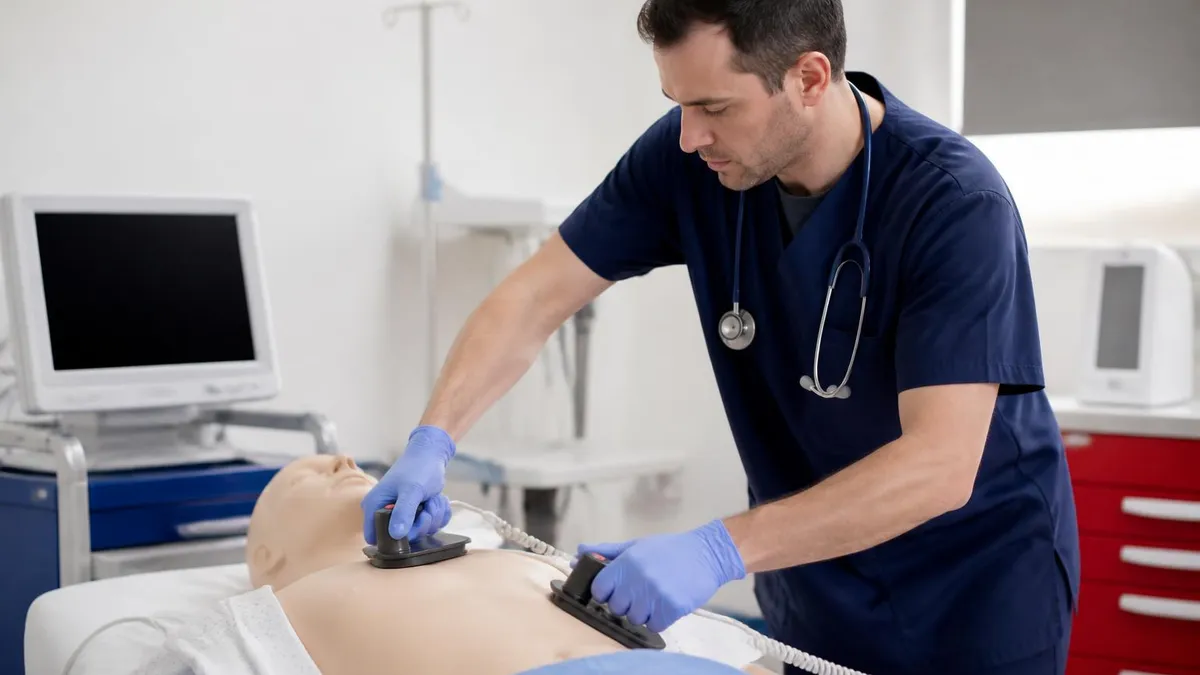
ACLS Recertification Online: Complete 2026 Guide to Renewing Your Card Fast, Affordably & Without the Classroom
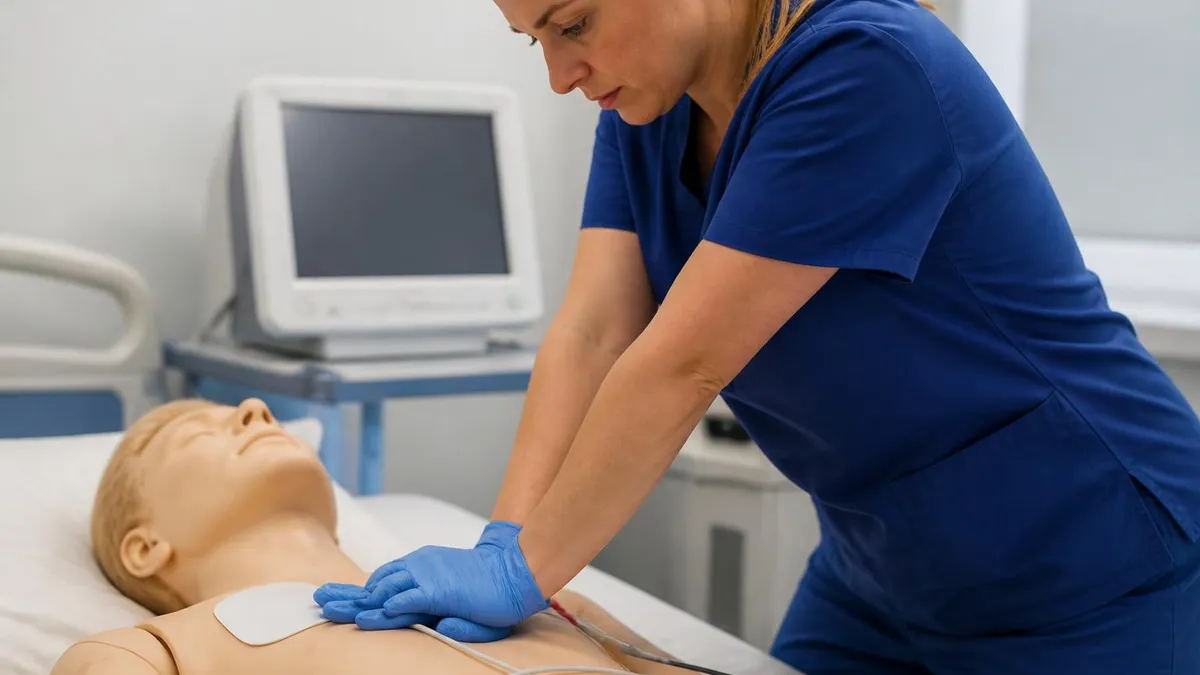
ACLS Renewal Class: Complete 2026 Guide to Recertification Requirements, Costs, Formats & Pass Strategies
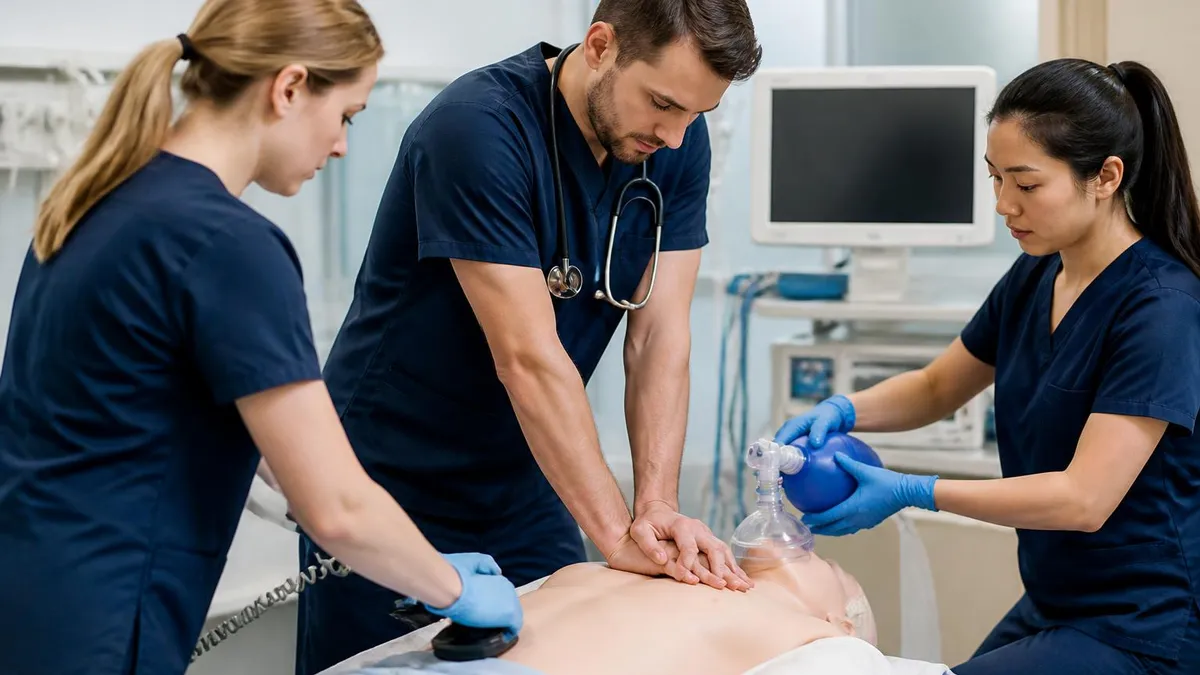
ACLS PALS Certification: Complete 2026 Guide to Dual Credentialing, Costs, Course Formats & Exam Prep
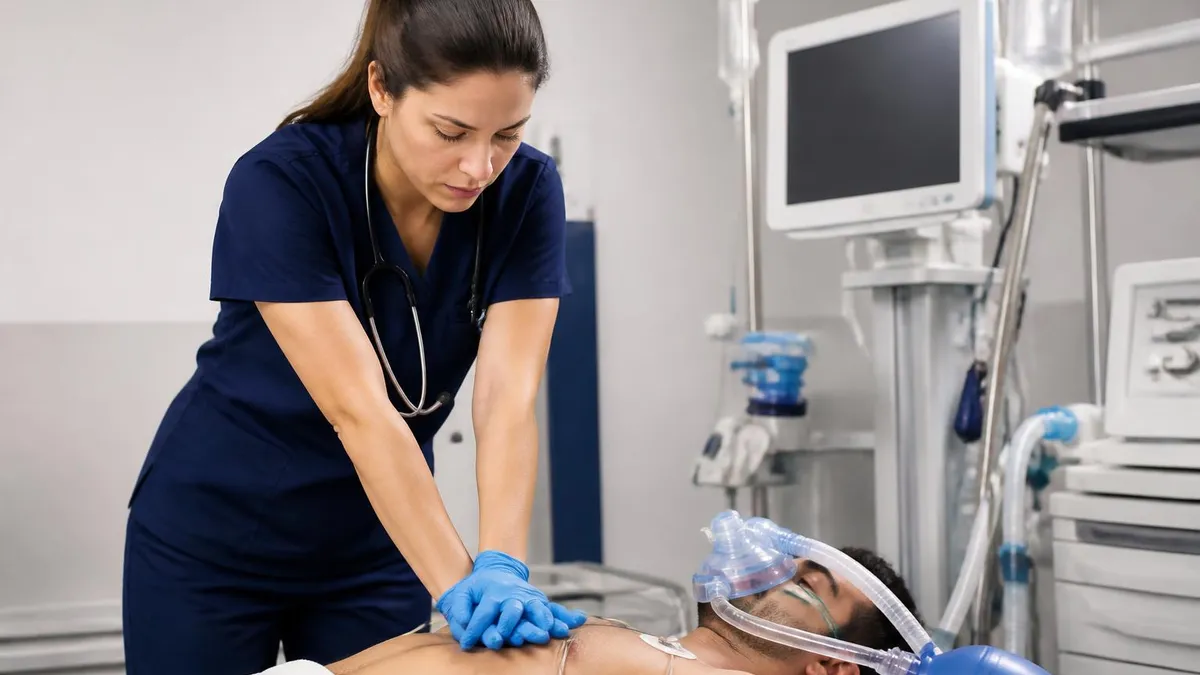
ACLS Online — Complete Guide (2026)
About the Author

Registered Nurse & Healthcare Educator
Johns Hopkins University School of NursingDr. Sarah Mitchell is a board-certified registered nurse with over 15 years of clinical and academic experience. She completed her PhD in Nursing Science at Johns Hopkins University and has taught NCLEX preparation and clinical skills courses for nursing students across the United States. Her research focuses on evidence-based exam preparation strategies for healthcare certification candidates.