
ACLS Look Up Card: Complete Reference Guide for Certification Prep 2026 October
Master the ACLS look up card with algorithms, drug doses & rhythms. Complete reference for certification prep. ✅ Free practice tests included.
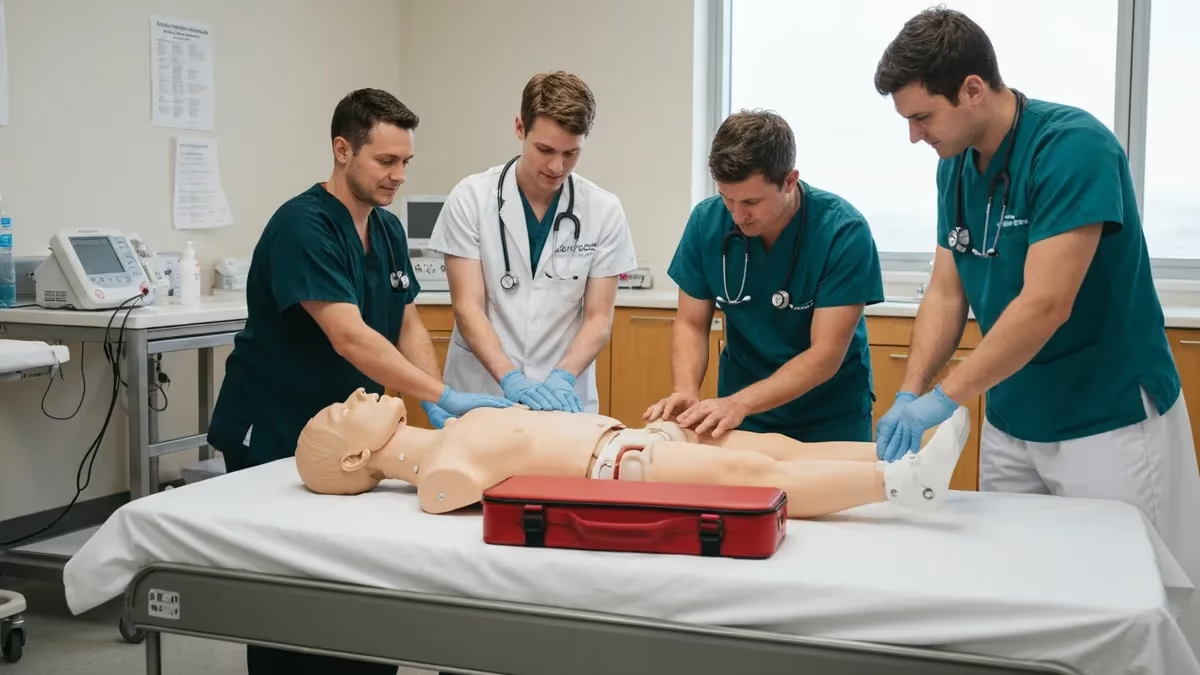
The ACLS look up card is one of the most essential tools a healthcare provider can carry into a resuscitation scenario. Whether you are a nurse, paramedic, respiratory therapist, or physician preparing for certification, having a concise reference that consolidates algorithms, drug dosages, and rhythm recognition criteria into a single, scannable format can mean the difference between a confident intervention and a hesitant one. This guide is designed to serve as your digital acls reference card, walking you through every component you need to master before your exam and in clinical practice.
The American Heart Association structures ACLS around a core set of algorithms that address the most life-threatening cardiac emergencies. These include the cardiac arrest algorithm for shockable and non-shockable rhythms, the post-cardiac arrest care protocol, the bradycardia and tachycardia algorithms, and the acute coronary syndrome pathway. Each algorithm follows a systematic approach — assess, intervene, reassess — and memorizing the sequence of steps, along with the specific medications and their doses at each decision point, is what separates providers who pass on the first attempt from those who need to retake the exam.
One of the biggest challenges candidates face is not understanding the concepts individually but integrating them under pressure. When a mock patient goes into ventricular fibrillation, you must simultaneously recall the correct energy setting for defibrillation (120–200 joules biphasic), the timing of CPR cycles (2 minutes between shocks), the first-line medication (epinephrine 1 mg IV/IO every 3–5 minutes), and when to introduce amiodarone or lidocaine. A well-organized ACLS look up card gives you the structure to rehearse these pathways until the sequence becomes automatic muscle memory rather than anxious recollection.
Drug pharmacology is another high-yield area where reference cards shine. ACLS pharmacology covers more than a dozen medications — adenosine, amiodarone, atropine, epinephrine, lidocaine, magnesium sulfate, dopamine, and more — each with specific indications, dosing windows, routes of administration, and contraindications. Candidates who rely solely on narrative textbook descriptions often struggle to recall exact milligram values under timed exam conditions. Breaking pharmacology down into a table format, organized by drug class and indication, dramatically improves both retention and recall speed during high-stakes testing.
ECG rhythm recognition is the third pillar of ACLS mastery. You must be able to identify sinus bradycardia, sinus tachycardia, atrial fibrillation, atrial flutter, supraventricular tachycardia, ventricular tachycardia, ventricular fibrillation, pulseless electrical activity, and asystole — not in a quiet classroom with unlimited time, but within seconds of seeing a rhythm strip during a megacode station. Pairing rhythm characteristics (rate, regularity, P-wave morphology, PR interval, QRS width) with their corresponding algorithm pathway is a core function of any effective reference card and a skill extensively tested on the written and skills evaluations.
Beyond the exam itself, the ACLS look up card has ongoing clinical value. Emergency departments, ICUs, code teams, and rapid response teams frequently post laminated algorithm reference cards at resuscitation stations precisely because even experienced providers benefit from a quick visual confirmation of the next step. Studies on clinical decision-making under stress consistently show that standardized cognitive aids reduce errors during resuscitation events, which is exactly why the AHA designs its algorithms to be both memorized and referenced. This guide will help you build both the knowledge and the reference habits that lead to certification success and better patient outcomes.
Throughout this article you will find algorithm breakdowns organized by emergency type, pharmacology tables sorted by drug class, rhythm recognition tips, study schedule guidance, and a comprehensive FAQ section addressing the questions that ACLS candidates ask most frequently. Whether you are approaching your initial certification or gearing up for renewal, the structured reference material here will help you walk into exam day with clarity, confidence, and command of every algorithm the AHA will test you on.
ACLS Certification by the Numbers

ACLS Reference Card Study Schedule
- ▸Memorize the VF/pVT shockable algorithm step by step
- ▸Learn PEA and asystole non-shockable pathway
- ▸Drill epinephrine timing (every 3–5 min) and amiodarone doses (300 mg, then 150 mg)
- ▸Review defibrillation energy settings (120–200 J biphasic)
- ▸Map the bradycardia algorithm: atropine 0.5 mg → transcutaneous pacing → dopamine/epinephrine infusion
- ▸Study stable vs. unstable tachycardia decision branch
- ▸Learn synchronized cardioversion energy levels by rhythm type
- ▸Practice adenosine dosing: 6 mg rapid IV, then 12 mg if no conversion
- ▸Identify all 9 ACLS-tested rhythms from strip examples
- ▸Practice distinguishing stable SVT from unstable tachycardia
- ▸Study targeted temperature management (32–36°C for 24 hours)
- ▸Review coronary angiography indications post-ROSC
- ▸Complete two full practice tests under timed conditions
- ▸Run full megacode scenarios with a partner or simulation platform
- ▸Review ACS algorithm: aspirin, nitroglycerin, 12-lead ECG, reperfusion decision
- ▸Drill the opioid emergency algorithm and naloxone dosing
- ▸Take final timed practice test and review all missed questions
Understanding the cardiac arrest algorithms in depth is the foundation of any effective ACLS study plan. The shockable rhythm pathway — covering ventricular fibrillation and pulseless ventricular tachycardia — begins with immediate high-quality CPR and rapid defibrillation. The energy dose for the first shock is 120–200 joules on a biphasic defibrillator, though providers should use the device manufacturer's recommended setting when available. After the shock, CPR resumes immediately for a full 2-minute cycle before a rhythm check, a discipline that prevents the common error of pausing compressions prematurely to look at the monitor.
Epinephrine is introduced into the shockable arrest pathway after the second shock, dosed at 1 mg IV or IO, and repeated every 3–5 minutes. It is critical to know that epinephrine administration should not interrupt CPR cycles — it is given during compressions, not during rhythm checks or shock delivery.
Amiodarone enters the algorithm after the third shock, with a first dose of 300 mg IV/IO bolus, followed by a second dose of 150 mg if the rhythm remains refractory. Lidocaine is an acceptable alternative at 1–1.5 mg/kg IV for the first dose, with subsequent doses of 0.5–0.75 mg/kg at 5–10 minute intervals up to a maximum of 3 mg/kg.
The non-shockable pathway — covering pulseless electrical activity and asystole — follows a different but equally systematic sequence. CPR continues without defibrillation, and epinephrine 1 mg IV/IO is given as soon as IV or IO access is established, with repeat dosing every 3–5 minutes. The critical cognitive task in PEA is identifying and treating reversible causes, summarized by the Hs and Ts: hypovolemia, hypoxia, hydrogen ion excess (acidosis), hypo/hyperkalemia, hypothermia, tension pneumothorax, tamponade, toxins, thrombosis pulmonary, and thrombosis coronary. This list appears on every ACLS reference card and is consistently tested on the written examination.
Post-cardiac arrest care is a domain that has grown significantly in the updated AHA guidelines and is now weighted heavily in certification testing. Following return of spontaneous circulation (ROSC), priorities shift to optimizing oxygenation (target SpO2 of 92–98%), ventilation (target PaCO2 of 35–45 mmHg), and hemodynamic stability (target systolic blood pressure above 90 mmHg). Targeted temperature management between 32 and 36 degrees Celsius is recommended for comatose survivors, maintained for at least 24 hours. Coronary angiography is recommended for STEMI patients and should be considered for hemodynamically unstable patients regardless of whether STEMI is present on the initial ECG.
The ACS algorithm is another high-yield section of the ACLS look up card that receives dedicated attention in the certification exam. Initial management follows the MONA mnemonic — morphine (used selectively), oxygen (only if SpO2 below 90%), nitroglycerin (sublingual or IV), and aspirin 162–325 mg chewed.
A 12-lead ECG should be obtained within 10 minutes of patient contact, and the critical decision point is whether STEMI is present. If yes, the reperfusion strategy must be determined: primary percutaneous coronary intervention (PCI) is preferred if the door-to-balloon time can be achieved within 90 minutes; fibrinolytics are the alternative when PCI is not timely.
The bradycardia algorithm is triggered when the heart rate falls below 50 beats per minute and the patient displays signs or symptoms of hemodynamic compromise — hypotension, altered mental status, chest pain, or signs of shock. Atropine 0.5 mg IV is the first-line intervention, repeatable every 3–5 minutes to a maximum total dose of 3 mg.
If atropine is ineffective or the bradycardia is thought to be related to a high-degree AV block or infranodal block (where atropine would be contraindicated or ineffective), transcutaneous pacing should be initiated immediately. Dopamine infusion at 2–20 mcg/kg/min or epinephrine infusion at 2–10 mcg/min are the pharmacologic bridges while preparing for transvenous pacing.
The tachycardia algorithm is perhaps the most branching pathway in ACLS, requiring providers to simultaneously assess stability, classify the QRS as narrow or wide, and determine regularity. Unstable tachycardia — defined by hypotension, altered consciousness, signs of shock, or ischemic chest discomfort — is treated with immediate synchronized cardioversion regardless of the specific rhythm.
Stable tachycardia management diverges based on QRS width: narrow-complex rhythms are addressed with vagal maneuvers and adenosine first, while wide-complex rhythms of uncertain type are treated with adenosine if regular and monomorphic, or with amiodarone if the etiology is unclear. Torsades de pointes with a wide, polymorphic QRS and prolonged QT interval is specifically treated with magnesium sulfate 1–2 g IV bolus.
For a fuller set of questions on this topic, see our aha acls algorithms resource.
ACLS Drug Reference: Key Medications by Category
Epinephrine 1 mg IV/IO every 3–5 minutes is the cornerstone pharmacologic intervention in both shockable and non-shockable cardiac arrest. It works by increasing systemic vascular resistance and coronary perfusion pressure, improving the likelihood of defibrillation success and ROSC. Amiodarone is the preferred antiarrhythmic for shock-refractory ventricular fibrillation and pulseless VT, given as 300 mg IV/IO for the first dose, followed by 150 mg if needed. Lidocaine serves as the alternative antiarrhythmic at 1–1.5 mg/kg, with additional doses possible up to 3 mg/kg total cumulative dose.
Magnesium sulfate 1–2 g IV/IO is specifically indicated for torsades de pointes, a polymorphic ventricular tachycardia associated with prolonged QT interval that does not respond to standard antiarrhythmics. Sodium bicarbonate is not routinely recommended in cardiac arrest but may be given for specific indications including severe hyperkalemia, tricyclic antidepressant overdose, or pre-existing metabolic acidosis. Calcium chloride 500–1000 mg IV is indicated for hyperkalemia, hypocalcemia, and calcium channel blocker toxicity. These drug-indication pairs are classic exam questions, so pairing each medication with its specific clinical scenario is essential reference card knowledge.
Paper Reference Card vs. Digital ACLS Study Tools: Which Works Better?
- +Physical cards can be posted at workstations, on simulation mannequins, or in clinical areas for immediate visual reference during practice
- +No screen or battery required — works in any environment including simulation labs, clinical units, and low-resource settings
- +Writing information by hand onto a physical card reinforces memory encoding through kinesthetic learning
- +Laminated cards are durable and can withstand clinical environments without risk of damage from fluids or gloves
- +Quick to scan at a glance — a well-designed one-page card shows all algorithms simultaneously without scrolling
- +Can be customized with personal annotations, color-coding, and mnemonics that match your individual learning style
- −Physical cards become outdated when AHA guidelines are updated and must be replaced or corrected manually
- −Limited space forces trade-offs — a wallet card cannot include every nuance of every algorithm without becoming unreadable
- −Cannot include interactive practice questions, rhythm strip videos, or self-testing features that digital tools provide
- −Easy to misplace, leave at home, or forget to bring to the exam review session when you need it most
- −Static format means you cannot quickly search for a specific drug or algorithm by keyword as you can on a digital platform
- −Does not provide performance tracking or analytics to identify which algorithm sections need more focused review time
Pros and Cons at a Glance
| Pros | Cons |
|---|---|
| Physical cards can be posted at workstations, on simulation mannequins, or in clinical areas for immediate visual reference during practice | Physical cards become outdated when AHA guidelines are updated and must be replaced or corrected manually |
| No screen or battery required — works in any environment including simulation labs, clinical units, and low-resource settings | Limited space forces trade-offs — a wallet card cannot include every nuance of every algorithm without becoming unreadable |
| Writing information by hand onto a physical card reinforces memory encoding through kinesthetic learning | Cannot include interactive practice questions, rhythm strip videos, or self-testing features that digital tools provide |
| Laminated cards are durable and can withstand clinical environments without risk of damage from fluids or gloves | Easy to misplace, leave at home, or forget to bring to the exam review session when you need it most |
| Quick to scan at a glance — a well-designed one-page card shows all algorithms simultaneously without scrolling | Static format means you cannot quickly search for a specific drug or algorithm by keyword as you can on a digital platform |
| Can be customized with personal annotations, color-coding, and mnemonics that match your individual learning style | Does not provide performance tracking or analytics to identify which algorithm sections need more focused review time |
ACLS Reference Card Mastery Checklist
- ✓Memorize the 5-step shockable VF/pVT algorithm including defibrillation energy, epinephrine timing, and amiodarone doses
- ✓Learn the non-shockable PEA/asystole pathway and recite all 10 Hs and Ts reversible causes from memory
- ✓Drill the bradycardia algorithm sequence: atropine → transcutaneous pacing → dopamine/epinephrine infusion
- ✓Master the tachycardia algorithm branch points: stable vs. unstable, narrow vs. wide, regular vs. irregular
- ✓Identify all 9 ACLS-tested ECG rhythms within 10 seconds of seeing a rhythm strip
- ✓Recite adenosine dosing sequence: 6 mg → 12 mg → 12 mg, with rapid push and 20 mL flush technique
- ✓Distinguish amiodarone dosing for cardiac arrest (300 mg bolus) vs. stable tachycardia (150 mg over 10 min)
- ✓Know post-ROSC targets: SpO2 92–98%, PaCO2 35–45 mmHg, SBP above 90 mmHg, temp 32–36°C for 24 hours
- ✓Complete at least two full megacode simulations covering all algorithm branches under timed conditions
- ✓Pass three consecutive timed practice tests with scores above 84% before scheduling the certification exam

The Most Commonly Missed Reference Card Detail
Most exam failures trace back to one specific error: confusing the timing rules for epinephrine administration. Epinephrine 1 mg is given every 3–5 minutes — not every 2 minutes, which is the CPR cycle time. During a megacode, providers who give epinephrine every CPR cycle instead of every other cycle will demonstrate incorrect technique. Build the rhythm into your mental model: shock, 2 min CPR with epi, shock, 2 min CPR, shock, 2 min CPR with epi again. That pattern is what examiners look for.
ECG rhythm recognition is tested both on the written examination and during the practical megacode skills evaluation, making it one of the highest-use study areas for any candidate using an ACLS reference card. The ability to classify a rhythm correctly within seconds depends on a systematic four-step analysis: rate, regularity, P-wave presence and morphology, and QRS duration. Applying this framework consistently to every rhythm strip you encounter during study — rather than pattern-matching at a glance — builds the neural pathways needed for accurate identification under exam pressure.
Ventricular fibrillation is characterized by chaotic, disorganized electrical activity with no discernible P waves, QRS complexes, or T waves. The baseline is grossly irregular with variable amplitude, and there is no organized rhythm of any kind. Coarse VF (large amplitude deflections) tends to respond better to defibrillation than fine VF (small amplitude deflections), though both are treated identically with the shockable algorithm.
Pulseless ventricular tachycardia displays a wide QRS (typically greater than 0.12 seconds), a rate above 100 bpm, and a regular or near-regular rhythm — the key differentiator from VF is that organized electrical activity is present even though it is producing no effective cardiac output.
Atrial fibrillation is identified by the absence of distinct P waves replaced by chaotic fibrillatory baseline activity, and an irregularly irregular ventricular response. The ventricular rate in uncontrolled AFib can range from 60 to well over 150 bpm depending on AV nodal conduction.
Atrial flutter classically shows a regular sawtooth flutter wave pattern at approximately 300 bpm, with a ventricular response that is most commonly 150 bpm (2:1 block), though 3:1 and 4:1 ratios also occur. Distinguishing AFib from flutter on a rhythm strip is a common exam question — the key is identifying whether the baseline activity between QRS complexes is chaotic (AFib) or organized and sawtooth (flutter).
Supraventricular tachycardia (SVT) encompasses a group of rhythms originating above the bundle of His, typically presenting with a narrow QRS and a rate between 150 and 250 bpm. The rhythm is usually regular, and P waves may be absent, buried in the QRS, or appearing immediately after the QRS as retrograde P waves.
AVNRT (atrioventricular nodal reentrant tachycardia) and AVRT (atrioventricular reentrant tachycardia) are the two most common subtypes, both responding to vagal maneuvers and adenosine when the patient is hemodynamically stable. Recognition of narrow-complex tachycardia as likely SVT versus sinus tachycardia (which has visible P waves before each QRS) is a critical distinction that drives algorithm selection.
Third-degree (complete) heart block presents with complete dissociation between atrial and ventricular activity. The P-P interval is regular, the R-R interval is regular, but P waves and QRS complexes march through each other with no relationship. The ventricular rate is typically slow (20–40 bpm for infranodal escape or 40–60 bpm for junctional escape), and the QRS may be narrow if the escape pacemaker is junctional or wide if it is ventricular.
This rhythm is a critical finding because atropine is relatively contraindicated in complete heart block — the AV node does not respond to atropine in the setting of complete block, and transcutaneous pacing should be initiated promptly if the patient is symptomatic.
Pulseless electrical activity (PEA) is not a single rhythm but rather a clinical state in which organized electrical activity is present on the monitor but the heart is generating insufficient mechanical force to produce a detectable pulse. PEA rhythms can include sinus rhythm, sinus tachycardia, idioventricular rhythms, and others.
The critical exam skill is recognizing that rhythm organization on the monitor does not equal adequate perfusion — always check for a pulse before assuming the patient is stable. The treatment imperative in PEA is immediate high-quality CPR, epinephrine, and systematic evaluation for reversible causes using the Hs and Ts framework discussed earlier.
Asystole presents as a nearly flat or minimally undulating baseline with no organized electrical activity. Before diagnosing asystole, providers should verify the rhythm in at least two leads, confirm that lead connections are secure, and increase the gain on the monitor — a truly flat line in all leads is asystole, while a fine VF may appear flat in one lead but show oscillations in another.
This lead confirmation step is a tested protocol component. Asystole carries the poorest prognosis of all arrest rhythms, and the primary interventions are high-quality CPR, epinephrine, and addressing reversible causes — there is no role for defibrillation in confirmed asystole.
Always verify that your ACLS reference card reflects the current AHA guidelines. The most recent comprehensive update was published in 2020, with ongoing updates to specific recommendations. Outdated cards may include vasopressin as an arrest medication (removed in 2015), incorrect energy dosing, or superseded post-arrest temperature targets. Before your exam, confirm your study materials align with the guidelines version your certifying organization is testing. Using an outdated card on exam day is a preventable source of incorrect answers.
The practical megacode evaluation is where all reference card knowledge is tested under realistic time pressure, and preparation for this skills component requires a fundamentally different study approach than written exam preparation. During a megacode, you will be assigned the role of team leader and expected to direct a simulated resuscitation, calling out interventions, managing the team, communicating clearly, and demonstrating correct algorithm sequence without prompting. The evaluator is watching not just for what you do but for how you do it — team leadership, closed-loop communication, and confident decision-making under pressure are all assessed components.
The AHA ACLS course is structured around a provider manual, skill practice stations, and the culminating megacode evaluation. Written test questions are drawn from the provider manual content and typically number around 50 questions in the online pre-course exam format, with a passing score of 84% or higher required.
The skills stations evaluate rhythm recognition, electrical cardioversion technique, airway management, and the megacode team leadership scenario. Candidates who fail the written test can typically retest once; candidates who fail skills stations receive remediation before retesting. Understanding the specific pass/fail criteria for your course format helps you prioritize your preparation time effectively.
One study strategy that dramatically improves megacode performance is verbal rehearsal of algorithm decision trees. Rather than silently reading the algorithms, practice saying them aloud in the exact language you will use during the evaluation: "Rhythm check — I see ventricular fibrillation. Resume CPR, charging to 200 joules. Everyone clear? Delivering shock. Resume CPR immediately. Someone establish IV access, we will give epinephrine 1 milligram as soon as access is confirmed." This verbalization rehearsal builds both the content recall and the communication fluency that distinguishes confident team leaders from hesitant ones during evaluation.
Simulation-based practice remains the gold standard for megacode preparation, but not everyone has access to high-fidelity simulation equipment. Effective alternatives include partnered verbal run-throughs using a printed scenario card, online simulation platforms that present branching rhythm and vital sign scenarios, and video reviews of ACLS megacode demonstrations. The AHA itself publishes supplemental video content, and many ACLS training centers offer practice megacode sessions as part of their renewal courses. If your course includes a precourse self-assessment, complete it honestly and use your results to identify algorithm sections that need additional focused review before the in-person skills day.
Time management during the written exam is another skill that candidates underestimate. ACLS written questions often involve clinical vignettes that require you to identify the rhythm, select the next intervention, choose the correct dose, or identify the contraindication — sometimes in the same question. Candidates who read every answer choice carefully and eliminate clearly wrong options before selecting typically perform better than those who choose the first plausible answer. For pharmacology questions specifically, watch for distractors that present correct medications in incorrect doses or correct doses for the wrong indication, as these are the most common trap formats.
Many certification candidates benefit from using the reference card during the study phase as an active recall tool rather than a passive reading source. Cover the right column of a two-column drug table and try to recall the dose before revealing it. Cover the algorithm steps after the first intervention and try to recite the next three steps before checking.
This retrieval practice approach, supported by extensive cognitive science research, produces significantly stronger long-term retention than re-reading the same content repeatedly. The goal is not to recognize the correct answer when you see it but to generate it independently — exactly what the megacode demands.
Pairing your reference card study with timed practice questions from platforms like PracticeTestGeeks gives you both the content reinforcement and the exam-format familiarity needed for a first-attempt pass. The practice questions here mirror the vignette style and content distribution of the actual written exam, covering the full range of algorithms, pharmacology, rhythm interpretation, and post-arrest care topics.
After each practice session, review every missed question carefully — not just to learn the right answer, but to understand precisely why the answer you chose was wrong, which reveals the specific algorithm branch or drug detail that needs reinforcement in your reference card review.
Exam day execution begins the night before with a deliberate wind-down routine rather than a last-minute cramming session. Candidates who study heavily until midnight before their certification course report higher anxiety and more working memory interference during evaluations than those who do a light 30-minute review of algorithm key points and then prioritize sleep. By the time you arrive for your certification course, your knowledge base is largely set — the goal on exam day is to access what you already know clearly and confidently, not to learn new information in the final hours before testing.
Arrive at your ACLS course with your reference materials reviewed but not clutched. The provider manual is typically available during the written exam at some institutions, though not all — confirm this policy with your training center in advance. For the megacode, having a solid mental algorithm framework is far more useful than trying to mentally flip through reference card images under pressure. If you have practiced the verbal algorithm rehearsal described earlier, you will find that the words come automatically when the scenario begins, freeing your cognitive bandwidth for team leadership and clinical judgment rather than basic content recall.
During the megacode, one of the most common team leader errors is failing to explicitly communicate role assignments at the outset. When the scenario begins, take two seconds to assign roles: designate who will do compressions, who will manage the airway, who will establish vascular access, and who will draw and administer medications. This explicit role assignment prevents the chaotic duplication of effort and missed interventions that evaluators frequently cite as a reason for remediation. It also demonstrates the systematic leadership approach that the AHA specifically trains and evaluates.
If you encounter a scenario event that surprises you — an unexpected rhythm change, a medication complication, or a team member reporting a finding you did not anticipate — pause for one focused second before responding. State what you observe: "I see the rhythm has changed to a wide-complex tachycardia at 180 beats per minute. Is the patient stable? Vital signs please." Then branch through the algorithm based on the answer. This structured pause-and-assess technique prevents the snap reactions that lead candidates to cardiovert a stable patient or withhold cardioversion from an unstable one.
After your certification course concludes, begin thinking about your renewal timeline immediately. ACLS certification is valid for two years, and the renewal process typically requires completion of a recertification course (which is shorter than the initial course but covers the same algorithm content) or completion of an online renewal module followed by a skills check.
Mark your expiration date in your calendar with a 90-day reminder, because many training centers fill quickly and last-minute renewal attempts frequently result in brief lapses in certification. Maintaining a current reference card file in a dedicated study folder makes the renewal process significantly faster than starting from scratch two years later.
The most important piece of final advice for any ACLS candidate is this: trust the system. The AHA algorithms are deliberately designed to be systematic, memorable, and executable under extreme stress. They exist precisely because expert resuscitators recognized that cognitive load during a cardiac arrest is enormous, and that a clear, pre-memorized decision tree produces better outcomes than individual improvisation.
Your job during both the exam and real resuscitations is to execute the algorithm faithfully, communicate clearly, and keep the team moving through the steps. Everything on the reference card serves that purpose — and mastering it serves both your certification and your patients.
Continue building your knowledge and testing yourself regularly with the practice quizzes available throughout this guide. Each quiz session reinforces algorithm recall, sharpens rhythm recognition, and familiarizes you with the question formats and distractors you will encounter on exam day. Consistent, distributed practice over several weeks produces dramatically better retention than a single intensive weekend of studying, so start early, use your reference card actively, and approach the certification course with the confidence that comes from thorough, systematic preparation.
ACLS Questions and Answers

2025 ACLS Changes: Complete Guide to Updated Guidelines, Algorithms & Certification Requirements

ACLS Acute Coronary Syndrome Algorithm: Complete Study Guide for Certification Prep
ACLS Renewal Class: Complete 2026 Guide to Recertification Requirements, Costs, Formats & Pass Strategies
ACLS Bradycardia Algorithm: Complete 2026 Guide to Recognition, Treatment Steps & Drug Doses

ACLS CPR Certification: Complete Training Guide for Healthcare Professionals
About the Author

Registered Nurse & Healthcare Educator
Johns Hopkins University School of NursingDr. Sarah Mitchell is a board-certified registered nurse with over 15 years of clinical and academic experience. She completed her PhD in Nursing Science at Johns Hopkins University and has taught NCLEX preparation and clinical skills courses for nursing students across the United States. Her research focuses on evidence-based exam preparation strategies for healthcare certification candidates.