
ACLS Bradycardia Algorithm: Complete 2026 October Guide to Recognition, Treatment Steps & Drug Doses
Master the ACLS bradycardia algorithm with 2026 October AHA steps, 📚 atropine dosing, transcutaneous pacing, and decision-making for symptomatic adults.
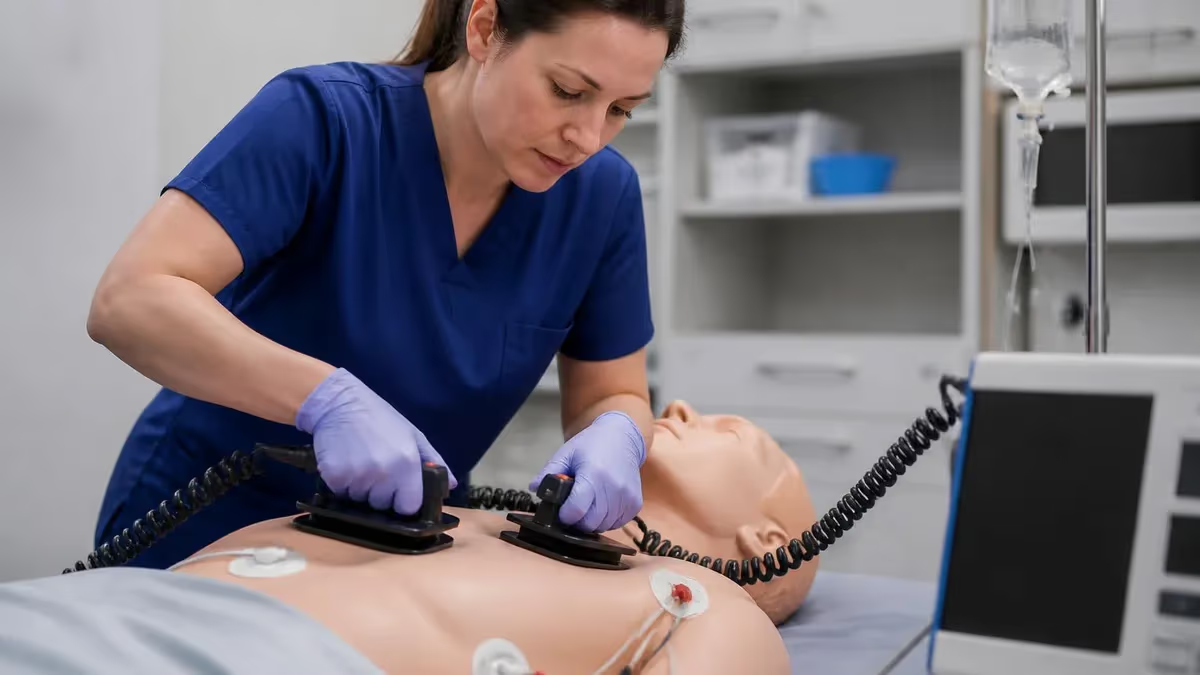
The ACLS bradycardia algorithm is the American Heart Association's structured decision pathway for adult patients presenting with a heart rate below 50 beats per minute who show signs of inadequate perfusion. It guides providers through rapid assessment, identification of unstable symptoms, and a tiered treatment sequence that begins with atropine and escalates to transcutaneous pacing or vasoactive infusions when the rhythm fails to respond. Understanding the algorithm cold is essential for any clinician sitting for ACLS provider certification in 2026.
This guide walks you through every branch of the algorithm exactly as it appears in the 2020 AHA Guidelines (still current for 2026) and the updated 2025 focused updates. You will learn how to recognize sinus bradycardia, junctional escape rhythms, and the three degrees of atrioventricular block, then move stepwise through the first-line drug, second-line interventions, and escalation triggers. The goal is to make your response automatic under stress.
Bradycardia accounts for roughly 15 percent of symptomatic arrhythmia calls in emergency departments, and the most common reversible causes (hypoxia, hyperkalemia, medication toxicity, inferior wall myocardial infarction) all have specific algorithm-driven workarounds. A clinician who memorizes only the atropine dose without learning the underlying pathophysiology will fail to recognize when atropine is unlikely to work, such as in Mobitz II or third-degree block. We address both layers throughout.
You will see the algorithm broken into four phases: identify, assess for unstable signs, treat, and reassess. Each phase has its own checkpoint criteria. Hypotension below 90 mmHg systolic, acutely altered mental status, signs of shock, ischemic chest discomfort, and acute heart failure are the five classic instability markers that trigger immediate intervention. If none are present, monitoring and identification of reversible causes take precedence over pharmacologic treatment.
For learners preparing the full certification, we recommend pairing this pathway with our comprehensive ACLS Study Guide, which maps every algorithm to the official provider manual chapters. Combining algorithm drills with ECG recognition practice produces the strongest exam outcomes, and most candidates who pass on the first attempt report doing at least 200 simulated rhythm strips before testing.
Whether you are a new ICU nurse, a paramedic preparing for recertification, or a physician returning to clinical practice after a research sabbatical, the bradycardia algorithm rewards repetition. Read this guide once for orientation, then return to the checklist and FAQ sections before your skills station. By the end, you should be able to recite the sequence, dose atropine correctly by weight-independent flat dose, and articulate exactly when to skip atropine and proceed directly to pacing.
Throughout this article, we cite 2026 AHA recommendations, document the rationale behind dose changes, and include the most current evidence on transcutaneous versus transvenous pacing thresholds. The algorithm itself has remained stable since the 2020 update, but verbal phrasing and emphasis on identifying reversible causes have evolved. We flag those distinctions to keep your knowledge aligned with current scoring rubrics.
ACLS Bradycardia Algorithm by the Numbers

ACLS Bradycardia Algorithm: Step-by-Step Sequence
Step 1: Identify Bradycardia
Step 2: Assess for Instability
Step 3: First-Line Atropine
Step 4: Transcutaneous Pacing
Step 5: Vasoactive Infusion
Step 6: Treat Reversible Causes
Recognizing symptomatic bradycardia requires distinguishing a slow rate that is causing the patient harm from a slow rate that is incidental. Many endurance athletes maintain resting heart rates in the high 30s without symptoms, and well-conditioned patients on beta-blockers may run in the 40s as a therapeutic goal. The algorithm specifically targets rates that produce clinically significant signs and symptoms of inadequate cardiac output. Without those signs, treatment with atropine or pacing is not only unnecessary but potentially harmful.
Start by anchoring on the five instability markers: systolic blood pressure below 90 mmHg with hypoperfusion, acutely altered mental status, signs of shock such as cool clammy skin and delayed capillary refill, ischemic chest discomfort suggestive of acute coronary syndrome, and acute decompensated heart failure with pulmonary congestion. The presence of any single marker, when reasonably attributable to the bradycardia, transitions the patient from a monitor-and-investigate pathway into immediate treatment.
Rhythm identification on the monitor matters because it predicts atropine response. Sinus bradycardia with intact AV conduction usually responds well to atropine because the drug increases sinus node firing. First-degree AV block and Mobitz I (Wenckebach) typically respond as well, since the block is at the AV node and is vagally mediated. Mobitz II and complete heart block, by contrast, involve infranodal disease and rarely respond to atropine, sometimes paradoxically worsening with increased atrial rates.
The 12-lead ECG, when feasible without delaying treatment, provides essential diagnostic anchors. Look for inferior ST elevation suggesting right coronary artery occlusion with vagal-mediated bradycardia, peaked T waves of hyperkalemia, the saddle pattern of Brugada, or the J wave of hypothermia. Identification of these patterns immediately changes management: hyperkalemia demands calcium and insulin, hypothermia demands rewarming, and inferior STEMI demands urgent reperfusion alongside hemodynamic support.
Medication history is the second most productive line of investigation. Beta-blockers and calcium channel blockers are everyday culprits, and digoxin toxicity remains underdiagnosed in older patients with declining renal function. Newer drugs such as ivabradine specifically lower heart rate and can produce profound bradycardia in overdose. Always ask about cannabis edibles and clonidine in adolescents, both of which cause significant bradycardia and are increasingly common. The full ACLS Drugs reference covers each of these.
Finally, never forget the simplest reversible cause: hypoxia. A pulse oximeter reading below 90 percent in a patient with bradycardia should prompt immediate airway and oxygenation correction before any pharmacology. Children especially, but also adults with severe lung disease, respond to hypoxia with bradycardia rather than tachycardia, and the rate often normalizes within seconds of effective oxygenation. This is one of the algorithm's most clinically important learnings.
Document your assessment in the AHA framework: rate, rhythm, perfusion, and probable cause. This four-element charting habit aligns with the ACLS scoring rubric and trains you to think systematically under pressure. Examiners watch for candidates who jump to atropine without articulating the instability rationale, and they downgrade scores for treatment without clear indication. Slow down for thirty seconds, name the signs, and you will both pass the megacode and treat real patients better.
ACLS Practice Test Questions
Prepare for the ACLS Advanced Cardiovascular Life Support Practice exam with our free practice test modules. Each quiz covers key topics to help you pass on your first try.
ACLS Cardiac Rhythms & ECG Interpretation
ACLS Exam Questions covering ACLS Cardiac Rhythms & ECG Interpretation. Master ACLS Test concepts for certification prep.
ACLS Pharmacology & Medications
Free ACLS Practice Test featuring ACLS Pharmacology & Medications. Improve your ACLS Exam score with mock test prep.
ACLS Best Practices & Methodologies
ACLS Mock Exam on Best Practices & Methodologies. ACLS Study Guide questions to pass on your first try.
ACLS Communication & Stakeholder Relations
ACLS Test Prep for Communication & Stakeholder Relations. Practice ACLS Quiz questions and boost your score.
ACLS Core Concepts & Fundamentals
ACLS Questions and Answers on Core Concepts & Fundamentals. Free ACLS practice for exam readiness.
ACLS Data Analysis & Reporting
ACLS Mock Test covering Data Analysis & Reporting. Online ACLS Test practice with instant feedback.
ACLS Documentation & Record Keeping
Free ACLS Quiz on Documentation & Record Keeping. ACLS Exam prep questions with detailed explanations.
ACLS Industry Regulations & Compliance
ACLS Practice Questions for Industry Regulations & Compliance. Build confidence for your ACLS certification exam.
ACLS Leadership & Team Management
ACLS Test Online for Leadership & Team Management. Free practice with instant results and feedback.
ACLS Professional Standards & Ethics
ACLS Study Material on Professional Standards & Ethics. Prepare effectively with real exam-style questions.
ACLS Quality Assurance & Improvement
Free ACLS Test covering Quality Assurance & Improvement. Practice and track your ACLS exam readiness.
ACLS Risk Management & Assessment
ACLS Exam Questions covering Risk Management & Assessment. Master ACLS Test concepts for certification prep.
ACLS Bradycardia Algorithm Drugs and Dosing
Atropine is the first-line pharmacologic agent for symptomatic bradycardia in adults. The 2026 AHA recommendation is 1 mg IV or IO push, which represents the increase from the older 0.5 mg dose adopted in the 2020 guidelines. Repeat every 3 to 5 minutes as clinically indicated up to a total maximum dose of 3 mg. Doses below 0.5 mg can cause paradoxical bradycardia by stimulating central vagal nuclei and should be avoided.
Atropine works by competitively blocking acetylcholine at muscarinic receptors in the sinus and AV nodes, accelerating both sinus node firing and AV conduction. It is most effective in vagally mediated bradycardia such as sinus bradycardia, first-degree AV block, and Mobitz I. It is unlikely to help in Mobitz II, third-degree block, or any infranodal block, where it may even worsen the rhythm by increasing the atrial rate without improving ventricular conduction. Skip atropine and proceed to pacing in these cases.

Atropine vs. Immediate Pacing: Weighing the Choice
- +Atropine is fast, requires no equipment setup, and works within 1-2 minutes when effective
- +Atropine is highly effective for vagally mediated and AV-nodal bradycardias
- +No sedation or pain management is needed for atropine administration
- +Atropine is universally available on every code cart and in every ambulance
- +The drug has decades of safety data and well-understood dosing
- +Atropine treatment requires minimal additional personnel beyond the basic ACLS team
- −Atropine often fails in Mobitz II and complete heart block, wasting valuable time
- −The drug can cause tachycardia, urinary retention, and acute glaucoma exacerbation
- −Atropine may worsen ischemia in patients with active acute coronary syndrome
- −Pacing provides immediate, reliable rate control regardless of block location
- −Atropine has a 3 mg ceiling, while pacing can be sustained indefinitely
- −Delayed pacing while exhausting atropine doses increases mortality in high-grade block
Pros and Cons at a Glance
| Pros | Cons |
|---|---|
| Atropine is highly effective for vagally mediated and AV-nodal bradycardias | Atropine often fails in Mobitz II and complete heart block, wasting valuable time |
| No sedation or pain management is needed for atropine administration | The drug can cause tachycardia, urinary retention, and acute glaucoma exacerbation |
| Atropine is universally available on every code cart and in every ambulance | Atropine may worsen ischemia in patients with active acute coronary syndrome |
| The drug has decades of safety data and well-understood dosing | Pacing provides immediate, reliable rate control regardless of block location |
| Atropine treatment requires minimal additional personnel beyond the basic ACLS team | Delayed pacing while exhausting atropine doses increases mortality in high-grade block |
ACLS Bradycardia Algorithm: Provider Checklist
- ✓Confirm heart rate below 50 bpm on monitor and palpation
- ✓Attach pulse oximeter, NIBP, and continuous cardiac monitor
- ✓Obtain 12-lead ECG if it does not delay treatment
- ✓Establish IV or IO access with at least 18-gauge access proximally
- ✓Assess for the five signs of instability: hypotension, altered mental status, shock, chest pain, heart failure
- ✓Administer atropine 1 mg IV push if symptomatic and likely vagal
- ✓Prepare transcutaneous pacing pads and analgesia simultaneously
- ✓Identify and treat reversible causes including hypoxia, hyperkalemia, and drug toxicity
- ✓Consider dopamine or epinephrine infusion if atropine fails
- ✓Arrange expert cardiology consultation for transvenous pacing or pacemaker placement
When to Skip Atropine and Go Straight to Pacing
If the rhythm is Mobitz II, third-degree AV block, or any wide-complex escape rhythm in a hemodynamically unstable patient, do not waste time on atropine. The block is below the AV node and will not respond. Proceed directly to transcutaneous pacing with sedation, and begin a dopamine or epinephrine infusion as a bridge to transvenous pacing.
Transcutaneous pacing is the bedside bridge therapy for symptomatic bradycardia unresponsive to atropine, and every ACLS provider should be able to set it up within 60 seconds. Apply the pacing pads in either anterior-posterior or anterior-lateral configuration, with the anterior pad over the cardiac apex and the posterior pad between the scapulae for AP placement. Most modern defibrillator-pacers default to a fixed rate of 60 to 80 bpm and demand mode, which prevents the device from firing during intrinsic complexes.
Begin by setting the rate at 80 bpm and the output at zero milliamps. Gradually increase the milliamp output by 10 mA increments until you observe both electrical capture, defined as a pacer spike followed by a wide QRS, and mechanical capture, confirmed by a palpable femoral or carotid pulse synchronous with the pacer spike. Typical capture thresholds range from 60 to 100 mA, but pads age, lung volumes, and chest wall thickness can shift this dramatically.
Awake patients tolerate pacing poorly. The transthoracic current causes intense skeletal muscle contraction and significant pain, which is why sedation and analgesia are integral to the procedure rather than optional add-ons. Reasonable choices include midazolam 1 to 2 mg IV with fentanyl 25 to 50 mcg IV, titrated to patient comfort while preserving spontaneous respirations. Some protocols use ketamine 0.5 to 1 mg/kg IV when hemodynamic preservation is critical.
If transcutaneous pacing fails to achieve consistent capture, or if pacing will be required for more than a few hours, transvenous pacing is the next step. This procedure requires either fluoroscopic or electrocardiographic guidance and is typically performed by cardiology, emergency medicine, or intensivist providers. The internal jugular and femoral veins are the most common access sites, with the right internal jugular preferred for ease of catheter advancement into the right ventricle.
While arranging definitive pacing, continue vasoactive infusions to maintain perfusion. Dopamine 5 to 20 mcg/kg/min or epinephrine 2 to 10 mcg/min are the algorithm-supported choices. Avoid isoproterenol unless directed by cardiology, as it can worsen ischemia by increasing oxygen demand and causing diastolic hypotension. For comprehensive guideline review, see our ACLS Guidelines overview, which details the 2026 vasoactive recommendations.
Throughout pacing, reassess the patient every few minutes. Look for return of intrinsic conduction, which is common in vagally mediated and ischemia-related bradycardia once reversible causes are addressed. Document the lowest stable output at which mechanical capture is maintained, and increase by 10 percent as a safety margin. Watch for loss of capture due to pad displacement, dried conductive gel, or evolving metabolic derangement such as worsening hyperkalemia.
Special populations deserve mention. Patients with implanted cardiac devices may require pacemaker interrogation if bradycardia persists despite apparent pacing settings. Heart transplant recipients lack vagal innervation, so atropine is ineffective and pacing or isoproterenol becomes first-line. Pregnant patients require a left lateral tilt during pacing to prevent aortocaval compression, and the differential should include peripartum cardiomyopathy and amniotic fluid embolism as drivers of acute bradycardia.
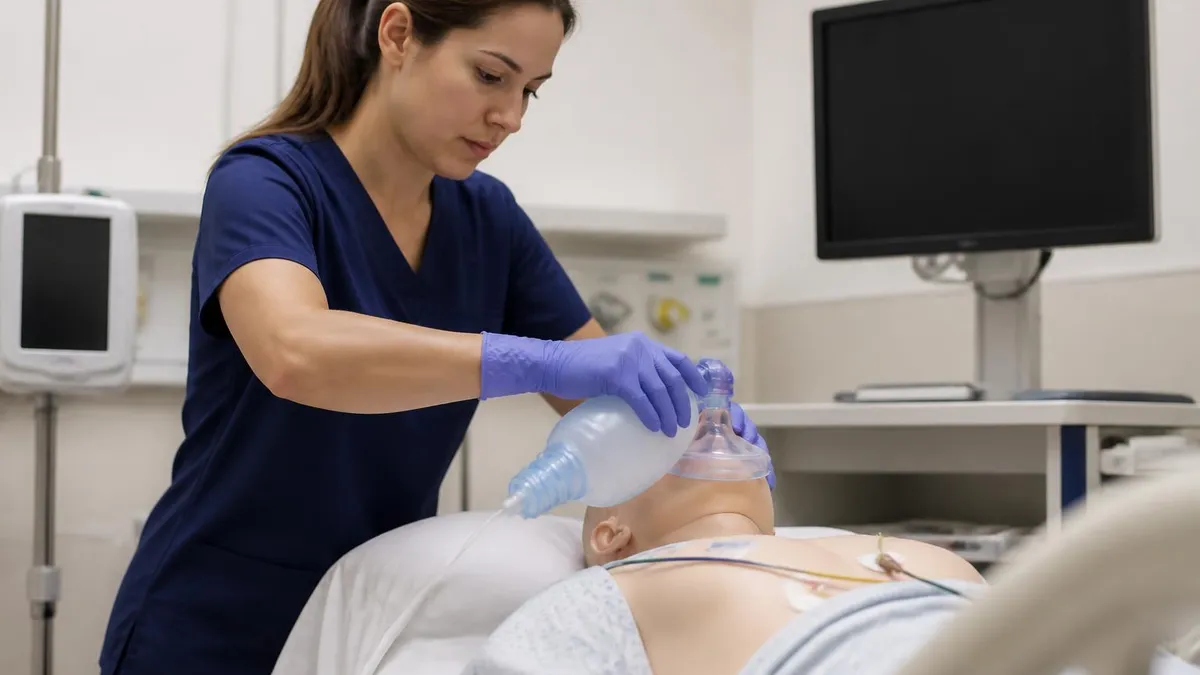
The ACLS bradycardia algorithm applies only to patients with signs of inadequate perfusion. Treating an asymptomatic patient with atropine because of a number on the monitor can precipitate tachyarrhythmias, ischemia, and unnecessary harm. Always confirm symptoms are clearly linked to the bradycardia before intervention.
Exam preparation for the bradycardia algorithm focuses on three reliable testing areas: recognition of unstable signs, correct atropine dosing, and the decision point between pharmacology and pacing. Megacode scenarios typically begin with a slow rhythm strip and a vital sign change, and the proctor wants to see you state the heart rate, name the rhythm, identify the instability, and announce the next intervention in that order. Candidates who blurt out atropine without naming the indication frequently lose points.
The most common testing pitfall is confusing Mobitz I (Wenckebach) with Mobitz II. Mobitz I shows progressive PR prolongation until a beat is dropped, indicates AV nodal disease, and usually responds to atropine. Mobitz II shows constant PR intervals with intermittent dropped beats, indicates infranodal disease, and rarely responds to atropine. Drilling 50 to 100 rhythm strips of each block type before testing is the single highest-yield exam preparation activity. We strongly recommend our ACLS Training Near Me directory for hands-on practice opportunities.
Second high-yield testing area: atropine maximum dose. The current 2026 ceiling is 3 mg total. The older 0.04 mg/kg formulation is obsolete. Examiners may test the older number to catch candidates relying on outdated study materials. Always answer 3 mg as the adult max and 1 mg as the single dose. Pediatric atropine is dosed differently at 0.02 mg/kg, but pediatric bradycardia falls under PALS rather than ACLS, so questions about kids are uncommon on the adult certification.
Third area: transcutaneous pacing indications. The two clearest pacing indications are (1) symptomatic bradycardia unresponsive to atropine and (2) symptomatic high-grade AV block where atropine is unlikely to work. Pacing as a stand-alone first-line therapy is acceptable when atropine is contraindicated or when the rhythm clearly indicates infranodal block. The exam likes to ask which patients should skip atropine entirely, and the answer set is heart transplant recipients, denervated hearts, and high-grade block.
For practical preparation, time yourself running through the algorithm verbally with a study partner playing the proctor. Use a kitchen timer set to 90 seconds and try to articulate the assessment, treatment, and reassessment for a hypothetical Mobitz II patient with a systolic of 78 mmHg. If you can hit every algorithm checkpoint within the time limit, you are ready for the megacode. Most test failures are not knowledge gaps but timing and articulation gaps.
On test day, bring a pocket card with the algorithm printed on one side and the drug doses on the other. Skim it during the orientation period but rely on memorized sequences during the actual station. Sleep matters more than last-minute cramming, and a brief 20-minute review the morning of the exam outperforms hours of late-night study. Eat a substantial breakfast, hydrate, and arrive 30 minutes early to settle nerves before your first scenario.
Finally, remember that ACLS testing emphasizes team leadership as much as algorithm recall. As code leader, assign clear roles, request closed-loop communication, summarize the situation aloud every 2 minutes, and verbalize your differential of reversible causes. Examiners scoring the megacode award substantial points for these team behaviors, and they often weight leadership and communication equally with technical correctness. Practice this with classmates, and your scores will reflect it.
Final preparation strategies blend algorithm mastery with situational awareness. The bradycardia algorithm rarely lives in isolation; in real practice and on the megacode, it intersects with the ACS algorithm (inferior STEMI with right coronary artery occlusion produces vagally mediated bradycardia), the toxidromes (beta-blocker, calcium channel blocker, and digoxin overdoses), and post-arrest care (where iatrogenic hypothermia may slow the rate intentionally). Train yourself to scan for these overlaps with every bradycardic patient you encounter.
Develop a personal pre-treatment pause habit. Before you push atropine or activate pacing, take a single breath and ask: Is the rate truly causing this? Is the rhythm one that will respond to atropine? Are there reversible causes I have not yet addressed? This three-question pause adds about ten seconds and prevents the most common treatment errors. Examiners and senior physicians alike appreciate this disciplined approach, and patients benefit from the few extra seconds of diagnostic precision.
Use spaced repetition for rhythm strips and dosing facts. Apps such as Anki with ACLS deck downloads allow you to review 20 cards in five minutes daily, and most candidates who use spaced repetition for two weeks pre-exam pass with comfortable margins. Pair this with full-length practice megacodes once weekly to consolidate procedural memory. The combination of fact recall and scenario-based reasoning prepares you for both the written and skills components of certification.
Build a personal study group of three to five colleagues who can run scenarios on each other. Take turns playing patient, code leader, and proctor. The proctor role is the most educational because it forces you to identify what an ideal performance looks like. After each scenario, debrief in the style of clinical event reviews: what was done well, what was missed, what we would do differently next time. This habit transfers directly to clinical practice.
Plan your renewal cycle proactively. ACLS certification is valid for two years, and waiting until the last week creates avoidable stress. Schedule your renewal class six to eight weeks before expiration, and use the intervening time for focused review. Many providers find that the ACLS Renewal Near Me directory simplifies finding convenient evening and weekend options. Renewal courses are typically half a day rather than the full two-day initial certification.
Mental preparation matters as much as content review. Visualize the exam space the night before. Picture yourself walking in, hearing the scenario, and calmly stepping through the algorithm. Athletes have used visualization for decades, and the same neuroscience applies to medical testing. Combine this with diaphragmatic breathing in the waiting room: four seconds in, four seconds hold, four seconds out. Your heart rate drops, prefrontal cortex re-engages, and you perform at your best.
Lastly, after passing, commit to monthly micro-reviews to keep the algorithm fresh. Five minutes once a month reviewing the bradycardia, tachycardia, and cardiac arrest algorithms prevents the slow decay that catches providers off-guard during real emergencies. Many institutions now require quarterly mock codes precisely because algorithm recall degrades quickly without practice. Build the habit, and your two-year renewal cycle will feel like a formality rather than a hurdle.
ACLS Questions and Answers
ACLS Training Near Me: How to Find Local Classes, Costs & Fast-Track Options in 2026
ACLS Study Guide: Complete 2026 Certification Prep with Algorithms, Drugs & Practice Tests

ACLS Guidelines 2026: Complete AHA Update on Algorithms, Drugs, CPR Quality & Post-Arrest Care
ACLS Drugs: Complete 2026 Guide to Medications, Doses, Indications & Algorithm Use

ACLS Renewal Near Me: Find Local Recertification Classes, Costs & Online Options in 2026
About the Author

Registered Nurse & Healthcare Educator
Johns Hopkins University School of NursingDr. Sarah Mitchell is a board-certified registered nurse with over 15 years of clinical and academic experience. She completed her PhD in Nursing Science at Johns Hopkins University and has taught NCLEX preparation and clinical skills courses for nursing students across the United States. Her research focuses on evidence-based exam preparation strategies for healthcare certification candidates.