
ACLS Drugs: Complete 2026 October Guide to Medications, Doses, Indications & Algorithm Use
🧠 ACLS drugs explained: complete 2026 October guide to epinephrine, amiodarone, atropine, adenosine doses, indications, and algorithm use for certification success.
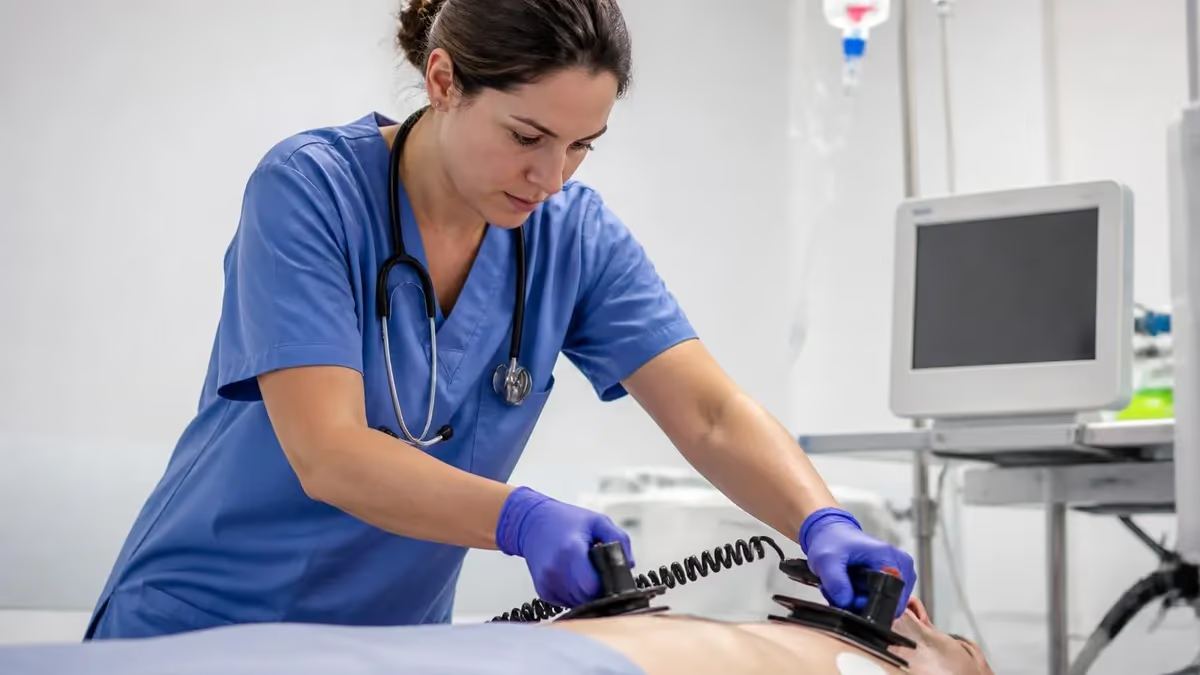
Mastering ACLS drugs is one of the most challenging parts of certification, and it is the area where examiners most often catch candidates off guard. The 2026 American Heart Association guidelines emphasize that medication knowledge is not just memorizing names — it is understanding when to push a drug, when to hold it, and how the choice fits into the broader resuscitation algorithm. Whether you are a first-time candidate or a renewing provider, this guide walks through every essential medication you must know.
This article covers the full pharmacology curriculum tested on the ACLS exam, including cardiac arrest drugs, antiarrhythmics, vasopressors, and post-arrest agents. We break down indications, adult doses, contraindications, and the specific algorithms where each drug appears. You will also find memorization tricks, common test traps, and clinical pearls that experienced ACLS instructors use to help students retain dosing under stress during a megacode scenario.
The current AHA emphasis is on high-quality CPR first, drugs second. Epinephrine remains the backbone vasopressor for cardiac arrest, while amiodarone and lidocaine compete for first-line antiarrhythmic status in shockable rhythms. Atropine, adenosine, and a small group of calcium-channel blockers and beta-blockers round out the symptomatic bradycardia and tachycardia algorithms. Knowing which drug fits which rhythm — and at what dose — separates strong candidates from struggling ones.
Beyond the algorithm drugs, the 2026 update places renewed attention on post-cardiac-arrest medications. Norepinephrine, dopamine, and epinephrine infusions are now front and center for managing the shock state after return of spontaneous circulation. Magnesium sulfate retains its niche role in torsades de pointes, and sodium bicarbonate remains reserved for very specific metabolic scenarios. The exam will test whether you can name those scenarios and avoid using bicarb reflexively.
Drug calculations also appear in scenario-based questions. You should be comfortable with weight-based dosing for pediatric exceptions on the adult exam, infusion rate conversions for vasopressors, and the standard mix concentrations used in code carts across the United States. Expect at least two questions that ask you to titrate a drip to a target mean arterial pressure or heart rate, with multiple-choice answers that differ by a single decimal place.
Finally, remember that ACLS medication safety is woven throughout the exam. The AHA wants providers who pause, identify the rhythm, confirm the indication, and then administer the right drug at the right dose by the right route. Drugs given out of sequence — or without addressing reversible causes — are a fast path to a failed scenario. Use this guide as your single reference for everything pharmacologic on the 2026 ACLS provider exam.
By the end of this article, you will know every drug name, dose, indication, and algorithm placement tested on ACLS. You will also have a clear study plan, a printable checklist, and links to free practice questions that simulate the exact pharmacology items you will see on test day. Let's start with a high-level snapshot of the numbers behind ACLS drug mastery.
ACLS Drugs by the Numbers

The Four Categories of ACLS Medications
Epinephrine and amiodarone (or lidocaine) form the backbone of VF, pulseless VT, asystole, and PEA management. Given via IV or IO push during high-quality CPR cycles every 3-5 minutes.
Atropine is the first-line drug for symptomatic bradycardia, followed by dopamine or epinephrine infusion when atropine fails or transcutaneous pacing is unavailable or not tolerated by the patient.
Adenosine for stable narrow-complex SVT, amiodarone or procainamide for stable wide-complex tachycardia, and beta-blockers or calcium channel blockers for rate control in atrial fibrillation.
Norepinephrine, dopamine, and epinephrine infusions stabilize blood pressure after ROSC. Targeted temperature management protocols may include sedatives and neuromuscular blockers when shivering compromises cooling.
Magnesium sulfate for torsades de pointes, calcium chloride for hyperkalemia or calcium-channel-blocker overdose, sodium bicarbonate for tricyclic toxicity, and naloxone for opioid-associated cardiac arrest.
The cornerstone medication of every ACLS cardiac arrest algorithm is epinephrine. The standard adult dose is 1 mg IV or IO push, repeated every 3 to 5 minutes throughout resuscitation. Epinephrine works by stimulating alpha-1 receptors to constrict peripheral vessels, which raises aortic diastolic pressure and improves coronary perfusion during chest compressions. The AHA 2026 update reinforces that epinephrine should be given as soon as feasible in non-shockable rhythms (asystole and PEA) and after the second defibrillation attempt in shockable rhythms.
Amiodarone is the antiarrhythmic of choice for refractory ventricular fibrillation or pulseless ventricular tachycardia. The initial dose is 300 mg IV or IO push, followed by a second dose of 150 mg if VF or pulseless VT persists. Amiodarone blocks multiple ion channels — sodium, potassium, and calcium — and antagonizes alpha and beta receptors, giving it broad-spectrum antiarrhythmic action. Side effects include hypotension and bradycardia, particularly when infused too rapidly during the post-arrest maintenance phase of care.
Lidocaine returned to the ACLS algorithm in 2018 as an acceptable alternative when amiodarone is unavailable. The initial dose is 1 to 1.5 mg/kg IV or IO push, with a second dose of 0.5 to 0.75 mg/kg if needed. Maximum cumulative dose is 3 mg/kg. Lidocaine is a class Ib sodium-channel blocker that suppresses ventricular ectopy and stabilizes cardiac membranes. It is often preferred when patients have known iodine allergies or when amiodarone supplies are limited during a code.
Sodium bicarbonate is not routinely used during cardiac arrest. Reserve it for documented metabolic acidosis with a known pH, hyperkalemia, or tricyclic antidepressant overdose. The dose is 1 mEq/kg IV. Routine bicarbonate use can worsen intracellular acidosis, impair oxygen delivery via leftward shift of the oxyhemoglobin dissociation curve, and inactivate catecholamines if given in the same line. Expect ACLS exam questions that try to lure you into giving bicarb for prolonged arrest — resist that temptation.
Magnesium sulfate has one clear indication on the ACLS exam: torsades de pointes with a long QT interval. The dose is 1 to 2 grams IV diluted in 10 mL of D5W, given over 5 to 20 minutes. Magnesium is not recommended for routine cardiac arrest. It also has a role in eclampsia and severe asthma exacerbations, but those scenarios fall outside the typical adult ACLS scope. Watch for hypotension and respiratory depression if infused too quickly.
Calcium chloride and calcium gluconate appear in special-situations questions. Calcium chloride 1 gram (10 mL of 10% solution) IV is given for severe hyperkalemia, hypocalcemia, hypermagnesemia, or calcium-channel-blocker overdose. Calcium gluconate is roughly one-third as potent gram-for-gram, so doses are higher. Both stabilize the cardiac membrane in hyperkalemia but do not lower potassium itself. Pair with insulin-and-glucose, bicarbonate, and definitive therapy like dialysis when treating life-threatening hyperkalemia in the code setting.
Vasopressin was removed from the standard adult cardiac arrest algorithm in 2015 because it offered no advantage over epinephrine. However, you may still see it in older study materials or in combination protocols (vasopressin + steroids + epinephrine, sometimes called VSE) used in certain in-hospital arrest settings. For ACLS exam purposes, focus on epinephrine as the single first-line vasopressor and do not select vasopressin-containing answer choices unless the question specifically references a research or special protocol.
ACLS Practice Test Questions
Prepare for the ACLS Advanced Cardiovascular Life Support Practice exam with our free practice test modules. Each quiz covers key topics to help you pass on your first try.
ACLS Cardiac Rhythms & ECG Interpretation
ACLS Exam Questions covering ACLS Cardiac Rhythms & ECG Interpretation. Master ACLS Test concepts for certification prep.
ACLS Pharmacology & Medications
Free ACLS Practice Test featuring ACLS Pharmacology & Medications. Improve your ACLS Exam score with mock test prep.
ACLS Best Practices & Methodologies
ACLS Mock Exam on Best Practices & Methodologies. ACLS Study Guide questions to pass on your first try.
ACLS Communication & Stakeholder Relations
ACLS Test Prep for Communication & Stakeholder Relations. Practice ACLS Quiz questions and boost your score.
ACLS Core Concepts & Fundamentals
ACLS Questions and Answers on Core Concepts & Fundamentals. Free ACLS practice for exam readiness.
ACLS Data Analysis & Reporting
ACLS Mock Test covering Data Analysis & Reporting. Online ACLS Test practice with instant feedback.
ACLS Documentation & Record Keeping
Free ACLS Quiz on Documentation & Record Keeping. ACLS Exam prep questions with detailed explanations.
ACLS Industry Regulations & Compliance
ACLS Practice Questions for Industry Regulations & Compliance. Build confidence for your ACLS certification exam.
ACLS Leadership & Team Management
ACLS Test Online for Leadership & Team Management. Free practice with instant results and feedback.
ACLS Professional Standards & Ethics
ACLS Study Material on Professional Standards & Ethics. Prepare effectively with real exam-style questions.
ACLS Quality Assurance & Improvement
Free ACLS Test covering Quality Assurance & Improvement. Practice and track your ACLS exam readiness.
ACLS Risk Management & Assessment
ACLS Exam Questions covering Risk Management & Assessment. Master ACLS Test concepts for certification prep.
Bradycardia and Tachycardia Drug Therapy
Atropine 1 mg IV is the first-line drug for symptomatic bradycardia in the 2026 guidelines, an increase from the prior 0.5 mg starting dose. Repeat every 3 to 5 minutes up to a maximum total dose of 3 mg. Atropine blocks vagal tone at the sinoatrial and atrioventricular nodes, accelerating heart rate. It is ineffective in denervated transplanted hearts and in high-degree AV blocks where the pacemaker site is below the AV node.
If atropine fails or the patient remains unstable, move to dopamine 5 to 20 mcg/kg/min IV infusion or epinephrine 2 to 10 mcg/min IV infusion. Transcutaneous pacing is also a parallel option and should be prepared early. The exam will test whether you escalate appropriately rather than redosing atropine indefinitely. Watch for tachyarrhythmias as the most common side effect of dopamine and epinephrine drips in this scenario.

Should You Memorize Every Dose? Pros and Cons
- +You will answer dose-specific questions correctly without second-guessing
- +Confidence under megacode pressure increases significantly with mastery
- +Avoids relying on a code cart reference card that may be missing
- +Hospital pharmacists and code teams expect quick recall from providers
- +Many state license renewals and credentialing committees test these doses
- +Knowing doses cold frees mental bandwidth for diagnosing reversible causes
- +You become a stronger team leader and can correct dosing errors in real time
- −Memorization takes 10 to 15 hours of focused study for most candidates
- −Doses occasionally change between AHA guideline updates every 5 years
- −Some hospitals use pre-mixed concentrations that differ from textbook values
- −Without context, memorized numbers fade quickly after the exam ends
- −Rote memorization can crowd out understanding of indications and contraindications
- −Drug calculations still require practice beyond just knowing the standard dose
ACLS Drug Dosing Checklist for Exam Day
- ✓Epinephrine 1 mg IV/IO every 3-5 minutes for all cardiac arrest rhythms
- ✓Amiodarone 300 mg IV/IO first dose, 150 mg second dose for refractory VF/pVT
- ✓Lidocaine 1-1.5 mg/kg first dose, 0.5-0.75 mg/kg repeat, max 3 mg/kg
- ✓Atropine 1 mg IV every 3-5 minutes, max 3 mg total for symptomatic bradycardia
- ✓Adenosine 6 mg rapid IV push, then 12 mg if needed for stable narrow SVT
- ✓Magnesium sulfate 1-2 g IV for torsades de pointes only, not routine arrest
- ✓Dopamine infusion 5-20 mcg/kg/min for bradycardia or post-arrest hypotension
- ✓Epinephrine infusion 2-10 mcg/min for symptomatic bradycardia refractory to atropine
- ✓Norepinephrine 0.1-0.5 mcg/kg/min for post-ROSC hypotension management
- ✓Sodium bicarbonate 1 mEq/kg only for hyperkalemia, TCA overdose, or known acidosis
Always pair the drug with the rhythm, not just the symptom
The single most common mistake candidates make is choosing a drug based on a symptom (low blood pressure, chest pain) rather than the underlying rhythm. ACLS exam writers reward providers who first identify the rhythm, confirm pulse status, then select the algorithm-appropriate medication. Train yourself to say the rhythm out loud before naming the drug — this habit alone can raise your score by 8 to 12 percentage points.
One of the most common test traps involves epinephrine timing in shockable rhythms. Many candidates incorrectly give epinephrine before the first defibrillation, but the 2026 algorithm clearly states that the first epinephrine dose in VF or pulseless VT should follow the second shock and at least one cycle of CPR with a vasopressor consideration. In non-shockable rhythms, however, epinephrine should be given as soon as IV or IO access is established. Knowing this single distinction can earn you two to three exam points.
Another frequent trap is confusing the doses of amiodarone in cardiac arrest versus stable wide-complex tachycardia. In arrest, you push 300 mg, then 150 mg. In stable VT with a pulse, you infuse 150 mg over 10 minutes. Pushing 300 mg into a patient with a pulse can cause profound hypotension and is a classic distractor on the exam. Always check whether the scenario describes a pulseless rhythm or a perfusing rhythm before selecting the dose and route of administration.
Adenosine misuse is another tested concept. Adenosine works only on AV-nodal-dependent reentrant tachycardias. It will not convert atrial fibrillation, atrial flutter, or ventricular tachycardia. However, it can be diagnostic — slowing AV conduction long enough to reveal the underlying flutter waves or to confirm a wide-complex tachycardia is truly VT. The exam may show an ECG and ask whether adenosine is appropriate. The correct answer hinges on whether the rhythm is regular, narrow, and likely reentrant in origin.
Atropine has a special trap in high-degree AV block. The drug works at the SA and AV nodes, so in third-degree AV block with a ventricular escape pacemaker, atropine is essentially useless and may even worsen the situation by increasing atrial rate without improving ventricular response. The 2026 guidelines explicitly recommend preparing for transcutaneous pacing or initiating a chronotropic infusion (dopamine or epinephrine) when the block is below the AV node. Memorize the phrase block below the AV node = skip atropine for the exam.
Sodium bicarbonate is heavily tested with distractors. Long-duration arrests, hypotension, and routine acidosis are all incorrect indications. The only correct indications you should select on the exam are documented severe metabolic acidosis with a measured pH, life-threatening hyperkalemia, and tricyclic antidepressant overdose with widened QRS. If a question lists prolonged downtime alone as the indication, that is almost always a wrong answer on the AHA exam blueprint.
Calcium is another commonly confused drug. Calcium chloride contains three times more elemental calcium per gram than calcium gluconate, so 1 gram of chloride equals roughly 3 grams of gluconate. Calcium chloride is preferred during arrest because it acts faster, but it is highly irritating and should ideally go through a central line. The exam will sometimes specify peripheral access only, in which case calcium gluconate is the safer choice to avoid tissue necrosis from extravasation injury.
Finally, watch for route confusion. Most ACLS drugs can be given IV or IO. Endotracheal administration is reserved for a small subset (lidocaine, epinephrine, atropine, naloxone, vasopressin — remember the mnemonic LEAN or NAVEL) at 2 to 2.5 times the IV dose, diluted in 5 to 10 mL of saline. However, IO access has largely replaced ET administration because absorption is more reliable and dosing is straightforward. If a question offers ET as the only access, double the dose to score the point.

Amiodarone and amlodipine, dopamine and dobutamine, epinephrine and ephedrine — these name pairs cause real medication errors during codes. The AHA exam includes at least one question per attempt that tests whether you can pick the correct drug from a look-alike list. Always read the full drug name twice before selecting your answer, and never abbreviate in your own clinical practice.
The best way to memorize ACLS drugs is to build mental hooks that link each medication to its algorithm, rhythm, and dose simultaneously. Start by writing out the four major algorithms — cardiac arrest, bradycardia, tachycardia, and post-arrest — and then color-code every drug by its category. Vasopressors get one color, antiarrhythmics another, and special-situation drugs a third. Visual learners retain drug-rhythm pairings up to 40 percent better when colors are used during the first study pass before any formal practice testing begins.
Use spaced repetition for the actual numbers. Apps like Anki or Quizlet let you create flashcards with the drug name on one side and the dose, indication, and route on the other. Study 15 cards a day for two weeks before your exam date. By exam day, you will have seen each card at least seven times, which is the threshold for long-term retention according to cognitive psychology research on medical learners and procedural recall under stress.
Mnemonics help with the more confusing facts. The classic NAVEL (Naloxone, Atropine, Vasopressin, Epinephrine, Lidocaine) reminds you which drugs can be given endotracheally. CALM (Calcium, Albuterol, Lasix, Magnesium — among others) helps with hyperkalemia management. Make your own for the points that trip you up. Personally generated mnemonics outperform memorized lists from textbooks because the act of creation strengthens neural pathways that retrieval depends on under timed exam conditions.
Simulation practice is non-negotiable. Reading about epinephrine is not the same as standing at the head of a manikin and calling for it at the right moment in the algorithm. Find a study partner, run unscripted megacode scenarios, and practice verbalizing every drug order with full dose and route. Saying epinephrine 1 milligram IV push aloud during practice cements the response so that you produce it automatically when the real megacode timer is running on exam day.
Take advantage of free resources like the AHA pocket reference card and the official ECC handbook. Pair these with practice tests that ask scenario-based pharmacology questions rather than simple recall. Our complete ACLS study guide walks through a 4-week plan that integrates drug study with algorithm practice and rhythm recognition. Combining all three skills together is far more efficient than studying each in isolation across separate weeks of preparation.
Plan a final review day 48 hours before your exam. Write every drug, dose, indication, and route from memory on a single page. Compare against the official reference and flag any gaps. Then spend the night before doing one full-length practice exam under timed conditions. This combination of active recall and timed practice predicts first-attempt pass rates with high accuracy in studies of healthcare provider certification testing across emergency medicine and critical care nursing populations.
Finally, take care of yourself. Drug names blur and doses scramble when you are sleep-deprived or anxious. Eat a full meal before the exam, hydrate well, and arrive 20 minutes early to settle your nerves. ACLS pharmacology is fully learnable in a few weeks of focused effort, and thousands of healthcare providers pass it every month. Trust your preparation, slow down when reading distractors, and you will join them on the first attempt without unnecessary stress or a costly retest fee.
On exam day, manage your time deliberately during the pharmacology section. Most ACLS exams give you about one minute per question, and drug items often require a quick mental calculation. Read the entire scenario first, identify the rhythm before looking at the answer choices, and then narrow your options by eliminating any drug that does not belong to that algorithm. This three-step approach prevents you from being tricked by plausible-sounding distractors that target a different rhythm entirely.
For dose calculation questions, write the math on your scratch paper rather than trying to compute in your head. Vasopressor drips in mcg/kg/min require you to multiply weight by rate and then convert units. A common item asks you to calculate the mL/hr setting on a pump for a norepinephrine drip given a specific concentration. Practice five of these calculations the day before your exam so the format is familiar and you do not lose points to arithmetic errors under time pressure.
Trust the algorithm flow. When a scenario describes an unstable patient, the answer is almost always the next algorithmic step rather than another round of the same drug. If atropine has been given twice with no response, the correct answer is to escalate to pacing or a chronotropic infusion, not to push more atropine. The AHA wants providers who recognize when a strategy is failing and move on quickly, especially when working through a long megacode under team-based pressure.
Remember the reversible causes — the Hs and Ts — every time you see a non-shockable arrest scenario. Hypoxia, hypovolemia, hydrogen ion (acidosis), hypo/hyperkalemia, hypothermia, tension pneumothorax, tamponade, toxins, thrombosis (pulmonary), and thrombosis (coronary). Each of these has a specific drug or intervention associated with it. Calcium for hyperkalemia, fluids for hypovolemia, naloxone for opioids, and so on. Identifying the cause often unlocks the correct medication answer that scenarios are testing.
For post-arrest care questions, focus on the targeted MAP of at least 65 mmHg and the use of norepinephrine as the first-line vasopressor for ROSC hypotension. Epinephrine infusion is a reasonable alternative, especially in patients with reactive airway concerns or significant bradycardia. Dopamine has fallen out of favor as a first-line agent in many recent ICU protocols, though it still appears as an acceptable choice on the ACLS exam. Know all three and how they rank in current evidence-based practice.
Stay calm during scenarios with multiple correct-sounding answers. ACLS questions are written with one best answer that aligns with the most current guidelines. If two drugs are both clinically reasonable, pick the one the AHA specifically lists in the algorithm flowchart. Guideline alignment trumps personal clinical preference for the purposes of this exam. Your hospital may use different drugs in real practice, but exam day requires you to think like an AHA test writer rather than a bedside clinician.
Lastly, when you encounter the inevitable question you simply do not know, flag it, make your best guess based on algorithm logic, and move on. Returning with fresh eyes after completing easier questions often reveals the answer. Pharmacology is one of the highest-yield study areas because the rules are well defined and the questions are predictable. Put in the dedicated study hours, run through practice tests, and you will walk out of the exam center with a passing score and renewed confidence.
ACLS Questions and Answers
ACLS Training Near Me: How to Find Local Classes, Costs & Fast-Track Options in 2026
ACLS Study Guide: Complete 2026 Certification Prep with Algorithms, Drugs & Practice Tests

ACLS Guidelines 2026: Complete AHA Update on Algorithms, Drugs, CPR Quality & Post-Arrest Care

ACLS Course: Length, Cost, Format & Pass Tips (2026)
ACLS Practice Test: Free Questions, Answers & 2026 Exam Prep Guide
About the Author

Registered Nurse & Healthcare Educator
Johns Hopkins University School of NursingDr. Sarah Mitchell is a board-certified registered nurse with over 15 years of clinical and academic experience. She completed her PhD in Nursing Science at Johns Hopkins University and has taught NCLEX preparation and clinical skills courses for nursing students across the United States. Her research focuses on evidence-based exam preparation strategies for healthcare certification candidates.