
ACLS Practice Test: Free Questions, Answers & 2026 October Exam Prep Guide
Free ACLS practice test with 100+ questions covering rhythms, algorithms, pharmacology. Pass your ACLS exam first try with our 2026 October prep guide. 🆕
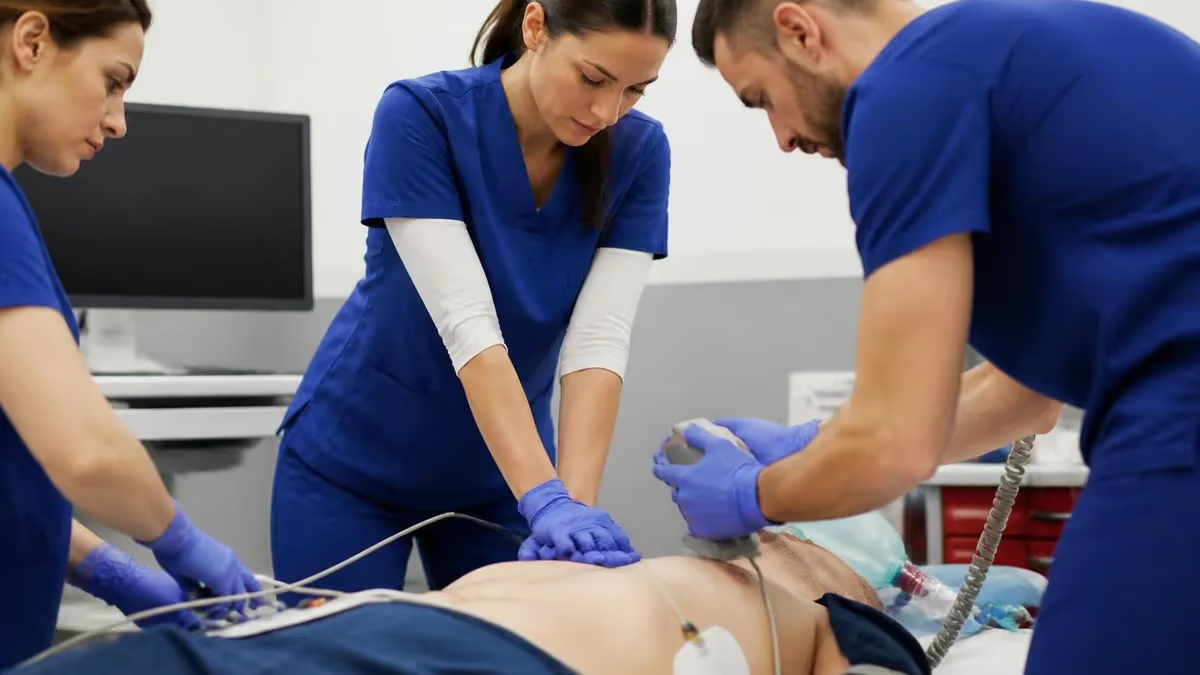
Taking an ACLS practice test is the single most reliable way to predict whether you will pass your Advanced Cardiovascular Life Support certification exam on the first attempt. The American Heart Association reports that candidates who complete at least three full-length practice tests before sitting for the official exam pass at a rate roughly 27 percent higher than those who rely only on textbook review. That gap matters because ACLS recertification is required every two years for most ICU nurses, emergency physicians, paramedics, and respiratory therapists, and a failed attempt costs both time and money.
This guide walks you through everything you need to know about preparing for the ACLS written exam and megacode evaluation. We cover the 10 core algorithms tested most heavily, the high-yield ECG rhythms you must recognize within five seconds, the medication doses examiners love to trick candidates on, and the team dynamics scenarios that catch even experienced providers off guard. Every section is built around active recall, which research has shown to be two to three times more effective than passive rereading.
The current ACLS exam, aligned with the 2025 AHA guideline focused updates, contains 50 multiple-choice questions delivered in a 75-minute window. A passing score requires 84 percent, meaning you can miss no more than eight questions. Roughly 60 percent of items test rhythm identification and algorithm sequencing, 25 percent cover pharmacology, and the remaining 15 percent address airway management, post-arrest care, and special resuscitation circumstances such as pregnancy, drowning, and opioid overdose.
Most candidates underestimate the rhythm strip portion. The exam routinely shows lead II tracings with subtle T-wave changes, paced beats that mimic ventricular tachycardia, and torsades de pointes that can be confused with coarse ventricular fibrillation. Practicing under timed conditions, with no pausing or rewinding, is the only way to build the pattern-recognition speed the exam demands. Our practice tests replicate the timing and difficulty of the actual exam so you encounter no surprises on test day.
Pharmacology questions are the second-most-missed category. You must know not only the dose but the indication, the maximum cumulative dose, the route, and the situations where a drug is explicitly contraindicated. For example, adenosine 6 mg rapid IV push is correct for stable narrow-complex tachycardia, but giving it to a patient with known WPW and atrial fibrillation can precipitate ventricular fibrillation. The exam tests these nuances repeatedly, and a strong practice regimen is the only way to internalize them.
Beyond raw content, the ACLS exam evaluates your ability to lead and follow within a resuscitation team. Closed-loop communication, clear role assignment, and 10-second pulse checks are not just instructional buzzwords; they appear directly on the test. Working through scenario-based questions teaches you to think in algorithm order under pressure, which carries directly into the megacode station where an instructor evaluates your performance in real time. The practice questions in this guide mirror that scenario format.
By the end of this article you will have a clear study plan, access to free ACLS practice questions organized by topic, and a checklist to follow during the final 48 hours before your exam. Whether you are testing for the first time or recertifying after a stressful gap year, the strategies below have helped tens of thousands of providers walk into the testing room confident and walk out certified.
ACLS Practice Test by the Numbers
Key Facts at a Glance
| Item | Value | Details |
|---|---|---|
| Questions on Exam | 50 | Multiple choice format |
| Passing Score Required | 84% | 42 of 50 correct |
| Time Limit | 75 min | About 90 sec per question |
| Certification Length | 2 yrs | Renewal required |

ACLS Written Exam Format
| Section | Questions | Time | Weight | Notes |
|---|---|---|---|---|
| Rhythm Identification & Algorithms | 30 | 45 min | 60% | Includes VF, pulseless VT, asystole, PEA, bradycardia, tachycardia |
| Pharmacology & Dosing | 13 | 20 min | 25% | Epinephrine, amiodarone, adenosine, atropine, lidocaine |
| Post-Arrest & Special Cases | 7 | 10 min | 15% | TTM, airway, stroke, ACS, pregnancy |
| Total | 50 | 75 minutes | 100% |
A high-quality ACLS practice test covers six distinct domains, each tested in proportion to its clinical importance during a real resuscitation. The first and largest domain is rhythm recognition. You must be able to identify ventricular fibrillation, pulseless ventricular tachycardia, asystole, pulseless electrical activity, sinus bradycardia with hemodynamic compromise, second-degree AV block Mobitz I and II, third-degree heart block, atrial fibrillation with rapid ventricular response, atrial flutter, supraventricular tachycardia, and torsades de pointes within seconds of seeing the strip.
The second domain is the cardiac arrest algorithm itself. Questions will ask which action comes next, how long to perform CPR before checking a rhythm, when to administer the first dose of epinephrine, and when amiodarone or lidocaine is preferred. The 2025 update reaffirms that epinephrine 1 mg IV should be given every three to five minutes during cardiac arrest, with the first dose pushed as soon as IV or IO access is established for non-shockable rhythms or after the second defibrillation for shockable rhythms.
Third, the practice test covers the bradycardia and tachycardia algorithms for patients with a pulse. You will see questions about symptomatic bradycardia management starting with atropine 1 mg IV, escalating to transcutaneous pacing, dopamine infusion at 5 to 20 mcg/kg/min, or epinephrine infusion at 2 to 10 mcg/min. Tachycardia questions distinguish stable from unstable patients and then sort by narrow versus wide complex and regular versus irregular rhythms.
The fourth domain involves airway management. Expect questions on bag-mask ventilation technique, the indications for advanced airway placement, capnography waveform interpretation, and the recommended ventilation rate of one breath every six seconds once an advanced airway is in place. A sudden drop in end-tidal CO2 below 10 mm Hg during CPR signals inadequate chest compressions or return of spontaneous circulation depending on context.
The fifth domain is post-cardiac arrest care, including targeted temperature management between 32 and 36 degrees Celsius for 24 hours, hemodynamic optimization with mean arterial pressure goals above 65 mm Hg, glucose control, seizure recognition with EEG monitoring, and early coronary angiography for suspected cardiac causes. Many candidates skip this section in studying and pay for it on test day. If you want broader background on the curriculum, our ACLS course guide walks through every module.
The sixth domain addresses special resuscitation situations: acute coronary syndromes with STEMI activation, acute ischemic stroke with the eight Ds and tPA window, opioid overdose with naloxone, pregnancy with manual left uterine displacement, and pulmonary embolism with consideration of fibrinolytics during CPR. These topics appear on every exam and are commonly tested through brief patient vignettes that require you to identify the underlying pathology and select the next best step.
Strong practice tests interleave these domains rather than grouping them, because real clinical scenarios do not announce which algorithm applies. By forcing your brain to switch contexts between questions, you build the diagnostic flexibility the exam demands. Our question bank follows this interleaved structure deliberately, and many candidates report that their scores jump by 10 to 15 percentage points within two weeks of using it.
ACLS Practice Test Questions
Prepare for the ACLS Advanced Cardiovascular Life Support Practice exam with our free practice test modules. Each quiz covers key topics to help you pass on your first try.
ACLS Cardiac Rhythms & ECG Interpretation
ACLS Exam Questions covering ACLS Cardiac Rhythms & ECG Interpretation. Master ACLS Test concepts for certification prep.
ACLS Pharmacology & Medications
Free ACLS Practice Test featuring ACLS Pharmacology & Medications. Improve your ACLS Exam score with mock test prep.
ACLS Best Practices & Methodologies
ACLS Mock Exam on Best Practices & Methodologies. ACLS Study Guide questions to pass on your first try.
ACLS Communication & Stakeholder Relations
ACLS Test Prep for Communication & Stakeholder Relations. Practice ACLS Quiz questions and boost your score.
ACLS Core Concepts & Fundamentals
ACLS Questions and Answers on Core Concepts & Fundamentals. Free ACLS practice for exam readiness.
ACLS Data Analysis & Reporting
ACLS Mock Test covering Data Analysis & Reporting. Online ACLS Test practice with instant feedback.
ACLS Documentation & Record Keeping
Free ACLS Quiz on Documentation & Record Keeping. ACLS Exam prep questions with detailed explanations.
ACLS Industry Regulations & Compliance
ACLS Practice Questions for Industry Regulations & Compliance. Build confidence for your ACLS certification exam.
ACLS Leadership & Team Management
ACLS Test Online for Leadership & Team Management. Free practice with instant results and feedback.
ACLS Professional Standards & Ethics
ACLS Study Material on Professional Standards & Ethics. Prepare effectively with real exam-style questions.
ACLS Quality Assurance & Improvement
Free ACLS Test covering Quality Assurance & Improvement. Practice and track your ACLS exam readiness.
ACLS Risk Management & Assessment
ACLS Exam Questions covering Risk Management & Assessment. Master ACLS Test concepts for certification prep.
ACLS Practice Test Topic Breakdown
Rhythm identification accounts for the largest single block of questions on the ACLS exam, typically 18 to 22 items out of 50. Expect to see ventricular fibrillation in both coarse and fine variants, monomorphic and polymorphic ventricular tachycardia, asystole confirmed in two leads, and pulseless electrical activity, which can present as anything from sinus rhythm to a wide idioventricular escape rhythm. Speed matters more than perfection here.
You should also master the bradyarrhythmias: sinus bradycardia, junctional rhythm, first-degree AV block with PR greater than 200 ms, Mobitz I Wenckebach with progressive PR lengthening, Mobitz II with sudden dropped beats, and third-degree complete heart block with AV dissociation. On the tachycardia side, learn to distinguish sinus tachycardia, atrial fibrillation with RVR, atrial flutter with classic sawtooth pattern, SVT, and the wide-complex differential of VT versus SVT with aberrancy.
Online vs Traditional ACLS Practice Test Prep
- +Available 24/7 so you can study around clinical shifts
- +Instant grading with rationale for each answer choice
- +Adaptive question banks that target your weak areas
- +Mobile access lets you review during downtime
- +Up-to-date with the 2025 AHA guideline focused updates
- +Free or low-cost compared to in-person review courses
- +Unlimited attempts to build pattern recognition
- −No live instructor to clarify confusing concepts
- −Cannot replicate megacode hands-on skill evaluation
- −Quality varies widely between providers and apps
- −Some banks recycle outdated 2015 guideline questions
- −Self-discipline required to complete full-length sets
- −No team dynamics practice without a study partner
ACLS Practice Test Pre-Exam Checklist
- ✓Complete at least three full-length 50-question practice tests under timed conditions
- ✓Score 90 percent or higher on two consecutive practice tests before sitting for the real exam
- ✓Memorize all eight ACLS algorithms in correct sequence without referring to the handbook
- ✓Identify ten core rhythms in under five seconds per strip with 95 percent accuracy
- ✓Know exact doses, routes, and indications for the fifteen core ACLS medications
- ✓Practice the six Hs and six Ts of reversible cardiac arrest causes daily for one week
- ✓Review the post-arrest TTM protocol and target MAP goals above 65 mm Hg
- ✓Run through stroke and ACS algorithms including alteplase dosing and STEMI activation times
- ✓Schedule the exam during a time of day when you are mentally sharpest, typically morning
- ✓Get a full eight hours of sleep the night before and avoid caffeine overload on test morning

The 80/20 Rule of ACLS Practice Tests
Roughly 80 percent of exam questions come from just 20 percent of the curriculum: the cardiac arrest algorithm, the six core arrest rhythms, and the five most-used medications. If you master these high-yield areas first and then layer on stroke, ACS, and special situations, you will reach a passing score faster than any other study strategy.
The ACLS cardiac arrest algorithm is the backbone of the exam, and understanding its decision branches at a deeper level than rote memorization separates first-time passers from repeat testers. When a patient is found pulseless, the immediate sequence is to call for help, start high-quality chest compressions at 100 to 120 per minute with a depth of at least two inches, attach the monitor or defibrillator, and identify the rhythm. The next action depends entirely on what you see on the monitor.
If the rhythm is ventricular fibrillation or pulseless ventricular tachycardia, defibrillate immediately at the manufacturer-recommended energy, which is typically 120 to 200 joules biphasic. Resume CPR for two minutes, then reassess. If still in a shockable rhythm, shock again, resume CPR, and give epinephrine 1 mg IV or IO. For the third shock cycle, consider amiodarone 300 mg IV bolus. Throughout the entire code, minimize interruptions in compressions to less than ten seconds and rotate compressors every two minutes to maintain quality.
For asystole or PEA, defibrillation is not indicated. Begin CPR, establish IV or IO access, and give epinephrine 1 mg as soon as possible, repeating every three to five minutes. The clinical priority shifts heavily toward identifying and treating reversible causes. The six Hs are hypovolemia, hypoxia, hydrogen ion acidosis, hypo- or hyperkalemia, hypothermia, and hypoglycemia. The six Ts are toxins, tamponade cardiac, tension pneumothorax, thrombosis pulmonary, thrombosis coronary, and trauma.
Pharmacology questions frequently test the difference between adenosine and other antiarrhythmics. Adenosine 6 mg rapid IV push followed by a 20 mL saline flush is first-line for stable narrow-complex regular tachycardia. If unsuccessful, a 12 mg second dose may be given. Adenosine is contraindicated in irregular wide-complex tachycardias because it can accelerate conduction through accessory pathways in patients with WPW and atrial fibrillation, precipitating ventricular fibrillation.
Atropine 1 mg IV every three to five minutes up to a maximum of 3 mg is first-line for symptomatic bradycardia. If atropine fails or is unlikely to work due to high-degree block such as Mobitz II or complete heart block, move directly to transcutaneous pacing or chronotropic infusions. Dopamine at 5 to 20 mcg/kg/min and epinephrine at 2 to 10 mcg/min are both acceptable; choose based on availability and patient hemodynamics.
For tachycardia with a pulse, the first question is always whether the patient is stable or unstable. Unstable signs include hypotension, altered mental status, ischemic chest discomfort, or acute heart failure. Unstable tachycardia of any kind warrants synchronized cardioversion. Energy levels are 50 to 100 J for narrow regular, 120 to 200 J for narrow irregular such as atrial fibrillation, 100 J for wide regular, and unsynchronized defibrillation doses for wide irregular such as polymorphic VT.
The Acute Coronary Syndrome algorithm tests time-sensitive decision-making. From first medical contact to balloon inflation in a STEMI, the goal is 90 minutes or less. Initial actions include oxygen if SpO2 below 90 percent, aspirin 162 to 325 mg chewed, nitroglycerin if not contraindicated, and morphine for refractory pain. A 12-lead ECG should be obtained and transmitted within ten minutes. Knowing these time targets cold is essential because the exam loves asking which intervention should occur next and within what window.
Do not memorize doses in isolation. The exam consistently pairs correct doses with incorrect indications to trap candidates. For example, amiodarone 150 mg IV is correct for stable wide-complex tachycardia, but the same dose is the wrong answer during cardiac arrest where 300 mg is the first dose. Always learn dose, indication, and contraindication together as a three-part fact.
Test day strategy can add five to ten points to your final score even if your content knowledge is unchanged. Arrive at the testing center 30 minutes early to handle check-in without stress, and bring two forms of identification along with any documentation your training center required. Most provider courses today administer the written exam online through the AHA Learning Management System after course completion, but some hospitals still use paper forms, so confirm the format in advance.
Read every question stem twice before looking at the answer choices. ACLS questions often contain a single qualifying word such as stable, unstable, witnessed, unwitnessed, refractory, or first-line that completely changes the correct answer. Underline these qualifiers mentally before considering options. If you finish early, return to flagged questions, but resist the urge to change answers without a clear reason; first instincts are correct roughly 75 percent of the time on standardized medical exams.
The megacode evaluation is the practical companion to the written exam and is where many candidates feel the most pressure. You will be assigned the role of team leader and must direct a simulated resuscitation while an instructor evaluates your performance against a standardized checklist. The checklist includes recognizing the rhythm correctly, ordering appropriate medications with correct dose and route, ensuring high-quality CPR, defibrillating without delay, and maintaining clear closed-loop communication with team members.
Closed-loop communication is non-negotiable. When you order epinephrine, the team member should repeat back, "Epinephrine 1 milligram IV, given," and you should acknowledge with "Thank you, please give another dose in three to five minutes." Failing to use this structure is one of the most common reasons providers are asked to remediate the megacode station. Practice this aloud with study partners before your course; it feels awkward at first but becomes natural quickly.
Team dynamics also include knowing the limits of your knowledge and asking for help. If you are unsure of a dose during the megacode, you may consult the ACLS provider manual or pocket card; the AHA explicitly permits this and considers it good practice. The evaluation is not testing perfect memory but rather your ability to lead a coordinated, evidence-based resuscitation. For more on the official curriculum behind the megacode, see our AHA ACLS overview.
If you do not pass on the first attempt, do not panic. Most training centers allow a second attempt within 30 days at no additional cost, and remediation focuses specifically on the areas where you struggled. Common remediation topics are rhythm identification, dosing for non-arrest medications such as atropine and adenosine, and algorithm sequencing for the post-arrest care pathway. Treat a failed attempt as targeted feedback rather than a verdict on your clinical competence.
Finally, plan to use your certification immediately and frequently. ACLS skills decay rapidly without reinforcement; studies show measurable degradation in psychomotor skills within three to six months of certification. Participate in mock codes at your hospital, review rhythm strips during downtime, and consider becoming an ACLS instructor yourself within a year or two. Teaching forces a level of mastery that no amount of independent study can replicate, and it keeps your skills sharp between renewal cycles.
The final 48 hours before your ACLS exam should be devoted to active review, not new material acquisition. Cramming new content this late tends to displace previously consolidated knowledge from working memory, a phenomenon researchers call retroactive interference. Instead, take one full-length practice test 48 hours out, review only the questions you missed, and then take a second timed practice test 24 hours before the exam to verify your readiness. Aim for 92 percent or higher on these final two assessments.
Sleep is your most undervalued study tool. Memory consolidation occurs primarily during slow-wave and REM sleep, so a single all-nighter before the exam can reduce recall accuracy by up to 40 percent. Plan to be in bed at your normal time the night before and to wake naturally if possible. Light exercise the day before, such as a 30-minute walk, has been shown to improve next-day cognitive performance through enhanced cerebral blood flow and reduced anxiety.
Nutrition the morning of the exam matters more than candidates realize. Eat a moderate breakfast containing complex carbohydrates, protein, and a small amount of healthy fat. Examples include oatmeal with nuts and berries, eggs with whole-grain toast, or Greek yogurt with granola. Avoid sugary cereals or pastries that cause blood glucose spikes followed by crashes mid-exam. Limit caffeine to your normal daily amount; doubling your intake to feel sharper typically backfires by causing jitters and rapid heartbeat that mimic test anxiety.
Bring two pens, two forms of identification, your AHA Learning Station confirmation if applicable, and a printed copy of your course completion if your testing center requires it. Wear layered clothing because testing rooms vary dramatically in temperature, and an uncomfortable testing environment can subtract several points from your score by degrading concentration. Use the restroom immediately before the exam begins; even brief discomfort can derail focus during a 75-minute test.
During the exam itself, allocate your time strategically. With 50 questions and 75 minutes, you have approximately 90 seconds per question, but rhythm strips and algorithm questions take longer than pharmacology recall items. Aim to spend 60 seconds on quick recall questions and 120 seconds on multi-step scenarios. If a question stumps you for more than two minutes, mark it, choose your best guess, and move on. Return to flagged questions in the final ten minutes with fresh eyes.
After completing the exam, your score is usually displayed immediately on the screen. A passing score of 84 percent or higher unlocks your provider eCard within 24 hours through the AHA system. Print or save your eCard immediately and forward a copy to your hospital education office or clinical manager. Many employers require proof of current ACLS certification within a specific timeframe of completion, and a delay can affect scheduling, payroll, or unit privileges.
Recertification falls due every two years from the date on your card, not the date you renewed. Mark your calendar for 90 days before expiration so you have time to schedule a renewal course without your certification lapsing. Many providers prefer the hybrid HeartCode ACLS format for renewal, which combines self-paced online cognitive learning with a brief in-person skills session, reducing total time commitment to about four hours instead of the full 12 to 16 hours of an initial provider course.
📝 How many questions are on the ACLS practice test and how long do you get?
The official written exam has 50 multiple-choice questions with a 75-minute time limit, about 90 seconds per question. Good ACLS practice questions replicate that same timing so you build real pacing before test day.
✅ What score do you need to pass the ACLS exam?
You need 84 percent, meaning no more than 8 wrong answers out of 50. Score at least 90 percent on your ACLS pretest attempts, since real exam nerves typically cost 3 to 5 points compared to at-home practice.
⚡ What is the first defibrillation energy for VF or pulseless VT?
Defibrillate immediately at the manufacturer-recommended energy, typically 120-200 joules biphasic, then resume CPR for two minutes before reassessing the rhythm. This sequence shows up constantly in ACLS exam questions.
💉 What is the epinephrine dose during cardiac arrest and how often is it given?
Give epinephrine 1 mg IV or IO every 3 to 5 minutes during arrest. For shockable rhythms it follows the second shock; for non-shockable rhythms it is given as soon as access is established.
🫀 When is adenosine used, and when is it dangerous?
Adenosine 6 mg rapid IV push (then 12 mg if needed) treats stable, regular narrow-complex tachycardia. It is contraindicated in irregular wide-complex tachycardia because it can trigger VF in patients with WPW and atrial fibrillation.
🩺 What is the atropine dose for symptomatic bradycardia?
Atropine 1 mg IV every 3 to 5 minutes, up to a 3 mg maximum. If it fails, move to transcutaneous pacing or a dopamine (5-20 mcg/kg/min) or epinephrine (2-10 mcg/min) infusion.
💊 What are the amiodarone doses in ACLS?
During cardiac arrest, amiodarone is 300 mg IV first dose, then 150 mg if needed after the third shock. For stable wide-complex tachycardia outside of arrest, the dose is 150 mg IV — a common trick pairing on ACLS practice tests.
🌡️ What is the target temperature and MAP after ROSC?
Targeted temperature management keeps patients between 32 and 36 degrees Celsius for 24 hours after return of spontaneous circulation, with a mean arterial pressure goal above 65 mm Hg to protect brain and organ perfusion.
🗣️ What does closed-loop communication sound like in the megacode?
The team leader gives a clear order ("Epinephrine 1 milligram IV"), the team member repeats it back and confirms once given, and the leader acknowledges. Skipping this structure is a top reason candidates remediate the megacode station.
🔁 How often must you recertify, and what changed for 2026?
ACLS certification is valid for 2 years from the card date. The current exam aligns with the 2025 AHA guideline focused updates, so free ACLS practice tests built on older 2015 or 2020 material can teach outdated dosing.
Official Resources
- AHA HeartCode / eLearning — the American Heart Association's official online learning system where candidates complete the self-paced cognitive portion of ACLS and access course enrollment for the written exam.
- AHA Instructor Network (Atlas) — the official AHA platform for locating approved ACLS training centers, tracking course completion, and verifying provider eCards after you pass.
- AHA ECC Product Catalog — the official source for the current ACLS Provider Manual and other AHA-published study materials aligned with the latest guideline updates.
ACLS Questions and Answers
ACLS Course: Length, Cost, Format & Pass Tips (2026)
AHA ACLS: American Heart Association Advanced Cardiovascular Life Support Guide
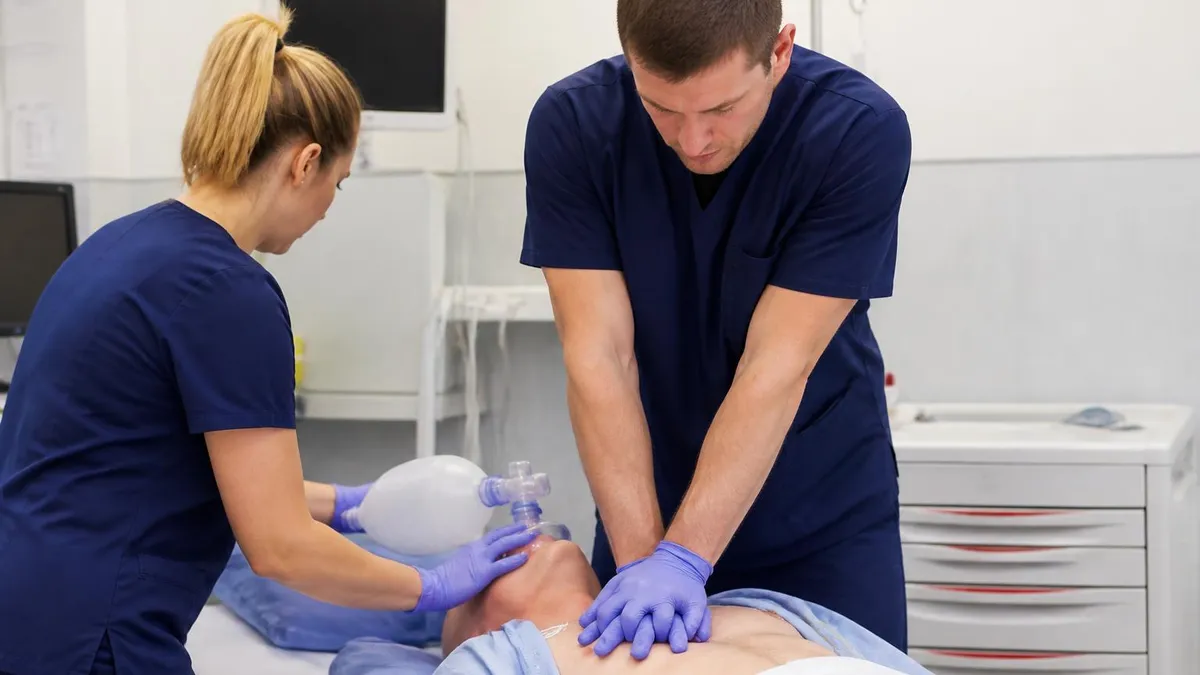
ACLS Study Guide: Complete 2026 Certification Prep with Algorithms, Drugs & Practice Tests

ACLS Provider Manual: What's Inside the AHA 2020 Handbook and Where to Get It
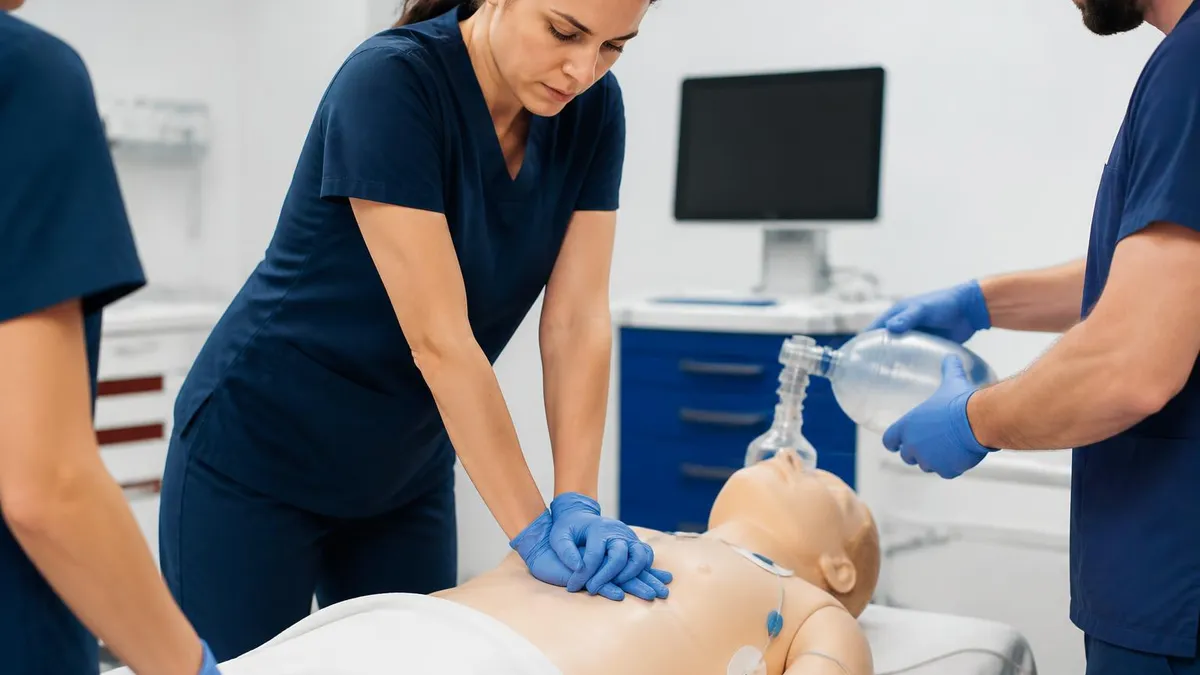
ACLS Certification Online: Complete 2026 Guide to Courses, Costs, AHA Approval & Fast-Track Renewal
About the Author

Registered Nurse & Healthcare Educator
Johns Hopkins University School of NursingDr. Sarah Mitchell is a board-certified registered nurse with over 15 years of clinical and academic experience. She completed her PhD in Nursing Science at Johns Hopkins University and has taught NCLEX preparation and clinical skills courses for nursing students across the United States. Her research focuses on evidence-based exam preparation strategies for healthcare certification candidates.