
VTach ACLS: Complete 2026 October Guide to the Ventricular Tachycardia Algorithm, Drugs & Decision Points
Master vtach ACLS with the 2026 October ventricular tachycardia algorithm: stable vs unstable, drugs, cardioversion energy, pulseless VT and exam prep. 🗨️

Mastering vtach ACLS is one of the most decisive skills you will demonstrate during certification and at the bedside, because ventricular tachycardia can deteriorate to ventricular fibrillation in seconds and demands an instant, structured response. The 2026 American Heart Association algorithm splits VT management into three distinct pathways — stable wide-complex tachycardia, unstable tachycardia with a pulse, and pulseless VT — and your first job as team leader is identifying which pathway the patient is on before reaching for a drug, paddle, or defibrillator pad.
The word "vtach" describes any rhythm of three or more consecutive ventricular ectopic beats at a rate above 100 beats per minute, but ACLS is concerned almost exclusively with sustained VT lasting longer than 30 seconds or causing hemodynamic compromise. Monomorphic VT typically arises from a re-entry circuit around scar tissue, while polymorphic VT and torsades de pointes signal acute ischemia, electrolyte derangement, or a prolonged QT interval that requires entirely different management.
Recognizing VT on a 12-lead or monitor strip is the gateway skill the algorithm assumes you already possess. Look for a wide QRS greater than 120 milliseconds, a rate usually between 150 and 250 beats per minute, AV dissociation, fusion or capture beats, and concordance across the precordial leads. When you cannot reliably distinguish VT from SVT with aberrancy, the 2026 guidelines remain unchanged: treat the wide-complex tachycardia as VT until proven otherwise, because the cost of mismanaging VT as SVT is catastrophic.
The single most important branch point in the VT algorithm is the assessment of perfusion. Unstable signs include hypotension with systolic blood pressure below 90 mmHg, acutely altered mental status, signs of shock, ischemic chest discomfort, and acute heart failure. If any of these are present in a patient with a pulse, you move immediately to synchronized cardioversion rather than antiarrhythmic drug therapy. If the patient is pulseless, you defibrillate and begin high-quality CPR following the cardiac arrest algorithm.
This guide walks through every limb of the vtach pathway in the exact order an ACLS instructor will test you on it: rhythm recognition, the stable VT drug ladder, energy levels for synchronized cardioversion, the pulseless VT/VF arrest sequence, post-arrest care, and the special cases of polymorphic VT and torsades that trip up the majority of candidates on the megacode. We have built the structure around the same decision points that appear on the 2026 AHA written exam and on the practical skills station.
You will also find linked practice quizzes after each major concept so you can reinforce recognition and dosing in the same session. If you want a broader review of all algorithms before drilling into VT, start with the comprehensive ACLS study guide, then return here to lock in the ventricular tachycardia specifics that separate confident providers from hesitant ones.
By the end of this article you should be able to verbalize the entire VT algorithm without looking at a card, justify every drug choice and energy setting, and explain why polymorphic VT with a normal QT is treated differently from torsades. That is the standard the AHA holds candidates to, and it is also the standard your patients deserve when seconds count.
VTach ACLS by the Numbers
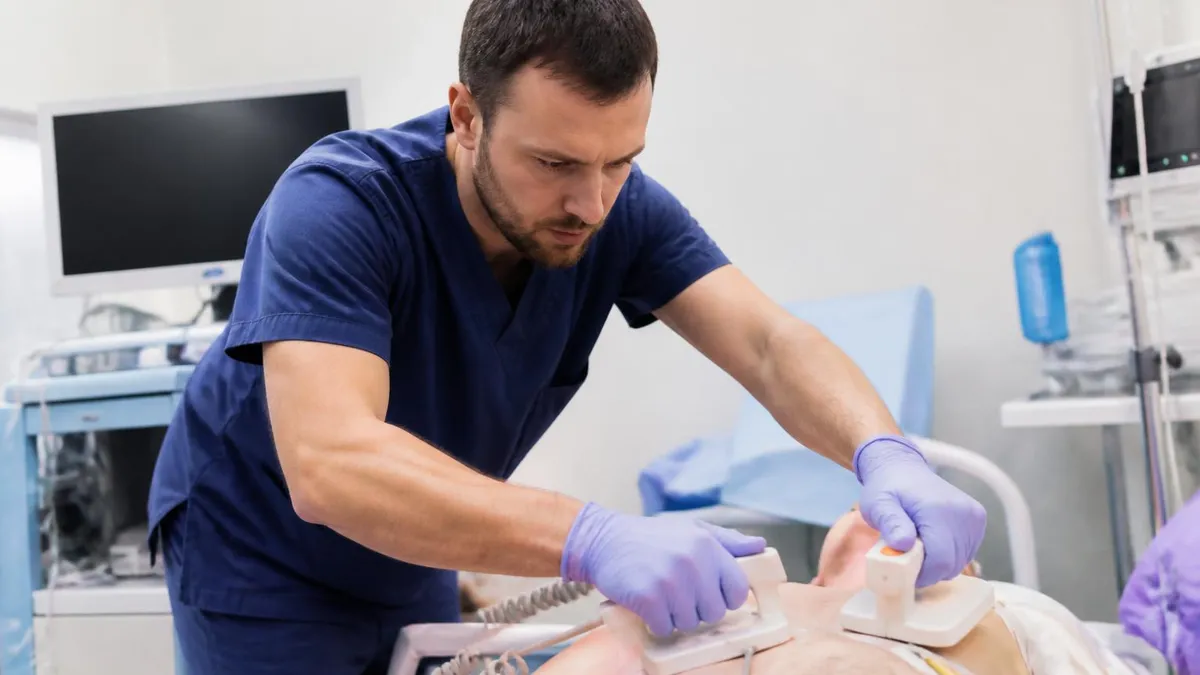
VT Algorithm Pathways at a Glance
Patient has a pulse, normal mental status, and adequate blood pressure. Obtain 12-lead ECG, establish IV access, and consider antiarrhythmic therapy with amiodarone, procainamide, or sotalol while preparing for elective cardioversion.
Hypotension, altered mental status, chest pain, or acute heart failure present. Move directly to synchronized cardioversion at 100 J biphasic. Sedate the conscious patient if time allows and do not delay shock for IV access.
No palpable pulse with VT on the monitor. Treat as cardiac arrest: immediate unsynchronized defibrillation at maximum biphasic energy, high-quality CPR, epinephrine every 3-5 minutes, and amiodarone or lidocaine after the second shock.
QRS morphology varies beat to beat. Check QT interval: if prolonged, give magnesium sulfate 1-2 g IV and correct electrolytes. If normal QT and ischemia suspected, treat the underlying ischemia and consider beta-blockers or amiodarone.
Accurate rhythm recognition is the foundation of vtach ACLS, and the algorithm assumes you can identify ventricular tachycardia within ten seconds of seeing the monitor. The classic appearance is a regular, wide-complex tachycardia at a rate between 150 and 250 beats per minute with QRS duration greater than 120 milliseconds and absent or dissociated P waves. Monomorphic VT shows identical QRS morphology in every beat, while polymorphic VT displays continuously changing QRS shape, axis, and amplitude.
The cardinal mistake on the ACLS exam is misclassifying VT as supraventricular tachycardia with aberrant conduction. Several ECG clues favor VT: AV dissociation with independent P waves, fusion beats where a sinus impulse partially captures the ventricle, capture beats showing a normal narrow QRS in the middle of the run, extreme axis deviation between -90 and -180 degrees, and concordance where all precordial QRS complexes point in the same direction. Any one of these features makes VT overwhelmingly likely.
Clinical context matters as much as the strip itself. A patient older than 50 with a history of myocardial infarction, cardiomyopathy, or known structural heart disease who presents with a wide-complex tachycardia has VT roughly 95 percent of the time. In contrast, a young patient with no cardiac history and a prior ECG showing pre-excitation is more likely to have an SVT with aberrancy or antidromic AVRT. When in doubt, follow the AHA guidance: assume VT and treat accordingly.
Rate alone does not distinguish VT from other rhythms, but it does help frame urgency. VT below 150 beats per minute may produce minimal symptoms in a patient with good baseline function, while rates above 200 almost always cause hemodynamic compromise and demand immediate intervention. Idioventricular rhythms at 40-100 beats per minute and accelerated idioventricular rhythm at 60-110 are not VT and generally do not require antiarrhythmic treatment, especially during reperfusion after thrombolysis or PCI.
Sustained versus non-sustained VT is another critical distinction. Non-sustained VT lasts fewer than 30 seconds and terminates spontaneously, while sustained VT persists beyond 30 seconds or causes hemodynamic collapse sooner. Both warrant evaluation, but only sustained or symptomatic VT mandates the algorithmic interventions described in this guide. Frequent runs of non-sustained VT in a sick patient still demand attention to electrolytes, ischemia, and drug effects.
For comprehensive rhythm interpretation practice across all ACLS rhythms — VT, VF, asystole, PEA, bradycardias, and tachycardias — work through the ACLS guidelines refresher alongside this article. Pattern recognition develops only through repetition, and the AHA megacode expects you to call the rhythm out loud within seconds of seeing it on the simulator screen.
One final recognition pearl: never trust a monitor lead in isolation. Always confirm VT in at least two leads, rule out artifact from patient movement or loose electrodes, and palpate a central pulse before treating. A patient who is awake, talking, and well-perfused while the monitor shows VT may have artifact, a loose lead, or a paced rhythm — and a defibrillator discharge on the wrong diagnosis can itself trigger lethal arrhythmia.
ACLS Practice Test Questions
Prepare for the ACLS Advanced Cardiovascular Life Support Practice exam with our free practice test modules. Each quiz covers key topics to help you pass on your first try.
ACLS Cardiac Rhythms & ECG Interpretation
ACLS Exam Questions covering ACLS Cardiac Rhythms & ECG Interpretation. Master ACLS Test concepts for certification prep.
ACLS Pharmacology & Medications
Free ACLS Practice Test featuring ACLS Pharmacology & Medications. Improve your ACLS Exam score with mock test prep.
ACLS Best Practices & Methodologies
ACLS Mock Exam on Best Practices & Methodologies. ACLS Study Guide questions to pass on your first try.
ACLS Communication & Stakeholder Relations
ACLS Test Prep for Communication & Stakeholder Relations. Practice ACLS Quiz questions and boost your score.
ACLS Core Concepts & Fundamentals
ACLS Questions and Answers on Core Concepts & Fundamentals. Free ACLS practice for exam readiness.
ACLS Data Analysis & Reporting
ACLS Mock Test covering Data Analysis & Reporting. Online ACLS Test practice with instant feedback.
ACLS Documentation & Record Keeping
Free ACLS Quiz on Documentation & Record Keeping. ACLS Exam prep questions with detailed explanations.
ACLS Industry Regulations & Compliance
ACLS Practice Questions for Industry Regulations & Compliance. Build confidence for your ACLS certification exam.
ACLS Leadership & Team Management
ACLS Test Online for Leadership & Team Management. Free practice with instant results and feedback.
ACLS Professional Standards & Ethics
ACLS Study Material on Professional Standards & Ethics. Prepare effectively with real exam-style questions.
ACLS Quality Assurance & Improvement
Free ACLS Test covering Quality Assurance & Improvement. Practice and track your ACLS exam readiness.
ACLS Risk Management & Assessment
ACLS Exam Questions covering Risk Management & Assessment. Master ACLS Test concepts for certification prep.
Stable, Unstable & Pulseless VT Treatment
For stable monomorphic VT with a pulse, obtain a 12-lead ECG, secure IV access, and apply pads in case rapid deterioration occurs. The 2026 AHA algorithm recommends amiodarone 150 mg IV over 10 minutes as first-line antiarrhythmic, repeated as needed to a maximum of 2.2 grams over 24 hours, followed by a maintenance infusion of 1 mg/min for 6 hours then 0.5 mg/min.
Alternative agents include procainamide 20-50 mg/min IV until arrhythmia suppressed, hypotension develops, QRS widens by more than 50 percent, or the maximum dose of 17 mg/kg is reached. Sotalol 100 mg IV over 5 minutes is another option but should be avoided in prolonged QT. If pharmacologic therapy fails or the patient becomes unstable, proceed to synchronized cardioversion under conscious sedation.
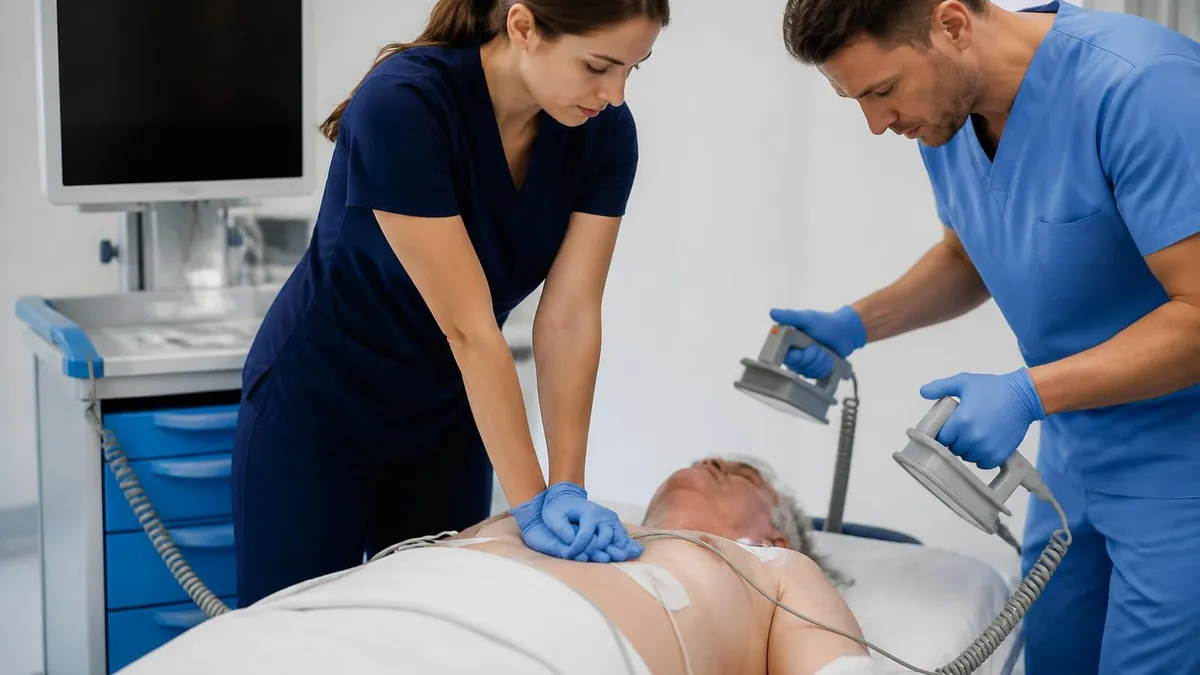
Amiodarone vs Procainamide for Stable VT
- +Amiodarone is familiar to most ACLS providers and stocked on every code cart
- +Effective for both ventricular and supraventricular arrhythmias
- +Lower risk of QT prolongation than procainamide or sotalol
- +Safe in patients with reduced ejection fraction and structural heart disease
- +Long half-life provides sustained suppression after loading dose
- +Compatible with subsequent electrical cardioversion if drug therapy fails
- +AHA Class IIb recommendation with extensive ACLS pathway integration
- −Procainamide has higher acute conversion rates in some randomized trials
- −Amiodarone can cause significant hypotension during rapid infusion
- −Long-term amiodarone use carries pulmonary, thyroid, and hepatic toxicity
- −Procainamide requires continuous BP and QRS monitoring during administration
- −Procainamide is contraindicated in long QT and severe heart failure
- −Both drugs delay definitive electrical cardioversion if they fail
- −Amiodarone interacts with many cardiac and non-cardiac medications
Pros and Cons at a Glance
| Pros | Cons |
|---|---|
| Amiodarone is familiar to most ACLS providers and stocked on every code cart | Procainamide has higher acute conversion rates in some randomized trials |
| Effective for both ventricular and supraventricular arrhythmias | Amiodarone can cause significant hypotension during rapid infusion |
| Lower risk of QT prolongation than procainamide or sotalol | Long-term amiodarone use carries pulmonary, thyroid, and hepatic toxicity |
| Safe in patients with reduced ejection fraction and structural heart disease | Procainamide requires continuous BP and QRS monitoring during administration |
| Long half-life provides sustained suppression after loading dose | Procainamide is contraindicated in long QT and severe heart failure |
| Compatible with subsequent electrical cardioversion if drug therapy fails | Both drugs delay definitive electrical cardioversion if they fail |
VTach ACLS Management Checklist
- ✓Confirm ventricular tachycardia in at least two ECG leads and rule out artifact
- ✓Palpate a central pulse and assess perfusion within 10 seconds
- ✓Identify monomorphic versus polymorphic QRS morphology
- ✓Apply defibrillator pads in anterior-lateral or anterior-posterior position
- ✓Establish at least one large-bore IV or IO line for drug administration
- ✓Obtain 12-lead ECG when patient stability permits
- ✓Verify synchronization is ON before delivering cardioversion for VT with pulse
- ✓Verify synchronization is OFF for defibrillation of pulseless VT or VF
- ✓Sedate the awake patient prior to elective synchronized cardioversion
- ✓Review and treat the Hs and Ts for any persistent or refractory VT
- ✓Document time, energy, and rhythm response after every shock
- ✓Transition to post-cardiac arrest care including targeted temperature management
Pulse Check Drives Everything
The single most important branch in vtach ACLS is the pulse check. Pulseless VT means immediate unsynchronized defibrillation at maximum energy; VT with a pulse and unstable signs means synchronized cardioversion starting at 100 J biphasic; stable VT with a pulse allows time for antiarrhythmic therapy. Get this wrong and you will fail the megacode.
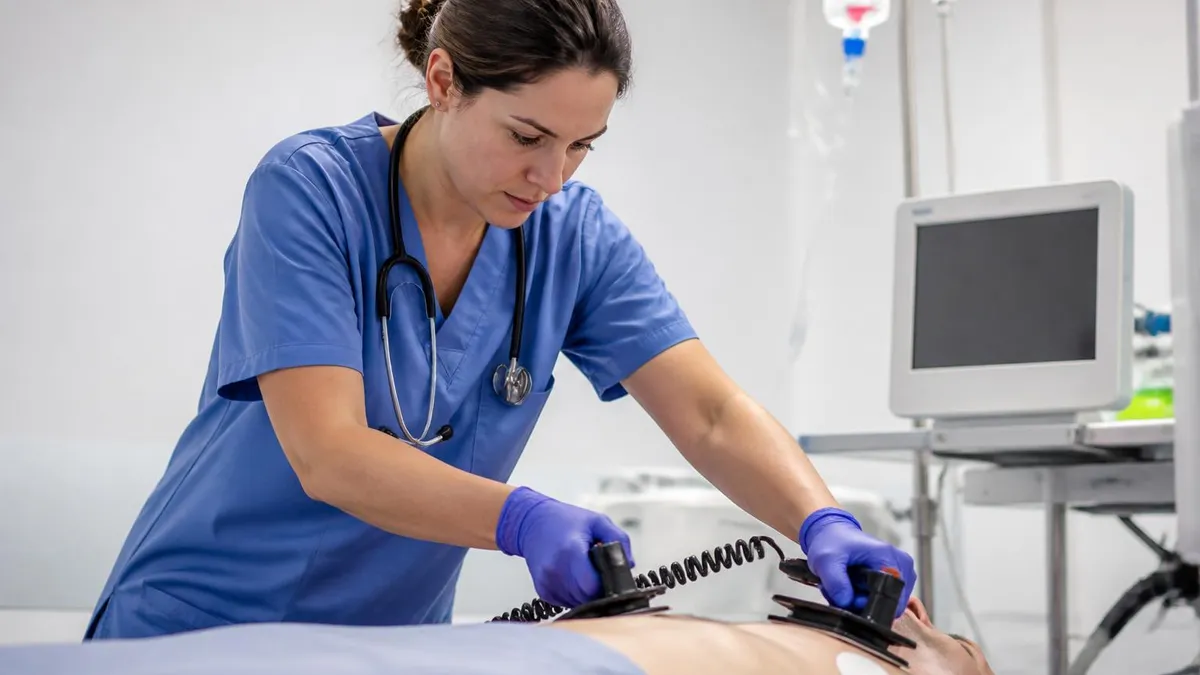
Electrical therapy is the cornerstone of vtach ACLS, and understanding the distinction between defibrillation and synchronized cardioversion is non-negotiable for certification. Defibrillation is an unsynchronized, high-energy shock delivered at random within the cardiac cycle, used exclusively for pulseless VT and ventricular fibrillation. Synchronized cardioversion times the shock to the R wave, avoiding the vulnerable T-wave period and preventing R-on-T phenomenon, and it is reserved for tachyarrhythmias with a pulse.
For monomorphic VT with a pulse, the 2026 AHA algorithm recommends an initial synchronized cardioversion energy of 100 J biphasic. If the first shock fails, escalate to 150 J, then 200 J, and finally maximum biphasic energy on subsequent attempts. Older monophasic defibrillators require higher energies — typically 200 J initial, escalating to 300 J and 360 J — but these devices are increasingly rare in modern emergency departments and EMS systems.
Polymorphic VT with a pulse should generally be treated as unstable and managed with unsynchronized defibrillation because the irregular, rapidly varying QRS makes reliable synchronization impossible. Use the same energy as for ventricular fibrillation: maximum biphasic on most devices, or 360 J on monophasic units. The exception is brief, well-tolerated runs of polymorphic VT, which may permit time for IV magnesium and electrolyte correction first.
Sedation for synchronized cardioversion is the standard of care in any patient who is awake and hemodynamically stable enough to tolerate a brief delay. Common choices include midazolam 1-2 mg IV, etomidate 0.1-0.2 mg/kg IV, or ketamine 1-2 mg/kg IV. The drug matters less than the principle: do not shock an awake patient without sedation if the clinical situation allows even 60 seconds of preparation. In peri-arrest scenarios, however, the shock takes priority.
Defibrillator pad placement affects shock effectiveness more than most providers realize. The anterior-lateral position places one pad to the right of the sternum below the clavicle and the other at the cardiac apex in the left mid-axillary line. The anterior-posterior position places one pad over the precordium and the other between the scapulae on the back. AP placement is preferred for patients with implanted devices, large breast tissue, or refractory arrhythmias where vector change may improve success.
Refractory VT and VF that fail three or more shocks raise the question of double sequential external defibrillation, a technique in which two defibrillators discharge nearly simultaneously through different pad vectors. Recent randomized data from the DOSE-VF trial showed improved termination rates with this approach, and the 2026 AHA guidelines now acknowledge it as a reasonable option in refractory shockable arrest, though it is not yet a Class I recommendation.
Finally, every shock should be followed by immediate resumption of CPR for two minutes before the next pulse and rhythm check, with the exception of synchronized cardioversion in a patient who never lost a pulse. The temptation to pause and reassess after each shock costs perfusion pressure and lowers survival. Train your team to anticipate the rhythm check at the end of each two-minute cycle and to minimize hands-off time to less than 10 seconds.

If your defibrillator fails to synchronize because the R waves are too irregular or low-amplitude — common in fast polymorphic VT — switch to unsynchronized defibrillation immediately. Waiting for a sync signal that will never arrive delays definitive therapy and worsens outcomes. Confirm the sync marker is on every QRS before discharging in any other situation.
Polymorphic ventricular tachycardia and torsades de pointes are the special cases that separate well-prepared candidates from the rest of the pack on the ACLS exam. Polymorphic VT shows continuously varying QRS morphology, axis, and amplitude, while torsades de pointes is a specific form of polymorphic VT with a characteristic twisting appearance around the isoelectric line and is always associated with QT prolongation. The treatment pathways diverge sharply based on whether the baseline QT interval is normal or prolonged.
Torsades de pointes is treated with magnesium sulfate 1-2 g IV over 15 minutes for stable patients, or as a rapid bolus for unstable patients. Magnesium works regardless of the serum magnesium level and is effective even in patients with normal magnesium concentrations. Discontinue any QT-prolonging medications immediately — common culprits include methadone, ondansetron, haloperidol, certain antibiotics like azithromycin and levofloxacin, and antiarrhythmics like sotalol and dofetilide.
Overdrive pacing at 100-120 beats per minute or isoproterenol infusion can suppress torsades by shortening the QT interval and preventing the long pause that triggers the next run. These interventions are reserved for recurrent or refractory torsades and are typically deployed in the ICU rather than during initial ACLS resuscitation. Correct hypokalemia aggressively, targeting serum potassium above 4.0 mEq/L, and replete calcium and magnesium even if levels are within the normal range.
Polymorphic VT with a normal baseline QT is usually driven by acute myocardial ischemia and demands a different approach. Treat the underlying ischemia with emergent coronary angiography and revascularization, administer beta-blockers if hemodynamically tolerated, and consider amiodarone or lidocaine for arrhythmia suppression. Magnesium has no specific benefit in non-torsades polymorphic VT unless hypomagnesemia is documented, though many providers give it empirically given its favorable safety profile.
The Brugada syndrome and long QT syndromes are inherited channelopathies that present with polymorphic VT or torsades, often in young, otherwise healthy patients. Recognize them by characteristic baseline ECG findings: coved ST elevation in V1-V2 for Brugada and obvious QT prolongation for long QT syndrome. Acute management follows the standard algorithms, but long-term care requires ICD placement and genetic counseling, neither of which falls within the ACLS provider's immediate scope.
For a deeper dive into every ACLS medication including magnesium dosing, amiodarone protocols, and second-line antiarrhythmics, study the complete ACLS drugs reference alongside this article. Drug knowledge cannot be improvised at the bedside, and the AHA written exam tests dose, route, indication, and contraindication for every algorithm medication you may need to administer during a code.
One last clinical pearl: bidirectional VT, in which the QRS axis alternates beat to beat by approximately 180 degrees, is highly suggestive of digoxin toxicity or catecholaminergic polymorphic VT. The treatment is digoxin-specific antibody fragments for the former and beta-blockers plus avoidance of catecholamines for the latter. These rare presentations rarely appear on the basic ACLS exam but show up in instructor-level testing and advanced cardiac life support recertification scenarios.
Final preparation for the vtach portion of the ACLS exam comes down to repetition, scenario rehearsal, and verbal fluency with the algorithm. You should be able to talk through any VT scenario — stable, unstable, pulseless, polymorphic, or torsades — without consulting a card, calling out the rhythm, perfusion status, intervention, and reassessment plan at each step. Practice this out loud, alone or with a study partner, until the language becomes automatic.
Memorize the exact drug doses cold: amiodarone 300 mg IV/IO bolus for pulseless VT with a 150 mg repeat, amiodarone 150 mg over 10 minutes for stable VT, lidocaine 1-1.5 mg/kg as alternative, magnesium 1-2 g IV for torsades, and epinephrine 1 mg every 3-5 minutes for any cardiac arrest rhythm. Numbers are the easiest points to lose and the easiest to nail with flashcards or spaced-repetition apps in the week before the exam.
Energy levels are equally testable. For synchronized cardioversion of monomorphic VT with a pulse, the initial dose is 100 J biphasic. For defibrillation of pulseless VT or VF, the dose is maximum biphasic — typically 200 J on most modern devices — or per manufacturer recommendation. Do not confuse synchronized cardioversion energies for atrial fibrillation (120-200 J) or atrial flutter (50-100 J) with the VT energies on a multiple-choice question; the algorithm cards make this distinction explicit.
The megacode station is where many candidates falter, not because they lack knowledge but because they lack a structured approach under pressure. Begin every scenario with a primary assessment — airway, breathing, circulation, defibrillation, IV access — and announce your role as team leader. Assign team roles explicitly, request closed-loop communication, and verbalize every decision: "The patient is in monomorphic VT with a pulse and hypotension; I am ordering synchronized cardioversion at 100 J biphasic after sedation."
Reversible causes deserve a dedicated mental checklist. The Hs are hypovolemia, hypoxia, hydrogen ion (acidosis), hypo- or hyperkalemia, and hypothermia. The Ts are tension pneumothorax, tamponade, toxins, thrombosis (pulmonary), and thrombosis (coronary). For refractory or recurrent VT, run this list aloud during a pulse check or while CPR continues, because the underlying cause is often the only path to definitive termination of the arrhythmia.
Post-resuscitation care is now a tested part of the ACLS curriculum and frequently appears in megacode debriefings. After return of spontaneous circulation, manage oxygenation to a target SpO2 of 92-98 percent, target a systolic blood pressure above 90 mmHg with fluids and vasopressors, obtain a 12-lead ECG to identify STEMI, initiate targeted temperature management at 32-36 degrees Celsius for unresponsive patients, and arrange transfer to a center with PCI capability. The first hour after ROSC influences neurologic outcome as much as the resuscitation itself.
Finally, treat the practice tests linked throughout this guide as diagnostic tools. If you miss a rhythm recognition question, return to the strip and identify what made you uncertain. If you miss a drug dose, write the correct dose, indication, and contraindication on a flashcard. The goal is not to pass a single quiz but to build the durable knowledge that will serve your patients at three in the morning when no instructor and no algorithm card are within reach.
ACLS Questions and Answers
ACLS Training Near Me: How to Find Local Classes, Costs & Fast-Track Options in 2026
ACLS Study Guide: Complete 2026 Certification Prep with Algorithms, Drugs & Practice Tests

ACLS Guidelines 2026: Complete AHA Update on Algorithms, Drugs, CPR Quality & Post-Arrest Care
ACLS Drugs: Complete 2026 Guide to Medications, Doses, Indications & Algorithm Use
ACLS Renewal Near Me: Find Local Recertification Classes, Costs & Online Options in 2026
About the Author

Registered Nurse & Healthcare Educator
Johns Hopkins University School of NursingDr. Sarah Mitchell is a board-certified registered nurse with over 15 years of clinical and academic experience. She completed her PhD in Nursing Science at Johns Hopkins University and has taught NCLEX preparation and clinical skills courses for nursing students across the United States. Her research focuses on evidence-based exam preparation strategies for healthcare certification candidates.