
ACLS Recertification Online: Complete 2026 October Guide to Renewing Your Card Fast, Affordably & Without the Classroom
ACLS recertification online in 2026 October: compare AHA, ACLS.com & Red Cross options, costs, employer acceptance, exam tips & how to renew in one evening. 💡
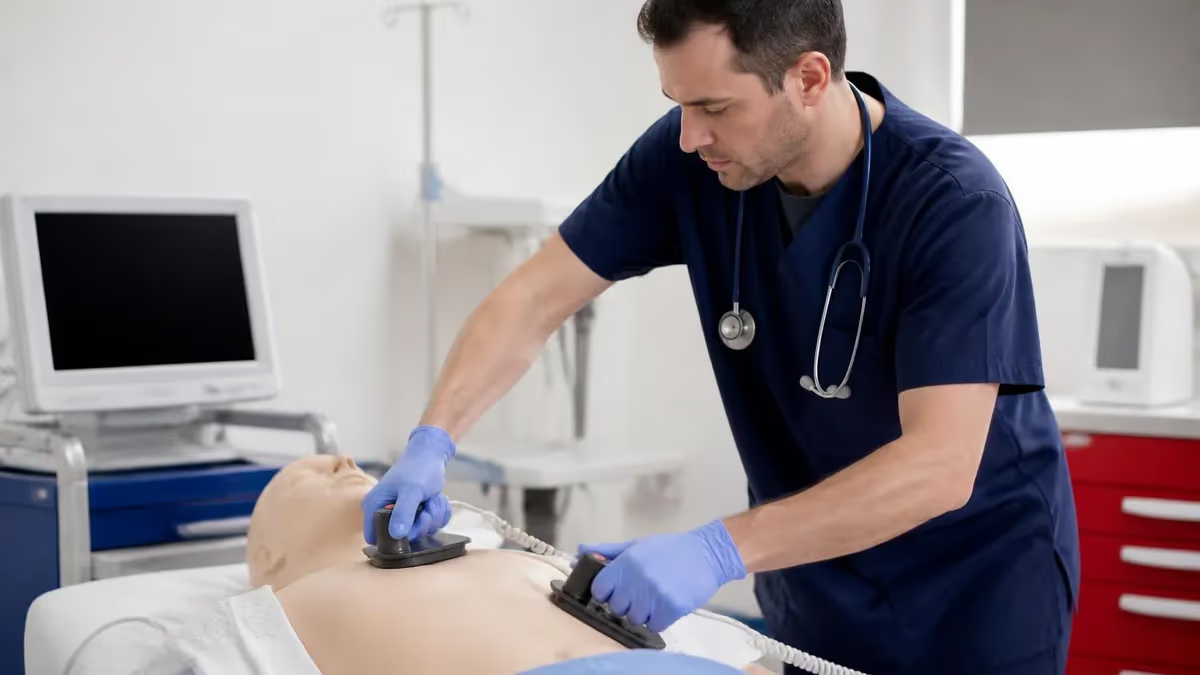
ACLS recertification online has become the default renewal path for the vast majority of practicing nurses, physicians, paramedics, respiratory therapists, and pharmacists in the United States. In 2026, more than 70% of healthcare professionals choose a blended or fully digital renewal format over the traditional two-day classroom course. The reason is simple: clinicians do not need to relearn what they already practice every shift. They need a streamlined refresh on the updated algorithms, a competency check, and a card on file before their employer's deadline.
The challenge is figuring out which online ACLS recertification course is legitimate, accepted by your hospital, and actually worth the money. The internet is flooded with $99 "instant card" sites that look credible but do not meet American Heart Association (AHA) standards. Meanwhile, the official AHA HeartCode ACLS program, the Red Cross Resuscitation Suite, and a handful of accredited continuing education providers each offer slightly different experiences, prices, and skills-check requirements.
This guide walks through every legitimate online ACLS renewal option available in 2026, what your employer will and will not accept, how the testing process works on each platform, how long the full process takes from login to printed card, and how to prepare so you finish on the first attempt. We will compare costs ranging from $165 to $375, identify which providers include a required hands-on skills session, and explain when a fully online card is enough and when a blended course is mandatory.
If your current card expires within the next 60 days, you can almost certainly complete recertification this week. The HeartCode ACLS module typically requires four to six hours of self-paced study, a passing score of 84% on the cognitive exam, and a brief virtual or in-person skills check. Most providers issue a digital eCard within 24 hours of completion that is verifiable through the AHA's Atlas system or the issuing organization's portal.
Online does not mean easy. The 2025 AHA guideline updates introduced refined recommendations for dual sequential defibrillation in refractory ventricular fibrillation, updated dosing language for amiodarone and lidocaine, and stronger emphasis on extracorporeal CPR (ECPR) candidacy. Megacode scenarios on the renewal exam now reflect these changes, and clinicians who rely on memory from their last cycle two years ago are routinely surprised by 5 to 10 questions that test new content.
Before you click the first "buy now" button, read through the eligibility section. ACLS recertification is only appropriate if your current card has not yet expired or if it expired within the grace window your employer recognizes — typically 30 days. If your card lapsed more than 30 to 60 days ago, you may be required to take a full initial provider course rather than a renewal, which adds hours and cost. For local in-person options that pair well with online study, our ACLS training near me guide breaks down regional pricing and availability.
By the end of this article you will know exactly which online ACLS recertification course fits your timeline, budget, and clinical role, what your hospital credentialing office wants to see, and how to pass the exam confidently the first time. Let's start with the numbers.
ACLS Recertification Online by the Numbers
Key Facts at a Glance
| Item | Value | Details |
|---|---|---|
| Total Course Cost | $165-$375 | varies by provider and skills option |
| Passing Score | 84% | on AHA cognitive exam |
| Card Validity | 2 years | from issue date, not expiration |
| Choose Online Renewal | 70%+ | vs. classroom in 2026 |
Your ACLS Recertification Online Timeline
60 Days Before Expiration
Choose Provider & Pay
Complete Online Modules
Pass Cognitive Exam
Complete Skills Check
Receive eCard
Online ACLS recertification works on a tiered model that combines self-paced cognitive learning with a competency demonstration. Understanding the structure removes the anxiety most clinicians feel when they hear "online exam." The cognitive portion mirrors the printed provider manual chapter by chapter, but it is delivered through interactive case scenarios, branching megacode simulations, and rhythm-identification drills rather than a passive lecture format. You can pause, rewind, and replay any section as many times as needed.
The American Heart Association's HeartCode ACLS is the gold-standard online cognitive course. It is structured around adaptive learning: when you miss a question about adenosine dosing or stable tachycardia algorithm pathways, the platform automatically serves you additional content on that exact topic before moving forward. The full module includes more than 30 interactive scenarios covering cardiac arrest, acute coronary syndromes, stroke, bradycardia, tachycardia, and post-cardiac arrest care. Plan on four to six focused hours.
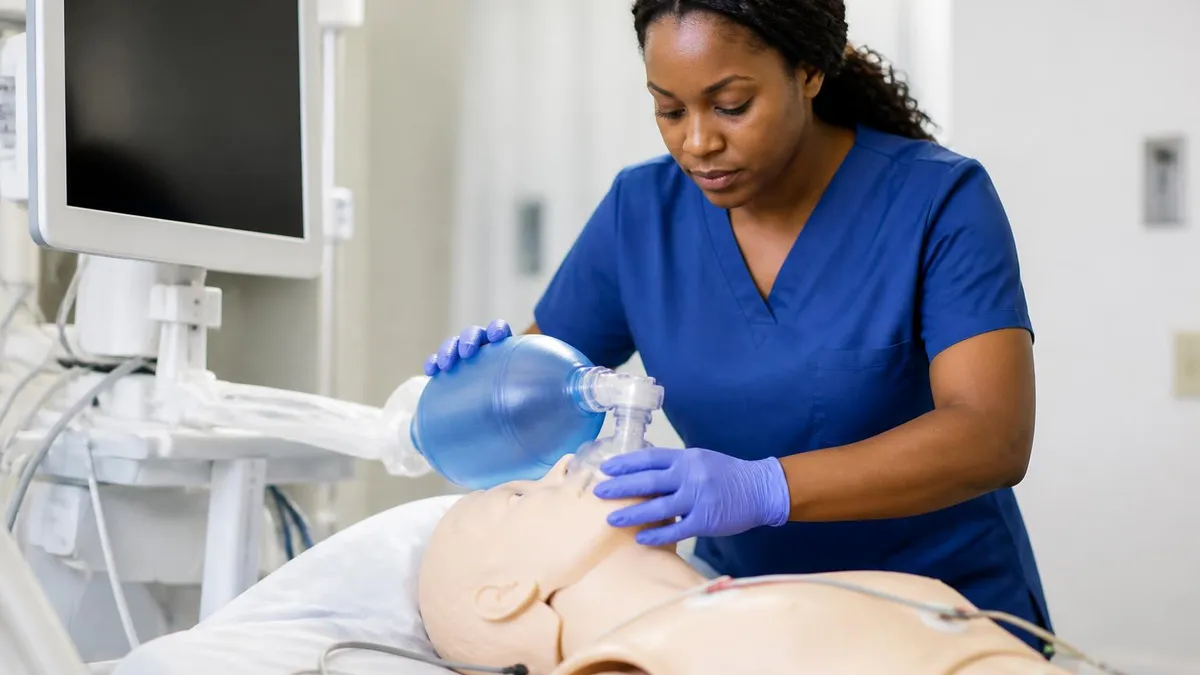
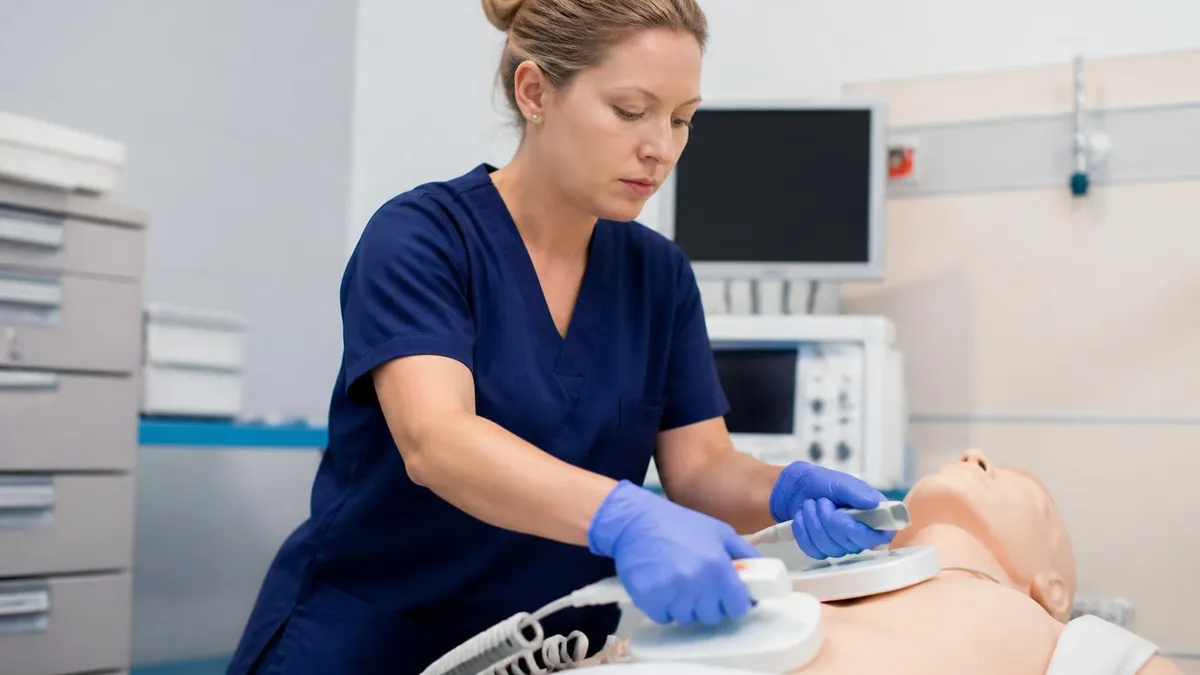
After cognitive completion, the AHA requires a hands-on skills verification. This is the part most clinicians overlook when they buy a "completely online" course. Pure online cards without any skills check are not AHA-issued and will likely be rejected by hospital credentialing. Acceptable skills options include a virtual session using a Voice Assisted Manikin (VAM) that ships to your home, an in-person session at an AHA Training Center, or a session arranged through your hospital education department.
The Red Cross Resuscitation Suite ACLS program follows the same logic but uses its own algorithms aligned with the International Liaison Committee on Resuscitation (ILCOR) consensus. The Red Cross has gained substantial market share since 2023 because its program is OSHA-compliant, Joint Commission-recognized, and accepted by an increasing number of hospital systems. Pricing tends to run $30 to $50 below AHA equivalents, and the skills check can often be completed virtually without shipping a manikin.
Non-AHA, non-Red Cross providers exist in a gray zone. Sites like ACLS.com, ProMed, and National Health Care Provider Solutions offer cognitive-only exams that issue their own branded cards. These are accepted by some employers — particularly outpatient clinics, dental offices, urgent care chains, and travel nursing agencies — but rarely by acute care hospitals. Always verify with your specific credentialing office before purchasing. A $99 card that your employer rejects costs more than a $295 AHA renewal that they accept.
The skills verification component deserves particular attention. Modern virtual skills checks use a Bluetooth-enabled manikin that measures compression depth, rate, and recoil in real time. An instructor watches via video, scores you against the same checklist used in traditional classes, and signs off electronically. Most clinicians who already work codes pass on the first attempt in under 30 minutes. If you want a comprehensive content refresher to pair with your online course, the ACLS study guide walks through every algorithm in plain language.
The final step is digital card issuance. AHA eCards are stored in the AHA Atlas system and are searchable by employers using your name and the card's unique identifier. Red Cross digital cards live in your personal Red Cross account and include a QR code for instant verification. Print a copy for your records, but most hospitals now require the digital version uploaded directly into their credentialing portal.
ACLS Practice Test Questions
Prepare for the ACLS Advanced Cardiovascular Life Support Practice exam with our free practice test modules. Each quiz covers key topics to help you pass on your first try.
ACLS Cardiac Rhythms & ECG Interpretation
ACLS Exam Questions covering ACLS Cardiac Rhythms & ECG Interpretation. Master ACLS Test concepts for certification prep.
ACLS Pharmacology & Medications
Free ACLS Practice Test featuring ACLS Pharmacology & Medications. Improve your ACLS Exam score with mock test prep.
ACLS Best Practices & Methodologies
ACLS Mock Exam on Best Practices & Methodologies. ACLS Study Guide questions to pass on your first try.
ACLS Communication & Stakeholder Relations
ACLS Test Prep for Communication & Stakeholder Relations. Practice ACLS Quiz questions and boost your score.
ACLS Core Concepts & Fundamentals
ACLS Questions and Answers on Core Concepts & Fundamentals. Free ACLS practice for exam readiness.
ACLS Data Analysis & Reporting
ACLS Mock Test covering Data Analysis & Reporting. Online ACLS Test practice with instant feedback.
ACLS Documentation & Record Keeping
Free ACLS Quiz on Documentation & Record Keeping. ACLS Exam prep questions with detailed explanations.
ACLS Industry Regulations & Compliance
ACLS Practice Questions for Industry Regulations & Compliance. Build confidence for your ACLS certification exam.
ACLS Leadership & Team Management
ACLS Test Online for Leadership & Team Management. Free practice with instant results and feedback.
ACLS Professional Standards & Ethics
ACLS Study Material on Professional Standards & Ethics. Prepare effectively with real exam-style questions.
ACLS Quality Assurance & Improvement
Free ACLS Test covering Quality Assurance & Improvement. Practice and track your ACLS exam readiness.
ACLS Risk Management & Assessment
ACLS Exam Questions covering Risk Management & Assessment. Master ACLS Test concepts for certification prep.
AHA vs Red Cross vs Other Online ACLS Recertification Providers
The American Heart Association HeartCode ACLS is the most widely accepted online recertification format in the United States. Cost runs $185 for cognitive only, with skills checks adding $50 to $150 depending on whether you choose virtual or in-person verification. Every major academic medical center, Magnet hospital, and federal employer (VA, military, USPHS) accepts the AHA eCard without question.
HeartCode's strength is its depth and adaptive learning engine. The platform tracks your weak areas and reinforces them with extra practice. The downside is rigidity: you cannot test out, you must complete every module, and the 84% passing score allows little margin. Plan four to six hours and budget for the separate skills component before purchasing.
Is ACLS Recertification Online Right for You?
- +Complete the cognitive portion entirely on your own schedule, including nights, weekends, and split sessions
- +Significantly cheaper than two-day classroom courses, which run $300 to $500 in most metro areas
- +Unlimited practice attempts on rhythm strips and megacode scenarios before the final exam
- +Digital eCard issued within 24-72 hours and instantly verifiable by employers
- +No travel, parking, or time off work required for the cognitive component
- +Adaptive learning reinforces your specific weak areas instead of one-size-fits-all lecture content
- −Skills check is still required by AHA and most employers, adding $50-$150 and 60-90 minutes
- −Cognitive exam requires 84% passing score with limited retakes on some platforms
- −Self-paced format can be a disadvantage for clinicians who struggle without structured deadlines
- −Some hospital systems still require fully in-person renewal for ICU, ED, or code team members
- −Cheap non-AHA online cards are frequently rejected by acute care credentialing offices
- −Technical issues (internet drops, browser crashes mid-exam) can lock you out temporarily
Pre-Exam Checklist for Online ACLS Recertification
- ✓Verify your current ACLS card has not yet expired or is within your employer's grace window
- ✓Confirm with credentialing exactly which provider (AHA, Red Cross, other) is accepted
- ✓Review the 2025 AHA guideline update highlights, especially ECPR and dual sequential defibrillation
- ✓Memorize epinephrine 1 mg every 3-5 minutes and amiodarone 300 mg then 150 mg dosing
- ✓Practice rhythm recognition for VF, pulseless VT, asystole, PEA, and stable vs unstable tachycardias
- ✓Review the H's and T's reversible causes of cardiac arrest until you can recite them without notes
- ✓Run through the bradycardia and tachycardia algorithms aloud three times before the exam
- ✓Have a quiet 4-6 hour block of time with strong internet and no work interruptions
- ✓Take the precourse self-assessment first and target your study to the weakest sections
- ✓Schedule your skills check appointment before starting the cognitive module to avoid delays
The 84% Rule Catches Experienced Clinicians Off Guard
AHA HeartCode ACLS requires 84% to pass the cognitive exam, not 70% or 80% like many other certifications. On a 50-question exam, that means you can miss only 8 questions. Veteran providers who skip the practice modules and rely on clinical experience routinely fail by 2-4 questions because of new guideline language. Always complete the precourse self-assessment and review every wrong answer before sitting the final.
Cost and employer acceptance are the two factors that determine whether your online ACLS recertification was actually worth it. The all-in cost ranges from roughly $165 on the low end (Red Cross fully bundled) to about $375 on the high end (AHA HeartCode plus in-person skills at a major training center). Most clinicians end up paying between $245 and $295 for the AHA pathway when they account for both the cognitive module and a virtual or local skills check.
Reimbursement is a hidden lever. Roughly 60% of US hospitals reimburse the full cost of ACLS recertification for clinical staff, but only if you use a pre-approved provider. Before paying out of pocket, check your employee handbook, your unit's continuing education budget, or simply ask your manager. Travel nurses and locum physicians can typically deduct the cost on their taxes as a business expense, which effectively reduces the price by 22% to 37% depending on tax bracket.
Employer acceptance varies more than most people realize. Within a single hospital system, the ED may require AHA HeartCode while the outpatient clinic accepts any AHA-equivalent. The cleanest approach is to email your credentialing office and request a written list of accepted providers before purchasing. Save that email — when your card gets verified two years from now, you want documentation that the provider was on the approved list at the time you registered.
The card itself is now almost universally digital. AHA eCards are issued through the AHA Atlas system and include a unique QR code, instructor name, training center, and issue date. Red Cross digital certificates live in your personal Red Cross learning account. Both are searchable by employers, recruiters, and credentialing verification services. Printed paper cards are still issued on request but are no longer the standard. Most hospital credentialing portals now accept only the digital format with a verifiable URL or QR code.
Card validity is exactly two years from the issue date, not from your previous card's expiration date. This catches many clinicians by surprise. If you renew three months early, your new card expires three months earlier than your old one would have. Most providers recommend renewing within the final 30 to 60 days before expiration to maximize the validity period. There is no benefit to renewing earlier unless your employer has imposed a deadline that requires it.
Failed renewal scenarios deserve a plan. If your card has already expired by more than 30 days, the AHA technically requires you to take a full initial provider course, not a renewal. Some training centers will still allow a renewal up to 60 or even 90 days post-expiration at their discretion, particularly for clinicians who can document continuous clinical practice. If you are caught in this gap, call several training centers directly — policies vary widely and a phone call can save you four hours of additional coursework.
Finally, keep records. Save your completion certificate, eCard PDF, payment receipt, and the email confirming employer acceptance in a dedicated folder. Two years from now when you renew again, having that documentation accessible saves time, money, and the stress of trying to remember which provider you used and what your employer required. For local in-person backup options if your online attempt fails, our ACLS renewal near me directory lists training centers by region with current pricing.

If your ACLS card expires before you complete recertification, many hospitals require immediate removal from code team rotations, ED triage, ICU primary assignments, and procedural sedation duties until a new card is on file. Some systems treat it as a credentialing lapse that requires Risk Management notification. Start your online renewal no later than 30 days before expiration to build in buffer for technical issues or a failed first attempt.
A pass-first-time strategy for online ACLS recertification starts with an honest assessment of how much has changed since your last cycle. The 2025 AHA Focused Update made several specific revisions that appear on current exam versions. Calcium for cardiac arrest is no longer routinely recommended outside of confirmed hyperkalemia or calcium channel blocker toxicity. Sodium bicarbonate has similarly narrowed indications. ECPR for refractory cardiac arrest is now a Class 2a recommendation in centers with the capability. If your last card was issued in 2022 or 2023, these are net-new content for you.
The single highest-yield study technique is to take the precourse self-assessment cold, without any review beforehand. Your score on that 30-minute baseline test tells you exactly where to focus. If you scored above 90% on rhythm recognition but 60% on pharmacology, spend 80% of your study time on the drugs. The temptation to start at the beginning and read sequentially is comforting but inefficient. Adaptive study based on real baseline data outperforms linear review every single time.
Megacode video review is the second highest-yield technique. The AHA HeartCode platform includes more than a dozen video megacodes that walk through team leader decision-making in real time. Watch each one twice: once as the team leader, mentally calling the next step before the video shows it, and once focusing on the supporting roles. This builds the pattern recognition that the exam tests, more so than memorizing the printed algorithms on paper. For a comprehensive review of every drug you'll encounter, the ACLS drugs reference covers indications, doses, and contraindications.
Rhythm recognition trips up more renewers than any other content area. The exam will show you a 6-second rhythm strip and ask you to identify it correctly in under 30 seconds, sometimes under 15 seconds in proctored versions. Practice with mixed strips, not categorized ones. Anyone can identify VF when they know the strip is in the "shockable rhythms" section. Real exam questions strip away the category labels and force pattern recognition under time pressure.
For the cognitive exam itself, use the standard ACLS test-taking framework: identify the rhythm first, determine if the patient is stable or unstable second, choose the algorithm third, and select the dose fourth. Most wrong answers on the exam come from skipping step two. A stable supraventricular tachycardia gets vagal maneuvers and adenosine; an unstable one gets synchronized cardioversion. Same rhythm, completely different intervention based on hemodynamics.
Time management on the exam is rarely an issue, but technical setup is. Test your webcam, microphone, internet speed, and browser compatibility 24 hours before sitting the exam, not 10 minutes before. Close every other application, disable notifications, and use a hardwired ethernet connection if available. A dropped connection mid-exam can trigger a lockout that requires support intervention to resolve. Have your provider manual and notes accessible during the practice portions, but not during the proctored final.
If you fail on the first attempt, do not panic. AHA and Red Cross both allow retakes — typically two free attempts before requiring a repurchase. Review every missed question, take a 24-hour break to consolidate, and return for the retake. Most clinicians who fail on the first attempt pass on the second by a comfortable margin. The 84% threshold is achievable with focused, targeted preparation, and the published ACLS guidelines document is the definitive reference if you want to verify any answer.
The final preparation phase begins 48 hours before your scheduled exam time. By this point you should have completed the precourse self-assessment, worked through the cognitive modules, and reviewed every rhythm strip and drug card at least twice. The last two days are not for learning new material — they are for consolidation, rest, and tactical preparation. Cramming new content in the final 48 hours statistically reduces pass rates because it competes with the consolidated knowledge already in working memory.
Build your exam environment intentionally. The room should be quiet, well-lit, free of clutter on the desk surface, and at a comfortable temperature. Most online proctored exams require a 360-degree camera scan of the room before starting, so clear away anything that could be flagged: sticky notes, second monitors, phones, smartwatches, books. Have water, a single piece of scratch paper (if allowed), and a pen within arm's reach. Use the bathroom immediately before starting and close the door.
The night before, do exactly two things. First, take one final timed practice exam and review every wrong answer. Second, get a full night of sleep — eight hours is ideal, seven is acceptable, less than six measurably hurts performance on standardized testing. Skip the late-night cram session. Your brain consolidates memory during sleep, and a tired brain underperforms regardless of how well-prepared you are. This is not exam-prep folklore; it is well-established cognitive science with measurable effect sizes.
On exam day morning, eat a normal breakfast with protein and complex carbs. Avoid heavy caffeine if you don't normally consume it, and avoid skipping caffeine if you normally do. The goal is to keep your baseline state consistent. Light exercise 60 to 90 minutes before the exam — a 20-minute walk, some stretching, nothing strenuous — measurably improves cognitive performance and reduces test anxiety. Plan to start your exam at the time of day when you are normally sharpest, which for most clinicians is mid-morning between 9 and 11 AM.
During the exam itself, use the standard four-step framework on every question: identify the rhythm, assess stability, select the algorithm, choose the intervention. Read every question twice before looking at the answer choices. The AHA writing style frequently embeds the critical clue in the second half of a long stem, and clinicians who skim miss it. Eliminate obviously wrong answers first, then choose between the remaining two by returning to the algorithm in your head, not by gut feeling.
Flag uncertain questions and move on. The exam platform allows you to return to flagged items before submitting. Most clinicians improve their score by 3 to 5 percentage points just by reviewing flagged questions with fresh eyes at the end. Resist the urge to change answers without a specific reason. Statistical analysis of standardized testing shows that initial instincts are correct more often than second-guessing, unless you identify a specific recall or new information that prompts the change.
After you submit and pass, immediately download your completion certificate as a PDF, save it to cloud storage, and email a copy to yourself. Schedule your skills check within seven days if you haven't already. Upload the certificate to your hospital credentialing portal the same day. The whole process — cognitive exam, skills check, card issuance, employer verification — can be completed start to finish in less than a week if you stay organized. Two years of card validity for a single focused evening of work is a high-value trade.
ACLS Questions and Answers
ACLS Training Near Me: How to Find Local Classes, Costs & Fast-Track Options in 2026
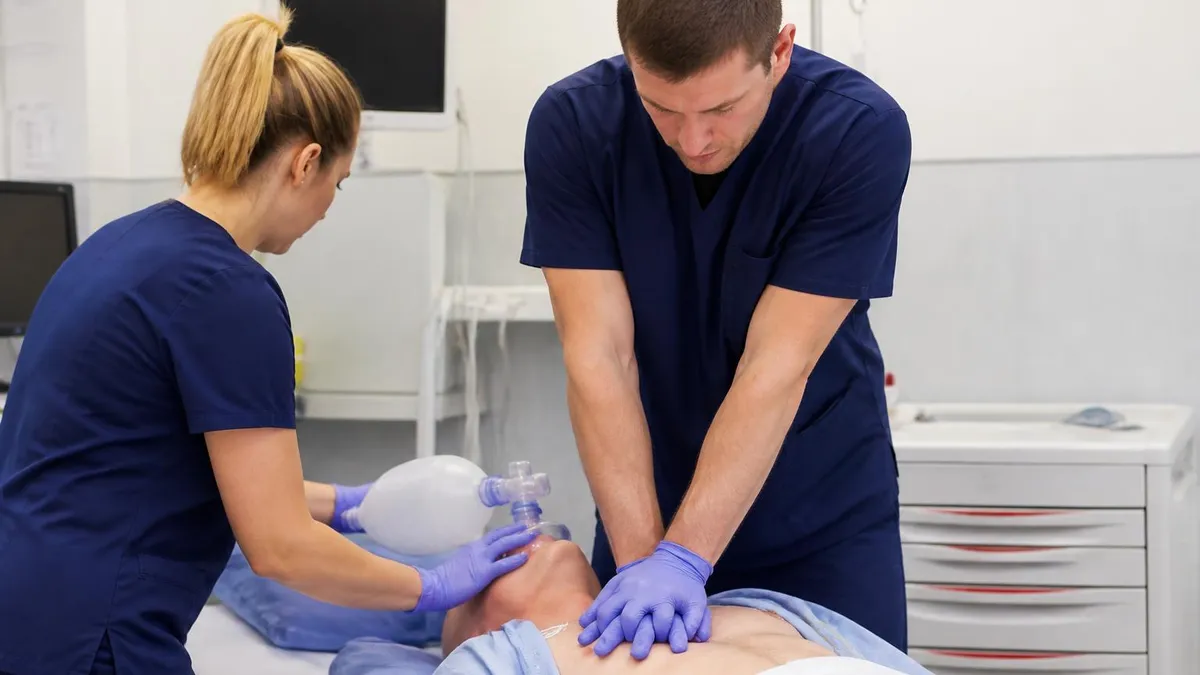
ACLS Study Guide: Complete 2026 Certification Prep with Algorithms, Drugs & Practice Tests

ACLS Guidelines 2026: Complete AHA Update on Algorithms, Drugs, CPR Quality & Post-Arrest Care
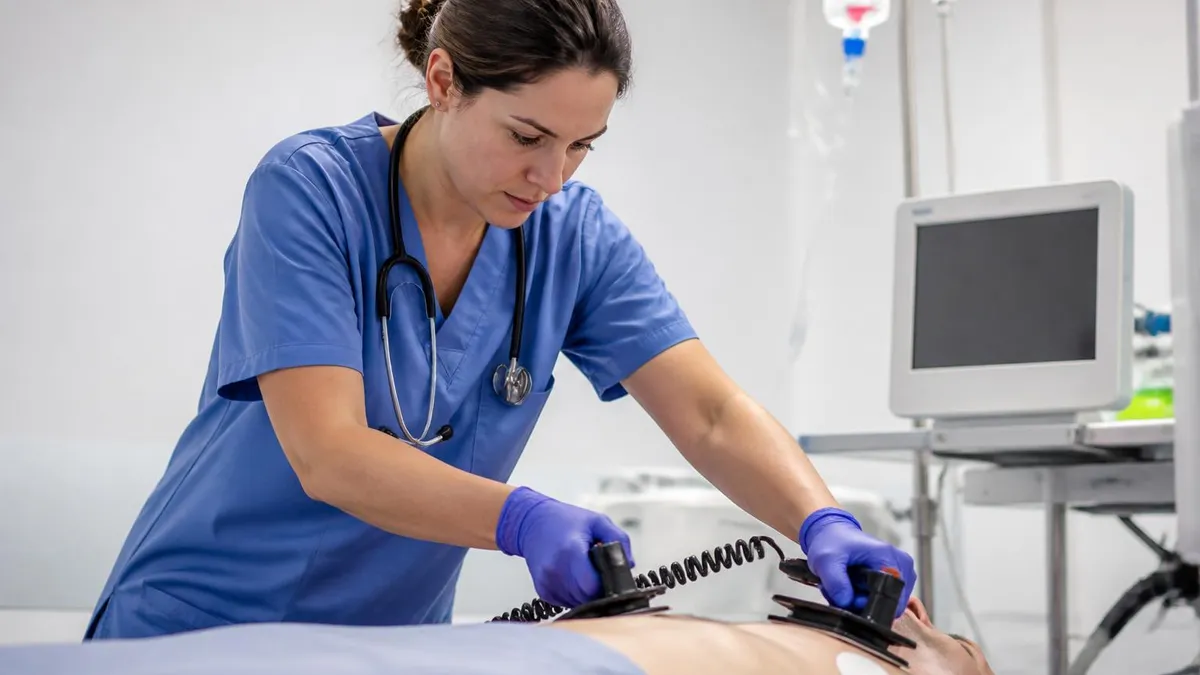
ACLS Drugs: Complete 2026 Guide to Medications, Doses, Indications & Algorithm Use

ACLS Renewal Near Me: Find Local Recertification Classes, Costs & Online Options in 2026
About the Author

Registered Nurse & Healthcare Educator
Johns Hopkins University School of NursingDr. Sarah Mitchell is a board-certified registered nurse with over 15 years of clinical and academic experience. She completed her PhD in Nursing Science at Johns Hopkins University and has taught NCLEX preparation and clinical skills courses for nursing students across the United States. Her research focuses on evidence-based exam preparation strategies for healthcare certification candidates.