
How to Get a Forklift Licence in Australia: Complete TLILIC0003 Guide for 2026 October
Learn how to get a forklift licence in Australia. Step-by-step TLILIC0003 guide covering eligibility, costs, training, assessment, and renewal in 2026 October. 💡
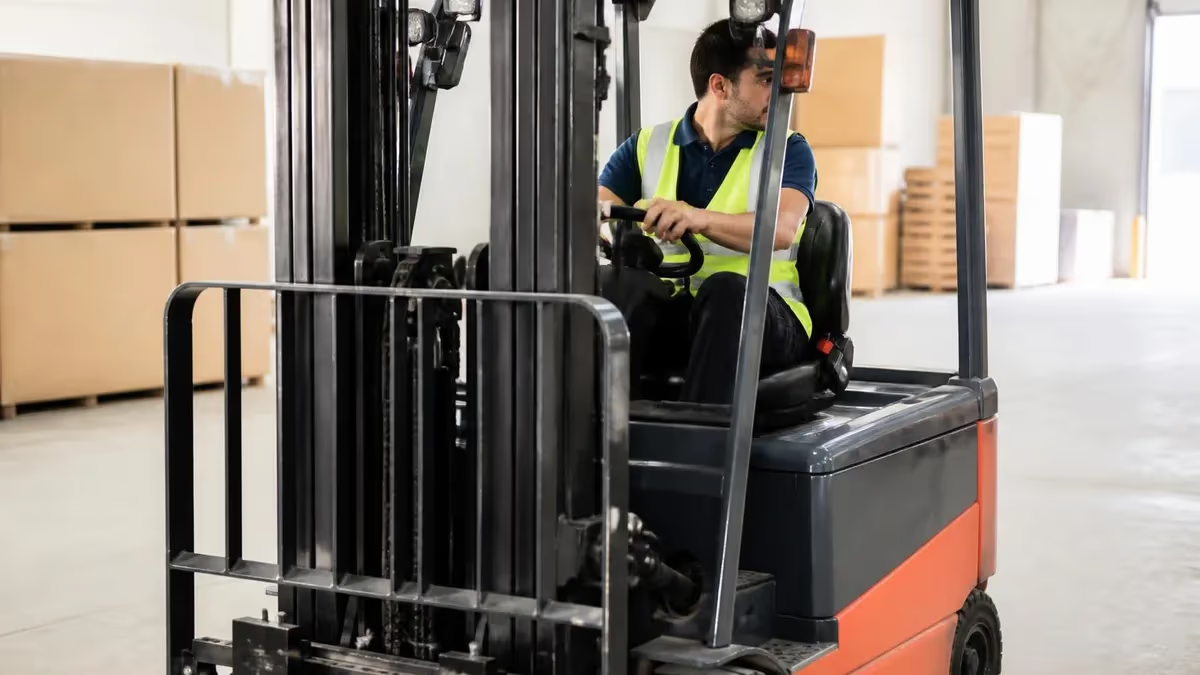
Understanding how to get a forklift licence in Australia is the first step toward a stable, well-paid career in warehousing, construction, logistics, and manufacturing. The national qualification you need is TLILIC0003 Licence to operate a forklift truck, a high-risk work licence issued by your state or territory WHS regulator. This guide walks you through every part of the process, from confirming your eligibility through to passing the practical assessment, getting your photo card in the mail, and keeping your credential current throughout your working life.
Forklift operators are in constant demand across Australia, with Seek and Indeed routinely listing more than 8,000 active forklift roles at any given time. Employers prefer candidates who already hold a valid LF class high-risk work licence because it removes the cost and downtime of internal training. Knowing how to get a forklift licence quickly and correctly can therefore add tens of thousands of dollars to your annual earning potential and open doors at large employers like Coles, Woolworths, Toll, Linfox, and Australia Post.
The licence itself is governed by the model Work Health and Safety Regulations 2011, adopted by every state except Victoria and Western Australia, which run equivalent OHS frameworks. The training package is administered by SafeWork NSW, WorkSafe Victoria, Workplace Health and Safety Queensland, SafeWork SA, WorkSafe WA, NT WorkSafe, WorkSafe Tasmania, and WorkSafe ACT, depending on where you sit your assessment. The qualification itself is portable Australia-wide once issued.
To complete TLILIC0003, you must train with a Registered Training Organisation (RTO) approved to deliver high-risk work licence courses. The course typically runs three to five days and combines classroom theory, machine familiarisation, and practical operation under supervision. At the end you sit two assessments: a written knowledge test of around 55 questions, and a practical performance assessment witnessed by an accredited assessor who reports directly to the regulator.
Costs vary by state and provider, ranging from about $350 in regional Queensland to $750 in inner Sydney or Melbourne. Most providers include the assessment fee, learner guide, and PPE in the headline price, but the regulator's licence application fee of $72 to $117 is usually paid separately to your local authority. Budget around $500 all-in for a typical metropolitan course in 2026.
Before you book a course, gather your 100 points of identification, confirm you are at least 18 years old, and check that you can read and understand English at a working level. Some applicants underestimate the literacy requirements, but the written test cannot be translated and the safe operation of any forklift depends on reading labels, load plates, and signage accurately. If you are unsure, ask the RTO about a Language, Literacy and Numeracy (LLN) assessment beforehand.
Free Forklift Licence Study Tools
Interactive Forklift Licence resources on PracticeTestGeeks, free to start:
- Forklift Licence practice test — 300+ questions with instant scoring and answer explanations
- Forklift Licence flashcards — review key terms and concepts card by card
- Forklift Licence study guide — topic-by-topic overview of what the exam covers
- Forklift Licence cheat sheet — one-page printable summary for last-minute review
Forklift Licensing in Australia by the Numbers
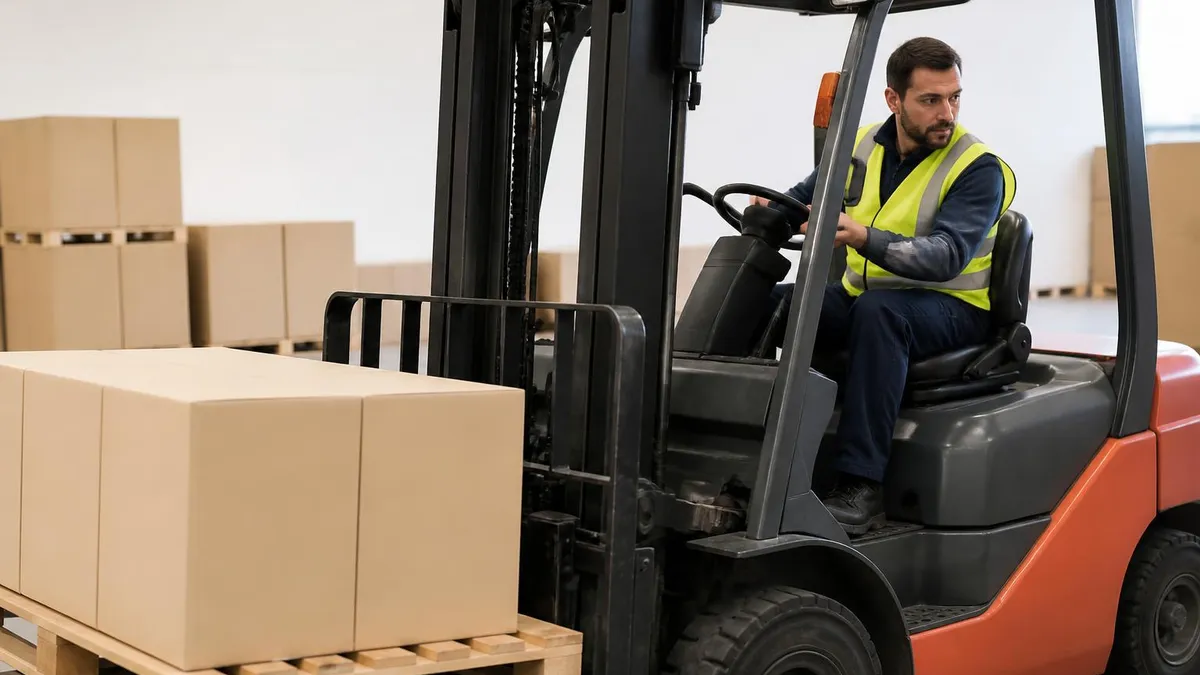
How to Get a Forklift Licence: Step-by-Step Timeline
Confirm Eligibility
Choose an Approved RTO
Complete Training
Pass Assessments
Apply to Regulator
Receive Photo Licence
Eligibility for a forklift licence is set by national WHS regulations, but each state administers the application process slightly differently. The universal requirements are that you must be at least 18 years old on the day of assessment, hold 100 points of identification in your current legal name, and have the language, literacy, and numeracy skills required to operate safely. The TLILIC0003 unit explicitly assumes a Year 10 reading level, so applicants who left school earlier may benefit from a brief LLN bridging session before enrolling.
Most regulators will also ask whether you have any medical conditions that could affect your ability to operate plant safely. Uncorrected vision problems, untreated epilepsy, severe sleep apnoea, and certain cardiac conditions are flagged for review.
You are not required to submit a full medical certificate at the application stage, but you do sign a declaration of fitness, and providing false information is a Category 2 offence under the WHS Act. If in doubt, see your GP first and ask whether you meet the National Standard for Health Assessment of Rail Safety Workers, which most regulators use as a benchmark for plant operators.
The 100 points of identification can be made up of one primary document (passport or birth certificate worth 70 points) plus one or two secondary documents (driver licence, Medicare card, utility bill). New arrivals to Australia can use a valid foreign passport plus a visa grant notice and a bank statement. Your RTO will photocopy and certify these documents on the first day of class, and the regulator may later request originals if anything is unclear. Always bring more documentation than you think you need.
For non-citizens, the right-to-work check is critical. The regulator does not issue a high-risk work licence to anyone whose visa prohibits paid employment in plant operation. Working Holiday (subclass 417/462), Skilled Independent (189), and Permanent Resident visas are all acceptable. Bridging visas with full work rights are generally accepted, but some states will only issue a five-year licence to permanent residents, while temporary residents receive a licence matched to their visa expiry date. Check the forklift licence near me resource to find providers familiar with your visa situation.
Your existing driver licence is not required for a forklift ticket, but it is highly recommended. Many employers expect operators to move machines around yards, between buildings, and occasionally on public roads under permit. A clean MR or HR driver licence will dramatically improve your hireability, particularly for warehouse-to-truck loading roles where the same employee operates both the forklift and a rigid delivery truck.
Finally, consider any criminal history checks your eventual employer may require. While the regulator itself does not run a police check for the licence, large logistics companies, defence sites, ports, and airport precincts all require an Aviation Security Identification Card (ASIC) or Maritime Security Identification Card (MSIC). Plan ahead if you are targeting these high-paying sectors, as security clearances can take six to twelve weeks to process and may need to be lodged in parallel with your TLILIC0003 training.
If you fail to meet one of the eligibility tests, you still have options. Applicants under 18 can complete training as a learner and sit the assessment the day they turn 18. Applicants with poor English can complete a Certificate I in Spoken and Written English first, and many TAFEs offer this for free under the Skills First or JobTrainer programs. Medical issues can sometimes be managed with specialist sign-off. The pathway exists for almost every motivated applicant, but it pays to address barriers up front rather than discover them on assessment day.
TLILIC0003 Practice Test Questions
Prepare for the Forklift Licence Australia - TLILIC0003 exam with our free practice test modules. Each quiz covers key topics to help you pass on your first try.
TLILIC0003 Forklift Licence Australia Atta...
TLILIC0003 Exam Questions covering Forklift Licence Australia Attachments and Modifications. Master TLILIC0003 Test concepts for certification prep.
TLILIC0003 Forklift Licence Australia Batt...
Free TLILIC0003 Practice Test featuring Forklift Licence Australia Battery and Fuel Safety. Improve your TLILIC0003 Exam score with mock test prep.
TLILIC0003 Forklift Licence Australia Emer...
TLILIC0003 Mock Exam on Forklift Licence Australia Emergency Procedures. TLILIC0003 Study Guide questions to pass on your first try.
TLILIC0003 Forklift Licence Australia Fork...
TLILIC0003 Test Prep for Forklift Licence Australia Forklift Pre-Operational Checks. Practice TLILIC0003 Quiz questions and boost your score.
TLILIC0003 Forklift Licence Australia Haza...
TLILIC0003 Questions and Answers on Forklift Licence Australia Hazard Identification. Free TLILIC0003 practice for exam readiness.
TLILIC0003 Forklift Licence Australia Load...
TLILIC0003 Mock Test covering Forklift Licence Australia Load Centre Calculations. Online TLILIC0003 Test practice with instant feedback.
TLILIC0003 Forklift Licence Australia Load...
Free TLILIC0003 Quiz on Forklift Licence Australia Load Handling and Capacity. TLILIC0003 Exam prep questions with detailed explanations.
TLILIC0003 Forklift Licence Australia Oper...
TLILIC0003 Practice Questions for Forklift Licence Australia Operating in Different Environments. Build confidence for your TLILIC0003 certification exam.
TLILIC0003 Forklift Licence Australia Oper...
TLILIC0003 Test Online for Forklift Licence Australia Operating Techniques. Free practice with instant results and feedback.
TLILIC0003 Forklift Licence Australia Pede...
TLILIC0003 Study Material on Forklift Licence Australia Pedestrian Safety. Prepare effectively with real exam-style questions.
Inside the TLILIC0003 Forklift Training Course
The classroom phase usually runs for one to one-and-a-half days and covers the underpinning knowledge you need to operate safely. Topics include Australian Standard AS 2359, load charts and capacity calculations, stability triangles, centre of gravity, hazard identification, and the operator's legal duties under WHS legislation. Your trainer will work through scenario-based examples drawn directly from the regulator's question bank.
You will also study site-specific risks such as overhead obstructions, traffic management plans, pedestrian segregation, and refuelling protocols for LPG, electric, and diesel forklifts. Expect short multiple-choice quizzes at the end of each module to reinforce learning. Most RTOs provide a printed learner guide and access to an online portal with videos, animations, and downloadable load charts you can review in the evenings.
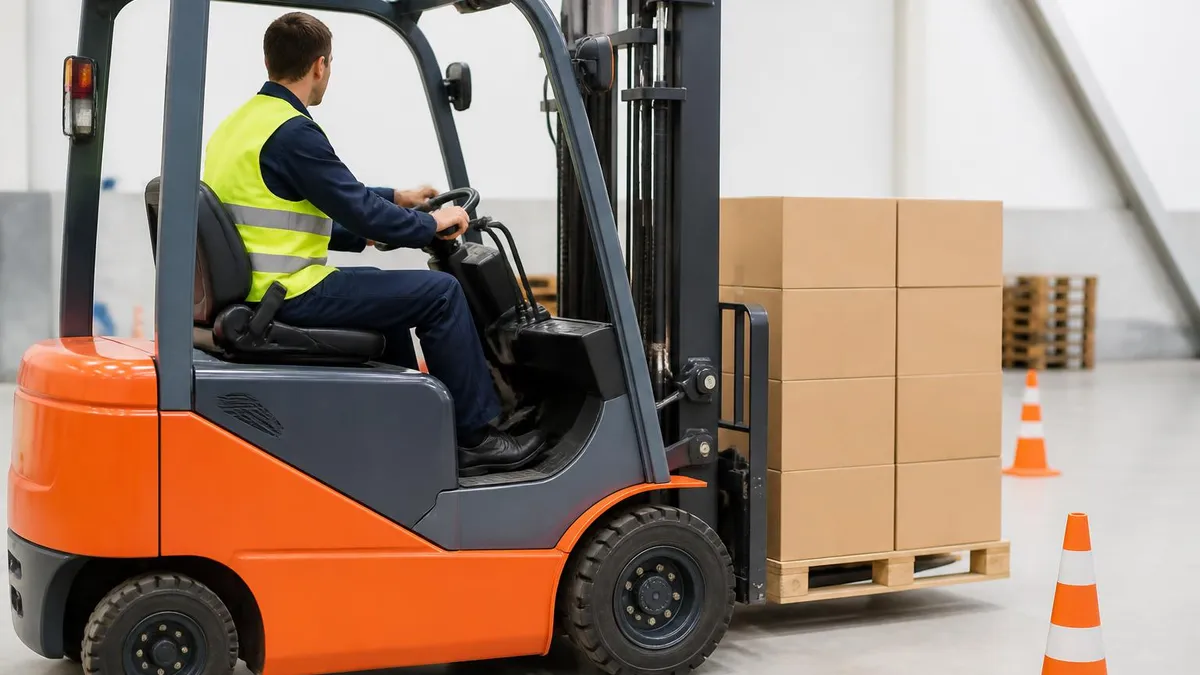
Should You Get a Forklift Licence? Pros and Cons
- +Recognised Australia-wide and portable between states without re-testing
- +Strong job market with 8,000+ active listings nationally at any time
- +Hourly rates of $32-$45 for casual operators, more for night shift
- +Short training pathway — usually 3 to 5 days from start to ticket
- +Stepping stone to higher-paid tickets like reach truck, EWP, and crane
- +Valid for five years before any renewal or refresher is required
- +Suitable for career changers, school leavers, and migrants alike
- −Upfront course cost of $350-$750 not always covered by employers
- −Physically demanding shift work with early starts and cold-store conditions
- −Strict drug and alcohol testing on most major sites
- −Repetitive lifting and twisting can lead to back and neck strain over time
- −Licence can be suspended for serious safety breaches at work
- −Five-yearly renewal requires you to keep evidence of recent operation
- −Some sites also require ASIC or MSIC clearance, adding cost and delay
Pros and Cons at a Glance
| Pros | Cons |
|---|---|
| Recognised Australia-wide and portable between states without re-testing | Physically demanding shift work with early starts and cold-store conditions |
| Stepping stone to higher-paid tickets like reach truck, EWP, and crane | Strict drug and alcohol testing on most major sites |
| Valid for five years before any renewal or refresher is required | Repetitive lifting and twisting can lead to back and neck strain over time |
| Suitable for career changers, school leavers, and migrants alike | Licence can be suspended for serious safety breaches at work |
Pre-Course Checklist Before You Start Your Forklift Licence
- ✓Confirm you are at least 18 years old on the scheduled assessment date
- ✓Gather 100 points of identification including a primary photo document
- ✓Verify your visa allows full-time paid work in plant operation
- ✓Book a vision test with your optometrist if you wear glasses or contacts
- ✓Read the regulator's High Risk Work Licence Applicant Information Kit
- ✓Compare at least three local RTOs on price, duration, and assessor reputation
- ✓Confirm the course includes the assessment fee and learner guide
- ✓Buy steel-cap safety boots and a hi-vis shirt or vest in advance
- ✓Set aside $72-$117 for the post-assessment regulator application fee
- ✓Notify your current employer if you need leave to attend the course
Your Notice of Assessment expires 60 days after issue
Once your RTO issues your Notice of Assessment, you have exactly 60 calendar days to lodge it with your state WHS regulator. If you miss this window, the document becomes void and you must repeat the entire training and assessment process at full cost. Lodge your application within the first week to avoid postal or processing delays — most regulators now offer fast online lodgement with credit card payment.
The true cost of getting a forklift licence in Australia in 2026 ranges from $420 to $870 once every component is added up. The bulk of this is the RTO course fee, which sits between $350 and $750 depending on location, intake size, and whether the provider supplies the machine or you bring your own. Regional providers in Toowoomba, Bendigo, Albany, or Devonport are often $200 cheaper than identical courses in Sydney CBD or inner Melbourne. Group bookings of three or more participants can attract a further 10 to 15 percent discount, especially during quieter winter intakes.
On top of the course fee, every state regulator charges an application fee. As of early 2026, this is approximately $72 in Tasmania, $89 in Queensland and South Australia, $98 in New South Wales, $109 in Victoria, and $117 in Western Australia. The Northern Territory and ACT sit at the lower end. This fee is non-refundable, even if your application is later rejected for incomplete documentation, so accuracy on the form matters. Allow another $20 to $30 for the passport-style photograph some states still require, and around $90 if you need new steel-cap boots.
Funding options can dramatically reduce your out-of-pocket cost. Most states subsidise TLILIC0003 under the Skills First (Victoria), Smart and Skilled (NSW), User Choice (Queensland), or JobTrainer (national) programs for eligible learners. Concession card holders, school leavers, and people on JobSeeker often pay just $100 to $150 for the entire course at a TAFE. Employer-funded training is also widespread: if you have a job offer conditional on holding a forklift ticket, most employers will pay the course fee in exchange for a six- to twelve-month service agreement.
Time investment is just as important as money. The course itself takes three to five days, but you also need to factor in travel, evening study, and the wait for your licence card to arrive. Realistically, plan for two weeks from the day you enrol to the day you can legally start work on someone else's premises. Express services from some regulators can shave this down to seven business days for an additional fee. The card itself is plastic, photo-bearing, and valid for five years from the date of issue.
If you already hold an interstate or international forklift ticket, you may not need to retrain from scratch. Australian high-risk work licences are mutually recognised between states under the WHS Act, so a Queensland LF licence is valid in New South Wales without any additional paperwork — you simply transfer your registration when you move. International qualifications from New Zealand, the UK, Ireland, and Singapore are sometimes recognised by RTO assessment of equivalence, but most overseas applicants find it faster to complete a one-day gap-training course and sit the local assessment.
Hidden costs to budget for include time off work to attend training, lost wages during the licence wait period, and ongoing PPE replacement once you are employed. Most operators also choose to invest in additional tickets within the first two years — reach truck, order picker, EWP yellow card, and white card — bringing their total ticket inventory up to a competitive level. Each of these adds $200 to $600 but multiplies your job-search radius and pay rate significantly.
The return on investment is excellent. With an average operator salary of $64,000 to $78,000 plus penalty rates, the licence typically pays for itself within the first week of employment. Operators willing to work nights, weekends, or fly-in-fly-out roles in Pilbara mining sites can earn well above $120,000 in their first year, making the forklift ticket one of the most cost-effective vocational credentials in the country.
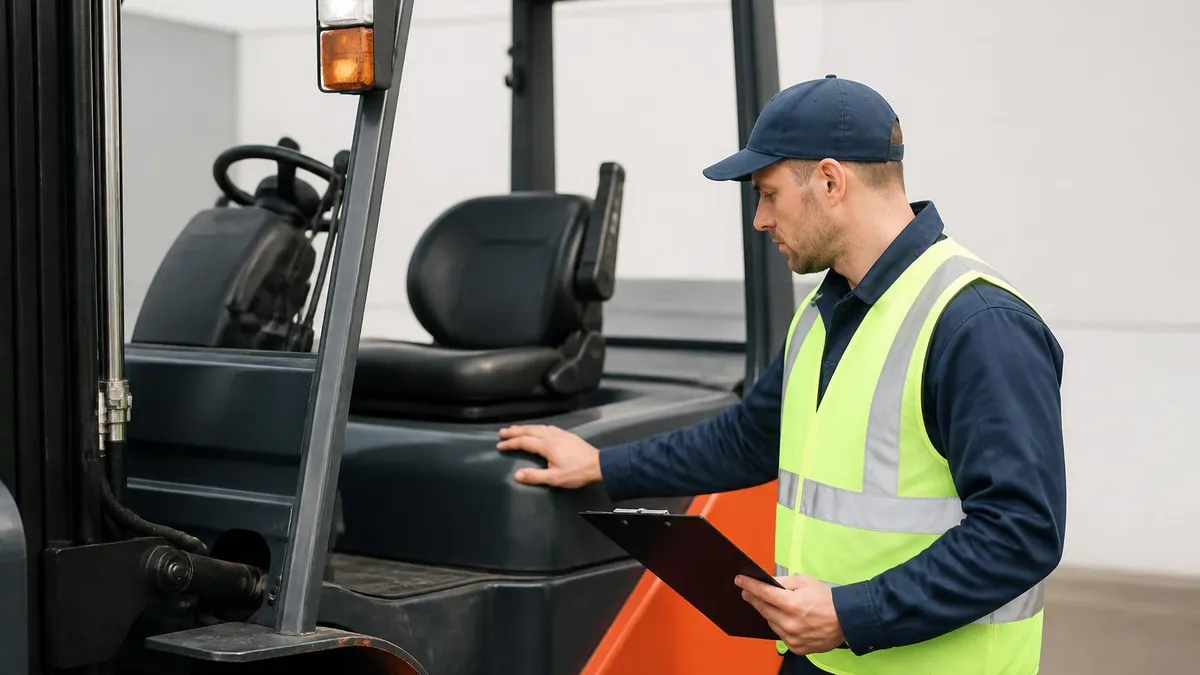
Operating a forklift without a valid LF or LO licence is a Category 2 offence under the WHS Act, with individual fines of up to $150,000 and corporate fines exceeding $1.5 million. Employers who allow unlicensed operation face equal or greater penalties. Never accept an offer to operate a machine 'just for a few minutes' before your photo card arrives — even brief unlicensed use can void site insurance and end your career before it begins.
Once your forklift licence arrives, the next five years are largely your responsibility. The regulator does not actively monitor your skills, but every employer is required under WHS law to verify your competence and conduct a site-specific induction before you operate their machines. This usually takes two to four hours and covers traffic management, pedestrian zones, emergency exits, refuelling areas, and any unique features of the racking or loading docks. Take this induction seriously — most workplace incidents involve operators who skipped or rushed the site walk-through.
Renewal is required every five years and is a paperwork-only process for operators with recent experience. You complete the regulator's renewal form, declare that you have operated a forklift within the past two years, pay a renewal fee of $72 to $117, and receive a new photo card. If you have not operated for two or more years, most regulators will require you to re-sit the practical assessment with an RTO before reissuing the ticket. Keep payslips, timesheets, or employer letters as evidence of recent operation just in case.
Working safely day-to-day means consistently applying the habits drilled into you during training. Always conduct a documented pre-start check, always wear your seatbelt, never lift people on tynes without an approved cage, and never travel with raised loads. The Australian Standard AS 2359 sets the technical baseline, and Safe Work Australia's Forklift Code of Practice provides the practical playbook. Print both and keep them in your locker for the first six months of employment.
Attachments and modifications are a common cause of incidents and licence suspensions. Any attachment that changes the load centre — slip-on tynes, drum grabs, jibs, rotators, carpet poles — reduces the rated capacity of the machine and must be accompanied by a revised data plate from a competent engineer. Operating with an unrated attachment is treated as operating an unlicensed machine. If you want a deeper understanding of how attachments interact with the machine, our guide on forklift parts walks through every mast, carriage, and hydraulic component you'll encounter.
Drugs and alcohol are a zero-tolerance issue at every major site. Random testing is standard at Linfox, Toll, Visy, BlueScope, BHP, Coles, Woolworths, and almost every port and airport. A positive reading does not just end your shift — it can be reported to the regulator and trigger a suspension of your high-risk work licence. Prescription medications can also affect your reaction time, so always disclose them to your supervisor and check the warning labels for 'do not operate heavy machinery' notices.
Incident reporting is part of every operator's legal duty. Any near miss, contact with racking, dropped load, or pedestrian incident must be reported to your supervisor and recorded in the site's incident register before the end of the shift. Honest reporting protects you legally and helps the business identify systemic risks. Hiding an incident, by contrast, is grounds for instant dismissal and can be raised by the regulator at your next renewal.
Finally, stay current with regulatory changes. The High Risk Work Licence framework is reviewed every few years, and small but important changes — to load chart requirements, attachment certification, or assessment criteria — are released through Safe Work Australia and your state regulator. Subscribing to the regulator's newsletter takes 30 seconds and ensures you never operate under outdated rules. Many operators also join the LinkedIn forklift operators of Australia group, where 12,000 members share alerts, job leads, and product recalls in real time.
With your licence in hand, the next priority is converting it into well-paid, sustainable work. Start by polishing your resume to highlight TLILIC0003 alongside any other tickets — white card, EWP, MR licence, RSA — that broaden your employability.
Recruiters at logistics agencies like Programmed, Adecco, and Workforce Extensions scan resumes for specific ticket numbers, so type the unit code TLILIC0003 exactly as it appears on your photo card, plus the dates of issue and expiry. A short cover paragraph mentioning your familiarity with counterbalance, reach, and order picker machines, even if only from training, will get you to the top of the shortlist.
Practical interview preparation matters more than most candidates realise. Many employers conduct a 15- to 30-minute machine test as part of the interview, where you are asked to complete a pre-start inspection, move a pallet across a yard, and place it precisely between two markers. Practise these basics regularly in your first few weeks, even if it means visiting your old RTO on a Saturday morning. Smooth, confident operation in a five-minute window can be the difference between a $32-an-hour job and a $42-an-hour role on the same site.
Building experience strategically pays off. Spend your first six months on counterbalance work to consolidate fundamentals, then add a reach truck ticket to access high-bay warehouses, where pay rates are 15 to 20 percent higher. After twelve months, consider adding LO order picker and EWP yellow card endorsements to qualify for stocktaking, retail replenishment, and maintenance contracts. Each ticket compounds on your existing licence and broadens the kinds of sites that will hire you. For a detailed look at the wider machine family you may encounter, our guide on forklift types and parts covers everything from counterbalance to multi-directional models.
Maintaining your machine awareness is just as important as your skills. Before any shift, walk around the machine for a full minute, even if a previous operator says it's fine. Check tyre pressure, fork tip wear, mast chain tension, leak points, horn, lights, and the data plate. Document anything unusual in the pre-start book. Operators who consistently catch defects early are seen as more valuable than those who simply complete pallet movements quickly, and they are the first to be offered permanent placements when casual roles convert to direct hire.
Career progression beyond the operator role typically follows one of three pathways: warehouse leading hand or supervisor (requires people management and inventory software skills), trainer or assessor (requires TAE40122 Certificate IV in Training and Assessment), or specialist operator on niche machines like container handlers, side-loaders, or rough-terrain forklifts in mining and construction. Each pathway can take total earnings from $65,000 to over $130,000 within five years, and all are accessible to operators who continue learning beyond the initial TLILIC0003 ticket.
Networking inside the industry is dramatically underrated. Toolbox talks, supplier days, and machinery expos like CeMAT Australia (Sydney, every two years) put you in front of equipment dealers, large logistics operators, and recruiters who hire dozens of operators per quarter. A single business card swap at one of these events can lead to a permanent role within weeks. Local Facebook groups like 'Forklift Drivers Sydney' and 'Forklift Drivers Melbourne' also share daily job alerts and casual shift offers, and joining costs you nothing.
Finally, take care of your body. Forklift operation looks easy from the outside, but the constant twisting to look over your shoulder while reversing is a leading cause of long-term neck and lower-back injuries among operators over 40. Stretch before each shift, alternate seat positioning, take all rostered breaks, and use a lumbar support cushion if your seat is unsuitable. Operators who manage their physical health well can comfortably work into their sixties, while those who don't often leave the trade within ten years. Treat your body like the most expensive part of the machine, because it is.
Sample Forklift Licence Practice Questions
Try these questions from our free Forklift Licence practice tests. The correct answer and an explanation follow each question.
What penalties apply for non-compliance with Forklift Pre-Operational Checks regulations in Australia?
- A. No penalties
- B. Significant fines (up to millions of AUD for corporations) and potential imprisonment for serious offences
- C. A verbal warning only
- D. A small administrative fee
Answer: B. Significant fines (up to millions of AUD for corporations) and potential imprisonment for serious offences
Australian WHS penalties are severe, with Category 1 offences carrying fines up to AUD 3 million and potential imprisonment.
Under WHS legislation, who is responsible for ensuring forklift operators hold a valid High Risk Work (HRW) licence?
- A. The forklift operator only
- B. The person conducting the business or undertaking (PCBU)
- C. The state transport authority
- D. The equipment hire company only
Answer: B. The person conducting the business or undertaking (PCBU)
The PCBU has the primary duty to ensure that only workers holding a valid HRW licence for the class of forklift operate the equipment at their workplace.
Before operating a forklift, which pre-operational check must you complete first?
- A. Check the tyres for wear and damage
- B. Review the logbook for previous faults
- C. Ensure the load backrest extension is fitted
- D. Test the horn while travelling
Answer: B. Review the logbook for previous faults
Reviewing the logbook for previously recorded faults is the first step so you are aware of any outstanding issues before conducting your own physical checks.
What documentation must be maintained for Forklift Pre-Operational Checks activities?
- A. No documentation needed
- B. Risk assessments, training records, incident reports, and inspection logs as required by WHS Regulations
- C. Only financial records
- D. A brief email
Answer: B. Risk assessments, training records, incident reports, and inspection logs as required by WHS Regulations
WHS Regulations require maintaining various records for compliance, auditing, and incident investigation purposes.
TLILIC0003 Questions and Answers
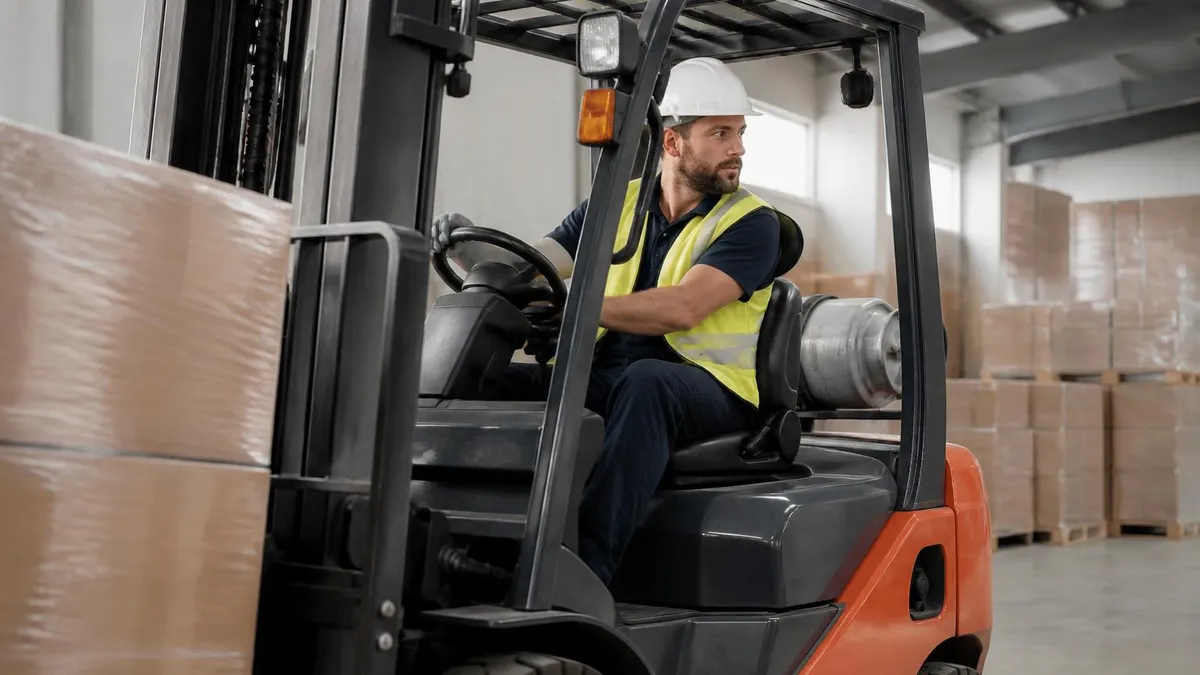
Mast of Forklift: Complete Guide to Forklift Parts for TLILIC0003 Operators in Australia
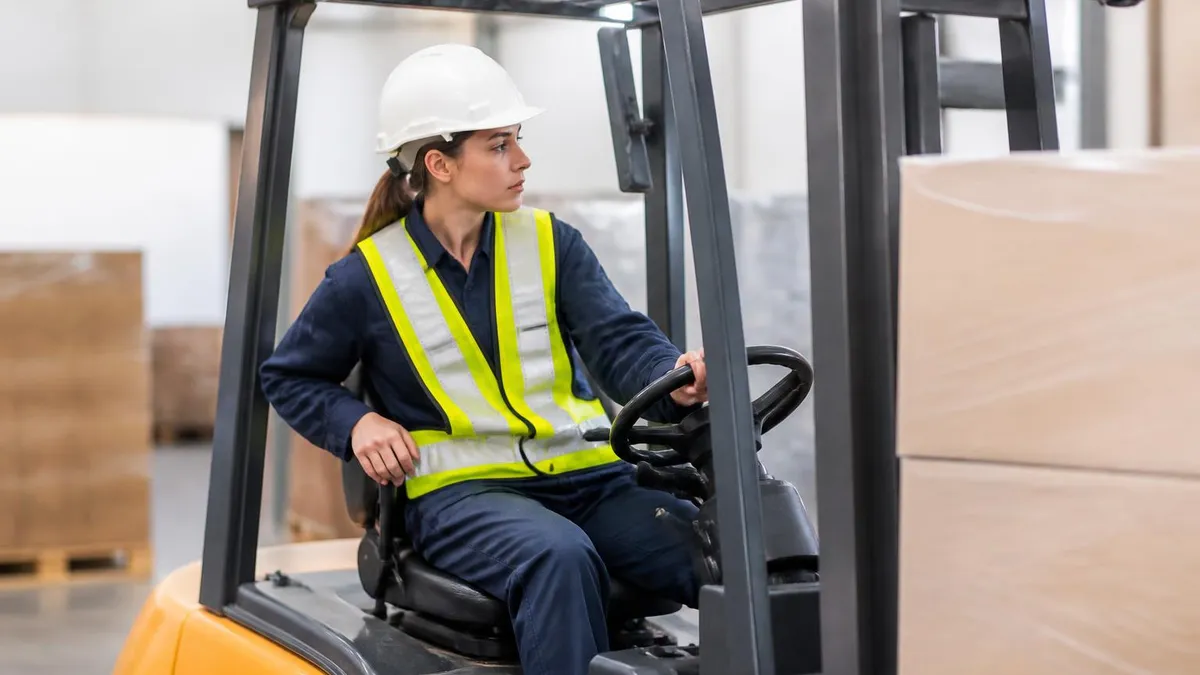
Multi Directional Forklift Trucks: Complete Guide to Forklift Types and Parts for TLILIC0003 Operators in Australia
Free Forklift Practice Test 2026 - Forklift Exam Questions
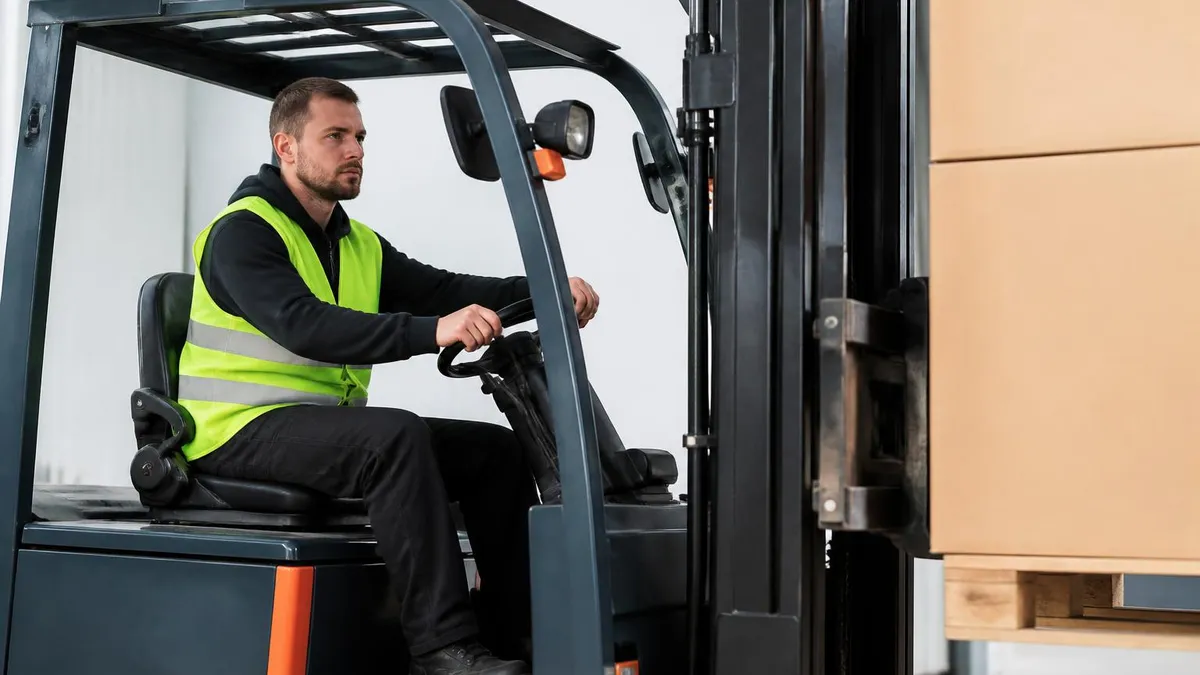
Forklift Clearance Height: Complete Guide to Forklift Specifications for TLILIC0003 Operators in Australia
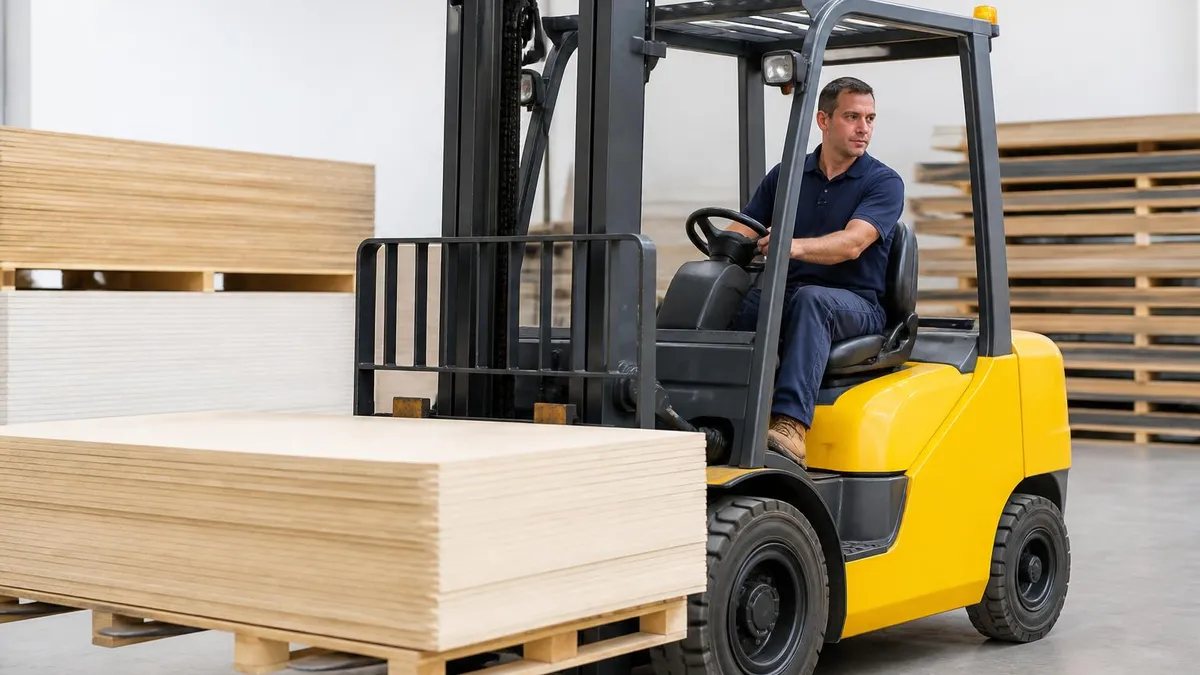
Forklift Licence Near Me: How to Find Local TLILIC0003 Training Providers in Australia
About the Author

Certified Crane Operator & Skilled Trades Exam Specialist
Ferris State UniversityRobert Martinez is a Journeyman Ironworker, NCCCO-certified crane operator, and forklift trainer with a Bachelor of Science in Construction Technology from Ferris State University. He has 21 years of ironworking, rigging, and heavy equipment operation experience across high-rise and industrial construction sites. Robert prepares candidates for crane operator, rigger, forklift, and skilled trades certification examinations.