
Forklift Course Near Me: How to Find Local TLILIC0003 Training Providers in Australia
Find a forklift course near me in Australia. Compare TLILIC0003 training providers, costs, duration, and what to expect from local RTOs in 2026 October. 🎯
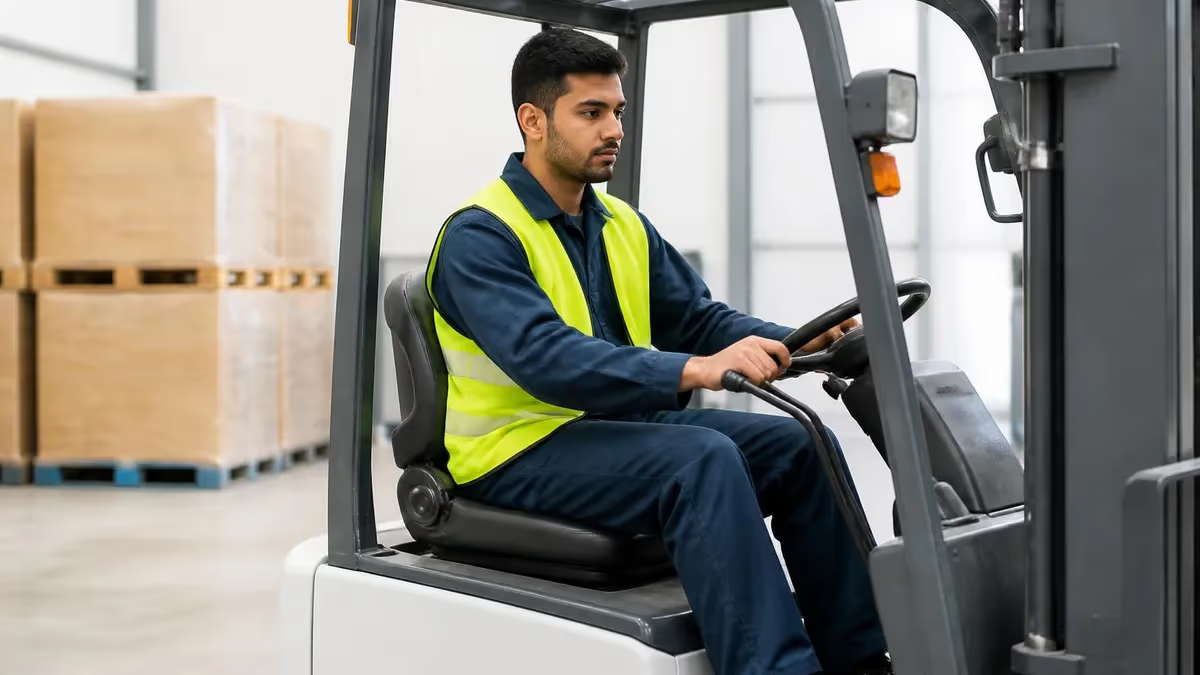
Searching for a forklift course near me is the first step thousands of Australian workers take each year when chasing a higher-paying warehouse, logistics, or construction job. The nationally recognised qualification you need is TLILIC0003 — Licence to operate a forklift truck — and it must be delivered by a Registered Training Organisation (RTO) approved by your state regulator. Knowing what to look for locally, what to pay, and what to expect can save you weeks of wasted time and hundreds of dollars in fees.
Forklift training in Australia is consistent in its national framework but varies wildly in delivery, cost, and class size depending on where you live. A course in regional Queensland might cost $380 and run over two days, while a Sydney inner-west RTO charges $650 and squeezes everything into a single 10-hour day. The difference is rarely about quality — it's about location, machine availability, instructor ratios, and how busy that RTO's assessment slots are with WorkSafe or SafeWork inspectors.
Most learners are surprised to discover that finding the closest provider is not always the smartest move. A course 45 minutes away with smaller class sizes, modern counterbalance forklifts, and an in-house assessor often beats a five-minute drive to a centre that books 12 students per session and shares one assessor across three sites. Travel time pays for itself when you actually pass the High Risk Work Licence (HRWL) assessment on the first attempt rather than re-sitting at $250 a pop.
This guide walks through exactly how to evaluate local TLILIC0003 providers — pricing benchmarks, eligibility rules, what happens on assessment day, the paperwork you need to lodge with your state regulator, and the red flags that signal an RTO is cutting corners. We'll also cover common questions about funding, refresher training, and whether a forklift ticket from Victoria works in Western Australia (it does, but with caveats).
If you're starting from scratch with no warehouse experience, you can still pass — TLILIC0003 is designed for beginners. About 78% of candidates pass on their first attempt when they complete a full-length training program rather than a one-day fast-track. The key is choosing a provider whose teaching style suits how you learn, which is exactly what the rest of this article will help you do. Before booking, also check our guide to forklift licence near me for a deeper breakdown of state-by-state licensing rules.
By the end of this guide you'll have a clear checklist, realistic budget, and the confidence to ring three or four local RTOs and ask the right questions. Let's start with the numbers behind the Australian forklift training market in 2026.
Forklift Training in Australia by the Numbers
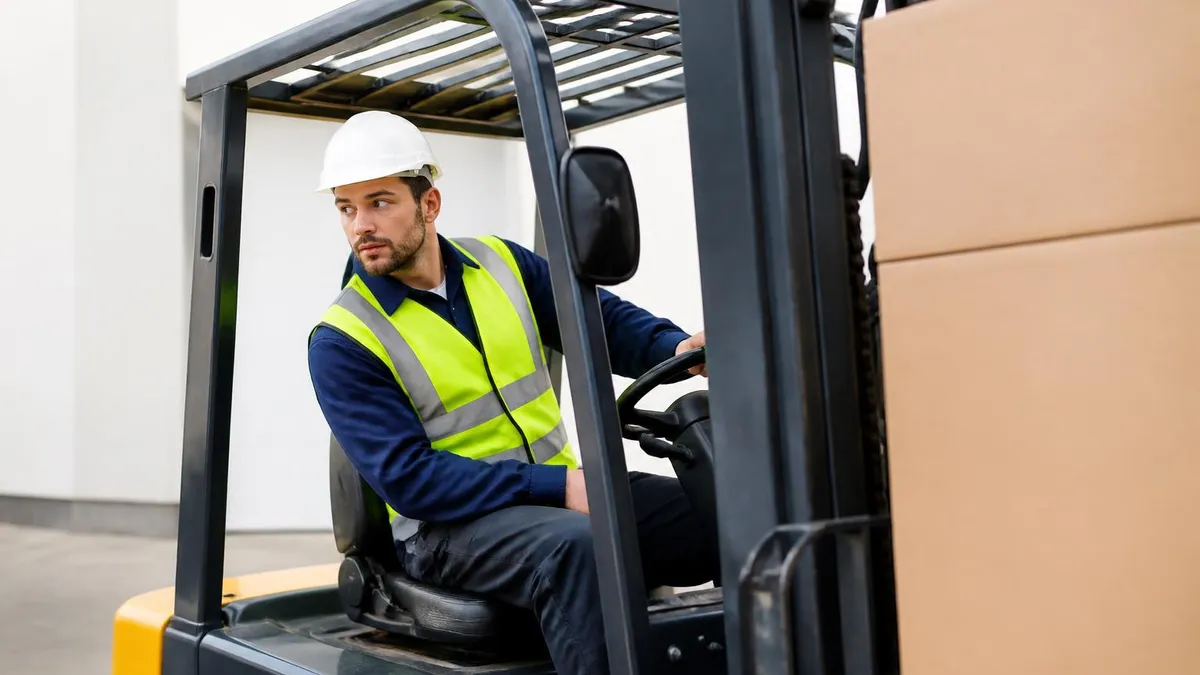
What TLILIC0003 Actually Covers
You'll learn to read load tickets, calculate load weights, identify hazards in the work area, and select the correct forklift attachment. This stage tests your ability to plan safely before any wheel turns.
Pre-start inspections, fluid levels, tyre condition, mast operation, horn, brakes, and load backrest. Examiners watch closely — missing even one item on the checklist can fail you on assessment day.
Practical operation including pallet pick-up, travelling with loads, stacking, de-stacking, navigating ramps, and operating in pedestrian zones. This is the bulk of your assessment time.
Correct shutdown sequence, parking on level ground, mast down, forks tilted, handbrake on, keys removed. Plus reporting any faults or near-misses identified during the shift.
Using hand signals, two-way radios, understanding worksite SWMS documents, exclusion zones, and your legal obligations under the Work Health and Safety Act 2011 and state regulations.
When you type forklift course near me into Google, you'll get a mix of legitimate RTOs, brokers who simply resell other providers' courses at a markup, and sometimes outdated listings for businesses that have closed. Your first filter should always be the official training.gov.au database, which lists every RTO authorised to deliver TLILIC0003. If a provider isn't there, walk away — they cannot legally issue a Statement of Attainment.
The next filter is your state regulator's approved assessor list. In New South Wales that's SafeWork NSW; in Victoria it's WorkSafe Victoria; in Queensland it's WHSQ; Western Australia uses WorkSafe WA. Each state maintains a public register of accredited assessors for high risk work licences. Cross-reference your shortlist of RTOs against this register to confirm they have an in-house assessor or a reliable assessment partnership.
Geography matters more than most people realise. If you live in a major metropolitan area you'll have 15–25 options within a 30km radius. Regional learners often have one or two local options plus mobile assessors who travel to host workplaces. Mobile assessment is fantastic if your employer is paying — the trainer brings everything to your site — but it usually requires a minimum booking of four to six students to be cost-effective.
When evaluating providers, ask three specific questions before booking: how many students per class, what type of forklift will I be assessed on (counterbalance versus reach truck), and is the assessor an employee of the RTO or a contractor. Smaller classes mean more seat time on the machine. Assessment on a counterbalance truck is standard and what most workplaces use. An in-house assessor means quicker turnaround on your paperwork — sometimes same-day rather than waiting two weeks.
Reviews tell a story but read between the lines. Look for specific mentions of fairness on assessment day, quality of pre-course materials, and how the RTO handled people who failed. A 5-star average from 12 reviews is less reliable than a 4.3-star average from 280 reviews where you can see how problems were resolved. Avoid providers where multiple recent reviews mention pressure to pass marginal candidates — that's an audit risk and can invalidate your licence later.
Don't forget to factor in machine variety. If you'll be operating a reach truck or order picker at work, ask whether the RTO offers familiarisation training on those after the TLILIC0003 ticket is issued. Some include it free; others charge $180–$250 for a half-day session. For a deeper look at machine types you might encounter on the job, our multi directional forklift trucks guide is worth bookmarking.
Finally, check the cancellation and rebooking policy. Life happens. The best RTOs let you reschedule once without penalty if you give 48 hours notice. The worst keep your full deposit if you cancel within a week. This information is rarely on the website — you'll need to ring and ask, and get the answer in writing via email before you pay.
TLILIC0003 Practice Test Questions
Prepare for the Forklift Licence Australia - TLILIC0003 exam with our free practice test modules. Each quiz covers key topics to help you pass on your first try.
TLILIC0003 Forklift Licence Australia Atta...
TLILIC0003 Exam Questions covering Forklift Licence Australia Attachments and Modifications. Master TLILIC0003 Test concepts for certification prep.
TLILIC0003 Forklift Licence Australia Batt...
Free TLILIC0003 Practice Test featuring Forklift Licence Australia Battery and Fuel Safety. Improve your TLILIC0003 Exam score with mock test prep.
TLILIC0003 Forklift Licence Australia Emer...
TLILIC0003 Mock Exam on Forklift Licence Australia Emergency Procedures. TLILIC0003 Study Guide questions to pass on your first try.
TLILIC0003 Forklift Licence Australia Fork...
TLILIC0003 Test Prep for Forklift Licence Australia Forklift Pre-Operational Checks. Practice TLILIC0003 Quiz questions and boost your score.
TLILIC0003 Forklift Licence Australia Haza...
TLILIC0003 Questions and Answers on Forklift Licence Australia Hazard Identification. Free TLILIC0003 practice for exam readiness.
TLILIC0003 Forklift Licence Australia Load...
TLILIC0003 Mock Test covering Forklift Licence Australia Load Centre Calculations. Online TLILIC0003 Test practice with instant feedback.
TLILIC0003 Forklift Licence Australia Load...
Free TLILIC0003 Quiz on Forklift Licence Australia Load Handling and Capacity. TLILIC0003 Exam prep questions with detailed explanations.
TLILIC0003 Forklift Licence Australia Oper...
TLILIC0003 Practice Questions for Forklift Licence Australia Operating in Different Environments. Build confidence for your TLILIC0003 certification exam.
TLILIC0003 Forklift Licence Australia Oper...
TLILIC0003 Test Online for Forklift Licence Australia Operating Techniques. Free practice with instant results and feedback.
TLILIC0003 Forklift Licence Australia Pede...
TLILIC0003 Study Material on Forklift Licence Australia Pedestrian Safety. Prepare effectively with real exam-style questions.
Cost, Duration and Funding Options
Most TLILIC0003 courses across Australia sit in the $380–$650 band. Metropolitan Sydney and Melbourne courses trend higher because of operating costs, while regional Victoria, Queensland, and South Australia frequently come in under $450. Group bookings of four or more often unlock 10–15% discounts, so if you have mates job-hunting at the same time it's worth co-ordinating.
The advertised price almost always excludes the state regulator's HRWL application fee, which is paid separately at Australia Post. Expect to budget an additional $76 to $109 depending on your state. Some RTOs roll this into the course fee — read the fine print carefully so you don't get caught with a surprise bill on assessment day before you can lodge.
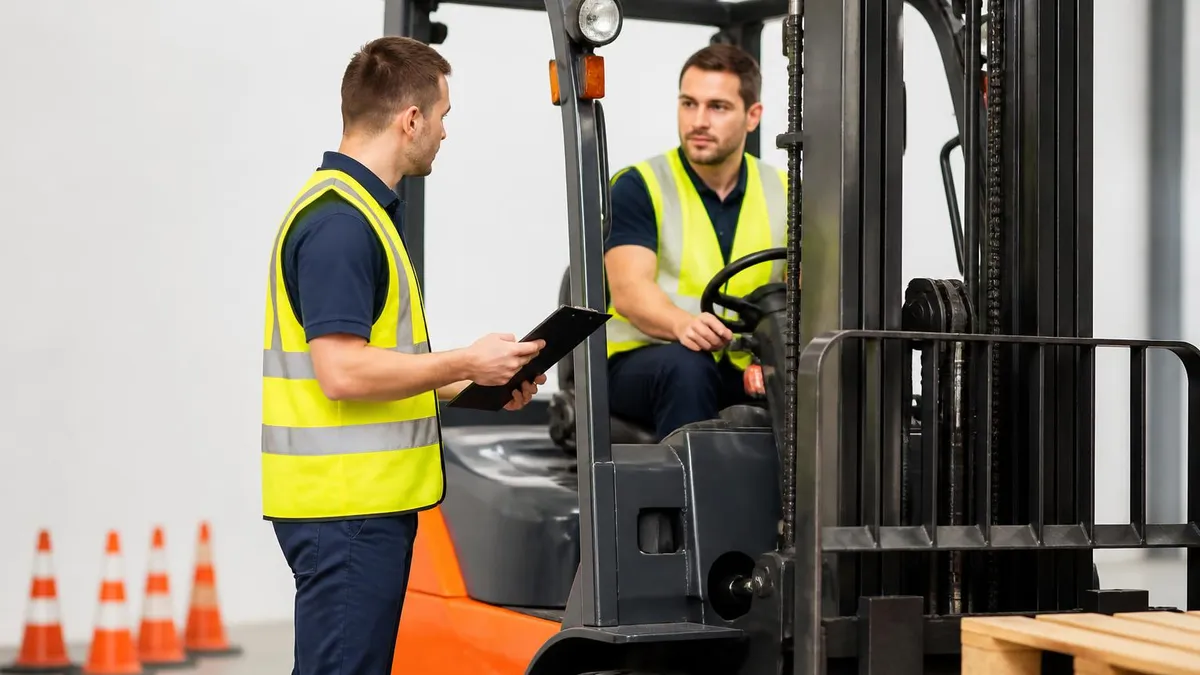
Local Forklift Courses vs Mobile/On-Site Training
- +Lower per-student cost when booking individually at an established RTO
- +Access to professionally maintained training forklifts and dedicated practice yards
- +Wider range of class times — early morning, evening, and weekend options
- +In-house assessors mean faster paperwork turnaround and quicker HRWL issue
- +Easier to compare instructor quality through verified online reviews
- +Opportunity to network with other learners hunting the same warehouse jobs
- +Established training yards have varied terrain, ramps, and confined-space practice areas
- −Travel time and parking costs in major cities can add 1–2 hours per day
- −Fixed class schedules may not align with shift workers or carers
- −Less customised to your specific workplace forklift model or load type
- −Larger class sizes can reduce individual seat time on the machine
- −You learn on the RTO's truck, not the one you'll actually use at work
- −Wet-weather days may shift outdoor practical work to less ideal indoor setups
- −Limited flexibility if you need extra practice — usually charged at hourly rate
Pros and Cons at a Glance
| Pros | Cons |
|---|---|
| Lower per-student cost when booking individually at an established RTO | Fixed class schedules may not align with shift workers or carers |
| Access to professionally maintained training forklifts and dedicated practice yards | Less customised to your specific workplace forklift model or load type |
| Wider range of class times — early morning, evening, and weekend options | Larger class sizes can reduce individual seat time on the machine |
| In-house assessors mean faster paperwork turnaround and quicker HRWL issue | You learn on the RTO's truck, not the one you'll actually use at work |
| Easier to compare instructor quality through verified online reviews | Wet-weather days may shift outdoor practical work to less ideal indoor setups |
| Opportunity to network with other learners hunting the same warehouse jobs | Limited flexibility if you need extra practice — usually charged at hourly rate |
Pre-Course Checklist for Your TLILIC0003 Forklift Course
- ✓Confirm the RTO is listed on training.gov.au as authorised for TLILIC0003
- ✓Verify the assessor appears on your state regulator's approved assessor register
- ✓Bring 100 points of ID — driver licence, Medicare card, and a utility bill or bank statement
- ✓Bring your USI (Unique Student Identifier) — create one free at usi.gov.au if you don't have one
- ✓Wear high-vis vest, steel-cap safety boots, long pants, and a long-sleeve shirt
- ✓Confirm payment method accepted — most RTOs accept card but some still require bank transfer 24 hours prior
- ✓Eat a proper breakfast — the day involves 4+ hours of focused practical operation
- ✓Bring your reading glasses if needed — the theory test includes detailed load charts
- ✓Confirm your meeting point — some RTOs use a secondary yard that's not the head office address
- ✓Have your HRWL application form pre-filled (your RTO will provide it) to lodge same-day
Always do a full pre-start check, even on assessment day
The fastest way to fail TLILIC0003 isn't dropping a load or hitting a witches hat — it's skipping or rushing the pre-start inspection. Assessors deliberately leave faults on the machine (a low tyre, missing horn cover, faulty seatbelt buckle) to test whether you'll notice. Slow down. Walk around the truck. Tick every item. Identifying that planted fault is often the difference between passing and re-sitting.
Assessment day is structured in three parts: knowledge test, practical demonstration, and an oral examination woven through the practical. Most learners stress about the practical, but it's actually the knowledge test that catches people out first. The theory paper is usually 30–40 multiple choice questions covering load charts, weight calculations, exclusion zones, SWMS interpretation, and regulator-specific obligations. You need around 80% to progress to the practical, depending on the RTO.
The morning typically starts with a recap of the previous day's training, a Q&A session, and then the written knowledge test. Plan for about 45 minutes on the paper. Read every question twice — many are deliberately worded to test whether you can distinguish between similar concepts like 'load capacity' versus 'rated capacity at extended load centre'. You can usually take the test in printed or digital form depending on your preference.
Practical assessment follows lunch in most one and two-day courses. You'll be observed performing a full pre-operational check, starting the forklift, conducting basic manoeuvring (forward, reverse, figure-eights, parking), pallet pick-up at ground level, stacking and de-stacking from racking, and operating with restricted vision (large loads). The assessor calls out scenarios — 'a pedestrian has just entered your travel path' — and watches how you respond.
Throughout the practical the assessor will pause you and ask oral questions: 'What's the load centre on this truck? Why are you sounding the horn now? Where is the data plate?' These are not gotcha questions — they're verifying you understand what you're doing rather than just mimicking actions. Speak your thought process out loud as you operate. Examiners reward candidates who narrate their reasoning, even when they make minor errors.
Errors are not automatic fails. The assessor categorises each issue as either critical (instant fail — for example, no seatbelt or running over a marked pedestrian zone) or non-critical (lose a tick, but recover with awareness). You're allowed a small number of non-critical errors as long as you self-correct and acknowledge them. Trying to hide a mistake is a faster path to failure than openly fixing it.
If you don't pass, most RTOs offer one re-sit at a discounted rate — typically $150–$250 — within four weeks. Don't panic and don't rush back. Take a few days, identify what tripped you up, and book additional practice time on the machine before re-attempting. Re-sit pass rates are over 90% when candidates address their specific weakness rather than just trying again immediately.
Finally, dress and behave like a professional. Assessors are paid to certify safe operators — people who will work alongside pedestrians, near racking, and around expensive stock. They want to pass you. Show up clean, alert, with the right PPE, ask clarifying questions when uncertain, and treat the day as a real workshift. That mindset alone lifts your odds significantly.
Every nationally recognised qualification in Australia requires a Unique Student Identifier (USI). If you turn up on day one without one, your RTO cannot legally enter your results into the national training register. Create yours free at usi.gov.au before booking — it takes about three minutes and you'll need your driver licence or passport on hand.
Once you've successfully completed TLILIC0003 your RTO issues a Notice of Satisfactory Assessment (NSA) — a yellow or white form signed by the assessor. This is not your licence. It's your proof of competency, valid for 60 days, that you take to an Australia Post outlet to lodge your High Risk Work Licence application with your state regulator. Missing that 60-day deadline forces you to re-sit the entire assessment.
At Australia Post you'll present the NSA, two forms of ID, a passport-sized photo (some outlets take it on the spot for an extra fee), and the application fee — between $76 and $109 depending on the state. The Post Office staff verify your identity, take your fingerprint or signature sample, and transmit the application electronically. You'll receive a temporary licence printed on the spot which is valid until your physical card arrives, usually within four to six weeks.
Your TLILIC0003 ticket is recognised in every Australian state and territory under the mutual recognition framework. That means a licence issued in Queensland is fully valid in Tasmania, the NT, or anywhere else. You do not need to re-apply when you move interstate. However, if you change your name, address, or licence is lost or stolen, you must notify the issuing state regulator within 14 days — failure to do so can void the licence.
The licence is valid for five years. Renewal is straightforward in most states: pay the renewal fee, complete a refresher if your state requires one (NSW and WA do not require formal refresher training; QLD and SA may). If you've been actively operating during the five-year period the renewal is essentially administrative. If you've had a long break — say, three years out of any forklift role — most safety managers will insist on a voluntary refresher course before letting you back on a truck.
For workers using forklifts daily in complex environments, a verification of competency (VOC) is often required by employers in addition to your HRWL. This is a workplace-specific assessment showing you can operate the specific forklift model, in the specific yard, with the specific loads your job involves. VOCs are usually internal and take 1–2 hours. They are separate from but complementary to your TLILIC0003 ticket.
It's worth bookmarking our free forklift practice test 2026 page and running through it monthly. Knowledge fades. Even certified operators benefit from periodic review of load charts, capacity reduction calculations, and updated WHS guidance. Five years passes faster than you think and showing fresh practical knowledge at renewal time is always a good look.
Beyond the basic licence, consider stacking additional units onto your skill set: TLILIC0008 (boom-type elevating work platform), TLILIC0005 (slewing crane up to 60 tonnes), or load-shifting equipment qualifications. Combined ticket holders consistently earn $4–$8 more per hour than single-ticket forklift operators across warehousing, freight, and construction sectors in Australia. The investment pays back within months.
Practical preparation in the days leading up to your course makes a measurable difference to your performance. Start by reading your provider's pre-course learner guide — almost every RTO emails this 5–7 days before the course start. Skim it once for an overview then re-read the sections on load charts and capacity reduction in detail. Those two concepts are tested heavily in both the written and oral components.
Spend an evening searching YouTube for footage of TLILIC0003 assessments. There are dozens of real candidates filming their assessment days. Watching what good operators look like — how slowly they actually drive, how deliberately they place forks, how they sound the horn at every blind corner — recalibrates your expectations. Most learners drive too fast in their first practice runs because they've only seen warehouse footage of experienced operators at production pace.
If you can visit a working warehouse and watch real operators for an hour or two, do it. Note how they enter aisles, communicate with pedestrians, position the mast, and shut down between tasks. Real-world observation accelerates your learning curve more than any classroom session can. Most warehouse managers are happy to let job-curious people observe if you ring ahead politely and stay out of the way.
The night before your assessment, sleep is more valuable than last-minute cramming. Eat a proper dinner, lay out your PPE and ID, set two alarms, and aim to arrive 20 minutes early. Arriving rushed and flustered is the single biggest contributor to early-morning errors. Coffee is fine in moderation; energy drinks rarely help and can leave you jittery during the practical operation phase.
On the day, listen carefully during the introductory briefing. Assessors often drop hints about what they'll be watching closely — exclusion zones, horn use at intersections, seatbelt compliance, load tilting during travel. These hints are deliberate. Take notes if you can. Then during practical operation, narrate your decisions: 'Sounding the horn, checking left, no pedestrians, proceeding.' That running commentary both proves your knowledge and slows your operating pace to a safer rhythm.
For ongoing skills development, take our mast of forklift overview and combine it with the load chart materials your RTO provides. Operators who understand the mechanical why behind safety rules — why load centres matter, why tilt limits the rated capacity — make far better decisions on the floor than those who memorise rules without comprehension.
Finally, treat your TLILIC0003 ticket as the start of a career, not the end of a course. Continuous improvement, regular practice, and a willingness to learn additional tickets is what separates lifetime warehouse staff from people who plateau after their first job. Operators who keep their skills sharp and add complementary qualifications routinely move into team leader, supervisor, and safety roles within five to eight years.
Sample Forklift Licence Practice Questions
Try these questions from our free Forklift Licence practice tests. The correct answer and an explanation follow each question.
What is the PCBU's obligation for worker training in Racking and Storage?
- A. No obligation exists
- B. To provide information, training, instruction, and supervision adequate for the worker to perform the task safely
- C. To provide a manual only
- D. To tell workers to be careful
Answer: B. To provide information, training, instruction, and supervision adequate for the worker to perform the task safely
The PCBU must ensure workers receive adequate information, training, instruction, and supervision appropriate to the nature of the work and risks.
What is the PCBU's obligation for worker training in Load Centre Calculations?
- A. No obligation exists
- B. To provide information, training, instruction, and supervision adequate for the worker to perform the task safely
- C. To provide a manual only
- D. To tell workers to be careful
Answer: B. To provide information, training, instruction, and supervision adequate for the worker to perform the task safely
The PCBU must ensure workers receive adequate information, training, instruction, and supervision appropriate to the nature of the work and risks.
What is the importance of near-miss reporting for Load Centre Calculations?
- A. Near misses are not important
- B. Near misses reveal existing hazards and allow preventive action before injuries occur
- C. They should only be discussed informally
- D. They complicate record keeping
Answer: B. Near misses reveal existing hazards and allow preventive action before injuries occur
Near misses are valuable indicators of hazards that could cause future injuries — reporting them enables preventive action.
What training is required before workers perform Emergency Procedures activities?
- A. No training — learn on the job
- B. Appropriate training covering hazards, procedures, equipment use, and emergency response
- C. A quick verbal briefing only
- D. Self-study from a pamphlet
Answer: B. Appropriate training covering hazards, procedures, equipment use, and emergency response
Workers must receive comprehensive training appropriate to the risks before performing the activity.
TLILIC0003 Questions and Answers
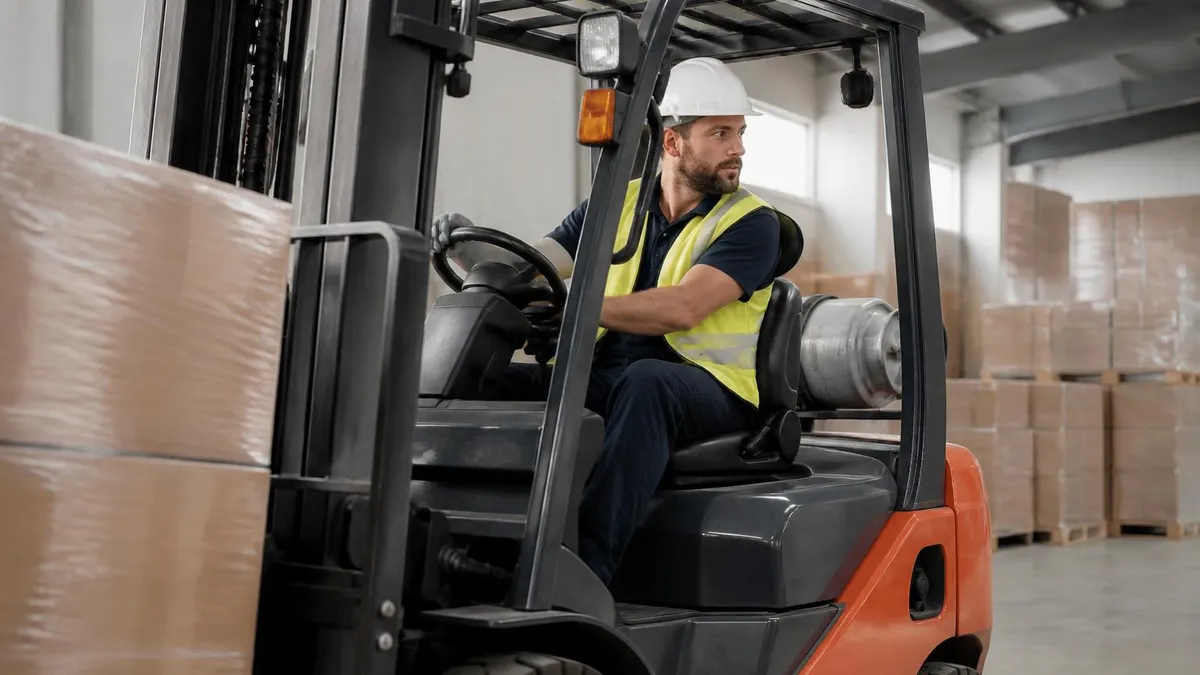
Mast of Forklift: Complete Guide to Forklift Parts for TLILIC0003 Operators in Australia

Multi Directional Forklift Trucks: Complete Guide to Forklift Types and Parts for TLILIC0003 Operators in Australia
Free Forklift Practice Test 2026 - Forklift Exam Questions
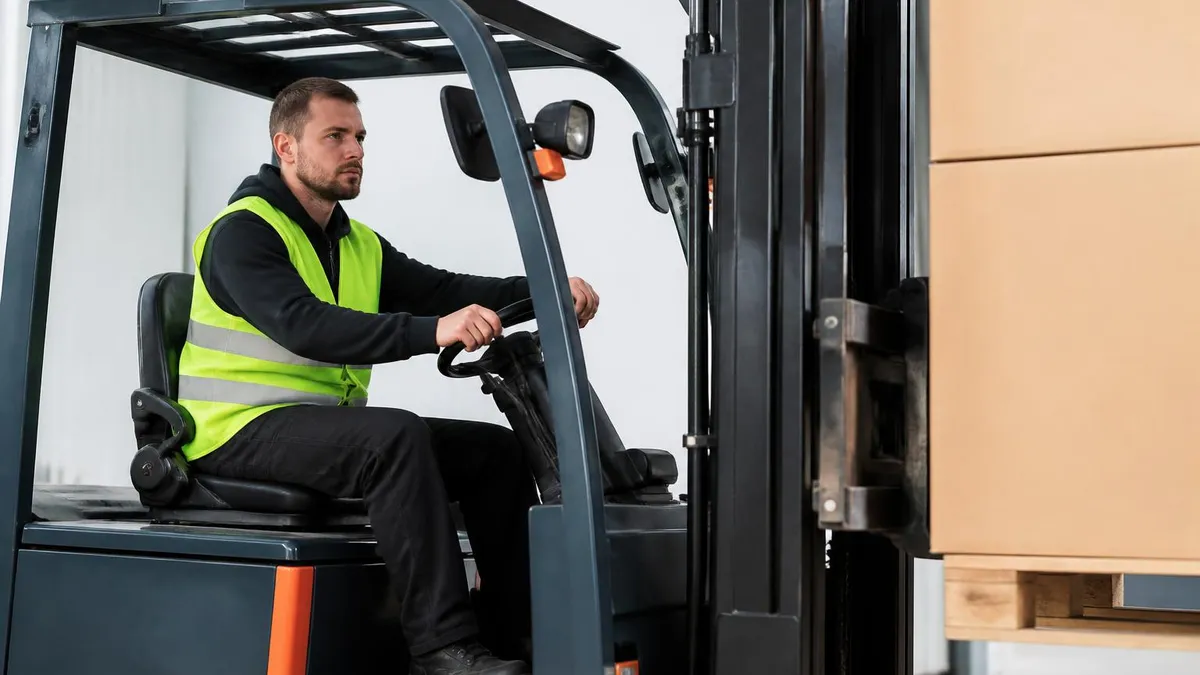
Forklift Clearance Height: Complete Guide to Forklift Specifications for TLILIC0003 Operators in Australia
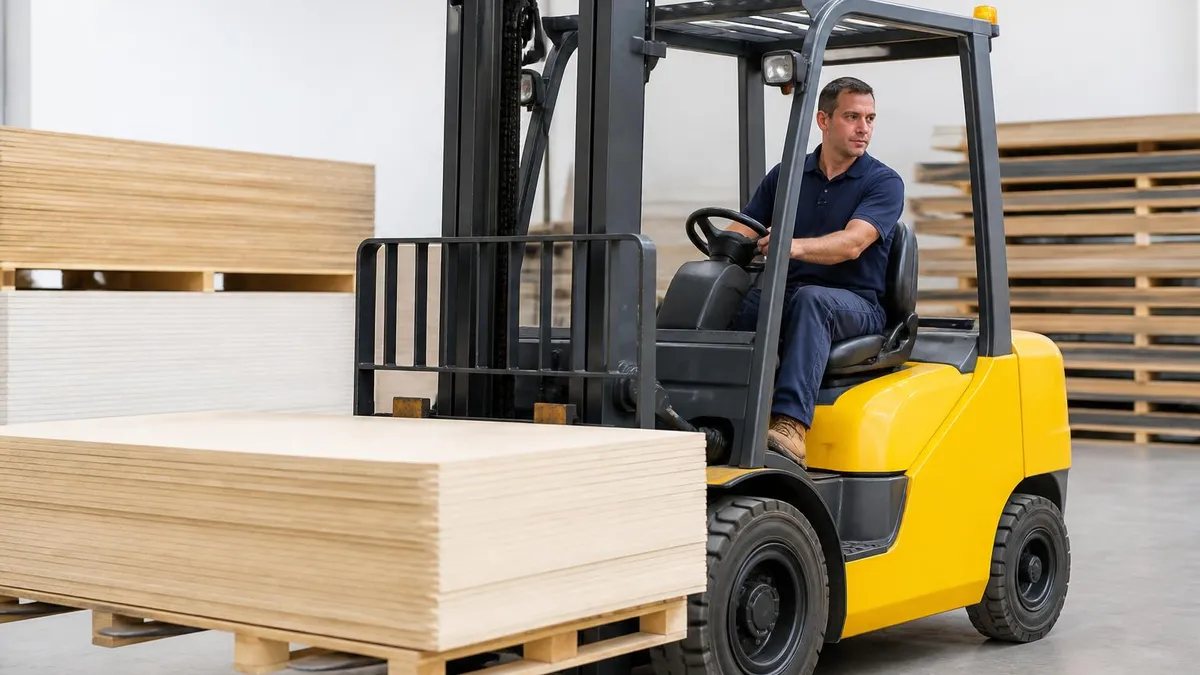
Forklift Licence Near Me: How to Find Local TLILIC0003 Training Providers in Australia
About the Author

Certified Crane Operator & Skilled Trades Exam Specialist
Ferris State UniversityRobert Martinez is a Journeyman Ironworker, NCCCO-certified crane operator, and forklift trainer with a Bachelor of Science in Construction Technology from Ferris State University. He has 21 years of ironworking, rigging, and heavy equipment operation experience across high-rise and industrial construction sites. Robert prepares candidates for crane operator, rigger, forklift, and skilled trades certification examinations.