
Forklift Jobs Sydney: Complete Guide to Securing Work with Your TLILIC0003 Licence in Australia
Find forklift jobs Sydney with your TLILIC0003 licence. Salary data, top employers, hiring suburbs, application tips and skills employers want in 2026 October. 🎯
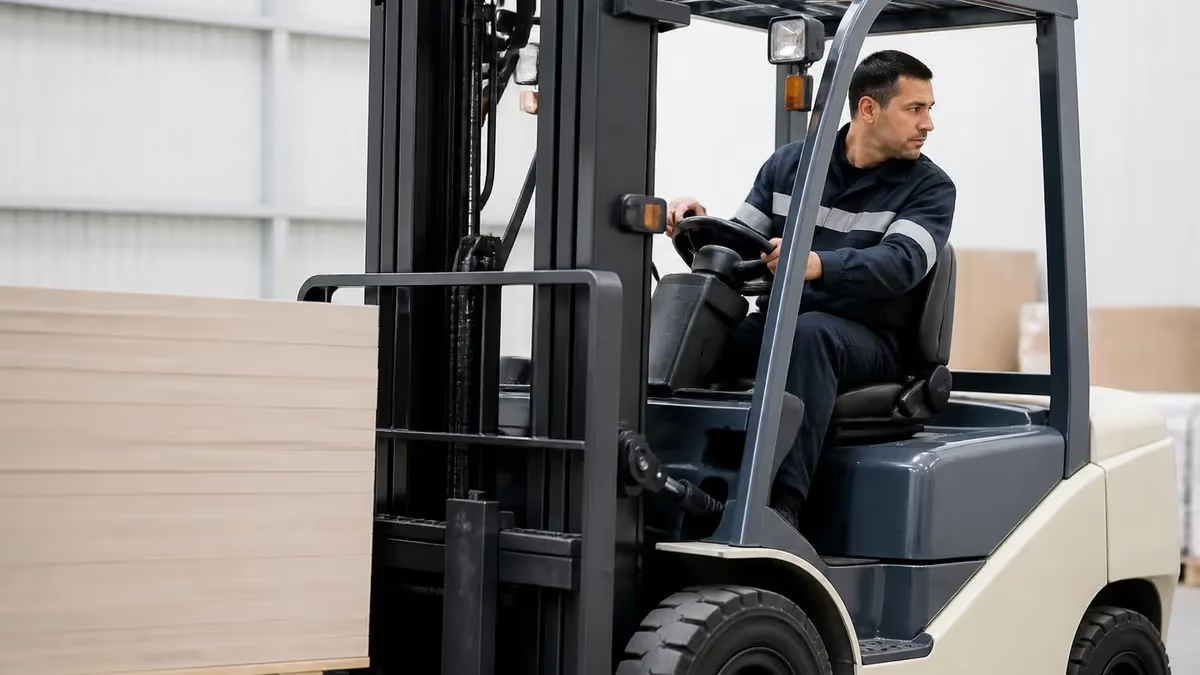
Forklift jobs Sydney has become one of the most consistently searched employment phrases in New South Wales, and for good reason. Sydney's sprawling network of warehouses across Eastern Creek, Erskine Park, Yennora, Prestons and the Port Botany precinct creates thousands of openings every quarter, and almost every one of them requires a valid TLILIC0003 high-risk work licence. Whether you are entering the industry for the first time or transferring from interstate, understanding how the Sydney market actually hires forklift operators will dramatically shorten your job search.
The TLILIC0003 unit of competency covers the licence to operate an LF (counterbalance) class forklift truck, and it remains the single most requested ticket across SEEK, Indeed and direct-hire warehouse boards. Employers in Sydney typically expect candidates to hold the physical licence card issued by SafeWork NSW, not just the statement of attainment. This distinction matters because most labour-hire agencies will not place you on a roster until the plastic card has been processed and uploaded to their compliance portal.
Sydney's forklift demand is driven by three powerhouse sectors: third-party logistics (3PL), e-commerce fulfilment and food manufacturing. The Western Sydney Aerotropolis development has further accelerated warehouse construction, with millions of square metres of new shed space coming online between 2024 and 2028. For new licence holders, this means consistent entry-level opportunities, though pay rates and progression vary significantly between casual labour-hire roles and permanent positions with direct employers.
Wages for forklift operators in Sydney sit well above the national average due to higher cost-of-living adjustments built into enterprise agreements. Casual day-shift operators in Western Sydney can expect $32 to $38 per hour, while afternoon and night-shift premiums push experienced operators past $45 per hour. Reach truck and order picker specialists, particularly those comfortable at 10-metre heights, often command an additional $3 to $5 per hour above standard counterbalance rates.
The hiring process in Sydney has tightened considerably since 2023. Most reputable employers now require a pre-employment medical, a drug and alcohol screen, two recent work references and a verifiable VEVO check if you are not an Australian citizen. Some 3PL operators add a practical assessment on their site, asking candidates to perform a basic pallet pick-up, stack and put-away sequence within a 15-minute window. Preparing for this practical component separates successful applicants from the rest.
This guide walks you through every step of finding, applying for and keeping a forklift job in Sydney. We cover the geographic hotspots, the highest-paying sectors, the documents you must have ready, the interview questions employers actually ask, and the common mistakes that get candidates rejected before they even reach the warehouse floor. If you are still completing your training, the section on choosing the right RTO will help you avoid providers whose certificates carry less weight with Sydney recruiters.
By the end of this article you should have a clear, actionable plan for converting your TLILIC0003 ticket into stable, well-paid work within Sydney's logistics corridor. We have included current salary ranges, suburb-by-suburb employer concentrations, and a practical interview checklist drawn from feedback collected directly from Sydney warehouse managers between late 2024 and early 2026.
Sydney Forklift Job Market by the Numbers
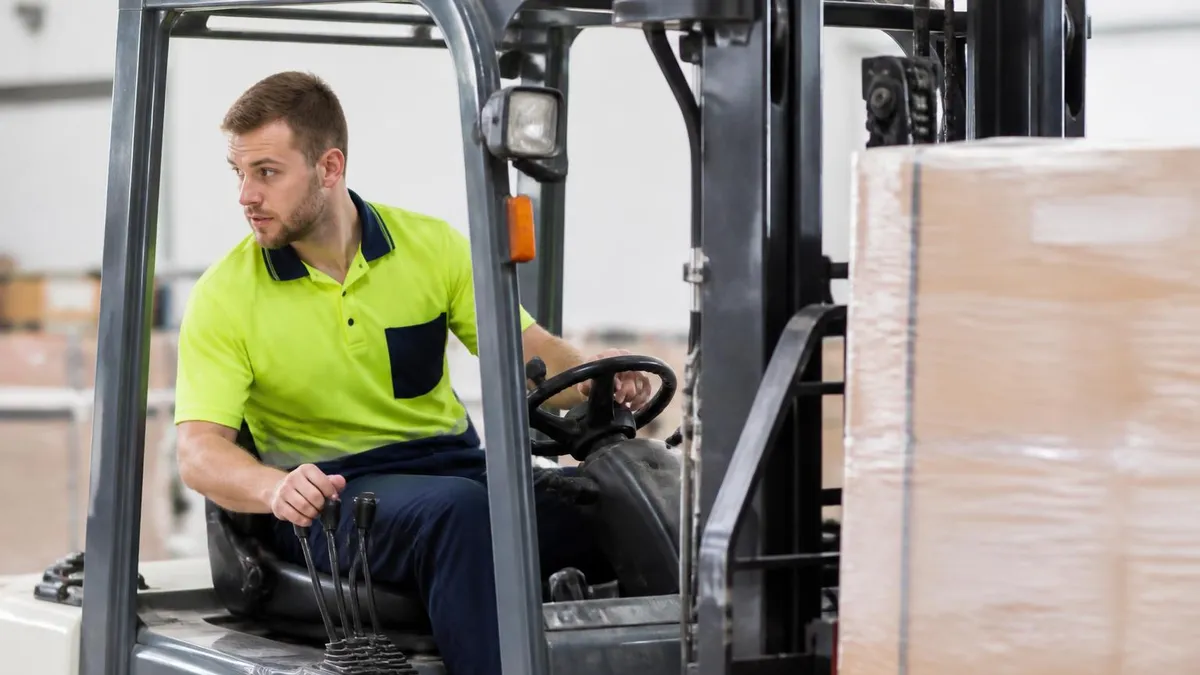
Sydney's Highest-Demand Forklift Hiring Suburbs
The dense M7 corridor warehousing belt is Sydney's busiest hiring zone, with Coles, Woolworths, Toll, DHL and Linfox all running 24/7 distribution centres requiring counterbalance, reach and order picker operators across three shifts.
Historic Western Sydney industrial precinct still hosts hundreds of mid-sized 3PL and manufacturing employers. Wages are slightly lower than M7 sheds, but commute access from Parramatta and Liverpool is excellent for newer operators.
Home to the Moorebank Intermodal Terminal, this area focuses on container handling, reach stacker integration and rail-fed pallet flows. Reach truck specialists earn premium rates here, often $42+ per hour.
Container parks, customs depots and import consolidators dominate. Roles often require an LO (order picker) endorsement alongside LF, and shifts typically align with vessel arrival schedules.
Newest growth zone with Amazon, Bunnings and Kmart Group hubs opening between 2024 and 2027. Strong demand for entry-level operators willing to work rotating rosters and learn voice-pick systems.
Forklift operator wages across Sydney have risen approximately 18 per cent since 2022, driven by labour shortages, rising warehouse productivity demands and inflation-indexed enterprise agreements. Understanding how pay is structured is essential before signing with an agency or accepting a permanent offer, because the headline hourly rate often disguises significant variations in superannuation, leave loadings, overtime multipliers and shift allowances. Two roles advertised at the same base rate can differ by $15,000 a year once you factor in penalties and entitlements.
Casual labour-hire remains the most common entry point. Agencies such as Programmed, Hays, Workfast and Adecco place new TLILIC0003 holders into 3PL warehouses on rolling weekly assignments. Base rates typically sit between $32 and $38 per hour, with a 25 per cent casual loading already included. Successful casuals are often converted to permanent roles after 12 to 26 weeks of consistent performance, though conversion is not guaranteed and depends on the host warehouse's headcount budget.
Permanent direct-hire positions pay a lower hourly rate on paper, often $28 to $33 per hour, but include four weeks of annual leave, ten days of personal leave, superannuation at 12 per cent, long service leave accrual and shift allowances of 15 to 30 per cent depending on roster. For operators planning to stay in the industry long term, permanent roles almost always deliver higher annual take-home pay once overtime and leave are factored in. The trade-off is reduced flexibility and a longer notice period.
Shift loadings dramatically alter earnings. A standard Sydney afternoon shift (typically 2pm to 10pm) attracts a 15 per cent loading, while night shift (10pm to 6am) carries 30 per cent or more. Weekend penalties under most warehousing awards range from 50 per cent on Saturdays to 100 per cent on Sundays. Operators willing to commit to permanent night shift can comfortably exceed $90,000 per year before overtime, particularly in cold storage facilities at sites like Eastern Creek and Minchinbury.
Specialist endorsements unlock the highest pay brackets. Reach truck operators handling double-deep racking above eight metres typically earn $40 to $46 per hour. Container handler and reach stacker operators at Port Botany and the Moorebank Intermodal Terminal can clear $55 per hour with overtime. Cherry picker and improved work platform tickets stacked on top of a forklift licence make you eligible for facility maintenance crews paying premium rates. If you want a deeper understanding of the equipment differences, our guide to multi directional forklift trucks is a good starting point.
Bonus structures are becoming more common in Sydney e-commerce warehouses. Amazon, Catch and The Iconic all run productivity-linked weekly bonuses tied to pick rates, accuracy scores and safety metrics. A well-performing operator can add $150 to $400 per week through these schemes. Be cautious however: aggressive productivity targets have been linked to improved injury rates, and turnover in these facilities is significantly higher than at traditional 3PL sites.
Finally, factor in commute costs. A job in Eastern Creek paying $38 per hour but requiring a 90-minute drive from the Inner West may net you less than a $34 per hour role in Alexandria or Mascot. Sydney's congestion charge, parking constraints and fuel costs all eat into hourly take-home. Many experienced operators deliberately target sites within 30 kilometres of home, accepting slightly lower hourly rates in exchange for two extra hours per day of personal time.
TLILIC0003 Practice Test Questions
Prepare for the Forklift Licence Australia - TLILIC0003 exam with our free practice test modules. Each quiz covers key topics to help you pass on your first try.
TLILIC0003 Forklift Licence Australia Atta...
TLILIC0003 Exam Questions covering Forklift Licence Australia Attachments and Modifications. Master TLILIC0003 Test concepts for certification prep.
TLILIC0003 Forklift Licence Australia Batt...
Free TLILIC0003 Practice Test featuring Forklift Licence Australia Battery and Fuel Safety. Improve your TLILIC0003 Exam score with mock test prep.
TLILIC0003 Forklift Licence Australia Emer...
TLILIC0003 Mock Exam on Forklift Licence Australia Emergency Procedures. TLILIC0003 Study Guide questions to pass on your first try.
TLILIC0003 Forklift Licence Australia Fork...
TLILIC0003 Test Prep for Forklift Licence Australia Forklift Pre-Operational Checks. Practice TLILIC0003 Quiz questions and boost your score.
TLILIC0003 Forklift Licence Australia Haza...
TLILIC0003 Questions and Answers on Forklift Licence Australia Hazard Identification. Free TLILIC0003 practice for exam readiness.
TLILIC0003 Forklift Licence Australia Load...
TLILIC0003 Mock Test covering Forklift Licence Australia Load Centre Calculations. Online TLILIC0003 Test practice with instant feedback.
TLILIC0003 Forklift Licence Australia Load...
Free TLILIC0003 Quiz on Forklift Licence Australia Load Handling and Capacity. TLILIC0003 Exam prep questions with detailed explanations.
TLILIC0003 Forklift Licence Australia Oper...
TLILIC0003 Practice Questions for Forklift Licence Australia Operating in Different Environments. Build confidence for your TLILIC0003 certification exam.
TLILIC0003 Forklift Licence Australia Oper...
TLILIC0003 Test Online for Forklift Licence Australia Operating Techniques. Free practice with instant results and feedback.
TLILIC0003 Forklift Licence Australia Pede...
TLILIC0003 Study Material on Forklift Licence Australia Pedestrian Safety. Prepare effectively with real exam-style questions.
Top Sydney Employer Categories Hiring Forklift Operators
Third-party logistics giants including Toll, Linfox, DHL Supply Chain, CEVA and Australia Post dominate the Sydney forklift hiring market. These operators run dedicated client warehouses for major retailers and FMCG brands, meaning steady year-round volumes with seasonal peaks in October through January. Rosters are typically four-on-four-off panama shifts or rotating five-day patterns with weekend penalties.
3PL warehouses generally offer the most structured training, the clearest path from casual to permanent, and the broadest exposure to different equipment types. Operators here learn voice-pick, RF scanning and warehouse management system fundamentals that transfer to almost any other employer. The downside is that pace is fast, KPIs are strict, and supervisors expect immediate compliance with site safety procedures from day one.
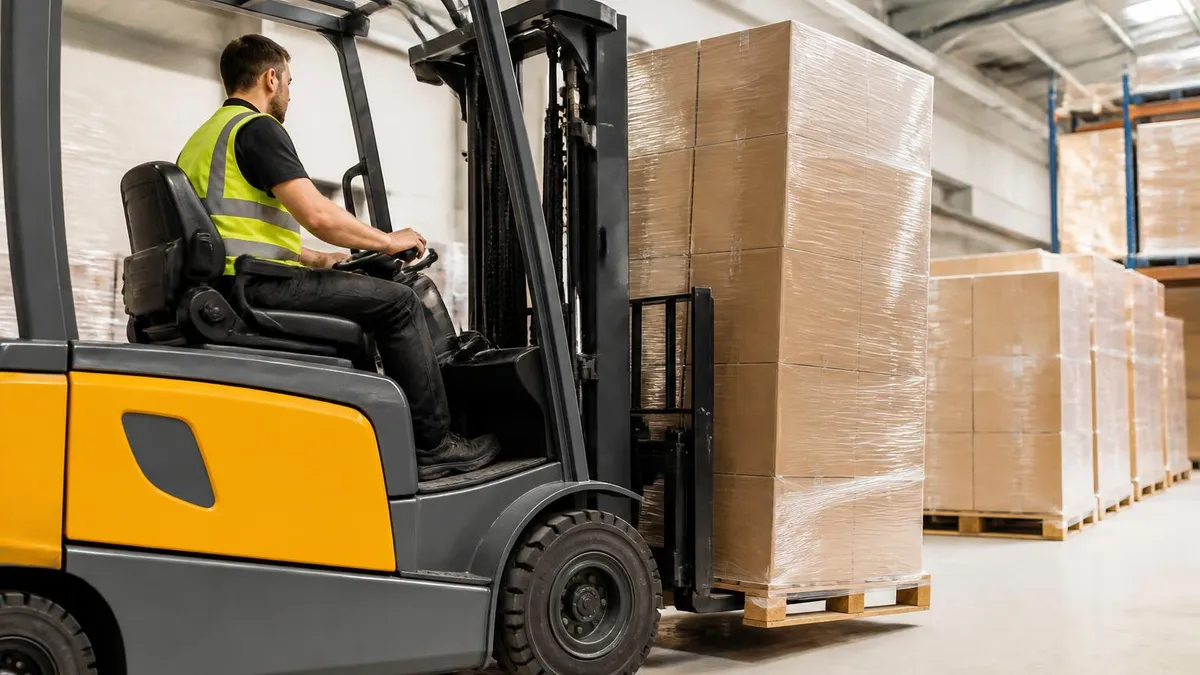
Casual Labour-Hire vs Permanent Direct-Hire in Sydney
- +Higher headline hourly rate including 25% casual loading
- +Flexibility to refuse shifts and try different sites
- +Fast entry pathway for new TLILIC0003 holders
- +Exposure to multiple warehouse environments and equipment
- +Pathway to permanent conversion at well-performing sites
- +Weekly pay rather than fortnightly cycles
- −No paid annual leave, sick leave or public holidays
- −Shifts can be cancelled with as little as two hours notice
- −Superannuation paid only on hours actually worked
- −Slower access to home loans due to inconsistent income
- −No long service leave accrual with the host employer
- −Limited training investment from agencies beyond basics
Pros and Cons at a Glance
| Pros | Cons |
|---|---|
| Flexibility to refuse shifts and try different sites | No paid annual leave, sick leave or public holidays |
| Exposure to multiple warehouse environments and equipment | Shifts can be cancelled with as little as two hours notice |
| Pathway to permanent conversion at well-performing sites | Superannuation paid only on hours actually worked |
| Weekly pay rather than fortnightly cycles | Slower access to home loans due to inconsistent income |
Forklift Jobs Sydney: Application Checklist
- ✓Valid SafeWork NSW TLILIC0003 plastic licence card (statement of attainment alone is rarely accepted)
- ✓Photo identification — driver licence or passport, with current Sydney address
- ✓Two recent employer references with phone numbers and email addresses verified
- ✓Tax File Number, superannuation fund details and bank account ready for onboarding
- ✓VEVO check or copy of passport visa page if you are not an Australian citizen
- ✓Steel-cap boots, hi-vis shirt and long pants ready for site induction day one
- ✓Updated resume listing every type of forklift you have operated and approximate hours
- ✓Email address that you check daily — most agencies send shift offers by email
- ✓Smartphone with mobile data for digital induction apps and timesheet platforms
- ✓Pre-employment medical clearance and willingness to undertake drug and alcohol screening
Logbook hours beat any cover letter
Sydney warehouse managers consistently rate verified machine hours as the single strongest indicator of an applicant's suitability. Keep a simple logbook recording site name, dates, machine type and approximate hours operated. Candidates who present a logbook at interview are roughly twice as likely to be offered immediate work compared to those relying on verbal claims of experience.
Interviewing for a forklift role in Sydney rarely resembles a traditional office interview. Most warehouse managers and labour-hire recruiters prefer short, structured conversations focused on three things: your licence currency, your safety mindset, and your willingness to work the shifts on offer. Expect the entire phone screen to last 10 to 15 minutes, with the practical site visit being where the real assessment takes place. Preparing for both stages separately significantly improves your conversion rate.
The phone screen typically covers basic eligibility questions: do you hold a current TLILIC0003 card, when did you last operate a counterbalance, what suburbs can you commute to, are you available for early morning or night shifts, and do you have your own transport. Answer concisely and honestly. Recruiters can verify licence currency through the SafeWork NSW public register in under a minute, so embellishing your card status is pointless and will end the conversation immediately.
Behavioural questions, when they come, almost always focus on safety incidents and near misses. Expect variations of "tell me about a time you identified a hazard" or "what would you do if you saw a colleague operating unsafely". The recommended approach is to describe a real example using the situation-action-outcome structure: briefly set the scene, explain what you did, and state what changed as a result. Generic textbook answers without a specific example tend to score poorly.
The practical assessment, where it exists, usually involves a 10 to 20 minute supervised drive. You will be asked to perform a pre-start inspection, demonstrate horn use at intersections, pick up a pallet from ground level, transport it through a defined route, place it in a racking position between one and three metres high, and reverse the machine safely back to the starting point. Assessors watch for seatbelt use, mast tilt discipline, travelling with forks low, and head checks before reversing.
Common mistakes during practical assessments include forgetting to honk at blind corners, travelling with the load tilted forward, leaving the forks raised when stationary, and failing to apply the park brake when dismounting. Each of these is a potential fail point, and several together will end the assessment. Reviewing the basics of mast operation and load handling through a guide such as our overview of the mast of forklift components helps refresh the fundamentals before walking onto site.
Document checks happen immediately after a successful practical. You will be asked to provide your licence, ID, bank details and superannuation information. Many Sydney sites also require you to complete a 30 to 60 minute online induction covering site-specific hazards, emergency procedures, exclusion zones and reporting protocols. Do not skim this content. Inductions often include a short quiz at the end, and failing it means you cannot start work that day even if everything else has been approved.
Finally, treat the first shift as an extended interview. Sydney warehouse supervisors make retention decisions quickly, often within the first three to five shifts. Arrive 15 minutes early, ask sensible questions, follow instructions exactly the first time, and never argue with safety call-outs even if you disagree with them. Operators who demonstrate humility and consistency in the first fortnight almost always receive ongoing work, while those who push back on minor issues are quietly removed from the roster.
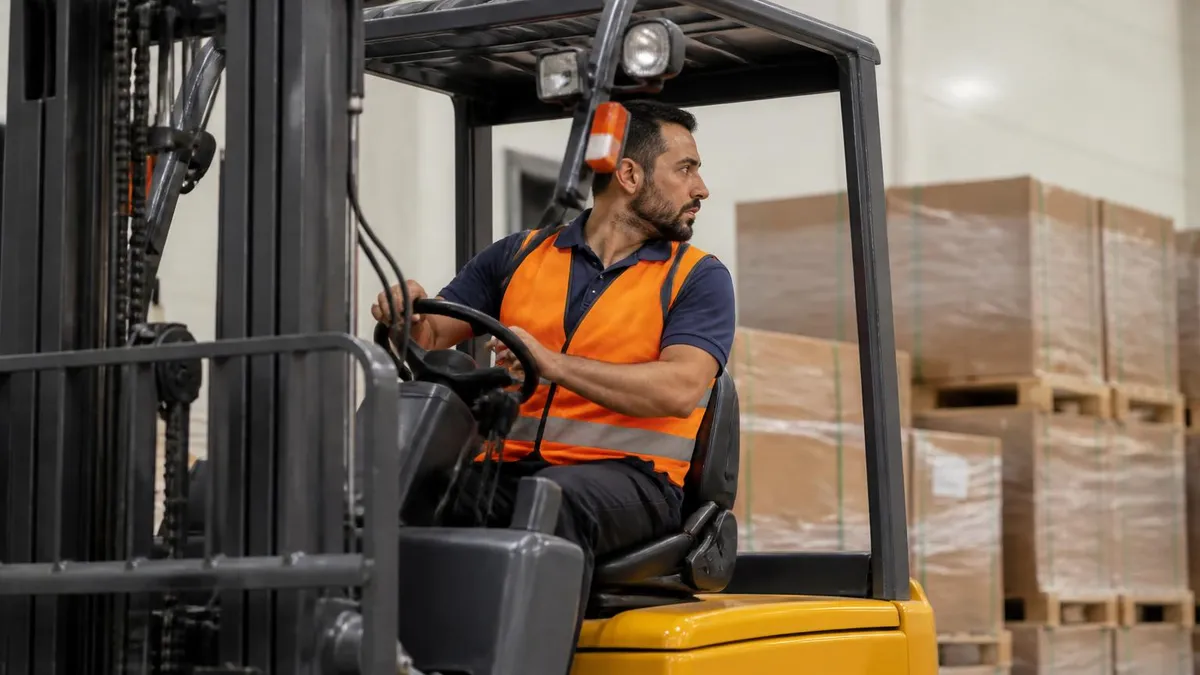
SafeWork NSW continues to cancel licences obtained through non-compliant RTOs. If your TLILIC0003 was issued in under two days, without on-machine assessment, or paid for in cash without a tax invoice, your card may be flagged during employer compliance audits. Always verify your RTO via training.gov.au before enrolling, and keep your assessment paperwork for at least seven years.
Career progression for forklift operators in Sydney is more structured than many new entrants realise. The pathway typically moves from counterbalance operator to reach truck and order picker specialist, then to lead hand or trainer, and ultimately to warehouse supervisor or operations coordinator. Each step carries a meaningful pay increase and broader responsibility. Operators who deliberately plan their progression often double their starting wage within five to seven years, while those who remain on basic counterbalance work see only inflationary adjustments.
Adding equipment endorsements is the fastest way to lift your hourly rate. After six to twelve months of consistent LF work, most Sydney operators add LO (order picker) and reach truck competency through their employer or a dedicated RTO. Many 3PL and e-commerce sites will fund this training for permanent staff once you have proven reliability. Stacking these endorsements typically adds $4 to $8 per hour and opens up roles in higher-bay racking facilities, container parks and intermodal terminals.
Specialised tickets unlock additional pay tiers. Container handler, reach stacker, improving work platform (EWP yellow card) and dogging or rigging tickets are all complementary to forklift work and frequently requested at Port Botany, Moorebank and major construction supply yards. A combined LF, LO, reach and EWP profile makes you eligible for facility maintenance roles paying upwards of $50 per hour, often with vehicle allowances and on-call premiums on top.
Becoming a lead hand or shift supervisor is a natural progression for experienced operators with strong communication skills. Lead hand roles typically pay $42 to $48 per hour and involve coordinating a small team, conducting toolbox talks, performing safety observations and managing shift handovers. Supervisors earn $90,000 to $115,000 annually as salaried staff, with bonuses and superannuation on top. Most Sydney employers promote internally, so building a strong reputation at one site is often more effective than chasing external supervisor roles.
Training and assessing is another lucrative pathway. Operators with five or more years of experience can complete the TAE40122 Certificate IV in Training and Assessment and apply to become forklift trainers and assessors with an RTO. Sydney trainer day rates typically sit between $480 and $650, with many trainers working four days per week and earning the equivalent of $130,000 annually. The role suits patient, safety-focused operators who enjoy teaching and have strong written communication.
Warehouse operations management roles open up for experienced supervisors who add formal qualifications such as a Diploma of Logistics or a Bachelor of Supply Chain. These roles pay $130,000 to $180,000 in Sydney and increasingly include responsibility for warehouse management systems, automation projects and continuous improvement programs.
Many of Sydney's most senior logistics managers began their careers on the warehouse floor with a TLILIC0003 ticket, and they actively prefer hiring internal candidates who understand operations from the ground up. If you are still mapping where to obtain advanced training, our resource on finding a forklift licence near me covers reputable Sydney RTOs offering full progression pathways.
Finally, consider geographic mobility within New South Wales as part of your long-term plan. Operators willing to work fly-in-fly-out at regional mine sites, Hunter Valley logistics hubs or Newcastle's port precinct can earn $130,000 to $180,000 annually on 14/14 or 8/6 rosters. The trade-off is significant time away from home, but for operators in their twenties or those planning a major purchase such as a home deposit, the income acceleration can be significant.
With the strategy clear, the final piece is execution: how you actually apply for forklift jobs in Sydney week by week, and what to do during the unavoidable lulls between assignments. A scattergun approach of sending the same resume to fifty job ads rarely works. The operators who land work fastest treat job searching as a structured weekly process with specific application targets, follow-up routines and skill maintenance habits.
Start by registering with at least four Sydney-focused labour-hire agencies in your first week. Programmed, Hays Logistics, Workfast, Adecco Industrial, Randstad and Recruitment Edge all run dedicated warehouse and forklift desks. Complete each agency's full registration including video induction, licence upload and reference checks the same day you sign up. Agencies almost always offer first shifts to candidates whose paperwork is already cleared, not to those still in the onboarding queue when an urgent call-out comes in.
Direct applications to specific employers should run in parallel. Target the careers pages of Toll, Linfox, DHL, Amazon, Coles, Woolworths, Bunnings Distribution and Kmart Group fortnightly. Many of these employers also recruit through Workforce Australia and university job boards for graduate logistics streams that frequently include forklift operator pathways. A direct hire offer almost always pays better long term than agency work, so investing time in direct applications is worthwhile even when casual shifts are plentiful.
Maintain your skills during quiet periods. If a fortnight passes without a shift, consider a paid refresher session at a local training provider for $80 to $150. This keeps your reflexes sharp and gives you something concrete to mention when recruiters ask what you have been doing. Reviewing technical content such as load chart interpretation, capacity calculations and pre-start inspection checklists is equally valuable, particularly before an interview at a new site with unfamiliar equipment.
Build a small professional network. Join two or three forklift operator groups on Facebook and LinkedIn that are specifically focused on Sydney logistics. These groups frequently post unadvertised shifts, warn members about problematic employers, and share information about wage rates and conditions at specific sites. Some of the most reliable Sydney warehouse jobs are never publicly advertised because they are filled through word-of-mouth from existing employees.
Keep your documentation current. Set diary reminders for your licence expiry (TLILIC0003 must be renewed every five years), pre-employment medical (often valid for 12 to 24 months depending on employer), and any white card or EWP tickets. Letting a credential lapse, even by a day, will remove you from agency rosters until renewal is complete. Renewal applications through SafeWork NSW can take three to six weeks, so start the process at least two months before expiry. For a refresher on equipment fundamentals before any assessment, our guide on forklift clearance height and other key specifications is worth reviewing.
Finally, look after your body. Forklift operating is physically demanding in ways new entrants underestimate: extended seated postures, frequent rotation, repeated mounting and dismounting, and occasional manual handling all contribute to lower back, shoulder and knee strain. Stretch before each shift, maintain core strength outside of work, and report any pain or discomfort early. Operators who treat their physical fitness as a professional obligation typically enjoy 25 to 30 year careers, while those who ignore early warning signs often leave the industry within ten years due to injury.
Sample Forklift Licence Practice Questions
Try these questions from our free Forklift Licence practice tests. The correct answer and an explanation follow each question.
What penalties apply for non-compliance with Hazard Identification regulations in Australia?
- A. No penalties
- B. Significant fines (up to millions of AUD for corporations) and potential imprisonment for serious offences
- C. A verbal warning only
- D. A small administrative fee
Answer: B. Significant fines (up to millions of AUD for corporations) and potential imprisonment for serious offences
Australian WHS penalties are severe, with Category 1 offences carrying fines up to AUD 3 million and potential imprisonment.
What penalties apply for non-compliance with Operating in Different Environments regulations in Australia?
- A. No penalties
- B. Significant fines (up to millions of AUD for corporations) and potential imprisonment for serious offences
- C. A verbal warning only
- D. A small administrative fee
Answer: B. Significant fines (up to millions of AUD for corporations) and potential imprisonment for serious offences
Australian WHS penalties are severe, with Category 1 offences carrying fines up to AUD 3 million and potential imprisonment.
Under WHS legislation, who is responsible for ensuring forklift operators hold a valid High Risk Work (HRW) licence?
- A. The forklift operator only
- B. The person conducting the business or undertaking (PCBU)
- C. The state transport authority
- D. The equipment hire company only
Answer: B. The person conducting the business or undertaking (PCBU)
The PCBU has the primary duty to ensure that only workers holding a valid HRW licence for the class of forklift operate the equipment at their workplace.
What penalties apply for non-compliance with Racking and Storage regulations in Australia?
- A. No penalties
- B. Significant fines (up to millions of AUD for corporations) and potential imprisonment for serious offences
- C. A verbal warning only
- D. A small administrative fee
Answer: B. Significant fines (up to millions of AUD for corporations) and potential imprisonment for serious offences
Australian WHS penalties are severe, with Category 1 offences carrying fines up to AUD 3 million and potential imprisonment.
TLILIC0003 Questions and Answers
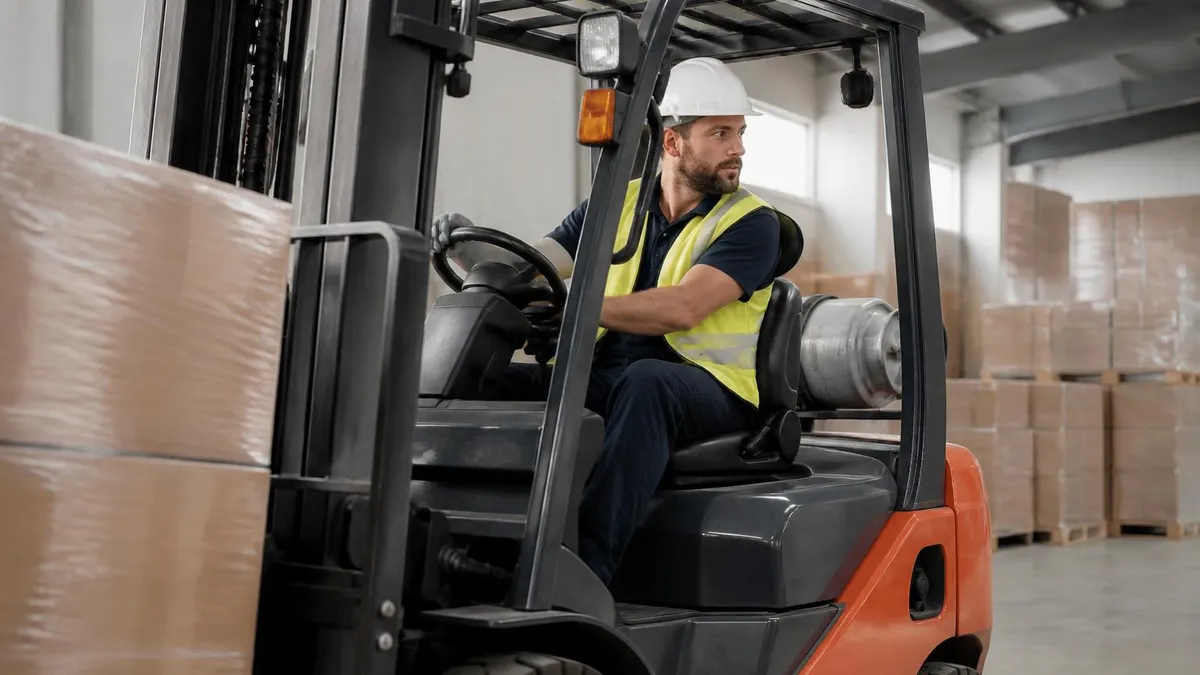
Mast of Forklift: Complete Guide to Forklift Parts for TLILIC0003 Operators in Australia
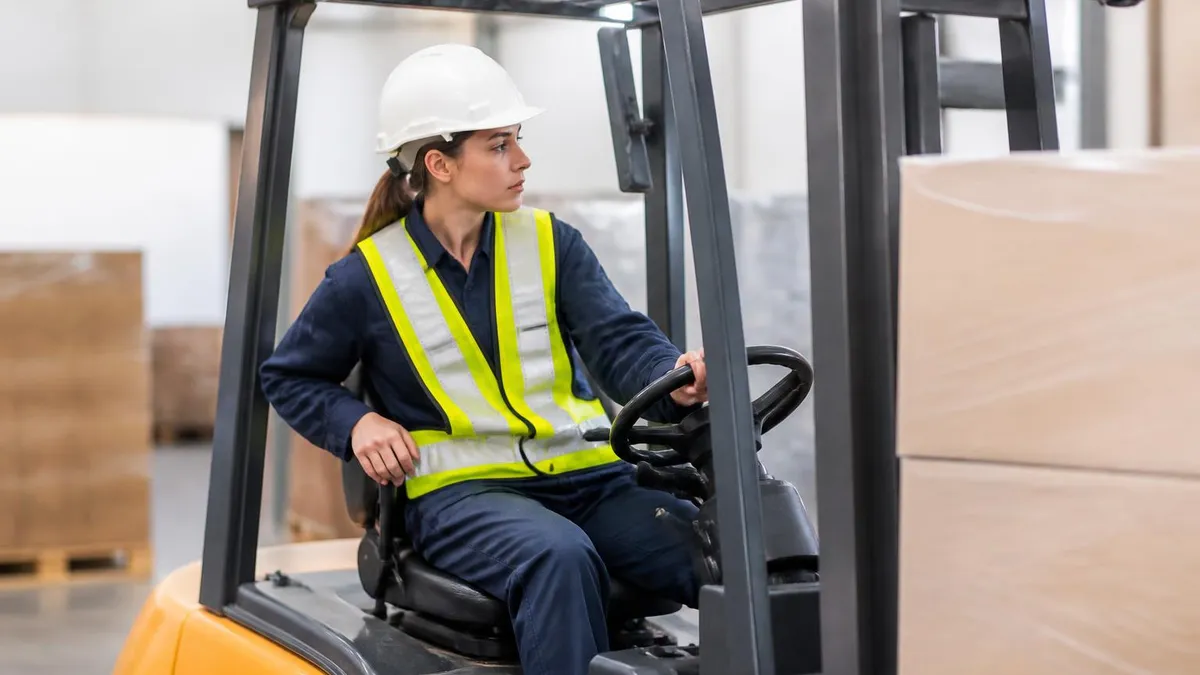
Multi Directional Forklift Trucks: Complete Guide to Forklift Types and Parts for TLILIC0003 Operators in Australia
Free Forklift Practice Test 2026 - Forklift Exam Questions
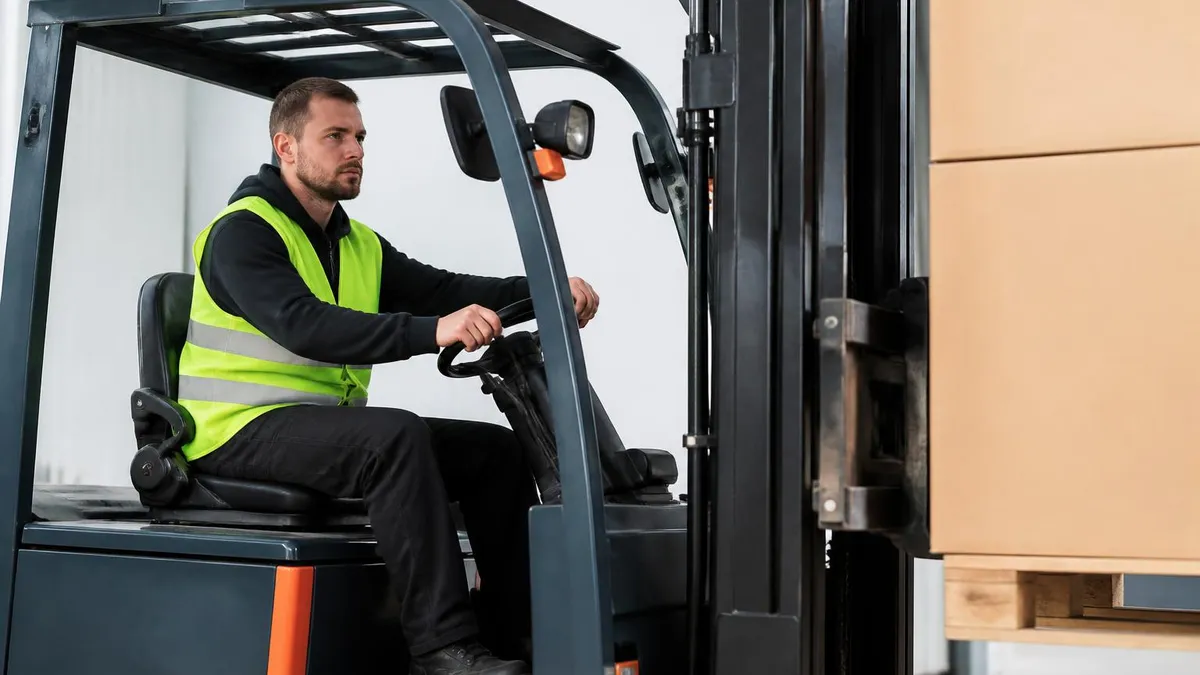
Forklift Clearance Height: Complete Guide to Forklift Specifications for TLILIC0003 Operators in Australia
Forklift Licence Near Me: How to Find Local TLILIC0003 Training Providers in Australia
About the Author

Certified Crane Operator & Skilled Trades Exam Specialist
Ferris State UniversityRobert Martinez is a Journeyman Ironworker, NCCCO-certified crane operator, and forklift trainer with a Bachelor of Science in Construction Technology from Ferris State University. He has 21 years of ironworking, rigging, and heavy equipment operation experience across high-rise and industrial construction sites. Robert prepares candidates for crane operator, rigger, forklift, and skilled trades certification examinations.