
ServSafe Manager Book 6th Edition: Complete Study Guide & Certification Prep Hub
Master the ServSafe Manager Book 6th Edition 📚 — exam topics, practice tests, study schedules, and everything you need to pass certification in 2026 September.

The ServSafe Manager Book 6th Edition is the gold-standard textbook used by food service professionals across the United States to prepare for the servsafe manager certification exam. Whether you work in a restaurant, school cafeteria, healthcare facility, or hotel kitchen, the 6th edition provides the foundational knowledge regulators, employers, and health departments expect every food protection manager to demonstrate. Understanding how to navigate this textbook — and supplement it with targeted practice — is the single most reliable path to passing on your first attempt.
ServSafe is a certification program developed and administered by the National Restaurant Association Educational Foundation (NRAEF). The servsafe certification is recognized in all 50 states and is often required by local health codes before a manager can legally supervise food preparation. The Manager exam consists of 90 questions, with 80 scored and 10 unscored pilot questions. A passing score is 75 percent, meaning you must answer at least 60 of the 80 scored questions correctly. That threshold sounds manageable, but many first-time test-takers underestimate the exam's depth.
The 6th edition of the ServSafe Manager Book was updated to align with the 2013 FDA Food Code, and it remains the current required reading for the proctored, ANSI-accredited exam. The book covers nine core domains: providing safe food, forms of contamination, the safe food handler, the flow of food (an introduction, purchasing, and receiving), the flow of food (storage, preparation, and service), food safety management systems, safe facilities and pest management, cleaning and sanitizing, and regulations. Each chapter maps directly to questions you will encounter on test day.
Studying from the textbook alone, however, is rarely sufficient. The most successful candidates combine close reading of the 6th edition with servsafe food manager certification supplemental resources, including practice exams that mirror the question style and difficulty of the actual assessment. Research into certification outcomes consistently shows that candidates who complete at least 200 practice questions before exam day score significantly higher than those who rely solely on passive reading.
One important distinction to understand before you begin: the servsafe food handler certification and the servsafe manager certification are two separate credentials with different textbooks, exam formats, and legal standing. The Food Handler certificate is a 15-question online assessment for entry-level workers and does not require a proctor. The Manager certification, by contrast, requires a proctored, 2-hour exam session and demonstrates a higher level of food safety knowledge, making it the credential most required by local jurisdictions and corporate food service operators.
This article serves as a complete prep hub for the ServSafe Manager Book 6th Edition — from a breakdown of every chapter and what to study, to a realistic study schedule, honest pros and cons of the official textbook, and a curated set of free practice questions you can start using right now. By the time you finish reading, you will have a concrete action plan to earn your servsafe certified credential with confidence.
If you are just starting your food safety journey or returning to recertify after five years, the guidance here applies equally. The 6th edition content has remained the controlling study material for the proctored exam, and the strategies outlined in this guide are drawn from the exam blueprint itself. Bookmark this page, grab your textbook, and let's get to work building the knowledge base that gets you certified.
ServSafe Manager Certification by the Numbers

4-Week ServSafe Manager 6th Edition Study Schedule
- ▸Read Chapter 1 (Providing Safe Food) and highlight FDA Food Code references
- ▸Complete Chapter 1 review questions; score and review every missed item
- ▸Read Chapter 2 (Forms of Contamination) — focus on biological, chemical, physical hazards
- ▸Create a contamination flashcard set covering TCS foods and their temperature danger zone
- ▸Read Chapter 3 (The Safe Food Handler) — memorize handwashing steps and exclusion rules
- ▸Take a 30-question practice quiz on Chapters 1–3 to benchmark baseline knowledge
- ▸Read Chapter 4 (Flow of Food: An Introduction) — HACCP principles overview
- ▸Study the temperature requirements for receiving deliveries and build a quick-reference chart
- ▸Read Chapter 5 (Flow of Food: Purchasing and Receiving) — focus on rejection criteria
- ▸Read Chapter 6 (Flow of Food: Storage) — FIFO method, labeling rules, storage temperatures
- ▸Read the Preparation and Service sections — thawing methods, cooling requirements, reheating rules
- ▸Complete 50 flow-of-food practice questions and review all wrong answers with chapter references
- ▸Read Chapter 7 (Food Safety Management Systems) — master the 7 HACCP principles
- ▸Build a HACCP process chart from memory and verify against the textbook
- ▸Read Chapter 8 (Safe Facilities and Pest Management) — ventilation, plumbing, IPM
- ▸Read Chapter 9 (Cleaning and Sanitizing) — chemical sanitizer concentrations and contact times
- ▸Review regulations chapter and identify which federal, state, and local requirements overlap
- ▸Take a 90-question full-length practice exam under timed conditions; record your score
- ▸Identify your three lowest-scoring domains from Week 3 timed exam
- ▸Re-read the corresponding textbook chapters for weak domains only
- ▸Complete two additional 90-question timed practice exams over two separate days
- ▸Review every missed question and find its location in the 6th Edition textbook
- ▸Do a final flashcard pass on TCS foods, temperature thresholds, and HACCP critical limits
- ▸Get a good night's sleep before exam day — cramming in the final 12 hours is counterproductive
The ServSafe Manager exam draws heavily from the content in the 6th edition, but the questions are written to test application and analysis — not mere memorization. The exam is developed in alignment with the Conference for Food Protection (CFP) standards, meaning each question is designed to assess whether a manager can make the right decision in a real kitchen environment, not just recite a definition. This distinction is critical for how you approach your study sessions.
The largest single domain on the exam is the flow of food, which covers purchasing, receiving, storage, preparation, and service. Together these topics account for roughly 40 percent of the scored questions. A manager who deeply understands the temperature danger zone (41°F to 135°F), proper cooling procedures (from 135°F to 70°F within two hours, and from 70°F to 41°F within an additional four hours), and the FIFO (First In, First Out) labeling system will have a massive advantage on exam day. These are not abstract concepts — they come up again and again across multiple question formats.
HACCP — Hazard Analysis and Critical Control Points — is another exam heavyweight. The 6th edition devotes an entire chapter to the seven HACCP principles, and the exam tests whether candidates can identify critical control points, establish critical limits, and understand corrective actions. Expect scenario-based questions such as: "A food worker finds that the temperature of cooked chicken in a steam table has dropped to 120°F. What is the correct corrective action?" These scenario questions require genuine understanding, not surface-level familiarity.
Contamination is a third major pillar. The 6th edition breaks contamination into biological (pathogens), chemical (cleaning agents, pesticides), and physical (bone fragments, glass) categories. The exam tests your ability to identify the most common foodborne illness pathogens — Salmonella, Norovirus, E. coli O157:H7, Hepatitis A, and Shigella are the Big 5 you must know cold — along with their transmission routes, symptoms, and foods most likely to be associated with each pathogen.
The servsafe food protection manager certification section on cleaning and sanitizing is smaller by question volume but high in specificity. You need to know the correct concentration ranges for chlorine, iodine, and quaternary ammonium sanitizers, the water temperature requirements for each, and the difference between cleaning (removing dirt and food residue) and sanitizing (reducing pathogens to safe levels). A common exam trap is asking whether a surface that looks clean is necessarily safe — it is not, and the exam wants you to know why.
Regulations and facility safety round out the remaining question weight. The 6th edition explains the relationship between the FDA Model Food Code, state adoption of that code, and local health department enforcement. Understanding this three-tier regulatory structure helps you answer questions about what a health inspector can and cannot legally require, and what a manager's responsibilities are during an inspection. These questions tend to be straightforward if you have read the chapter carefully.
Managers who earn the highest scores share a common study habit: they treat every practice question as a diagnostic tool, not a grade. When you miss a question, you open the 6th edition to the relevant page, understand why the correct answer is correct, and why each distractor is wrong. This slow, deliberate review of errors compounds over your study period and produces far better retention than re-reading entire chapters passively.
ServSafe Manager Practice Test Strategies: Three Proven Methods
The textbook-first method means reading every chapter of the ServSafe Manager Book 6th Edition before attempting any practice questions. Proponents of this approach argue that building a complete knowledge framework first prevents you from memorizing wrong answers or developing misconceptions. You read Chapter 1 through Chapter 9, complete the end-of-chapter review activities, and only then move to full practice exams. This method works best for candidates who have no prior food safety experience and need a strong conceptual foundation before drilling questions.
The main drawback is time: a thorough read of the 6th edition with notes and review activities takes approximately 25 to 35 hours. Candidates with tight timelines — say, an exam scheduled in two weeks — may find this approach too slow. If you choose the textbook-first method, use active reading techniques: annotate margins, create summary flashcards at the end of each chapter, and test yourself aloud on key definitions before moving to the next section. Passive reading of a 350-page textbook produces very poor retention without these reinforcement strategies.

ServSafe Manager Book 6th Edition: Pros and Cons for Exam Prep
- +Directly aligned with the ANSI-accredited exam blueprint — every exam question traces back to 6th edition content
- +Comprehensive coverage of all nine exam domains in a single, organized resource
- +Includes end-of-chapter review questions that reinforce key concepts immediately after reading
- +Available in print, digital (eBook), and online course formats for different learning styles
- +Used by instructors in formal ServSafe certification classes, so group-study resources are widely available
- +Spanish-language edition available, broadening accessibility for non-English-speaking food service workers
- −Dense academic writing style can be challenging for readers who are not native English speakers or who have limited formal education
- −Does not include a full 90-question practice exam — candidates must source practice tests separately
- −Priced at $50–$75 retail, which may be a barrier for individual workers paying out of pocket
- −The 6th edition content is based on the 2013 FDA Food Code; some local jurisdictions have adopted newer code versions
- −No built-in spaced repetition or adaptive learning features — candidates must build their own review systems
- −Physical textbook is heavy and not convenient for commute or on-the-go study without the eBook version
ServSafe Manager Certification Exam Day Readiness Checklist
- ✓Confirm your exam location, date, and time at least 48 hours in advance and add it to your calendar with a reminder.
- ✓Bring a government-issued photo ID — the proctor is required to verify your identity before the exam begins.
- ✓Review the temperature danger zone (41°F–135°F), cooling parameters, and the Big 5 pathogens the morning of your exam.
- ✓Eat a balanced meal before the exam — low blood sugar impairs concentration and decision-making under time pressure.
- ✓Arrive at the testing site at least 15 minutes early to allow time for check-in procedures.
- ✓Complete at least two full 90-question timed practice exams in the week before your actual exam date.
- ✓Score above 80% on your final practice exam before scheduling the real exam — this gives a comfortable buffer above the 75% passing threshold.
- ✓Know which chapter covers HACCP, cooling procedures, and sanitizer concentrations — the three most exam-heavy topics.
- ✓Understand the difference between the Food Handler certificate and the Manager certification so you are sitting for the right exam.
- ✓After passing, confirm with your testing provider how and when your official servsafe certification certificate will be issued.
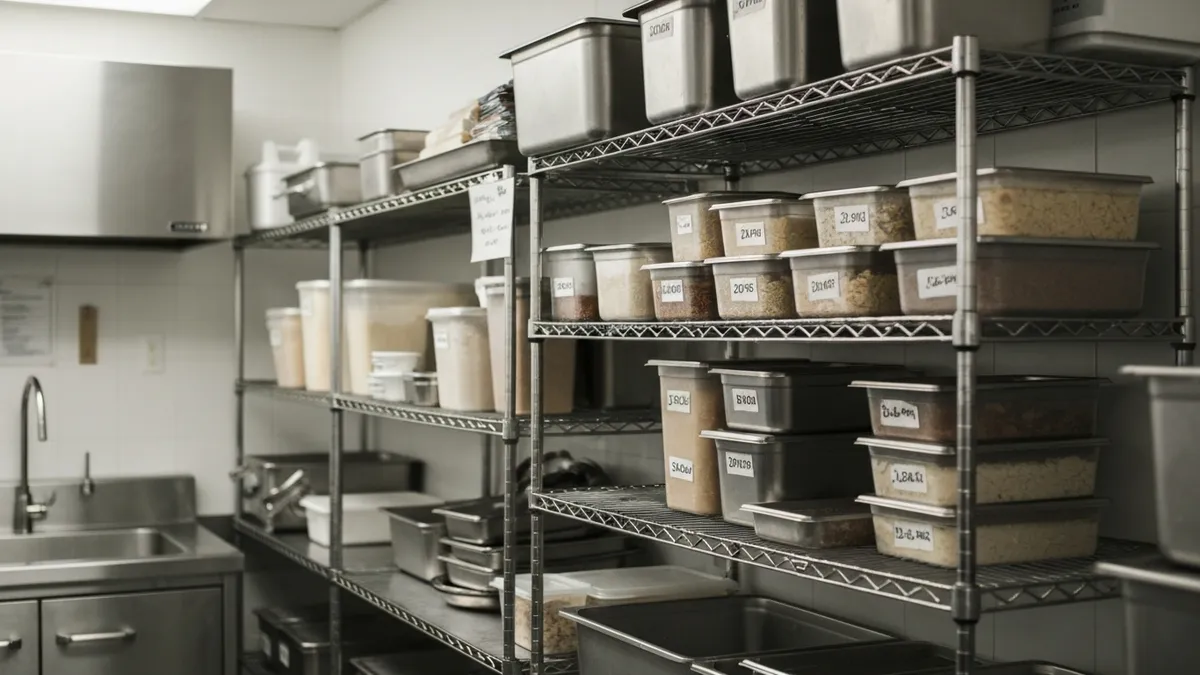
Master the Two-Stage Cooling Requirement
Survey data from ServSafe instructors consistently identifies the two-stage cooling rule as the single most missed question category. Remember: cooked food must cool from 135°F to 70°F within 2 hours, and then from 70°F to 41°F or below within an additional 4 hours — for a maximum total cooling time of 6 hours. Knowing this precisely, including what corrective action to take when the timeline is missed, can be worth 3 to 5 exam questions on its own.
High-scoring ServSafe candidates share a set of test-taking habits that go beyond what they study — they also optimize how they engage with each question during the exam itself. The 90-question format gives you 2 hours, which works out to roughly 80 seconds per question. That is ample time if you stay calm, but it disappears quickly if you spend five minutes second-guessing three or four questions in a row. The best strategy is to answer every question on your first pass, mark any that feel uncertain, and then return to marked questions after completing the full exam.
Elimination is your most powerful tool on difficult questions. The ServSafe Manager exam uses four-answer multiple choice throughout, and the distractors (wrong answers) are almost always plausible. When you cannot immediately identify the correct answer, begin by eliminating the one or two answers that are clearly contradicted by 6th edition content. Often, eliminating two options leaves you with a 50-50 choice, which is far better odds than guessing blindly from four. Even a partially informed guess is better than leaving a question blank.
Pay close attention to absolute language in questions and answers. Words like "always," "never," "must," and "only" often signal a trap — food safety is context-dependent, and answers with extreme language are frequently wrong. Conversely, words like "usually," "typically," and "generally" often point toward the correct, nuanced answer. The exam writers are testing whether you understand the principles behind the rules, not just the rules themselves.
Scenario questions — which make up a significant portion of the exam — require you to visualize the described situation before choosing an answer. A question might describe a food worker returning from the restroom and ask what the worker should do next. Before reading the answer choices, mentally run through what you know: handwashing is required after using the restroom, before handling food, before putting on gloves, and after. Then read the answers and find the one that matches your mental model. This approach reduces the influence of well-written distractors that sound plausible but contradict 6th edition guidance.
Temperature questions are especially prone to numerical distractors. The exam will test whether you know that 165°F is the minimum internal temperature for poultry, while 155°F applies to ground meat, and 145°F applies to whole-muscle beef, pork, and seafood. A question that asks the correct temperature for cooking ground beef and offers 145°F as one of the choices is specifically designed to catch candidates who confuse whole-muscle and ground-meat requirements. Memorize the temperature chart from the 6th edition, and know which foods belong to which threshold.
HACCP questions on the exam tend to be sequential — they test whether you understand the order of the seven principles and what each one requires. A common question format presents a scenario in which a hazard has occurred and asks at which HACCP step the breakdown happened.
Understanding that Step 1 is Hazard Analysis, Step 2 is Identifying Critical Control Points, Step 3 is Establishing Critical Limits, and so on allows you to walk through the scenario logically and identify the failure point. Do not try to memorize the 7 principles as a list — instead, understand the narrative: you analyze, then control, then monitor, then correct, then verify, then record.
Finally, trust your preparation and resist the urge to change answers without a strong reason. Research on standardized testing consistently shows that first instincts are correct more often than changed answers. Change an answer only if you find a concrete, textbook-based reason to do so — not because you feel uncertain or because you remember the question differently. The servsafe manager practice test sessions you completed before exam day were building exactly the instincts you need. Trust them.
The ANSI-accredited ServSafe Manager Certification exam must be taken in a proctored setting — either in-person at an authorized testing location or via live online proctoring. An online non-proctored "food manager" quiz does not result in an ANSI-recognized certificate accepted by health departments. Always confirm with your employer or local jurisdiction which credential they require before purchasing an exam voucher.
The ServSafe Manager certification carries a five-year validity period, after which you must recertify by retaking the proctored exam. Many food service professionals treat recertification as a formality — after all, they have been working in food service for five years — but the exam content is periodically updated to reflect changes in the FDA Food Code and emerging food safety science. Heading into recertification with that "I already know this" mindset is one of the most common reasons experienced managers fail on their second or third attempt.
The smartest recertification strategy mirrors the same approach used by first-time candidates: a focused four-week review of the 6th edition (or the most current edition at the time of your recertification), supplemented by a full set of practice exams. Pay particular attention to any chapters that cover areas where food safety science has evolved — pathogen science, allergen management, and food safety management systems are the domains most likely to have been updated since your last certification cycle. Do not assume that what you learned five years ago is still current best practice.
Employers in the food service industry — particularly multi-unit restaurant chains, healthcare facilities, and school nutrition programs — often require that at least one servsafe certified manager be present during all hours of operation. Some local jurisdictions go further, requiring that all supervisory staff hold current manager certification. If your certification lapses, you may be legally prohibited from fulfilling your supervisory role, which creates both a professional and a legal compliance risk for your employer. Build recertification into your professional calendar well before the expiration date on your certificate.
The cost of recertification in 2026 is comparable to the initial certification: an exam voucher runs approximately $36 to $69 depending on whether you purchase through a training provider or directly from the NRAEF, and optional review courses can add another $15 to $175 depending on format. For more detailed cost information, review the servsafe food protection manager certification pricing breakdown, which covers all fees including retake policies and bulk employer discount programs.
One recertification pathway worth knowing about is the ServSafe online proctored option, which allows you to take the exam from a workplace or home computer with a live remote proctor monitoring via webcam. This eliminates the need to travel to a testing center and has made recertification significantly more accessible for managers in rural areas or those with scheduling constraints. The exam content and passing threshold are identical to the in-person version; only the delivery mechanism differs.
For managers who supervise staff that serve alcohol, the ServSafe Alcohol certification is a separate credential with its own study materials, covering responsible alcohol service, recognizing intoxication, checking identification, and handling difficult situations. This certification does not replace the Food Manager certification — they serve different regulatory purposes and many jurisdictions require both. The ServSafe Alcohol program has both Primary and Advanced levels, with the Advanced level covering more complex intervention scenarios.
Looking ahead, the food service industry is placing increasing emphasis on digital food safety management systems — software platforms that replace paper temperature logs and HACCP checklists. The principles you learn from the 6th edition remain fundamental regardless of whether logs are kept on paper or in an app, because the underlying food science does not change. A manager who understands why the cooling rule exists — not just what it says — will apply it correctly whether they are recording temperatures on a clipboard or receiving an automated alert from a digital sensor.
Building a strong study routine in the weeks before your ServSafe Manager exam requires more than just reading the 6th edition — it requires treating each study session as a deliberate, structured investment in your future performance. The candidates who pass on the first attempt are not necessarily the ones who study the most hours; they are the ones who study the most effectively. Active recall, spaced repetition, and immediate error review are the three pillars of effective exam preparation, and each can be implemented with simple, low-cost tools.
Active recall means testing yourself constantly rather than re-reading. After you read a paragraph about TCS foods, close the book and try to list every TCS food you just encountered from memory. After you study the cooling rule, put the textbook aside and explain the two-stage process out loud as if teaching it to a new hire. This act of retrieving information from memory — even imperfectly — dramatically strengthens the neural pathways that store that information, making it far more accessible under exam pressure than passive reading ever could.
Spaced repetition means reviewing material on an increasing schedule: review new content after one day, then after three days, then after one week, then after two weeks. Rather than trying to review everything every day, you focus each session's review time on the material that is oldest in your memory and therefore most at risk of being forgotten. Index cards or a free flashcard app can help you implement spaced repetition without buying specialized software. The key metric to track is not how many cards you make but how many times you have successfully recalled each fact.
Immediate error review is the practice of stopping after every missed practice question and tracing the correct answer back to the specific page and paragraph in the 6th edition that supports it. This sounds slow, and it is — but it closes the loop between the practice question and the source material in a way that prevents you from repeating the same mistake on the real exam.
Candidates who complete 200 practice questions but skip error review often plateau at 65 to 70 percent accuracy. Candidates who do rigorous error review on even 100 questions routinely reach 80 to 85 percent accuracy.
The servsafe com website offers a range of official study materials beyond the textbook, including an online course with interactive activities, a study guide with additional practice scenarios, and a mobile-accessible format. These paid resources are high quality and directly aligned with the exam, but they are not required — well-designed free practice tests combined with the 6th edition textbook can produce equivalent results for motivated self-studiers.
Group study is an underutilized strategy for the ServSafe Manager exam. If you work in a food service operation where multiple managers need certification, consider organizing a study group that meets two to three times per week. Each member can take responsibility for presenting a different chapter, creating that chapter's flashcards, and writing five to ten original practice questions for the group to answer. Teaching material to others is one of the most reliable ways to identify gaps in your own understanding — you cannot explain what you do not actually know.
In the 48 hours before your exam, shift from intensive study to light review. Re-read your summary notes, go through your flashcard deck one final time, and take one more short practice quiz (20 to 30 questions) as a confidence builder rather than a diagnostic. Avoid starting any new chapters or topics in this window — your brain needs consolidation time, not new information. Get at least seven hours of sleep the night before the exam; sleep is when the brain consolidates and organizes newly learned information into long-term memory.
On exam day, read every question twice before selecting your answer. Many errors on standardized exams come from misreading the question — especially negatively worded questions like "Which of the following is NOT a TCS food?" — under time pressure. A second read takes only a few seconds and can prevent costly careless errors. With the solid preparation outlined in this guide, you will walk into the testing room with genuine confidence, not just hope.
ServSafe Questions and Answers

ServSafe Cleaning Agents: Which Cleaning Agent Best Removes Baked-On Food?

ServSafe Certification Cost: Complete 2026 Pricing Guide for Food Handlers and Managers

ServSafe Food Manager Certification: Complete 2026 Study Guide, Exam Prep & Pass Strategy

ServSafe Cost: Complete Breakdown of Exam, Course, and Certification Fees in 2026
What Is ServSafe Certification? Complete 2026 Guide to Food Safety Credentials
About the Author

Registered Sanitarian & Food Safety Certification Expert
Cornell University College of Agriculture and Life SciencesThomas Wright is a Registered Sanitarian and HACCP-certified food safety professional with a Bachelor of Science in Food Science from Cornell University. He has 17 years of experience in food safety auditing, regulatory compliance, and foodservice management training. Thomas prepares food industry professionals for ServSafe Manager, HACCP certification, and state food handler examinations.
Join the Discussion
Connect with other students preparing for this exam. Share tips, ask questions, and get advice from people who have been there.
View discussion (7 replies)