
What Colleges Have ROTC Programs: The Complete Guide to Finding Your School
What colleges have ROTC programs? 🎯 Explore Army, Navy & Air Force ROTC schools, host vs. cross-enrollment options, and how to earn a commission.

If you are asking what colleges have ROTC programs, the short answer is: more than 1,700 schools across the United States participate in some form of the Reserve Officers' Training Corps, spread across Army, Navy/Marine Corps, and Air Force branches. These programs are divided between host institutions — campuses that maintain their own dedicated ROTC battalion, battalion, or detachment — and cross-enrollment partner schools whose students commute to nearby host campuses for training. Understanding which category your target school falls into is the first step toward earning your commission while finishing a bachelor's degree.
The Army ROTC network is the largest of the three branches, with roughly 1,100 colleges and universities either hosting a full battalion or offering cross-enrollment agreements with neighboring host schools. Navy ROTC, which also commissions Marine Corps officers, operates at approximately 160 host institutions and adds hundreds of consortium partner schools. Air Force ROTC maintains around 145 host units supplemented by more than 900 cross-enrolled schools nationwide. Together these three programs give motivated students an enormous range of academic options without ever having to sacrifice the officer commissioning track.
Geography matters enormously when you map out your options. Major research universities in every state — flagship schools like Penn State, the University of Texas at Austin, UCLA, Ohio State, and the University of Michigan — maintain full host programs in all three branches. Smaller liberal arts colleges and regional universities frequently participate through cross-enrollment. Students at schools like Amherst, Wellesley, or Rice can join ROTC by traveling to a nearby host campus several mornings per week, keeping their own school's academic environment while still completing all military training requirements.
Historically Black Colleges and Universities (HBCUs) have a deep and celebrated connection to ROTC. Schools such as Howard University, Spelman College, Morehouse College, Hampton University, and Prairie View A&M maintain active programs and have produced thousands of commissioned officers over the decades. The Department of Defense actively recruits through these institutions and has expanded partnership agreements in recent years to broaden access at HBCU campuses that previously lacked dedicated host units. If you attend or plan to attend an HBCU, you almost certainly have a pathway into ROTC available to you.
Hispanic-Serving Institutions (HSIs) and other minority-serving institutions are also increasingly integrated into the ROTC network. Schools including Florida International University, the University of New Mexico, California State University campuses, and the University of Texas at San Antonio all host or partner with active ROTC programs. The services actively track demographic representation among their commissioned officer corps and use ROTC enrollment targets to improve that representation, which has translated into dedicated recruitment resources and scholarship funding directed toward HSIs over the past decade.
Private universities round out the picture. Ivy League schools have a complex history with ROTC, but several have restored formal partnerships in recent years: Harvard, Yale, Columbia, and Cornell all allow students to enroll in ROTC through consortium arrangements with nearby host units. MIT and Princeton maintain their own active host programs. Georgetown, Notre Dame, Fordham, Boston University, and dozens of other private institutions host programs directly on campus, providing students access to the full commissioning track without leaving their home institution.
For students researching specific schools, the most reliable sources are the official branch websites — GoArmy.com/rotc for Army, the Navy's NROTC locator, and the Air Force ROTC school finder — each of which maintains searchable databases of host and partner schools updated annually.
If you want to explore the Marine Corps commissioning pathway specifically, learning more about what colleges have rotc programs through the Marine option in Navy ROTC is an excellent next step. The following sections of this guide break down the differences between host and cross-enrollment schools, how to evaluate program quality, what the scholarship landscape looks like, and what daily life in a college ROTC program actually involves.
ROTC College Programs by the Numbers

Host vs. Cross-Enrollment: Understanding ROTC School Types
A college that maintains its own dedicated ROTC unit on campus. Students attend labs, PT, and classroom sessions without leaving campus. Host schools typically offer the widest scholarship opportunities and the most robust cadet experience.
A college with a formal agreement allowing students to travel to a nearby host school for ROTC training. Ideal for students whose preferred academic institution does not maintain its own unit. All branch credits and scholarships remain fully available.
Schools like Virginia Tech, Texas A&M, and The Citadel maintain a Corps of Cadets structure alongside traditional ROTC. Senior Military Colleges receive special commissioning authority and historically high Officer candidacy rates.
DoD-designated priority schools with active ROTC presence. Programs at HBCUs and HSIs often benefit from additional recruitment funding, dedicated scholarship pools, and targeted mentorship pipelines to improve officer corps diversity.
When evaluating the top colleges with ROTC programs, it helps to think in tiers based on program size, scholarship funding available, and commissioning rates. The flagship state universities consistently rank at the top of Army ROTC production: schools like the University of Georgia, Penn State, Texas A&M, University of Wisconsin-Madison, and Purdue University each commission dozens of officers every spring. These programs benefit from large cadet battalions, experienced cadre officers with recent combat deployments, and strong alumni networks in both the military and the private sector.
For Navy and Marine Corps officers, the picture centers on a different set of schools. MIT, Stanford, the University of Notre Dame, Tulane University, the University of Southern California, and the Naval Sea Grant institutions are among the most prestigious Navy ROTC host schools. The Marine Corps option within NROTC is particularly selective — typically only 15 to 20 percent of NROTC midshipmen pursue the Marine option — and competition at the top host schools is correspondingly intense. Students serious about commissioning as a Marine officer should research the history of Marine Corps selections at any school they consider.
Air Force ROTC operates through what the service calls Detachments, and the strongest detachments by commissioning numbers include those hosted at Embry-Riddle Aeronautical University (which has two campuses with detachments), the University of Colorado Boulder, the University of Arizona, Oklahoma State University, and the University of Illinois at Urbana-Champaign. AFROTC also maintains programs at several historically significant pilot-producing schools, which matters for cadets who want to maximize their chances of earning a pilot slot upon commissioning.
Beyond the flagship schools, students should pay careful attention to whether a school's ROTC program has earned the designation of a Professor of Military Science (PMS) command with recent high performance ratings. The Army rates its ROTC battalions annually based on cadet performance on physical fitness tests, academic standing, leadership assessments, and commissioning numbers. High-rated battalions receive preferential scholarship funding and more competitive branch assignments — meaning that attending a well-run smaller school can sometimes produce better outcomes than attending a mediocre program at a more famous university.
Regional public universities often house surprisingly strong programs. Schools like Western Kentucky University, East Tennessee State University, University of North Dakota, and Murray State University all run well-regarded Army ROTC programs that produce consistent commissioning numbers with lower average class sizes. Smaller cadet populations can mean more individualized attention from cadre officers, more leadership opportunities per cadet, and a tighter cohort that builds strong lasting connections. For students who do not need the prestige of a flagship degree, a regional university with a well-resourced ROTC program can be an excellent choice.
Catholic universities and other faith-affiliated schools with long military traditions also deserve mention. The University of Scranton, Saint Louis University, Creighton University, Gonzaga University, and Villanova University all maintain ROTC programs where the institutional culture reinforces many of the values the military prizes: discipline, service, integrity, and community. Students at these schools often report that the alignment between their school's mission and their ROTC experience creates an unusually coherent four years of personal and professional development.
Engineering and technical schools represent a separate tier worth highlighting. Schools like Georgia Tech, Virginia Tech, Rose-Hulman, and Stevens Institute of Technology produce officers whose STEM backgrounds are highly sought after for technical branches including the Signal Corps, Cyber Branch, Army Corps of Engineers, and aviation. Air Force ROTC in particular actively recruits engineers and computer scientists, given the service's growing emphasis on space operations, cyber warfare, and advanced aircraft systems. Students with STEM majors who are also interested in commissioning should consider these schools as strong combined options for both their military and their long-term civilian career prospects.
Choosing the Right ROTC Branch for Your Goals
Army ROTC is the most widely available branch program, with host schools in every state and a broad cross-enrollment network that brings the total to over 1,100 participating institutions. The Army offers the most diverse range of commissioning branches — from Infantry, Armor, and Aviation to Cyber, Finance, and the Medical Service Corps — giving cadets considerable flexibility in how they build their military career. The four-year scholarship is available at both private and public schools, covering up to full tuition plus a monthly living stipend that increases each year from roughly $420 to $500 per month.
Army ROTC training emphasizes land navigation, small-unit tactics, physical fitness, and leadership in challenging conditions. The capstone event is LDAC (Leadership Development and Assessment Course), a 35-day training exercise at Fort Knox where cadets are evaluated by active-duty Army assessors. LDAC scores significantly influence the branch assignments cadets receive upon commissioning. Students who excel academically, physically, and tactically at LDAC earn the most competitive branch choices, including Aviation, Special Forces, and Ranger Regiment pipelines.

Pros and Cons of Joining ROTC at a College or University
- +Full or partial tuition scholarships that can eliminate student loan debt entirely
- +Monthly living stipend that increases each year you remain in the program
- +Guaranteed job offer — a commissioned officer position upon graduation
- +Leadership development and mentorship from active-duty and retired military officers
- +Access to military healthcare, base facilities, and commissary benefits after commissioning
- +Strong professional network spanning both active-duty military and veteran civilian communities
- −Service obligation of four to eight years on active duty or in the reserves after commissioning
- −Significant time commitment — PT four to five mornings per week plus lab and classroom hours
- −Cross-enrolled students must travel to the host campus, adding commute time to demanding schedules
- −Branch and duty station assignments are not fully within the cadet's control
- −Summer training requirements can conflict with civilian internships and research opportunities
- −Physical fitness standards must be maintained throughout the program or scholarship can be revoked
ROTC College Search Checklist: What to Verify Before Enrolling
- ✓Confirm whether your target school is a host institution or a cross-enrollment partner for your preferred branch.
- ✓Research the program's annual commissioning numbers — programs that commission fewer than five officers per year may indicate a weaker cadre or funding shortfalls.
- ✓Verify that the academic major you want is available at or near the host ROTC campus.
- ✓Check the scholarship deadline calendar — Army four-year scholarships open applications in the spring of your junior year in high school.
- ✓Review the physical fitness standards for the branch you're targeting and honestly assess your current fitness level relative to those benchmarks.
- ✓Ask the program's recruiter about the branch selection history — what percentage of recent cadets received their first or second choice branch?
- ✓Confirm whether the school offers a nursing, pre-med, or STEM track with branch-specific incentive scholarships.
- ✓Identify the summer training obligations by year and map them against internship or research plans you already have.
- ✓Review the school's academic calendar for conflicts with mandatory ROTC field training exercises or leadership labs.
- ✓Connect with current cadets or recent alumni from the program through the school's veteran student services office or ROTC alumni network.
The Host School vs. Partner School Decision Affects More Than Convenience
Students who cross-enroll at a host school are fully eligible for ROTC scholarships, summer training, and commissioning — but the daily logistics add real friction. Cadets report early morning commutes before 6 AM PT sessions as one of the biggest challenges of cross-enrollment. If you have two academically similar schools as options and one is a host campus, the logistical advantage of being a host-school cadet is significant over four years.
ROTC scholarships represent one of the most substantial financial aid packages available to undergraduate students anywhere in American higher education. The Army's four-year scholarship covers full tuition at any Army ROTC host school or partner institution, all required fees, a book stipend of approximately $1,200 per year, and a monthly living allowance that starts at around $420 per month for freshmen and increases to $500 for seniors.
When calculated across four years, the combined value of an Army ROTC four-year scholarship can exceed $180,000 at expensive private universities, making it the single most transformative financial tool available to eligible students who are also willing to serve.
The scholarship selection process is competitive and begins earlier than most students expect. Army four-year scholarships open for applications during the spring semester of junior year in high school, with a primary board that convenes in the fall of senior year. The evaluation criteria include SAT or ACT scores, high school GPA and class rank, extracurricular leadership experience, a personal essay, physical fitness assessment scores, and a board interview. Applicants who have participated in high school JROTC, varsity athletics, student government, or community service often present the strongest overall profiles.
Two-year and three-year scholarships are also available and are frequently awarded after students have already enrolled in college and demonstrated their commitment through on-campus ROTC participation. These mid-college scholarships are particularly valuable for students who discover ROTC after their freshman year or who were not initially competitive for a four-year award but have significantly developed their leadership, fitness, or academics in the interim.
Students who complete Basic Camp — a summer training course at Fort Knox open to students who did not complete their freshman and sophomore ROTC courses — become scholarship-eligible even if they started college with no prior ROTC involvement.
Navy ROTC scholarships follow a similar structure but include an additional service-specific consideration: midshipmen who earn competitive GPAs in STEM fields are eligible for supplemental funding through the Navy's STEM scholarship track. Engineering, computer science, mathematics, physics, and chemistry majors who pursue the Navy option and maintain academic excellence can combine their NROTC scholarship with Navy STEM incentive programs to fully cover graduate school costs in some cases. The Navy has also introduced dedicated scholarship pathways for students interested in submarine warfare and nuclear propulsion, which carry additional service obligations in exchange for enhanced funding.
Air Force ROTC offers Type 1, Type 2, and Type 7 scholarships with varying coverage levels. Type 1 covers full tuition regardless of cost, while Type 2 covers tuition up to a capped dollar amount that is adjusted annually. Type 7 covers tuition at in-state public university rates and is typically reserved for students attending in-state institutions where room, board, and fees are proportionately lower.
All scholarship types include the book stipend and monthly living allowance. The most competitive scholarship recipients — those with the highest Cadet Ranking scores at Field Training — are also first in line for pilot slots, which creates a powerful incentive structure that links scholarship performance to career outcomes.
Beyond the scholarship, ROTC students receive additional financial benefits that are often overlooked during the recruitment phase. Upon commissioning as a second lieutenant or ensign, officers receive a uniform allowance to purchase the mandatory clothing required for military service. During summer training, all cadets receive government meals and lodging at no personal cost. Students in their junior and senior years who are under contract with their branch also receive the monthly stipend even when not on scholarship, which provides meaningful financial support during the academically demanding upper-division years.
Simultaneous Membership Programs (SMPs) offer an additional financial option for students who join a National Guard or Reserve unit while enrolled in ROTC. SMP students receive both their ROTC stipend and their Guard or Reserve drill pay simultaneously, which can add several hundred dollars per month to their total income during the school year.
The SMP pathway also guarantees a place in the Guard or Reserve upon commissioning, which is particularly attractive to students who want to serve part-time after college without committing to active-duty service. Understanding all these financial components together — not just the headline scholarship number — gives prospective cadets the clearest picture of ROTC's total value proposition.

Army four-year ROTC scholarship applications open in the spring of junior year in high school, and the most competitive board convenes in October of your senior year. Students who wait until second semester of senior year to apply are applying to later boards with fewer scholarships remaining. Air Force and Navy deadlines follow similar timelines. Missing the primary board can mean competing for significantly reduced funding — start your application the summer before senior year.
Understanding what ROTC training actually looks like on a college campus is essential for any student evaluating the program. The daily rhythm of ROTC varies somewhat by branch and by school, but the broad structure is consistent across the country. On most days when PT is scheduled — typically Monday, Wednesday, and Friday — cadets report to a designated training area or gymnasium between 5:30 and 6:30 AM for a structured physical conditioning session lasting 60 to 90 minutes.
These sessions include running, calisthenics, team events, and sometimes swimming or cycling depending on the branch and available facilities. PT ends with enough time for cadets to shower, change, and make it to their first academic class.
The formal ROTC class — called Military Science for Army, Naval Science for Navy/Marine, and Aerospace Studies for Air Force — meets once or twice per week during regular academic hours. These courses are taught by uniformed cadre officers and NCOs and cover military history, leadership theory, ethics, small-unit tactics, land navigation, military law, and branch-specific technical content.
The courses are graded academic classes that count toward the student's GPA and, in most schools, count toward elective credit requirements. First and second-year students take introductory courses, while junior and senior contracted cadets take advanced leadership courses that directly prepare them for commissioning responsibilities.
The laboratory session is where book knowledge meets practical application. Labs typically run two to three hours on one afternoon per week and take place outdoors or in a training environment rather than a classroom.
A typical lab might involve practicing land navigation with a map and compass, conducting a radio communications exercise, running a squad-level tactical scenario, learning to apply a tourniquet and treat a simulated casualty, or practicing military formations and drill and ceremony. Labs are graded on participation, performance, and demonstrated leadership, and the grades factor into both the student's academic record and their overall cadet performance file.
Summer training is a mandatory component of the ROTC experience for contracted cadets. For Army cadets, the culminating summer training event is LDAC at Fort Knox, which all junior-year cadets attend before their senior year. This 35-day evaluation is the most consequential single event in a cadet's ROTC career, as the Cadet Evaluation Report generated at LDAC directly influences the Order of Merit List that determines branch and duty station assignments after commissioning.
Air Force cadets attend Field Training at Maxwell AFB, typically between their sophomore and junior years, in a compressed two-week format that evaluates similar leadership competencies under time pressure and sleep deprivation designed to simulate operational stress.
Physical fitness standards are non-negotiable throughout the ROTC experience. Army cadets must pass the Army Combat Fitness Test (ACFT), which replaced the older three-event APFT and now includes six events: the three-repetition maximum deadlift, standing power throw, hand-release push-up, sprint-drag-carry, leg tuck or plank, and two-mile run.
Each event is scored on a 100-point scale, and cadets must meet minimum standards in all six events to remain in good standing. Air Force cadets take the Physical Fitness Assessment, while Navy midshipmen complete the Physical Readiness Test. Students who enter college without meeting these standards typically have freshman and sophomore year to build their fitness before mandatory testing begins in earnest for contracted upperclassmen.
Beyond the formal training structure, ROTC cadets participate in community service events, military balls, leadership symposia, and inter-collegiate competitions. Ranger Challenge is a particularly popular Army ROTC extracurricular that pits teams from different schools against each other in events including a 10K ruck march, obstacle course, one-rope bridge construction, and a weapons assembly relay. Schools that invest heavily in Ranger Challenge often see corresponding improvements in cadet fitness, team cohesion, and overall program morale. These extracurricular competitions are entirely voluntary but are widely viewed as a marker of program health and cadet commitment.
The social dimension of ROTC is something that is difficult to fully convey on paper but is repeatedly cited by commissioned officers as one of the most significant parts of their college experience. The shared early morning workouts, the physically and mentally demanding training events, and the process of learning to lead peers through challenging tasks create unusually tight bonds between cadets.
Many ROTC graduates describe their battalion or detachment as the most important community they belonged to in college, more formative than any club, Greek organization, or athletic team. This social cohesion is itself a form of preparation: the military relies on small-unit trust, and the habits of mutual accountability and shared hardship built in ROTC translate directly to the responsibilities officers will carry from day one of their active-duty careers.
Making the most of your ROTC experience requires intentionality from the moment you arrive on campus. One of the most common mistakes new cadets make is treating their first two years — often called the Basic Course — as a casual exploration rather than an audition. Cadre officers are observing cadet effort, attitude, and leadership potential from day one, even when formal evaluations are not on the calendar.
Cadets who arrive physically prepared, consistently on time, and openly engaged with training early in their college career build a reputational foundation that pays dividends when scholarship decisions, advanced camp placements, and branch selection boards occur in junior and senior years.
Physical fitness preparation should begin the summer before your freshman year. Research the specific fitness test your branch uses and train to exceed the minimum standards rather than simply meet them. For Army ROTC, this means building your deadlift, improving your sprint times, and extending your two-mile run pace over months of consistent work — not cramming fitness during a single summer week before school starts.
Air Force and Navy cadets should similarly use the pre-college summer to establish a running base and build the functional strength that field training will demand. Arriving at your first PT session already capable of performing at a solid level sets a tone that is hard to reverse if you arrive out of shape and struggling.
Academic performance matters more in ROTC than many incoming cadets realize. Scholarship eligibility requires maintaining a minimum GPA — typically 2.5 for Army and 2.0 for initial scholarship retention, but higher GPAs correlate directly with better Order of Merit List standing and therefore better branch and duty station outcomes. Engineering and science majors sometimes struggle in their first two years as course loads become demanding simultaneously with early-morning PT commitments. Building strong time management habits and seeking tutoring or study group support early prevents the GPA erosion that can otherwise sneak up on cadets between freshman and sophomore fall semesters.
Leadership positioning within your battalion or detachment accelerates your development faster than any other single action. Volunteer to serve as a squad leader during labs even before it is required. Take the initiative to run PT warm-ups, organize study sessions for fellow cadets, or coordinate community service events. Cadre officers note and remember cadets who voluntarily take on responsibility, and those cadets consistently receive higher performance scores on their evaluations. The military rewards demonstrated initiative, and the ROTC environment is specifically designed to give cadets a low-stakes training ground for building that habit of stepping forward.
Networking with recently commissioned alumni from your program is an underutilized resource. Most programs maintain some form of alumni connection, and a single conversation with a lieutenant who commissioned two or three years ahead of you can yield specific, actionable intelligence about branch selection strategy, LDAC or Field Training preparation, and the realities of active-duty life in specific branches or duty stations. Alumni mentors can also write letters of recommendation for special programs — Airborne School, Air Assault School, the Cadet Internship Program — that add valuable resume entries and build physical and mental resilience ahead of commissioning.
Use every summer training opportunity available to you, even those that are technically optional. Army ROTC offers optional Airborne School, Air Assault School, Northern Warfare Training, and Cadet Troop Leader Training placements during summers beyond the mandatory LDAC. These experiences not only develop skills but also demonstrate to selection boards that a cadet is serious about maximizing their preparation.
Air Force cadets can apply for undergraduate flight training exposure and special summer internships at major Air Force commands. Navy midshipmen go on summer cruise assignments that rotate through fleet ships, submarine commands, and Marine Corps training environments, each providing valuable exposure that informs the service selection process.
Finally, approach the academic content of your Military Science, Naval Science, or Aerospace Studies courses with genuine intellectual engagement rather than treating them as boxes to check. The leadership theories, ethical frameworks, and doctrinal concepts you encounter in those classes are not abstract academic exercises — they are the intellectual foundation of every decision you will make as a commissioned officer.
Cadets who genuinely grapple with the material, ask probing questions, and connect classroom theory to current events arrive at commissioning with a conceptual framework that gives them a significant advantage over peers who coasted through the coursework. ROTC is simultaneously a scholarship program, a fitness program, and a professional school, and treating it as all three from the very beginning produces the outcomes that matter most: a commission, a career, and a character equal to the responsibility of leading American service members.
ROTC Questions and Answers
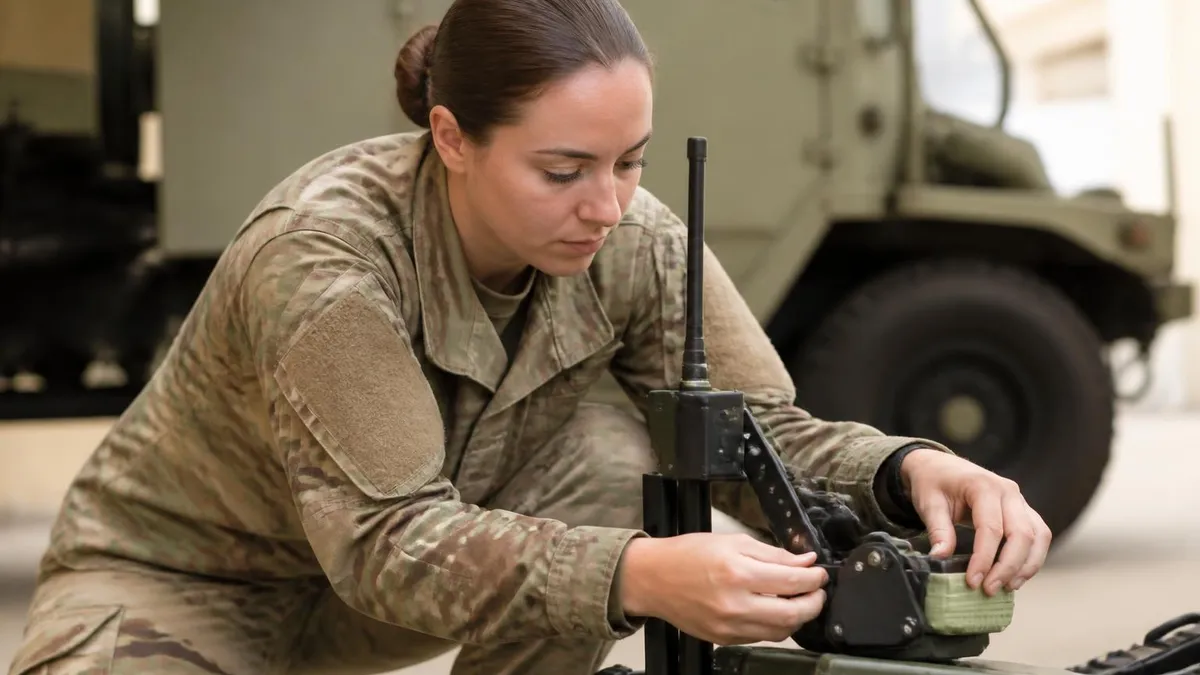
Marine ROTC: Duties, Career Path, and Life as a Marine Corps Officer

What Is ROTC? The Complete Guide to the Program

ROTC Stipend: How Much You Get Paid and When It Starts
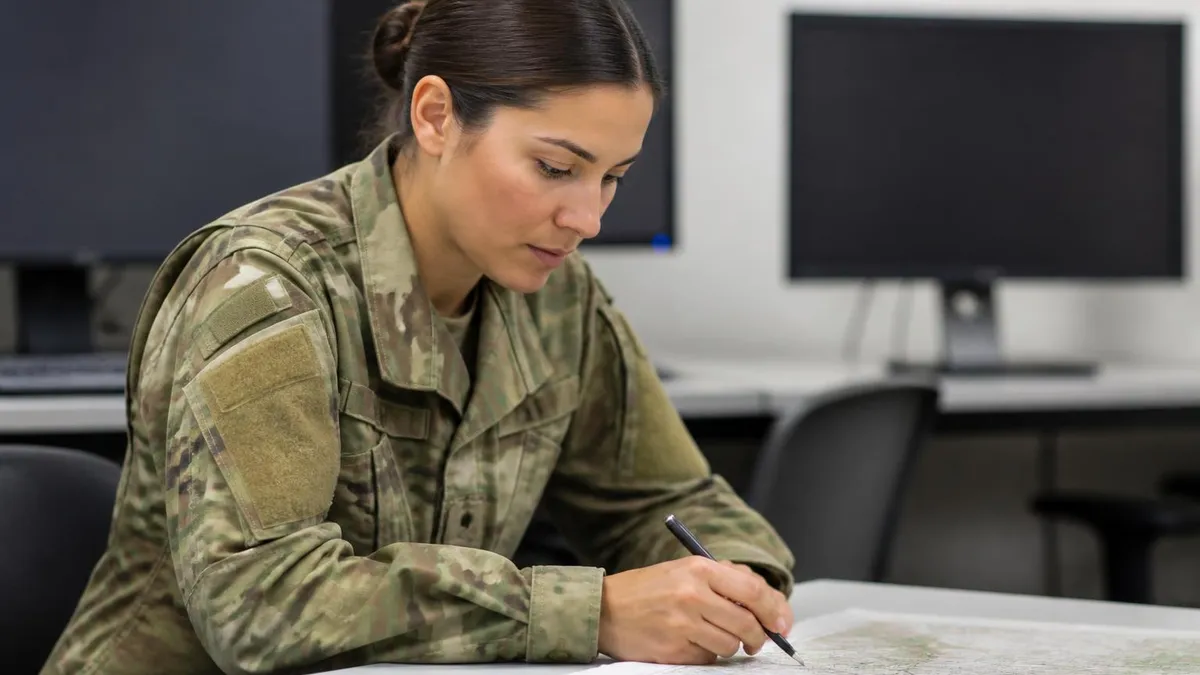
ROTC Scholarship Application: How to Apply, Qualify, and Win Funding

Colleges with Air Force ROTC: Complete Guide to Programs, Benefits, and How to Enroll
About the Author

Educational Psychologist & Academic Test Preparation Expert
Columbia University Teachers CollegeDr. Lisa Patel holds a Doctorate in Education from Columbia University Teachers College and has spent 17 years researching standardized test design and academic assessment. She has developed preparation programs for SAT, ACT, GRE, LSAT, UCAT, and numerous professional licensing exams, helping students of all backgrounds achieve their target scores.
Join the Discussion
Connect with other students preparing for this exam. Share tips, ask questions, and get advice from people who have been there.
View discussion (9 replies)