
Reserve Officers Training Corps: Complete Training Guide and Requirements
Complete guide to Reserve Officers Training Corps: 📗 eligibility, training, scholarships, and how to succeed. Includes practice tests and study tips.

The reserve officers training corps is one of the most powerful pathways to military leadership available to college students in the United States. Established to develop future commissioned officers across all branches of the armed forces, ROTC programs operate on hundreds of college campuses nationwide, blending rigorous academic study with structured military training. Students who complete the program graduate as second lieutenants or ensigns, entering active duty or reserve service with the skills and credentials to lead troops from day one.
ROTC is not simply a scholarship program — it is a comprehensive leadership development experience that shapes cadets and midshipmen physically, mentally, and ethically over two to four years of college. Participants attend weekly leadership labs, physical training sessions, field training exercises, and advanced camps that challenge them far beyond the typical college experience. At the same time, they pursue full degree programs, earning credentials that serve them throughout both their military and civilian careers.
The three main branches of ROTC in the United States are Army ROTC, Navy ROTC (which also commissions Marine Corps officers), and Air Force ROTC. Each branch operates under its own regulations, fitness standards, and curriculum, but all share the same foundational goal: producing capable, ethical, mission-ready officers. Army ROTC is by far the largest, with programs at more than 1,700 colleges and universities through its host and partnership school network.
One of the biggest draws of ROTC is the scholarship opportunity. Competitive four-year scholarships can cover full tuition, fees, and a monthly stipend, making college affordable for thousands of students who might otherwise struggle with cost. Even students who do not receive scholarships can participate in ROTC for their first two years without any military obligation, giving them time to evaluate whether a commission is right for them before making a commitment.
Training intensity ramps up progressively throughout the program. Freshmen and sophomores in the basic course focus on fundamentals — map reading, first aid, leadership principles, and physical fitness. Juniors and seniors in the advanced course take on greater responsibility, leading their fellow cadets through complex tactical scenarios, practicing land navigation under pressure, and mastering the Army, Navy, or Air Force values and doctrines specific to their branch.
Many cadets cite ROTC as the single most transformative experience of their college years. The program forces participants to operate outside their comfort zones regularly, whether that means conducting a night land navigation course, briefing a plan to a senior officer, or managing a team under simulated combat stress. These experiences build a level of confidence and competence that translates directly into effective leadership in any environment.
This guide covers everything you need to know about ROTC: how the program is structured, what the eligibility requirements are, what training looks like at each level, and how to prepare yourself for the assessments and fitness tests that determine your standing and scholarship eligibility. Whether you are just beginning to research ROTC or are already enrolled and looking to sharpen your performance, the information here will help you succeed.
ROTC by the Numbers

ROTC Program Structure: From Basic to Advanced Course
The introductory phase with no military obligation. Cadets learn foundational skills: land navigation, first aid, drill and ceremony, physical fitness standards, and leadership theory. Freshmen and sophomores can drop the program at any time without penalty.
A critical evaluation event — typically held between the sophomore and junior year — where cadets demonstrate leadership potential under field conditions. Army cadets attend Cadet Summer Training; Air Force cadets complete Field Training at a designated encampment.
The contracted phase where cadets assume leadership roles, mentor junior cadets, and prepare for commissioning. Cadets receive a monthly stipend and are now obligated to complete the program and accept a commission upon graduation.
Upon completing degree requirements and the ROTC program, cadets are commissioned as second lieutenants (Army/Air Force) or ensigns (Navy). Branch assignments are based on performance rankings, Army needs, and cadet preferences submitted during the senior year.
Eligibility for ROTC is governed by each branch's specific regulations, but several core requirements apply across all programs. Applicants must be United States citizens, though some exceptions exist for legal permanent residents pursuing specific commissioning paths. Age limits vary: Army ROTC generally requires cadets to be able to complete the program and receive a commission before age 31, while Navy ROTC sets a maximum commissioning age of 27 for the Navy option and 28 for Marine Corps. Air Force ROTC allows commissioning up to age 31 for line officer roles.
Academic standing is a fundamental requirement. Most ROTC programs require a minimum cumulative GPA of 2.0 to remain in good standing, though scholarship competitions often favor students with GPAs of 3.0 or higher. Cadets must be enrolled full-time at a host or affiliate institution and be making satisfactory progress toward a baccalaureate degree. Certain high-need degree fields — engineering, nursing, and foreign languages, for example — may receive priority consideration for scholarship awards.
Physical fitness is non-negotiable in ROTC. Army cadets must pass the Army Combat Fitness Test (ACFT), which replaced the older Army Physical Fitness Test in 2022. The ACFT consists of six events: the three-repetition maximum deadlift, standing power throw, hand-release push-up, sprint-drag-carry, plank, and two-mile run. Minimum passing scores vary by age and gender under the current standards. Navy and Air Force candidates take their respective branch fitness assessments, all of which emphasize cardiovascular endurance, muscular strength, and overall physical readiness.
Medical fitness is assessed through the Department of Defense Medical Examination Review Board (DoDMERB), which conducts a comprehensive physical and vision exam. Many common medical conditions can be waived, but candidates with significant cardiovascular, neurological, or musculoskeletal conditions may face challenges. It is worth scheduling your DoDMERB exam early — processing can take weeks, and any delays can affect scholarship award timelines.
Moral character requirements include a background investigation and a review of any prior legal history. Minor infractions are not automatically disqualifying, but major criminal convictions, drug use history, and certain financial problems can create significant obstacles to enrollment. Cadets who are already enlisted or prior service can participate in ROTC through programs like the Army's Simultaneous Membership Program (SMP), which allows National Guard and Reserve soldiers to serve while training as officer candidates.
The scholarship application process is competitive and deadline-driven. The Army ROTC four-year scholarship opens in the spring of a candidate's junior year of high school, with most awards announced by January of their senior year. Applications require a personal statement, teacher recommendations, a fitness assessment, and a structured interview. Scholarship recipients must accept and enroll by the deadlines specified in their award letters — missing these dates can result in forfeiture of the award.
Students who miss the four-year scholarship cycle can still compete for two- and three-year scholarships awarded during their freshman or sophomore years. Campus-based scholarships funded directly by the host institution are also available and can cover a significant portion of costs. Even without a scholarship, the monthly stipend for contracted cadets — which ranges from approximately $300 per month for MS III cadets to $500 per month for MS IV cadets — helps offset expenses while in the program.
Training by Branch: Army, Navy, and Air Force ROTC
Army ROTC is the largest and most geographically widespread commissioning source in the United States, producing approximately 70% of all new Army officers each year. The program emphasizes tactical leadership, land navigation, small-unit operations, and the seven Army values: loyalty, duty, respect, selfless service, honor, integrity, and personal courage. Cadets attend weekly leadership labs, participate in physical training three to five days per week, and complete multiple field training exercises each semester that simulate real-world tactical environments.
The centerpiece of Army ROTC is Cadet Summer Training (CST) at Fort Knox, Kentucky, a 28-day evaluation camp where cadets are rated by active duty officers and non-commissioned officers on their leadership under pressure. Performance at CST directly affects a cadet's Order of Merit List (OML) ranking, which determines branch and duty station preferences. Top-ranked cadets have first pick of branches such as Infantry, Special Forces, Aviation, and Cyber, while lower-ranked cadets are assigned to branches based on Army needs.

Is ROTC Worth It? Benefits and Drawbacks to Consider
- +Full-tuition four-year scholarships can eliminate undergraduate debt entirely
- +Guaranteed job offer upon graduation — no competitive post-college job search required
- +Leadership and management skills that translate directly to civilian career advancement
- +Monthly stipend during the advanced course provides income while still in school
- +Access to world-class physical training, mentorship, and professional development resources
- +Opportunity to serve in specialized fields including aviation, cyber, intelligence, and special operations
- −Service obligation of 4–8 years (active or reserve) limits career flexibility immediately after graduation
- −Time commitment of 10–20 hours per week competes with internships, social life, and other activities
- −Military fitness and medical standards may disqualify candidates with certain health conditions
- −Branch assignments are not guaranteed — Army needs can override personal preferences
- −Deployment and relocation requirements can strain personal relationships and family stability
- −The transition from college life to military hierarchy and structure is a significant cultural adjustment
ROTC Preparation Checklist: Steps to Maximize Your Performance
- ✓Start a structured PT program at least 6 months before your first ROTC fitness test — build your two-mile run to under 15:30 and max your push-ups.
- ✓Research your target branch's specific fitness test (ACFT for Army, PRT for Navy, PFT for Air Force) and practice every event individually.
- ✓Complete a DoDMERB physical exam early to identify and address any potential medical disqualifications before they affect your schedule.
- ✓Prepare a competitive scholarship application by securing strong teacher recommendations and writing a focused, specific personal statement.
- ✓Study land navigation fundamentals: learn to plot UTM grid coordinates, shoot azimuths with a lensatic compass, and pace-count distances accurately.
- ✓Memorize your branch's core values and warrior ethos or creed — these are tested frequently in labs, field exercises, and evaluation camps.
- ✓Practice the five-paragraph operation order (OPORD) format until you can deliver a complete briefing in under ten minutes under pressure.
- ✓Develop time management skills by building a weekly schedule that allocates time for PT, labs, academic study, and personal recovery.
- ✓Seek mentorship from a senior cadet or active duty advisor who can walk you through the OML ranking system and branch selection process.
- ✓Take practice assessments for your branch's officer qualifying test (AFOQT, OAR, or ROTC lab evaluations) well in advance of the actual exam.
Your OML Rank Determines Your Future — Start Building It from Day One
In Army ROTC, the Order of Merit List (OML) is the single most consequential number in your cadet career. It is calculated from your GPA, physical fitness test scores, leadership evaluations, and Cadet Summer Training performance. Cadets who finish in the top 20% of their OML class can choose from almost any branch and duty station. Those who finish in the bottom quartile may be assigned branches and locations they ranked last. Start building your OML score in MS I — every PT score, every leadership grade, and every academic semester counts toward your final ranking.
ROTC scholarships are among the most generous merit-based financial aid packages available to college students in the United States. A four-year Army ROTC scholarship covers full tuition at any participating institution, all mandatory fees, a book allowance of up to $1,200 per year, and a monthly stipend that increases each year from approximately $300 in the junior year to $500 in the senior year. Over a four-year degree at a school with tuition of $25,000 per year, the total value can exceed $115,000 — not counting the stipend.
Navy ROTC four-year scholarships follow a similar structure, covering full tuition and fees at any of the approximately 160 host institutions, plus a book stipend and monthly living allowance. The scholarship selection process for Navy ROTC is highly competitive, with selection boards evaluating applicants on academic achievement, SAT/ACT scores, extracurricular leadership, teacher evaluations, and a board interview. Strong candidates typically have GPAs above 3.5 and demonstrate measurable leadership experience in high school.
Air Force ROTC offers Type 1, Type 2, and Type 7 scholarships. Type 1 covers full tuition regardless of cost, Type 2 caps tuition coverage at $18,000 per year, and Type 7 is a room-and-board scholarship. High-STEM applicants — those pursuing degrees in electrical engineering, computer science, aerospace engineering, or nursing — are eligible for the highest-value awards. The Air Force also offers in-college scholarships for cadets who did not receive a high school scholarship, awarded competitively based on academic performance and leadership evaluations during the freshman and sophomore years.
Beyond the four-year awards, campus-based scholarships funded by host universities add another layer of financial support. Many large land-grant universities with strong ROTC traditions — schools like Texas A&M, Virginia Tech, and The Citadel — offer institutional scholarships specifically for contracted cadets. These awards can cover room and board, textbooks, or other costs not included in the federal ROTC scholarship package, significantly reducing or eliminating out-of-pocket expenses for dedicated cadets.
Students who are already contracted in the advanced course but do not hold a scholarship receive the monthly stipend as a baseline benefit. MS III cadets receive approximately $300 per month, and MS IV cadets receive approximately $500 per month under current standards. While not enough to cover full living expenses, this stipend acknowledges the significant time commitment cadets make by participating in the advanced course and helps offset the opportunity cost of hours spent on military training rather than paid employment.
One financial consideration cadets often overlook is the Simultaneous Membership Program (SMP) available through Army ROTC. Under SMP, cadets simultaneously enlist in a National Guard or Army Reserve unit at the E-5 (Sergeant) pay rate while attending ROTC. This means they earn drill pay on top of their ROTC stipend — a significant financial benefit, particularly for students with financial need. SMP participants also gain valuable experience working alongside non-commissioned officers and soldiers, which enriches their understanding of enlisted culture and makes them more effective leaders at commissioning.
Post-commissioning financial benefits are substantial as well. New second lieutenants receive basic pay, a Basic Allowance for Housing (BAH) based on duty station and dependency status, and a Basic Allowance for Subsistence (BAS). When all components are combined, the total compensation package for a junior officer in a high cost-of-living area can comfortably exceed $64,000 annually, with no student debt for those who completed ROTC on scholarship. Officers also receive comprehensive healthcare through TRICARE, 30 days of paid leave per year, and access to commissary and exchange facilities.

Army ROTC four-year scholarship applications typically open in April of a student's junior year of high school and close in January of their senior year. Air Force and Navy deadlines follow similar timelines. Missing these windows means waiting for an in-college scholarship competition, which is more limited. Set calendar reminders at least 60 days before each deadline for applications, DoDMERB physicals, fitness assessments, and recommendation letter requests — late submissions are not accepted.
Service obligations vary by branch and scholarship type but are a critical factor every ROTC candidate must understand before committing. Army ROTC graduates who received a merit-based scholarship are generally obligated to serve eight years in a combination of active duty and reserve service — typically four years on active duty followed by four years in the Individual Ready Reserve (IRR). Non-scholarship graduates who contracted in the advanced course serve a minimum of eight years as well, with the active duty component varying by branch assignment and officer specialty.
Navy ROTC graduates commission with an initial service obligation of five years on active duty for the Navy option, with additional obligated service added for graduate education programs, flight training, or nuclear power school. Marine Corps option graduates serve a minimum of four years on active duty. Air Force ROTC commissions come with a four-year active duty service commitment for most career fields, with extended obligations of ten or more years for those who complete undergraduate pilot training — the Air Force's most expensive and time-intensive investment in new officers.
The career paths available to commissioned officers span an enormous range of specialties. Army officers can serve in branches ranging from Infantry and Armor to Signal Corps, Military Intelligence, and the Judge Advocate General's Corps. Air Force officers may pursue careers in space operations, cyber warfare, acquisitions, or combat aviation. Navy officers can serve aboard surface ships, submarines, in naval aviation, or in special warfare as SEAL officers. The breadth of options means that virtually any professional interest — from medicine to engineering to law to operations — has a corresponding military career path available to ROTC graduates.
Post-military career prospects are strong for veterans who complete their service obligations. The leadership, operational planning, project management, and team-building skills developed through military service are consistently cited by civilian employers as among the most valuable credentials a candidate can bring to a job interview. Many ROTC graduates transition seamlessly into leadership roles in finance, consulting, technology, logistics, and law enforcement. Others pursue advanced degrees with support from the GI Bill or military tuition assistance programs.
The reserve component is an increasingly popular option for ROTC graduates who want to serve their country without committing to a full-time active duty career. Army National Guard and Reserve officers can maintain civilian careers while serving part-time, typically one weekend per month and two weeks per year in addition to any mobilizations or deployments. This dual-career model offers the financial and community benefits of military service — pension eligibility after 20 qualifying years, healthcare during deployments, and VA benefits — while preserving the flexibility to build a civilian career simultaneously.
Graduate school opportunities through the Army's Funded Legal Education Program, the Health Professions Scholarship Program, and interagency fellowships create paths for ROTC graduates to earn law degrees, medical degrees, and advanced technical certifications with full pay and benefits. These programs are highly competitive but represent enormous financial value — a three-year law degree at a top program costs $200,000 or more, which the Army funds entirely in exchange for additional service commitment.
Ultimately, the service obligation should be viewed not as a burden but as a structured opportunity to develop expertise, responsibility, and leadership at a pace and scale that no entry-level civilian job can match. Junior officers in their mid-twenties routinely manage teams of 30 to 40 soldiers, oversee million-dollar equipment inventories, and make decisions with real consequences — experiences that build the kind of seasoned judgment that takes decades to accumulate in most civilian professions.
Practical preparation for ROTC begins long before you set foot on a college campus. The cadets who thrive in the program — earning high OML rankings, winning scholarships, and selecting competitive branch assignments — are almost always the ones who started preparing systematically during high school and continued building habits of excellence throughout their undergraduate years. Physical fitness, academic discipline, leadership experience, and military knowledge are the four pillars you need to develop in parallel.
For physical fitness, the most efficient preparation strategy is to train specifically for the events on your branch's fitness test, not for general athleticism. If you are pursuing Army ROTC, start training the six ACFT events now: deadlifts, standing power throws, hand-release push-ups, the sprint-drag-carry course, planks, and two-mile runs.
Each event tests a different physical quality — strength, power, muscular endurance, anaerobic conditioning, core stability, and aerobic capacity — so your training program must be well-rounded. Aim to exceed the minimum passing scores by a comfortable margin before entering the program, because test anxiety and fatigue will reduce your performance from your training baseline.
Academic preparation is straightforward but requires sustained effort. Maintain the highest GPA possible, particularly in courses that demonstrate quantitative and analytical ability. ROTC scholarship boards look favorably on candidates who have taken challenging courses like AP calculus, physics, and history rather than inflating their GPA with electives. If you are interested in aviation, cyber, or engineering career fields, take as many math and science courses as your schedule allows — these foundational skills directly affect your performance on qualifying tests and your effectiveness as an officer.
Leadership experience outside the classroom matters enormously in scholarship evaluations and in the leadership laboratory environment. Seek out positions of genuine responsibility: team captain, student government officer, Eagle Scout, volunteer coordinator, or any role where you directed other people toward a goal. ROTC evaluators are looking for evidence that you can influence, motivate, and organize people even before formal military training. The candidate who led a struggling team to success tells a more compelling story than the one who simply participated in activities.
Military knowledge — understanding of Army, Navy, or Air Force doctrine, history, rank structure, customs and courtesies, and current events — sets prepared cadets apart during leadership labs and field exercises. Study the rank insignia for all branches, memorize the phonetic alphabet, learn the basics of land navigation and map reading, and familiarize yourself with the OPORD format used in tactical briefings. None of this knowledge is secret or hard to find — it is all publicly available in field manuals, recruiting resources, and online cadet study guides.
Mental resilience is perhaps the hardest quality to develop but the most important to sustain through the ROTC program. Field training exercises are deliberately stressful — you will be sleep-deprived, cold, hungry, and evaluated while making decisions. The cadets who perform best in these conditions are not necessarily the strongest or smartest; they are the ones who manage their stress responses, stay calm under pressure, and continue communicating clearly and decisively when their environment is chaotic.
Develop this quality through progressive exposure to discomfort: early morning PT sessions in bad weather, cold showers, competitive team sports, or public speaking practice all build the mental toughness that field evaluators look for.
Finally, use practice assessments and study resources consistently throughout your cadet career. Taking timed practice tests that mirror the content and format of your ROTC evaluations — leadership theory, ethics, land navigation, communication, and field medicine — builds the retrieval fluency that transforms studied knowledge into automatic recall under pressure. The cadets who excel at evaluation camps are the ones who have tested themselves repeatedly, identified their weak areas, and closed the gaps before the evaluators start watching.
ROTC Questions and Answers

Army Junior ROTC Cadet Creed: Full Text, Meaning, and How to Master It

What Is ROTC? The Complete Guide to the Program

Colleges with Air Force ROTC: Complete Guide to Programs, Benefits, and How to Enroll
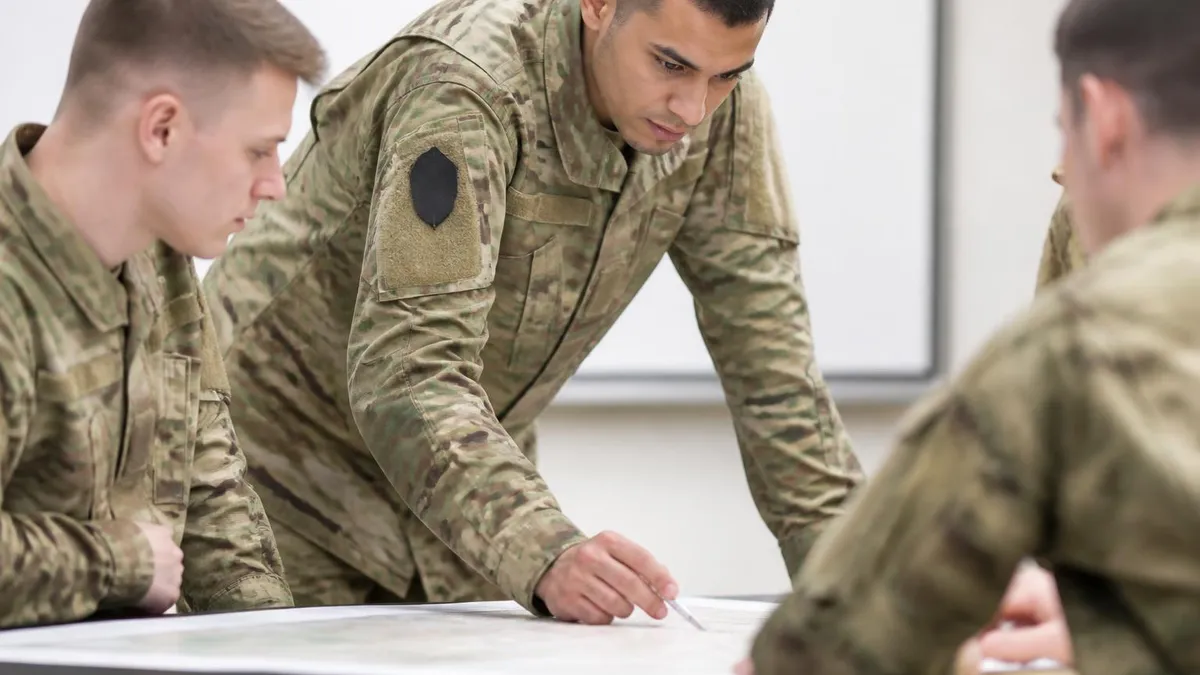
ROTC Requirements: Complete Guide to Eligibility, Fitness, and Service

Army ROTC Scholarship Application: Complete 2026 Guide to Winning a Full-Tuition Award
About the Author

Educational Psychologist & Academic Test Preparation Expert
Columbia University Teachers CollegeDr. Lisa Patel holds a Doctorate in Education from Columbia University Teachers College and has spent 17 years researching standardized test design and academic assessment. She has developed preparation programs for SAT, ACT, GRE, LSAT, UCAT, and numerous professional licensing exams, helping students of all backgrounds achieve their target scores.
Join the Discussion
Connect with other students preparing for this exam. Share tips, ask questions, and get advice from people who have been there.
View discussion (7 replies)