
Is ROTC Considered Military Service? What You Need to Know 2026 October
Is ROTC considered military service? 🎯 Learn what counts, what doesn't, and how ROTC status affects benefits, hiring, and your military career path.

One of the most common questions prospective cadets and their families ask is: is ROTC considered military service? The short answer is nuanced — ROTC cadet status itself does not count as active-duty military service, but the program is the gateway to a commissioned officer career that absolutely does. Understanding this distinction is critical for anyone making decisions about college, scholarships, Veterans Affairs benefits, federal hiring preferences, and long-term retirement planning. The difference between being an ROTC cadet and a commissioned officer can mean thousands of dollars in benefits and lifetime healthcare access.
Reserve Officer Training Corps programs exist at more than 1,700 colleges and universities across the United States, spanning the Army, Navy, Marine Corps, and Air Force branches. Cadets enrolled in these programs are college students who receive military training, leadership development, and in many cases full-tuition scholarships in exchange for a service commitment after graduation. During the cadet phase, participants are not considered members of the armed forces for most legal and benefits purposes — they hold a conditional status that converts upon commissioning.
The moment a cadet graduates and is commissioned as an officer — typically a second lieutenant in the Army, Air Force, or Marine Corps, or an ensign in the Navy — the active military service clock begins. From that point forward, every year of active duty counts toward retirement eligibility, Veterans Affairs benefits, federal civil service preference points, and the host of other entitlements tied to honorable military service. This is a fundamentally different legal standing from the cadet training period.
There are important exceptions worth knowing. Cadets who attend a contracted field training exercise or a summer leadership assessment may receive some limited pay, and those on scholarship are technically in a contractual relationship with the federal government. However, these arrangements do not automatically confer veteran status or active-duty credit. The Defense Department draws a firm line between training and actual commissioned service, and that line has major downstream consequences that every prospective ROTC student should understand before signing a contract.
Understanding rotc military service status also matters for federal employment. The Veterans Employment Opportunities Act and other hiring preference laws grant significant advantages to veterans in civil service hiring. ROTC graduates who complete their active service commitment — usually four years on active duty — qualify for these preferences. Pure ROTC cadet experience alone, without subsequent commissioned service, does not generate veteran hiring preference, a point that surprises many people who assume enrollment itself confers veteran status.
For anyone preparing to enter an ROTC program or advising a family member, getting clarity on these distinctions early prevents costly planning mistakes. Cadets who leave the program before commissioning — whether voluntarily or due to medical issues — may face repayment obligations for scholarship funds received. Conversely, those who complete the program and serve honorably set themselves up for a lifetime of earned benefits. The ROTC pathway is one of the most rewarding routes into military leadership, but it requires clear-eyed understanding of what the cadet phase does and does not provide in terms of formal military service recognition.
This article breaks down exactly how ROTC status is classified at every stage, which benefits apply during training versus after commissioning, how different branches treat cadet time, and what steps cadets should take to protect their legal and financial interests throughout the process. Whether you are a high school junior exploring college options or a junior cadet approaching your commissioning ceremony, the information here will give you an authoritative picture of how ROTC fits into the broader framework of American military service.
ROTC Military Service by the Numbers

ROTC Service Classification by Stage
No service obligation exists. Cadets explore military training without committing. No veteran status, no active-duty credit, and no repayment liability if they leave the program during this exploratory phase.
Cadets sign a contract and accept scholarship or stipend funds. They are now obligated to complete the program or repay benefits. Still not active-duty military, but legally bound to the government.
Field training camps like Army's Leadership Development and Assessment Course (LDAC) provide limited pay. This time does not count toward active-duty service or retirement eligibility.
The cadet is sworn in as a commissioned officer. Active-duty military service legally begins here. All subsequent service counts toward retirement, VA benefits, and federal hiring preference.
New officers serve their contractual obligation — typically 4 years active or 8 years in a reserve component. This is full military service in every legal and benefits sense.
Understanding what benefits apply during the ROTC cadet phase versus after commissioning is essential financial and career planning knowledge. During the cadet phase, scholarship recipients receive tuition, room and board, fees, and a monthly stipend that ranges from $300 to $500 depending on year of enrollment. These are valuable financial resources, but they do not come with the healthcare, housing allowance, or retirement accrual that characterize actual active-duty military compensation. The stipend is modest by design — it supplements education costs rather than replacing a full salary.
Once commissioned, the picture changes dramatically. A newly minted second lieutenant or ensign earns base pay determined by the military's pay grade chart — currently $3,637 per month for an O-1 with less than two years of service. Added to that are Basic Allowance for Housing (BAH), which can exceed $2,000 per month in high-cost cities, and Basic Allowance for Subsistence (BAS). Active-duty officers also receive comprehensive TRICARE healthcare coverage for themselves and their dependents, access to base commissaries and exchanges, and participation in the Blended Retirement System, which combines a traditional pension with a government-matched Thrift Savings Plan contribution.
Veterans Affairs benefits are another major dividing line. The VA provides healthcare, home loan guarantees, education benefits under the GI Bill, disability compensation, vocational rehabilitation, and life insurance to eligible veterans. Veteran status requires honorable active-duty service — it does not attach to ROTC cadet training. A cadet who leaves the program before commissioning has no VA eligibility whatsoever. However, an officer who completes even a single four-year active-duty obligation and separates honorably becomes a veteran with full VA access, including the Post-9/11 GI Bill that can fund graduate school tuition and a monthly housing stipend.
State-level veterans benefits add another layer of consideration. Most states offer additional educational grants, property tax exemptions, hunting and fishing license discounts, and civil service hiring preferences to veterans. These benefits, like federal ones, require documented active-duty service. Some states have enacted provisions specifically for reservists and National Guard members who complete ROTC and serve in those components, so it is worth researching the specific rules in your home state if you are commissioned into a reserve or Guard unit after graduation.
The Montgomery GI Bill and Post-9/11 GI Bill entitlements accrue from active-duty service, not from ROTC enrollment. An officer who serves four years on active duty earns full Post-9/11 GI Bill eligibility — worth over $100,000 in educational benefits at many universities — that can be used for graduate school, law school, or medical school after separation. Some officers transfer unused GI Bill benefits to spouses or children as part of retention incentives. None of these options are available to someone who participated in ROTC but never commissioned or served on active duty.
Military service also counts in ways that surprise many people outside the system. Federal civilian retirement calculations, certain Social Security crediting rules, and even some private-sector pension plans have provisions for counting prior military service. These downstream benefits make the distinction between cadet status and commissioned service economically significant over a lifetime. Financial planners who work with military families routinely note that a four-year active-duty commitment following ROTC can generate hundreds of thousands of dollars in lifetime benefit value beyond the salary earned during service itself.
For officers who stay in uniform long enough, the retirement benefit is particularly powerful. The military's pension system pays 40 to 50 percent of base pay for life beginning at 20 years of service — with the clock starting at commissioning, not at ROTC enrollment. A 22-year-old who commissions after four years of college and ROTC can retire with a lifetime pension at age 42 if they serve a 20-year career. That same person's ROTC cadet time, however valuable for training purposes, does not accelerate that retirement date by even a single day.
Branch-by-Branch ROTC Military Service Breakdown
Army ROTC — administered through Cadet Command — is the largest officer commissioning source in the United States, producing roughly 70 percent of new Army officers each year. Cadets do not hold military rank during training, though they are addressed informally by cadet titles. The Leadership Development and Assessment Course (LDAC), a 35-day summer evaluation at Fort Knox, provides limited pay but does not accrue as active-duty time for retirement or VA purposes. Commissioning as a second lieutenant initiates all military service entitlements.
Army officers commissioned through ROTC typically serve a four-year active-duty obligation, though branching into certain specialties or accepting a Reserve or National Guard commission reduces this to three years of active service plus reserve participation. Officers assigned to the Reserve or Guard component begin accruing qualifying retirement points immediately upon commissioning, with 20 qualifying years required for reserve retirement — a different calculation than the active-duty pension but still a meaningful long-term benefit that begins at commissioning, not during cadet training.

ROTC vs. Direct Enlistment: Weighing Military Service Paths
- +Commission as an officer immediately upon graduation — no enlisted time required
- +Scholarship funding can eliminate undergraduate student debt entirely
- +Leadership training integrated into college experience builds resume credentials even before commissioning
- +Multiple branch options (Army, Navy, Marine, Air Force, Space Force) accessible through ROTC
- +Officer pay and benefits significantly exceed enlisted compensation from day one of commissioning
- +ROTC graduates often access competitive career fields unavailable to enlisted personnel without additional education
- −Cadet phase does not count as military service — no veteran status during college training years
- −Scholarship contract creates repayment liability if the cadet disenrolls after contracting
- −Retirement clock starts at commissioning, not at program enrollment, potentially delaying retirement age
- −Competitive selection process — not all applicants receive scholarships or preferred branch assignments
- −Active-duty obligation (typically 4 years) limits early civilian career flexibility after graduation
- −Performance during ROTC directly affects commissioning eligibility — poor evaluations can disqualify cadets
Checklist: Protecting Your ROTC Service Record and Benefits
- ✓Keep copies of all ROTC scholarship contracts, amendments, and correspondence in a secure personal file.
- ✓Request and retain a copy of your commissioning oath and DD Form 1AF or equivalent commissioning paperwork.
- ✓Ensure your commissioning date is correctly recorded in the Defense Enrollment Eligibility Reporting System (DEERS) on day one.
- ✓Obtain a DD Form 214 upon any separation from active duty — this document is the primary proof of honorable military service.
- ✓Register with the VA within one year of separation to establish eligibility for healthcare and other earned benefits.
- ✓Document all active-duty service periods accurately in your Official Military Personnel File (OMPF) and verify entries annually.
- ✓If transitioning to a reserve or Guard component, ensure your reserve affiliation is recorded and your retirement point statements are reviewed annually.
- ✓Apply for federal civilian jobs through USAJOBS and correctly claim your veterans' preference points by attaching your DD Form 214.
- ✓Track your active-duty months carefully if pursuing a 20-year retirement — a single month's discrepancy can affect your retirement start date.
- ✓Notify your state veterans affairs office of your commissioned service so you can access state-level veterans benefits promptly after separation.
Commissioning Day is Day One — Not Freshman Orientation
Many ROTC cadets mistakenly assume their military service begins when they sign a scholarship contract or attend their first training event. It does not. Your legally recognized active-duty service — the foundation for retirement eligibility, VA benefits, and veteran hiring preference — begins the moment you raise your right hand and take the officer's oath of commissioning. Every planning decision about retirement timing, graduate school funding, and federal job applications should be calculated from that date, not from your ROTC enrollment date.
Federal hiring preference for veterans is one of the most tangible long-term benefits of military service, and understanding how ROTC fits into this system is critical for anyone planning a post-military career in government work. The Veterans Employment Opportunities Act (VEOA) and Title 5 of the United States Code establish a tiered preference system that gives veterans significant advantages in competitive civil service hiring.
A five-point preference applies to veterans who served on active duty during specified periods or in defined campaigns. A ten-point preference — substantially more advantageous — applies to veterans with service-connected disabilities and to certain categories of honorably separated veterans.
ROTC graduates who complete their active-duty obligation and separate honorably qualify for veterans' preference in federal hiring. This preference is not available during the cadet phase, and it does not apply to someone who participated in ROTC but declined or was denied a commission. The distinction the federal hiring system makes is simple: documented active-duty service followed by honorable separation creates the entitlement. The pathway through ROTC to that entitlement is irrelevant — what matters is the DD Form 214 showing honorable service completion.
In practice, veterans' preference in federal hiring can be decisive. Under the rule of three, hiring managers must select from the top three candidates on a certificate of eligibles, and veterans with preference are placed ahead of non-veterans with equal scores. Some positions are governed by category rating, where veterans are ranked above all non-preference eligibles within the same quality category. For competitive positions at agencies like the Department of Defense, Department of Homeland Security, and the State Department, veterans' preference can be the difference between receiving an interview and being passed over entirely.
ROTC graduates who transition to federal law enforcement — the FBI, DEA, Secret Service, Border Patrol, or federal corrections — find that military officer experience, combined with veterans' preference, creates a powerful competitive profile. Many federal law enforcement agencies actively recruit ROTC-trained officers because the combination of leadership training, discipline, and proven ability to function under pressure aligns closely with what these agencies need. The military officer credential, earned through commissioning after ROTC, carries genuine weight in these hiring processes.
Federal executive agencies also run specific programs designed to transition military officers into senior civilian roles. The Presidential Management Fellows program, the Senior Executive Service candidacy programs, and various agency-specific leadership development tracks all include provisions that recognize military officer experience. ROTC graduates who serve five to seven years on active duty before separating often find themselves highly competitive for GS-12 and GS-13 positions — mid-level federal roles with salaries ranging from $85,000 to $125,000 annually depending on locality — because their combined education, leadership experience, and veteran status create a profile that civilian candidates cannot easily replicate.
State civil service systems mirror the federal model in most respects, though specific rules vary. California, Texas, Florida, Virginia, and most other states with large state workforces have veterans' preference statutes that grant point additions or categorical priority to eligible veterans in state hiring. Police departments, fire departments, corrections systems, and state transportation agencies all participate in these preference programs. For ROTC graduates considering careers in state public safety or government administration, the veteran credential earned through commissioned service is a significant career asset that compounds over decades of state employment.
Private-sector employers increasingly recognize the value of ROTC officer experience even without a formal preference system. Fortune 500 companies, particularly in logistics, aerospace, defense contracting, financial services, and consulting, actively recruit from the military officer ranks because the leadership, project management, and decision-making skills developed through commissioned service are genuinely difficult to develop elsewhere. ROTC cadets who understand that their veteran status — earned at commissioning, not at enrollment — will eventually serve as a career differentiator are better positioned to use that status strategically throughout a 30 to 40-year professional career.

Cadets who disenroll from ROTC after signing a scholarship contract may be required to repay all scholarship funds received, including tuition, fees, and stipend payments. In some cases, the military may offer an enlisted service option instead of financial repayment — the cadet serves a specified period as an enlisted member rather than repaying cash. Repayment obligations can reach $50,000 or more for multi-year scholarship recipients. Always consult a JAG officer or legal assistance attorney before initiating disenrollment to understand your full financial exposure.
The commissioning ceremony itself marks one of the most significant legal and personal transitions in a young officer's life. In a matter of minutes, a college student becomes a commissioned officer of the United States Armed Forces, with all the rights, responsibilities, and authorities that title carries.
The ceremony typically involves the reading of the officer's oath — the same oath sworn by every commissioned officer from the President of the United States to the newest second lieutenant — followed by the pinning of rank insignia by a chosen family member or mentor. From a legal standpoint, the moment that oath is complete, active-duty military service has begun.
The first duty assignment after commissioning sets the trajectory for much of an officer's early career. ROTC graduates receive branch assignments through a competitive process that considers academic performance, physical fitness scores, leadership evaluations, and personal preferences. High performers can access competitive branches like aviation, special forces, intelligence, and cyber operations. Others may be assigned to combat arms, logistics, medical services, or a dozen other functional areas. Each branch carries its own career path, deployment patterns, promotion timelines, and lifestyle implications — all of which begin accumulating toward the officer's military service record from day one of active duty.
For ROTC graduates commissioned into the Reserve or National Guard, the active-duty versus reserve distinction creates a more complex service record. Reserve component officers may serve periods of active duty through mobilization, training exercises, or voluntary active-duty orders, each of which generates separately credited active-duty time. A National Guard officer who is mobilized for a federal mission generates a DD Form 214 for that period of active service, establishing a separate veteran status credential for the mobilization period even if the majority of their service is reserve-component weekend drills and annual training.
Post-commissioning education is another area where ROTC graduates with active-duty service have distinct advantages. The Army, Navy, and Air Force all fund graduate education for selected officers through fully funded programs at civilian universities and the service's own professional military education institutions. An ROTC graduate who commissions and performs well can earn a fully funded master's degree or even a law or medical degree through military education programs — opportunities completely unavailable during the cadet phase and accessible only by virtue of commissioned service.
Understanding the timeline of a military career helps put the ROTC cadet phase in proper perspective. A typical Army ROTC graduate might commission at 22, complete a four-year active-duty obligation by 26, separate with veteran status and GI Bill benefits, use those benefits to fund a master's degree by 28, and enter a civilian career with proven leadership experience, veteran hiring preference, and partial GI Bill housing stipend support during graduate school.
Alternatively, that same officer might stay in uniform for 20 years, retire at 42 with a pension and lifetime healthcare, then begin a second career with all of those accumulated benefits. Neither outcome is possible without the commissioned service that begins at graduation — never during the cadet years.
The question of whether ROTC service counts also arises in the context of government security clearances. Active-duty service provides a strong foundation for security clearance investigations because it generates years of documented federal oversight of an individual's conduct, finances, and associations. The clearance process looks favorably on honorable military service as evidence of trustworthiness and reliability. ROTC training contributes positively to a clearance application as evidence of background and character, but the documented active-duty service record carries far greater weight in the adjudicative process.
Ultimately, the ROTC pathway is best understood as one of the most effective preparation programs for military officer service that exists — but it is preparation, not service itself. The program builds the skills, habits, and knowledge base that make ROTC graduates effective officers from their first day in uniform.
The commissioned service that follows ROTC is where those skills get applied, where the benefits accrue, and where the legal and financial entitlements that define veteran status are earned. Cadets who approach the program with this understanding — and who prepare rigorously for both the training and the commissioning ceremony — position themselves for decades of meaningful service and its accompanying rewards.
Preparing effectively for your ROTC program requires more than physical fitness — it demands intellectual readiness, strategic planning, and a clear understanding of the military's institutional culture. Cadets who treat the ROTC training years as genuine professional development — not just a scholarship mechanism — arrive at commissioning far better prepared than those who coast through the academic portions and only engage seriously during field exercises. The habits and knowledge base you build during the cadet phase will directly determine how effective you are as a commissioned officer from day one.
Physical fitness is the most visible and frequently tested component of ROTC performance, but it is not the only one. The Army Combat Fitness Test (ACFT), the Navy's Physical Readiness Test (PRT), and the Air Force Fitness Assessment all measure distinct physical attributes, and each branch's officer evaluation system weights fitness scores in cadet performance rankings that influence branch selection and scholarship continuation. Training for your branch's specific fitness assessment — rather than generic exercise — is one of the highest-use preparation strategies available to cadets at any stage of the program.
Academic performance in ROTC coursework directly affects commissioning eligibility. Most programs require a minimum GPA for scholarship continuation, and class performance in military science courses influences evaluations submitted to branch commanders during the officer accession process. Cadets who develop strong study habits, take military history and ethics courses seriously, and engage with the intellectual dimensions of military leadership consistently outperform their peers in officer evaluation boards. The military is an intellectually demanding profession, and the best ROTC programs reflect that reality in their curricula.
Networking within the ROTC program and the broader military community provides career advantages that formal training cannot replicate. Building relationships with active-duty cadre, guest speakers who are current officers, and senior cadets who have attended advanced training gives junior cadets access to real-world perspectives on branch selection, duty station quality, deployment experiences, and career progression strategies. These informal information networks are often more current and actionable than formal guidance documents, and cultivating them is a skill that serves officers throughout their entire military career.
Leadership opportunities within the cadet battalion are highly competitive and highly consequential. Serving as a platoon leader, company commander, or battalion commander at the cadet level generates the kind of documented leadership experience that branch assignment boards and scholarship review committees prioritize. Cadets who seek these positions, perform well in them, and receive strong evaluations from cadre officers build records that open doors to competitive branch assignments and special programs after commissioning. Passive participation — showing up, meeting minimum standards — produces a mediocre record that limits options at precisely the moment when options matter most.
Preparing for summer training evaluations deserves dedicated focus beginning months in advance. LDAC for Army cadets, Field Training for Air Force cadets, and Officer Candidates School for Marine-option midshipmen are high-stakes evaluations that assess performance under sustained pressure. Reviewing the evaluation rubrics, practicing land navigation, rehearsing military briefing formats, and building physical conditioning well beyond minimum standards all contribute to strong summer training performance. Cadets who arrive at these evaluations underprepared frequently underperform relative to their actual leadership potential simply because unfamiliarity with the format creates unnecessary cognitive load.
Finally, take every opportunity to engage with the professional reading lists and military doctrine that your branch publishes. Army leaders read ADP 6-22 on leadership. Naval officers study Mahan and maritime strategy. Air Force officers engage with Airman's Manual and Air Force Doctrine Documents. These publications shape how the institution thinks about leadership, warfare, and professional responsibility.
Cadets who arrive at commissioning already conversant with their branch's foundational doctrine are immediately more effective in unit settings — and the officers who notice that readiness become the mentors who accelerate young officers' careers. The ROTC years are the time to build that intellectual foundation before the operational demands of commissioned service dominate every available hour.
ROTC Questions and Answers

Ace Your ROTC Assessment: Practice Test Guide
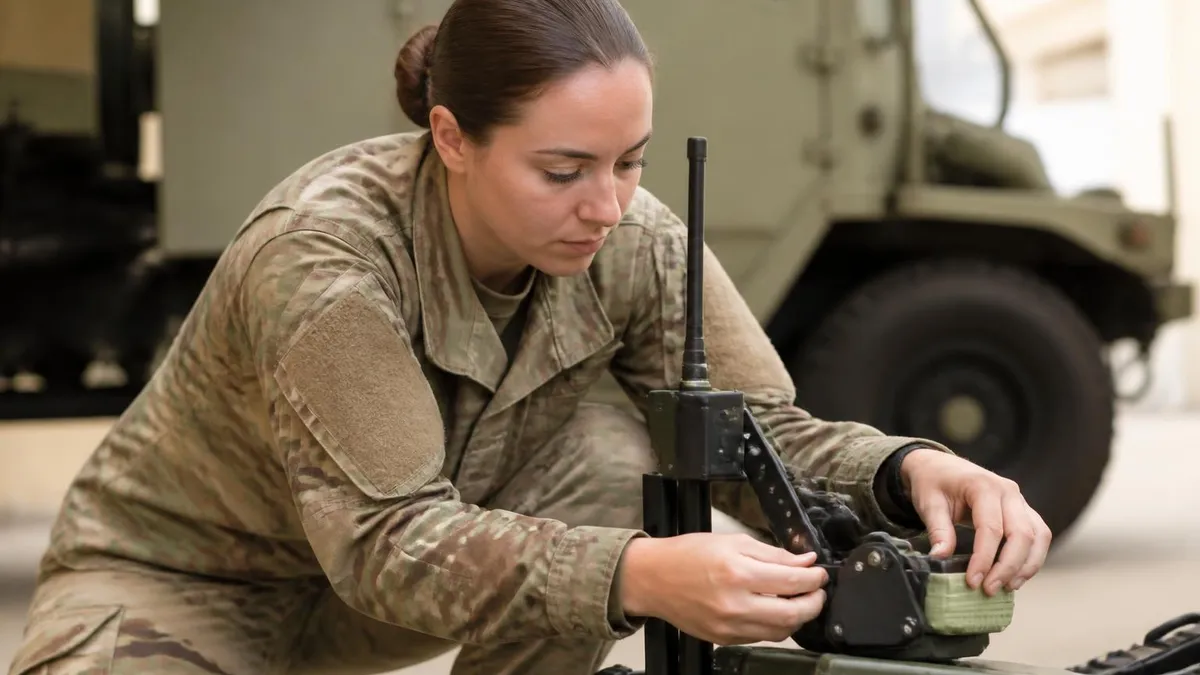
Marine ROTC: Duties, Career Path, and Life as a Marine Corps Officer

What Colleges Have ROTC Programs: The Complete Guide to Finding Your School

Army Junior ROTC Cadet Creed: Full Text, Meaning, and How to Master It

How to Get Into Air Force ROTC: Complete Requirements and Training Guide
About the Author

Educational Psychologist & Academic Test Preparation Expert
Columbia University Teachers CollegeDr. Lisa Patel holds a Doctorate in Education from Columbia University Teachers College and has spent 17 years researching standardized test design and academic assessment. She has developed preparation programs for SAT, ACT, GRE, LSAT, UCAT, and numerous professional licensing exams, helping students of all backgrounds achieve their target scores.
Join the Discussion
Connect with other students preparing for this exam. Share tips, ask questions, and get advice from people who have been there.
View discussion (9 replies)