
ROTC Ranks: Cadet Rank Structure for Army, Navy, and Air Force ROTC, MS-Year Progression, and Leadership Roles
ROTC ranks explained: cadet rank structure for Army, Navy, Air Force ROTC programs. MS-I to MS-IV progression, leadership roles, post-commission ranks. ✏️
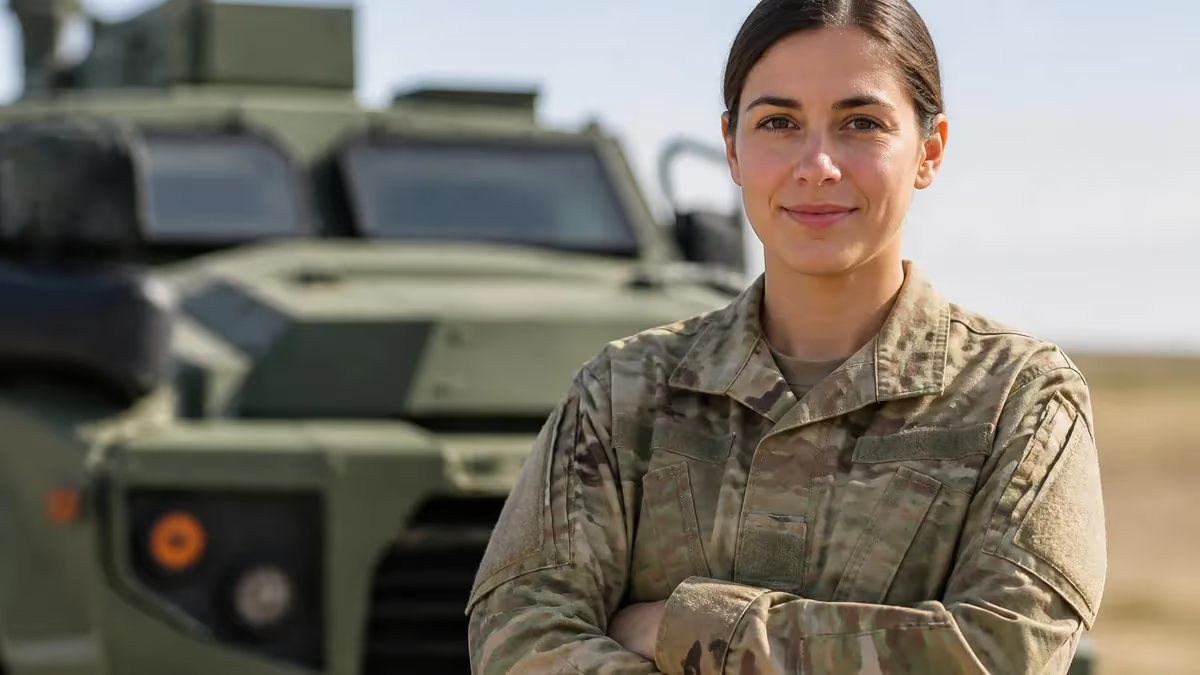
ROTC (Reserve Officers' Training Corps) is a college-based program that trains future commissioned officers for the US military services. Cadets in ROTC programs hold specific cadet ranks during their college years, designed to mirror the military officer rank structure while providing leadership development opportunities. Understanding ROTC ranks helps prospective cadets, current cadets, and family members grasp the structure and expectations of the program.
The cadet rank structure differs slightly between the three main ROTC programs: Army ROTC (the largest), Air Force ROTC (AFROTC), and Naval ROTC (NROTC, which includes both Navy and Marine Corps options). Each follows a similar pattern of progressive responsibility from freshman year through senior year.
The four MS-years (Military Science years) provide the framework. MS-I (Military Science Level 1, freshman year): basic introduction to military life. Typically no cadet rank or 'Cadet Private' status. Focus on learning basics. MS-II (sophomore year): increasing responsibility. Some cadets become 'Cadet Corporal' or 'Cadet Private First Class.' Beginning of leadership roles in small groups.
MS-III (junior year): substantial leadership opportunities. Cadets typically hold 'Cadet Sergeant' through 'Cadet First Sergeant' ranks. Lead squads and platoons in field training. MS-IV (senior year): senior leadership roles. Cadets hold 'Cadet Officer' ranks: Cadet Second Lieutenant, Cadet First Lieutenant, Cadet Captain, Cadet Major. Lead battalion and company-level training. Prepare for commissioning.
After graduation, ROTC cadets commission as officers in their service: Army/Air Force: Second Lieutenant (O-1). Navy: Ensign (O-1). Marines: Second Lieutenant (O-1). The cadet ranks during ROTC are training designations; the post-commission rank is the actual military rank.
This guide covers ROTC ranks in detail — the cadet rank structure for each service, MS-year progression, leadership roles, and how cadet experience translates to military officer responsibilities. It's intended for prospective ROTC cadets, current cadets, family members trying to understand the program, and educators familiar with the program.
Latest Updates (September 2026)
- Army ROTC is currently offered at 1,000+ host and cross-town partner colleges and universities nationwide, with graduates commissioning as Second Lieutenants in the Army, Army Reserve, or Army National Guard. (Source: goarmy.com, Army ROTC page, verified Sept 2026)
- AFROTC's senior cadet officer grade is Cadet Lieutenant Colonel (C/Lt Col), who typically serves as wing commander; at the largest wings, a cadet may instead be promoted to Cadet Colonel (C/Col), the highest AFROTC cadet grade. (Source: afrotc.com, verified Sept 2026)
- NROTC commissions midshipmen through three tracks — Navy Option, Nurse Option, and Marine Corps Option — leading to an Ensign (Navy/Nurse Corps) or Second Lieutenant (Marine Corps) commission. (Source: navy.com, NROTC education page, verified Sept 2026)
- All three programs commission graduates at the same starting pay grade, O-1, regardless of cadet rank held during college.
Key Information
- Programs: Army ROTC, Air Force ROTC (AFROTC), Naval ROTC (NROTC)
- Cadet rank during ROTC: Training designations
- MS-Year framework: MS-I (freshman) through MS-IV (senior)
- Post-commission rank: Second Lieutenant or Ensign (O-1)
- Cadet officer ranks (senior year): CDT 2LT, 1LT, CPT, MAJ
- Cadet enlisted ranks (junior years): Sergeant series
- Cadet enlisted ranks (lower years): Corporal, Private series
- Leadership progression: Squad → Platoon → Company → Battalion
- Commissioning: After graduation, typically immediately
- Service obligation: Active duty (3-4 years) or reserve component
- Different service traditions: Each branch has specific rank style
Army ROTC cadet ranks. The largest ROTC program with the most detailed rank structure.
Senior cadet officer ranks (typically MS-IV seniors): Cadet Major (C/MAJ) — Battalion commander; highest cadet rank at most programs. Cadet Captain (C/CPT) — Company commander or staff officer. Cadet First Lieutenant (C/1LT) — Platoon leader or staff officer. Cadet Second Lieutenant (C/2LT) — Squad leader or assistant platoon leader. These positions handle most leadership responsibilities within the cadet battalion structure.
Senior NCO ranks (typically MS-III juniors and some MS-IV seniors): Cadet First Sergeant (C/1SG) — Senior NCO of a company. Manages day-to-day operations. Cadet Master Sergeant (C/MSG) — Senior NCO with specialized responsibilities. Cadet Sergeant First Class (C/SFC) — Platoon sergeant; supports the platoon leader. Cadet Staff Sergeant (C/SSG) — Squad leader; first major leadership role.
Junior NCO ranks (typically MS-II sophomores and MS-III juniors): Cadet Sergeant (C/SGT) — Team leader or assistant squad leader. First step into NCO leadership. Cadet Corporal (C/CPL) — Team leader. Entry NCO position.
Enlisted ranks (typically MS-I freshmen and MS-II sophomores): Cadet Private First Class (C/PFC) — Entry-level cadet with basic training experience. Cadet Private (C/PVT) — Initial entry rank. Most freshmen.
Battalion structure. A typical Army ROTC battalion has 100-300 cadets. Organized like an actual Army battalion: Battalion command (Cadet Major or LTC if larger) → Companies → Platoons → Squads → Fire teams. Each level has cadet officers and NCOs in leadership positions.
Promotion structure. Promotions are based on: time in program (year-by-year progression), demonstrated leadership ability, academic performance, physical fitness performance, peer evaluations, instructor recommendations. Most cadets receive at least one promotion per year. Higher ranks are competitive within the cohort.
Cadre. Active duty Army officers and NCOs serve as cadre, providing training and mentorship. The Senior Military Science Instructor (SMSI) is typically a Lieutenant Colonel; assistants are Captains, Lieutenants, and senior NCOs. They evaluate and develop the cadets.
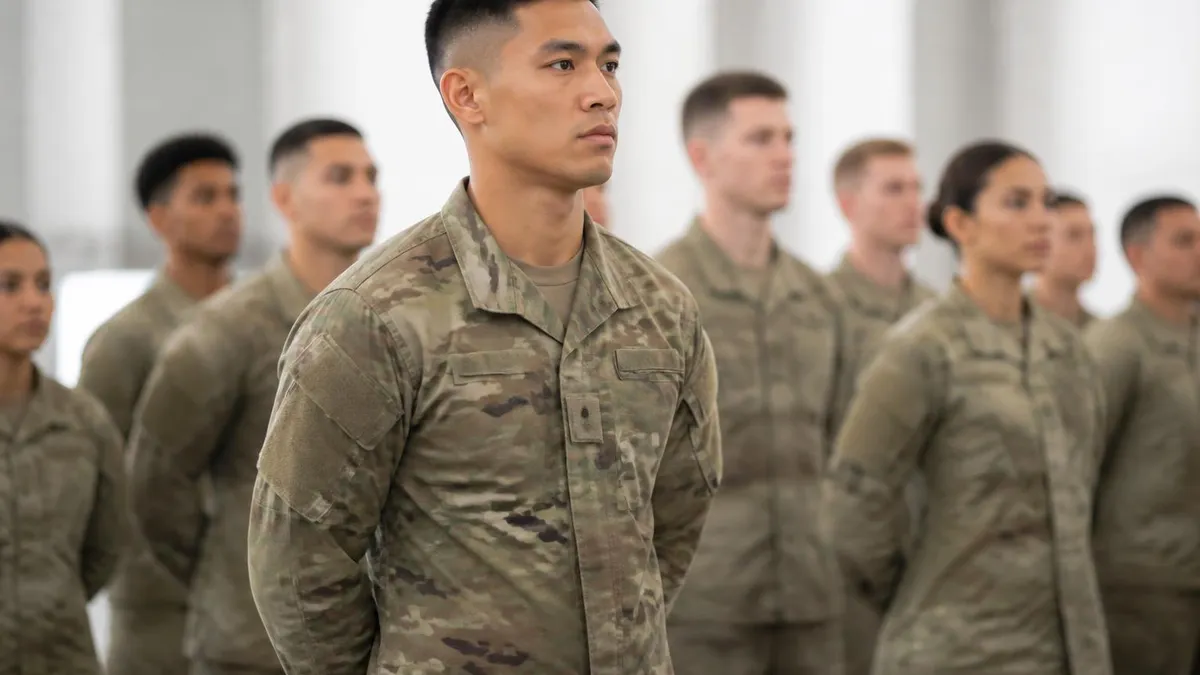
Army ROTC Cadet Ranks
Cadet Major. Battalion commander. Highest cadet rank at most programs.
Cadet Captain. Company commander or major staff officer.
Cadet First/Second Lieutenant. Platoon leader, squad leader, staff.
Cadet First Sergeant / Master Sergeant. Senior NCO positions.
Senior, Staff, Regular Cadet Sergeant. NCO positions in platoons and squads.
Cadet Corporal, Private First Class, Private. Junior cadets, freshmen and sophomores.
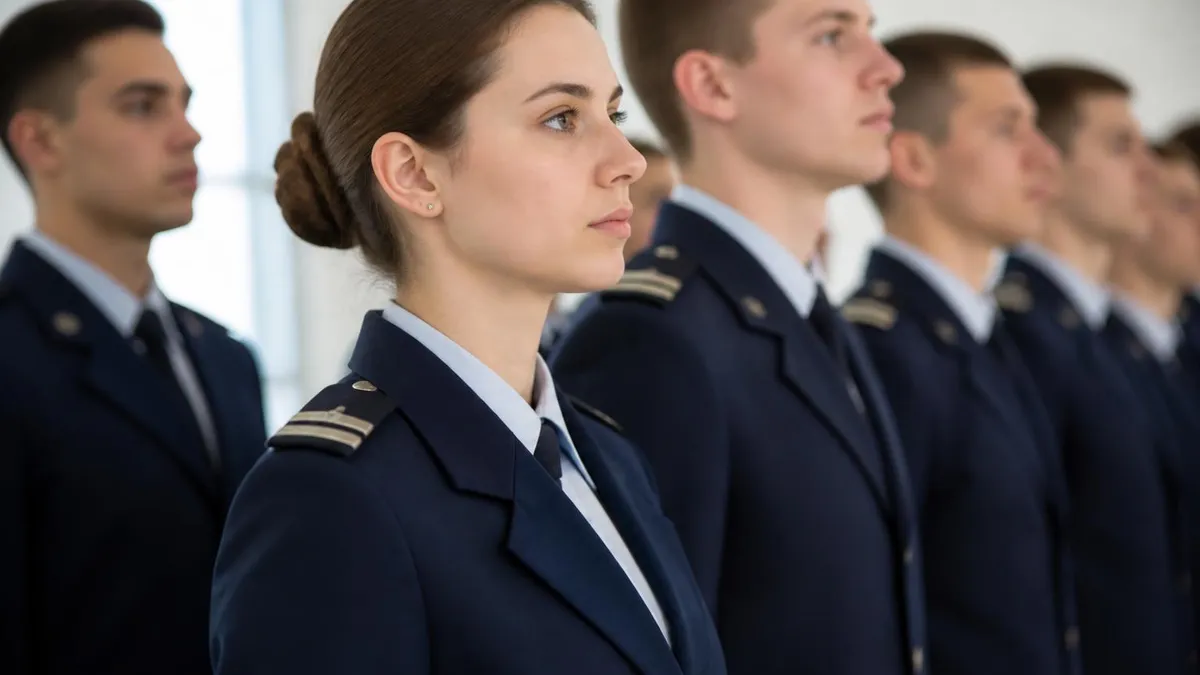
Air Force ROTC (AFROTC) cadet ranks. Similar concept to Army but with Air Force-specific style.
Senior cadet officer ranks (MS-IV seniors): Cadet Lieutenant Colonel (C/Lt Col) — Wing commander at most detachments; the largest wings may instead promote their commander to Cadet Colonel (C/Col), the top cadet officer grade in AFROTC. Cadet Major (C/Maj) — Group commander or senior staff. Cadet Captain (C/Capt) — Squadron commander or staff officer. Cadet First Lieutenant (C/1Lt) — Flight commander or staff. Cadet Second Lieutenant (C/2Lt) — Junior officer position.
Senior NCO ranks: Cadet Chief Master Sergeant (C/CMSgt) — Wing sergeant major position. Cadet Senior Master Sergeant (C/SMSgt) — Group sergeant major. Cadet Master Sergeant (C/MSgt) — Squadron first sergeant. Cadet Technical Sergeant (C/TSgt) — Flight chief or assistant.
Junior NCO ranks: Cadet Staff Sergeant (C/SSgt) — Element leader. First major leadership role. Cadet Sergeant (C/Sgt) — Assistant element leader.
Enlisted ranks: Cadet Senior Airman (C/SrA) — Senior airman. Cadet Airman First Class (C/A1C) — Entry-level rank. Cadet Airman (C/Amn) — Initial entry.
Wing structure. AFROTC organizes cadets into a 'wing' (similar to Army battalion). Wing → Groups → Squadrons → Flights → Elements. Each level has cadet officers and NCOs.
Detachment cadre. Active duty Air Force officers and NCOs serve as cadre. Detachment Commander (typically Lieutenant Colonel) leads the unit. Other officers and NCOs assist with training.
Promotion. Similar to Army ROTC. Year-by-year progression with competitive selection for higher ranks. AFROTC tends to have more cadet officers per year (less competitive than Army for senior positions).
Field training. AFROTC cadets attend Field Training (FT) the summer between MS-II and MS-III. Approximately 4 weeks of intensive training at Maxwell AFB. Performance at FT significantly affects rank progression in subsequent years.
AFROTC Cadet Ranks
Cadet Lieutenant Colonel. Wing commander at most detachments (the largest wings may use Cadet Colonel, C/Col, instead).
Cadet Major and Captain. Group and Squadron commanders. Senior staff.
Cadet First/Second Lieutenant. Flight commanders, staff officers.
Cadet Chief/Senior Master Sergeant. Wing and Group sergeant major positions.
Cadet Master/Technical Sergeant. Squadron and Flight NCO positions.
Cadet Staff Sergeant, Sergeant, Senior Airman, Airman First Class, Airman.
Naval ROTC (NROTC) cadet ranks. NROTC includes both Navy and Marine Corps options. Different rank structure than Army or Air Force.
NROTC officer cadet ranks (Navy Option for senior midshipmen): Battalion Commander (1/C MIDN). Highest cadet position. Most senior midshipman. Company Commander (1/C MIDN). Leads a company within the battalion. Other officer positions: Operations Officer, Adjutant, Supply Officer, etc.
NROTC ranks use 'Midshipman' designation rather than 'Cadet': MIDN 1/C (Midshipman First Class) — senior year. MIDN 2/C (Midshipman Second Class) — junior year. MIDN 3/C (Midshipman Third Class) — sophomore year. MIDN 4/C (Midshipman Fourth Class) — freshman year. 'First Class' is senior; 'Fourth Class' is freshman.
Marine Option (within NROTC). For students planning to become Marine Corps officers. Rank structure same as NROTC. Some additional training requirements (Officer Candidates School expectations, etc.).
Battalion structure. NROTC organizes cadets into a 'battalion.' Battalion command staff at the top. Companies under battalion. Platoons under companies. Squads under platoons.
Unit cadre. Active duty Naval officers (Surface Warfare, Submarine, Aviation, Marine Corps, etc.) serve as cadre. The Commanding Officer is typically a Captain (O-6) or Commander (O-5). Other cadre are commissioned officers and enlisted leaders.
Summer cruises. NROTC midshipmen complete summer cruises in different fleet experiences. First-summer cruise is enlisted exposure. Second-summer is fleet exposure with focus on chosen warfare community. Third-summer is officer leadership preparation.
For NROTC midshipmen, performance and leadership during the academic year and summer cruises drive promotion. Most NROTC programs have fewer 'cadet officer' positions than Army ROTC, creating more competition for the top spots.
ROTC Programs Comparison
Size: Largest program. ~30,000 cadets across 270+ schools.
Structure: Battalion, Companies, Platoons, Squads
Top rank: Cadet Major (battalion commander)
Commission: Second Lieutenant (Army)
Distinctive: Largest officer pipeline; strong leadership emphasis
Progression through ROTC years. The MS-Year framework provides a structured leadership development path.
MS-I (Freshman year). Basic military science introduction. Learn military customs, structure, basic skills. Physical fitness assessments. Few leadership responsibilities. Typical rank: Cadet Private. Focus: developing strong academic foundation, understanding the military, deciding if ROTC is the right path.
MS-II (Sophomore year). Increased responsibility and complexity. Learn small-unit tactics, leadership theory. Some leadership in squad-level training. Typical rank: Cadet Private First Class, Cadet Corporal, or Cadet Sergeant. Focus: developing as a follower and emerging leader.
MS-III (Junior year). Significantly expanded leadership opportunities. Junior NCO and possible officer positions. Lead platoon-level training. Cadets contract to commit to military service. Typical rank: Cadet Sergeant through Cadet Second Lieutenant depending on program. Focus: demonstrating leadership ability for senior-year selection.
MS-III summer. Most Army ROTC cadets attend Cadet Summer Training (CST) at Fort Knox. AFROTC cadets attend Field Training. NROTC midshipmen complete summer cruise. Performance at summer training affects MS-IV opportunities.
MS-IV (Senior year). Senior leadership roles. Lead battalion or wing operations. Mentor junior cadets. Prepare for commissioning. Typical rank: Cadet Second Lieutenant through Cadet Major/Lieutenant Colonel. Focus: completing degree, finalizing career path within service, preparing for active duty.
Post-commissioning. After graduation: commission as O-1 (Second Lieutenant or Ensign). Active duty obligation begins (typically 3-4 years for Army/Air Force; 4-5 years for Navy/Marines). Initial training (Basic Officer Leader Course for Army; Officer Indoctrination for Air Force; SWO School for Navy; The Basic School for Marines). First assignment to operational unit.
Reserve component option. Some ROTC cadets commission into Reserve or National Guard rather than active duty. Different service obligation structure. Often combined with civilian career.
ROTC Year-by-Year Progression
MS-I (Freshman)
MS-II (Sophomore)
MS-III Summer
MS-III (Junior)
MS-IV (Senior)
Graduation
Active Duty
Post-commissioning officer ranks. After ROTC graduation, cadets become commissioned officers.
Officer rank pay grades. O-1: entry-level officer rank. Second Lieutenant (Army/Air Force/Marines), Ensign (Navy). 1-2 years of service typical. O-2: First Lieutenant (Army/AF/Marines), Lieutenant Junior Grade (Navy). 2-4 years. O-3: Captain (Army/AF/Marines), Lieutenant (Navy). 4-10 years. The 'company-grade' officer level. O-4: Major (Army/AF/Marines), Lieutenant Commander (Navy). 10-15 years. Mid-career officer. O-5: Lieutenant Colonel (Army/AF/Marines), Commander (Navy). 15-22 years. Senior officer. O-6: Colonel (Army/AF/Marines), Captain (Navy). 20-30 years. Most senior promotable officer. O-7+: General officers (Army/AF/Marines), Admirals (Navy). Top-tier leadership.
Initial officer training. After commissioning, immediate training to prepare for first assignment. Army Basic Officer Leader Course (BOLC) 4-6 months depending on branch. Air Force Initial Pilot Training (for pilots) or other specialty training. Navy Surface Warfare Officer School (SWOS) 6 months. Marine The Basic School (TBS) 6 months.
First assignments. After initial training: Army platoon leader position. Air Force operational role (pilot, navigator, intel officer, etc.). Navy ship assignment (Surface Warfare) or submarine. Marines company executive officer or platoon commander. These first assignments shape early career.
Career progression. Promotion timing varies by service and career field. Typical: O-1 to O-2: 18-24 months. O-2 to O-3: 24-36 months. O-3 to O-4: 4-6 years. O-4 to O-5: 5-7 years. O-5 to O-6: 5-7 years. Performance and 'select boards' determine promotions.
Career obligations. Army/Air Force ROTC: typically 3-4 years active duty obligation. NROTC: typically 4-5 years (longer for pilots). After obligation, officers can: continue active duty, transition to reserves, leave military for civilian career, retire (after 20+ years for retirement eligibility).
The relationship between cadet rank and officer rank. Cadet ranks during ROTC don't directly translate. A Cadet Major doesn't graduate as a Major — they graduate as a Second Lieutenant. But cadet ranks reflect leadership ability that often correlates with career success. Cadets with strong ROTC performance typically have strong early officer careers.
Officer Pay Grades
What ROTC ranks tell you about a cadet. Cadet rank reflects performance and progression in the program.
What higher cadet rank indicates. Demonstrated leadership ability over multiple years. Strong academic performance. Good physical fitness. Peer respect (some ranks involve peer evaluations). Selection ability for higher responsibility. Future officer potential.
What cadet rank doesn't tell you. Specific career field after commissioning (separate selection process). Future officer career trajectory (early career performance, not cadet rank, predicts most strongly). Combat or operational ability (untested at cadet level). Quality of judgment in real-world military operations.
How cadet rank affects post-commission career. Mostly indirect — cadet rank reflects qualities that often correlate with officer career success. But cadet rank itself isn't tracked or considered in officer career progression. The Army doesn't say 'this Lieutenant was a Cadet Captain.'
Visible insignia. Cadet ranks have specific insignia (rank pins, sleeve braids, or chest tabs depending on service). Worn on cadet uniforms during ROTC events, drill, training, and PT. Different from active-duty insignia but designed to reflect officer rank style.
Drill and ceremony. ROTC units conduct drill and ceremony exercises. Cadet officers and NCOs lead these. Roles correspond to rank (battalion commander leads the battalion in parade). Visible demonstration of rank structure.
For prospective cadets: don't fixate on rank during ROTC. Focus on: learning leadership, academic performance, physical fitness, ethical behavior, helping fellow cadets. Higher ranks come from doing the right things consistently, not from pursuing rank specifically. The cadets who 'play politics' for rank often face challenges as active duty officers.
For current cadets: rank is a result of consistent performance. The fundamentals — be a good follower, lead when asked, learn continuously, maintain physical fitness — are what matter. Rank tracks these naturally.
Cultural differences across services. Army ROTC tends to be more rank-focused than NROTC. AFROTC has its own culture with different rank dynamics. Marines have a distinct culture. Each program reflects its service's broader culture.
Some cadets become overly focused on cadet rank, treating it as a competition or status symbol. This usually backfires. Strong cadet officers are those who focus on: doing the right things consistently, being a good follower as well as leader, demonstrating ethical behavior, taking care of fellow cadets, and learning continuously. Higher ranks emerge naturally from these behaviors. Cadets who 'politic' for rank often face challenges as active duty officers because they've developed the wrong habits. Focus on the substance of leadership; rank follows.
ROTC Pros and Cons
- +ROTC has a publicly available content blueprint — you know exactly what to prepare for
- +Multiple preparation pathways accommodate different schedules and budgets
- +Clear score reporting shows specific strengths and weaknesses
- +Study communities share current insights from recent test-takers
- +Retake policies allow recovery from a difficult first attempt
- −Tested content scope requires substantial preparation time
- −No single resource covers everything optimally
- −Exam-day performance can differ from practice test performance
- −Registration, prep, and retake costs accumulate significantly
- −Content changes between versions can make older materials less reliable
Pros and Cons at a Glance
| Pros | Cons |
|---|---|
| ROTC has a publicly available content blueprint — you know exactly what to prepare for | Tested content scope requires substantial preparation time |
| Multiple preparation pathways accommodate different schedules and budgets | No single resource covers everything optimally |
| Clear score reporting shows specific strengths and weaknesses | Exam-day performance can differ from practice test performance |
| Study communities share current insights from recent test-takers | Registration, prep, and retake costs accumulate significantly |
| Retake policies allow recovery from a difficult first attempt | Content changes between versions can make older materials less reliable |
🎖️ What are the Army ROTC cadet ranks in order?
Army ROTC cadet ranks run from Cadet Private (C/PVT) and Cadet Private First Class (C/PFC) through the cadet NCO ranks (C/CPL, C/SGT, C/SSG, C/SFC, C/MSG, C/1SG) to the cadet officer ranks C/2LT, C/1LT, C/CPT and C/MAJ. The Cadet Major is normally the battalion commander; larger battalions may add a Cadet Lieutenant Colonel. Every abbreviation carries the C/ prefix, which is how you tell a cadet rank from a real Army rank.
START ROTC PRACTICE TEST✈️ What are the AFROTC cadet ranks and rank insignia?
AFROTC cadet ranks mirror Air Force titles: Cadet Airman (C/Amn), C/A1C and C/SrA, then the cadet NCO grades C/SSgt, C/TSgt, C/MSgt, C/SMSgt and C/CMSgt, and the cadet officer grades C/2Lt, C/1Lt, C/Capt, C/Maj and C/Lt Col. The wing commander, usually a C/Lt Col, is the senior cadet at most detachments. Cadet rank insignia are cadet-style versions of the Air Force chevrons and officer bars and leaves, worn on the cadet uniform.
START ROTC PRACTICE TEST⚓ What ranks do NROTC midshipmen hold?
NROTC does not use "cadet" ranks. Students are midshipmen, classed by year: MIDN 4/C (freshman), MIDN 3/C (sophomore), MIDN 2/C (junior) and MIDN 1/C (senior). Leadership is expressed through billets rather than ranks, so a senior midshipman may serve as battalion commander, company commander, operations officer or adjutant. Navy Option, Nurse Option and Marine Corps Option midshipmen all use the same class structure.
START ROTC PRACTICE TEST📅 How do MS years map to Army ROTC cadet ranks?
MS I (freshman) and MS II (sophomore) form the Basic Course, where cadets typically hold Cadet Private through Cadet Sergeant. MS III (junior) and MS IV (senior) form the Advanced Course, which requires the Basic Course or the 32-day Basic Camp and commits the cadet to serve as an officer. MS III cadets fill NCO billets and attend the 35-day Advanced Camp; MS IV cadets hold the cadet officer ranks and run the battalion.
START ROTC PRACTICE TEST🛫 How is AFROTC divided by year, and where do cadet officer ranks start?
AFROTC splits into the General Military Course (freshman and sophomore years) and the Professional Officer Course (junior and senior years). Every semester cadets take Aerospace Studies plus Leadership Laboratory. Between sophomore and junior year, cadets attend Field Training, a two-week encampment at Maxwell AFB where leadership potential is rated. Cadet enlisted and NCO ranks belong to the GMC years; cadet officer ranks are held in the POC years.
START ROTC PRACTICE TEST🆚 Cadet rank vs commissioned rank: what is the difference?
Cadet rank is a training designation inside the ROTC unit and has no standing in the regular military. A Cadet Major does not graduate as a Major; every cadet who completes the program commissions at the same grade, O-1. Cadet rank is not entered in an officer's record after commissioning, although the leadership it reflects usually carries over into early officer performance.
START ROTC PRACTICE TEST🏅 How is cadet rank earned in ROTC?
Cadet rank comes from a mix of year in the program, demonstrated leadership, grade point average, physical fitness scores, peer evaluations and cadre recommendations. Summer training matters: Army cadets are evaluated at Advanced Camp before their MS IV year, and AFROTC cadets receive Field Training performance ratings plus a Detachment Commander rating that feed later selections. Most cadets move up at least one rank per year, but the top billets are competitive.
START ROTC PRACTICE TEST🎓 What changes at commissioning?
On commissioning, cadet rank ends and the graduate becomes an O-1: Second Lieutenant in the Army, Army Reserve or Army National Guard, Second Lieutenant in the Air Force or Space Force, Ensign for NROTC Navy Option and Nurse Option, and Second Lieutenant in the Marine Corps for Marine Option. A service commitment begins, typically four years of active duty for Air Force officers, with longer obligations for pilots and other specialties.
START ROTC PRACTICE TEST🔤 What do the common ROTC rank abbreviations stand for?
C/ means Cadet, so C/CPT is Cadet Captain and C/SSgt is Cadet Staff Sergeant. MIDN is Midshipman and 1/C through 4/C are First Class through Fourth Class. MS stands for Military Science (the Army ROTC course level), AS for Aerospace Studies (the AFROTC course), PMS for Professor of Military Science, and GMC and POC for the AFROTC General Military Course and Professional Officer Course.
START ROTC PRACTICE TEST🧭 Which leadership roles go with each cadet rank?
In Army ROTC the ladder is squad leader (C/SSG), platoon sergeant (C/SFC), first sergeant (C/1SG), platoon leader (C/1LT or C/2LT), company commander (C/CPT) and battalion commander (C/MAJ). AFROTC follows its wing structure: element leader (C/SSgt), flight commander (C/1Lt), squadron commander (C/Capt), group commander (C/Maj) and wing commander (C/Lt Col). NROTC assigns the same kinds of roles as billets to 1/C and 2/C midshipmen.
START ROTC PRACTICE TESTSample ROTC - Reserve Officer Training Corps Practice Questions
Try these questions from our free ROTC - Reserve Officer Training Corps practice tests. The correct answer and an explanation follow each question.
What is the relationship between theory and practice in Reserve Officer Training Corps military leadership?
- A. Theory provides the foundation and framework that guides effective practical application
- B. Theory and practice are completely unrelated
- C. Practice is only important; theory is unnecessary
- D. Theory replaces the need for any practical experience
Answer: A. Theory provides the foundation and framework that guides effective practical application
Theory and practice are complementary: theoretical knowledge provides the conceptual framework and understanding that guides effective, evidence-based practical application in professional settings.
What is the primary objective of military leadership in Reserve Officer Training Corps?
- A. To ensure competence and proficiency in core military leadership concepts
- B. To replace practical experience entirely
- C. To limit access to the profession
- D. To generate revenue for testing organizations
Answer: A. To ensure competence and proficiency in core military leadership concepts
The primary objective of military leadership knowledge is to ensure practitioners have the competence and proficiency needed to perform effectively and safely in their professional roles.
In Reserve Officer Training Corps, what role does continuing education play in military leadership?
- A. To keep professionals current with evolving standards, technologies, and best practices
- B. To prevent professionals from advancing in their careers
- C. To replace initial certification requirements
- D. To increase testing frequency for compliance purposes
Answer: A. To keep professionals current with evolving standards, technologies, and best practices
Continuing education ensures professionals stay current with new developments, evolving standards, and emerging best practices in their field, maintaining competence throughout their careers.
During a military formation, who is the person responsible for maintaining dress and alignment within a rank?
- A. The guide
- B. The base soldier
- C. The file closer
- D. The sergeant major
Answer: B. The base soldier
The base soldier (or base element) sets the standard for alignment, and all other soldiers dress to the base's position.
Take the full ROTC - Reserve Officer Training Corps practice test
ROTC Questions and Answers
Understanding ROTC ranks helps prospective and current cadets grasp the structure of the program and its leadership development purpose. The cadet rank system trains future officers through progressive responsibility — from learning basic military skills as freshmen to leading battalion or wing operations as seniors.
For prospective cadets: don't fixate on rank during ROTC. Focus on being a good follower first, then a good leader. Higher ranks come from consistent strong performance. The qualities that earn high cadet rank (leadership, academic performance, physical fitness, ethical behavior) are the same qualities that produce successful active duty officers. Develop those qualities, and the ranks (and career success) follow naturally.
The cadet rank structure exists to develop leaders, not to create a separate military hierarchy. Each rank carries real responsibility — supervising fellow cadets, leading training, making decisions, accepting accountability for results. These responsibilities teach the practical aspects of military leadership that classroom instruction alone cannot convey.
By the time cadets commission as Second Lieutenants or Ensigns, they have years of practical leadership experience built incrementally through the cadet rank progression. The system works because it matches gradually-increasing responsibility with gradually-increasing capability, producing junior officers ready to lead their first platoons or divisions effectively from day one of active duty service.
Official Resources
- Army ROTC (goarmy.com) — the official Army ROTC page explaining the Basic Course, Advanced Course, Basic Camp and Advanced Camp, scholarships, and commissioning as a second lieutenant.
- Air Force ROTC (afrotc.com) — the official AFROTC site covering the General Military Course, Professional Officer Course, Field Training at Maxwell AFB, and the service commitment after commissioning.
- Naval ROTC (navy.com) — the official Navy page on NROTC scholarships, Navy, Nurse and Marine Corps Options, and commissioning as an Ensign or Marine second lieutenant.
About the Author

Educational Psychologist & Academic Test Preparation Expert
Columbia University Teachers CollegeDr. Lisa Patel holds a Doctorate in Education from Columbia University Teachers College and has spent 17 years researching standardized test design and academic assessment. She has developed preparation programs for SAT, ACT, GRE, LSAT, UCAT, and numerous professional licensing exams, helping students of all backgrounds achieve their target scores.
Join the Discussion
Connect with other students preparing for this exam. Share tips, ask questions, and get advice from people who have been there.
View discussion (9 replies)