
ROTC Creed: Full Text, Meaning, and How to Memorize It 2026 October
Learn the ROTC Creed line by line, understand each pledge, 🏆 and use proven memorization tactics cadets rely on to pass inspections and boards.

The ROTC Creed is the single most recited paragraph in the Reserve Officer Training Corps, and it shapes how every cadet thinks about duty, character, and the long road to a commission. Whether you are a freshman MS-I trying to memorize it before your first lab, or an MS-IV preparing to lead a battalion, the rotc creed defines the standard you are expected to live by every single day, in uniform and out of it.
Most cadets first encounter the creed during New Cadet Orientation or at the opening formation of their first semester. Cadre will hand you a small card, point to a wall placard, and expect you to recite it from memory within days. That pressure is intentional. The creed is not a poem to admire; it is a contract you sign verbally every time you speak it aloud in front of your peers.
The full text contains roughly 95 words across five declarative statements, each beginning with the phrase "I am." Those two words anchor the entire creed in personal accountability. You are not pledging what the Army will do for you, what your university will provide, or what your scholarship requires. You are pledging what you, the individual cadet, will become and how you will conduct yourself across the next two to four years of training.
This guide walks you through the complete text of the creed, the meaning behind each line, the history that produced it, and concrete memorization techniques that have helped thousands of cadets nail recitation under stress. We will also cover how the creed shows up on written exams, during leadership labs, in oral boards, and as a quiet internal compass when you face a hard decision at three in the morning during a field training exercise.
If you treat the creed as a checkbox to clear before your first PT test, you will forget it within a semester. If you treat it as a framework for who you are becoming, it will follow you from your sophomore year through your first platoon and beyond. The cadets who internalize the words tend to be the ones who write strong officer evaluation reports and earn the trust of the soldiers they eventually command.
Throughout this article we will return to one central idea: the creed works because it is short, specific, and impossible to fake. You either live the standards or you do not, and the people around you notice quickly. By the end of this guide you will be able to recite the creed from memory, explain each clause in plain English, and apply its principles to the small daily choices that make or break a cadet career.
Before we dive into the full text, take a moment to consider why your program chose this specific creed over other military oaths. The answer matters, because understanding the why makes the memorization stick far longer than rote repetition ever will. The words were chosen with care, and they deserve the same care from anyone planning to wear gold bars one day.
The ROTC Creed by the Numbers
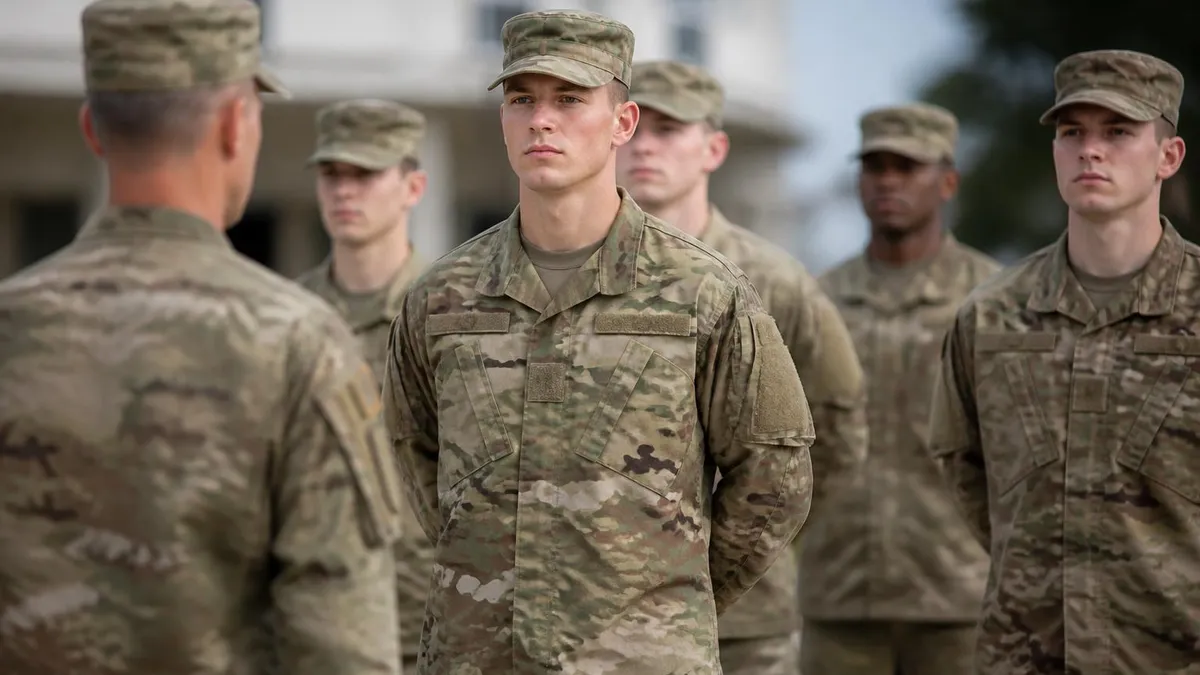
Full Text of the ROTC Cadet Creed
"I am an Army Cadet. Soon I will take an oath and become an Army Officer committed to defending the values which make this Nation great." This opening establishes who you are and what is coming next.
"Honor is my touchstone. I understand mission first and people always." Two competing priorities that every officer must balance throughout their entire career in uniform.
"I am the past — the spirit of those Warriors who have made the final sacrifice. I am the present — the scholar and apprentice soldier enhancing my skills in the science of warfare and the art of leadership."
"But above all, I am the future — the future Warrior Leader of the United States Army. May God give me the compassion and judgment to lead and the gallantry in battle to win." The creed closes with humility and aspiration.
"I will do my duty." This final five-word declaration is often recited with extra emphasis and represents the cadet's personal commitment to the standards described above.
Understanding each line of the creed transforms it from a memorization chore into a leadership philosophy you actually believe. Start with the opening phrase: "I am an Army Cadet." That word "Cadet" is deliberate. You are not yet an officer, but you are no longer a civilian either. You occupy a transitional rank with its own responsibilities, its own privileges, and its own expectations from the soldiers who watch you train.
The phrase "Soon I will take an oath" reminds you that the commission is coming, but it is not automatic. Every semester of academic struggle, every failed PT event, every leadership lab where you froze in front of your squad is part of earning that oath. The word "soon" feels distant when you are an MS-I and uncomfortably close when you are an MS-IV. Both perspectives are valuable, and the creed forces you to hold both at once.
"Honor is my touchstone" introduces a metaphor that many cadets gloss over. A touchstone was historically a piece of dark stone used by jewelers to test the purity of gold. Rub a gold coin against the touchstone and the streak reveals whether it is real or counterfeit. The creed is saying that honor is what you measure every decision against. Lie on a land navigation course? The touchstone reveals you. Cover for a peer who skipped formation? The touchstone reveals you.
"Mission first and people always" is the line cadets debate most in leadership labs. The two priorities seem contradictory until you have actually led a squad through a wet, cold, sleep-deprived exercise. The mission must be accomplished or soldiers die. The people must be cared for or the mission fails next time. Holding both simultaneously is the central tension of officership, and the creed names it directly so you cannot pretend it does not exist.
The triad of past, present, and future is the most poetic section of the creed. You are the past because you inherit a tradition stretching back to Lexington and Concord. You are the present because every push-up, every map exercise, and every ROTC program classroom hour is shaping you right now. You are the future because the soldiers you will lead in five years are currently teenagers who have no idea your decisions will affect their lives.
The phrase "scholar and apprentice soldier" is a useful reminder that ROTC is not a boot camp. You are expected to earn a four-year degree, perform academically, and study the science of warfare with the same rigor you give to chemistry or political science. Cadre will absolutely check your GPA, and a 2.0 will not earn you a commission no matter how well you shoot or run.
The closing line, "I will do my duty," is intentionally simple. There is no qualifier, no exception clause, no "as long as it is convenient." Duty is duty. When you recite those five words at the end of the creed, you are not making a poetic flourish. You are making a personal promise that other cadets and cadre will hold you to throughout your time in the program.
ROTC Practice Test Questions
Prepare for the ROTC - Reserve Officer Training Corps exam with our free practice test modules. Each quiz covers key topics to help you pass on your first try.
ROTC Leadership and Management
ROTC Exam Questions covering Leadership and Management. Master ROTC Test concepts for certification prep.
ROTC Values and Tactical Skills
Free ROTC Practice Test featuring Values and Tactical Skills. Improve your ROTC Exam score with mock test prep.
ROTC Communication and Orders
ROTC Mock Exam on Communication and Orders. ROTC Study Guide questions to pass on your first try.
ROTC Ethical Decision Making
ROTC Test Prep for Ethical Decision Making. Practice ROTC Quiz questions and boost your score.
ROTC First Aid and Field Medicine
ROTC Questions and Answers on First Aid and Field Medicine. Free ROTC practice for exam readiness.
ROTC Land Navigation
ROTC Mock Test covering Land Navigation. Online ROTC Test practice with instant feedback.
ROTC Military History
Free ROTC Quiz on Military History. ROTC Exam prep questions with detailed explanations.
ROTC Military Leadership
ROTC Practice Questions for Military Leadership. Build confidence for your ROTC certification exam.
ROTC Physical Fitness
ROTC Test Online for Physical Fitness. Free practice with instant results and feedback.
ROTC Tactics and Strategy
ROTC Study Material on Tactics and Strategy. Prepare effectively with real exam-style questions.
History and Origin of the ROTC Creed
The current ROTC Cadet Creed traces its modern form to revisions made in the late 1990s and early 2000s by U.S. Army Cadet Command at Fort Knox, then later at Fort Knox's successor location. Earlier creeds existed throughout the 20th century, but cadre wanted a shorter, more memorizable text that aligned directly with the Soldier's Creed and the Warrior Ethos already in use across the active force.
The result was a deliberate parallel structure. If you place the Cadet Creed next to the Soldier's Creed, you can see the phrases "I will always place the mission first" and "I will never quit" echoed in the cadet version's "mission first and people always." This parallel is intentional so that the transition from cadet to lieutenant feels seamless rather than jarring once you commission.

Memorizing the Creed Early vs. Procrastinating
- +Builds instant credibility with cadre during your first leadership lab
- +Reduces stress before formation inspections and surprise recitations
- +Gives you mental bandwidth to focus on PT and academics instead
- +Helps you understand the language used in OPORDs and briefings
- +Creates a foundation for memorizing other texts like the Soldier's Creed
- +Demonstrates the discipline that contracting boards specifically look for
- −Requires committing 20-30 minutes daily during the first two weeks
- −Can feel mechanical if you skip the meaning behind each line
- −Pressure to recite in front of peers makes some cadets freeze up
- −Late memorizers often resort to cramming the night before evaluations
- −Procrastination compounds with other unfinished knowledge requirements
- −Cadre may assign extra duty or remedial training for missed deadlines
ROTC Creed Memorization Checklist
- ✓Print the creed and tape it to your bathroom mirror for daily exposure
- ✓Record yourself reading it aloud and replay during your commute or walks
- ✓Break the text into five chunks matching the five "I am" statements
- ✓Recite the first chunk perfectly before adding the second chunk
- ✓Practice with a battle buddy and quiz each other at random times
- ✓Write the creed from memory on paper every morning for one week
- ✓Recite at full volume in an empty room to build confidence under pressure
- ✓Match each phrase to a physical movement or gesture as a memory anchor
- ✓Explain each line in your own words to a non-military friend or roommate
- ✓Recite the complete creed during your PT cooldown stretch every Monday
Memorize the meaning, not just the words
Cadets who only memorize the syllables tend to blank out under stress, especially during oral boards. Cadets who memorize the meaning of each clause can rebuild the sentence on the fly if they lose their place. Spend 15 minutes understanding why each phrase exists before you spend hours repeating it aloud.
Living the creed is harder than reciting it, and the difference becomes obvious within your first semester. Cadre will not give you a written test on whether you embody the words. Instead, they will watch how you behave during stressful situations, how you treat peers who outrank you, and how you respond when no one is watching. Each of those moments is a small audit of whether the creed lives in your character or only on the index card in your cargo pocket.
Start with "mission first and people always." In practical terms, this means finishing the assigned land navigation course before you stop to help a struggling teammate, but also doubling back to check on that teammate once the mission is complete. New cadets often pick one priority and ignore the other, which produces either heartless task-completion or warm-hearted failure. Neither pattern earns the respect of soldiers, and both will sink an officer evaluation report.
The honor clause shows up in tiny decisions. Do you log the actual time you finished your two-mile run, or do you shave off fifteen seconds because no one was watching the stopwatch? Do you sign the attendance roster for a friend who slept in, or do you let cadre know? These choices feel small in isolation, but they accumulate into a reputation that follows you from your sophomore year through the contracting board and into your first duty station.
The phrase "scholar and apprentice soldier" reminds you that academics are not optional. Cadets sometimes treat their college coursework as background noise compared to PT and field training. That mindset will end your career quickly. A failing grade in a major course can pull your cumulative GPA below the 2.0 threshold required for contracting, and no amount of land navigation skill will compensate. Treat your degree with the same seriousness you treat your military training.
The past-present-future triad has practical implications too. Knowing the history of the units you train with is not trivia. When you can speak intelligently about the lineage of the 82nd Airborne, the 10th Mountain, or your own state's National Guard battalions, you signal to senior cadre that you understand you are joining a tradition. That signal opens doors at branch selection time and at your first assignment.
One underrated way to live the creed is to mentor newer cadets without being asked. MS-IIIs and MS-IVs who voluntarily help MS-Is memorize the creed, fold uniforms correctly, or prepare for their first FTX are demonstrating servant leadership in its purest form. Cadre notice this behavior, but more importantly, the underclassmen never forget the upperclassman who took five minutes to help them succeed during a panicked moment.
Finally, recognize that living the creed will sometimes put you in conflict with peers who are not taking it seriously. You may need to confront a friend who is cutting corners, report integrity violations, or refuse to participate in behavior that contradicts the values you have publicly recited. Those moments are uncomfortable, but they are exactly the moments the creed was written to prepare you for. Avoiding them does not make you a better cadet; it makes you a quieter one.
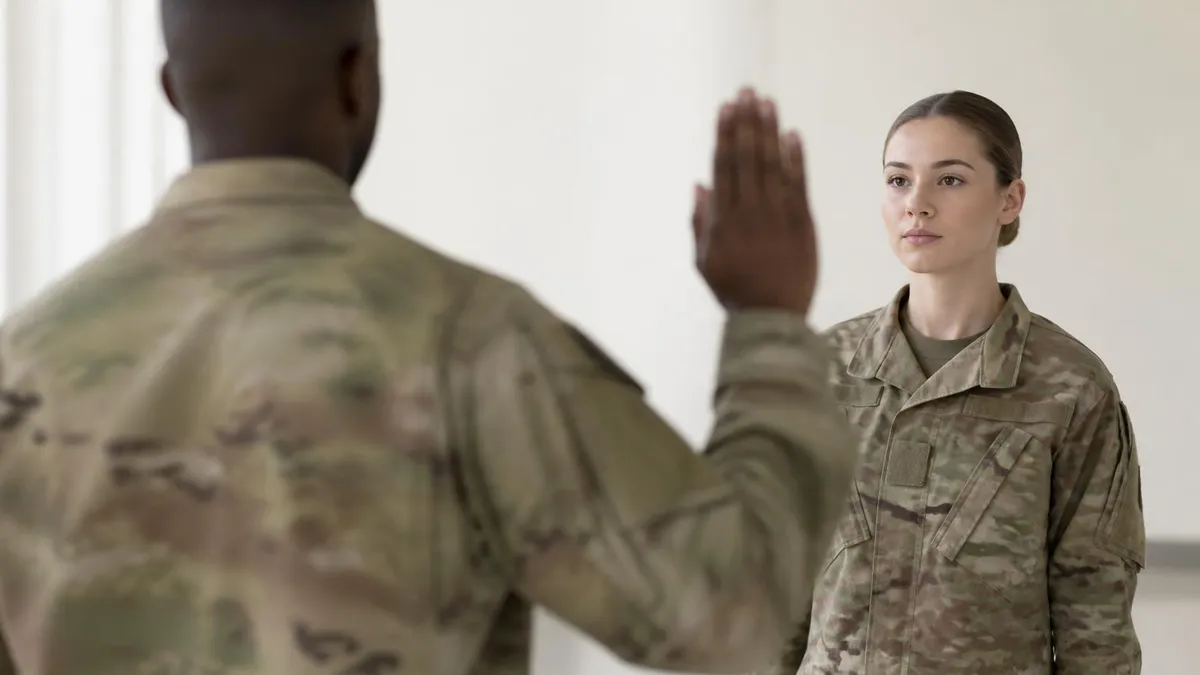
Most programs document creed recitation as part of your MS-level evaluation. Repeated failures can delay your contracting timeline, affect your Order of Merit List standing, and even disqualify you from competitive summer training slots. Treat memorization deadlines as hard deadlines, not suggestions.
The creed appears on written exams and oral boards more often than most cadets expect, and the questions are usually not simple fill-in-the-blank items. Cadre know that any cadet can recite the words on paper. What they want to test is whether you understand the doctrine behind the words and can apply it to scenarios you have never seen before. That applied knowledge is what separates a passing answer from a memorable one.
On written exams, expect questions like "Which Army Value most closely aligns with the touchstone phrase in the Cadet Creed?" The answer is honor, but the question is testing whether you can connect the creed to the broader seven Army Values. Cadets who memorize the creed in isolation often get tripped up here. Cadets who study the creed alongside the Army Values, the Soldier's Creed, and the Warrior Ethos sail through these questions effortlessly.
Oral boards add the pressure of recitation in front of three to five senior cadre members staring at you across a folding table. The room is usually quiet, you are in your Class B uniform, and you have approximately thirty seconds to begin. Practice this scenario specifically. Stand at parade rest in front of a mirror, take a slow breath, and recite the creed at conversational volume. Repeat until your voice does not shake on the opening phrase.
If you blank during a recitation, the worst thing you can do is mumble or trail off. Cadre would rather see you pause, take a breath, and restart the sentence cleanly than hear you stumble through garbled phrases. A clean restart demonstrates composure under stress, which is exactly the trait being evaluated. Many cadets pass boards not because their memorization was perfect, but because their recovery from a stumble was graceful.
The creed also appears indirectly in scenario-based questions. A typical prompt might describe a situation where a cadet sees a peer cheating on an academic exam, and ask how the creed informs your response. Strong answers explicitly cite the honor touchstone and the duty clause. Weak answers describe what you would do without anchoring it to the creed's language. The cadre wants to see the connection drawn out loud, so make it explicit.
For a full sense of what to expect across all evaluation formats, walk through a complete practice test at least twice before your first major exam. The PDF format simulates the timing pressure of an actual sit-down evaluation and forces you to recall information without the safety net of an open textbook. Cadets who skip this step often underestimate how different timed recall feels compared to casual review.
Finally, remember that the creed is a living document in your career, not a one-time exam item. You will recite it at commissioning, at promotion ceremonies, and possibly at unit gatherings throughout your time as a lieutenant. Memorizing it deeply now means you will never embarrass yourself by fumbling it during a high-visibility moment in front of soldiers who expect their officer to know the basics cold.
Practical preparation for creed mastery comes down to a handful of repeatable habits that compound over weeks. The cadets who recite flawlessly under pressure are not gifted memorizers; they are disciplined practitioners who built small daily routines and stuck with them through the chaos of midterms, PT tests, and weekend field exercises. Copy their habits and you will get their results, regardless of your natural memory.
Habit one is the morning recite. Before your feet hit the floor each day during your first two weeks, run the creed silently in your head while still in bed. This trains recall during a low-stress moment and primes your brain for the day. Cadets who only practice at night often find the words slip away by morning formation. Bookending the day with one mental rep at wake-up and one verbal rep at lights-out doubles retention with minimal effort.
Habit two is partner accountability. Find one cadet in your MS class who is also memorizing the creed and trade recitations at least three times per week. Schedule it like a workout. Meet for ten minutes before chemistry lab, recite to each other, correct mistakes, and walk away. Partner practice catches errors you would never notice on your own and makes the process less lonely during the harder weeks when motivation drops.
Habit three is the random recitation. Set a phone alarm to fire at unpredictable times during the day, and recite the creed out loud the moment it goes off, wherever you are. In your dorm, at the gym, walking to class. This trains your brain to retrieve the text under any conditions, not just when you are seated calmly with the index card in front of you. Real evaluations rarely happen in calm conditions.
Habit four is the explanation drill. Once you can recite the words, practice explaining what each line means in plain English to a friend, a sibling, or even your dog. The act of translating the doctrine into everyday language exposes any clauses you do not actually understand. Those gaps in understanding are exactly where you will stumble during an oral board, so close them now while the stakes are low.
Habit five is the writing drill. Once per week, sit down with a blank sheet of paper and write the entire creed from memory. Compare your version to the official text and circle any differences. Writing engages a different memory pathway than speaking and reveals weak spots that verbal practice alone misses. Most cadets who do this for four consecutive weeks can write the creed perfectly without any prompts.
Pair these habits with consistent attendance at every leadership lab and FTX your program offers. The creed is reinforced constantly in those environments through opening formations, AAR sessions, and informal cadre conversations. Cadets who miss labs and skip optional events end up trying to absorb the creed in isolation, which is far harder. Show up, participate fully, and the words will start to feel like your own rather than something you are reciting from a script.
ROTC Questions and Answers




About the Author

Educational Psychologist & Academic Test Preparation Expert
Columbia University Teachers CollegeDr. Lisa Patel holds a Doctorate in Education from Columbia University Teachers College and has spent 17 years researching standardized test design and academic assessment. She has developed preparation programs for SAT, ACT, GRE, LSAT, UCAT, and numerous professional licensing exams, helping students of all backgrounds achieve their target scores.
Join the Discussion
Connect with other students preparing for this exam. Share tips, ask questions, and get advice from people who have been there.
View discussion (9 replies)