
PCA Training Program: Complete 2026 October Guide to Personal Care Assistant Certification, Curriculum, Costs, and Career Pathways
Complete PCA training program guide: curriculum, hours, costs, state requirements, and how to become a certified Personal Care Assistant in 2026 October. 🎓
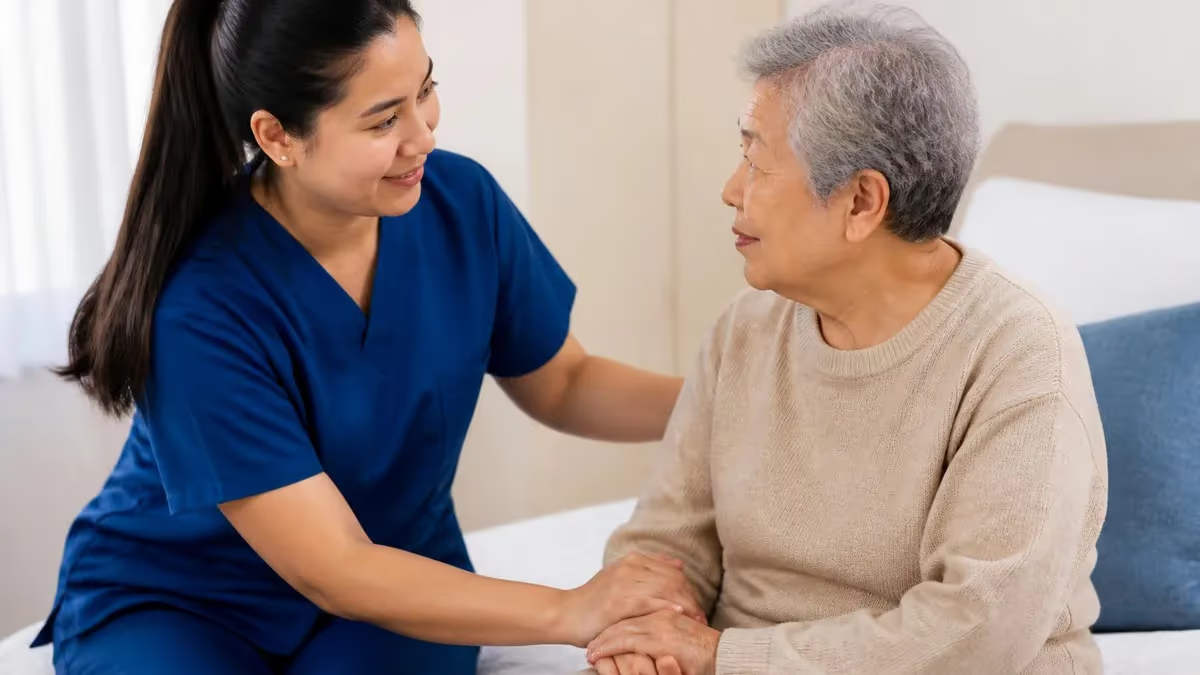
A pca training program is the structured educational pathway that prepares aspiring caregivers to become certified Personal Care Assistants, equipping them with the clinical knowledge, hands-on skills, and professional ethics required to support clients in homes, assisted living facilities, and community settings. These programs typically range from 40 to 120 hours of combined classroom instruction and supervised clinical practice, depending on state regulations, employer requirements, and whether the role involves additional medical responsibilities under nurse delegation rules common in modern long-term care environments.
Understanding the pca meaning is the first step before enrolling: PCA stands for Personal Care Assistant, a frontline caregiver who provides non-medical support such as bathing, dressing, meal preparation, mobility assistance, and emotional companionship. Some states blur the line between PCA, Home Health Aide (HHA), and Certified Nursing Assistant (CNA) roles, so the training program you choose should match the credentialing pathway recognized by your state's Department of Health and the employers in your target geographic area.
Demand for trained PCAs has surged dramatically as the Baby Boomer generation ages into long-term care needs, with the Bureau of Labor Statistics projecting 22% job growth through 2032—nearly five times faster than the average occupation. This explosive demand means accredited training programs are filling quickly, employers frequently sponsor tuition for new hires, and graduates often receive multiple job offers within days of completing certification. For background on the broader role, see our pca medical career overview.
Choosing the right pca training program involves balancing several factors: accreditation status, total program hours, clinical placement opportunities, cost, scheduling flexibility, instructor credentials, and pass rates for the state competency exam. Programs offered through community colleges, vocational schools, Red Cross chapters, home health agencies, and online providers each carry distinct advantages and trade-offs that affect both your immediate learning experience and your long-term career mobility within the healthcare hierarchy.
The curriculum typically covers infection control, vital signs measurement, body mechanics, nutrition, dementia care, communication techniques, emergency response, HIPAA compliance, and the legal-ethical framework governing caregiver-client relationships. Hands-on labs allow students to practice transferring clients safely, measuring blood pressure, performing range-of-motion exercises, and documenting care accurately. Many programs also include modules on cultural competency, end-of-life care, and recognizing signs of abuse or neglect that PCAs are legally mandated to report.
Costs for a quality pca training program range from $300 at subsidized community programs to $2,500 at private vocational schools, with employer-sponsored options often available at zero out-of-pocket cost in exchange for an employment commitment of six to twelve months. Federal Pell Grants, Workforce Innovation and Opportunity Act (WIOA) funding, Medicaid worker training initiatives, and state-specific scholarships make this credential one of the most financially accessible healthcare entry points available in the American job market today.
This comprehensive guide walks you through every dimension of selecting and completing a pca training program in 2026: comparing program formats, decoding state-specific certification requirements, calculating realistic costs, understanding the curriculum module by module, preparing for the competency exam, and translating your new credential into a sustainable healthcare career with clear advancement pathways into nursing, social work, or specialized caregiving roles that build on your foundational PCA training.
PCA Training Program by the Numbers

How a PCA Training Program Is Structured
40-60 hours of theoretical coursework covering anatomy, infection control, nutrition, communication, and ethics. Delivered in-person, online, or hybrid format depending on the provider and state regulations governing distance learning.
20-30 hours of supervised hands-on practice using mannequins and peer partners. Students master 22 core competencies including transfers, vital signs, perineal care, and feeding techniques required for state exam.
16-40 hours of supervised work in a real care setting such as a nursing home, assisted living facility, or home health agency. Direct client interaction under licensed nurse supervision builds workplace confidence.
Two-part assessment combining a written multiple-choice test and a hands-on skills demonstration. Passing both sections within state-mandated attempts earns placement on the official nurse aide registry.
Most states require 12-24 hours of annual in-service training to maintain certification. Topics rotate through dementia care, infection prevention, fall reduction, and medication awareness updates.
The curriculum inside a quality pca training program follows a carefully sequenced learning progression that begins with foundational concepts and builds toward complex clinical scenarios. Week one typically introduces the healthcare system structure, the PCA's scope of practice, basic anatomy and physiology, and the legal framework including patient rights, advance directives, and the Health Insurance Portability and Accountability Act. Students learn the boundaries of their role and when to escalate concerns to nurses or supervisors—a critical safety skill.
Infection control receives substantial emphasis given that PCAs work intimately with medically fragile populations highly vulnerable to healthcare-associated infections. Training covers standard precautions, transmission-based precautions, proper hand hygiene technique, donning and doffing personal protective equipment, sharps disposal, and outbreak response protocols. Post-COVID curricula now include enhanced respiratory pathogen modules and ventilation considerations that were previously absent from most pca training program syllabi before 2020. To understand related career duties, review our pca church resource page.
Personal care skills form the program's largest module by clock hours. Students practice bathing techniques including bed baths, partial baths, and tub assistance; perineal care for both male and female clients; oral hygiene including denture care; hair washing and grooming; dressing assistance for clients with limited mobility or one-sided weakness; and safe nail care excluding diabetic clients where contraindicated. Each skill follows a standardized step-by-step procedure designed for the state competency examination.
Mobility, transfers, and body mechanics constitute another high-stakes module because improper technique causes the majority of caregiver injuries reported nationally. Students learn the gait belt application, pivot transfers, two-person transfers, mechanical lift operation, wheelchair safety, ambulation assistance, and range-of-motion exercises. Body mechanics principles—wide base of support, bending at the knees, keeping loads close, avoiding twisting—are reinforced repeatedly throughout the program to prevent the back injuries that end many caregiving careers prematurely.
Vital signs measurement training includes manual blood pressure using sphygmomanometer and stethoscope, radial and apical pulse counting, respiration assessment, temperature using oral, axillary, and tympanic methods, and pulse oximetry. Students learn normal ranges across age groups, when readings require immediate nurse notification, and accurate documentation practices. Some advanced PCA programs add fingerstick blood glucose monitoring and weight tracking for clients with diabetes or congestive heart failure under nurse delegation protocols.
Nutrition and hydration modules teach therapeutic diets including diabetic, cardiac, renal, low-sodium, and pureed textures; safe feeding techniques for clients with dysphagia; intake and output documentation; signs of dehydration and malnutrition; and cultural and religious dietary preferences. Students practice meal preparation, table setup for clients with visual impairment, and assistive device use including weighted utensils, divided plates, and nosey cups for clients with neck mobility limitations.
Communication and behavioral health content prepares PCAs to work effectively with clients experiencing dementia, depression, anxiety, sensory deficits, and language barriers. Validation therapy, reminiscence techniques, redirection strategies for behavioral expressions in dementia, therapeutic communication principles, and active listening skills receive substantial classroom time. Programs also cover documentation, shift reports, and electronic health record basics increasingly required even in home care settings where tablet-based charting has become the industry standard.
PCA Practice Test Questions
Prepare for the PCA - Personal Care Assistant exam with our free practice test modules. Each quiz covers key topics to help you pass on your first try.
PCA Duties and Responsibilities
Free PCA Practice Test featuring Duties and Responsibilities. Improve your PCA Exam score with mock test prep.
PCA Qualifications
PCA Mock Exam on Qualifications. PCA Study Guide questions to pass on your first try.
PCA Working Conditions
PCA Test Prep for Working Conditions. Practice PCA Quiz questions and boost your score.
PCA Assisting with Daily Living Activities
PCA Questions and Answers on Assisting with Daily Living Activities. Free PCA practice for exam readiness.
PCA Basic Nursing Skills
PCA Mock Test covering Basic Nursing Skills. Online PCA Test practice with instant feedback.
PCA Basic Patient Care Skills
Free PCA Quiz on Basic Patient Care Skills. PCA Exam prep questions with detailed explanations.
PCA Communication and Interpersonal Skills
PCA Practice Questions for Communication and Interpersonal Skills. Build confidence for your PCA certification exam.
PCA Ethical and Legal Responsibilities
PCA Test Online for Ethical and Legal Responsibilities. Free practice with instant results and feedback.
PCA Health and Safety Procedures
PCA Study Material on Health and Safety Procedures. Prepare effectively with real exam-style questions.
PCA Health & Safety Protocols
Free PCA Test covering Health & Safety Protocols. Practice and track your PCA exam readiness.
PCA Infection Control
PCA Exam Questions covering Infection Control. Master PCA Test concepts for certification prep.
PCA Mental Health & Emotional Support
Free PCA Practice Test featuring Mental Health & Emotional Support. Improve your PCA Exam score with mock test prep.
PCA Nutrition & Hydration
PCA Mock Exam on Nutrition & Hydration. PCA Study Guide questions to pass on your first try.
PCA Patient Mobility & Transfers
PCA Test Prep for Patient Mobility & Transfers. Practice PCA Quiz questions and boost your score.
PCA Training Program Formats: What Is a PCA Pathway Right for You?
Community college pca training programs typically run 8-12 weeks at a measured pace, often as part of a broader certificate or stackable credential pathway leading toward an associate degree in nursing. Tuition averages $400-$1,200 with Pell Grant eligibility, dedicated financial aid offices, and frequent partnerships with local hospitals for clinical placements.
The advantage is academic rigor, library access, tutoring, and articulation agreements that let your PCA coursework count toward future CNA, LPN, or RN programs. The drawback is rigid scheduling, fall and spring start dates, and longer waitlists for popular programs. Best for students planning a healthcare career trajectory beyond the PCA role.

Pros and Cons of Pursuing a PCA Training Program
- +Fastest credential pathway into healthcare, often complete within 4-12 weeks
- +Low tuition costs compared to nursing or allied health programs
- +Strong job demand with 22% projected growth and immediate hiring
- +Flexible schedules including evening, weekend, and online options
- +Pell Grant, WIOA, and employer tuition assistance widely available
- +Stackable credentials transfer toward CNA, HHA, LPN, and RN pathways
- +Hands-on clinical experience builds confidence before full employment
- −Starting wages remain modest at $14-$18 per hour in most states
- −Physically demanding work increases injury and burnout risk
- −Emotional toll of dementia, hospice, and end-of-life caregiving
- −Variable scheduling including weekends, holidays, and overnight shifts
- −State-specific certification limits geographic job portability
- −Continuing education hours required annually to maintain credentials
- −Limited upward mobility without additional nursing or social work training
PCA Training Program Enrollment Checklist
- ✓Verify the program is approved by your state Department of Health or nurse aide registry
- ✓Confirm the program meets or exceeds your state's minimum hour requirement (typically 75-120 hours)
- ✓Request the published first-attempt state exam pass rate from the past two cohorts
- ✓Schedule and complete a criminal background check and fingerprinting before classes begin
- ✓Obtain a recent two-step tuberculosis (TB) skin test or chest X-ray clearance
- ✓Submit proof of MMR, varicella, hepatitis B, influenza, and current COVID-19 vaccinations
- ✓Pass a physical exam confirming ability to lift 50 pounds and stand for extended periods
- ✓Apply for financial aid including Pell Grant, WIOA voucher, or scholarships well in advance
- ✓Purchase required scrubs, closed-toe shoes, watch with second hand, and stethoscope
- ✓Register for the state competency exam at least 30 days before your program completion date
Always verify your state-specific hour requirements before enrolling.
Federal regulations set a 75-hour minimum for Home Health Aide training under Medicare-certified agencies, but states like California (160 hours), Maine (180 hours), and Washington (75 hours plus continuing education) impose stricter standards. A program that satisfies one state's rules may leave you unable to test in another, so confirm certification reciprocity rules if you anticipate relocating during your career.
The financial picture of a pca training program is dramatically more favorable than virtually any other healthcare credential, with total costs—including tuition, books, uniforms, immunizations, background checks, and exam fees—typically falling between $500 and $3,000 nationally. Compared to a $40,000 associate degree in nursing or a $120,000 bachelor's program, the PCA pathway offers an exceptional return on investment, particularly for adult learners, career-changers, and parents balancing family responsibilities with workforce reentry.
Tuition itself varies enormously by program type and geography. Subsidized community college programs in rural areas may charge as little as $300, while private vocational schools in major metropolitan markets like New York City, Los Angeles, and Boston can exceed $2,500 for comparable instruction. American Red Cross PCA-equivalent programs occupy the middle range at $1,200-$1,800 with strong brand recognition that employers value during hiring decisions.
Federal financial aid extends to most accredited pca training programs through the Pell Grant, which currently provides up to $7,395 annually for qualifying low-income students—often more than covering the entire program cost with surplus available for living expenses. Filing the Free Application for Federal Student Aid (FAFSA) is the gateway, even for short-term programs, and most college financial aid offices will help non-traditional students navigate the application during pre-enrollment advising sessions.
The Workforce Innovation and Opportunity Act represents another powerful funding stream, channeling federal dollars through state workforce agencies and American Job Centers to subsidize training for displaced workers, low-income adults, and out-of-school youth. WIOA vouchers frequently cover 100% of tuition plus a stipend for transportation, childcare, and books. Eligibility hinges on income, employment status, and program approval through the state's Eligible Training Provider List.
Beyond federal sources, Medicaid Home and Community-Based Services (HCBS) initiatives in many states now fund caregiver training directly, recognizing that an adequately trained PCA workforce is essential to keeping Medicaid beneficiaries out of expensive institutional care. The Minnesota PCA Choice program, Pennsylvania CAREgiver registration, and California's IHSS provider training all offer free or heavily subsidized training pathways with immediate employment opportunities upon completion.
Employer tuition reimbursement has become a competitive recruitment tool in the post-pandemic caregiver shortage. National chains including Brookdale Senior Living, Atria Senior Living, Genesis HealthCare, and BAYADA Home Health Care offer signing bonuses ranging from $500 to $3,000 plus full tuition coverage in exchange for employment commitments. Many local home health agencies match or exceed these offers in tight labor markets, making it possible to complete training with no out-of-pocket cost and immediate income.
Hidden costs deserve careful budgeting attention even when tuition is covered. Background checks run $35-$75 depending on state requirements, immunizations average $200-$400 if not covered by insurance, uniforms and shoes total $80-$150, the state exam fee ranges from $75 to $150, and licensing application fees add another $25-$100. Building a realistic budget that includes these ancillary expenses prevents the frustration of unexpected costs derailing your training timeline.

Diploma mills and unaccredited online PCA training programs continue to proliferate, particularly targeting immigrant and ESL communities. Completing an unapproved program means you cannot sit for the state competency exam, cannot be placed on the nurse aide registry, and cannot work legally as a certified PCA. Always verify program approval directly with your state Department of Health website before paying any tuition deposit.
Completing a pca training program is the beginning rather than the end of your professional development. The state competency examination, administered by Prometric, Pearson VUE, Headmaster, or state-specific contractors depending on your jurisdiction, validates that your training translated into demonstrable skill mastery. The two-part exam—a 60-100 question multiple-choice written test and a hands-on skills demonstration of 4-6 randomly assigned tasks—must be passed within three attempts in most states or you must repeat full training.
Preparation for the competency exam begins on day one of your training program, not in the final week. Maintain a personal skills checklist tracking each of the 22 core competencies, practice writing standardized procedure steps from memory, and form study groups with classmates to verbalize your reasoning aloud. Online practice question banks, free state-provided study guides, and the National Network of Career Nursing Assistants resources all provide invaluable test preparation. Review what is a pca certification requirements specific to your state before scheduling.
Once certified, you'll be placed on your state's nurse aide registry or PCA registry, a publicly searchable database that employers must check before hiring. Maintaining your active status requires meeting continuing education requirements—typically 12-24 hours annually—and working a minimum number of paid hours in covered settings during each two-year renewal cycle. Letting your certification lapse forces you to retrain and retest from scratch, so calendar your renewal deadlines carefully.
Career advancement opportunities from the PCA credential branch in multiple directions depending on your interests, aptitudes, and life circumstances. The most common upward pathway leads to Certified Nursing Assistant (CNA) certification, which adds approximately 75 hours of additional training and qualifies you for higher-paying hospital and skilled nursing facility positions. Many community colleges offer bridge programs allowing PCAs to complete CNA certification in as little as four to six additional weeks of part-time study.
Specialized PCA certifications represent another advancement avenue without leaving the personal care field. Dementia care specialists, hospice and palliative care aides, pediatric PCAs, and traumatic brain injury caregivers all command premium wages reflecting their specialized expertise. Most specialty certifications require 40-80 additional training hours plus supervised clinical experience working with the target population under qualified preceptor guidance.
The PCA-to-LPN pathway represents a popular mid-career advancement option for caregivers who want expanded clinical responsibilities and significantly higher wages, typically $26-$32 per hour versus the PCA's $15-$20 range. Licensed Practical Nurse programs run 12-18 months, often with evening and weekend scheduling friendly to working PCAs. Some employers pay full LPN tuition in exchange for continued employment, recognizing the value of growing nurses from within their existing caregiver workforce.
Beyond traditional clinical advancement, PCA experience opens doors to care coordination, case management, social work, healthcare administration, and entrepreneurship through agency ownership. Many successful home care agency owners began as frontline PCAs, learning the business intimately before launching their own services. The combination of clinical credibility, client relationship skills, and operational understanding makes former PCAs uniquely positioned to build and lead successful caregiving businesses.
Practical success in a pca training program requires more than showing up and completing assignments—it demands strategic study habits, clinical professionalism, and emotional self-care that compound throughout your career. Treat every classroom session as if you were already working with vulnerable clients, because the habits you build now—punctuality, uniform standards, respectful communication, thorough documentation—are the habits that distinguish exceptional caregivers from merely adequate ones. Your reputation begins forming the moment you walk through the program door.
Master the documentation language early in your program. Phrases like "client tolerated procedure well," "transferred with one-person assist using gait belt," "oriented to person, place, and time," and "refused breakfast, intake documented as zero percent" are the standardized terminology that demonstrates clinical competence to nurses and surveyors. Sloppy documentation creates legal liability and can cost you certification during state surveys, while precise charting protects both you and your clients from misunderstandings.
Practice clinical skills with deliberate repetition rather than passive observation. Research on skill acquisition shows that performing a technique correctly three times consecutively, then reviewing it 24 hours later, then practicing again within 72 hours produces dramatically better long-term retention than cramming all repetitions into one session. Use peer partners during open lab time and request video recordings of your performance when permitted so you can self-assess your technique against the standardized checklist criteria. For background on advanced clinical roles, see our pca skincare career profile.
Build relationships with your clinical preceptors and clinical instructors strategically. These individuals become your first professional references, often have direct hiring authority at their home facilities, and can write the recommendation letters that distinguish your job application from competing candidates. Arrive early, stay late, ask thoughtful questions about complex client situations, and volunteer for the demanding assignments that less ambitious classmates avoid. Your work ethic during clinicals signals your future work ethic to every observer.
Manage the emotional weight of caregiving from the very beginning of your training. PCAs work with clients facing dementia, terminal illness, profound disability, and family conflict daily, and the cumulative emotional load is one of the leading causes of burnout in the field. Establish boundaries between work and personal life, develop a reliable peer debriefing relationship with a classmate or fellow PCA, identify physical exercise that releases stress, and recognize that crying after a particularly hard shift reflects empathy rather than weakness.
Prepare meticulously for the skills portion of the state competency exam by memorizing the standardized procedure steps verbatim. Examiners are scoring you against a precise checklist, and skipping or reversing steps results in automatic failure even if your technique is otherwise excellent. Common pitfalls include forgetting to wash hands at the beginning and end of each skill, neglecting to identify the client and explain the procedure, omitting privacy measures, and skipping the post-procedure positioning and call-light placement steps.
Approach your first job after certification as continued education rather than career destination. Your first six months as a working PCA will teach you more about real-world caregiving than any classroom curriculum, but only if you remain coachable, humble, and observant. Shadow experienced PCAs willingly, accept constructive feedback gracefully, ask questions before improvising, document concerns through proper channels, and treat every client interaction as an opportunity to refine the foundational skills your pca training program first introduced.
PCA Questions and Answers

PCA - Personal Care Assistant: Complete Study Guide 2026
What Does a PCA Do? Complete Guide to Personal Care Assistant Duties and Daily Responsibilities

Do You Have to Be Certified to Be a PCA? Complete 2026 Guide to PCA Certification Requirements by State
PCA Nurse: Complete Guide to the Personal Care Assistant Role in Modern Nursing Teams
Personal Care Assistant Duties: Complete Guide to PCA Daily Responsibilities, Tasks, and Career Expectations in 2026
About the Author

Registered Nurse & Healthcare Educator
Johns Hopkins University School of NursingDr. Sarah Mitchell is a board-certified registered nurse with over 15 years of clinical and academic experience. She completed her PhD in Nursing Science at Johns Hopkins University and has taught NCLEX preparation and clinical skills courses for nursing students across the United States. Her research focuses on evidence-based exam preparation strategies for healthcare certification candidates.