
Do You Have to Be Certified to Be a PCA? Complete 2026 October Guide to PCA Certification Requirements by State
❓ Do you have to be certified to be a PCA? Complete state-by-state guide to PCA certification requirements, training hours, costs, and exam prep for 2026 October.

If you've been searching online lately, you may have noticed something funny — type "PCA" into Google and you'll get everything from pca skin care products to the Porsche Club of America before you ever reach a single result about Personal Care Assistants. That confusion is exactly why so many aspiring caregivers ask the same question: do you have to be certified to be a PCA, and if so, what does that certification actually look like? This complete 2026 guide answers that question state by state, hour by hour, dollar by dollar.
The short answer is that PCA certification requirements vary wildly depending on where you live, who employs you, and whether your client pays privately or through Medicaid. In some states, you can begin working as a Personal Care Assistant within a week of being hired. In others, you'll need 75 hours of classroom training, a competency exam, a background check, and a state registry listing before you can clock your first shift. Understanding these differences before you apply will save you weeks of frustration and hundreds of dollars in misdirected training fees.
The pca meaning in healthcare is straightforward — a Personal Care Assistant helps clients with the activities of daily living (ADLs) such as bathing, dressing, toileting, transferring, mobility, and meal preparation. PCAs work in private homes, assisted living facilities, group homes, and increasingly through consumer-directed Medicaid programs where family members can be paid to care for their own loved ones. The role sits one rung below a Certified Nursing Assistant on the clinical ladder, but the demand is enormous and growing every year.
According to the Bureau of Labor Statistics, home health and personal care aide employment is projected to grow 21% between 2023 and 2033 — more than seven times faster than the average for all occupations. That translates to roughly 820,000 new positions over the decade, plus another 700,000 annual openings created by turnover. Whether you're switching careers, returning to the workforce, or building toward a nursing degree, understanding pca medical certification pathways is the single fastest way to land a stable, meaningful job in healthcare.
This guide will walk you through every layer of the certification question: which states legally require certification, how many training hours each state mandates, what the competency exam covers, how much certification costs out of pocket, which employers reimburse training fees, and how the federal rules under 42 CFR 484.80 shape Medicaid-funded PCA work nationwide. We'll also cover the difference between agency-based certification and consumer-directed (CDPAP-style) programs, where the rules are dramatically different and often more flexible.
If you're hoping for a one-size-fits-all answer, you won't find one — and anyone claiming otherwise is either oversimplifying or selling a course. But by the end of this article, you'll know exactly what your state requires, how to budget your time and money, and how to position yourself for the highest-paying PCA roles in your market. Let's start with the numbers that frame the entire conversation.
PCA Certification by the Numbers (2026)
Key Facts at a Glance
| Item | Value | Details |
|---|---|---|
| Federal Minimum Training | 75 hrs | For Medicaid-funded home health |
| Typical Certification Cost | $0–$1,200 | Often employer-paid |
| Time to Certify | 2–6 wks | Including exam scheduling |

How PCA Certification Rules Vary Across the United States
States like Minnesota, Massachusetts, New York, and Washington require formal PCA certification with 40–75 training hours, a competency evaluation, a fingerprint background check, and registration on a state PCA registry before you can bill Medicaid.
States including Pennsylvania, Ohio, Illinois, and Texas require agency-based orientation and competency testing but no statewide PCA certificate. Training hours range from 16 to 40, with employer-administered skills checks substituting for formal exams.
States such as Florida, Tennessee, and South Carolina allow PCAs to begin work after employer orientation alone for private-pay clients. Medicaid-funded roles still require federal home health aide training where applicable.
Under CDPAP, IRIS, and similar self-directed Medicaid waivers, the client (not the state) determines training. Family caregivers often qualify after a brief orientation, dramatically lowering the certification barrier for relatives.
PCAs working in assisted living or group homes typically follow facility-specific training mandated by state licensing boards. These programs run 8–40 hours and focus on dementia care, infection control, and resident rights.
The federal floor for Personal Care Assistant training is set by 42 CFR 484.80, which governs Medicare-certified home health agencies. Under that rule, any aide providing hands-on care that will be billed to Medicare or Medicaid must complete at least 75 hours of training — including a minimum of 16 supervised practical (clinical) hours — and pass a competency evaluation. This is the same standard used for Certified Home Health Aides (HHAs), and many states simply adopt it wholesale for their PCA programs as well.
However, the federal rule only kicks in when federal dollars are involved. If a PCA is hired privately by a family paying out of pocket, or by a state-only Medicaid waiver program, the 75-hour rule does not automatically apply. This is where state authority takes over, and where the variation gets dramatic. Minnesota, for example, requires PCAs to complete a free online course administered by the Department of Human Services, pass a 17-topic test with at least 80%, and enroll on the state PCA registry — all before billing a single hour to Medical Assistance.
Massachusetts takes a different approach through its Personal Care Attendant Quality Home Care Workforce Council, which sets union-negotiated training standards for consumer-directed PCAs. New York's CDPAP program, by contrast, allows the consumer (the person receiving care) to design and verify their own caregiver's training, which means an adult child caring for an aging parent can often begin paid work within days of enrollment. The pca church volunteer pathway some faith-based caregiving ministries follow is not a substitute for these state requirements.
Washington State runs one of the most rigorous programs in the country. PCAs working through the SEIU 775 Training Partnership must complete 75 hours of basic training, pass a state competency exam, and complete 12 hours of continuing education every year thereafter. The trade-off is one of the highest PCA wage floors in the nation, with collective bargaining pushing base pay above $20 per hour in many counties. Higher certification standards generally correlate with higher pay and better benefits.
Texas occupies the middle of the spectrum. The Health and Human Services Commission requires PCAs in licensed Home and Community Support Services Agencies (HCSSAs) to complete employer-provided orientation covering specific competencies, but there is no statewide PCA certificate or registry. Instead, the agency must document that each aide can perform required tasks safely. This makes Texas a fast on-ramp into the field, but also means your credential doesn't easily transfer to other states.
Florida, Georgia, and several other Southern states do not require state-level PCA certification at all for non-Medicaid work. Agencies can hire and train PCAs based on internal standards alone. This flexibility cuts both ways — it lowers the barrier to entry but can also depress wages and create wide quality variation between employers. If you live in a low-regulation state and want a portable credential, consider pursuing the Certified Nursing Assistant (CNA) designation instead, which is federally recognized in all 50 states.
Understanding which regulatory bucket your state falls into is the single most important step in planning your PCA career. It determines how long you'll spend in training, how much you'll pay, which employers will hire you, and how easily you can move to another state later. Before signing up for any course, contact your state's Department of Health, Department of Human Services, or Medicaid agency directly to confirm current rules — they change more often than online guides can keep up with.
PCA Practice Test Questions
Prepare for the PCA - Personal Care Assistant exam with our free practice test modules. Each quiz covers key topics to help you pass on your first try.
PCA Duties and Responsibilities
Free PCA Practice Test featuring Duties and Responsibilities. Improve your PCA Exam score with mock test prep.
PCA Qualifications
PCA Mock Exam on Qualifications. PCA Study Guide questions to pass on your first try.
PCA Working Conditions
PCA Test Prep for Working Conditions. Practice PCA Quiz questions and boost your score.
PCA Assisting with Daily Living Activities
PCA Questions and Answers on Assisting with Daily Living Activities. Free PCA practice for exam readiness.
PCA Basic Nursing Skills
PCA Mock Test covering Basic Nursing Skills. Online PCA Test practice with instant feedback.
PCA Basic Patient Care Skills
Free PCA Quiz on Basic Patient Care Skills. PCA Exam prep questions with detailed explanations.
PCA Communication and Interpersonal Skills
PCA Practice Questions for Communication and Interpersonal Skills. Build confidence for your PCA certification exam.
PCA Ethical and Legal Responsibilities
PCA Test Online for Ethical and Legal Responsibilities. Free practice with instant results and feedback.
PCA Health and Safety Procedures
PCA Study Material on Health and Safety Procedures. Prepare effectively with real exam-style questions.
PCA Health & Safety Protocols
Free PCA Test covering Health & Safety Protocols. Practice and track your PCA exam readiness.
PCA Infection Control
PCA Exam Questions covering Infection Control. Master PCA Test concepts for certification prep.
PCA Mental Health & Emotional Support
Free PCA Practice Test featuring Mental Health & Emotional Support. Improve your PCA Exam score with mock test prep.
PCA Nutrition & Hydration
PCA Mock Exam on Nutrition & Hydration. PCA Study Guide questions to pass on your first try.
PCA Patient Mobility & Transfers
PCA Test Prep for Patient Mobility & Transfers. Practice PCA Quiz questions and boost your score.
What PCA Skincare-Style Training Curriculum Actually Covers
The federally mandated core curriculum centers on five competency domains: communication skills, observation and reporting, infection control, basic body functions, and maintenance of a clean and safe environment. Trainees learn how to document vital signs, recognize early warning signs of stroke or sepsis, and follow universal precautions for bloodborne pathogens. This foundation is identical whether you train in Maine or Arizona and is the basis for the competency evaluation at the end of the course.
Beyond the federal core, most state programs add modules on dementia care, abuse and neglect recognition, cultural competency, and HIPAA privacy rules. The Minnesota PCA curriculum, for instance, includes a dedicated unit on the rights of people with disabilities under the Olmstead decision. Massachusetts adds bargaining unit orientation. These supplementary modules typically add 4–12 hours to total seat time but significantly improve job readiness and client outcomes.

Is Formal PCA Certification Worth the Time and Cost?
- +Higher hourly wages — certified PCAs earn $2–$5 more per hour on average
- +Portability — state registry credentials transfer within most regional compacts
- +Eligibility for Medicaid-funded clients, which dominate the home care market
- +Stronger legal protection through documented competency
- +Faster pathway to CNA, HHA, LPN, or RN credentials with credit transfer
- +Access to union benefits in states like Washington, California, and Massachusetts
- +Employer reimbursement of tuition is common after 90 days of employment
- −Upfront time commitment of 40–75 hours before earning a paycheck
- −Out-of-pocket costs ranging from $0 to $1,200 depending on provider
- −Certification expires and requires 12 hours of annual continuing education in most states
- −Background check disqualifications are stricter than for private-pay work
- −State-by-state variation means credentials may not transfer if you relocate
- −Renewal paperwork and registry updates can be administratively burdensome
PCA Certification Eligibility Checklist — Before You Enroll
- ✓You are at least 18 years old (16 in a few states with parental consent)
- ✓You have a high school diploma, GED, or can demonstrate functional English literacy
- ✓You can pass a state and federal fingerprint-based criminal background check
- ✓You have no findings on the state nurse aide abuse and neglect registry
- ✓You can provide proof of identity and work authorization (I-9 documents)
- ✓You are up to date on tuberculosis screening, typically a two-step PPD or QuantiFERON test
- ✓You have current immunizations or documented declinations for MMR, Tdap, and seasonal flu
- ✓You can pass a basic physical demonstrating ability to lift 50 pounds and stand for extended periods
- ✓You have reliable transportation to client homes or facility locations
- ✓You have a working phone and email address for scheduling and electronic visit verification
- ✓You can commit to the full training schedule without unexcused absences
- ✓You are prepared to provide two professional or character references
Let your employer pay for your certification
More than 70% of home care agencies and nearly all Medicaid-funded employers offer fully-paid PCA training to new hires, including paid hours during class. Instead of paying $400–$1,200 out of pocket for a private course, apply to agencies first, get conditionally hired, then complete certification on the clock. You'll save money, earn while you learn, and lock in employment before your credential is even issued — a strategy used by an estimated 60% of new PCAs nationwide.
Let's talk dollars and timelines, because this is where most aspiring PCAs make their biggest planning mistakes. The full cost of certification — when paid out of pocket — typically ranges from $400 to $1,200. That figure includes tuition (usually $300–$900), textbook fees ($25–$75), a fingerprint background check ($35–$85), a TB test or QuantiFERON blood draw ($40–$150), required immunizations if not current, scrubs and a watch with a second hand ($40–$80), and the state competency exam fee ($75–$150). Add transportation and missed-work opportunity cost, and the real total often exceeds $1,500.
Now compare that to the employer-paid pathway. A new hire at a Medicaid-licensed home care agency typically receives free tuition, paid training hours at minimum wage or above, employer-covered background check and TB test, and reimbursement for any required uniforms. Some agencies, particularly large hospital-affiliated home health divisions, even offer signing bonuses of $500–$2,000 that more than cover any incidental costs. The catch is usually a 90-day to 12-month commitment clause, but for most career-focused PCAs, that's not a real constraint.
Community colleges and adult education programs offer another middle path. Tuition at a community college PCA or HHA program typically runs $300–$700 and is often eligible for federal Pell Grants, Workforce Innovation and Opportunity Act (WIOA) funding, or state-level scholarships specifically targeted at healthcare workforce development. If you're unemployed, underemployed, or returning to the workforce, contact your local American Job Center to ask about WIOA — it can cover 100% of tuition plus a stipend for books and transportation.
Online PCA training has exploded since 2021, but tread carefully here. Federal rules under 42 CFR 484.80 require that at least 16 hours of training be supervised practical (in-person, hands-on) experience. A purely online certificate, no matter how slick the marketing, will not qualify you to bill Medicaid in any state. Hybrid programs that combine online didactic content with in-person skills labs are perfectly legitimate and often more flexible — but always verify the practical component before paying.
Timeline-wise, the fastest legitimate path from zero to certified PCA is approximately two weeks: one week of accelerated full-time training (40 hours over five days), one week to schedule and complete the competency exam, fingerprint processing, and registry enrollment. The more typical timeline is four to six weeks, which accommodates part-time evening or weekend classes and allows background checks to clear at normal processing speeds.
Once certified, expect to earn between $14 and $22 per hour depending on your state, employer type, and shift differentials. Night, weekend, and holiday differentials commonly add $1–$3 per hour. Live-in PCAs and those working with high-acuity clients (ventilator care, complex behavioral support, end-stage hospice) can earn $25–$30 per hour or more. Consumer-directed Medicaid programs, where a family member is paid to care for a relative, often pay at the state Medicaid PCA reimbursement rate, typically $15–$20 per hour.
Finally, factor in the long-term return on investment. PCAs who use their credential as a stepping stone to CNA (4–6 additional weeks of training), LPN (12–18 months), or RN (2–4 years) routinely report that the PCA experience itself was the single most valuable factor in their nursing school applications and clinical confidence. Certification isn't just a job ticket — it's an entry point into the largest and fastest-growing sector of the U.S. labor market.

The acronym "PCA" appears in dozens of unrelated industries. PCA Skin and PCA Skincare are dermatology brands. PCA Pump refers to patient-controlled analgesia in hospital nursing. Porsche Experience and PCA Stats relate to the Porsche Club of America. None of these connect to Personal Care Assistant certification. Always verify that any course, registry, or credential explicitly references Personal Care Assistant, Home Health Aide, or your state Medicaid program before paying tuition.
Earning your PCA certificate is only the beginning — maintaining and upgrading it is where long-term career value is built. Most states require 12 hours of continuing education annually to keep an active PCA registry listing, with some states requiring as many as 24. Topics typically rotate through dementia care updates, infection control refreshers (heightened post-COVID), medication safety awareness, body mechanics, mental health first aid, and any new state-specific rules issued by the Department of Health.
Renewal cycles also vary. Minnesota requires PCA registry renewal every two years, with proof of continuing education and a clean background check rerun. Washington renews annually through the SEIU 775 Training Partnership. Many states automatically deactivate a PCA's registry status after 24 consecutive months without paid PCA work, requiring a competency re-evaluation to reactivate. Mark your renewal dates on a calendar the day you certify — missing them is the single most common reason PCAs lose income unexpectedly.
Upgrade pathways are where the real career money lives. A PCA who completes an additional 35–50 hours of training can typically test for the Certified Nursing Assistant (CNA) credential, which adds $2–$4 per hour in most markets and opens doors to hospital-based employment. From CNA, the natural next steps are Medication Aide, Patient Care Technician, LPN, and ultimately RN. Each upgrade builds on prior coursework, and many community colleges award direct credit for documented PCA training.
Specialty certifications can also boost earnings without requiring a full credential upgrade. Dementia Care Specialist, End-of-Life Doula, Activities Director, and Restorative Aide are all add-on certifications that require 8–40 hours of additional training and can push hourly pay into the $20–$25 range. Hospice agencies in particular pay premiums for PCAs with documented end-of-life training, since the work is emotionally demanding and turnover is high.
If you're considering employment with a home care agency, take time to research pca skincare aside — the real PCA agencies near you. Read their Glassdoor and Indeed reviews, ask current employees about training quality, and verify Better Business Bureau standing. A good agency will reimburse training, provide strong orientation, offer mentorship from a registered nurse, and treat its PCAs as valued team members rather than disposable labor. The best agencies have employee retention rates above 70%, well above the industry average of 40–50%.
Maintaining your professional reputation matters as much as maintaining your credential. PCA work is built on trust — clients invite you into their homes, often during their most vulnerable moments. Document everything, communicate proactively with supervisors and family members, and never accept gifts, loans, or financial favors from clients. A single substantiated complaint to your state's adult protective services or nurse aide registry can permanently end your career, regardless of how minor the underlying issue seemed at the time.
Finally, build a portfolio. Keep copies of your training certificates, competency check-offs, continuing education certificates, performance reviews, and any letters of recommendation from clients or families. Scan them and store them in cloud storage. When opportunities for higher-paying work or career advancement appear, you'll have your entire professional history ready to share in minutes rather than scrambling to reconstruct it from memory.
With the regulatory landscape, costs, and timelines covered, let's close with the practical playbook — the actions you should take this week to move from researching PCA certification to actually being one. Step one is the simplest and most overlooked: call your state Medicaid agency or Department of Health and ask, in plain language, what is required to become a paid Personal Care Assistant in your state right now. Write down the name of the person you spoke with, the date, and the rules they cited. This single phone call replaces hours of conflicting internet research.
Step two is to identify three to five potential employers in your area. Use Indeed, Care.com, and your state's Workforce Development job board to find agencies actively hiring PCAs. Filter for postings that explicitly mention "paid training," "tuition reimbursement," or "will train." Visit each agency's website, read their About page, and check their state licensure status — every legitimate home care agency must be licensed and that license should be displayed publicly.
Step three is to prepare your application materials. You'll need a basic résumé even if you have no healthcare experience — list any work that involved responsibility, schedule reliability, customer service, or caregiving for family members. Personal references from clergy, teachers, former employers, or community leaders carry significant weight in PCA hiring. Have your driver's license, Social Security card, and high school diploma ready to scan or upload.
Step four is to schedule your background check and TB test before you even start interviewing. Many employers will be impressed that you've already taken initiative, and starting these processes early shaves a week or more off your start date. Fingerprint appointments can sometimes book out two to three weeks in major metro areas, so getting on the schedule now pays dividends later. Keep all receipts — they're tax-deductible if you itemize as a job-search expense.
Step five is to start studying before your first class. Free practice quizzes covering PCA duties, basic nursing skills, infection control, and patient rights are available online and dramatically improve first-attempt exam pass rates. Many state competency tests have first-attempt pass rates of 70–85% — meaning a meaningful portion of test-takers must retake and re-pay. Twenty hours of prep before training even begins typically eliminates that risk entirely.
Step six, once you've started training, is to network aggressively within your class. Your fellow students are about to become your colleagues, your referral network, and your support system. Exchange phone numbers, form study groups, and stay in touch after certification. The PCAs who report the highest job satisfaction and career growth almost always cite peer relationships as a key factor — caregiving is hard work, and isolated caregivers burn out faster.
Finally, step seven: protect your wellbeing from day one. The single biggest threat to a long PCA career isn't the regulatory burden or the modest starting wages — it's caregiver burnout. Set clear boundaries with clients and families about working hours. Take your scheduled breaks. Decline shifts when you're sick or exhausted.
Use any employee assistance programs your agency offers. The PCAs who build five-, ten-, and twenty-year careers in this field are the ones who treat their own health as seriously as they treat their clients'. Do that, and certification becomes not just a credential but the foundation of a deeply meaningful working life.
Sample Personal Care Assistant Practice Questions
Try these questions from our free Personal Care Assistant practice tests. The correct answer and an explanation follow each question.
When a PCA moves from one US state to another, what must they most likely do regarding their certification?
- A. Their certification automatically transfers with no additional steps
- B. They must apply for certification in the new state, as requirements differ by state
- C. They only need to notify their former employer
- D. They must start a completely new career path
Answer: B. They must apply for certification in the new state, as requirements differ by state
PCA certification requirements are state-specific, so relocating PCAs typically need to apply for a new or reciprocal credential in their new state.
Which of the following best distinguishes a PCA from a Certified Nursing Assistant (CNA)?
- A. PCAs require more clinical training than CNAs
- B. CNAs typically have more formal clinical training and can perform more medical tasks
- C. PCAs are licensed by the federal government while CNAs are not
- D. There is no practical difference between the two roles
Answer: B. CNAs typically have more formal clinical training and can perform more medical tasks
CNAs complete more extensive clinical training and are listed on a state registry, allowing them to perform certain medical tasks beyond the PCA scope of practice.
What type of certification is commonly required or preferred for a PCA?
- A. Legal certification
- B. CPA (Certified Public Accountant)
- C. CPR and First Aid certification
- D. Real Estate Certification
Answer: C. CPR and First Aid certification
CPR (Cardiopulmonary Resuscitation) and First Aid certifications are commonly required or highly preferred for PCAs because they equip caregivers with essential skills to respond to medical emergencies. These certifications ensure the PCA can provide immediate, life-saving assistance in critical situations such as choking, cardiac arrest, or injuries, until professional medical help arrives. This competency is vital for ensuring the safety and well-being of the client.
A PCA's certification has lapsed because they missed the renewal deadline. What is the most appropriate course of action?
- A. Continue working while waiting for the new certificate to arrive
- B. Stop providing paid care until the certification is reinstated
- C. Ask the client to sign a waiver allowing continued service
- D. Have a coworker cover the visits without notifying the agency
Answer: B. Stop providing paid care until the certification is reinstated
A PCA should not perform paid care duties with a lapsed certification, as doing so may violate state regulations and put clients at risk.
PCA Questions and Answers

PCA - Personal Care Assistant: Complete Study Guide 2026
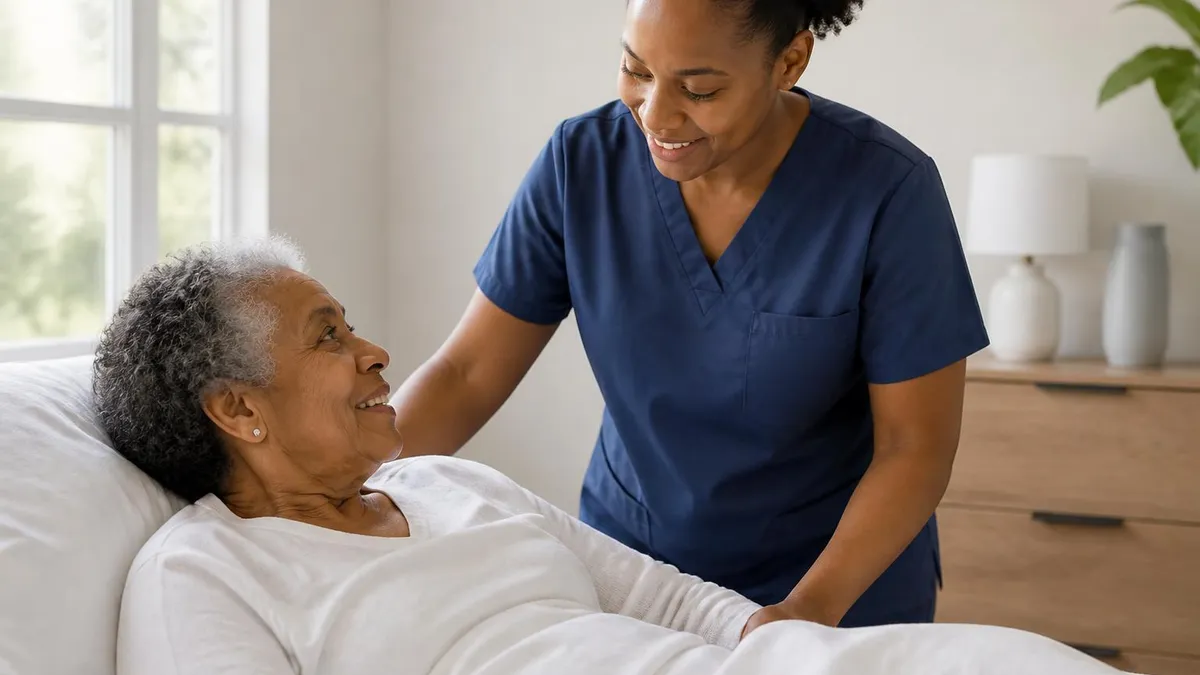
What Does a PCA Do? Complete Guide to Personal Care Assistant Duties and Daily Responsibilities
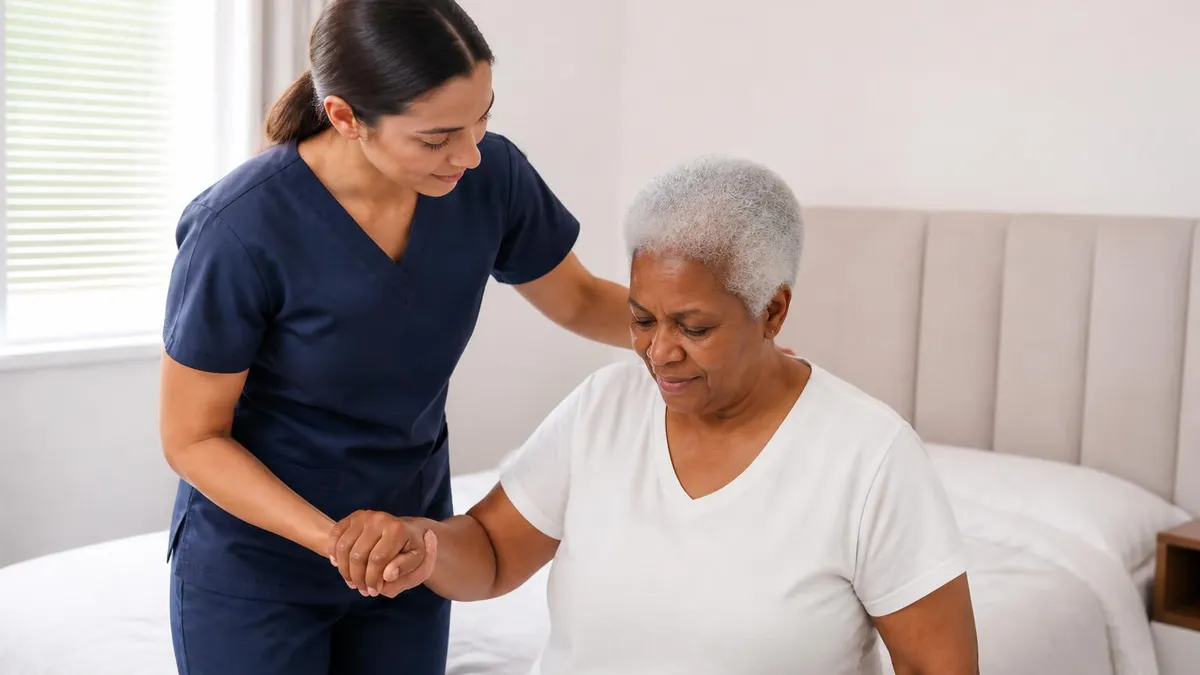
PCA Nurse: Complete Guide to the Personal Care Assistant Role in Modern Nursing Teams
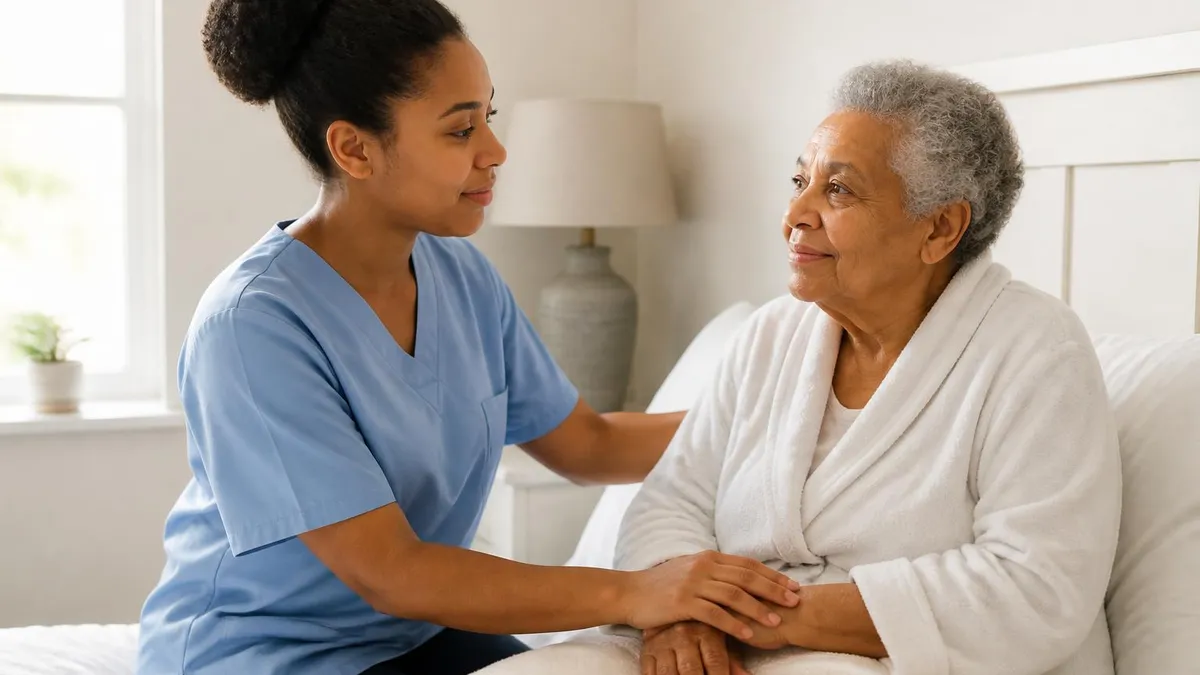
PCA Agencies Near Me: How to Find, Evaluate, and Choose a Local Personal Care Assistant Agency in 2026
PCA - Personal Care Assistant: Career Paths, Salary, and Requirements 2026
About the Author

Registered Nurse & Healthcare Educator
Johns Hopkins University School of NursingDr. Sarah Mitchell is a board-certified registered nurse with over 15 years of clinical and academic experience. She completed her PhD in Nursing Science at Johns Hopkins University and has taught NCLEX preparation and clinical skills courses for nursing students across the United States. Her research focuses on evidence-based exam preparation strategies for healthcare certification candidates.