
PCA Nurse: Complete Guide to the Personal Care Assistant Role in Modern Nursing Teams
Complete pca nurse guide: ✍🏼 duties, training, salary, and how personal care assistants support nursing teams in hospitals and home care settings.
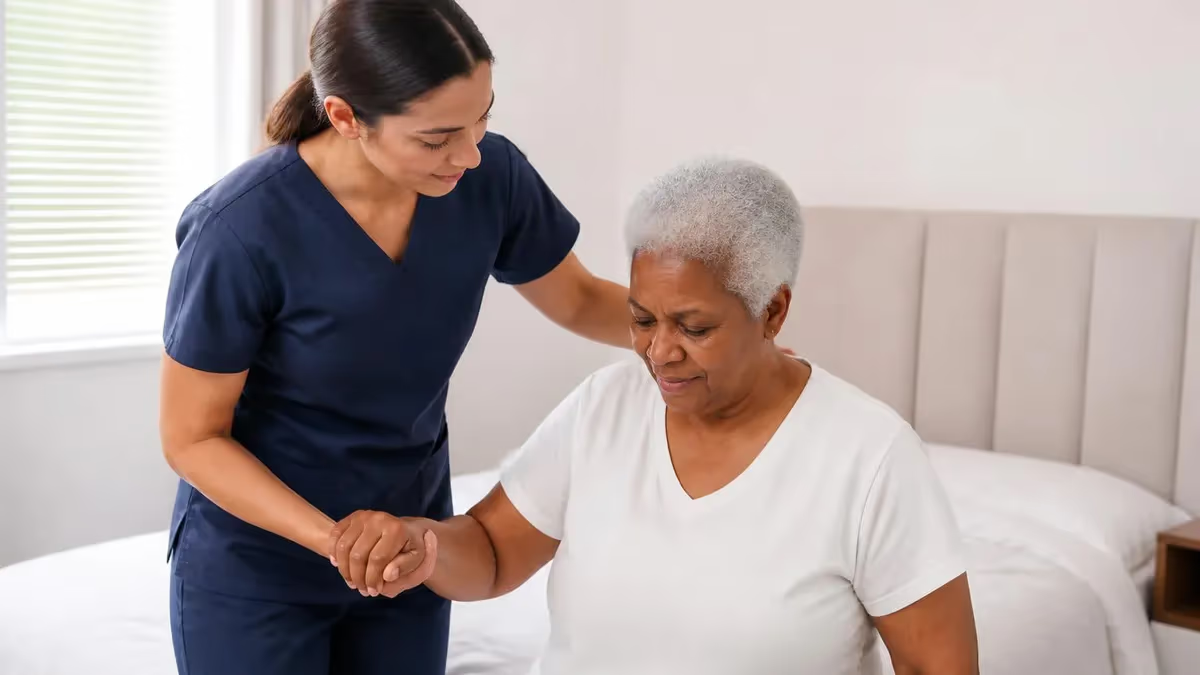
A pca nurse, more accurately known as a Personal Care Assistant working alongside licensed nurses, has become one of the most essential frontline roles in modern American healthcare. From bustling hospital med-surg floors to quiet rural home care visits, PCAs handle the hands-on personal care, mobility support, and observation work that allows RNs and LPNs to focus on clinical decision-making. If you have ever wondered what is a pca or how the role differs from a CNA, this guide walks through every duty, skill, and career pathway in detail.
The term pca medical setting role typically describes a worker who supports activities of daily living such as bathing, dressing, toileting, ambulation, feeding, and basic vital sign monitoring under the delegation of a registered nurse. Unlike a Certified Nursing Assistant, a PCA may not always require state certification, although most hospitals and licensed home health agencies now prefer or require completion of a structured training program before hire. Demand has grown sharply as the population over 75 has doubled since 2010.
To understand the full scope of the position, it helps to know the broader pca meaning across industries. The same acronym is used for patient-controlled analgesia devices, the Presbyterian Church in America, and even Porsche Club of America events, which is why search results can feel confusing. In healthcare, however, the term consistently refers to a paraprofessional caregiver. For a deeper foundation on the role and its certifications, our pca skin-to-soul caregiving study guide covers every competency tested on certification exams.
The relationship between a PCA and a registered nurse is built on delegation, communication, and trust. The RN remains legally responsible for the patient's plan of care, while the PCA executes specific tasks and reports observations such as skin breakdown, refusal of food, changes in mood, or unusual output. This division of labor allows nursing teams to serve more patients without compromising safety, and it gives PCAs meaningful exposure to clinical environments that often becomes a launching pad into LPN, RN, or even NP careers.
Working as a PCA in a nursing team is physically demanding but emotionally rich. You will lift, turn, and transfer patients dozens of times per shift, document carefully in electronic health records, and often be the staff member a patient sees most frequently. Families remember the PCA who combed their mother's hair, who noticed grandpa was confused before the fall, who brought a warm blanket without being asked. That human-scale impact is why retention among mission-driven PCAs remains higher than for most entry-level healthcare roles.
This article covers everything you need to know: daily duties, required training hours by state, salary ranges across settings, advancement paths, the differences between hospital-based and home care PCAs, common challenges like burnout and back injury, and the specific way a pca nurse partnership operates on a typical 12-hour shift. Whether you are exploring the field, preparing for a certification exam, or hiring for an agency, you will leave with a concrete understanding of how PCAs strengthen nursing care across the United States.
We will also touch on adjacent topics readers frequently confuse with the role, including pca stats from the Bureau of Labor Statistics, scope-of-practice limits, and how reimbursement through Medicaid waivers affects what a PCA may legally do in a private home. By the end you will know precisely where the PCA fits in the nursing hierarchy, what training to pursue, and how to evaluate whether this rewarding but rigorous career suits your strengths.
PCA Nurse Role by the Numbers

Where PCA Nurses Fit in the Care Team
A PCA works under the delegation of a registered nurse who remains accountable for the care plan, medications, and clinical assessments while the PCA performs personal care tasks.
In many states the PCA and CNA roles overlap, but CNAs typically hold a state certification allowing broader skills like vital signs in licensed facilities and Medicare-billable care.
PCAs reinforce physical and occupational therapy plans by encouraging prescribed exercises, safe transfers, and mobility goals between formal therapy sessions throughout the day.
Because PCAs spend the most one-on-one time with patients, they often become the trusted bridge between family members and the broader clinical care team.
A typical pca nurse partnership begins at shift handoff, when the registered nurse reviews each patient's status, assigns tasks, and flags any changes in condition. The PCA receives a written or verbal assignment that may include ten or more patients in a hospital setting or one to three clients in home health. From that moment, every action the PCA performs supports the nurse's overarching plan of care, whether that means assisting with morning hygiene or watching for early signs of a urinary tract infection.
Morning duties usually start with personal hygiene and dressing. PCAs bathe patients in bed or in shower chairs, brush teeth, shave faces, change incontinence briefs, and apply prescribed lotions to fragile skin. Detail matters here: a small reddened area on the sacrum, noticed during a bath, may be the first warning of a pressure injury that the nurse can address before it becomes a stage 2 wound. Documentation of skin condition, intake, and output is expected after every encounter.
Mobility and transfers occupy a major share of the day. Using gait belts, mechanical lifts, slide boards, and two-person assists, PCAs move patients from bed to chair, walk them in hallways, and reposition every two hours to prevent breakdown. Safe body mechanics protect both worker and patient; the Occupational Safety and Health Administration consistently lists nursing aides among the highest-risk occupations for musculoskeletal injury, which is why proper lift technique is taught from day one of training.
Meal support is another core responsibility. PCAs deliver trays, set patients up at the right angle to prevent aspiration, assist with feeding when needed, and document precisely how many milliliters were consumed. For patients on thickened liquids, dysphagia diets, or fluid restrictions, accuracy is critical. The PCA also encourages hydration throughout the day, an unglamorous task that nonetheless prevents many of the dehydration-related readmissions hospitals work so hard to avoid.
Vital signs, blood glucose checks, and weights may also fall to the PCA depending on facility policy and state scope of practice. Even when a PCA cannot legally interpret these numbers, they collect them accurately and report them immediately to the nurse. A blood pressure of 86/52 in a normally hypertensive patient, or a fasting glucose of 48, demands instant communication. The PCA's role is to gather reliable data and escalate concerns promptly.
Throughout the shift, the PCA observes and reports. Confusion that wasn't there an hour ago, a new cough, refusal of breakfast, a wound dressing that is suddenly saturated, fall risk behaviors, or a patient who seems unusually quiet all warrant communication to the RN. For a thorough breakdown of every task involved, see our complete guide to pca hydrating toner-style nurturing personal care duties from morning rounds to end-of-shift documentation.
End-of-shift work includes restocking supplies, completing all required charting, giving a clear verbal report to the oncoming PCA, and ensuring call lights are within reach of every patient. Strong PCAs leave the unit better than they found it: linens stocked, rooms tidy, patients comfortable. That habit of finishing well is exactly what makes nurses fight to keep good PCAs on their team and what opens doors when promotion opportunities or LPN program references are needed.

PCA Practice Test Questions
Prepare for the PCA - Personal Care Assistant exam with our free practice test modules. Each quiz covers key topics to help you pass on your first try.
PCA Duties and Responsibilities
Free PCA Practice Test featuring Duties and Responsibilities. Improve your PCA Exam score with mock test prep.
PCA Qualifications
PCA Mock Exam on Qualifications. PCA Study Guide questions to pass on your first try.
PCA Working Conditions
PCA Test Prep for Working Conditions. Practice PCA Quiz questions and boost your score.
PCA Assisting with Daily Living Activities
PCA Questions and Answers on Assisting with Daily Living Activities. Free PCA practice for exam readiness.
PCA Basic Nursing Skills
PCA Mock Test covering Basic Nursing Skills. Online PCA Test practice with instant feedback.
PCA Basic Patient Care Skills
Free PCA Quiz on Basic Patient Care Skills. PCA Exam prep questions with detailed explanations.
PCA Communication and Interpersonal Skills
PCA Practice Questions for Communication and Interpersonal Skills. Build confidence for your PCA certification exam.
PCA Ethical and Legal Responsibilities
PCA Test Online for Ethical and Legal Responsibilities. Free practice with instant results and feedback.
PCA Health and Safety Procedures
PCA Study Material on Health and Safety Procedures. Prepare effectively with real exam-style questions.
PCA Health & Safety Protocols
Free PCA Test covering Health & Safety Protocols. Practice and track your PCA exam readiness.
PCA Infection Control
PCA Exam Questions covering Infection Control. Master PCA Test concepts for certification prep.
PCA Mental Health & Emotional Support
Free PCA Practice Test featuring Mental Health & Emotional Support. Improve your PCA Exam score with mock test prep.
PCA Nutrition & Hydration
PCA Mock Exam on Nutrition & Hydration. PCA Study Guide questions to pass on your first try.
PCA Patient Mobility & Transfers
PCA Test Prep for Patient Mobility & Transfers. Practice PCA Quiz questions and boost your score.
PCA Nurse Settings and What Is a PCA in Each One
In acute care hospitals, PCAs (sometimes titled Patient Care Technicians) work twelve-hour shifts caring for eight to twelve patients on a med-surg floor or four to six on telemetry. They draw labs in some states, perform EKGs, monitor cardiac rhythms, and rotate patients onto and off of bedpans constantly. The pace is fast, but pay tends to be the highest in the industry and benefits are usually strong.
Hospital PCAs build strong clinical foundations. You learn to read between the lines of a patient's behavior, recognize early sepsis, and communicate concisely during bedside rounds. Many nursing students choose hospital PCA jobs specifically because exposure to physicians, charge nurses, and rapid response teams accelerates learning. The downside is physical strain and emotional weight; bereavement support and team debriefs help PCAs cope with frequent patient deaths.
Is a PCA Nurse Career Right for You?
- +Meaningful daily impact on real patients and families
- +Low barrier to entry compared with RN or LPN programs
- +Strong job security with 21% projected growth through 2034
- +Flexible schedules including part-time, per diem, and overnight options
- +Excellent stepping stone into LPN, RN, or allied health careers
- +Hands-on clinical exposure that builds practical nursing instincts
- +Diverse work settings from hospitals to private homes
- −Physically demanding with high risk of back and shoulder injury
- −Emotional weight of caring for declining or dying patients
- −Lower wages than licensed nursing roles despite hard work
- −Exposure to infectious diseases, body fluids, and difficult behaviors
- −Limited scope of practice may feel restrictive over time
- −Variable scheduling including weekends, holidays, and overnight shifts
- −Inconsistent benefits between agency, facility, and private-pay positions
Pros and Cons at a Glance
| Pros | Cons |
|---|---|
| Meaningful daily impact on real patients and families | Physically demanding with high risk of back and shoulder injury |
| Low barrier to entry compared with RN or LPN programs | Emotional weight of caring for declining or dying patients |
| Flexible schedules including part-time, per diem, and overnight options | Lower wages than licensed nursing roles despite hard work |
| Excellent stepping stone into LPN, RN, or allied health careers | Exposure to infectious diseases, body fluids, and difficult behaviors |
| Hands-on clinical exposure that builds practical nursing instincts | Limited scope of practice may feel restrictive over time |
| Diverse work settings from hospitals to private homes | Variable scheduling including weekends, holidays, and overnight shifts |

Essential Skills Checklist for Every New PCA Nurse
- ✓Perform hand hygiene before and after every patient contact
- ✓Use gait belts and mechanical lifts correctly for every transfer
- ✓Take accurate vital signs and report abnormal findings immediately
- ✓Document care promptly and precisely in the electronic health record
- ✓Recognize early signs of pressure injuries, dehydration, and infection
- ✓Communicate respectfully with patients, families, and the supervising nurse
- ✓Follow standard and transmission-based precautions for every patient
- ✓Maintain patient privacy and HIPAA compliance at all times
- ✓Respond calmly and quickly to call lights, alarms, and emergencies
- ✓Practice safe body mechanics to protect your back and joints
- ✓Provide culturally sensitive care across diverse patient populations
- ✓Know your scope of practice and refuse unsafe delegation
PCAs deliver 70% of hands-on patient touches in many hospital units
Research from the American Hospital Association shows that personal care assistants and CNAs account for the majority of direct patient contact hours on inpatient units. That means PCAs are usually the first to notice subtle changes that can prevent falls, sepsis, and readmissions. Strong PCA-nurse communication is one of the most cost-effective patient safety interventions available today.
Training and certification requirements vary significantly across the United States. Federal law mandates a minimum of 75 hours of training for any aide working in a Medicare- or Medicaid-certified nursing home, but states like California, Oregon, and Maine require 150 hours or more. Home care PCAs working under Medicaid waiver programs often complete 40 to 60 hours of state-specific personal assistance training before being assigned to clients. Hospital systems typically run their own internal training programs lasting four to twelve weeks.
Most PCA training programs cover infection control, basic anatomy, patient rights, communication, safe transfers, vital signs, nutrition, hygiene care, end-of-life care, and recognizing abuse or neglect. Programs end with a written exam and a skills demonstration evaluated by a registered nurse. In states that license or register PCAs, candidates pass through a state-approved test and are added to a public registry that employers verify before hire. Background checks, drug screens, and TB testing are universal.
Salary for PCAs depends on setting, region, and shift differentials. The Bureau of Labor Statistics reports a median annual wage near $34,900, but hospital-based patient care technicians in metropolitan areas often earn $20 to $26 per hour, while overnight or weekend shifts can push effective hourly rates higher with differentials. Home care PCAs paid through Medicaid waivers tend to earn less per hour but enjoy mileage reimbursement and flexible scheduling. Union positions in states like New York, California, and Minnesota offer the highest wages and best benefits.
Benefits packages have improved dramatically since 2020 as employers compete for caregivers. Many hospitals now offer tuition reimbursement specifically designed to grow PCAs into LPNs, RNs, respiratory therapists, or surgical technologists. Health insurance, retirement matching, paid time off, and even free child care are increasingly common at large health systems. Smaller agencies may offer fewer benefits but more flexibility, so candidates should weigh the full compensation package rather than just hourly rate.
Advancement is one of the most appealing aspects of the role. A motivated PCA can become a charge PCA or lead aide within one to two years, then enroll in an LPN bridge program while continuing to work. Many hospitals create specialty PCA roles in dialysis, telemetry, surgical units, emergency departments, or labor and delivery, each adding new skills and pay differentials. Some PCAs eventually become nurse managers themselves, bringing irreplaceable frontline perspective to leadership.
The pca stats trend over the past decade tells a clear story: demand will outpace supply for at least another generation. As baby boomers age and chronic conditions increase, the need for trained, compassionate paraprofessionals will only grow. That gives PCAs unusual use in the labor market, allowing them to choose settings, shifts, and employers that match their goals. Few entry-level careers offer this combination of meaning, security, and upward mobility.
For workers exploring this field, the most important first step is selecting a reputable training program approved by your state department of health. Avoid programs that promise certification in less than the legal minimum hours or charge unusually high tuition without job placement support. A well-chosen program plus a thoughtful first employer can launch a forty-year healthcare career, while a poor start often leads to burnout within months.
PCA scope of practice varies dramatically between states and even between facilities within the same state. Never perform a task you have not been trained and authorized to do, even if asked by a nurse or family member. Performing medication administration, sterile procedures, or unlicensed nursing acts can cost you your job, your registry status, and in some cases result in criminal charges. When in doubt, ask your supervising RN in writing.
Career advancement for a pca nurse begins the moment you accept your first position. The most successful PCAs treat every shift as an apprenticeship, asking the nurse questions during slower moments, observing wound dressings and IV insertions, and reading patient charts to understand the bigger clinical picture. Within a year, attentive PCAs often know more about unit workflow than newer nurses, which makes them invaluable preceptors and natural candidates for promotion when openings appear on the schedule.
The most common advancement path leads from PCA to LPN, then RN, and increasingly to nurse practitioner or specialty roles. Many community colleges now offer evening and weekend LPN programs designed specifically for working PCAs. Employers frequently sponsor tuition, and some hospitals guarantee an LPN or RN position upon graduation in exchange for a two- or three-year work commitment. The combination of clinical experience plus formal education makes former PCAs unusually strong new nurses.
Lateral moves can also dramatically expand earning power and quality of life. Becoming a phlebotomist, monitor technician, surgical tech, sterile processing technician, or medical assistant builds on PCA experience while opening different schedules and specialty environments. Each role provides a stepping stone toward larger goals while paying a higher wage than entry-level PCA work. The point is that the PCA role does not have to be a dead end; it is a launching pad if approached deliberately.
For PCAs who love direct care but want more autonomy, leadership roles within home care offer another path. Senior PCAs become case coordinators, scheduling supervisors, or quality improvement specialists at agencies. These positions blend clinical knowledge with administrative skill and pay considerably more than direct care. Many former PCAs go on to open their own home care agencies, drawing on years of frontline experience to build companies that treat caregivers and clients with the dignity both deserve.
If geographic flexibility matters, consider traveling PCA or contract positions that pay premium rates in underserved areas. Crisis staffing rates during the COVID-19 pandemic reached three or four times normal pay, and while those peaks have settled, premium contracts still exist for short-term hospital and skilled nursing assignments. For PCAs without dependents, a single year of travel work can fund nursing school entirely. For a deeper look at how compensation compares across settings, our pca pump-and-pour-yourself-in career and salary guide breaks down every income stream.
Networking quietly shapes careers in ways formal training cannot. The nurses who write your reference letters, the charge nurse who recommends you for the new ICU PCA opening, the manager who hears you mention an interest in pediatrics, all influence what doors open. Show up early, leave the unit better than you found it, and treat coworkers with the same respect you give patients. A reputation for reliability is worth more than any single credential.
Finally, take care of yourself. Burnout, back injury, and compassion fatigue end PCA careers prematurely far too often. Use ergonomic equipment every time, even when rushed. Take your breaks. Build a support network of coworkers who understand the work. Pursue counseling if traumatic events affect you. The patients you will help over a thirty-year career depend on you being physically and emotionally healthy enough to keep showing up day after day.
Practical tips for thriving as a PCA nurse start with the basics nobody warns you about: shoes, scrubs, and self-care. Invest in two pairs of premium slip-resistant shoes and alternate them daily to let cushioning rebound. Buy compression socks. Choose scrubs with deep, secure pockets for tape, alcohol pads, gloves, a pen, and a small notebook. These small details determine whether your first three months feel manageable or miserable, and they pay dividends every shift for the rest of your career.
Develop a personal shift routine within your first month. Successful PCAs follow the same opening sequence every shift: receive report, walk the unit to lay eyes on every patient, check call lights and IV lines, organize supply rooms, and prioritize the morning's first hygiene rounds. A predictable routine reduces decision fatigue and makes it easier to absorb the unpredictable events that always arise. Borrow systems from veteran PCAs you admire and adapt them to your own style over time.
Master documentation early. The PCA who charts cleanly and promptly is the PCA whom nurses trust. Learn the electronic health record keyboard shortcuts on your facility's system, document immediately after each patient encounter rather than waiting until the end of shift, and never copy and paste yesterday's assessment. Accurate, timely documentation protects your license, your facility, and most importantly the patient, and it makes shift transitions smoother for everyone on the team.
Build relationships intentionally with your nurses. Ask which tasks they prefer to delegate, what observations they want reported immediately versus at the end of the hour, and how they like to be called overnight. Different nurses have different communication styles, and learning each one quickly reduces friction. The PCA who anticipates the nurse's needs becomes indispensable, while the PCA who waits to be told what to do is forever stuck doing the least desirable work on the unit.
Continuously sharpen your clinical observation skills. Read about the conditions you see most often: heart failure, COPD, dementia, diabetes, stroke recovery, sepsis. Knowing the warning signs of each transforms you from a task-completer into a true clinical asset. Many free online resources, podcasts, and continuing education modules cover these topics in PCA-appropriate language. An hour a week of intentional learning compounds into deep practical knowledge within a year and shines through in every shift you work.
Protect your mental health proactively. Caregiving is emotionally intense work, and the cumulative weight of patient deaths, family conflicts, and difficult assignments can quietly erode wellbeing. Identify one or two trusted coworkers with whom you can debrief honestly. Use employee assistance programs when offered. Establish hard boundaries between work and home, including a decompression routine such as a walk or shower before engaging with family. Sustainable caregiving requires intentional self-care, not occasional crisis intervention after burnout has already set in.
Plan your next career step deliberately. Even if you love direct care work and never intend to leave, having a five-year plan keeps you growing. Whether it is moving to a higher-paying specialty unit, completing an LPN program, becoming a preceptor, or transitioning into home care leadership, intentional development beats drift. Write down your goals, share them with your supervisor during annual reviews, and revisit them quarterly. PCAs who plan their careers find that opportunities seem to find them, while those who drift often look back wishing they had moved sooner.
Sample Personal Care Assistant Practice Questions
Try these questions from our free Personal Care Assistant practice tests. The correct answer and an explanation follow each question.
Why is it important for a Personal Care Assistant (PCA) to perform proper hand hygiene?
- A. To reduce the need for gloves.
- B. To prevent the spread of infections and promote safety.
- C. It is only needed when handling food.
- D. It is unnecessary if gloves are worn.
Answer: B. To prevent the spread of infections and promote safety.
Proper hand hygiene is the single most effective way to prevent the transmission of harmful microorganisms and reduce the risk of infection. PCAs interact closely with vulnerable patients, making meticulous handwashing essential to protect both the patient from healthcare-associated infections and the PCA from exposure. This practice is fundamental to maintaining a safe and healthy care environment for everyone.
Which federal program is the primary payer for Medicaid-funded Personal Care Assistant services in most US states?
- A. Medicare Part A
- B. Medicaid HCBS Waiver
- C. TRICARE
- D. Veterans Affairs Community Care
Answer: B. Medicaid HCBS Waiver
Medicaid Home and Community-Based Services (HCBS) waivers fund PCA services for eligible individuals who would otherwise require institutional care.
What is the primary role of a Personal Care Assistant (PCA)?
- A. To diagnose medical conditions
- B. To provide assistance with daily living activities
- C. To perform surgical procedures
- D. To manage financial accounts
Answer: B. To provide assistance with daily living activities
The primary role of a Personal Care Assistant (PCA) is to provide essential assistance with Activities of Daily Living (ADLs) for individuals who need support due to age, illness, or disability. These activities include fundamental tasks such as bathing, dressing, eating, mobility, and personal hygiene. By helping with these daily living activities, PCAs enable clients to maintain their independence and improve their quality of life.
Which action BEST protects client privacy during personal hygiene care?
- A. Working as quickly as possible to minimize exposure time
- B. Closing the door and draping the client, exposing only the area being cleaned
- C. Asking family members to leave the building
- D. Dimming the lights to reduce visibility
Answer: B. Closing the door and draping the client, exposing only the area being cleaned
Closing the door and using draping techniques maintains the client's dignity and privacy while allowing necessary access for care.
PCA Questions and Answers

PCA - Personal Care Assistant: Complete Study Guide 2026
What Does a PCA Do? Complete Guide to Personal Care Assistant Duties and Daily Responsibilities
PCA Agencies Near Me: How to Find, Evaluate, and Choose a Local Personal Care Assistant Agency in 2026
PCA - Personal Care Assistant: Career Paths, Salary, and Requirements 2026
Personal Care Assistant Jobs Near Me: How to Find Local PCA Positions, Apply Successfully, and Start Your Caregiving Career in 2026
About the Author

Registered Nurse & Healthcare Educator
Johns Hopkins University School of NursingDr. Sarah Mitchell is a board-certified registered nurse with over 15 years of clinical and academic experience. She completed her PhD in Nursing Science at Johns Hopkins University and has taught NCLEX preparation and clinical skills courses for nursing students across the United States. Her research focuses on evidence-based exam preparation strategies for healthcare certification candidates.