
What Does a PCA Do? Complete Guide to Personal Care Assistant Duties and Daily Responsibilities
What does a PCA do? Learn the complete duties, daily tasks, skills, and responsibilities of a Personal Care Assistant in 2026 October. 🎯
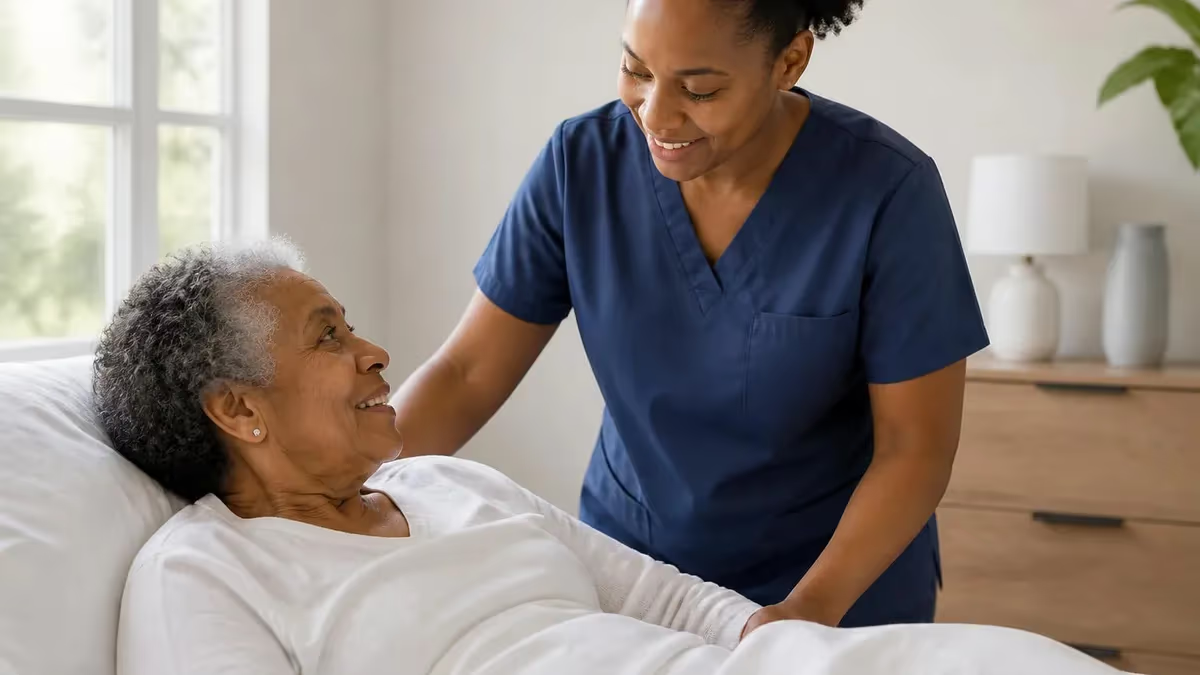
What does a PCA do on a typical workday? A Personal Care Assistant provides hands-on support to clients who cannot fully care for themselves due to age, disability, chronic illness, or recovery from surgery. The role blends physical assistance, emotional support, and basic health monitoring into one of the most personal jobs in healthcare. Understanding the pca meaning matters because the position bridges family caregiving and clinical nursing, giving clients independence while keeping them safe at home.
A PCA typically helps clients with activities of daily living, or ADLs, which include bathing, dressing, grooming, toileting, mobility, and eating. Beyond these core tasks, a PCA may prepare meals, handle light housekeeping, run errands, accompany clients to medical appointments, and provide companionship. Each shift is shaped by the client's care plan, which is written by a registered nurse or case manager and reviewed regularly to reflect changing needs.
The work happens in many settings. PCAs serve clients in private homes, assisted living communities, group homes for adults with developmental disabilities, hospice environments, and short-term post-surgical recovery situations. Some PCAs work one-on-one with a single client for years, while others rotate among several clients per day through a home health agency. Schedules can include mornings, evenings, overnights, weekends, and holidays because care needs do not stop.
What does a PCA do that nurses or CNAs do not? PCAs generally do not perform clinical tasks like injections, wound care, or medication administration in most states. Their scope focuses on personal care and supervised support. However, PCAs are often the first to notice subtle changes — a new bruise, slower walking, confusion, decreased appetite — and they communicate these observations to nurses or family members who then make medical decisions. This pca skin assessment skill saves lives.
The job requires more than physical strength. PCAs need patience, empathy, strong communication skills, attention to detail, and the ability to follow infection control procedures. They must respect client dignity during intimate care tasks, maintain confidentiality under HIPAA rules, and document care accurately so the next shift knows what happened. Strong PCAs also build trust with families, becoming a calm and reliable presence in stressful situations.
Demand for PCAs is among the fastest growing in the US labor market. The Bureau of Labor Statistics projects employment of personal care aides to grow by roughly 21 percent through 2032, far faster than the average for all occupations. As the baby boomer generation ages and more families choose aging in place over institutional care, qualified PCAs are needed everywhere — from rural counties to major metropolitan areas. This guide breaks down exactly what the role involves so you know what to expect before training begins.
PCA Role by the Numbers
The Five Core Duty Categories of a PCA
Bathing, grooming, oral care, dressing, toileting, incontinence care, and skin checks. These are the most frequent daily tasks and require strict infection control and respect for client dignity at every step.
Assisting with walking, transfers between bed, chair, and toilet, repositioning bedbound clients every two hours, and using gait belts, Hoyer lifts, or transfer boards safely to prevent client and PCA injuries.
Planning simple meals, grocery shopping, cooking diet-appropriate food, feeding clients who cannot self-feed, monitoring fluid intake, and observing for swallowing difficulties or food refusal that may signal illness.
Laundry, dish washing, bed changing, sanitizing bathrooms and kitchens, vacuuming the client's living area, and managing medical supplies. PCAs maintain a safe, clean environment without doing deep cleaning chores.
Taking vital signs when trained, observing mood, appetite, mobility, and skin condition, documenting in care notes, and reporting changes to the nurse, agency, or family promptly so issues are addressed early.
To answer what does a PCA do hour by hour, it helps to walk through a typical day. Most home shifts begin with a hand-off review — checking the previous shift's notes, the client's mood, and any pending tasks. The PCA then helps the client out of bed, into the bathroom for morning hygiene, and into clean clothes. Breakfast comes next, often accompanied by morning medications that the client self-administers under PCA supervision (state rules vary on this).
Mid-morning typically includes mobility activities. The PCA may walk the client around the home, do gentle range-of-motion exercises prescribed by physical therapy, or help the client into a wheelchair for outdoor time. For clients with dementia, this is when structured activities like puzzles, music, or photo albums help maintain cognitive engagement and reduce afternoon agitation, which is sometimes called sundowning.
Lunch preparation and feeding follow, with careful attention to dietary restrictions. A client with diabetes needs carbohydrate counting; a stroke survivor may need thickened liquids; a kidney patient may have potassium or fluid limits. The PCA does not write these diets but must follow them precisely. After lunch, many clients rest, giving the PCA time to handle laundry, change linens, and document the morning in the care log. Good documentation is a legal record and a clinical tool.
Afternoons often involve outings or appointments. A PCA might drive the client to a doctor's visit, the pharmacy, the bank, or a senior center social activity. During medical appointments, the PCA may take notes for the family, help the client remember symptoms, and confirm follow-up instructions. Some PCAs also assist with reviewing skincare regimens — a client recovering from surgery may need help applying prescribed creams, while a younger disabled client may use a pca hydrating toner or other specialty products independently with verbal cues.
Evenings repeat many morning tasks in reverse. Dinner is prepared and served, the client is helped to the bathroom, evening medications are supervised, and a bedtime routine starts. This includes changing into sleepwear, denture care, skin lotion application to prevent breakdown, and positioning pillows for comfortable, safe sleep. For clients with mobility limits, repositioning during overnight shifts is critical — pressure ulcers can form in just two hours of unrelieved pressure on bony areas.
Throughout the day, the PCA observes constantly. Did the client eat less than usual? Is the urine darker, suggesting dehydration? Did walking seem more unsteady today? Is there a new red area on the heel? These observations are recorded and reported. PCAs in pca medical home care settings are the eyes and ears of the broader care team, often catching deterioration days before it would otherwise be noticed.
Finally, end-of-shift documentation closes the day. The PCA records vital signs taken, meals eaten, bathroom output, mood, activities, and any concerns. They restock supplies, secure the home if leaving the client alone, and brief the next caregiver. This written and verbal handoff is what makes continuous high-quality care possible across multiple shifts and multiple PCAs in a week.

PCA Practice Test Questions
Prepare for the PCA - Personal Care Assistant exam with our free practice test modules. Each quiz covers key topics to help you pass on your first try.
PCA Duties and Responsibilities
Free PCA Practice Test featuring Duties and Responsibilities. Improve your PCA Exam score with mock test prep.
PCA Qualifications
PCA Mock Exam on Qualifications. PCA Study Guide questions to pass on your first try.
PCA Working Conditions
PCA Test Prep for Working Conditions. Practice PCA Quiz questions and boost your score.
PCA Assisting with Daily Living Activities
PCA Questions and Answers on Assisting with Daily Living Activities. Free PCA practice for exam readiness.
PCA Basic Nursing Skills
PCA Mock Test covering Basic Nursing Skills. Online PCA Test practice with instant feedback.
PCA Basic Patient Care Skills
Free PCA Quiz on Basic Patient Care Skills. PCA Exam prep questions with detailed explanations.
PCA Communication and Interpersonal Skills
PCA Practice Questions for Communication and Interpersonal Skills. Build confidence for your PCA certification exam.
PCA Ethical and Legal Responsibilities
PCA Test Online for Ethical and Legal Responsibilities. Free practice with instant results and feedback.
PCA Health and Safety Procedures
PCA Study Material on Health and Safety Procedures. Prepare effectively with real exam-style questions.
PCA Health & Safety Protocols
Free PCA Test covering Health & Safety Protocols. Practice and track your PCA exam readiness.
PCA Infection Control
PCA Exam Questions covering Infection Control. Master PCA Test concepts for certification prep.
PCA Mental Health & Emotional Support
Free PCA Practice Test featuring Mental Health & Emotional Support. Improve your PCA Exam score with mock test prep.
PCA Nutrition & Hydration
PCA Mock Exam on Nutrition & Hydration. PCA Study Guide questions to pass on your first try.
PCA Patient Mobility & Transfers
PCA Test Prep for Patient Mobility & Transfers. Practice PCA Quiz questions and boost your score.
What Is a PCA in Different Work Settings?
In private homes, PCAs work directly with one client or family, often for long shifts of 8 to 12 hours. The PCA becomes deeply familiar with the client's routine, preferences, medications, and personality. Trust builds quickly, and many private home PCAs stay with the same family for years, becoming almost like extended family while maintaining clear professional boundaries around scope of practice.
Pay in private settings can be higher when hired directly, but PCAs lose the safety net of agency support, scheduled breaks, and backup coverage. Self-employed PCAs handle their own taxes, liability insurance, and continuing education. Most still recommend starting through an agency to learn protocols, build a resume, and gain references before moving to private duty arrangements with greater independence.
Is Becoming a PCA Right for You? Pros and Cons
- +Fast entry into healthcare — most programs take 4 to 12 weeks
- +Strong job demand with 21% projected growth through 2032
- +Flexible schedules including part-time, overnight, and weekend options
- +Deeply meaningful work helping people live with dignity
- +Clear career ladder to CNA, LPN, RN, or case manager roles
- +Low barriers — no college degree required for entry positions
- +Diverse work settings from homes to hospices to group homes
- −Median pay starts low at roughly $16 per hour in most regions
- −Physical demands include lifting, transferring, and standing for hours
- −Emotional toll of caring for declining or dying clients
- −Exposure to bodily fluids requires strict infection control discipline
- −Schedules may include nights, weekends, and holidays away from family
- −Limited benefits in private duty or part-time agency roles
- −Risk of injury from improper transfers without proper training
Pros and Cons at a Glance
| Pros | Cons |
|---|---|
| Flexible schedules including part-time, overnight, and weekend options | Physical demands include lifting, transferring, and standing for hours |
| Deeply meaningful work helping people live with dignity | Emotional toll of caring for declining or dying clients |
| Clear career ladder to CNA, LPN, RN, or case manager roles | Exposure to bodily fluids requires strict infection control discipline |
| Low barriers — no college degree required for entry positions | Schedules may include nights, weekends, and holidays away from family |
| Diverse work settings from homes to hospices to group homes | Limited benefits in private duty or part-time agency roles |

Essential Skills Every PCA Must Master
- ✓Perform a complete bed bath using proper draping and warm water technique
- ✓Transfer a client safely using a gait belt or mechanical lift device
- ✓Take and document vital signs including pulse, blood pressure, and respiration
- ✓Recognize early signs of pressure ulcers, dehydration, and infection
- ✓Follow standard precautions with gloves, hand hygiene, and PPE for every client
- ✓Use proper body mechanics to prevent back and shoulder injuries
- ✓Communicate clearly with non-verbal, hearing-impaired, or dementia clients
- ✓Document care accurately in paper or electronic health records
- ✓Respond calmly to medical emergencies and call 911 when appropriate
- ✓Maintain client confidentiality and dignity during all personal care tasks
Observation Is Your Most Important Skill
While bathing, dressing, and meal preparation make up most of the daily checklist, the single most valuable thing a PCA does is notice change. A nurse may visit a client twice a week — a PCA sees them every day. Catching a small skin tear, a slight cognitive shift, or reduced appetite early can prevent a hospital admission. Train your eyes to scan systematically every shift.
Working with clients and their families is where the human side of the PCA role truly lives. Every client is a person with a lifetime of habits, preferences, fears, and pride. A new PCA learns quickly that the same task — say, helping someone shower — can feel routine to the caregiver but vulnerable and even humiliating to the client. The best PCAs adjust pace, tone, and approach to honor that vulnerability while still completing the necessary care.
Family dynamics often shape the work as much as the care plan itself. Adult children may have conflicting opinions about how much help mom needs. A spouse may resist letting a stranger into the home. A client may insist on tasks they can no longer safely do alone. The PCA navigates these tensions by staying calm, neutral, and focused on the client's wellbeing, while keeping the agency or case manager informed when family conflict starts to affect care delivery.
Communication is constant. PCAs talk with clients about their day, their pain, their meals, and their memories. They also communicate up the chain — to nurses, supervisors, and family — through written notes, phone calls, and electronic messaging apps used by most modern home care agencies. Clear, factual, professional communication protects both the client and the PCA. Vague notes like "client did fine" help no one; specific notes like "client walked 30 feet with walker, slight left knee buckling on return" guide real clinical decisions.
Cultural awareness is increasingly important. PCAs serve clients from every background, and respectful care means understanding dietary restrictions, religious practices, gender preferences for personal care, and language needs. Many agencies now offer cultural competency training, and bilingual PCAs are especially in demand. Treating each client as an individual rather than a diagnosis builds the trust that makes care actually work.
Setting boundaries protects both parties. PCAs are not financial managers, legal advisors, social workers, or therapists. When clients ask for favors outside the care plan — borrowing money, taking them to unauthorized places, or doing personal errands for family members — the PCA politely declines and reports the request. These boundaries prevent exploitation in both directions and keep the relationship professional even when it becomes warm and personal.
Self-care for the caregiver is non-negotiable. PCAs face emotional fatigue, grief when long-term clients decline, and physical wear from repetitive lifting. Smart PCAs build routines that protect their own health: stretching before shifts, taking real meal breaks, debriefing with peers, and using employee assistance programs when stress climbs. Burned-out caregivers make mistakes. Healthy caregivers deliver the kind of care that earns five-star reviews and long career tenure.
Finally, PCAs are part of a broader healthcare team even when they work alone. Nurses, therapists, social workers, case managers, and physicians all rely on PCA observations and follow-through. Showing up on time, completing documentation, attending care conferences when invited, and treating every team member with respect — these professional habits separate PCAs who get promoted and re-hired from those who struggle to keep steady work. The role is humble in title but rich in impact.
PCAs must never perform tasks outside their legal scope, even when asked by a client or family. Tasks like administering injections, changing sterile dressings, suctioning, or giving medications (in states that prohibit it) can result in criminal charges, license loss, and serious client harm. When in doubt, call your supervisor or nurse before acting. Document the request and the response.
The PCA role is rarely the end of a healthcare career — for most people, it is the beginning. Within a year of consistent work, many PCAs decide whether to stay in personal care long term, specialize in a setting like hospice or pediatrics, or use the experience as a launching pad into nursing, social work, or care management. The clinical exposure and patient communication skills built as a PCA accelerate every healthcare program that follows.
The most common next step is Certified Nursing Assistant (CNA) certification. CNAs perform broader clinical tasks like taking vital signs as a routine part of the job, assisting with basic medical equipment, and working in hospitals and skilled nursing facilities. CNA programs typically take 4 to 12 weeks beyond PCA training, and many employers pay for the program if you commit to staying with the agency for a year afterward.
Some PCAs move into specialty roles without leaving the personal care field. Medication Technician (Med Tech) is a popular path in assisted living, allowing the caregiver to manage scheduled medications under nurse delegation. Lead Caregiver or Caregiver Mentor roles add training and supervisory duties with modest pay bumps. Care Coordinators manage staffing, client schedules, and family communications from an office or hybrid setting, often after several years of field experience.
Nursing remains the gold-standard advancement track. Licensed Practical Nurse (LPN) programs take 12 to 18 months and dramatically expand scope of practice and pay. Registered Nurse (RN) programs through community colleges take 2 years for an Associate's degree or 4 years for a Bachelor's. Many RNs got their start as PCAs, and admissions committees value the clinical exposure heavily. Working part-time as a PCA while in nursing school is a proven, financially viable path.
For those interested in the medical equipment and technical side of patient care, some PCAs pursue training in patient-controlled analgesia devices, ventilator-dependent client care, or dialysis support. While managing a pca pump is a registered nurse responsibility, PCAs who work in oncology or post-surgical settings benefit from understanding how the equipment works, what alarms mean, and when to call the nurse immediately.
Outside direct care, PCA experience opens doors in healthcare administration, insurance case management, social services, and patient advocacy. Hospital discharge planners, Medicaid waiver coordinators, and elder-care attorneys often look for staff with hands-on caregiving backgrounds because they bring practical credibility that pure office workers cannot match. A PCA resume with three to five years of solid documentation is a strong asset in any health-related job application.
Geographic mobility is another advantage. PCA training transfers across most states with modest additional coursework or testing. PCAs can move for family, weather, or cost of living and find work almost immediately in any region. Travel PCA roles, similar to travel nursing, are emerging in some agencies and pay premium rates for short-term placements in underserved areas. The flexibility makes this one of the most portable careers in modern healthcare.
If you are seriously considering becoming a PCA, here are the practical preparation steps that turn interest into employment. First, research your state's specific PCA training requirements. Medicaid-funded programs typically require 75 hours of training plus a competency evaluation, while private-pay agencies may accept less. Your state Department of Health website lists approved training programs and certification rules. Avoid online-only programs that do not include supervised in-person skill labs — employers want hands-on proof of competency.
Next, choose a training format that fits your life. Community colleges offer 4 to 8 week programs that include classroom theory, lab practice with mannequins and real partners, and a supervised clinical at a partnering facility. Home care agencies often provide free training in exchange for an employment commitment of 6 to 12 months. Red Cross chapters and adult education centers also offer short-format courses. Total cost ranges from free (employer-sponsored) to about $1,200 (private programs). Some training even includes premium porsche experience simulator-style scenarios that put you in realistic care situations before your first real shift.
Before training begins, audit your physical readiness. PCAs lift, bend, kneel, push wheelchairs, and stand for hours. Get a basic physical to confirm you can handle the work, address any back or knee issues, and build core strength through daily walking and gentle resistance training. A pre-employment physical and TB test are required almost everywhere, and most employers add a drug screen and criminal background check. Resolve any old records issues before applying.
Gather your paperwork in advance. You'll need a valid driver's license, reliable transportation (especially for home care), proof of citizenship or work authorization, your high school diploma or GED, immunization records, and two or three professional or character references. Customer service, retail, restaurant, and childcare references all count — anything that shows responsibility, attendance, and people skills. A clean, scannable digital folder with all these documents speeds your hiring process significantly.
During training, focus on skills you will actually use daily: hand hygiene, gloves, perineal care, bed making with a client in the bed, safe transfers, vital signs, and emergency response. Practice documentation in plain professional English. Ask instructors for honest feedback on your communication style, body language during personal care, and ability to receive correction without defensiveness. The strongest PCAs entered the field humble and trainable, not already convinced they knew everything.
After certification, your first job sets the tone. Choose an employer that provides paid orientation, a mentor for your first weeks, manageable client loads, and accessible supervisors. Avoid agencies that throw new PCAs into solo home visits within days or that pressure you to skip breaks. Read employee reviews on Indeed and Glassdoor. Ask in the interview how the agency handles client emergencies, late time cards, and PPE supplies. The right employer protects your safety, your license, and your long-term career trajectory.
Finally, keep learning. Every shift teaches something — a new transfer technique, a creative way to engage a dementia client, a better documentation phrase. Attend optional in-service training, follow respected eldercare and disability advocacy sources online, and connect with peers through state caregiver associations. The PCAs who treat the role as a profession rather than just a job are the ones who advance fastest, earn the best assignments, and remember years later why they chose this work in the first place.
Sample Personal Care Assistant Practice Questions
Try these questions from our free Personal Care Assistant practice tests. The correct answer and an explanation follow each question.
Why is Assisting with Daily Living Activities crucial for daily care?
- A. It is not relevant for daily care.
- B. It is crucial for providing comprehensive and effective care.
- C. It only applies to patients with physical disabilities.
- D. It is only necessary during emergencies.
Answer: B. It is crucial for providing comprehensive and effective care.
Assisting with Daily Living Activities is crucial for daily care because it forms the foundation of comprehensive and effective patient support. These tasks address basic human needs, and when properly managed, they contribute to the patient's physical well-being, hygiene, and comfort. Neglecting ADLs can lead to a decline in health, increased risk of infection, and a diminished quality of life for the patient.
What does 'range of motion exercises' refer to in a PCA's care duties?
- A. Exercises that strengthen muscles beyond normal capacity
- B. Movements that keep joints flexible and prevent contractures
- C. High-intensity aerobic workouts for the client
- D. Exercises performed only by physical therapists
Answer: B. Movements that keep joints flexible and prevent contractures
Range of motion exercises move joints through their full natural movement to maintain flexibility and prevent stiffness or contractures.
How does Personal Hygiene & Grooming contribute to the overall health and well-being of a patient?
- A. It has no impact on the patient's overall health.
- B. It plays a vital role in ensuring the patient’s overall health and recovery.
- C. It only benefits physical health.
- D. It is only important during medical procedures.
Answer: B. It plays a vital role in ensuring the patient’s overall health and recovery.
Personal hygiene and grooming are fundamental to a patient's holistic health, extending beyond just cleanliness. These practices prevent infections, promote skin integrity, and contribute significantly to mental well-being and dignity, which are all crucial for recovery. By addressing these basic needs, PCAs support the patient's physical recovery, emotional comfort, and overall quality of life.
How does Assisting with Daily Living Activities contribute to the overall health and well-being of a patient?
- A. It has no impact on the patient's overall health.
- B. It plays a vital role in ensuring the patient’s overall health and recovery.
- C. It only benefits physical health.
- D. It is only important during medical procedures.
Answer: B. It plays a vital role in ensuring the patient’s overall health and recovery.
Assisting with Daily Living Activities plays a vital role in a patient's overall health and recovery by addressing fundamental physical needs that impact well-being. Proper hygiene, nutrition, and mobility support prevent complications, maintain physical function, and enhance comfort. This comprehensive care contributes significantly to the patient's ability to heal, regain independence, and improve their quality of life.
PCA Questions and Answers

PCA - Personal Care Assistant: Complete Study Guide 2026
PCA - Personal Care Assistant: Career Paths, Salary, and Requirements 2026

PCA (Personal Care Assistant) Test: What to Expect
PCA Training Near Me: How to Find Local Programs, Certification Requirements, and What to Expect in 2026
PCA Practice Test Video Answers
About the Author

Registered Nurse & Healthcare Educator
Johns Hopkins University School of NursingDr. Sarah Mitchell is a board-certified registered nurse with over 15 years of clinical and academic experience. She completed her PhD in Nursing Science at Johns Hopkins University and has taught NCLEX preparation and clinical skills courses for nursing students across the United States. Her research focuses on evidence-based exam preparation strategies for healthcare certification candidates.