
What Is a Personal Care Assistant? Complete Career Overview, Duties, Requirements, and Pathways for 2026 October
What is a personal care assistant? Complete guide to PCA duties, salary, training, certifications, and career paths in healthcare for 2026 October. 🆕
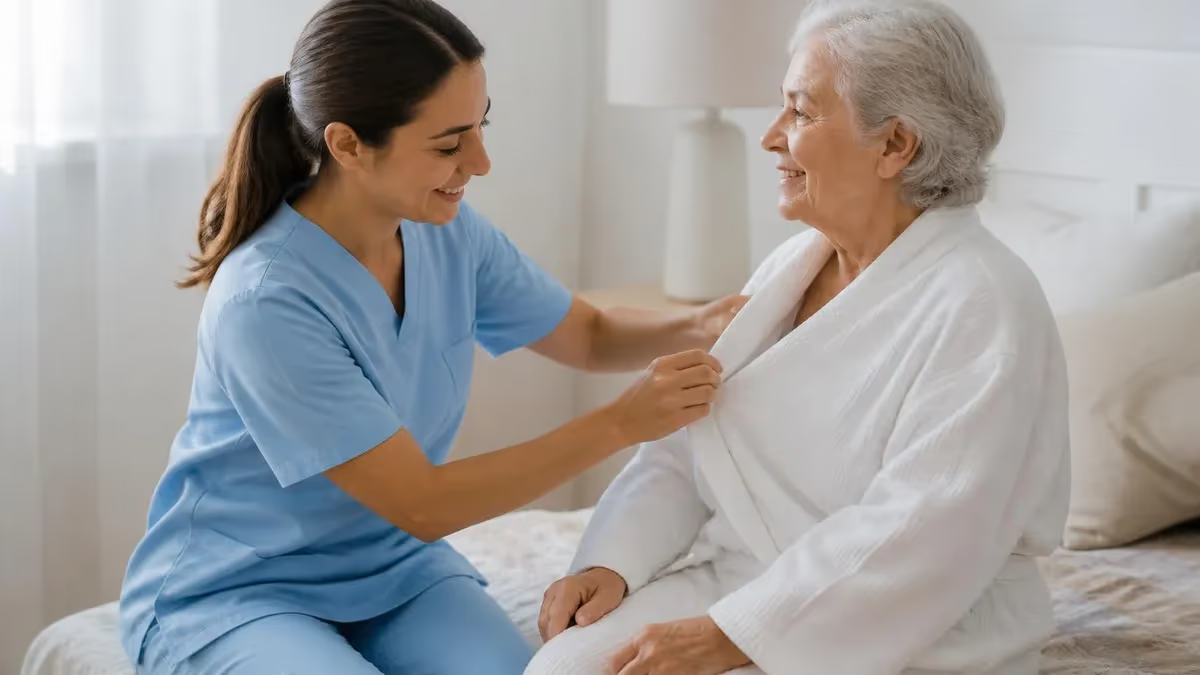
What is a personal care assistant? A personal care assistant, commonly known as a PCA, is a trained healthcare worker who helps clients with daily living activities they can no longer perform independently due to age, illness, injury, or disability. PCAs work in private homes, assisted living communities, group homes, hospice settings, and rehabilitation facilities. They are the frontline caregivers who make it possible for millions of Americans to remain safely in their preferred environment rather than relocating to institutional care.
The PCA role sits at the foundation of the home care industry and has grown rapidly as the U.S. population ages. The Bureau of Labor Statistics projects 21 percent employment growth for personal care aides between 2023 and 2033, making it one of the fastest-growing occupations in the country. Demand is driven by 10,000 baby boomers turning 65 every single day and by a strong consumer preference for aging in place rather than entering nursing facilities.
While the acronym PCA has many meanings across industries — you might think of pca skin care products, pca medical billing codes, the PCA church denomination, or even the Porsche Club of America — in the healthcare context, PCA almost always refers to a personal care assistant or personal care aide. The pca meaning in home health is specific and well-defined by state regulations and Medicaid guidelines.
Personal care assistants differ from certified nursing assistants and home health aides in important ways. PCAs focus on non-medical support: bathing, dressing, light housekeeping, meal preparation, transportation, and companionship. They typically do not perform clinical tasks like wound care, vital signs monitoring, or medication administration unless specifically trained and supervised under state-permitted scope of practice rules.
The job appeals to people who want to enter healthcare without a long degree program. Most states require somewhere between 40 and 75 hours of training, and many programs are free when sponsored by Medicaid agencies or home care companies. New PCAs can often begin earning within four to eight weeks of starting training, making this one of the most accessible entry points into the broader healthcare system.
This complete guide explains exactly what is a pca, what daily duties look like, how the role compares to other caregiving positions, what training and certifications you need, how much PCAs earn, and how to advance from PCA into higher-paying healthcare careers. Whether you are considering this work for yourself or hiring a PCA for a loved one, you will find practical, up-to-date information based on 2026 industry standards.
Personal Care Assistant Career by the Numbers

Core Components of the PCA Role
PCAs help clients with activities of daily living including bathing, grooming, toileting, dressing, and mobility. These tasks preserve dignity and prevent skin breakdown, falls, and infections in vulnerable populations.
Light housekeeping, laundry, meal preparation, grocery shopping, and errand running fall within the PCA scope. These instrumental activities allow clients to remain safely in their homes rather than entering facility care.
PCAs provide social interaction that combats isolation-related depression. They also monitor for safety risks like fall hazards, expired food, medication confusion, and changes in cognitive function that need reporting.
PCAs serve as the eyes and ears of the care team, documenting daily observations and reporting changes to nurses, case managers, and family members. This bridge role is critical for early intervention.
A typical workday for a personal care assistant begins with reviewing the care plan for each client. The care plan is a written document developed by a nurse or case manager that lists exactly which tasks the PCA may perform, any safety precautions, dietary restrictions, communication preferences, and emergency contacts. Following the care plan is not optional — deviating from it can put both the client and the PCA at legal risk.
Morning visits often focus on hygiene and getting the client ready for the day. This includes assisting with bathing in a tub, shower, or with a bed bath if mobility is limited. PCAs help with brushing teeth or denture care, shaving, hair grooming, applying lotion to prevent dry skin, and getting dressed in clothing the client selects. Throughout these tasks, the PCA preserves modesty, encourages independence, and watches for skin changes like redness or new bruising.
Meal preparation is a major daily duty. PCAs cook breakfast, lunch, or dinner based on dietary needs — diabetic, low-sodium, soft-textured, or pureed diets are common among older adults and people with swallowing disorders. The PCA may also feed clients who cannot self-feed, taking care to position them upright, offer small bites, and watch for choking signs. Detailed information about pca hydrating toner applications and other personal hygiene supports is available in our duties guide.
Mobility assistance includes helping clients transfer from bed to wheelchair, wheelchair to toilet, or chair to standing position. Proper body mechanics are essential because lifting injuries are the leading cause of PCA disability claims. Most agencies require use of gait belts, slide boards, and mechanical lifts for heavier clients. PCAs receive specific training on safe transfer techniques during their initial certification program.
Light housekeeping covers tasks directly related to the client's living environment: making the bed, changing linens, washing dishes after meals, doing the client's laundry, taking out trash, and tidying the bathroom and kitchen. PCAs do not typically perform deep cleaning, yard work, or housekeeping for other family members. The scope is limited to maintaining a safe and sanitary space for the client.
Documentation closes out every shift. PCAs complete electronic visit verification through a smartphone app, write a brief progress note describing what was done and how the client appeared, and report any concerns to their supervisor. Examples of reportable concerns include new pain, decreased appetite, falls, skin tears, signs of confusion, or refusal of care. Accurate documentation protects the PCA legally and ensures continuity of care.
The rhythm of a PCA's day depends heavily on the work setting. Home care PCAs may visit two to four clients spread across a region, while live-in PCAs spend extended shifts of 12 to 24 hours with a single client. Group home and assisted living PCAs work with multiple residents simultaneously during set shifts, similar to a traditional facility schedule.

PCA Practice Test Questions
Prepare for the PCA - Personal Care Assistant exam with our free practice test modules. Each quiz covers key topics to help you pass on your first try.
PCA Duties and Responsibilities
Free PCA Practice Test featuring Duties and Responsibilities. Improve your PCA Exam score with mock test prep.
PCA Qualifications
PCA Mock Exam on Qualifications. PCA Study Guide questions to pass on your first try.
PCA Working Conditions
PCA Test Prep for Working Conditions. Practice PCA Quiz questions and boost your score.
PCA Assisting with Daily Living Activities
PCA Questions and Answers on Assisting with Daily Living Activities. Free PCA practice for exam readiness.
PCA Basic Nursing Skills
PCA Mock Test covering Basic Nursing Skills. Online PCA Test practice with instant feedback.
PCA Basic Patient Care Skills
Free PCA Quiz on Basic Patient Care Skills. PCA Exam prep questions with detailed explanations.
PCA Communication and Interpersonal Skills
PCA Practice Questions for Communication and Interpersonal Skills. Build confidence for your PCA certification exam.
PCA Ethical and Legal Responsibilities
PCA Test Online for Ethical and Legal Responsibilities. Free practice with instant results and feedback.
PCA Health and Safety Procedures
PCA Study Material on Health and Safety Procedures. Prepare effectively with real exam-style questions.
PCA Health & Safety Protocols
Free PCA Test covering Health & Safety Protocols. Practice and track your PCA exam readiness.
PCA Infection Control
PCA Exam Questions covering Infection Control. Master PCA Test concepts for certification prep.
PCA Mental Health & Emotional Support
Free PCA Practice Test featuring Mental Health & Emotional Support. Improve your PCA Exam score with mock test prep.
PCA Nutrition & Hydration
PCA Mock Exam on Nutrition & Hydration. PCA Study Guide questions to pass on your first try.
PCA Patient Mobility & Transfers
PCA Test Prep for Patient Mobility & Transfers. Practice PCA Quiz questions and boost your score.
PCA Meaning Across Different Work Settings
Home care is the largest employment setting for PCAs, accounting for roughly 70 percent of all positions. PCAs visit clients in private residences, apartments, or family member homes, typically delivering shifts of two to eight hours. Cases may include elderly adults living alone, people with developmental disabilities, post-surgical patients, or individuals with chronic illnesses like Parkinson's or multiple sclerosis.
Home care PCAs work for licensed home care agencies, Medicaid waiver programs, or directly for consumers through consumer-directed models. The home environment offers one-on-one relationships and deep continuity, but also brings challenges like isolation, varied home conditions, transportation between cases, and occasional safety risks that require strong situational awareness.
Pros and Cons of a Personal Care Assistant Career
- +Fast entry into healthcare with only 40-75 hours of training required in most states
- +Strong projected job growth of 21 percent through 2033, far exceeding most occupations
- +Free training programs widely available through Medicaid agencies and home care companies
- +Flexible scheduling options including part-time, evening, weekend, and live-in arrangements
- +Meaningful work building close relationships with clients and making a daily difference
- +Clear advancement pathway into CNA, HHA, LPN, and RN roles with additional schooling
- +Available in every U.S. community, making it easy to find local employment
- −Median wages remain below national averages despite the rise to $33,530 annually
- −Physical demands including lifting, transferring, and standing for extended hours
- −Emotional toll from client decline, end-of-life situations, and family conflict
- −Limited benefits at many agencies, especially for part-time or per diem workers
- −Exposure to infectious diseases, requiring strict PPE and hand hygiene practices
- −Variable hours that may include holidays, weekends, and overnight shifts
- −Travel time between home care cases that is often unpaid by smaller agencies
Pros and Cons at a Glance
| Pros | Cons |
|---|---|
| Free training programs widely available through Medicaid agencies and home care companies | Physical demands including lifting, transferring, and standing for extended hours |
| Flexible scheduling options including part-time, evening, weekend, and live-in arrangements | Emotional toll from client decline, end-of-life situations, and family conflict |
| Meaningful work building close relationships with clients and making a daily difference | Limited benefits at many agencies, especially for part-time or per diem workers |
| Clear advancement pathway into CNA, HHA, LPN, and RN roles with additional schooling | Exposure to infectious diseases, requiring strict PPE and hand hygiene practices |
| Available in every U.S. community, making it easy to find local employment | Variable hours that may include holidays, weekends, and overnight shifts |

What Is a PCA Qualifications Checklist
- ✓Be at least 18 years old, or 16 with parental consent in some states
- ✓Possess a high school diploma or GED — though not required in all states
- ✓Pass a state and federal criminal background check with fingerprinting
- ✓Clear the abuse, neglect, and exploitation registry in your state
- ✓Complete a state-approved training program of 40 to 75 hours minimum
- ✓Pass a skills competency evaluation administered by a registered nurse
- ✓Receive current tuberculosis screening and required immunizations
- ✓Hold current CPR and first aid certification, often arranged through your agency
- ✓Provide a valid driver's license and reliable vehicle for home care positions
- ✓Pass a basic English literacy and math assessment for documentation tasks
- ✓Submit to a pre-employment drug screening following federal guidelines
- ✓Demonstrate physical ability to lift 50 pounds and assist with transfers
Most PCA training is completely free
In nearly every state, home care agencies, Medicaid managed care organizations, and workforce development programs offer free PCA training in exchange for a short employment commitment, typically 90 days. Some programs even pay you a stipend during training. Always ask about free options before paying out of pocket for PCA certification.
Personal care assistant salary varies significantly by state, employer, and shift differential. The Bureau of Labor Statistics reports a national median wage of $16.12 per hour, or $33,530 annually for full-time PCAs in 2024. Top-paying states include Washington, California, Massachusetts, New York, and Minnesota, where wages range from $18 to $24 per hour for experienced PCAs in home care settings. Lower-cost states in the South and Mountain West often pay closer to the federal minimum or just above.
Several factors push earnings higher than the median. Live-in arrangements that include room and board can effectively double take-home value. Specialized skill add-ons like CPR instructor certification, dementia care training, hospice support, or behavioral health endorsements often bring $1 to $3 per hour wage premiums. Holiday shifts typically pay 1.5x to 2x base rates. Weekend and overnight differentials add another $1 to $4 per hour depending on the agency.
Beyond hourly wages, the PCA role serves as an entry ramp to dozens of healthcare careers. A first-year PCA can stack credentials by earning HHA certification in just 10 to 30 additional hours, then CNA certification in another 75 to 150 hours. The career ladder continues toward medication aide, LPN, RN, occupational therapy assistant, or healthcare administration. Many hospitals and skilled nursing facilities offer tuition reimbursement for staff PCAs and CNAs who pursue nursing school while working part time.
The Bureau of Labor Statistics projects that personal care and home health aides combined will add more than 800,000 jobs through 2033 — more than any other single occupation in the U.S. economy. This growth is fueled by demographic shifts, expansion of Medicaid home and community-based services, and growing private long-term care insurance markets. Job security for qualified PCAs is among the strongest in healthcare.
Benefits packages vary widely. Large home care chains and facility employers offer health insurance, paid time off, retirement matching, and continuing education credits. Smaller agencies and consumer-directed employers may offer higher hourly rates but minimal benefits. Independent PCAs working through self-directed Medicaid programs receive payment but must arrange their own insurance and tax withholding, which is an important consideration when comparing offers. Comprehensive salary data is covered in our detailed pca pump career and compensation guide.
Geographic differences extend beyond raw wages. States with strong Medicaid home care programs like Minnesota, Massachusetts, and Washington offer higher reimbursement rates, more training subsidies, and stronger consumer protections. States with right-to-work laws and limited public funding often see lower wages but also lower cost of living, which can balance the equation depending on personal financial goals.
Long-term earnings depend on credential stacking. A career path that moves PCA to CNA to LPN to RN can take five to seven years working part time while training, and the income at the end ranges from $70,000 to $95,000 annually for staff RNs. Some PCAs prefer to remain in direct caregiver roles and grow into senior caregiver, mentor, or scheduling coordinator positions within their agencies, which often pay $20 to $26 per hour with full benefits.
PCA training hours, scope of practice, and certification rules differ from state to state. Minnesota, New York, and Washington each have specific PCA-CD programs distinct from home health aide rules. Always check your state Medicaid agency or department of health website for the exact requirements where you plan to work — relying on national averages can leave gaps in your credentials.
The path to becoming a personal care assistant is shorter than almost any other healthcare role. Most candidates move from initial inquiry to first paid shift within four to eight weeks. The process starts with a self-assessment to confirm that direct care work fits your strengths, schedule, and physical capacity. Honest reflection here saves frustration later — PCAs need patience, emotional steadiness, comfort with bodily care, and reliability above all else.
Next, research training options in your state. State Medicaid websites list approved training providers. Community colleges, vocational schools, American Red Cross chapters, and home care agencies all run PCA programs. Many agencies offer paid training where you earn an hourly stipend while learning. Ask each program three key questions: total hours, certification awarded, and whether job placement is guaranteed upon successful completion. If you are exploring opportunities locally, our porsche experience guide helps you find listings in your specific area.
The training curriculum typically covers infection control, body mechanics and safe transfers, personal hygiene assistance, nutrition and meal preparation, communication and documentation, recognizing abuse and neglect, basic first aid and emergency response, dementia and Alzheimer's care basics, and client rights including HIPAA confidentiality. Programs combine classroom instruction with hands-on lab practice and supervised clinical hours.
After classroom training, you must pass a skills competency evaluation. A registered nurse observes you performing key tasks like hand hygiene, taking vital signs (if your state allows it), assisting with a bath, transferring a client safely, and feeding a client with swallowing precautions. You typically have three attempts to pass each skill before needing to retake the relevant training module. The written knowledge exam covers similar content with multiple choice questions.
Background checks happen in parallel with training in most programs. You provide fingerprints for an FBI criminal history check, complete state-level criminal screening, and clear the nurse aide registry abuse and neglect database. Some convictions are automatic disqualifiers — typically felonies involving violence, theft, or vulnerable adults within a defined lookback window. Other offenses may require a waiver hearing where you explain rehabilitation evidence.
Once certified, you apply for open positions. Resumes for PCAs should highlight any caregiving experience including unpaid family caregiving, customer service backgrounds, reliability indicators like long tenure at previous jobs, and any specialty skills like multilingual ability or experience with specific conditions. Interviews focus on scenario questions: how would you respond to a client refusing a shower, what would you do if you found a client on the floor, how do you handle conflict with family members?
The first 90 days on the job often include shadow shifts with experienced PCAs, regular supervisor check-ins, and competency reviews. Take this time seriously — habits formed early shape your entire career. Ask questions, document thoroughly, build rapport with clients and families, and let supervisors know immediately when you encounter situations beyond your training. PCAs who treat their first three months as a continuation of training, not a graduation, build the strongest long-term careers.
Practical success as a personal care assistant requires more than completing certification. The PCAs who build long careers develop a consistent set of habits that protect their bodies, manage emotional load, and earn trust from clients and supervisors. The first habit is rigorous body mechanics on every single transfer. Even healthy clients can collapse unexpectedly, and one back injury can end a PCA career. Always use gait belts, position your feet shoulder-width apart, bend at the knees, and never twist your spine under load.
The second habit is careful infection control. Wash hands before and after every client contact, use gloves for all bodily care tasks, follow the agency's PPE protocols, and never come to work with a fever, vomiting, diarrhea, or active respiratory symptoms. PCAs serve immunocompromised and elderly clients who can be devastated by infections that would barely affect a healthy adult. Your hygiene literally protects lives.
The third habit is comprehensive documentation. Write notes that another caregiver could read tomorrow and immediately understand the client's status. Include vital observations like appetite, mood, mobility, skin condition, and any concerns or refusals of care. Use objective language — describe what you saw, heard, and did, not what you inferred. Document during or immediately after the visit, never from memory hours later when details fade.
The fourth habit is professional boundaries. Clients and families often want PCAs to perform tasks outside the care plan — running personal errands, lending money, accepting expensive gifts, working off the clock, or providing skilled medical care beyond your scope. Politely decline and refer requests to your supervisor. Boundaries protect you legally, preserve the integrity of the care relationship, and prevent burnout.
The fifth habit is ongoing learning. Take every continuing education opportunity your agency offers. Pursue specialty endorsements in dementia care, hospice support, behavioral health, or pediatric care. Each credential expands the cases you can take and pushes your hourly wage higher. Many PCAs who treat learning as a permanent practice progress to lead caregiver, mentor, or supervisor positions within two to three years.
The sixth habit is self-care and peer support. PCA work involves witnessing decline, death, family conflict, and sometimes preventable suffering. Develop reliable outlets — exercise, faith community, hobbies, therapy, or peer support groups. Many agencies offer employee assistance programs with free counseling sessions. Caregiver burnout is a leading cause of turnover; recognizing the early signs and asking for help is a strength, not a weakness.
The seventh habit is treating each client as a full person, not a task list. Learn their history, what work they did, who they love, what music they enjoy, what foods comfort them. This relational approach transforms routine personal care into meaningful connection. It is also the single biggest factor in client and family satisfaction surveys, which influence raises, promotions, and references. The best PCAs in any community are known not for speed but for genuine presence — and that presence is something you can cultivate starting on day one.
Sample Personal Care Assistant Practice Questions
Try these questions from our free Personal Care Assistant practice tests. The correct answer and an explanation follow each question.
What does 'range of motion exercises' refer to in a PCA's care duties?
- A. Exercises that strengthen muscles beyond normal capacity
- B. Movements that keep joints flexible and prevent contractures
- C. High-intensity aerobic workouts for the client
- D. Exercises performed only by physical therapists
Answer: B. Movements that keep joints flexible and prevent contractures
Range of motion exercises move joints through their full natural movement to maintain flexibility and prevent stiffness or contractures.
What is one of the primary personal care duties of a PCA?
- A. Managing financial accounts
- B. Assisting with bathing and grooming
- C. Conducting job interview
- D. Providing legal advice
Answer: B. Assisting with bathing and grooming
One of the primary personal care duties of a Personal Care Assistant (PCA) is to assist individuals with Activities of Daily Living (ADLs) that they can no longer perform independently. Assisting with bathing, dressing, grooming, and other hygiene tasks is fundamental to maintaining the client's personal health, dignity, and comfort. These duties are crucial for supporting the client's overall well-being and preventing health complications.
What is the correct procedure for hand hygiene before providing patient care?
- A. Rinse hands with water for 5 seconds.
- B. Wash hands with soap and water for at least 20 seconds or use hand sanitizer if hands are not visibly soiled.
- C. Wear gloves without washing hands.
- D. Dry hands on your uniform after rinsing.
Answer: B. Wash hands with soap and water for at least 20 seconds or use hand sanitizer if hands are not visibly soiled.
Proper hand hygiene is a cornerstone of infection prevention in healthcare. Washing hands with soap and water for at least 20 seconds, or using an alcohol-based hand sanitizer if hands are not visibly soiled, effectively removes or inactivates most pathogens. This critical step must be performed before and after patient contact to protect both the patient and the PCA.
If a PCA makes a mistake while providing care, what is the correct course of action?
- A. Ignore the mistake and hope it goes unnoticed.
- B. Report the mistake immediately to the supervisor and document it according to protocol.
- C. Blame another team member for the error.
- D. Attempt to fix the mistake without informing anyone.
Answer: B. Report the mistake immediately to the supervisor and document it according to protocol.
If a PCA makes a mistake while providing care, the correct course of action is to report it immediately to the supervisor and document it according to protocol. Prompt reporting ensures patient safety by allowing for immediate assessment and corrective action. It also contributes to a culture of learning and continuous quality improvement within the healthcare system.
PCA Questions and Answers

PCA - Personal Care Assistant: Complete Study Guide 2026
What Does a PCA Do? Complete Guide to Personal Care Assistant Duties and Daily Responsibilities
PCA - Personal Care Assistant: Career Paths, Salary, and Requirements 2026
Personal Care Assistant Jobs Near Me: How to Find Local PCA Positions, Apply Successfully, and Start Your Caregiving Career in 2026
What Does PCA Stand For? Complete Guide to the Personal Care Assistant Acronym and Career
About the Author

Registered Nurse & Healthcare Educator
Johns Hopkins University School of NursingDr. Sarah Mitchell is a board-certified registered nurse with over 15 years of clinical and academic experience. She completed her PhD in Nursing Science at Johns Hopkins University and has taught NCLEX preparation and clinical skills courses for nursing students across the United States. Her research focuses on evidence-based exam preparation strategies for healthcare certification candidates.