
What Is PCA: Personal Care Assistant Explained 2026 October
What is PCA? Personal Care Assistant role explained — duties, training, settings, compensation, career advancement, and how to become one. 📝
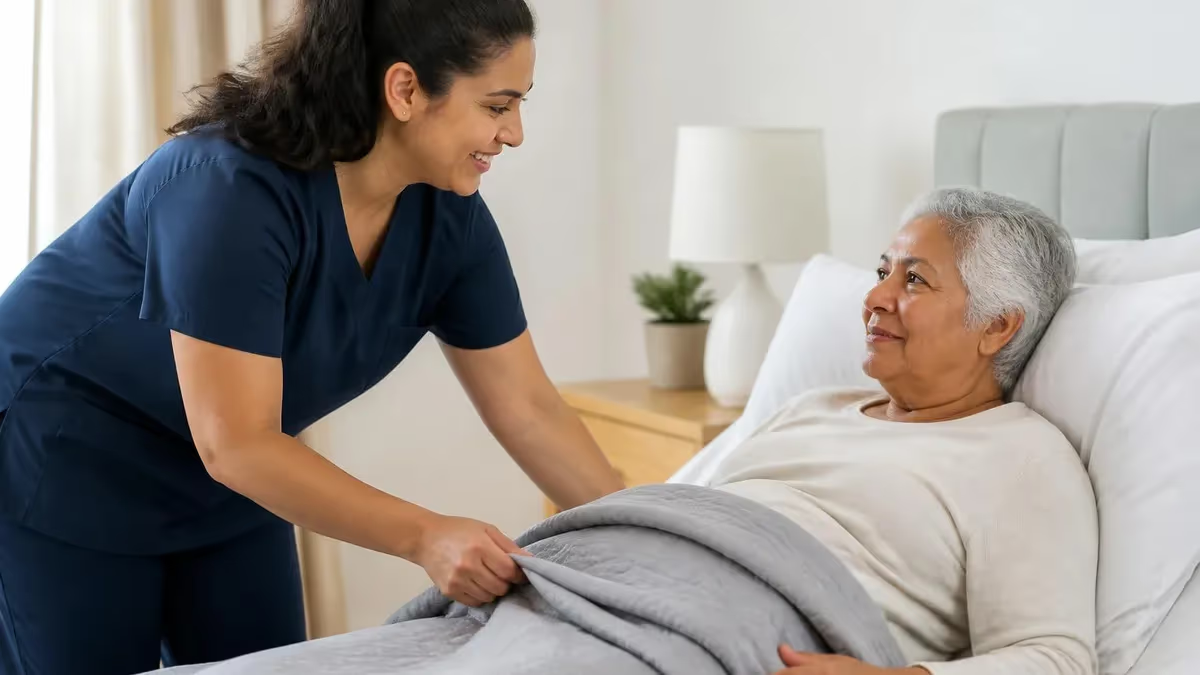
What is PCA? PCA stands for Personal Care Assistant — a healthcare worker who provides direct personal care services to clients in their homes, residential care facilities, or other settings. PCAs help individuals with disabilities, elderly clients, and people recovering from illness or surgery with daily activities they cannot perform independently. The role focuses on supporting client independence and quality of life through hands-on assistance with bathing, dressing, meal preparation, mobility, medication reminders, and various other activities of daily living that the client cannot manage without help due to their physical or cognitive condition.
This guide walks through the Personal Care Assistant role including responsibilities, training requirements, employment settings, compensation, certification options, and the broader home care industry that PCAs serve. Information here applies broadly to PCA positions across the United States with notes where state-specific regulations affect training and scope of practice. Whether you're considering PCA work as a career direction, supporting a family member who needs PCA services, or working in healthcare and curious about this important caregiving role, this overview covers the essentials of the Personal Care Assistant profession.
The PCA workforce has grown substantially as healthcare delivery has shifted toward home and community-based care rather than institutional settings. Aging population demographics, preference for aging in place rather than nursing home placement, and Medicaid waiver programs supporting home-based care have all contributed to PCA workforce growth. The Bureau of Labor Statistics projects continued strong employment growth for personal care aides through 2032 — among the fastest-growing occupations in the country. The combination of demand growth and entry-level accessibility makes PCA work an attractive option for many people entering healthcare careers without formal advanced education requirements.

What is PCA Quick Facts
Definition: Personal Care Assistant — provides direct personal care to clients with disabilities, elderly, or recovering from illness. Setting: Client homes most common; also assisted living, group homes, hospitals, hospice. Training: Varies by state and employer — typically 40-75 hours plus on-job training. Median pay: Approximately $14-$16 per hour with regional variation. Job growth: 22%+ projected through 2032 (much faster than average). Activities: Bathing, dressing, mobility, meals, medication reminders, light housekeeping, companionship. Career path: Entry-level position; supports advancement to CNA, HHA, or further nursing education.
The PCA role involves substantial direct hands-on caregiving work that supports client independence and well-being. Daily activities typically include personal hygiene assistance (bathing, oral care, hair care, toileting), dressing and grooming help, transferring clients between bed, chair, wheelchair, and other surfaces, mobility assistance including walking with support, meal preparation and feeding assistance, light housekeeping (laundry, vacuuming, dishes), medication reminders (PCAs typically don't administer medications themselves but remind clients of scheduled doses), shopping and errands when clients can't go themselves, and companionship through conversation and engagement during the visit.
The relationship between PCAs and clients is often deeply personal. PCAs may visit the same clients regularly for months or years, becoming familiar parts of clients' lives. The work involves substantial trust — clients depend on PCAs for personal care that requires comfort with intimate physical assistance. Communication skills matter substantially as PCAs work directly with clients, family members, and sometimes nursing supervisors coordinating care. The interpersonal dimensions of PCA work are often as important as the physical caregiving tasks for both client well-being and PCA job satisfaction across long-term assignments.
PCA Daily Activities
Bathing, showering, oral care, hair care, nail care, skin care assistance for clients.
Help with clothing changes, makeup application, shaving, getting ready for the day.
Transfers, ambulation support, range-of-motion exercises, fall prevention.
Preparing meals, feeding assistance for those who can't self-feed, dietary compliance.
Reminding clients of scheduled medications. PCAs typically don't administer medications.
Laundry, dishes, vacuuming, basic cleaning to maintain safe living environment.
PCA training requirements vary substantially by state and employer. Some states require formal certification programs (typically 40-75 hours of training covering basic caregiving skills, safety, communication, and various other topics) before working as PCAs. Other states allow PCA work with only on-the-job training provided by employers. Federal regulations require minimum training for PCAs working with Medicaid-funded home care programs. Verify your state's specific requirements through your state Department of Health or comparable agency. Even when not legally required, completing formal training improves competence, employment opportunities, and pay rates for PCAs entering the field.
The PCA work setting most commonly is the client's own home through home care agencies. Clients receive PCA services as part of community-based care supporting independence at home rather than institutional placement. Other PCA settings include assisted living facilities providing daily living assistance to residents, group homes for adults with developmental disabilities, hospice care providing comfort care to terminally ill clients in their homes, and hospital settings providing supplemental care. The home setting predominates — most PCAs travel between client homes throughout the day rather than working at a single facility location.
Compensation for PCAs varies by region, employer type, and experience. Entry-level PCAs typically earn $13-$16 per hour in most markets. Experienced PCAs often earn $15-$20 per hour. Major metropolitan areas with higher cost of living often pay 20-30% more than rural markets. Healthcare benefits, paid time off, and other employment benefits vary substantially across employers — agency PCAs typically receive employer benefits while self-employed PCAs handle their own benefits. Some states have implemented PCA wage standards through Medicaid programs supporting better pay for caregivers in home care settings serving Medicaid beneficiaries.
Eligibility: Typically 18+ years old, ability to read and write English, physical capability for caregiving work, no disqualifying criminal history (background check required). Training: Varies by state — typically 40-75 hours formal training where required. Otherwise on-job training. Application: Apply to home care agencies or directly to clients hiring privately. Documentation: Photo ID, Social Security card, training certificates if applicable. Background check: Required by most employers. Start: Begin caregiving with assigned clients.

The clients PCAs serve include several common populations. Elderly individuals living independently but needing assistance with activities of daily living represent a large portion of PCA caseloads. Adults with developmental disabilities supported in their homes or community settings. People recovering from surgery or illness needing temporary assistance during recovery periods. Adults with chronic conditions like multiple sclerosis, Parkinson's disease, ALS, stroke effects, or various other conditions affecting independence. Children with disabilities sometimes receive PCA services. Each client population has specific needs and care emphases that PCAs adapt their work to support effectively.
For PCAs working through Medicaid-funded programs (waiver programs supporting home and community-based services), specific regulations apply. Plan of care documents specify what services are authorized for each client. Service utilization tracking ensures services match authorized hours. Various reporting requirements support program compliance. The Medicaid framework provides funding for PCA services that many clients couldn't afford privately while creating administrative requirements that affect day-to-day work. Understanding these systems supports effective work in this common PCA employment context.
For private-pay PCA work (clients paying out of pocket rather than through Medicaid or insurance), arrangements are often more flexible but compensation comes from client resources. Hourly rates may be higher than Medicaid-reimbursed rates but client volumes may be lower. Self-employment as private-duty PCA is possible — PCAs working directly for clients rather than through agencies. Self-employment offers higher hourly rates (no agency margin) but requires handling business operations including taxes, insurance, scheduling, and various other administrative tasks. Each employment arrangement has trade-offs around income, stability, benefits, and administrative burden.
PCAs have limited scope of practice — exceeding this scope creates legal and safety problems. PCAs typically can: Help with personal care, mobility, meals, light housekeeping, medication reminders, companionship. PCAs typically cannot: Administer medications (just remind), perform clinical procedures (vital signs taking, wound care), make medical decisions, provide therapy. If clients need: Clinical care, refer to nurse, physician, or appropriate clinical professional. State variations: Some states allow expanded PCA scope with additional training. Verify your state's specific PCA scope to avoid practice violations.
For users considering PCA work as a career direction, several factors warrant honest reflection. The work is physically demanding — lifting, transferring, bending, and various caregiving activities require physical capability. Emotional intelligence helps substantially — caring for vulnerable people requires empathy and patience. Comfort with intimate caregiving (bathing, toileting assistance) is essential. Communication skills support client and family relationships. The work suits people drawn to direct caregiving with personal connection rather than those wanting more clinical or administrative healthcare roles. Match the role to your interests and capabilities honestly before committing to PCA work as a career path.
For users using PCA work as career stepping stone toward nursing or other healthcare careers, several considerations apply. PCA experience provides healthcare exposure helpful for nursing school applications. Time spent working as PCA can count toward various clinical experience requirements. Communication and caregiving skills developed as PCA transfer directly to nursing work. Many nurses began as PCAs before pursuing nursing education. The PCA role provides realistic preview of healthcare work — those who enjoy PCA work often thrive in nursing while those who struggle with PCA work may not be well-suited to nursing either.
For users wanting to maximize their PCA career, several strategies help. Develop specialty expertise in specific client populations (dementia care, developmental disabilities, hospice care) commanding premium pay. Build long-term relationships with stable clients providing reliable income and meaningful work. Pursue additional certifications (CNA, HHA) expanding scope of practice and pay. Consider self-employment with established clientele providing higher hourly rates. Document your skills and experience for advancement opportunities. Each strategy supports career growth from entry-level PCA work toward more senior caregiving roles or eventual transition to nursing or other healthcare careers.
Becoming a PCA Action Steps
- ✓Verify eligibility — age, English proficiency, physical capability, background check
- ✓Research your state's specific PCA training and certification requirements
- ✓Complete required training program if your state requires formal certification
- ✓Apply to home care agencies or directly to clients hiring privately
- ✓Complete employer-required onboarding including any specific training
- ✓Pass any required background checks and reference verifications
- ✓Obtain liability insurance if working independently rather than through agency
- ✓Begin work with assigned clients building experience and relationships
- ✓Pursue continuing education and additional certifications for advancement
- ✓Document client care thoroughly to support quality and any required reporting
For users considering whether to work for an agency versus independently as PCA, several considerations help. Agency employment provides scheduling support, client matching, employer-paid taxes and insurance, and various other administrative support — but at lower hourly rates due to agency margin. Independent contractor work requires self-management of scheduling, taxes, insurance, and various administrative tasks but pays higher hourly rates from clients directly. Self-employment also requires handling business setup including business registration, tax handling, and various other startup tasks. Most PCAs start with agency work and consider independent practice only after building experience and a personal client base.
For PCA work specifically with Medicaid-funded programs, several state-by-state variations matter. Each state's Medicaid program has specific PCA service definitions, training requirements, and rate structures. Some states have implemented consumer-directed programs where clients hire and direct their own PCAs (sometimes including family members) rather than going through agencies. These consumer-directed programs offer flexibility but require clients to handle employer responsibilities. Family member PCAs are increasingly common given workforce shortages and consumer preferences. Understand your specific state's program structure before pursuing PCA work in this context.
For users dealing with the emotional aspects of PCA work, several considerations help. Caring for declining or terminally ill clients can be emotionally challenging — bonds form, then loss occurs. Working with clients who have cognitive impairments (dementia, intellectual disabilities) requires patience and acceptance of limited communication. Support from peers, supervisors, and personal social networks helps process the emotional weight of caregiving. Self-care matters for sustainable career — burnout affects PCAs frequently when emotional demands accumulate without adequate recovery. Build sustainable practices including time off, separation between work and personal life, and emotional processing supports.

For families considering PCA services for loved ones, several practical considerations help. Identify needed services through honest assessment of what daily activities require assistance. Estimate hours needed based on activity assistance versus continuous supervision needs. Investigate funding sources — Medicaid waivers, long-term care insurance, Veterans benefits, private pay. Choose between agency-coordinated care or self-directed hiring. Verify caregiver background checks and references regardless of source. Plan for backup coverage when primary caregivers can't work. Document care expectations and review services regularly to ensure quality. Each consideration helps establish PCA care that genuinely supports your loved one's needs and well-being.
For PCAs developing long-term careers in personal care, several patterns emerge across the field. Many PCAs spend entire careers in personal care work building deep relationships with stable clients over years or decades. Others use PCA work as bridge to nursing or other healthcare careers. Some advance to supervisory positions in home care agencies.
Some specialize in specific populations (dementia, developmental disabilities, hospice) building expertise. Some transition to private practice. The career flexibility supports diverse paths matching individual interests and circumstances. The fundamental satisfaction of meaningful caregiving work sustains careers regardless of specific path chosen within the broader personal care field.
For users wanting to understand the broader caregiving workforce landscape, several trends matter. Workforce shortages affect home care substantially — agencies frequently cannot find enough qualified caregivers to serve all clients needing services. The shortage creates job security for PCAs but also frustration when client demands exceed capacity. Compensation pressure has increased some pay rates in recent years though wages remain modest in many markets. Immigration plays substantial role — many PCAs are immigrants providing essential caregiving services across many communities. Policy debates about caregiver wages, working conditions, and immigration affect the workforce in ongoing ways throughout each year.
The bottom line on PCAs: Personal Care Assistants provide essential direct care services supporting client independence and quality of life. The role is entry-level accessible without formal advanced education while offering meaningful work with people. Compensation is modest but stable with strong projected job growth.
The work suits people drawn to caregiving with comfort handling intimate personal care tasks. Career paths support advancement to nursing assistant, home health aide, or further nursing education for those wanting career growth in healthcare. For those who match the role's demands, PCA work provides reliable employment doing important work that genuinely matters in clients' daily lives.
PCA Career Quick Facts
PCA Client Populations
Older adults living at home but needing daily living assistance. Largest population.
Adults with developmental disabilities receiving community-based supports.
Temporary assistance during recovery from surgery or illness.
Adults with MS, Parkinson's, ALS, stroke effects requiring ongoing assistance.
Terminally ill clients receiving comfort care at home.
Some PCA programs serve children with significant medical or developmental needs.
For users transitioning from family caregiving to professional PCA work, several considerations apply. Family caregivers often have substantial caregiving experience that doesn't formally count toward PCA training requirements. Professional caregiving differs from family caregiving in important ways — formal documentation, scope of practice limits, professional boundaries, agency oversight. The transition typically requires completing formal training despite practical experience. Some states have created pathways recognizing family caregiver experience for PCA hiring. Family members serving as paid PCAs through Medicaid waivers represent another pathway combining family relationships with formal employment.
For users dealing with the unique challenges of PCA work in rural areas, several factors matter. Travel time between clients can substantially affect total billable hours and effective hourly compensation. Client populations may be limited compared to urban areas. Specialty clients (dementia care, complex medical needs) may be less common. Continuing education opportunities may be more limited. Networking with other PCAs may require more deliberate effort. Compensation may be lower than urban markets even when adjusted for cost of living. Each rural challenge has potential workarounds but warrants realistic expectation-setting before committing to rural PCA careers.
For users dealing with the workplace safety challenges of PCA work, several considerations apply. Lifting and transferring clients can cause injury without proper technique — formal training in proper body mechanics matters. Working alone in client homes creates safety considerations — communication with supervisors and emergency procedures help. Some clients have aggressive behaviors due to dementia or other conditions — de-escalation training and support help. Hazardous environments occasionally arise (unsafe homes, animals, weather conditions). Personal protective equipment and infection control matter especially during disease outbreaks. Each safety consideration warrants attention from individual PCAs and supportive employers prioritizing caregiver safety.
Looking forward, the PCA workforce will continue evolving with healthcare delivery trends. Technology integration including remote monitoring, electronic visit verification, and various other tools changes daily work. Compensation pressures continue with workforce shortages driving wage increases in some markets. Professional development pathways expand offering advancement opportunities for committed caregivers. Immigration policy affects workforce composition substantially. Healthcare delivery shifts continue favoring home care over institutional settings supporting continued employment growth. Stay engaged with industry changes through agency communications, professional associations, and ongoing learning across your PCA career.
PCA Career: Pros and Cons
- +Entry-level accessible without formal degree
- +Strong projected job growth (22%+ through 2032)
- +Meaningful direct caregiving with personal relationships
- +Career stepping stone toward nursing or other healthcare
- +Multiple work settings and employment models
- −Modest compensation ($13-$20/hour typical)
- −Physically demanding work with injury risk
- −Emotional demands from caring for vulnerable people
- −Variable schedules and travel between clients
- −Limited scope of practice constraints
Pros and Cons at a Glance
| Pros | Cons |
|---|---|
| Entry-level accessible without formal degree | Physically demanding work with injury risk |
| Meaningful direct caregiving with personal relationships | Emotional demands from caring for vulnerable people |
| Career stepping stone toward nursing or other healthcare | Variable schedules and travel between clients |
| Multiple work settings and employment models | Limited scope of practice constraints |
Sample Personal Care Assistant Practice Questions
Try these questions from our free Personal Care Assistant practice tests. The correct answer and an explanation follow each question.
In addition to providing personal care, what is another key role of a PCA?
- A. Performing surgical procedures
- B. Providing companionship and emotional support
- C. Conducting financial audits
- D. Writing medical prescriptions
Answer: B. Providing companionship and emotional support
In addition to providing physical assistance, PCAs play a crucial role in addressing the emotional and social needs of their clients. Many individuals receiving care, particularly the elderly or those with disabilities, may experience loneliness or social isolation. Offering companionship, engaging in conversation, and providing emotional support significantly enhances the client's mental well-being, reduces feelings of isolation, and contributes to a higher quality of life.
A PCA accidentally splashes blood on their eyes while performing personal care. What is the first action?
- A. Notify the supervisor and complete an incident report
- B. Flush the eyes with clean running water or saline for at least 15 minutes immediately
- C. Apply antibiotic eye drops and monitor for redness
- D. Cover the eyes and seek medical attention the next morning
Answer: B. Flush the eyes with clean running water or saline for at least 15 minutes immediately
Immediate flushing of the eyes for at least 15 minutes is the first step after a mucous membrane blood exposure.
What is the importance of Personal Hygiene & Grooming in patient care?
- A. It is irrelevant to patient care.
- B. It is essential for maintaining patient health and comfort.
- C. It is only necessary for elderly patients.
- D. It only relates to personal preference.
Answer: B. It is essential for maintaining patient health and comfort.
Personal hygiene and grooming are fundamental aspects of patient care that directly impact physical health by preventing infections, skin breakdown, and discomfort. Beyond physical benefits, these practices significantly contribute to a patient's comfort, dignity, and psychological well-being. Neglecting hygiene can lead to discomfort, odor, and a diminished sense of self-worth, affecting their overall quality of life.
What should a PCA do if a patient refuses care but the care is essential for their well-being?
- A. Force the patient to accept the care.
- B. Respect the patient’s decision and inform the supervisor or healthcare provider.
- C. Ignore the patient’s refusal and proceed with the care.
- D. Threaten the patient with consequences if they refuse.
Answer: B. Respect the patient’s decision and inform the supervisor or healthcare provider.
Even if care is essential, a PCA must respect a patient's right to refuse treatment. The correct action is to acknowledge the refusal, document it, and immediately inform the supervisor or healthcare provider. This allows the medical team to assess the situation, understand the patient's concerns, and explore alternative solutions while upholding patient autonomy.
PCA Questions and Answers
About the Author

Registered Nurse & Healthcare Educator
Johns Hopkins University School of NursingDr. Sarah Mitchell is a board-certified registered nurse with over 15 years of clinical and academic experience. She completed her PhD in Nursing Science at Johns Hopkins University and has taught NCLEX preparation and clinical skills courses for nursing students across the United States. Her research focuses on evidence-based exam preparation strategies for healthcare certification candidates.