
PCA Training: Requirements, Topics, Cost, and Career Pathways 2026 October
PCA training guide: 🏆 state-by-state requirements, training topics, cost, online vs in-person options, employer-sponsored programs, and career progression.
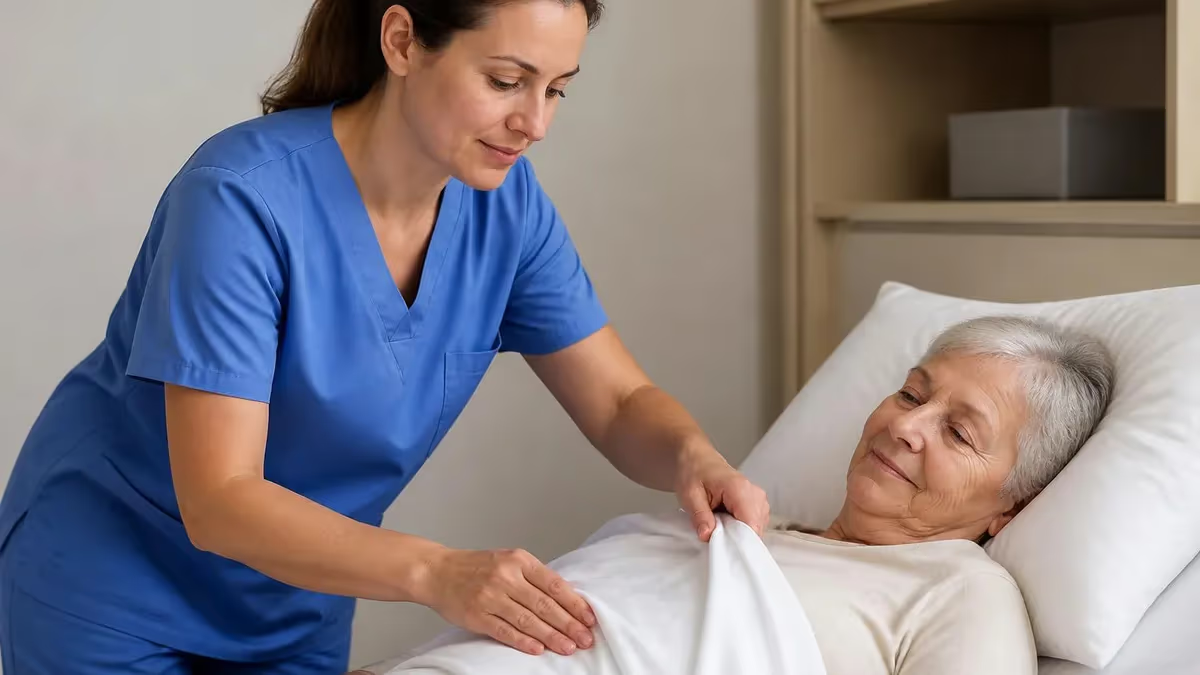
PCA Training: What It Takes to Become a Personal Care Assistant
Personal Care Assistants (PCAs) provide non-medical personal care services to elderly, disabled, or recovering individuals in homes, assisted living facilities, and group homes. PCA training prepares workers to safely and effectively help clients with activities of daily living (ADLs) — bathing, dressing, toileting, transferring, eating, light housekeeping, meal preparation, transportation, and companionship.
PCA work is among the fastest-growing healthcare-adjacent roles in the United States, driven by the aging population and the growth of home-based care as an alternative to institutional care. Training requirements vary substantially by state and employer because no federal training mandate exists for PCAs working in non-Medicaid settings.
PCA training requirements depend on who pays for the care services. Medicaid-funded Personal Care Services through Home and Community-Based Services (HCBS) waiver programs typically require state-specific PCA training — ranging from 40 to 75 hours depending on the state. Minnesota requires 75 hours; Massachusetts requires 60+ hours; many other states have specific PCA training mandates for Medicaid-funded work.
Private pay PCA work (where families pay directly without Medicaid involvement) typically has lower or no specific training requirements — employers set their own training standards. Knowing whether you will work for Medicaid clients, private pay clients, or both shapes your training pathway substantially.
PCA training covers a defined set of topics that prepare workers for safe and competent client care. HIPAA privacy compliance, infection control, body mechanics for safe lifting and transferring, recognising and reporting abuse and neglect, basic first aid, CPR, communication with clients and families, dementia care basics, food preparation and feeding assistance, bathing and personal hygiene techniques, and medication assistance limits all appear in PCA training curricula.
The breadth covers the major areas where PCAs interact with clients and where mistakes can cause harm. The PCA Certification page covers the credentialing aspects that follow training completion in some states and contexts.
The PCA workforce has grown substantially as the population ages and as policy shifts have favoured home and community-based care over institutional care for many disabled and elderly individuals. Medicaid spending on Personal Care Services and Home and Community-Based Services has grown to be among the largest categories of long-term care funding. The growth produces ongoing demand for trained PCAs across states. New PCA entrants find substantial employment opportunities across home care agencies, individual provider arrangements, and emerging agency models.
PCA Training Quick Reference
Role: Personal Care Assistant providing non-medical care for ADLs. Training hours: 40-75 hours typical for Medicaid-funded work; varies for private pay. Federal mandate: No federal PCA training requirement. State-specific examples: Minnesota 75 hours; Massachusetts 60+ hours. Topics: HIPAA, infection control, body mechanics, ADLs, dementia care, communication. CPR: Typically required (BLS or Heartsaver). Cost: $50-$500 typical; often free through employer or workforce development. Career pathway: PCA → CNA → LPN → RN progression common.
PCA vs CNA: Understanding the Difference
PCAs and Certified Nursing Assistants (CNAs) often work in similar settings with overlapping client populations, but their roles differ in important ways. PCAs provide primarily non-medical assistance with daily activities; CNAs provide clinical care including vital signs monitoring, medical observations, and basic medical procedures under nursing supervision. CNA scope of practice is broader and includes medical tasks that PCAs cannot perform. PCA training is typically 40-75 hours; CNA training is typically 75-150+ hours depending on the state. CNA certification requires passing state competency exam; PCA training completion varies in formality of credentialing depending on state and employer.
Salary differences reflect the training and scope differences. PCAs typically earn $13-$17 per hour ($27,000-$35,000 annually for full-time work). CNAs earn $15-$22 per hour ($31,000-$45,000 annually). The differential is modest but real. Many PCAs use the role as entry into healthcare with intent to upgrade to CNA after gaining experience. The career progression PCA → CNA → LPN → RN is well-traveled, with each step adding scope of practice, training requirements, and pay. Workers who start as PCAs and gradually advance often build substantial healthcare careers from this entry point.
Choosing between PCA and CNA training depends on career goals and current circumstances. PCA training is shorter, often free through employer sponsorship, and allows quick entry into paid work. CNA training is longer but produces higher pay immediately and opens hospital and skilled nursing employment that PCA work does not access directly. Some workers cycle through both — start as PCA for immediate income, then complete CNA training while working part-time as a PCA, then transition to higher-paying CNA work. The flexibility of healthcare career paths allows multiple entry points based on individual circumstances.
The role overlap between PCA and CNA in some settings is substantial. Both work directly with clients on daily activities. Both observe clients and report concerns. Both work under supervision of licensed nurses or care coordinators. The distinction matters most in healthcare settings (hospitals, skilled nursing facilities) that specifically require CNA credentials for clinical care. In home care settings, the PCA versus CNA distinction is sometimes less rigid — many home care clients receive similar care from either credential.

PCA Training Topics: What You'll Learn
Health Insurance Portability and Accountability Act covers client privacy and information protection. PCAs see substantial client personal information during care work. HIPAA training covers what information must be kept private, how to discuss client situations without violating privacy, when information can be shared (medical emergencies, law enforcement requirements), and consequences of violations. Foundational topic appearing in all PCA training programs.
Hand hygiene (proper handwashing technique, when to wash, alcohol-based hand sanitiser use), Personal Protective Equipment (gloves, masks, gowns) selection and proper use, isolation precautions for specific infections, blood-borne pathogen exposure prevention and post-exposure procedures. Particularly important since 2020 with increased emphasis on infection prevention in care settings. Foundational safety topic.
Lifting techniques that protect both the PCA and the client. Proper posture, leg-power versus back-power lifting, use of transfer belts, slide boards, hoyer lifts when needed. Two-person transfer protocols for heavier or less mobile clients. Most PCA back injuries result from improper transfer technique; proper training substantially reduces injury rates. Hands-on practice essential — book learning alone produces poor technique.
Bathing (in-bed bath, shower assistance, perineal care, hair washing), dressing (adaptive clothing, sequence with weak side first, dignity preservation), toileting (commode use, brief changing, perineal care), transferring (bed to chair, chair to bed, chair to commode), feeding (positioning, pacing, choking prevention, special diets). The technical heart of PCA work. Extensive practice during training builds the routine that makes ADL care safe and dignified.
Communicating with clients (active listening, respectful language, age-appropriate communication for elderly versus disabled adults versus children), communicating with families (reporting observations, addressing concerns), communicating with healthcare team (when to escalate, how to document, professional language). Soft skills that distinguish good PCAs from technically competent but interpersonally weak workers. Increasingly emphasised in modern PCA training.
PCAs often see clients in vulnerable circumstances and may witness or recognise abuse or neglect by family members or other caregivers. Training covers types of abuse (physical, emotional, financial, sexual, neglect), recognising signs and patterns, mandatory reporting requirements, how to make reports through Adult Protective Services or appropriate authorities. Legal and ethical training that all PCAs need regardless of work setting.
State-Specific Training Requirements
State PCA training requirements vary substantially because no federal mandate exists. Minnesota's PCA program requires 75 hours of training for PCAs working in the state's Personal Care Assistance program. The training covers all the standard topics plus Minnesota-specific elements like the state's Department of Human Services rules and Vulnerable Adult Reporting Act. Workers must complete training before billing Medicaid for PCA services. Massachusetts requires 60+ hours for PCAs working through the state's Personal Care Attendant program with specific topics mandated by state regulation.
Many states have less specific requirements. California's Personal Care Services program has training expectations but flexibility in delivery — agencies and individual providers can develop training meeting general standards. Other states like Texas and Florida have minimal state-mandated PCA training, leaving employers to set their own training. Looking up your specific state's Department of Health Services or equivalent agency reveals your state's actual requirements. The variation reflects different state choices about how to balance training standards with workforce availability.
The substantial state variation makes generalisation difficult. A worker certified through Minnesota's 75-hour program would generally satisfy training requirements for PCA work in most other states. A worker with only employer-provided training without state-recognised hours may not satisfy training requirements in states with specific mandates. Workers planning to relocate or work across state lines should verify their training will transfer or whether additional training is needed for the destination state. Most home care agencies guide new hires through any additional training required for their state.
State training requirements are sometimes specified in administrative rules rather than statute, which means requirements can change through agency rule-making without legislative action. Workers and employers should periodically check current rules rather than relying on multi-year-old information. State websites typically maintain current training requirement documentation. Industry associations like the National Association for Home Care & Hospice publish summaries of state requirements that sometimes simplify research across multiple states.
PCA Training Pathways
Most common pathway for new PCAs. Home care agencies, assisted living facilities, and other employers provide training to new hires at no cost to the employee. Training meets state requirements and prepares workers for the specific employer's care protocols. The arrangement benefits employers (consistent training across workforce) and employees (free training plus paid employment). Apply for PCA jobs and accept the training offered as part of onboarding. Most cost-effective entry path.
CPR Certification Requirement
CPR certification is typically required for PCAs regardless of state or employer. American Heart Association Basic Life Support (BLS) for Healthcare Providers is the gold standard, providing comprehensive CPR plus AED use plus choking response training. American Red Cross CPR/AED certification is also widely accepted. Heartsaver (also AHA) is the basic CPR certification suitable for many non-healthcare workers. Certification typically lasts 2 years before renewal. Cost runs $30-$100 typical depending on provider and format. Many employers reimburse certification costs as part of training investment.
The CPR training itself takes 4-8 hours including instruction and hands-on practice. Many community organisations offer CPR training including the American Red Cross local chapters, community colleges, hospital community education programs, and private training companies. Online-only CPR certifications without hands-on practical components are not generally accepted as full CPR certification — most legitimate certifications require in-person skill demonstration. Confirming your specific employer's CPR requirement and accepted certification programs before paying for training prevents wasted effort.
Some employers offer CPR certification as part of onboarding training package. Asking before paying for external CPR certification reveals whether the employer covers the cost. The standard 2-year certification cycle means most workers need to renew during their career. Setting calendar reminders 60-90 days before expiration prevents lapses that could affect employment eligibility. Lapsed certifications require retaking the full course rather than just the renewal version.

PCAs cannot perform clinical medical procedures that nurses, CNAs, or physicians provide. PCAs cannot inject medications, perform sterile procedures, dress complex wounds, monitor IV lines, change tracheostomy tubes, perform suctioning, administer oxygen beyond basic setup, or perform other medical procedures requiring professional licensure. PCAs can typically assist with self-administered medication (handing pills to clients who self-administer) but cannot administer medications directly. The scope of practice limits matter both for client safety and for the PCA's legal protection — exceeding scope can produce harm to clients plus liability and potential legal consequences for the PCA. Knowing exactly what is and is not within your scope before performing any task with clients is essential. When in doubt, consult with the supervising nurse or care coordinator rather than performing tasks that may exceed your scope. State practice guidelines vary somewhat; checking your specific state's PCA scope before working ensures compliance.
Cost of PCA Training
PCA training costs vary substantially depending on pathway. Employer-sponsored training is typically free to the employee — the employer absorbs the cost as workforce investment. Many home care agencies see this investment as essential for staffing reliability. Workforce development programs through American Job Centers are typically free for eligible participants, sometimes with stipends during training. Community college and vocational school programs charge $200-$800 typical tuition. Private training schools charge $300-$800. Online programs (combined with required in-person practical) typically $100-$400.
The financial calculation favours employer-sponsored training when possible. The combination of free training plus paid employment from day one produces faster total income than paying for training upfront and then seeking employment. The trade-off is that employer training ties you to that specific employer's culture and approaches during the formative training period. Some workers prefer the independence of self-funded training that produces credentials usable across multiple employers. Both paths produce competent PCAs; the choice depends on individual circumstances and preferences.
Tax deductibility of training costs varies. Workers who pay for training and later work as PCAs may be eligible for education-related tax benefits depending on their tax situation. Job-related education expenses sometimes qualify for deductions. Consulting with a tax professional or using IRS resources helps identify any available tax benefits. The total cost calculation for PCA training should include any tax benefits that may reduce the effective out-of-pocket cost.
PCA Training Decision Checklist
- ✓Identify your state's PCA training requirements (varies substantially)
- ✓Decide between Medicaid-funded versus private pay work pathways
- ✓Check American Job Center for free workforce development programs
- ✓Apply for PCA positions with home care agencies that train new hires
- ✓Compare community college, vocational school, and private training options
- ✓Verify online programs include accepted in-person practical components
- ✓Plan for CPR certification (BLS or Heartsaver) separately
- ✓Confirm program meets your specific state's requirements before enrolling
- ✓Budget for total cost including books, supplies, transportation
- ✓Apply for federal student aid if pursuing accredited college program
- ✓Schedule training around current job obligations realistically
Online vs In-Person PCA Training
Most state PCA training requirements include in-person hands-on practical components that pure online training cannot satisfy. Online programs typically cover the didactic (theory) portion — HIPAA, communication, abuse and neglect awareness, basic concepts of various care topics. The practical skills — actually performing transfers, bathing techniques, vital signs measurement, infection control practices — require in-person supervised practice with feedback. Hybrid programs combining online didactic with in-person skill labs satisfy state requirements while providing scheduling flexibility for the theory component.
For workers preferring or requiring online options, several legitimate hybrid programs exist. The structure typically: complete online modules covering theory at your own pace, attend in-person skill lab sessions (typically 2-3 days totaling 16-24 hours) to demonstrate practical competencies, complete program with combined documentation. The online portion takes 20-40 hours depending on program; the in-person portion 16-24 hours. Total time investment is similar to fully in-person programs but distributed differently. Workers with daytime work obligations sometimes find this combination more practical than residential programs requiring continuous attendance.
Quality of online didactic content varies substantially across programs. Well-designed online programs include interactive elements, scenario-based learning, video demonstrations, and assessments that confirm understanding. Poorly designed programs are essentially reading materials with quizzes. Reviewing program samples or asking former students about their experience before enrolling helps identify quality. The accreditation or approval status by your state agency is the most reliable quality indicator.
Career Progression from PCA
PCA work serves as entry to broader healthcare careers for many workers. The classic progression: PCA → CNA → LPN → RN, each step adding scope of practice, training requirements, and pay. PCA work provides immediate paid employment in healthcare while building exposure to the field.
After 1-2 years as a PCA, many workers complete CNA training (typically 75-150 hours plus state exam) to upgrade to CNA work with higher pay. After several years as a CNA, some workers complete LPN programs (12-18 months) for further advancement. The progression to RN typically requires associate or bachelor's degree nursing programs (2-4 years). Each step builds on prior credentials and experience.
The PCA experience itself provides career foundation beyond just credential progression. Understanding client needs, family dynamics, healthcare team coordination, documentation, and infection control all transfer to subsequent roles. PCAs who excel in client care and demonstrate professionalism often have stronger career trajectories than direct-entry CNAs or LPNs who lack the client-focused foundation. The career story of starting as PCA and advancing through nursing credentials is well-respected in healthcare hiring. The PCA Jobs guide covers employment patterns that support the career progression.
Employer support for career progression varies. Some home care agencies actively support PCA progression to CNA through scheduling flexibility, tuition reimbursement, or in-house CNA training programs. Others treat PCA work as a separate workforce from CNA without specific advancement support. Asking about career advancement support during job application produces clarity about expectations. Agencies investing in workforce advancement typically have stronger retention and produce better client outcomes through career-committed staff.

PCA Training Numbers
Key Facts at a Glance
| Item | Value | Details |
|---|---|---|
| Hours typical state PCA training | 40-75 | |
| Cost range when self-paying | $50-$500 | |
| CPR certification validity | 2 years |
Common PCA Training Mistakes
Many home care agencies provide training free to new hires. Paying for external training first when employer-sponsored training would have been free wastes money. Apply for PCA positions and ask about training as part of employment before committing to paid external training. The employer-sponsored path is typically the most cost-effective entry into PCA work.
Pure online PCA training typically does not satisfy state-mandated hands-on practical components. Verify your state's requirements and the program's recognition before paying for online training. Hybrid programs combining online didactic with in-person practical typically work; online-only typically does not. The verification step prevents discovering after completing training that the state does not accept it.
PCAs cannot perform many medical procedures that clients may ask them to perform. Knowing your scope limits before working with clients prevents performing inappropriate tasks that risk client safety and your legal protection. Saying "no, that's outside my scope, let me consult with the nurse" is professional rather than refusal. Clients and families appreciate competent scope awareness more than reluctant overreach.
PCA work involves substantial physical effort — transfers, bathing, walking with clients, standing for extended periods. Workers underestimating the physical demands sometimes struggle with the work and develop back or shoulder problems. Proper body mechanics training mitigates injury risk; ongoing physical conditioning supports sustainable career. The work is more physically demanding than many entry-level office or retail jobs.
What to Expect From PCA Training
PCA training typically combines classroom or online didactic learning with hands-on practical skills practice. The classroom portion covers theory, regulations, policies, and concepts. The practical portion involves practicing actual care techniques on mannequins, fellow trainees, and sometimes actual clients under supervision. Trainees learn through a progression: instructor demonstration, supervised practice, independent practice, evaluation. Each ADL skill (bathing, transferring, feeding, etc.) gets dedicated practice until trainees can perform it competently. The combination of theory and practice produces well-prepared graduates.
Training assessment includes both written tests on theory and practical demonstration of skills. Written tests cover concepts like HIPAA rules, infection control principles, body mechanics theory, and care concepts. Practical demonstrations cover hands-on competencies. Both must be passed for training completion. Most trainees pass on first attempt with adequate engagement during training. Failed practical demonstrations typically allow additional practice and retake; failed written tests similarly allow retake after additional study. Programs vary in pass standards and remediation processes.
The cohort experience during PCA training varies between programs. In-person programs build peer relationships among trainees that sometimes continue professionally. Online programs typically have less peer interaction unless deliberately structured for it. The peer relationships matter for ongoing professional support — fellow PCAs often help each other through workplace challenges, refer good employers, and share career advancement information. Programs that build strong cohort connections produce additional professional benefits beyond the formal training content.
Pursuing PCA Training: Honest Pros and Cons
- +Quick entry to healthcare-adjacent work (40-75 hours of training)
- +Often free through employer-sponsored programs
- +Strong demand across regions for home care workers
- +Flexible schedules common (part-time, full-time, weekend options)
- +Foundation for healthcare career progression (CNA, LPN, RN)
- +Direct positive impact on vulnerable individuals lives
- +Lower training cost than nursing or other healthcare credentials
- −Modest pay ($13-$17 hourly typical) for substantial work
- −Physical demands include transfers, lifting, standing
- −State training requirements vary substantially producing portability challenges
- −Scope of practice limits constrain advancement without further credentials
- −Emotional demands of caring for vulnerable clients can be challenging
- −Working alone in client homes without immediate support
- −Career ceiling at PCA level without progression to CNA or higher
Sample Personal Care Assistant Practice Questions
Try these questions from our free Personal Care Assistant practice tests. The correct answer and an explanation follow each question.
Which of the following continuing education topics is most relevant to maintaining PCA qualifications over time?
- A. Advanced surgical techniques
- B. Updates on infection control and client safety protocols
- C. Medical diagnosis procedures
- D. Pharmacological drug interactions for prescribers
Answer: B. Updates on infection control and client safety protocols
Ongoing education in infection control and safety directly supports the PCA's core duties and is typically required for certification renewal.
A client with dementia repeatedly asks the same question. The BEST response each time is to:
- A. Remind them they already asked that question
- B. Answer calmly and patiently each time as if it is the first time
- C. Redirect them to an activity to stop the repetition
- D. Contact the family to address the behavior
Answer: B. Answer calmly and patiently each time as if it is the first time
Clients with dementia cannot retain new information; consistent, patient responses reduce anxiety and maintain dignity.
A recently widowed client tells the PCA they feel empty and don't see the point in doing anything. The PCA should:
- A. Tell them to 'stay strong' and focus on moving forward
- B. Acknowledge their grief and report the comments to a supervisor
- C. Ignore the comment and focus only on physical care tasks
- D. Suggest the client start meeting new people right away
Answer: B. Acknowledge their grief and report the comments to a supervisor
Statements reflecting hopelessness after a loss can signal depression or suicidal ideation and must be taken seriously and reported.
Which document must a PCA candidate typically submit to verify they can legally work in the United States?
- A. Proof of citizenship only
- B. Form I-9 employment eligibility verification
- C. Social Security card alone
- D. State-issued driver's license only
Answer: B. Form I-9 employment eligibility verification
Form I-9 is required by federal law to verify identity and employment authorization for all new hires, including PCAs.
PCA Questions and Answers
About the Author

Registered Nurse & Healthcare Educator
Johns Hopkins University School of NursingDr. Sarah Mitchell is a board-certified registered nurse with over 15 years of clinical and academic experience. She completed her PhD in Nursing Science at Johns Hopkins University and has taught NCLEX preparation and clinical skills courses for nursing students across the United States. Her research focuses on evidence-based exam preparation strategies for healthcare certification candidates.