
Personal Care Assistant Duties: Complete Guide to PCA Daily Responsibilities, Tasks, and Career Expectations in 2026 October
Personal care assistant duties explained: ✅ daily tasks, hygiene care, medication reminders, mobility help, and PCA responsibilities for 2026 October careers.
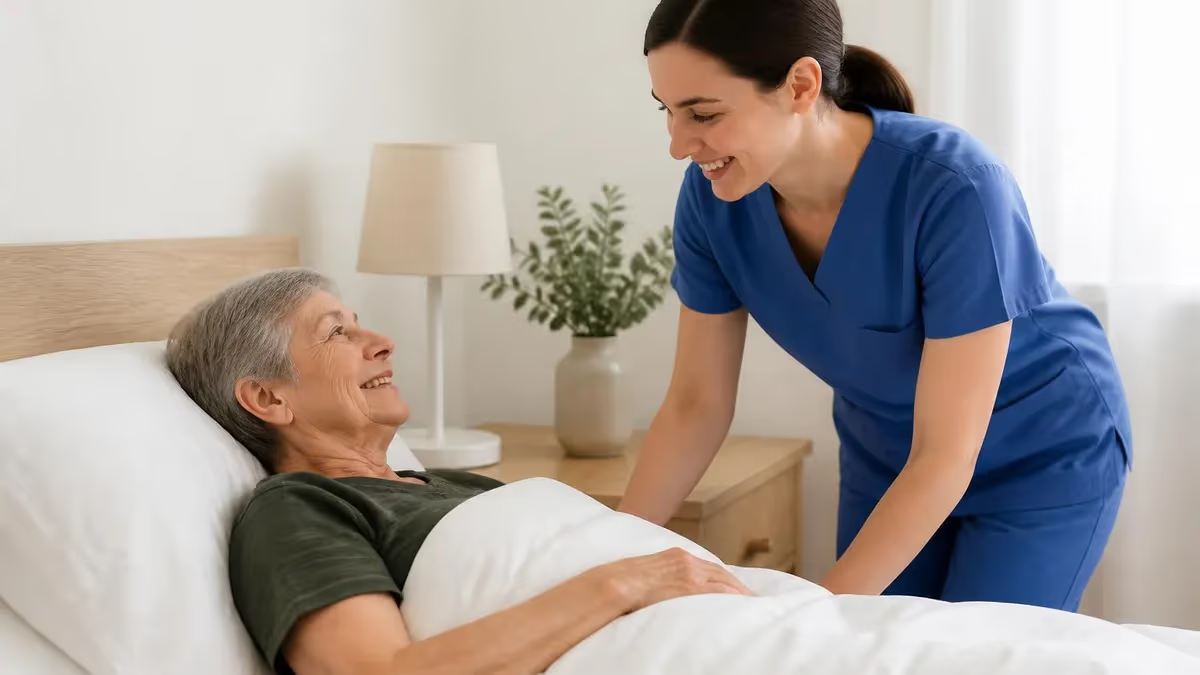
Understanding personal care assistant duties is the first step toward succeeding in one of the fastest-growing healthcare careers in the United States. A personal care assistant, often shortened to PCA, supports clients who cannot fully manage daily activities on their own due to age, disability, chronic illness, or recovery from surgery. These professionals work in private homes, assisted living communities, group homes, and hospitals, providing the kind of consistent hands-on care that allows clients to maintain independence and dignity.
The role blends practical caregiving with emotional support. On any given shift, a PCA might help a client bathe, prepare a balanced meal, remind them to take medication, document vital signs, and then sit and talk with them about their grandchildren. The work is rarely glamorous, but it is profoundly meaningful, and demand continues to climb as the U.S. population ages and more families seek in-home alternatives to nursing facility placement.
Personal care assistant duties differ from those of a Certified Nursing Assistant or Home Health Aide in important ways. While CNAs perform more clinical tasks under nursing supervision, PCAs focus primarily on non-medical support — though many states do allow trained PCAs to assist with medication reminders, basic wound observation, and limited skilled tasks under a registered nurse's delegation. Understanding where your scope of practice begins and ends is essential, and the boundaries vary considerably by state and employer.
This guide breaks down every category of PCA responsibility in detail, from morning hygiene routines to end-of-shift documentation. We cover physical caregiving tasks, household support, safety monitoring, communication with care teams, and the soft skills that separate good PCAs from great ones. If you're studying for a state competency exam or preparing for your first interview, this is the foundation you need. For broader context on the role, see our overview of pca medical training and certification pathways.
The pca meaning in healthcare contexts is always the same — Personal Care Assistant — but the precise job description varies. In Minnesota, for example, PCAs follow a formal PCA Provider program with specific billable tasks. In Massachusetts, the MassHealth PCA Program emphasizes consumer-directed care where the client itself supervises the worker. In Texas, attendants under the Community Attendant Services program operate under different rules entirely. Knowing what is a pca in your specific state is non-negotiable.
Beyond clinical and household tasks, personal care assistants frequently become trusted companions. Many clients see their PCA more often than they see family members, and that relationship becomes a lifeline. Loneliness is now recognized as a serious public health risk for older adults, and the simple act of showing up consistently, listening attentively, and treating each person with respect carries enormous value — even when it isn't listed on a task sheet.
Throughout this article, we'll use real scenarios, state-specific examples, and practical checklists drawn from actual PCA training programs. Whether you're brand new to caregiving or you've been doing this work informally for years, you'll find concrete information to sharpen your practice, protect your clients, and advance your career.
Personal Care Assistant Duties by the Numbers

Core Categories of Personal Care Assistant Duties
Direct hands-on assistance with bathing, dressing, grooming, toileting, transferring, and eating. These are the most personal and physically demanding tasks, requiring sensitivity to dignity and safety at every step.
Support with running a household — meal preparation, light housekeeping, laundry, grocery shopping, transportation to appointments, and managing simple finances or correspondence under client direction.
Medication reminders, vital sign monitoring, observing changes in condition, assisting with prescribed exercises, and reporting concerns to the supervising nurse or case manager promptly and accurately.
Conversation, reading aloud, accompanying clients to social events, supporting mental stimulation through games or hobbies, and providing the consistent presence that combats isolation in homebound clients.
Fall prevention, infection control, emergency response, maintaining a clean and hazard-free environment, and documenting incidents or near-misses according to agency policy and state regulations.
Personal hygiene assistance sits at the heart of personal care assistant duties. For many clients, the inability to bathe or use the toilet independently is the very reason they need a PCA. These tasks demand both technical skill and deep respect — the way you knock on a bathroom door, drape a towel, or warm a washcloth communicates volumes about how you see the person in your care. Approach every hygiene task as if it were being performed on your own grandparent.
Bathing assistance ranges from setting up supplies and providing standby support to performing a complete bed bath for a bedbound client. Always check water temperature with your wrist or elbow before pouring, work from cleanest to dirtiest areas, keep the client covered except for the section being washed, and inspect the skin for redness, breakdown, bruising, or rashes during the process. Reporting skin changes early prevents pressure ulcers, which are among the most common preventable complications in home care.
Dressing and grooming go beyond putting on clothes. Help the client choose weather-appropriate, comfortable garments that reflect their personal style — never default to whatever is easiest for you. For clients with weakness on one side, dress the affected side first and undress it last. Comb or brush hair the way the client prefers, assist with shaving carefully (electric razors are safer for clients on blood thinners), and help with denture care, oral hygiene, and basic nail filing where permitted by your state's scope.
Toileting is perhaps the most sensitive area of personal care assistant work. Whether you are assisting a client to the bathroom, helping with a bedside commode, emptying a urinal, or providing perineal care after an incontinence episode, the priorities are dignity, infection prevention, and observation. Note frequency, amount, color, and any unusual odor or blood, and document changes that may signal a urinary tract infection or dehydration.
Transferring and mobility assistance protect both the client and you. Use a transfer belt whenever indicated, never lift more than is safe, lock wheelchair brakes, position your feet shoulder-width apart, lift with your legs rather than your back, and verbally cue the client through each step. If a mechanical lift is required, never attempt the transfer alone unless you have been trained on that specific device. A single careless transfer can cause a fall, a fracture, or a career-ending back injury.
Eating assistance varies from cutting food into manageable pieces to full hand-feeding. Always position the client upright at 90 degrees, offer small bites, alternate solids and liquids, watch for swallowing difficulty, and never rush. Pocketing food in the cheeks, coughing during meals, or a wet-sounding voice afterward can all indicate dysphagia and should be reported. For a closer look at the daily reality of these tasks, our guide on what does a pca church communities and elderly congregants need helps illustrate the breadth of real-world settings.
Documentation closes every personal care interaction. Whether you use a paper task sheet or a smartphone-based electronic visit verification system, record exactly what was completed, the client's tolerance, any refusals, any observations of skin or mood, and the time you began and ended each task. Sloppy documentation is the single most common reason PCAs face disciplinary action — even when the actual care was excellent.

PCA Practice Test Questions
Prepare for the PCA - Personal Care Assistant exam with our free practice test modules. Each quiz covers key topics to help you pass on your first try.
PCA Duties and Responsibilities
Free PCA Practice Test featuring Duties and Responsibilities. Improve your PCA Exam score with mock test prep.
PCA Qualifications
PCA Mock Exam on Qualifications. PCA Study Guide questions to pass on your first try.
PCA Working Conditions
PCA Test Prep for Working Conditions. Practice PCA Quiz questions and boost your score.
PCA Assisting with Daily Living Activities
PCA Questions and Answers on Assisting with Daily Living Activities. Free PCA practice for exam readiness.
PCA Basic Nursing Skills
PCA Mock Test covering Basic Nursing Skills. Online PCA Test practice with instant feedback.
PCA Basic Patient Care Skills
Free PCA Quiz on Basic Patient Care Skills. PCA Exam prep questions with detailed explanations.
PCA Communication and Interpersonal Skills
PCA Practice Questions for Communication and Interpersonal Skills. Build confidence for your PCA certification exam.
PCA Ethical and Legal Responsibilities
PCA Test Online for Ethical and Legal Responsibilities. Free practice with instant results and feedback.
PCA Health and Safety Procedures
PCA Study Material on Health and Safety Procedures. Prepare effectively with real exam-style questions.
PCA Health & Safety Protocols
Free PCA Test covering Health & Safety Protocols. Practice and track your PCA exam readiness.
PCA Infection Control
PCA Exam Questions covering Infection Control. Master PCA Test concepts for certification prep.
PCA Mental Health & Emotional Support
Free PCA Practice Test featuring Mental Health & Emotional Support. Improve your PCA Exam score with mock test prep.
PCA Nutrition & Hydration
PCA Mock Exam on Nutrition & Hydration. PCA Study Guide questions to pass on your first try.
PCA Patient Mobility & Transfers
PCA Test Prep for Patient Mobility & Transfers. Practice PCA Quiz questions and boost your score.
PCA Medical Tasks vs. Non-Medical Support
In most states, personal care assistants may remind clients to take self-administered medications, assist with putting on prescribed compression stockings, support clients through range-of-motion exercises ordered by a therapist, and observe and report on overall condition. They can take routine vital signs after training, assist with prescribed personal care equipment, and help with simple wound observation without dressing changes.
PCAs may also assist with continence care, manage clean catheter bags externally where permitted, help apply topical lotions or sunscreen, and support clients through home exercise routines. The exact list depends on your state, your agency's policies, and whether a registered nurse has formally delegated a specific task to you. Always work from a written care plan rather than verbal instructions from family.
Working as a PCA: Pros and Cons of the Daily Duties
- +Flexible scheduling with part-time, full-time, weekend, and overnight shifts available
- +Strong emotional rewards from building lasting client relationships
- +Low barrier to entry — most states require under 100 hours of training
- +Consistent demand and excellent job security in a growing industry
- +Pathway to CNA, LPN, or RN credentials with employer tuition help
- +Variety in daily tasks prevents monotony and supports skill development
- +Opportunity to work in diverse settings: homes, group homes, assisted living
- −Physically demanding work with real risk of back and joint injury
- −Emotional toll when long-term clients decline or pass away
- −Lower hourly pay than many other healthcare positions
- −Inconsistent hours and potential gaps between client assignments
- −Exposure to bodily fluids, infectious illness, and challenging behaviors
- −Limited career ceiling without additional certifications or schooling
- −Travel time between clients often unpaid in agency settings
Pros and Cons at a Glance
| Pros | Cons |
|---|---|
| Flexible scheduling with part-time, full-time, weekend, and overnight shifts available | Physically demanding work with real risk of back and joint injury |
| Strong emotional rewards from building lasting client relationships | Emotional toll when long-term clients decline or pass away |
| Consistent demand and excellent job security in a growing industry | Lower hourly pay than many other healthcare positions |
| Pathway to CNA, LPN, or RN credentials with employer tuition help | Inconsistent hours and potential gaps between client assignments |
| Variety in daily tasks prevents monotony and supports skill development | Exposure to bodily fluids, infectious illness, and challenging behaviors |
| Opportunity to work in diverse settings: homes, group homes, assisted living | Limited career ceiling without additional certifications or schooling |

Daily PCA Shift Checklist: Personal Care Assistant Duties From Start to Finish
- ✓Review the care plan and any nurse notes from the previous shift before entering the client's space
- ✓Wash hands thoroughly and don personal protective equipment as indicated
- ✓Greet the client by their preferred name and explain the plan for the visit
- ✓Take baseline observations: alertness, mood, skin color, breathing, and any complaints of pain
- ✓Assist with morning hygiene, dressing, and grooming in the client's preferred sequence
- ✓Prepare a nutritionally appropriate meal and provide eating assistance as needed
- ✓Provide medication reminders at the times listed on the medication administration record
- ✓Complete light housekeeping focused on the client's living areas and safety zones
- ✓Encourage mobility, ambulation, or prescribed exercises within tolerance
- ✓Document every task, observation, and refusal before leaving the home
If it isn't written down, legally it never happened.
Detailed, contemporaneous documentation is your single best defense in any complaint, audit, or legal proceeding. Note every task completed, every observation about the client's condition, every refusal, and every communication with family or the supervising nurse. Use objective language — what you saw, heard, and measured — rather than opinions or assumptions about cause.
Health monitoring is one of the most underrated personal care assistant duties. While you are not diagnosing or treating, you are the eyes and ears of the nursing team. You see the client more often than anyone else, and small changes you notice today can prevent an emergency room visit tomorrow. Skilled observation is what transforms a task-completer into a true caregiver, and it is a competency emphasized in every state PCA exam.
Vital signs are part of many PCA care plans. After training, you may be asked to take a pulse, count respirations, measure blood pressure with an automatic cuff, check temperature with a digital thermometer, and weigh the client weekly. Record results in the format your agency requires, compare to baseline, and report values outside the parameters set by the supervising nurse — typically a systolic above 160 or below 90, a pulse over 100 or below 60, or a temperature above 100.4 degrees Fahrenheit.
Medication reminders are not medication administration. The legal distinction matters. Reminders mean opening a pre-poured pill organizer, reading the label aloud, handing the medication to the client, and confirming they swallowed it. Administration — pouring from a stock bottle, calculating a dose, or injecting — is reserved for nurses except in narrow delegated situations. Many lawsuits against PCA agencies center on aides who crossed this line, often with tragic outcomes. For deeper certification context, our article on what is a pca and how training prepares you for these distinctions is essential reading.
Observation skills extend beyond vital signs. Watch for confusion that is new or worsening, increased fatigue, refusal to eat or drink, changes in skin color or temperature, new bruises, swelling in the ankles or hands, shortness of breath at rest, complaints of chest pressure, sudden weight gain suggesting fluid retention, and any drop in functional ability from one day to the next. These pca stats track quietly across weeks and tell a story your supervising nurse needs to hear.
Communication with the care team is structured in most agencies. You may use a daily app-based note, a paper task sheet, a phone call to the case manager, or a shared electronic health record. Use objective, specific language. "Client refused lunch, took three bites of soup, said her stomach hurt for the second day in a row" is far more useful than "client didn't eat well." When you escalate by phone, document the time of the call, the name of the person you spoke with, and the guidance you received.
Infection control is woven through every task. Hand hygiene before and after every client contact, proper glove use, safe disposal of soiled briefs and dressings, careful handling of laundry contaminated with bodily fluids, and respiratory etiquette when you or the client are ill — these are non-negotiable. During flu and respiratory virus season, even healthy PCAs should mask, and any aide with fever, vomiting, or new cough should stay home and notify the agency immediately.
Mental and emotional health monitoring rounds out the picture. Watch for signs of depression like withdrawal, tearfulness, loss of appetite, sleep disturbance, or expressions of hopelessness. Note signs of anxiety, agitation, or new fears. Older adults sometimes minimize emotional symptoms, so non-verbal cues matter. Report these observations the same way you would report a physical change — they are equally important to the care plan.
Performing nursing tasks without proper training or delegation is illegal in every U.S. state and can result in criminal charges, permanent loss of certification, and personal liability. Even when families insist or beg, refer all clinical questions to your supervising nurse. Document the request, document your response, and never improvise.
Professional boundaries are part of every shift. Personal care assistants enter clients' homes, learn their secrets, see them at their most vulnerable, and often work alone without direct supervision. That access requires unwavering professionalism. You are not a friend, a family member, or a romantic partner — you are a trusted professional whose role is defined by the care plan and your scope of practice. Drift from that role harms everyone.
Gift acceptance is one of the most common boundary issues. Most agencies prohibit accepting cash, expensive items, inheritances, or even being named in a will. Small, low-value tokens like a homemade cookie or a birthday card are usually fine, but anything beyond that should be politely declined and reported to your supervisor. The same applies to lending or borrowing money, providing rides outside of work hours, or accepting friend requests on personal social media accounts.
Confidentiality protects clients and your license. Everything you see and hear in a client's home is protected under HIPAA and state privacy laws. Do not discuss clients with friends, post about them on social media even without names, or share photos taken inside their home. This includes seemingly harmless venting after a tough shift — coworkers gossip, screenshots travel, and what felt like a private complaint can end your career.
Recognizing and reporting abuse is a legal obligation in every state. As a mandated reporter, you must report suspected physical, emotional, sexual, or financial abuse, as well as neglect or self-neglect. Reports go through your agency and Adult Protective Services. You are not the investigator; you are the eyes that see and the voice that escalates. Failing to report when you reasonably suspect harm can result in fines, license revocation, and criminal charges.
Cultural competence shapes every interaction. Clients come from every background imaginable, and personal care touches food, religious practice, modesty norms, gender preferences for caregivers, communication styles, family dynamics, and end-of-life beliefs. Ask, listen, and adapt rather than assume. A Muslim client may prefer same-gender care during bathing; an Orthodox Jewish client may not want you turning on lights during Shabbat; a Hmong elder may want family members present for medication decisions. Respect for these differences is part of the job.
Workplace safety includes both physical and emotional protection. Use proper body mechanics, request a second aide for difficult transfers, refuse to enter unsafe homes, and trust your instincts when something feels wrong. If a family member is intoxicated, threatening, or sexually inappropriate, leave the home and call your supervisor from outside. No client visit is worth your safety. For a closer look at how PCAs integrate into clinical teams and protect themselves, our guide on pca skincare programs touches on team-based safety practices.
Continuing education is an expected part of the profession. State requirements typically include 8 to 16 hours of annual training, covering infection control, abuse recognition, dementia care, and specific clinical updates. Many employers offer paid time for training, and aides who pursue specialized certifications in dementia care, hospice support, or pediatric care command higher wages and more stable assignments. Treat each training as an investment in both your clients and your career.
Practical tips from experienced PCAs make the difference between simply completing a task list and providing care that truly improves a client's life. The aides who last in this profession share certain habits — they arrive early, they listen more than they talk, they remember what each client likes, and they treat documentation as seriously as direct care. These behaviors are not innate; they are built through repetition and reflection over many shifts.
Start every shift by reading. Care plans change, new medications get added, family preferences shift, and the nursing notes from the previous shift often contain critical information about how the client slept, ate, or behaved. Spending two minutes reviewing notes before you walk into the client's room can change your entire approach. If your agency uses an app, sync it before you leave home so connectivity issues don't slow you down.
Build a personal supply kit you can carry between clients. Include extra gloves, hand sanitizer, a pen and notepad, a small flashlight, a basic blood pressure cuff if you take vitals, a digital thermometer, and personal items like lip balm and tissues. Having your own equipment means you can deliver consistent care even when a client's home is disorganized or supplies have run out unexpectedly.
Master the small kindnesses. Warm a towel in the dryer before bath time. Plate food the way a restaurant would rather than dumping it on a tray. Remember which side the client prefers to sleep on. Notice when their favorite show is starting and finish your task list before it does. These micro-gestures cost nothing and transform the client's experience of being cared for from a clinical transaction into a relationship.
Protect your body relentlessly. Lifting injuries end PCA careers faster than anything else. Use mechanical lifts whenever they are available, request a second aide for two-person transfers without apologizing, stretch before shifts, wear supportive non-slip footwear, and report any twinge or strain before it becomes a chronic injury. A workers' compensation claim is far better than a permanently injured back.
Build a professional network early. Connect with experienced aides, attend agency meetings, ask the supervising nurse questions, and join state caregiver associations. The PCAs who advance fastest are those who learn from veterans, share knowledge generously, and treat each shift as a chance to grow. If you eventually want to become a CNA, LPN, or RN, those connections become references and mentors.
Finally, take your own well-being seriously. Caregiving is emotionally demanding work, and burnout is real. Set firm limits on overtime, take vacation time when you can, talk to peers about hard shifts, and seek counseling if grief from losing a long-term client lingers. The best PCAs are the ones who recognize that they cannot pour from an empty cup — and who refill their own reserves between shifts so they can show up fully present for the next person who needs them.
Sample Personal Care Assistant Practice Questions
Try these questions from our free Personal Care Assistant practice tests. The correct answer and an explanation follow each question.
Why is Assisting with Daily Living Activities crucial for daily care?
- A. It is not relevant for daily care.
- B. It is crucial for providing comprehensive and effective care.
- C. It only applies to patients with physical disabilities.
- D. It is only necessary during emergencies.
Answer: B. It is crucial for providing comprehensive and effective care.
Assisting with Daily Living Activities is crucial for daily care because it forms the foundation of comprehensive and effective patient support. These tasks address basic human needs, and when properly managed, they contribute to the patient's physical well-being, hygiene, and comfort. Neglecting ADLs can lead to a decline in health, increased risk of infection, and a diminished quality of life for the patient.
What is the importance of Assisting with Daily Living Activities in patient care?
- A. It is irrelevant to patient care.
- B. It is essential for maintaining patient health and comfort.
- C. It is only necessary for elderly patients.
- D. It only relates to personal preference.
Answer: B. It is essential for maintaining patient health and comfort.
Assisting with Daily Living Activities (ADLs) is fundamental in patient care because it directly impacts a patient's health, hygiene, and comfort. Many patients, due to illness, injury, or age, cannot perform these tasks independently. Proper assistance with ADLs prevents complications like skin breakdown, infections, and malnutrition, while also preserving dignity and promoting a sense of well-being.
Why is Mental Health & Emotional Support crucial for daily care?
- A. It is not relevant for daily care.
- B. It is crucial for providing comprehensive and effective care.
- C. It only applies to patients with physical disabilities.
- D. It is only necessary during emergencies.
Answer: B. It is crucial for providing comprehensive and effective care.
Mental Health & Emotional Support is crucial for daily care because illness, injury, or aging can significantly impact a patient's emotional and psychological state. Providing consistent support helps manage stress, anxiety, and feelings of isolation, which are common daily challenges. This ongoing attention ensures that PCAs offer comprehensive care that addresses both physical and emotional needs, promoting overall stability and well-being.
Why is Health & Safety Protocols crucial for daily care?
- A. It is not relevant for daily care.
- B. It is crucial for providing comprehensive and effective care.
- C. It only applies to patients with physical disabilities.
- D. It is only necessary during emergencies.
Answer: B. It is crucial for providing comprehensive and effective care.
Health and Safety Protocols are fundamental to daily care as they guide every interaction and procedure, ensuring that all tasks are performed safely and correctly. These protocols create a standardized approach to care, preventing errors and ensuring that patients receive consistent, high-quality, and effective support.
PCA Questions and Answers

PCA - Personal Care Assistant: Complete Study Guide 2026
What Does a PCA Do? Complete Guide to Personal Care Assistant Duties and Daily Responsibilities

Do You Have to Be Certified to Be a PCA? Complete 2026 Guide to PCA Certification Requirements by State
PCA Nurse: Complete Guide to the Personal Care Assistant Role in Modern Nursing Teams
PCA Agencies Near Me: How to Find, Evaluate, and Choose a Local Personal Care Assistant Agency in 2026
About the Author

Registered Nurse & Healthcare Educator
Johns Hopkins University School of NursingDr. Sarah Mitchell is a board-certified registered nurse with over 15 years of clinical and academic experience. She completed her PhD in Nursing Science at Johns Hopkins University and has taught NCLEX preparation and clinical skills courses for nursing students across the United States. Her research focuses on evidence-based exam preparation strategies for healthcare certification candidates.