
Makeup Artist Insurance: What Every MUA Needs to Know in 2026 September
Everything makeup artists need to know about insurance in 2026 September. 🎯 Coverage types, costs, providers, and how to protect your MUA business.
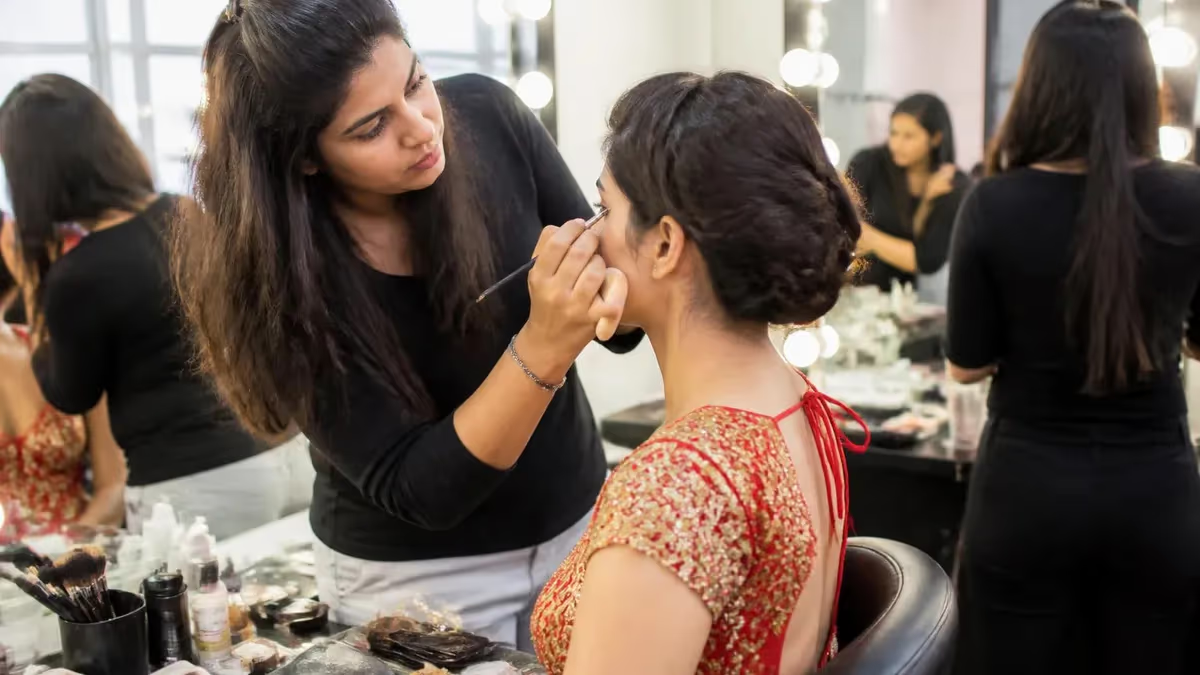
Makeup artist insurance is one of the most overlooked yet essential investments a professional MUA can make. Whether you're a freelancer doing bridal bookings on weekends or a full-time artist working on film sets, the financial and legal risks of operating without proper coverage are significant. A single allergic reaction, a damaged piece of equipment, or an accident at a client's venue could result in thousands of dollars in liability claims. Understanding your insurance options is as critical as mastering your craft.
The beauty industry in the United States generates over $100 billion annually, and makeup artists and cosmetologists account for a substantial portion of that economic activity. With growth comes risk. More clients, more events, and more complex gigs mean more opportunities for something to go wrong. Liability lawsuits in the personal care sector have increased steadily over the past decade, making it clear that professionals need legal and financial protection in place before they take on their next client.
Many makeup artists assume that their homeowner's insurance or a basic business license will protect them. This is a dangerous misconception. Standard homeowner's policies explicitly exclude commercial activities, meaning if a client is injured during a home studio session, your personal policy will likely deny the claim. Purpose-built makeup artist and beauty professional insurance fills those gaps with targeted coverage designed for your unique risk profile.
Whether you're searching for a makeup artist near me or building your own MUA business, understanding liability coverage should be part of your professional foundation. The cost of a comprehensive general liability policy is typically $200–$600 per year — a fraction of what a single uncovered claim could cost you in legal fees alone. In many cases, venues, wedding planners, and production companies now require proof of insurance before they will book you.
This guide breaks down every major type of insurance a makeup artist should consider, from general liability to product liability, professional indemnity, and equipment coverage. We'll explore real-world scenarios where coverage has protected artists from devastating financial loss, compare providers and costs, and give you a clear checklist for getting properly insured in 2026. By the end, you'll have everything you need to protect yourself, your clients, and your business.
The MUA profession spans an incredibly wide range of work environments — bridal suites, television studios, theater backstages, outdoor festivals, and private home appointments. Each setting carries its own risk profile. An artist doing drag artist makeup at a nightclub venue faces different liability exposure than one working on a corporate headshot day. A well-structured insurance policy accounts for these variables and ensures you're covered wherever your kit takes you.
Finally, insurance is not just about protection — it's also a professional differentiator. Clients increasingly expect licensed, insured makeup artists, especially for high-stakes events like weddings. Displaying that you carry professional liability coverage builds trust, signals professionalism, and can justify premium pricing. In a competitive market, being properly insured may be the detail that wins you the booking over an equally talented but uninsured competitor.
Makeup Artist Insurance by the Numbers
Types of Insurance Coverage Every Makeup Artist Needs
Covers third-party bodily injury and property damage claims. If a client trips over your kit bag and breaks a wrist, or if you accidentally stain a wedding dress, general liability pays for legal costs, settlements, and medical expenses up to your policy limit.
Protects you when a client claims your professional services caused harm — such as a makeup application that caused a skin reaction, an allergic breakout, or a look that didn't meet agreed expectations. Essential for any service-based beauty professional.
If products you apply to clients cause injury or illness, product liability coverage steps in. This is critical if you blend or recommend products, use unmarked or custom formulations, or stock retail items for sale at your studio.
Your kit is your livelihood. This coverage protects brushes, airbrush machines, lighting, and other professional tools against theft, damage, or loss during transit. Many policies cover equipment at full replacement value, not depreciated cost.
If you drive to client locations, your personal auto policy likely won't cover accidents during business trips. Commercial auto insurance protects you when you're transporting your kit, driving to a venue, or operating as a mobile makeup artist.
The cost of makeup artist insurance varies widely based on your coverage type, annual revenue, number of employees, and the states where you work. For a solo freelance MUA with no employees and revenue under $50,000 per year, a basic general liability policy typically runs between $200 and $350 annually through beauty-industry specialists. Add professional liability (errors and omissions) coverage and that figure rises to $350–$600 per year. These are among the most affordable business insurance products available for any profession.
Several factors push premiums higher. Working with large production companies or signing venue contracts often requires higher per-occurrence limits — $2 million instead of the standard $1 million — which can add $100–$200 to your annual premium. If you employ assistants or other makeup artists under your brand, you'll need employer's liability coverage, which is bundled with workers' compensation in most states. The cost of workers' comp varies by state but typically adds $300–$800 per employee annually for beauty workers classified in low-hazard categories.
Equipment and tools coverage is usually sold as a rider on your general liability or business owner's policy. Expect to pay $50–$150 per year to insure a kit valued up to $5,000, with higher premiums for more comprehensive kits used in film and television. Some artists who carry high-end airbrush systems, color-correcting lights, and custom-fabricated prosthetics may have kits worth $10,000 or more — for these professionals, a standalone inland marine policy is worth the extra investment.
Many insurance providers offer beauty professional bundles that combine general liability, professional liability, and product liability into a single policy with a single deductible. These bundles are almost always more cost-effective than purchasing separate policies. Organizations like the Professional Beauty Association (PBA) and Beauty Changes Lives offer group insurance programs with rates that can be 20–30% lower than individual market pricing. Membership in a professional organization can pay for itself in insurance savings alone.
As a working artist makeup artist building your brand, you should budget for insurance as a fixed business expense from day one. A useful benchmark: your insurance premium should equal roughly 1–2% of your annual gross revenue. If you earn $30,000 per year from freelance makeup work, a $400–$600 annual insurance spend is reasonable and tax-deductible as a business expense in most states. Keep receipts and policy documents organized in your business records for easy deduction at tax time.
Deductibles are another consideration. Most beauty liability policies carry a $250–$500 deductible per claim, meaning you pay that amount out of pocket before the insurer covers the rest. Choosing a higher deductible — say $1,000 — can lower your annual premium by 15–25%. This makes sense if you have emergency savings and want to minimize ongoing costs, but it's a risk calculation that depends on your financial situation and claim history.
Finally, don't overlook the cost of being uninsured. A single uncovered liability claim — even a frivolous one that ultimately gets dismissed — can result in $3,000–$10,000 in legal defense fees. Skin reaction lawsuits in the beauty sector routinely settle for $15,000–$50,000 when they go to court. Against those numbers, a $400 annual insurance premium is one of the best returns on investment a makeup artist can make.
Top Insurance Providers for Makeup Artists
Companies like Markel, Hiscox, and the Beauty and Bodywork Insurance (BBI) platform specialize in beauty professional coverage. These insurers understand the specific risks MUAs face — skin reactions, equipment in transit, off-site client appointments — and build policies that address them directly. BBI, for example, offers policies starting at $96 per year for general liability with up to $1 million per occurrence, making it one of the most affordable entry points for solo freelancers. Markel's beauty professional package bundles general liability, professional liability, and product liability together.
Hiscox is another strong option, particularly for makeup artists who also have a physical studio or retail component. Their small business policies are fully customizable online and can be active within 24 hours of application. Professional organizations like the American Association of Cosmetology Schools (AACS) and the National Cosmetology Association (NCA) have negotiated group rates with select insurers, and membership can reduce your annual premium by 15–30% compared to going directly to the open market.
Is Beauty Professional Insurance Worth the Cost?
- +Protects your personal assets from client liability claims and lawsuits
- +Covers legal defense costs even for frivolous claims that are eventually dismissed
- +Required by many venues, production companies, and corporate clients — opens more booking opportunities
- +Tax-deductible as a legitimate business expense, reducing your net cost
- +Equipment coverage replaces expensive kit items without out-of-pocket replacement cost
- +Builds client trust and supports premium pricing as a credentialed, insured professional
- −Ongoing annual expense of $200–$600 that impacts freelance profit margins
- −Policy exclusions and fine print can leave gaps if you don't read the full coverage terms
- −Claims can still result in out-of-pocket deductible costs of $250–$1,000 per incident
- −Some policies don't cover work done outside the United States, limiting international gigs
- −Group plans tie coverage to association membership, adding another recurring fee
- −Coverage limits may be insufficient for high-value commercial or film production work without upgrades
Makeup Artist Insurance Checklist: What to Secure Before Your Next Booking
- ✓Purchase a general liability policy with at least $1 million per occurrence and $2 million aggregate coverage.
- ✓Add professional liability (errors and omissions) coverage to protect against service-related claims.
- ✓Confirm your policy includes product liability for cosmetics and skincare products you apply.
- ✓Inventory your kit and insure equipment at full replacement value, not depreciated cost.
- ✓Download and save your certificate of insurance (COI) to your phone for fast sharing with venues.
- ✓Read your policy exclusions carefully — confirm coverage extends to off-site client appointments.
- ✓Check whether your policy covers assistants or other artists working under your business name.
- ✓Verify that coverage is active for every state or region where you regularly work.
- ✓Review your policy annually and update coverage limits as your revenue and client base grow.
- ✓Join a professional association to access group insurance rates and lower your annual premium.
Venues and Production Companies Now Require Proof of Insurance
As of 2026, an increasing number of wedding venues, event spaces, and commercial production companies require makeup artists to provide a current certificate of insurance before confirming a booking. Having your COI ready to send within minutes — not days — can be the difference between winning and losing a high-value contract. Set up instant certificate access through your insurer's mobile app or client portal the moment your policy is active.
Real-world insurance claims in the beauty industry follow patterns that every makeup artist should understand before they need to file one. The single most common claim category for MUAs is allergic reaction or skin sensitivity — a client develops a rash, hives, or more serious dermatitis after a makeup application and holds the artist financially responsible. These claims range from a few hundred dollars in medical costs to tens of thousands when the reaction is severe, causes scarring, or leads to time off work for the client.
The second most frequent claim type is property damage. Picture this: you're setting up at a luxury hotel bridal suite, and your rolling kit bag scratches the antique vanity mirror. Or your airbrush machine malfunctions and sprays product across the bride's newly installed custom dress. These are not hypothetical situations — they happen regularly at weddings and special events. Without general liability coverage, you're personally responsible for the cost of repair or replacement, which can easily reach $1,000–$5,000 for high-end venues and designer garments.
Professional negligence claims are a growing category as clients become more aware of their legal rights. If a client feels you failed to deliver the agreed-upon look, used a product you knew might cause a reaction, or didn't follow sanitation standards that led to an infection, they may pursue a professional liability claim. These cases often hinge on documentation: did you have a client intake form? Did you note known allergies? Did you perform a patch test? Good documentation practices combined with professional liability coverage form a two-layer defense against these claims.
Equipment theft is another under-discussed risk. Makeup artists frequently work in high-traffic environments — weddings, fashion shows, backstage at concerts — where bags and cases can be left unattended. A professional kit stolen at an event can represent $3,000–$8,000 in losses. Equipment coverage either as part of your business owner's policy or as a standalone inland marine policy ensures that a theft doesn't derail your business for weeks while you scrape together funds to replace your tools.
Makeup artist wedding makeup scenarios present some of the highest-stakes liability situations in the industry. Wedding days are emotionally charged, financially significant, and photographically documented — meaning any visible mistake is permanently recorded. A bride who breaks out in hives, a lipstick color that photographs differently than expected, or a look that fades within two hours can all generate post-event disputes. Professional liability insurance gives you the backing to respond to these disputes without absorbing the financial hit personally.
The rise of social media has introduced a newer claim category: reputational damage. Some clients have attempted to leverage negative reviews or social media posts as bargaining chips for refunds after events. While insurance doesn't cover reputational harm directly, it does provide legal support if a situation escalates to defamation allegations or if a client makes false claims about your services online. Having legal resources available through your insurer is a meaningful backstop when situations turn contentious.
Understanding these real-world claim patterns should motivate every makeup artist — from beginners doing their first paid sessions to veterans with decades of experience — to carry proper coverage. The beauty industry is relationship-driven, and most clients will never file a claim. But the small percentage who do can create financial and legal headaches that persist for years without the right insurance in place. Prevention through proper coverage is always cheaper than remediation after a claim.
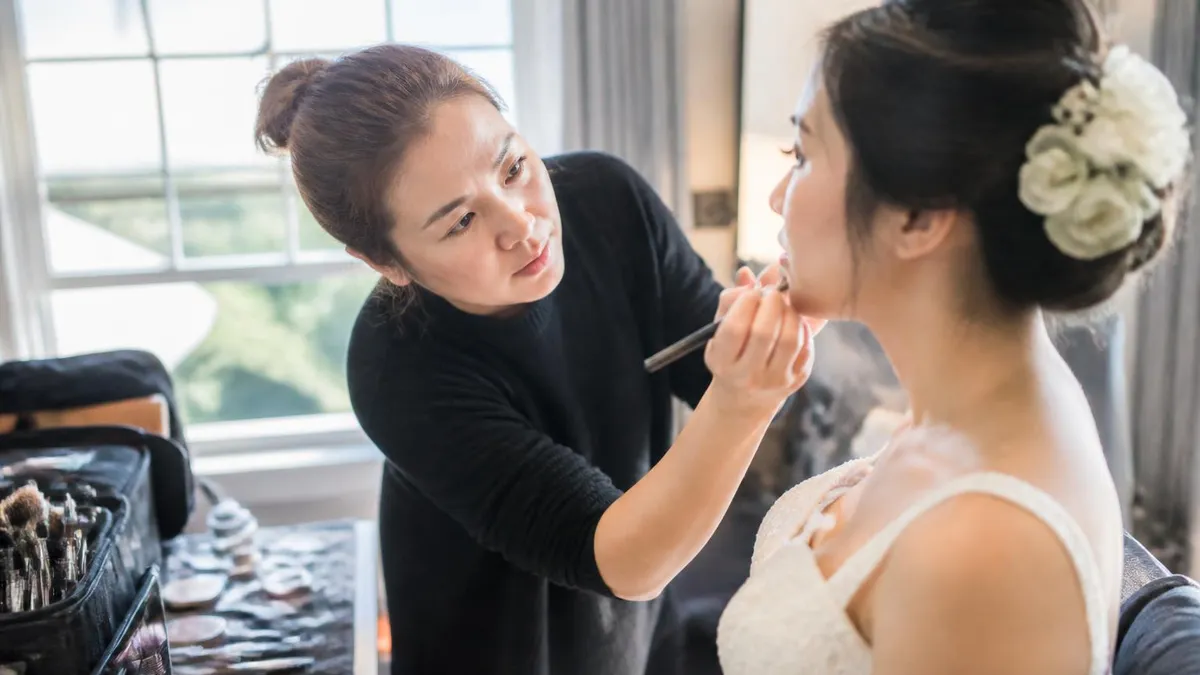
Standard homeowner's and renter's insurance policies contain explicit commercial activity exclusions. If you perform makeup services from your home — even occasionally — and a client is injured on your property or claims harm from a product you applied, your personal policy will almost certainly deny coverage. Dedicated makeup artist professional insurance is not optional if you conduct any commercial services, regardless of how infrequently. Operating without it exposes your personal assets, including savings and property, to liability claims.
Choosing the right insurance policy starts with an honest assessment of how you work. Solo freelancers who book a handful of weddings and portrait sessions each month have fundamentally different risk profiles than makeup artists running a studio with three employees, a retail product line, and regular contracts with advertising agencies. The insurance solution that fits a part-time bridal MUA will likely be inadequate for a full-time commercial artist — and overpaying for commercial-scale coverage is just as problematic as being underinsured.
Start by listing every type of gig or service you provide. Are you doing bridal makeup? Film and television work? Theater productions? Corporate events? Body painting? Special effects prosthetics? Each of these categories may have specific coverage requirements or exclusions you need to verify with a prospective insurer. A policy that explicitly covers theatrical and special effects work, for example, will include product liability for prosthetic adhesives and specialized pigments — coverage that a standard beauty liability policy might exclude.
Next, identify where you work. If you're a mobile makeup artist who works exclusively at client locations — hotel suites, homes, outdoor venues — your policy must explicitly cover off-premises services. Some basic policies only cover work performed at a fixed business address. If you work across multiple states regularly, confirm that your policy covers nationwide services rather than just your home state. Makeup artists working on cruise ships or internationally need to specifically ask about geographic coverage limits.
Consider the contract requirements of your largest clients. High-end wedding venues, film production companies, and corporate clients often have insurance requirements written into their vendor contracts. These requirements typically specify minimum coverage limits (often $1M–$2M per occurrence), policy types (general liability plus professional liability), and may require the client or venue to be listed as an additional insured on your policy. Most insurers can add additional insured endorsements at no or minimal extra cost — but you need to request this before signing a contract, not after.
Many working professionals find that the makeup artist and dual-discipline career path — combining makeup with hair services — requires broader coverage that encompasses both disciplines. If you offer both hair and makeup services, confirm that your policy explicitly covers hair-related claims (chemical burns from color treatments, scalp injuries) in addition to makeup-related claims. Some beauty liability policies are narrow and may only cover one service category, so read the coverage definitions carefully before signing.
The application process for makeup artist insurance has become remarkably streamlined in 2026. Most beauty-specialized insurers offer fully digital applications that take 10–15 minutes to complete. You'll typically need to provide your annual revenue, the number of clients you serve per year, whether you have employees, your primary services, and the states where you work. Based on these inputs, the insurer calculates your premium and presents coverage options. You can often have an active policy and downloadable certificate of insurance within the same business day you apply.
Finally, revisit your coverage annually. As your business grows — more revenue, more employees, higher-profile clients, new service offerings — your insurance needs will change. An artist who started as a part-time freelancer and has grown into a studio owner with two employees and $80,000 in annual revenue needs significantly different coverage than they did at the start. Set a calendar reminder to review your policy each year, compare it against your current business reality, and adjust limits or coverage types as needed to stay properly protected.
Building a sustainable makeup artist business in 2026 requires treating insurance not as a reluctant expense but as a strategic investment. The most successful makeup artists near me and across the country approach their business finances with the same discipline they bring to their craft. That means separating personal and business finances, maintaining proper bookkeeping records, and protecting revenue with the right insurance infrastructure before a single client appointment takes place.
One of the most practical steps a new MUA can take is to purchase insurance before their very first paid gig. This is not an overreaction — it's sound business practice. Even a student makeup artist charging discounted rates for practice sessions is technically providing a commercial service, and any injury or damage that results could expose them to personal liability. Insurance purchased before day one of paid work ensures there's no gap in coverage during the period when most claims actually occur: the early, learning-heavy phase of a career.
Sanitation and hygiene practices are your first line of defense against claims, and documentation is your second. Keep a client intake form that records known allergies, skin sensitivities, and contact information for every client. Note the specific products you used in each session, particularly for clients with sensitive skin. This documentation not only helps you provide better service — it creates a paper trail that can defend against false or exaggerated claims. Many insurers offer sample intake forms as part of their policyholder resources, so check your insurer's website before creating your own.
Patch testing is a frequently debated topic among makeup artists. Some argue it slows down service and undermines the spontaneous nature of event makeup. Others — and most insurers — strongly recommend it for clients who report any history of skin sensitivity or product reactions. Offering a patch test 48 hours before a major event like a wedding is both a genuine service enhancement and a liability reduction strategy. It's much harder for a client to claim negligence when the record shows you proactively tested the product before full application.
Professional development and certification also interact with your insurability and premium rates. Many insurers offer discounts to makeup artists who hold recognized certifications from accredited programs. Holding a cosmetology license, completing OSHA sanitation training, or earning a certificate from an accredited makeup artistry school signals to insurers that you're a lower-risk professional. Some beauty liability insurers explicitly tier their premiums based on whether the applicant holds professional credentials, making certification financially valuable beyond its career benefits.
The world of lori anne allison makeup artist level celebrity and bridal work demands the highest levels of professional preparation — including insurance. High-profile clients expect and often require proof of insurance before a first appointment. Building your professional portfolio with insurance coverage in place from the start positions you to say yes to these opportunities without scrambling to get covered at the last minute. A well-prepared MUA who can immediately provide a certificate of insurance builds instant credibility with discerning clients and event coordinators.
Ultimately, the goal of makeup artist insurance is to give you the freedom to focus entirely on your craft without the background anxiety of financial exposure. When you know you're covered, you can take on challenging gigs, experiment with new techniques, work in unfamiliar venues, and build client relationships without holding back out of fear of what might go wrong. That peace of mind has genuine value for your creativity, your client relationships, and your long-term career trajectory as a makeup artist professional.
MUA Questions and Answers
Hair & Makeup Artist: Dual-Discipline Career Guide

How to Become a Makeup Artist: Certification, Licensing & Career Path
Wedding Makeup Artist 2026: Pay, Bookings, and How to Become One
Celebrity Makeup Artist: How to Become One (2026 Career Guide)
How to Become a Celebrity Makeup Artist: The Complete Career Guide
About the Author
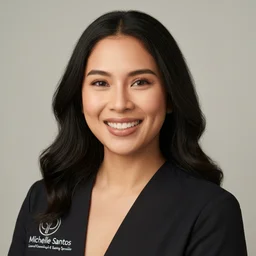
Licensed Cosmetologist & Beauty Licensing Exam Specialist
Paul Mitchell SchoolsMichelle Santos is a licensed cosmetologist with a Bachelor of Science in Esthetics and Salon Management from Paul Mitchell School. She has 16 years of salon industry experience and 8 years preparing students for state cosmetology board exams in theory, practical skills, and sanitation. She specializes in licensure preparation for cosmetologists, estheticians, and nail technicians.
Join the Discussion
Connect with other students preparing for this exam. Share tips, ask questions, and get advice from people who have been there.
View discussion (7 replies)