
Makeup Artist Business: Complete Guide to Building Your Pro MUA Brand in 2026
Launch a profitable makeup artist business in 2026. Pricing, licensing, bookings, marketing, and pro MUA brand strategy that actually works. 📗
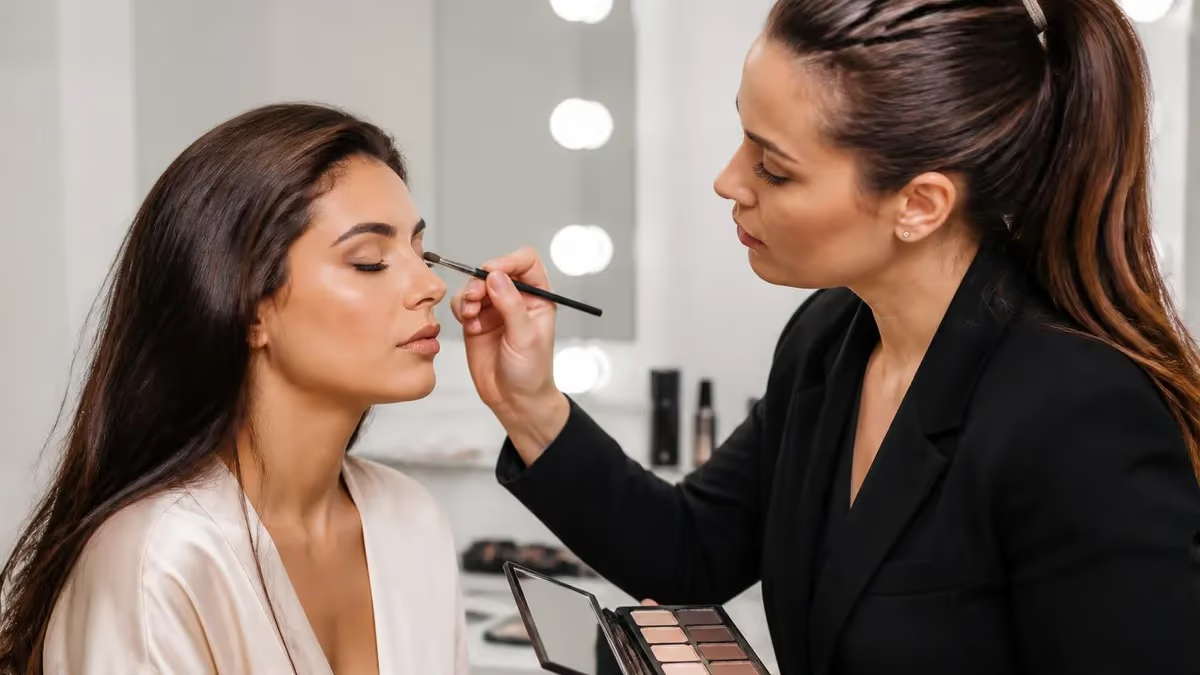
Starting a makeup artist business in 2026 is one of the most accessible creative careers you can launch, but it is also one of the most competitive. The beauty industry crossed $580 billion globally last year, and freelance MUAs now claim a larger share of bridal, editorial, and special-event work than ever before. If you are searching for clarity on pricing, licensing, branding, and booking systems, you are in the right place. This guide breaks down every business decision a working MUA must make, from the day you order your first kit to the day you hire your second assistant. Practice with the free MUA - Makeup Artist practice test on PracticeTestGeeks (150+ questions with answer explanations).
Most artists fail not because they lack skill, but because they treat their craft as a hobby instead of a registered business. A successful makeup artist and brand requires a legal entity, a tax ID, liability insurance, a contract template, and a payment processor before you ever pick up a brush professionally. We will walk through every one of these requirements with real dollar figures, real timelines, and real client scenarios drawn from working artists in major US markets.
The phrase "makeup artist business" covers a wide range of models. You might be a mobile bridal MUA who travels to suites every Saturday, a salon-based artist with a chair lease, a film and TV freelancer who joins union projects, a counter pro who built a private client list, or a brand educator who teaches workshops. Each model has different overhead, different revenue ceilings, and different tax treatment. Knowing which model fits your lifestyle is the single most important early decision.
This article assumes you have basic application skills and a portfolio in progress. If you are still building those foundations, certification programs and apprenticeships remain the fastest path to professional credibility. Insurance carriers, agencies, and venues increasingly ask for proof of training before they let you work on site, so credentials carry weight far beyond what your Instagram grid suggests.
We will also cover the unglamorous side of the business: bookkeeping software, mileage tracking, sales tax registration, sanitation logs, and client intake forms. These details are what separate a sustainable five-figure side hustle from a six-figure career. By the end of this guide you should be able to draft a one-page business plan, set rates that actually generate profit after expenses, and identify which marketing channels deserve your time in 2026.
Finally, we have packed this resource with real numbers from US markets including Los Angeles, Atlanta, Dallas, New York, and Chicago. Wedding-season pricing, kit replenishment costs, average bridal trial conversion rates, and platform fee structures are all included so you can benchmark your own business against industry norms. Read it slowly, take notes, and bookmark the checklists.
Free MUA - Makeup Artist Study Tools
Interactive MUA - Makeup Artist resources on PracticeTestGeeks, free to start:
- Free Makeup Artist Questions and Answers — 11 questions with instant scoring and answer explanations
- MUA - Makeup Artist flashcards — review key terms and concepts card by card
- MUA - Makeup Artist study guide — topic-by-topic overview of what the exam covers
- MUA - Makeup Artist cheat sheet — one-page printable summary for last-minute review
The Makeup Artist Business by the Numbers

Choose Your Makeup Artist Business Model
Travel to suites, hotels, and venues for weddings and special events. Highest revenue per hour with seasonal peaks April through October. Requires reliable transportation and weekend availability.
Rent a chair or station inside an established salon for $400-$1,200 monthly. Lower marketing effort because walk-ins exist, but you split exposure with stylists and other artists.
Operate from a dedicated home or commercial studio. Lower travel costs and faster turnover, but requires zoning approval and a polished space that photographs well for social media.
Join union or non-union sets, magazine shoots, and commercial productions. Day rates run $450-$1,200 but work is project-based with significant downtime between gigs.
Teach workshops, sell digital courses, or partner with cosmetic brands. Scales beyond your calendar but requires a personal brand and consistent content output.
Pricing is where most new makeup artist businesses bleed money. Artists copy competitor prices without understanding what those numbers actually cover, then discover six months in that they are working for less than minimum wage after gas, parking, kit replenishment, and self-employment tax. A defensible price starts with knowing your true cost per service. Calculate kit depreciation, transportation, insurance, software subscriptions, marketing spend, and your desired hourly wage, then build the service rate from that foundation upward.
For bridal work in major US metros, the 2026 benchmark is $250 to $450 for the bride alone, with bridesmaids at $95 to $150 each. Trials run $125 to $250 and should always be charged separately, never bundled free. Many artists searching makeup artist near me learn quickly that local pricing varies wildly by zip code. A bride in Beverly Hills expects a different price point than one in Tulsa, and your menu should reflect the buying power of the market you actually serve.
Special event work, including proms, photoshoots, and corporate headshots, typically prices between $125 and $225 per face. Editorial and commercial day rates start at $450 and climb to $1,500 for senior artists with published tear sheets. Film day rates depend on union status, with IATSE Local 706 rates currently around $54 per hour with overtime multipliers. Each segment has its own pricing logic, so do not apply bridal math to a commercial booking or you will leave money on the table.
Always build a clear deposit policy into your contract. Industry standard is 30% to 50% non-refundable retainer due at booking, with the balance collected on or before service day. Saturday and Sunday brides should pay a 10% to 15% weekend premium because those dates are inventory you can only sell once. Holidays and travel beyond 30 miles deserve their own surcharges, clearly labeled on your booking page so clients are never surprised at checkout.
Build packages, not à la carte menus. A bride who books trial plus wedding-day service plus three bridesmaids and a touch-up kit generates four to five times the revenue of a single bridal application. Package pricing also signals professionalism and lets you front-load value perception. Offer three tiers: a basic bridal-only option, a mid-tier with trial and one bridesmaid, and a premium package with full bridal party coverage, touch-ups, and lash add-ons included.
Track every dollar in a real accounting tool, not a notebook. QuickBooks Self-Employed, Wave, and HoneyBook are all reasonable choices for solo MUAs. Connect your business bank account, tag every transaction by category, and run a profit and loss report at the end of every month. If your gross margin on bridal services is under 60%, your pricing or your kit costs are out of balance and need correction before the next quarter.
Finally, raise prices once per year. Costs increase, your skills improve, and your portfolio strengthens. A 7% to 12% annual increase is normal and expected. Notify existing inquiries 60 days in advance so anyone with a pending booking has time to lock in the prior rate, then honor the old price for contracts already signed. This combination of transparency and discipline is what separates a real business from a hobby that happens to take payments.

MUA Practice Test Questions
Prepare for the MUA - Makeup Artist exam with our free practice test modules. Each quiz covers key topics to help you pass on your first try.
MUA Makeup Artist MCQ
MUA Exam Questions covering Makeup Artist MCQ. Master MUA Test concepts for certification prep.
MUA Makeup Artist
Free MUA Practice Test featuring Makeup Artist. Improve your MUA Exam score with mock test prep.
MUA Professional Makeup Artist
MUA Mock Exam on Professional Makeup Artist. MUA Study Guide questions to pass on your first try.
MUA Bridal & Special Occasion Makeup
MUA Test Prep for Bridal & Special Occasion Makeup. Practice MUA Quiz questions and boost your score.
MUA Color Theory & Skin Tone Analysis
MUA Questions and Answers on Color Theory & Skin Tone Analysis. Free MUA practice for exam readiness.
MUA Product Knowledge & Cosmetic Ingredients
MUA Mock Test covering Product Knowledge & Cosmetic Ingredients. Online MUA Test practice with instant feedback.
Marketing Channels for Makeup Artists and Their Businesses
Visual platforms remain the highest converting marketing channel for MUAs in 2026. Post three to five times weekly with a consistent grid aesthetic, use location tags, and feature client testimonials in reels. Bridal portfolios convert best when you film before-and-after transformations rather than static finished looks.
TikTok favors educational content like product reviews, technique tutorials, and behind-the-scenes wedding-day clips. Use trending audio strategically, but keep brand voice professional. Most working artists report that 40% to 60% of new bridal inquiries cite Instagram as the discovery channel, making it the single highest ROI marketing investment for new businesses.
Is Running a Makeup Artist Business Right for You?
- +Creative work with high autonomy and flexible scheduling
- +Strong income potential, especially in bridal and editorial niches
- +Low barrier to entry compared to most licensed beauty professions
- +Build a personal brand that can scale into education and product lines
- +Tax advantages from legitimate business deductions and home office use
- +Direct client relationships create deep job satisfaction
- +Skills transfer globally and travel well for destination work
- −Income is seasonal, with significant cash flow gaps in winter months
- −Weekend and early-morning work conflicts with family life
- −Self-employment tax adds 15.3% on top of regular income tax
- −Kit replenishment is constant and often underestimated by new artists
- −Physical demands cause wrist, back, and standing-related injuries
- −Client cancellations and weather disruptions hit revenue directly
- −Marketing and admin can consume 40% of working hours
Pros and Cons at a Glance
| Pros | Cons |
|---|---|
| Creative work with high autonomy and flexible scheduling | Income is seasonal, with significant cash flow gaps in winter months |
| Strong income potential, especially in bridal and editorial niches | Weekend and early-morning work conflicts with family life |
| Low barrier to entry compared to most licensed beauty professions | Kit replenishment is constant and often underestimated by new artists |
| Build a personal brand that can scale into education and product lines | Physical demands cause wrist, back, and standing-related injuries |
| Tax advantages from legitimate business deductions and home office use | Client cancellations and weather disruptions hit revenue directly |

Legal & Licensing Setup for Your Makeup Artist Business
- ✓Choose a business structure (sole proprietor, LLC, or S-corp) and file with your state
- ✓Apply for a federal EIN through the IRS website at no cost
- ✓Register for your state sales tax permit if your jurisdiction taxes services
- ✓Check city and county requirements for an esthetician or cosmetology license
- ✓Open a dedicated business checking account and credit card
- ✓Purchase professional liability insurance with at least $1M coverage
- ✓Register a DBA if operating under a name different from your legal name
- ✓Draft a service contract with deposit, cancellation, and liability clauses
- ✓Set up a HIPAA-aware client intake form for skin sensitivities and allergies
- ✓Maintain sanitation logs and a written infection-control protocol for inspection
- ✓Register with payment processors that accept tips and cards (Square, Stripe)
- ✓Track mileage with a dedicated app for IRS-compliant vehicle deductions
Get covered before your first paid client
Professional liability insurance for MUAs costs $150 to $375 annually through providers like Insure Beauty, Beauty & Bodywork Insurance, or PPA. One eye infection lawsuit can wipe out a decade of savings, and most venues now require certificates of insurance before they will let you work on premises. This is the single best investment you will make in year one.
Your kit is both an artistic tool and a business asset, and it deserves the same strategic thinking as any other capital investment. A pro starter kit costs $1,800 to $3,500 depending on which brand tiers you choose. Skip drugstore lines for foundation, concealer, and longwear products because they will not survive an eight-hour wedding day under photography lights. Invest in performance products where it matters and save on tools you can replace easily.
Build your foundation library around shade range first. You need at least 30 foundation shades spanning fair to deep with neutral, warm, and cool undertones in each depth. Brands like Face Atelier, Cinema Secrets, Temptu, Danessa Myricks, and Make Up For Ever are industry workhorses for a reason. The cost to bring in a single new bride who matches a shade you do not own will exceed the price of expanding your inventory, so view shade gaps as lost revenue.
Sanitation discipline separates professionals from hobbyists. Every brush gets cleaned between clients with a fast-acting solvent like Cinema Secrets Brush Cleaner. Disposable mascara wands, lip applicators, and spatulas are used once and discarded. Cream products are scraped from the pan onto a palette rather than touched directly. Document your sanitation workflow in writing because health inspectors and concerned clients will eventually ask to see it.
Branding for a makeup artist business goes far beyond a logo. Your brand is the entire client experience: the response time on inquiries, the polish of your contract, the cleanliness of your kit case, the music in your studio, and the thank-you note you send after the wedding. Each touchpoint either reinforces premium positioning or undermines it. Spend a Saturday auditing every step from first inquiry to final follow-up and rate yourself honestly on each.
Most artists also underestimate what professional photography of their own work is worth. Hiring a photographer for a styled shoot twice per year costs $400 to $1,200 but delivers a year of social media content, website hero images, and bridal directory listings. Compare that to running paid ads with mediocre iPhone photos and the ROI becomes obvious. Treat content creation as a recurring line item in your annual marketing budget rather than an occasional expense.
Consider how you present pricing on your website. Some clients searching for a lori anne allison makeup artist or other celebrity-tier service will accept premium rates because the brand justifies them. You can build a similar perception by displaying confident pricing, showcasing published or testimonial-backed work, and avoiding the common new-artist mistake of hiding rates behind a contact form. Transparent pricing filters out unqualified leads and protects your time.
Finally, document your processes in a simple operations manual. Booking workflow, intake form questions, kit setup checklist, sanitation steps, post-service follow-up sequence, and accounting close-out tasks should all live in one place. When you eventually hire an assistant or train a second artist on your team, this document is what lets the business operate without you in the room.
Do not skip the LLC and insurance step to save money. New artists who operate as informal sole proprietors lose personal assets when a client claims an allergic reaction, a contract dispute, or a property damage incident at a venue. Spend the $300 to $600 on proper formation and insurance during your first month of operation, not after a problem arises.
Scaling a makeup artist business beyond solo income is where most artists hit a wall. There are only so many Saturdays in wedding season, and even at premium rates a single artist tops out around $90,000 to $130,000 in annual revenue. Real growth requires moving from "artist who owns a business" to "business owner who happens to be an artist." That shift is uncomfortable but unavoidable if you want to build wealth, not just income.
The first scaling move is a team of associate artists working under your brand. Recruit two to four reliable artists, train them on your house style and sanitation protocols, and book them under your contracts at a revenue split typically between 50/50 and 70/30 in their favor depending on who supplies the kit and lead generation. This model lets you serve large bridal parties, multiple weddings per weekend, and corporate events you would otherwise turn away.
A second growth path is education. Live workshops, on-demand video courses, one-on-one coaching, and a paid newsletter all generate revenue that is decoupled from your physical presence. Education businesses require a real audience, so build to 10,000 engaged Instagram followers before you sell your first $499 course. Otherwise you will spend more on ads than you earn in enrollments.
A third option is product. Branded lash lines, custom palettes, and signature setting sprays let you earn margin on every kit you carry and every kit your students carry. Product businesses involve inventory, fulfillment, and FDA cosmetic registration, so they are not a side project. Start with one hero SKU, validate demand through pre-orders, and reinvest profit before expanding the line.
Affiliate and brand partnership income deserves a paragraph of its own. Once your audience reaches 5,000 plus engaged followers, brands will pay $200 to $2,500 per post for sponsored content. Negotiate based on real engagement rates rather than vanity follower counts, and disclose every paid partnership per FTC rules. Many successful MUAs now earn more from brand deals than from service revenue. Pursuing an artist makeup artist certification helps validate your authority to brands evaluating partnerships.
Finally, plan your exit. Even if you love makeup, you may not love it at 60. Build the business to be sellable: documented systems, a recognizable brand, recurring revenue from education or product, and a client roster that does not depend solely on your face. A salable MUA business commands two to four times annual EBITDA at exit. That number can fund retirement, a sabbatical, or the launch of your next venture.
Reinvest aggressively in years one through three, then start drawing meaningful profit in year four onward. The artists who treat the business as a long game rather than a quick income stream are the ones still working in this industry a decade from now. Build slowly, document everything, and remember that the most successful MUA brands look like overnight successes only to people who did not see the seven years of unglamorous setup that made them possible.
Practical week-one moves matter more than any aspirational planning. On day one, register your business entity with your state and apply for your EIN online through the IRS portal. Both can be done in under two hours and cost less than $200 combined. By day three you should have a business bank account opened, a contract template drafted in a tool like Dubsado or HoneyBook, and a basic Square or Stripe account live and ready to accept your first deposit.
Week two is for systems. Set up a Google Business Profile, claim your handles on Instagram and TikTok with consistent naming, and build a one-page website using Showit, Squarespace, or Wix. The website does not need to be perfect, but it must contain your service menu, three portfolio photos, a contact form, and clear pricing or starting-from language. Polish comes later; presence comes now.
Week three should focus on insurance, sanitation, and kit completion. Order any missing foundation shades, top up disposables, organize your kit in a hard-shell traveling case, and photograph your kit setup for marketing content. Your insurance policy should be active by end of week three at the latest, with a printable certificate of insurance ready to email to any venue that requests one. Many wedding venues require this paperwork 30 days before the event.
Drag artist makeup is one of the fastest-growing niches in the MUA business, and worth considering as part of your service menu. Drag performers spend significantly more per service than traditional brides, often $250 to $600 for a full transformation including beat brows, contour, and lash design. The work is creative, repeat clients are loyal, and the community generates referrals through word of mouth at a rate few other niches match.
Set quarterly goals rather than annual ones. The MUA business changes too quickly for 12-month plans to remain accurate. Pick three measurable goals per quarter, such as "book 15 weddings," "add 1,000 Instagram followers," and "launch the educator workshop." Review on the first of each new quarter, retire goals that no longer fit, and replace them with goals that match where the business actually is rather than where you wished it would be.
Keep a separate inquiry-to-booking conversion log. Industry average for bridal inquiries is 18% to 32%, depending on price point and market. If you are inquiring at 30 leads per month and booking only two, your pricing, response time, or proposal quality needs work. A quick fix is reducing inquiry response time to under one hour during business days. Speed often beats polish in this industry, particularly for higher-tier brides who are evaluating multiple vendors at once.
Finally, protect your energy. The MUA business is emotionally demanding because clients are paying for confidence on the most photographed days of their lives. Build recovery into your weekly schedule, block one weekend per month with no bookings, and limit your daily client count to a number that lets you arrive at the last appointment with the same energy you brought to the first. Burnout is the silent killer of promising MUA businesses, and it is preventable if you respect your own capacity.
Sample MUA - Makeup Artist Practice Questions
Try these questions from our free MUA - Makeup Artist practice tests. The correct answer and an explanation follow each question.
Which professional standard must a makeup artist follow regarding patch testing a client for potential product allergies?
- A. Patch tests are optional and only required for clients who request them
- B. A patch test should be performed 24–48 hours before applying any new product near sensitive areas like the eyes
- C. Patch tests are only required for theatrical body paint, not facial products
- D. Clients should patch test themselves at home before arriving
Answer: B. A patch test should be performed 24–48 hours before applying any new product near sensitive areas like the eyes
Industry best practice is to patch test new or potentially reactive products 24–48 hours before a full application to identify allergic reactions before they occur at a critical appointment.
Why is it important for a makeup artist to patch test products on clients with sensitive skin?
- A. To check if the product color is correct
- B. To identify potential allergic reactions before full-face application
- C. To test the longevity of the product
- D. To determine the correct foundation shade
Answer: B. To identify potential allergic reactions before full-face application
A patch test on a small skin area reveals any allergic reactions or sensitivity before the product is applied to the entire face.
A makeup artist is selecting a foundation for a client who will be photographed under flash photography. Which formula should be avoided?
- A. Satin-finish liquid foundation
- B. Oil-free matte foundation
- C. Foundation containing SPF or titanium dioxide
- D. Buildable coverage tinted moisturizer
Answer: C. Foundation containing SPF or titanium dioxide
Foundations with SPF or titanium dioxide cause 'flashback' — a white cast captured on camera due to those ingredients reflecting flash light.
For a quinceañera or sweet sixteen client requesting vibrant colorful makeup, what should the artist confirm first?
- A. The number of guests attending
- B. Whether parents approve the look and the client's skin sensitivities
- C. The venue's lighting temperature only
- D. The dress color only
Answer: B. Whether parents approve the look and the client's skin sensitivities
For minors, parental approval of the makeup look is both professional and legally prudent, and skin sensitivities must be assessed first.
MUA Questions and Answers

How this page was made: written with AI tools. We have not yet matched this exam's facts to an official source, so confirm fees, dates and rules with the exam body. Not reviewed by a subject-matter expert. Editorial policy