
Hair and Makeup Artists: Complete Career Guide for Aspiring MUAs 2026 October
Explore the world of makeup artist and hair styling careers. Salaries, certifications, specialties & how to get hired. ✅ Real data inside.

Hair and makeup artists occupy one of the most dynamic intersections in the beauty industry, blending technical skill with artistic vision to transform how people look and feel. Whether working on a Hollywood film set, backstage at a fashion show, or in a bridal suite the morning of a wedding, these professionals shape the visual identity of real people and fictional characters alike. If you are considering a career as a makeup artist and want to understand exactly what this path entails, this guide covers everything from entry-level steps to advanced specializations.
The demand for qualified makeup artists has never been higher. According to the U.S. Bureau of Labor Statistics, employment in the barbers, hairstylists, and cosmetologists category is projected to grow steadily through the decade, and makeup artistry specifically is expanding into new sectors like streaming, esports broadcasting, and virtual production. Understanding where the jobs are and what skills employers expect is the first step to building a sustainable career in this field.
One of the biggest misconceptions among newcomers is that talent alone is enough to succeed. In reality, the most successful makeup artist makeup artists combine artistic ability with strong business instincts, client communication skills, and a relentless commitment to continuing education. Trends shift rapidly in beauty, and professionals who invest in ongoing training consistently outperform those who rely solely on natural talent or outdated techniques.
Certifications and formal training programs provide more than just technical skills — they signal professionalism to potential clients and employers. Cosmetology licenses, esthetics certificates, and specialized MUA credentials all add layers of credibility that can directly translate into higher rates and better bookings. Many states require licensure for anyone applying cosmetics in a professional setting, so understanding the regulatory landscape in your region is essential before you launch your career.
The field of hair and makeup artistry is far broader than most people realize when they first explore it. Beyond bridal and editorial work, there are thriving niches in theatrical makeup, film and television, special effects prosthetics, medical camouflage, and even corporate headshot styling. Each niche has its own technical demands, earning potential, and client base, which means there is genuine room for specialization no matter what aspects of artistry most excite you.
Building a strong portfolio is arguably the single most important career investment you will make as a makeup artist. High-quality photographs of your work, organized by specialty and style, serve as your most persuasive marketing tool. Clients browsing for a makeup artist near me on Google or Instagram will make snap judgments based on portfolio images before they ever read a bio or check a price list. Prioritizing portfolio development from your very first paid gig sets a professional tone that pays dividends for years.
This guide walks you through the career landscape, key certifications, salary expectations, the pros and cons of different work arrangements, and the practical steps you need to take to go from curious beginner to working professional. Whether you are just starting out or are already working and want to level up, you will find concrete, actionable information on every page.
Hair & Makeup Artistry by the Numbers

Types of Makeup Artist Specialties
Bridal MUAs specialize in long-wearing, camera-ready looks for weddings, proms, and milestone events. This is one of the most lucrative freelance niches, with experienced artists booking out months or even a full year in advance during peak wedding season.
On-set makeup artists work alongside directors and cinematographers to create continuity-perfect looks under harsh lighting conditions. This specialty requires deep knowledge of HD-compatible products, aging and injury techniques, and strict union protocols on professional productions.
Editorial MUAs create avant-garde and trend-forward looks for magazine shoots, runway shows, and advertising campaigns. This is a highly competitive niche where artistic range and an impressive portfolio carry far more weight than any single credential or certification.
SFX artists create wounds, monsters, aging makeups, and creature designs for film, theater, and haunted attractions. This specialty requires sculpture training, silicone work, and airbrush mastery — and commands premium rates due to the advanced technical skill involved.
Theater MUAs design makeup that reads clearly from a distance under stage lighting. They must understand how different lighting temperatures alter color perception and how to create looks that hold up through a full performance and quick-change scenarios backstage.
Education and certification form the backbone of a credible makeup artist career, and the options available today are more varied than ever before. Traditional cosmetology schools offer comprehensive programs that typically run 12 to 24 months and cover hair styling, skincare, nail care, and makeup application in an integrated curriculum. These programs culminate in a state board examination that, once passed, grants a cosmetology license required for professional practice in most states.
However, dedicated makeup artistry programs at specialized beauty academies have grown significantly in popularity because they allow students to focus exclusively on the skills most relevant to a career as an MUA. Programs at institutions like Make-Up Designory (MUD), Cinema Makeup School, and the Makeup Artist Guild Academy concentrate coursework on color theory, product chemistry, client consultation, and hands-on application across multiple looks — all without the time investment required for a full cosmetology license.
Online education has also entered the conversation in a meaningful way. Platforms like Skillshare, MasterClass, and dedicated beauty academies now offer certificate programs in everything from corrective makeup to airbrush technique. While online programs rarely satisfy state licensing requirements, they are genuinely valuable for filling skill gaps, learning new product lines, and staying current with emerging trends — especially for already-licensed professionals looking to expand their service menu.
Continuing education is not optional in a field where product formulations, application tools, and client expectations change constantly. Many professional organizations, including the Professional Beauty Association (PBA) and the Makeup Artists and Hair Stylists Guild (IATSE Local 706), offer workshops, seminars, and masterclasses specifically for working professionals. Membership in these organizations also unlocks networking opportunities that can lead to referrals, collaborations, and access to closed industry job boards.
State licensing requirements vary considerably across the United States, and navigating them requires careful research specific to your location. Some states require a full cosmetology license to apply makeup professionally. Others have a separate esthetics license category that covers makeup services. A handful of states operate under more relaxed regulations, though even in these markets, professional certification from a recognized academy dramatically improves client trust and booking rates.
For artists interested in working on film and television productions covered by union contracts, membership in IATSE Local 706 — the Makeup Artists and Hair Stylists Guild — is effectively required for the highest-paying work. Joining the union typically requires a combination of documented work hours, vouchers from existing members, and payment of initiation fees and dues.
The process takes time, but the pay differentials and job protections offered by union contracts make it worth pursuing seriously for anyone committed to a long-term career on professional productions. Those curious about makeup artists near me working in local film markets will find that even non-union productions increasingly prefer candidates with verifiable training and documented experience.
Ultimately, the most effective educational path combines formal training — whether cosmetology school or a specialized academy — with hands-on experience accumulated through assisting established artists, volunteering for student film shoots, building trade-for-portfolio relationships with photographers, and accepting any legitimate opportunity to work on real clients under realistic conditions. The classroom teaches principles; the real world teaches judgment, speed, and adaptability under pressure.
Makeup Artist Salary, Rates & Earning Potential
Freelance makeup artists set their own rates, which typically range from $75 to $250 per hour depending on market, experience, and specialty. Bridal artists in major metropolitan areas like New York, Los Angeles, and Chicago often command $300 to $600 for a bridal application alone, with additional fees for trials, bridesmaid services, and travel. Building a reputation through consistent quality and strong reviews allows freelancers to raise rates steadily year over year.
Smart freelancers also build income streams beyond direct client bookings. Teaching workshops, selling digital tutorials, consulting for beauty brands, and offering group class packages all diversify revenue in ways that smooth out the seasonal dips that affect most event-based makeup businesses. Peak booking seasons — spring and fall for weddings, October for Halloween, and December for holiday events — should generate enough revenue to sustain slower winter and summer months.

Pros and Cons of a Career as a Makeup Artist
- +High creative freedom — every client and project presents a unique artistic challenge
- +Flexible scheduling allows freelancers to design work-life balance that suits their lifestyle
- +Multiple specialization paths mean you can pivot as your interests and skills evolve
- +Strong word-of-mouth referral potential makes client acquisition self-reinforcing over time
- +Growing demand in film, streaming, and digital content creation expands job opportunities
- +Low startup costs compared to many other creative businesses — a quality kit can launch a career
- −Income volatility is significant, especially in the early years before a stable client base forms
- −Physical demands are real — long hours on your feet, repetitive hand motions, and heavy kit bags take a toll
- −Highly saturated market in major cities means standing out requires exceptional branding and marketing
- −Licensing requirements vary by state and can be costly and time-consuming to obtain
- −Client-facing work means managing difficult personalities, last-minute cancellations, and high-pressure situations
- −Keeping up with rapidly changing product trends requires continuous investment in education and new supplies
Pros and Cons at a Glance
| Pros | Cons |
|---|---|
| High creative freedom — every client and project presents a unique artistic challenge | Income volatility is significant, especially in the early years before a stable client base forms |
| Flexible scheduling allows freelancers to design work-life balance that suits their lifestyle | Physical demands are real — long hours on your feet, repetitive hand motions, and heavy kit bags take a toll |
| Multiple specialization paths mean you can pivot as your interests and skills evolve | Highly saturated market in major cities means standing out requires exceptional branding and marketing |
| Strong word-of-mouth referral potential makes client acquisition self-reinforcing over time | Licensing requirements vary by state and can be costly and time-consuming to obtain |
| Growing demand in film, streaming, and digital content creation expands job opportunities | Client-facing work means managing difficult personalities, last-minute cancellations, and high-pressure situations |
| Low startup costs compared to many other creative businesses — a quality kit can launch a career | Keeping up with rapidly changing product trends requires continuous investment in education and new supplies |
Essential Skills Every Makeup Artist Needs
- ✓Master color theory and undertone matching to select correct foundation and concealer shades for every skin tone
- ✓Develop proficiency with airbrush systems for bridal, editorial, and film work requiring flawless, long-lasting coverage
- ✓Learn proper sanitation and hygiene protocols to protect client safety and comply with state board requirements
- ✓Build client consultation skills to understand expectations, manage requests, and communicate realistic outcomes
- ✓Study skin anatomy and skincare basics to address prep concerns like dryness, oiliness, and texture issues
- ✓Practice eye anatomy mapping to customize eyeshadow placement for different lid shapes and eye distances
- ✓Develop speed and efficiency to complete professional looks within tight timeframes on set or at events
- ✓Understand lighting conditions — natural, studio, and stage — and how they affect product choices and application
- ✓Build hair styling competency to offer blowouts, updos, and texture work as complementary services to makeup
- ✓Create and maintain a professional, visually strong portfolio that demonstrates range across multiple specialties
Your Portfolio Is Your Most Powerful Marketing Tool
Ninety percent of new client decisions are made before a consultation even happens — based entirely on portfolio images seen on Instagram, your website, or Google. Prioritize quality photography of your work from your very first professional booking, and organize your portfolio by specialty so potential clients can quickly find looks relevant to their needs. A focused, well-photographed portfolio of 20 strong images outperforms a disorganized gallery of 200 mediocre ones every single time.
Finding clients consistently is the challenge that separates thriving makeup artists from those who struggle to fill their calendars. In the early stages of a career, referrals from friends, family, and first clients are often the primary driver of new bookings. This organic network is more powerful than most beginners realize — a single satisfied bride, for example, can refer an artist to her entire social circle, generating dozens of future bookings from a single excellent experience at a fraction of the cost of paid advertising.
Social media has fundamentally transformed how makeup artists market themselves and attract clients. Instagram and TikTok are the dominant platforms for beauty professionals because they are inherently visual and optimized for discovery through hashtags, geotags, and the algorithm-driven Explore and For You pages. Posting consistently — three to five times per week at minimum — and using location-specific hashtags (such as your city name combined with terms like wedding makeup or bridal artist) helps potential clients find you when they search for a makeup artist near me in your area.
Wedding planning platforms like The Knot, WeddingWire, and Zola represent a significant source of bridal bookings for makeup artists who complete detailed profiles and actively collect reviews. These platforms function as search engines for couples actively shopping for vendors, meaning a strong profile with 20 or more positive reviews can generate consistent inbound inquiries with minimal ongoing effort once established. Response time matters significantly on these platforms — artists who reply within an hour convert inquiries at dramatically higher rates than those who take a day or more to respond.
Networking with complementary vendors — photographers, wedding planners, florists, and hair salons — creates reciprocal referral relationships that can become among your most reliable booking sources. Photographers in particular are powerful referral partners because brides often ask their photographers for vendor recommendations, and a photographer who has worked with you and seen your work translate beautifully on camera will enthusiastically refer you to their clients. Reach out proactively to photographers whose aesthetic matches yours and offer a complimentary styled shoot collaboration to build the relationship and generate portfolio content simultaneously.
Participating in bridal expos, industry trade shows, and local beauty events puts your work in front of potential clients who are actively planning events and comparing vendors. While booth fees can be significant, a well-designed display with a clear price menu, a tablet showing your portfolio, and a method for collecting contact information can generate leads that convert into bookings many months later. Follow up with every lead from these events promptly and personally — a generic email blast performs far worse than a personalized message referencing a specific conversation you had at the booth.
As your career advances, consider developing a signature style or specialty that sets you apart in a crowded market. The most booked artists are rarely generalists — they are known for something specific, whether that is flawless skin-first bridal makeup, bold editorial color work, or impeccable drag artist makeup. A distinct artistic identity makes you easier to recommend, easier to find through targeted searches, and more memorable to clients who are comparing multiple artists at similar price points.
Building a referral program that rewards existing clients for sending new business is a strategy most makeup artists overlook entirely. Offering a modest discount on a future service, a complimentary lash application, or a product gift in exchange for a confirmed referral creates a systematic incentive for your happiest clients to actively promote your work within their networks. Track where every new client comes from so you can identify your highest-performing referral sources and invest more relationship-building energy in those channels.

Practicing as a makeup artist without the required state license can result in fines, cease-and-desist orders, and damage to your professional reputation that is difficult to recover from. Licensing requirements differ significantly across states — some require a full cosmetology license, others require an esthetics license, and a few have minimal requirements. Check with your state's cosmetology board before accepting your first paid booking to ensure you are operating legally from day one.
Building a long-term career as a makeup artist requires deliberate planning that extends well beyond mastering application techniques. The artists who sustain thriving practices for decades treat their work as a business with the same rigor they apply to their craft. This means tracking income and expenses carefully, setting aside money for taxes, building an emergency fund to absorb slow seasons, and investing strategically in education and equipment that generate measurable returns in the form of higher rates or new service categories.
Pricing your services correctly is one of the most challenging and consequential business decisions you will make as a freelance artist. Underpricing is by far the more common mistake, particularly among newer artists who fear losing bookings to competitors. But chronically underpriced services erode your income, attract clients who do not value your work, and make it psychologically difficult to raise rates later. Research what established artists in your market with comparable experience and portfolio quality are charging, and price yourself within that range — adjusting up as your demand increases and your waiting list lengthens.
Contracts protect both you and your clients, and using them consistently from your very first paid booking is a hallmark of professionalism that clients almost universally respect. A well-drafted contract should specify the services to be provided, the date, time, and location of the appointment, the total cost and payment schedule, your cancellation and rescheduling policy, and any liability limitations. Many artists use contract management platforms like HoneyBook, Dubsado, or 17hats to simplify the booking and contract process, integrating inquiry forms, contracts, invoices, and client communication into a single workflow.
Diversifying your income streams provides financial resilience that pure booking revenue alone cannot offer. Teaching in-person workshops, creating online courses, consulting for beauty brands, building an affiliate income stream by recommending products you genuinely use, and licensing your name or image for product collaborations are all legitimate income diversification strategies that working MUAs pursue. The artists who weather economic downturns, slow seasons, and industry disruptions most successfully are invariably those who have built multiple revenue legs rather than depending entirely on client bookings.
Mentorship — both receiving it and eventually providing it — plays an underappreciated role in career development. Finding a more experienced artist who is willing to share knowledge, provide feedback on your work, and introduce you to professional networks can compress your learning curve dramatically. Many established MUAs actively look for talented assistants because assisting provides real-world experience on professional bookings while giving the lead artist additional support. As you gain experience, becoming a mentor yourself deepens your own mastery and builds goodwill in the professional community that frequently returns as referrals and collaboration opportunities.
Thoughtful makeup artist wedding makeup professionals understand that personal branding is an ongoing investment, not a one-time project. Your name, your visual aesthetic, your client communication style, and your reputation for reliability are all components of a brand that potential clients evaluate before they ever reach out. Consistency across every touchpoint — from your Instagram grid to your email signature to the packaging on the skincare prep products you bring to every appointment — builds the cumulative impression of professionalism that translates directly into premium pricing power.
Finally, protecting your physical and mental health is not optional for a long career in a demanding, client-facing profession. Back pain, repetitive strain injuries in the hands and wrists, and professional burnout are occupational hazards that makeup artists rarely discuss openly but frequently experience. Building regular physical activity into your routine, investing in ergonomic equipment, scheduling genuine rest days, and maintaining clear professional boundaries with clients all contribute to the sustainability of a career that, done right, can remain creatively fulfilling and financially rewarding for 30 years or more.
Practical preparation for your MUA career begins long before you book your first paying client. One of the most effective early steps is building a comprehensive kit with professional-grade products that perform reliably across a wide range of skin tones, types, and conditions. Your kit is your tool set, and shortcuts in product quality show up immediately in your finished work and in photographs.
Invest in a strong foundation range that covers at least 30 shades, a versatile selection of eyeshadow palettes weighted toward neutrals with strategic pops of color, and setting products that work reliably for your most common working conditions — outdoor summer ceremonies, studio shoots, or stage environments.
Practice on as many different faces as possible before you start charging professional rates. Family members, friends, fellow students, and willing models all provide valuable repetition across different skin tones, facial structures, eye shapes, and skin conditions that classroom dummies and mannequin heads simply cannot replicate.
The more variety you encounter in your practice phase, the more adaptable and confident you will be when paying clients present challenges outside your comfort zone. Document every practice session with quality photographs — natural light is your best friend for accurate color rendering — and use those images to build your earliest portfolio pages.
Developing a simplified, replicable workflow for your most common service types is essential for working efficiently under time pressure. A disorganized kit that requires 10 minutes of searching for the right concealer is not just frustrating — it eats into the application time your client is paying for and creates a poor impression of your professionalism. Organize your kit by category, use labeled palettes and organizers, and standardize the order in which you execute steps so that muscle memory reduces cognitive load during high-pressure appointments.
Client consultation is a skill that deserves as much deliberate practice as any application technique. Before each appointment, gather information about the client's skin type and concerns, any allergies or sensitivities, the look they are hoping to achieve, and the context in which the makeup will be worn — the lighting, the photography, the duration of wear. Use this information to select products and plan your application strategy before you even touch the client's face. Clients who feel heard and understood during consultation are dramatically more likely to leave satisfied, leave positive reviews, and return for future bookings.
Staying current with product launches, formulation innovations, and technique trends requires active, ongoing engagement with the professional beauty community. Follow established MUAs whose work you admire on social media, subscribe to trade publications like Allure, Beauty Launchpad, and American Salon, attend industry trade shows like Cosmoprof and IBS when they come to your region, and participate in professional communities on platforms like Facebook Groups, Reddit, and Discord where working artists share knowledge and field questions from peers.
Test and certify your knowledge regularly using practice exams and assessment tools designed specifically for makeup artists. Working through realistic exam scenarios helps identify gaps in your theoretical knowledge — areas like color correction principles, product chemistry, sanitation standards, and client intake procedures — that practical experience alone may not fully address. Structured study and self-assessment builds the comprehensive professional foundation that separates fully competent artists from those who are merely skilled with a brush.
The most important long-term habit you can build is a genuine commitment to excellence on every single booking, regardless of budget or scope. Your smallest booking — a quick blowout for a college student, a simple natural look for a business headshot — receives the same care and attention as your highest-paying bridal client. Word-of-mouth referrals come from every satisfied client regardless of what they paid, and a reputation for consistent quality at every level is the most durable competitive advantage any makeup artist can build over a long career.
Sample MUA - Makeup Artist Practice Questions
Try these questions from our free MUA - Makeup Artist practice tests. The correct answer and an explanation follow each question.
What should makeup artists use to sanitize every palette and palette knife?
- A. 99% alcohol
- B. Water and soap
- C. Palette cleaner
Answer: A. 99% alcohol
For proper sanitization of makeup palettes and palette knives, 99% alcohol (isopropyl alcohol) is the industry standard. Its high concentration effectively kills bacteria and viruses without leaving residue or damaging most makeup products. Water and soap are insufficient for thorough sanitization in this context, and specific palette cleaners are typically for product removal, not sterilization.
Which four issues related to personal sanitation should makeup artists be aware of?
- A. Gloves are required, along with a clean, polished makeup case and no perfume or fake eyelashes.
- B. Fresh breath, no colored nail polish, hair out of the face, and no perfume.
- C. Keep your hair out of your face, avoid chewing gum or mints, and wear gloves at all times.
Answer: B. Fresh breath, no colored nail polish, hair out of the face, and no perfume.
Makeup artists must maintain strict personal sanitation to ensure client safety and comfort. Key issues include having fresh breath, avoiding strong perfumes that can cause allergies, keeping hair neatly out of the face, and refraining from colored nail polish which could chip or transfer. These practices contribute to a professional and hygienic service environment.
What does OSHA's Bloodborne Pathogen Standard require makeup artists to do if they accidentally cut a client?
- A. Continue the service with gloves on
- B. Immediately stop, apply pressure, and follow exposure control procedures
- C. Disinfect the wound and resume normally
- D. Document only at the end of the session
Answer: B. Immediately stop, apply pressure, and follow exposure control procedures
OSHA requires immediate cessation of service, proper wound care, and following the employer's exposure control plan after a blood exposure incident.
In theatrical stage makeup, why is the makeup applied more heavily than in everyday or film makeup?
- A. Stage lighting bleaches out features at a distance, requiring intensified color and definition
- B. Stage actors sweat more and need thicker product
- C. Audiences require natural-looking makeup in theater
- D. Stage makeup must be photographed in extreme close-up
Answer: A. Stage lighting bleaches out features at a distance, requiring intensified color and definition
Strong stage lighting washes out facial features at a distance, so heavily applied, exaggerated makeup ensures features remain visible to the audience.
MUA Questions and Answers
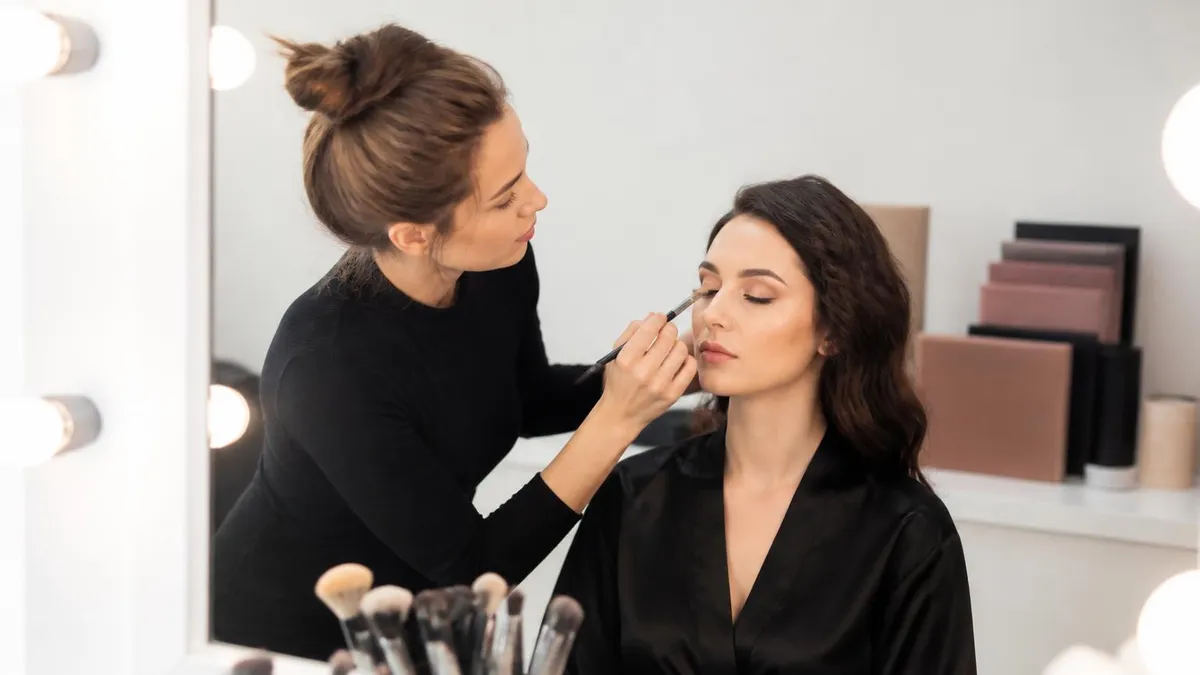
Celebrity Makeup Artist: How to Become One (2026 Career Guide)

Makeup Artist for Film: How to Break Into the Industry and Build a Career

Halloween Makeup Artist: Skills, Career Paths & How to Get Hired

Makeup Artist Names: Famous MUAs, Career Inspirations & How to Build Your Brand

Makeup Artist Portfolio: How to Build, Present, and Land Clients in 2026
About the Author
Licensed Cosmetologist & Beauty Licensing Exam Specialist
Paul Mitchell SchoolsMichelle Santos is a licensed cosmetologist with a Bachelor of Science in Esthetics and Salon Management from Paul Mitchell School. She has 16 years of salon industry experience and 8 years preparing students for state cosmetology board exams in theory, practical skills, and sanitation. She specializes in licensure preparation for cosmetologists, estheticians, and nail technicians.
Join the Discussion
Connect with other students preparing for this exam. Share tips, ask questions, and get advice from people who have been there.
View discussion (7 replies)