
MRI When Invented: The Complete History, Timeline, and Pioneers Behind Magnetic Resonance Imaging
💡 MRI when invented: discover the 1977 first human scan, Nobel-winning pioneers Lauterbur and Mansfield, and the full timeline of MRI history.
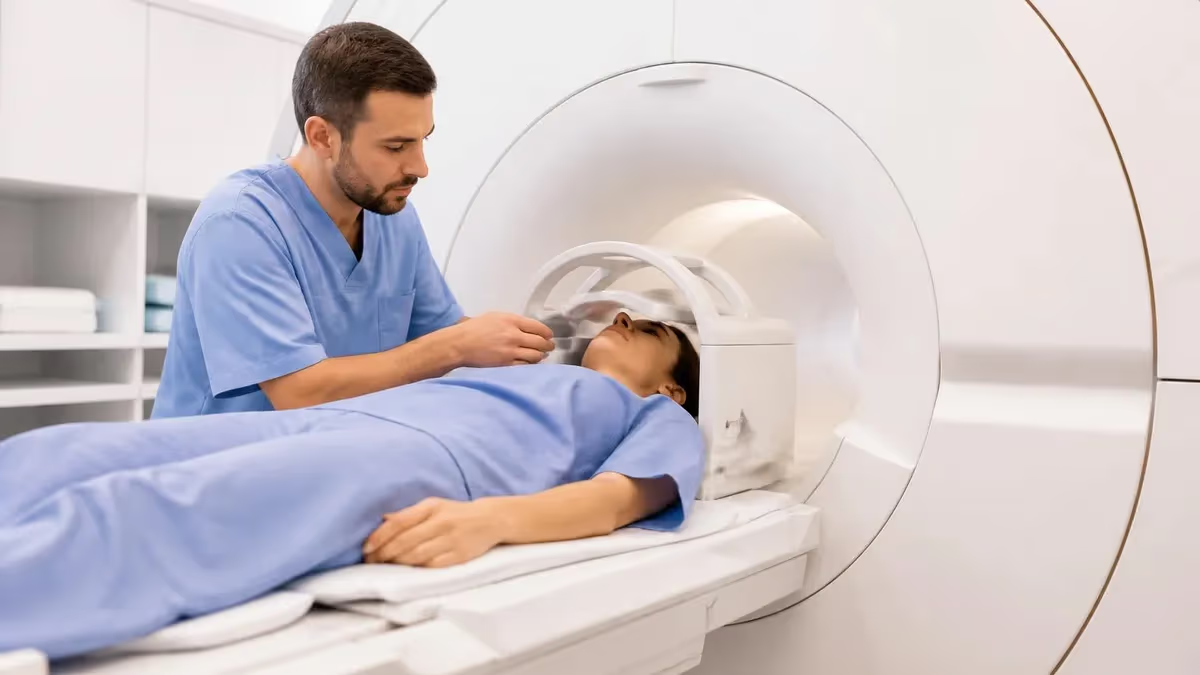
The question of mri when invented does not have a single tidy answer, because magnetic resonance imaging was built from decades of physics breakthroughs before anyone ever scanned a living person. Most historians point to 1977 as the year the first whole-body MRI scan of a human being was completed, but the foundational nuclear magnetic resonance work stretches back to 1946. Understanding that timeline matters because the technology you encounter in hospitals today rests on at least seven separate Nobel-caliber discoveries layered on top of each other.
If you have ever wondered why your doctor orders an MRI instead of a CT or X-ray, the answer is rooted in the unique physics that scientists slowly unlocked between the 1940s and the 1980s. MRI uses powerful magnets and radio waves rather than ionizing radiation, which is why it became indispensable for imaging soft tissues like the brain, spinal cord, ligaments, and internal organs. For a broader overview, the The History of MRI: From Discovery to Modern Medicine article digs deeper into specific eras.
The short version: nuclear magnetic resonance was discovered in 1946 by Felix Bloch and Edward Purcell, who shared the 1952 Nobel Prize in Physics for the achievement. Raymond Damadian filed a patent in 1972 describing how NMR could distinguish cancerous tissue from healthy tissue. Paul Lauterbur produced the first NMR image, of two tubes of water, in 1973. Peter Mansfield developed the mathematical techniques to make scanning fast enough for clinical use. Damadian completed the first full-body human scan on July 3, 1977.
That July 1977 scan, performed on a machine Damadian and his graduate students nicknamed Indomitable, took nearly five hours to produce a single cross-sectional image of a human chest. By comparison, a modern 3 Tesla scanner can capture the same anatomy in a few seconds with vastly superior resolution. The journey from a five-hour scan to a five-second scan covers roughly five decades of relentless engineering, magnet design, computer power, and pulse sequence innovation that we will trace step by step.
Beyond the headline dates, the story of mri when invented is also a story of fierce scientific rivalry. The 2003 Nobel Prize in Physiology or Medicine went to Lauterbur and Mansfield but pointedly excluded Damadian, who took out full-page newspaper advertisements protesting the decision. That controversy still shapes how textbooks present the invention, and it illustrates how messy real scientific progress can be when multiple labs race toward the same goal from different angles.
This article walks through every milestone in chronological order, names the key people, explains the underlying physics in plain language, and connects the historical record to the MRI scanners patients use today. Whether you are a radiology student preparing for boards, a curious patient about to undergo your first scan, or a tech enthusiast tracing medical innovation, you will leave with a clear picture of when MRI was invented, by whom, and why the answer is more nuanced than a single year.
We will also cover the commercial rollout in the early 1980s, the shift from 0.05 Tesla resistive magnets to 7 Tesla superconducting systems, functional MRI in the 1990s, and the AI-assisted reconstruction breakthroughs that define modern scanning in the 2020s. Each section ends with concrete examples and numbers so the historical claims stay grounded in verifiable fact rather than vague summary.
MRI Invention by the Numbers
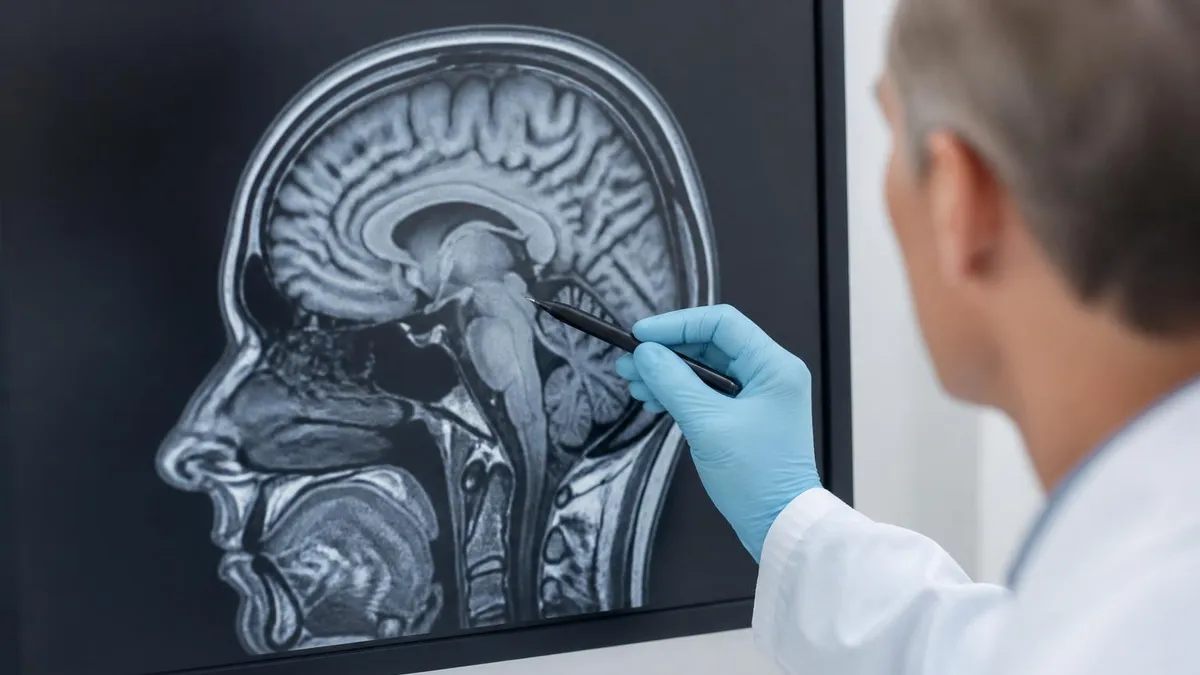
MRI Invention Timeline: From NMR to Clinical Imaging
1946 — NMR Discovered
1971 — Damadian's T1/T2 Insight
1973 — First NMR Image
1977 — First Human Scan
1980 — First Commercial Scanner
2003 — Nobel Prize
To grasp mri when invented, you need to understand the physics that had to be solved first. Nuclear magnetic resonance, the parent technology, depends on the fact that hydrogen nuclei behave like tiny spinning bar magnets. In 1946, Felix Bloch and Edward Purcell independently showed that when you place these nuclei inside a strong magnetic field and pulse them with the correct radio frequency, they absorb energy and then release it in a measurable signal as they relax back to equilibrium. This relaxation signal carries information about the local chemical environment.
For roughly twenty-five years after that discovery, NMR was used purely as a chemistry and biochemistry tool. Scientists used it to identify molecules and study reaction kinetics, but no one had figured out how to extract spatial information from the signal. Without spatial encoding, you could measure that hydrogen was present in a sample, but you could not tell where in the sample it was located. That single limitation kept NMR confined to spectroscopy benches rather than scanning patients in hospitals throughout the 1950s and 1960s.
The breakthrough came in 1973 when Paul Lauterbur realized that applying additional, weaker magnetic field gradients across the sample would make different regions resonate at slightly different frequencies. By measuring those frequency differences, you could mathematically reconstruct a two-dimensional map of hydrogen density. He called his technique zeugmatography, from the Greek word for joining. The published image of two water tubes inside heavy water was crude by modern standards, but it was the first proof that NMR could become an imaging modality. To learn how acronyms evolved, see MRI Medical Abbreviation: What MRI Stands For and Why It Matters.
Peter Mansfield at the University of Nottingham attacked a different bottleneck. Lauterbur's reconstruction was theoretically sound but painfully slow. Mansfield developed echo-planar imaging in 1977, a mathematical technique that allowed an entire image plane to be captured in a single radio frequency excitation rather than requiring hundreds of separate pulses. Echo-planar imaging would not be widely usable until magnet and gradient hardware caught up in the 1990s, but it set the theoretical ceiling for how fast MRI could ever become.
Raymond Damadian approached the problem from yet another angle. As a physician, he was interested in whether NMR could detect disease. His 1971 Science paper demonstrated that tumors had longer T1 and T2 relaxation times than normal tissue. This was the medical motivation that justified turning NMR from a chemistry tool into a diagnostic instrument. Damadian's field-focused NMR technique, while ultimately superseded by Lauterbur's gradient method, provided the practical engineering know-how to build a magnet large enough for a human body.
The convergence of these three strands — Bloch and Purcell's quantum mechanical foundation, Lauterbur's spatial encoding, Mansfield's fast imaging mathematics, and Damadian's clinical motivation and engineering — made the 1977 first human scan possible. Without any one of those pieces, MRI as we know it would not exist. This is why historians of medicine usually treat the invention of MRI as a layered, collaborative process rather than a single eureka moment, even though July 3, 1977 remains the symbolic birthday.
Modern MRI still uses the same fundamental physics. The main magnet is much stronger now, often 1.5 or 3 Tesla compared to the 0.05 Tesla of Indomitable, but the underlying principle of exciting hydrogen nuclei and listening to their relaxation signal is unchanged. What has improved are the gradient coils, the radio frequency coil arrays, the computational reconstruction algorithms, and the magnet technology that allows superconducting wires to maintain extremely high field strengths inside hospital-grade systems.
MRI Practice Test Questions
Prepare for the MRI - Magnetic Resonance Imaging exam with our free practice test modules. Each quiz covers key topics to help you pass on your first try.
MRI Knowledge
MRI Exam Questions covering Knowledge. Master MRI Test concepts for certification prep.
MRI Physics
Free MRI Practice Test featuring Physics. Improve your MRI Exam score with mock test prep.
MRI Anatomy and Pathology
MRI Test Prep for MRI Anatomy and Pathology. Practice MRI Quiz questions and boost your score.
MRI Anatomy and Positioning
MRI Questions and Answers on MRI Anatomy and Positioning. Free MRI practice for exam readiness.
MRI Contrast Agents
Free MRI Quiz on MRI Contrast Agents. MRI Exam prep questions with detailed explanations.
MRI Patient Care and Positioning
MRI Practice Questions for MRI Patient Care and Positioning. Build confidence for your MRI certification exam.
The Three MRI Pioneers: Who Did What
Raymond Damadian was an American physician and biophysicist whose 1971 Science paper demonstrated that NMR relaxation times differ between cancerous and healthy tissue. This finding provided the medical rationale for building a human MRI scanner in the first place, motivating funding agencies and clinicians who otherwise saw NMR as pure chemistry.
Damadian built the first whole-body MRI machine, Indomitable, and led the team that completed the first human scan on July 3, 1977. He founded FONAR, the first MRI company, in 1978 and shipped the first commercial scanner in 1980. His exclusion from the 2003 Nobel Prize remains one of the most disputed decisions in modern science.
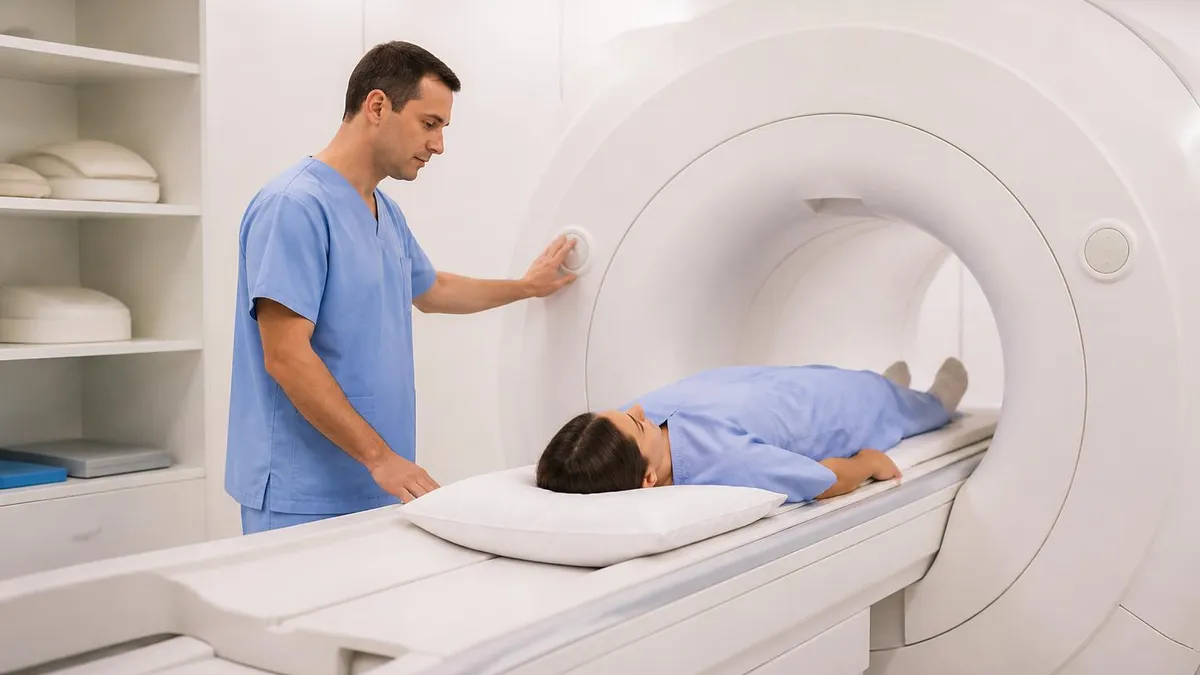
Why MRI Replaced Many Older Imaging Methods
- +No ionizing radiation, unlike X-ray and CT, making repeat scans much safer
- +Superior soft tissue contrast for brain, spine, joints, and abdominal organs
- +Multiple imaging planes without moving the patient or reconfiguring hardware
- +Functional imaging captures blood flow, diffusion, and neural activity in real time
- +Contrast agents are generally safer than iodinated CT contrast for kidneys
- +Non-invasive evaluation of vasculature without arterial catheterization required
- −Long scan times relative to CT, often 20 to 60 minutes per study
- −Contraindicated for many pacemakers, cochlear implants, and ferromagnetic foreign bodies
- −Confined bore can trigger claustrophobia in roughly 5 to 10 percent of patients
- −High capital cost, with 3 Tesla scanners exceeding 2 million dollars installed
- −Loud acoustic noise during scanning requires hearing protection for every patient
- −Limited availability in rural areas compared to ubiquitous X-ray and ultrasound equipment
Key MRI Invention Milestones Worth Memorizing
- ✓1946 — Bloch and Purcell independently discover nuclear magnetic resonance
- ✓1952 — Bloch and Purcell share the Nobel Prize in Physics for NMR
- ✓1971 — Damadian publishes T1/T2 tissue contrast findings in Science
- ✓1972 — Damadian files US Patent 3,789,832 covering NMR cancer detection
- ✓1973 — Lauterbur produces first NMR image of two water tubes
- ✓1976 — Mansfield publishes echo-planar imaging theoretical framework
- ✓1977 — First whole-body human MRI scan performed on July 3
- ✓1980 — FONAR ships world's first commercial MRI scanner
- ✓1991 — Functional MRI demonstrated using BOLD contrast technique
- ✓2003 — Lauterbur and Mansfield awarded Nobel Prize in Physiology or Medicine
MRI was not invented in a single year
The simplest exam answer to mri when invented is 1977, the year of the first human scan. But the underlying NMR physics dates to 1946, the imaging method to 1973, and commercial clinical use to 1980. Knowing all four dates demonstrates real understanding rather than rote memorization.
The leap from laboratory curiosity to clinical workhorse happened faster than most medical technologies. After the 1977 Indomitable scan, FONAR delivered its first commercial scanner in 1980, and within three years, GE, Siemens, Philips, and Picker all entered the market with competing designs. By 1985, the United States had roughly 150 clinical MRI scanners installed. By 1995, that number exceeded 3,500. Today, the global installed base of MRI systems is estimated at over 50,000 units operating across hospitals, imaging centers, and specialty clinics.
The earliest commercial scanners used resistive electromagnets at field strengths of 0.05 to 0.3 Tesla. These were inexpensive to build but produced relatively noisy images and required long acquisition times. The major engineering breakthrough that defined the modern era was the adoption of superconducting magnets cooled with liquid helium. Superconducting coils can sustain magnetic fields of 1.5 or 3 Tesla indefinitely without ongoing power consumption, dramatically improving signal-to-noise ratio and enabling the high-resolution images patients see today.
The 1980s also brought paramagnetic contrast agents based on gadolinium chelates. Gadopentetate dimeglumine, marketed as Magnevist, received FDA approval in 1988 and became the first widely used MRI contrast agent. Contrast injection allowed radiologists to highlight tumors, infections, and vascular abnormalities that would otherwise blend into surrounding tissue. For patients trying to understand the difference between contrast and non-contrast studies, the article on MRI With and Without Contrast: How It Works, What to Expect covers the full clinical picture.
Functional MRI, often called fMRI, emerged in 1991 when researchers at the Massachusetts General Hospital demonstrated that the blood oxygen level dependent or BOLD signal could be used to map brain activity non-invasively. This was a fundamental expansion of what MRI could do. Before fMRI, the technology imaged anatomy. After fMRI, it could image function, showing which parts of the brain activate during specific tasks. Cognitive neuroscience as a field essentially exploded into existence on the back of this single technical capability.
Diffusion weighted imaging followed in the mid-1990s and revolutionized stroke care. By measuring how water molecules move through tissue, diffusion MRI can detect acute ischemic stroke within minutes of onset, when CT scans still appear normal. This early detection window opened the door to thrombolytic therapy and mechanical thrombectomy, treatments that can reverse stroke if administered fast enough. Diffusion imaging is now standard on every clinical MRI installed worldwide.
The 2000s brought 3 Tesla scanners into routine clinical use, doubling the field strength of standard 1.5 Tesla systems and producing markedly sharper images, especially of the brain and musculoskeletal system. Research scanners pushed to 7 Tesla and higher, although FDA clearance for 7 Tesla clinical use did not arrive until 2017. Each field strength increase brought new engineering challenges around radio frequency safety, image uniformity, and patient comfort, all of which required iterative refinement over years.
By the 2020s, MRI had become so common that finding a scanner usually requires nothing more than a referral and an online search. Patients curious about access can read MRI Scan Near Me: How to Find, Schedule, and Prepare for a Local MRI for practical guidance. The four-and-a-half hour first scan of 1977 has become a 15 to 45 minute outpatient procedure performed millions of times each year in the United States alone, with imaging quality that would have been considered impossible by Damadian, Lauterbur, or Mansfield in their original work.
Test questions often ask either when NMR was discovered (1946) or when the first human MRI scan happened (1977). Read carefully. The Nobel Prize for MRI itself came in 2003, but the original NMR Nobel Prize was awarded back in 1952 to Bloch and Purcell, which is a different question entirely.
Modern MRI continues to evolve at a pace that would astonish the original inventors. The most visible change in the last decade has been the rise of AI-assisted image reconstruction. Companies like GE, Siemens, and Philips now ship deep learning reconstruction algorithms that can produce diagnostic quality images from undersampled data, cutting scan times by 40 to 70 percent without sacrificing resolution. A knee MRI that took 25 minutes in 2015 can finish in under 8 minutes in 2025 with comparable diagnostic accuracy.
Higher field strength scanners are also becoming clinically routine. The first 7 Tesla MRI cleared for clinical use received FDA approval in October 2017, and several academic medical centers now operate them for specialized neurological and musculoskeletal imaging. At 7 Tesla, individual cortical layers of the brain become visible, opening new diagnostic possibilities for multiple sclerosis, epilepsy, and small vessel disease that were previously impossible to characterize in vivo.
At the other end of the spectrum, ultra-low-field portable MRI scanners have emerged as a complementary technology. Hyperfine Research received FDA clearance for its 0.064 Tesla bedside Swoop scanner in 2020. These point-of-care systems trade image resolution for portability, allowing MRI to reach intensive care units, emergency departments, and remote clinics that could never house a conventional 1.5 Tesla magnet. They are reshaping how acute neurological imaging gets delivered in the United States and globally.
The article on Common MRI Findings: Brain, Spine and Joints Guide explores what radiologists look for on these modern scans, which builds directly on the historical foundation we have traced. Each advance in hardware or software expands the range of findings that can be detected, characterized, and treated. The journey from a blurry water tube image in 1973 to detailed white matter tractography today represents one of the most successful translational research stories in medicine.
Quantitative MRI is another fast-growing area. Traditional MRI produces images that are qualitatively weighted toward T1, T2, or other contrast mechanisms, but the pixel values are not directly comparable between scanners or even between scans on the same scanner. Quantitative techniques like MR fingerprinting and synthetic MRI produce maps with absolute physical units, enabling longitudinal tracking of disease progression and standardized multi-center clinical trials in ways the original inventors could not have imagined.
Looking forward, hyperpolarized MRI promises to extend the technology from imaging anatomy to imaging metabolism in real time. By temporarily polarizing nuclei like carbon-13 to millions of times their normal alignment, researchers can watch metabolic pathways like the conversion of pyruvate to lactate happen inside living tissue. This could transform how oncologists assess whether a tumor is responding to chemotherapy within hours rather than weeks of starting treatment.
The answer to mri when invented is therefore not a fixed historical fact but a continuing story. The core invention happened between 1946 and 1977, but the technology has reinvented itself roughly every decade since. Anyone studying MRI today is essentially looking at the seventh or eighth generation of an idea that began in two American physics labs in 1946 and has since become the most informationally rich medical imaging modality ever developed.
If you are preparing for an exam like the ARRT MRI registry, the ASRT primary certification, or a graduate physics course, the history of MRI is almost always tested. Examiners use these questions to verify that candidates understand the conceptual sequence from NMR physics to clinical imaging, not just dates. The best preparation strategy is to memorize four anchor dates: 1946 for NMR discovery, 1971 for Damadian's tissue contrast paper, 1977 for the first human scan, and 2003 for the Nobel Prize. From those anchors you can reconstruct the rest of the timeline logically.
For each pioneer, also memorize one specific contribution. Bloch and Purcell discovered NMR. Damadian discovered tissue T1/T2 contrast and built the first human scanner. Lauterbur invented spatial encoding using magnetic field gradients. Mansfield invented echo-planar imaging. If you can pair each name with one sentence, you can answer essentially any history-related question on a registry exam regardless of how it is phrased or which distractor options the question writer chose.
Patients reading this article have different practical concerns. If your physician has ordered an MRI, knowing that the technology has been clinically used since the early 1980s and refined over four decades should be reassuring. Modern scanners are safe, well-understood, and operated by trained technologists who follow protocols developed over millions of accumulated patient studies. The acoustic noise and the bore size are the two most common patient complaints, both of which technologists can mitigate with proper preparation and patient communication.
If you are choosing between imaging modalities, understand that MRI is generally preferred for soft tissue, brain, spine, joints, and pelvic organs, while CT is faster and better for bone fractures, acute trauma, and lung imaging. Ultrasound is best for first-line evaluation of abdominal organs, pregnancy, and superficial structures. Each modality has its place, and the MRI invention story explains why this particular technology became dominant for the indications it serves today.
For radiology technologists in training, the historical narrative provides essential context for understanding why MRI safety zones, ferromagnetic screening, and quench procedures matter. The superconducting magnets that made high-field clinical MRI possible also introduced the unique safety hazard of projectile metallic objects, which had no analog in earlier imaging modalities. Every safety protocol you learn in school connects back to engineering decisions made between 1977 and 1985 as the technology transitioned from laboratory to clinic.
Researchers and students interested in deeper reading should look at the original primary sources rather than relying solely on textbook summaries. Lauterbur's 1973 Nature paper is short, accessible, and shockingly clear given its historical importance. Mansfield's 1977 Journal of Physics C paper on echo-planar imaging is more mathematically demanding but illustrates the elegance of the original solution. Damadian's 1971 Science paper and his 1972 patent provide the medical motivation. Reading these alongside modern review articles gives a complete picture.
Finally, remember that the history of MRI is still being written. Whatever scanner you train on or get scanned in today represents the current state of a 75-year-old project. Diffusion tensor imaging, fMRI, MR spectroscopy, MR elastography, MR fingerprinting, and AI reconstruction were all invented well after the original 1977 scan, and the next major innovation may emerge in the next five years. Understanding mri when invented gives you the foundation to recognize and appreciate those future advances as they arrive.
MRI Questions and Answers
About the Author

Medical Laboratory Scientist & Clinical Certification Expert
Johns Hopkins UniversityDr. Sandra Kim holds a PhD in Clinical Laboratory Science from Johns Hopkins University and is certified as a Medical Technologist (MT) and Medical Laboratory Scientist (MLS) through ASCP. With 16 years of clinical laboratory experience spanning hematology, microbiology, and molecular diagnostics, she prepares candidates for ASCP board exams, MLT, MLS, and specialist certification tests.
Join the Discussion
Connect with other students preparing for this exam. Share tips, ask questions, and get advice from people who have been there.
View discussion (8 replies)