
Jacksonville MEPS Swearing-In Ceremony: Complete Guide to Your Oath of Enlistment
Everything about the Jacksonville MEPS swearing-in ceremony — what to expect, how to prepare, and what happens after your Oath of Enlistment. ✅

The Jacksonville MEPS swearing-in ceremony is one of the most significant milestones in any recruit's military journey. Located at the Jacksonville Military Entrance Processing Station in Florida, this ceremony marks the official moment when civilians transition into members of the United States Armed Forces.
Understanding what to expect during the MEPS process — from medical evaluations to the final Oath of Enlistment — helps recruits arrive prepared, confident, and ready to begin their service. If you want to understand what does meps stand for and how the system works nationwide, the Jacksonville MEPS follows the same federal standards applied at every station across the country.
The Military Entrance Processing Station, commonly abbreviated as MEPS, is a Department of Defense joint-service organization staffed by military and civilian personnel. MEPS serves as the gateway through which all enlistees must pass before officially joining any branch of the U.S. military. Jacksonville MEPS processes applicants for the Army, Navy, Marine Corps, Air Force, Space Force, and Coast Guard. The station evaluates each applicant's physical, mental, and moral qualifications to ensure they meet the strict standards required for military service.
Most recruits experience a two-day processing schedule at Jacksonville MEPS. On the first day, applicants complete medical examinations including blood work, urinalysis, vision and hearing tests, and a comprehensive physical evaluation by a licensed physician. On the second day — or sometimes later the same day for some branches — recruits finalize their job selections, review and sign their enlistment contracts, and participate in the swearing-in ceremony. The entire process is carefully orchestrated to be thorough yet efficient, typically running from early morning through mid-afternoon.
The swearing-in ceremony itself, also known as the Oath of Enlistment ceremony, is a formal and solemn event conducted in a dedicated room at the MEPS facility. An officer — usually a commissioned officer from one of the military branches — administers the oath. Recruits raise their right hands and repeat the words that legally bind them to their commitment to defend the Constitution of the United States against all enemies, foreign and domestic. The ceremony lasts only a few minutes but carries profound legal and personal significance for every participant.
Jacksonville MEPS serves the northeastern Florida region, including recruits from Jacksonville, St. Augustine, Gainesville, Daytona Beach, and surrounding communities. The facility is known for its professional staff and streamlined processing procedures. Recruiters from local offices escort their applicants to the station, but once inside, MEPS personnel take charge of the entire evaluation and processing sequence. Understanding the flow of the day helps reduce anxiety and allows recruits to focus on performing their best during each phase of evaluation.
Preparation is the key to a smooth experience at Jacksonville MEPS. Recruits should gather all required documents well in advance, get adequate sleep the night before their appointment, avoid alcohol for at least 24 hours prior, and eat a healthy breakfast on processing day. Wearing comfortable, easy-to-remove clothing makes the medical examination process faster and less stressful. Arriving with a positive attitude and a clear understanding of what to expect transforms a potentially nerve-wracking day into an exciting step toward a rewarding military career.
This guide covers every stage of the Jacksonville MEPS experience, with special emphasis on the swearing-in ceremony. Whether you are a first-time applicant, a concerned parent, or a recruiter preparing your candidates, the information here provides a detailed, accurate roadmap to navigating one of the most important days in a new service member's life. Read on to learn about MEPS meaning, the processing timeline, what the oath ceremony looks like, and how to ensure your recruit day goes as smoothly as possible.
Jacksonville MEPS by the Numbers

Jacksonville MEPS Processing Timeline
Recruiter Pre-Screening
Day 1 — Medical Examinations
ASVAB Aptitude Testing
Job Selection and Contract Signing
The Swearing-In Ceremony
Departure for Basic Training
Understanding what happens at Jacksonville MEPS from start to finish removes much of the uncertainty that makes recruits nervous. The station is located in the Jacksonville area and operates under the command of the Military Entrance Processing Command (MEPCOM), headquartered in Chicago. All MEPS stations follow federally standardized procedures, which means that the experience at Jacksonville closely mirrors what you would encounter at tampa meps or any other station nationwide. This consistency ensures every service member entering the military has been evaluated to the same rigorous federal standards regardless of where they processed.
On processing day, recruits typically check in at the front desk before dawn and immediately begin a carefully sequenced series of evaluations. The first order of business is usually a urine sample, which screens for controlled substances. This must be completed before eating or drinking anything at the station, so recruits are advised to hydrate well the night before and avoid diuretics. Station staff then guide groups of applicants through each station in an orderly rotation, minimizing wait times while ensuring thorough evaluation of every candidate.
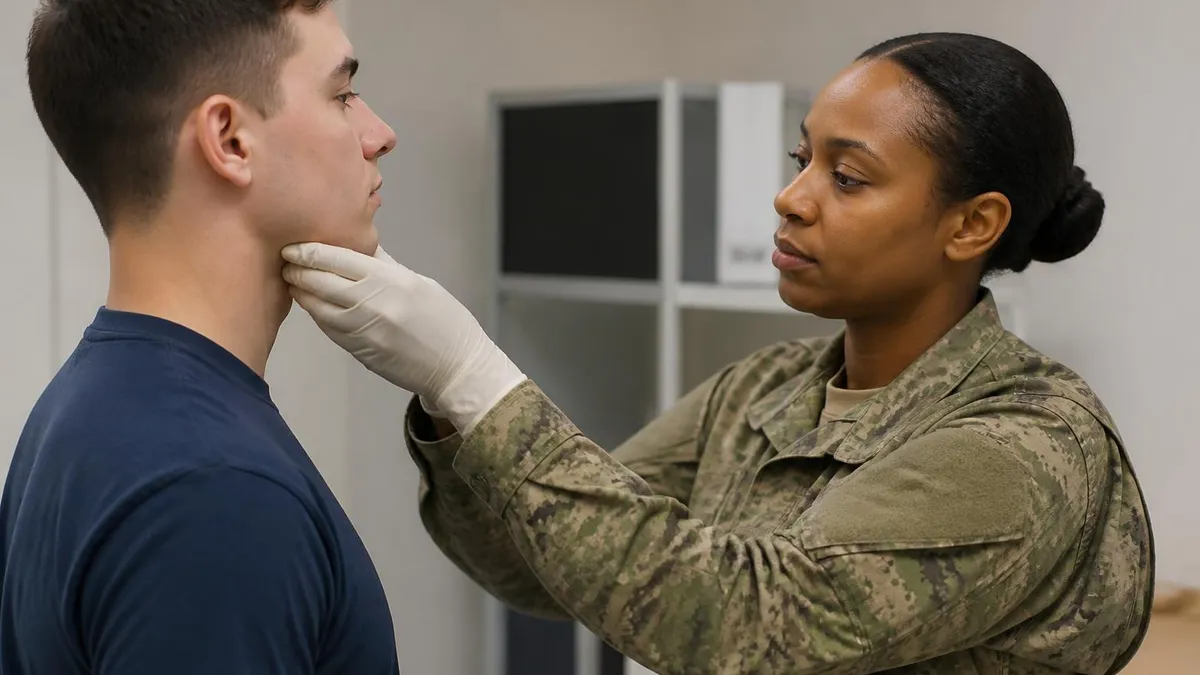
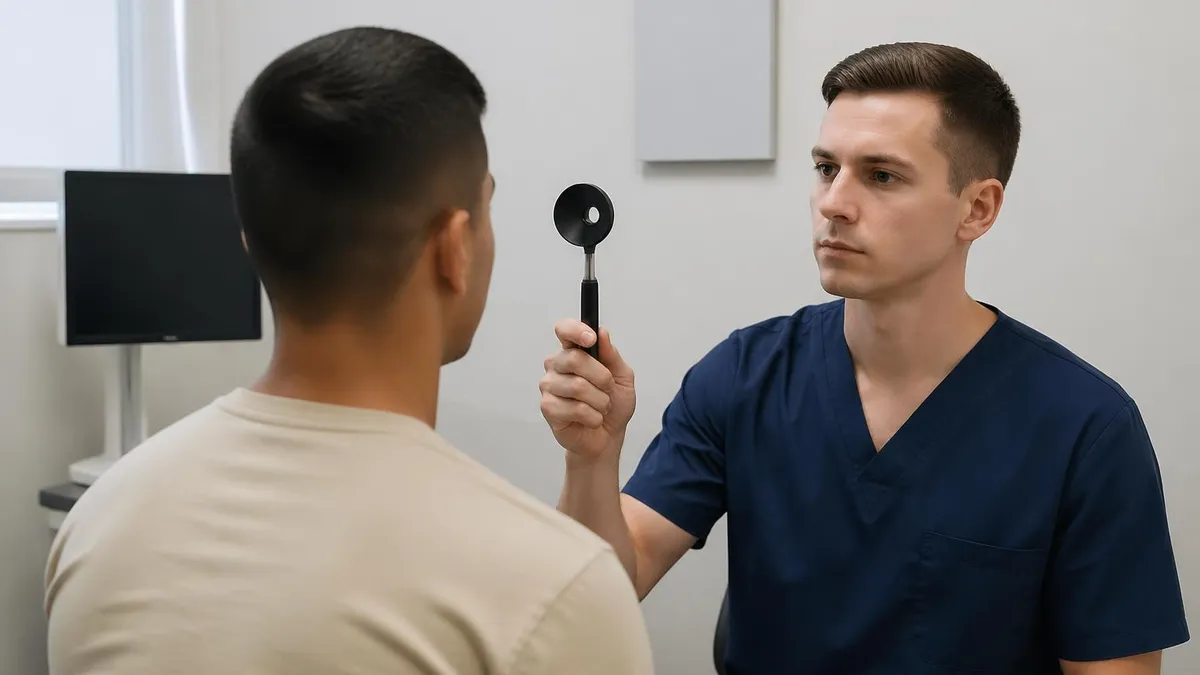
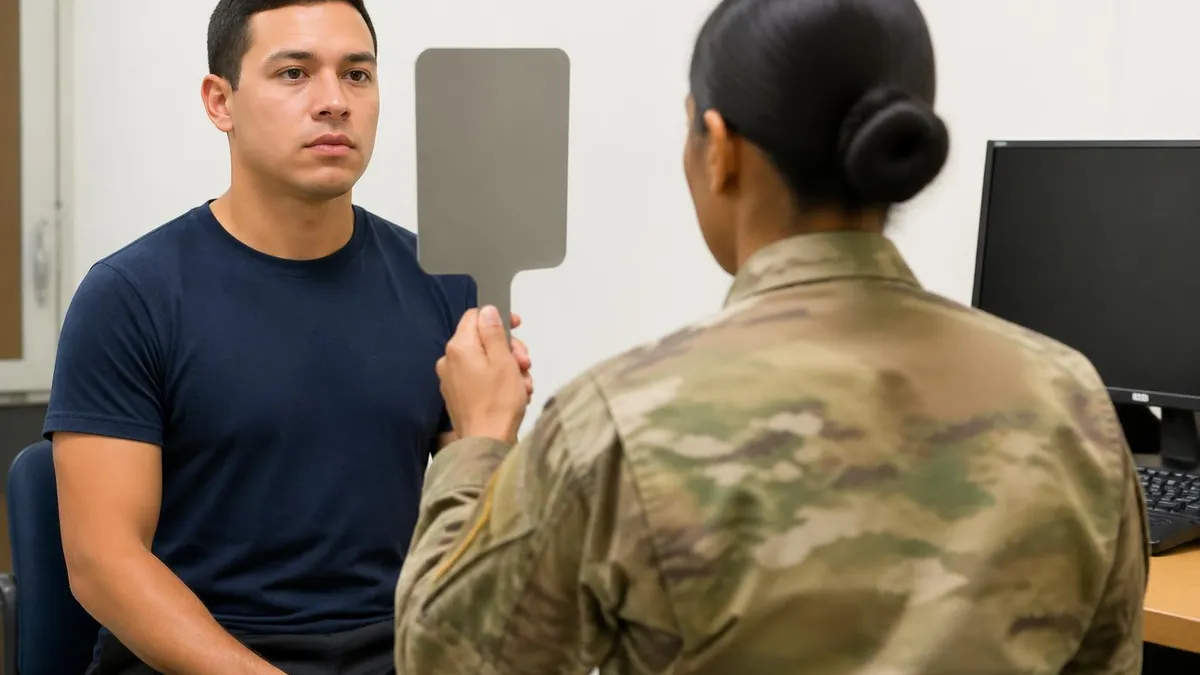
The medical examination at Jacksonville MEPS is the most comprehensive part of the first day. Physicians and medical technicians check blood pressure, pulse rate, height, and weight against Department of Defense standards. Vision is tested for both acuity and color perception, since certain military jobs require specific visual capabilities. Hearing tests are conducted in soundproof booths using calibrated audiometers. Orthopedic evaluations assess joint function, range of motion, and any history of injury that could affect a recruit's ability to perform military duties.
Blood work drawn at MEPS screens for a range of conditions including HIV, anemia, and sexually transmitted infections. Positive findings do not automatically disqualify a recruit but may require additional medical review or waivers before processing can continue. The MEPS physician reviews each applicant's entire medical history, including documentation of past surgeries, chronic conditions, mental health treatment, and prescription medications. Recruits are legally required to disclose all medical history accurately — concealment of a disqualifying condition is a federal offense.
For recruits who have not yet taken the Armed Services Vocational Aptitude Battery, Jacksonville MEPS offers computerized testing on-site. The ASVAB consists of ten subtests covering areas such as arithmetic reasoning, word knowledge, paragraph comprehension, and mechanical comprehension. The Armed Forces Qualification Test score, derived from four of these subtests, determines basic enlistment eligibility. Higher scores open up a wider range of job opportunities across all branches. MEPS counselors use ASVAB scores in combination with physical profile codes and branch-specific requirements to help each recruit identify the best occupational fit.
Once medical clearance is granted and the ASVAB score is confirmed, recruits meet individually with a branch-specific career counselor to discuss job options. This conversation may feel like a negotiation — the military needs certain jobs filled, and recruits have personal preferences — but MEPS counselors are experienced at finding matches that satisfy both parties. After agreeing on a job, the recruit reviews the enlistment contract in detail. This legally binding document specifies the Military Occupational Specialty code, enlistment bonuses, service length, training locations, and reporting dates. Recruits should read every page carefully and ask questions before signing.
The day concludes with the swearing-in ceremony, the emotional high point of the entire MEPS experience. Recruits are gathered in a formal ceremony room decorated with flags representing each military branch. Many stations allow a small number of family members or guests to observe, and Jacksonville MEPS generally accommodates this when space permits.
The presiding officer calls the room to attention, instructs recruits to raise their right hands, and administers the Oath of Enlistment word by word. After the final words are spoken, the room erupts in applause, handshakes, and often tears of pride from families watching their loved ones take this historic step.
Understanding MEPS Military Processing: What Each Phase Means
The Oath of Enlistment is the legal foundation of military service. Every recruit — whether enlisting in the Army, Navy, Marines, Air Force, Space Force, or Coast Guard — recites the same oath: "I do solemnly swear that I will support and defend the Constitution of the United States against all enemies, foreign and domestic; that I will bear true faith and allegiance to the same; and that I will obey the orders of the President of the United States and the orders of the officers appointed over me, according to regulations and the Uniform Code of Military Justice. So help me God." Recruits who wish may substitute "affirm" for "swear" and omit the final phrase for religious reasons.
The ceremony takes less than five minutes, but its implications last a lifetime. Once the oath is administered, the recruit is legally a member of the United States Armed Forces and is subject to the Uniform Code of Military Justice (UCMJ). For those in the Delayed Entry Program, this initial oath is a commitment to report for duty on the assigned ship date. Recruits who fail to report after swearing in can face legal consequences including the designation of being Absent Without Leave before even reaching basic training.

Enlisting at Jacksonville MEPS: Benefits and Challenges to Consider
- +The swearing-in ceremony is a powerful, memorable milestone that officially marks your transition to military service
- +Jacksonville MEPS staff are experienced professionals who guide recruits through every step, reducing confusion
- +Processing at MEPS provides legal certainty — your job, bonus, and training dates are locked into a signed contract
- +Recruits receive thorough medical evaluations at no cost, often identifying health conditions they were previously unaware of
- +The Delayed Entry Program provides flexibility for recruits who need time to prepare before shipping to basic training
- +Family members can often attend the oath ceremony, creating a shared moment of pride and celebration
- −Processing days are long, often starting before 5:00 AM and running until mid-afternoon, which can be physically and mentally exhausting
- −Medical disqualifications discovered during MEPS examination can derail enlistment plans that recruits have spent months preparing
- −The job selection process may not result in the recruit's first-choice MOS if scores or openings do not align with preferences
- −Recruits in the Delayed Entry Program must maintain fitness and eligibility standards for months before shipping, requiring sustained discipline
- −Disclosure requirements are strict — undisclosed medical history discovered later can result in discharge or legal consequences
- −Wait times during the processing day can be unpredictable, and stress levels are high, especially during medical evaluations
Pros and Cons at a Glance
| Pros | Cons |
|---|---|
| The swearing-in ceremony is a powerful, memorable milestone that officially marks your transition to military service | Medical disqualifications discovered during MEPS examination can derail enlistment plans that recruits have spent months preparing |
| Jacksonville MEPS staff are experienced professionals who guide recruits through every step, reducing confusion | The job selection process may not result in the recruit's first-choice MOS if scores or openings do not align with preferences |
| Processing at MEPS provides legal certainty — your job, bonus, and training dates are locked into a signed contract | Recruits in the Delayed Entry Program must maintain fitness and eligibility standards for months before shipping, requiring sustained discipline |
| Recruits receive thorough medical evaluations at no cost, often identifying health conditions they were previously unaware of | Disclosure requirements are strict — undisclosed medical history discovered later can result in discharge or legal consequences |
| The Delayed Entry Program provides flexibility for recruits who need time to prepare before shipping to basic training | Wait times during the processing day can be unpredictable, and stress levels are high, especially during medical evaluations |
Jacksonville MEPS Swearing-In Day Preparation Checklist
- ✓Bring a valid government-issued photo ID such as a driver's license, passport, or state ID card
- ✓Carry your Social Security card — MEPS staff will need to verify your Social Security number
- ✓Pack your birth certificate (original or certified copy) to confirm citizenship eligibility
- ✓Bring all medical records, eyeglass prescriptions, and documentation for any past surgeries or chronic conditions
- ✓Wear comfortable, loose-fitting clothing and slip-on shoes to speed up the medical examination process
- ✓Avoid alcohol for at least 24 hours and recreational drugs for at least 72 hours before your MEPS appointment
- ✓Get at least 8 hours of sleep the night before — fatigue affects test scores and physical performance
- ✓Eat a nutritious breakfast before arriving, as processing can last 8-10 hours with limited meal breaks
- ✓Do not bring weapons, tobacco products, or large amounts of cash to the MEPS facility
- ✓Confirm your reporting time with your recruiter the day before and arrange reliable transportation to arrive on time
Once You Raise Your Hand, You Are In
The Oath of Enlistment administered at Jacksonville MEPS is a federal legal commitment. Unlike a job offer you can decline, once you have sworn the oath, you are subject to the Uniform Code of Military Justice and are obligated to report for duty on your assigned ship date. Recruits in the Delayed Entry Program who fail to report can face legal consequences. Make sure you are fully committed before raising your right hand.
After the Jacksonville MEPS swearing-in ceremony, recruits enter a new phase of their military journey that requires continued preparation and commitment. For direct-ship recruits, the hours immediately following the oath ceremony are a whirlwind of activity. MEPS staff provide travel orders, meal vouchers for en-route meals, and specific reporting instructions for the reception battalion at the recruit's assigned basic training installation. Recruits are advised to call family members to share the news and to follow travel instructions precisely, as missing connecting flights or failing to report to the correct location creates complications that are difficult to resolve quickly.
Recruits entering the Delayed Entry Program face a different but equally important post-oath period. DEP members should maintain a consistent physical fitness regimen to prepare for the demanding requirements of basic training. The Army's basic training, for instance, requires recruits to meet minimum fitness standards from the very first week. Showing up to Fort Jackson, Parris Island, Lackland Air Force Base, or Naval Station Great Lakes already physically prepared gives recruits a significant advantage and reduces the risk of injury during the physically intensive early weeks of training.
During the DEP period, recruits remain in regular contact with their recruiter. Monthly check-ins may be required, and recruits may be asked to attend group DEP meetings where they receive information about what to expect in basic training. These meetings are also opportunities to ask questions, connect with other recruits heading to the same branch or installation, and practice military customs and courtesies such as proper reporting statements and the chain of command. Recruits who treat the DEP period seriously and show up to check-ins prepared and motivated stand out positively to their recruiters.
Mental preparation is just as important as physical fitness in the weeks before shipping to basic training. Recruits should research their assigned installation, understand what a typical training day looks like, and familiarize themselves with military ranks, insignia, and basic terminology. Understanding the difference between an enlisted rank and a commissioned officer rank, knowing how to address a drill sergeant, and being familiar with the phonetic alphabet are small but meaningful ways to ease the transition into military culture. Many recruits find that reading firsthand accounts of basic training from veterans helps set realistic expectations.
Financial preparation is another critical area for recruits in the DEP. Once at basic training, recruits receive their first military pay, but the transition period can create a financial gap. Recruits should pay down debt, build an emergency fund, and notify relevant institutions — banks, student loan servicers, and landlords — of their upcoming deployment to basic training. Service members on active duty may qualify for benefits under the Servicemembers Civil Relief Act, which can reduce interest rates on pre-service debts and provide certain legal protections during training.
Recruits should also use the time between the Jacksonville MEPS swearing-in ceremony and their ship date to strengthen relationships with family and friends. Basic training prohibits personal phone use for the first several weeks, and communication is limited to handwritten letters. Saying meaningful goodbyes, leaving contact information for the training installation with family members, and discussing expectations for communication help ease the separation anxiety that many recruits and their families experience during training. Preparing family members emotionally for the limited contact period prevents misunderstandings and reduces stress on both sides.
Documentation is another area recruits often overlook after their MEPS oath ceremony. Each recruit should keep copies of their enlistment contract, ASVAB score sheet, and physical profile documentation in a secure location accessible to a trusted family member. If any discrepancies arise during basic training regarding job assignment, enlistment bonuses, or service length, having copies of original MEPS documents provides the evidence needed to resolve the issue. MEPS paperwork is the legal foundation of the entire enlistment, and protecting those documents is a simple but important step every new service member should take.

Failing to disclose a medical condition, prior surgery, mental health treatment, or prescription medication history at Jacksonville MEPS is a federal offense. If a concealed condition is discovered during basic training or later in your career, you can face discharge, loss of benefits, and potential criminal prosecution under the Uniform Code of Military Justice. Always disclose completely and honestly — many conditions can be waived if properly documented and reviewed in advance.
Succeeding at Jacksonville MEPS requires both logistical preparation and the right mental mindset. Recruits who arrive knowing exactly what to expect can move through each phase of processing with calm efficiency rather than anxious uncertainty. One of the most effective ways to prepare is to study the MEPS process in detail using reliable resources.
Practice tests, study guides, and informational articles like this one give recruits the knowledge framework they need to approach each evaluation phase with confidence. Recruits heading to Texas should note that the experience at dallas meps follows the same federal protocols as Jacksonville, making preparation universally applicable across all MEPS locations.
Physical readiness on the day of processing significantly affects outcomes. While the medical examination itself is not a fitness test, physical condition matters in ways recruits may not anticipate. Orthopedic evaluations assess joint health, flexibility, and range of motion — conditions like flat feet, old knee injuries, or limited shoulder mobility can trigger additional scrutiny. Recruits with known orthopedic issues should obtain documentation from their personal physician explaining the condition's current status and functional impact before their MEPS appointment. Proactive documentation often facilitates waiver approvals that might otherwise be delayed.
Hydration plays a larger role at MEPS than most recruits expect. The urine sample collected at the start of processing must be sufficient in volume to test — recruits who cannot produce a sample face delays and may even have their appointment rescheduled. Blood pressure readings, which are taken multiple times throughout the day, are affected by dehydration and caffeine consumption.
Recruits should drink plenty of water in the 24 hours before their appointment, limit caffeine on processing day, and avoid energy drinks entirely. Elevated blood pressure readings can require same-day re-testing and, in extreme cases, can temporarily disqualify a recruit from processing.
ASVAB performance at MEPS is one of the factors recruits have the most direct control over through preparation. Recruits who study vocabulary, practice arithmetic word problems, and review basic mechanical and electrical concepts consistently score higher than those who walk in unprepared.
Many recruits take a practice ASVAB through their recruiter's office, but additional preparation using online practice tests and study guides can push scores into ranges that unlock more competitive and higher-paying job opportunities. The difference between a score in the 50s and a score in the 70s can mean access to dozens of additional career options across every branch.
During the job selection phase at Jacksonville MEPS, recruits should enter the conversation with their career counselor having already researched several job options they find appealing. Knowing the ASVAB line score requirements for your desired jobs, understanding the training pipeline length and location, and being familiar with enlistment bonus opportunities for specific roles puts recruits in a stronger negotiating position. Career counselors work within a framework of available job seats, but recruits who demonstrate informed preferences are more likely to get assignments that match their goals than those who say they will take whatever is available.
Behavior and attitude at Jacksonville MEPS matter more than recruits sometimes realize. MEPS personnel are trained to observe demeanor, follow instructions, and work cooperatively as character indicators. Recruits who are disrespectful, argumentative, or uncooperative create documented records that can follow them into their branch. Conversely, recruits who are polite, patient, and professional — even when processing runs long or instructions seem repetitive — demonstrate the kind of character that military service demands. Treating the MEPS staff and fellow applicants with respect is not just courteous; it is a reflection of the values the military looks for in its members.
The moment of the swearing-in ceremony is one that many veterans describe as unforgettable. Standing in a room with fellow recruits, all with right hands raised, repeating words that have been spoken by millions of Americans before you — from World War II veterans to peacetime service members to those who served in Iraq and Afghanistan — creates an undeniable sense of connection to something larger than yourself. The Jacksonville MEPS swearing-in ceremony is not just a legal formality. It is the beginning of a chapter that will shape the rest of your life in ways both predictable and profound.
Practical tips for the Jacksonville MEPS swearing-in ceremony day begin the night before your appointment. Lay out everything you need to bring — your ID, Social Security card, birth certificate, medical documents, eyeglasses or contact lenses — so that morning departure is stress-free. Set two alarms and arrange transportation that accounts for traffic, parking, and the walk into the facility. Being even five minutes late to a MEPS appointment can result in losing your processing slot for the day and being rescheduled, which delays your enlistment timeline and frustrates your recruiter.
During the medical examination phase, answer every question from the MEPS physician completely and honestly. If you do not understand a question, ask for clarification rather than guessing. If you have brought medical documentation for a past condition, present it proactively to the medical staff rather than waiting to be asked.
Recruits who are transparent about their medical history and arrive with supporting documentation generally experience faster and smoother processing than those who are vague or evasive. The MEPS physician is not an adversary — their job is to ensure you are medically fit for service, not to find reasons to disqualify you.
During the ASVAB testing phase, manage your time carefully. Each subtest is individually timed, and the computerized adaptive format used at MEPS means that earlier questions carry significant weight in determining your final score. Read each question carefully before selecting an answer, but do not spend excessive time on any single question.
If you are unsure of an answer, make your best educated guess and move on — unanswered questions do not benefit your score. The arithmetic reasoning and word knowledge subtests have the most direct impact on your Armed Forces Qualification Test score, so prioritize strong performance on these sections.
During the job selection conversation with your MEPS career counselor, approach the discussion as a professional negotiation rather than a passive acceptance of whatever is offered. Know your must-haves — such as a specific geographic region, a particular type of training, or a minimum bonus amount — and communicate them clearly.
Be prepared to explain why certain jobs appeal to you, as counselors respond better to articulated preferences than to vague statements. At the same time, maintain flexibility. If your first-choice job is not available on your desired ship date, a closely related alternative may provide similar training and career development opportunities.
For family members attending the swearing-in ceremony at Jacksonville MEPS, a few preparation tips help ensure the experience goes smoothly. Confirm with the recruit or recruiter how many guests are permitted, as space in the ceremony room is limited. Arrive at least 30 minutes before the scheduled ceremony time to allow for security check-in and seating.
Silence phones and avoid disruptive behavior during the oath administration — this is a formal military ceremony, and MEPS staff expect respectful decorum from all attendees. Bring a camera or fully charged phone to capture photographs after the ceremony, as most stations permit photos following the official oath.
After the ceremony concludes, recruits who are shipping directly to basic training will have very little free time before departing. Families should plan for brief goodbyes rather than extended celebrations at the MEPS facility. Many families choose to host a send-off gathering the evening before the processing day so that the post-ceremony farewell can be warm but quick.
Recruits who are entering the Delayed Entry Program have more flexibility — the celebration can happen in the days following the oath at a time convenient for everyone. Either way, the Jacksonville MEPS swearing-in ceremony represents a profound family milestone that deserves meaningful recognition.
Veterans who have gone through the MEPS process consistently offer one overarching piece of advice to recruits preparing for their day: trust the process. The MEPS system has been refined over decades to evaluate applicants thoroughly and fairly. While the day is long and can feel overwhelming, every step serves a clear purpose. Medical evaluations protect the recruit and their future unit.
ASVAB testing ensures proper job placement. Contract review prevents misunderstandings. And the oath ceremony provides a shared, solemn moment of commitment that binds new service members to the storied tradition of American military service. Approach the entire Jacksonville MEPS experience with respect for the process, and you will walk out of that ceremony room ready for whatever comes next.
Sample MEPS - Military Entrance Processing Stations Practice Questions
Try these questions from our free MEPS - Military Entrance Processing Stations practice tests. The correct answer and an explanation follow each question.
On an applicant's scheduled ship date, they participate in a final Oath of Enlistment ceremony at MEPS. What is the primary legal effect of this second oath?
- A. It finalizes the applicant's job selection and any negotiated enlistment bonuses.
- B. It serves as a formal welcome to the military branch by a senior officer.
- C. It discharges the individual from the Delayed Entry Program (DEP) and transitions them to active duty status.
- D. It allows the applicant a final opportunity to renegotiate the terms of their contract.
Answer: C. It discharges the individual from the Delayed Entry Program (DEP) and transitions them to active duty status.
The first oath places an applicant into the Delayed Entry Program (DEP), which is an inactive reserve status. The second oath, administered on the ship date, officially discharges them from the DEP and enlists them into their active duty component, at which point they become subject to the Uniform Code of Military Justice (UCMJ).
In which of the following scenarios would a recruiter most likely request a delayed enlistment oath ceremony date?
- A. The applicant wants to choose their MOS after enlisting
- B. The applicant needs time to finish high school before shipping to training
- C. The applicant failed one section of the ASVAB
- D. The applicant scored too high on the physical fitness test
Answer: B. The applicant needs time to finish high school before shipping to training
Delayed Entry Program (DEP) allows enlistees to take the oath and delay ship date to complete obligations like finishing school.
Who is legally authorized to administer the Oath of Enlistment at MEPS?
- A. Any senior NCO with E-7 or higher rank
- B. Any commissioned officer of the United States Armed Forces
- C. Only the MEPS commanding officer
- D. Any federal government employee
Answer: B. Any commissioned officer of the United States Armed Forces
Any commissioned officer of the U.S. Armed Forces is authorized to administer the Oath of Enlistment.
Which agency administers the Oath of Enlistment to recruits at a MEPS facility?
- A. A commissioned officer of the U.S. Armed Forces
- B. The recruiter who enlisted the applicant
- C. A federal civilian employee designated by the Secretary of Defense
- D. Any non-commissioned officer E-7 or above
Answer: A. A commissioned officer of the U.S. Armed Forces
By law, the Oath of Enlistment must be administered by a commissioned officer, though in some cases a warrant officer or other authorized official may qualify.
Take the full MEPS - Military Entrance Processing Stations practice test
MEPS Questions and Answers


About the Author

Retired Military Officer & Armed Forces Test Preparation Specialist
United States Army War CollegeColonel Steven Harris (Ret.) served 28 years in the US Army, earning a Master of Arts in Military Science from the Army War College and a Bachelor of Science in Criminal Justice. He has coached thousands of military enlistment and officer candidate program applicants through the ASVAB, AFQT, AFCT, OAR, and officer selection assessment processes across all military branches.
Join the Discussion
Connect with other students preparing for this exam. Share tips, ask questions, and get advice from people who have been there.
View discussion (8 replies)