
HVAC Repair Companies: How to Vet, Hire, and Pay the Right Pro in 2026 September
HVAC repair companies vary wildly on price and quality. Learn what NATE and EPA 608 mean, red flags, real cost ranges, and when to call for emergency 📝
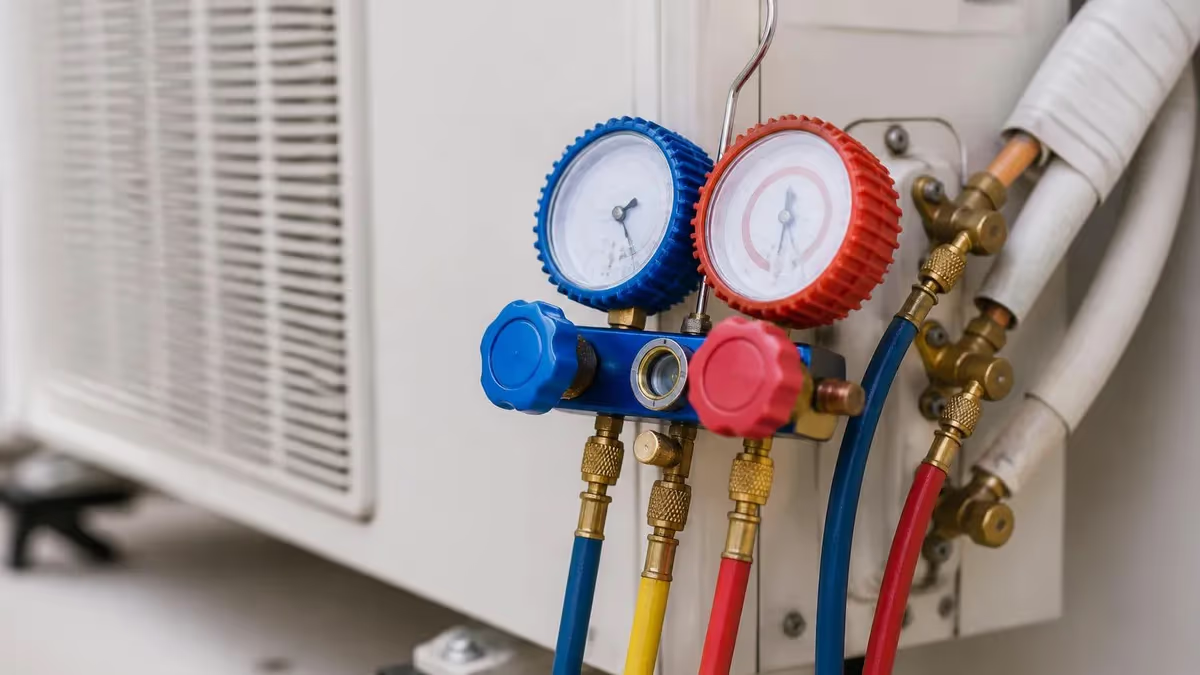
Most homeowners only think about hvac repair companies twice in their lives: the day the AC dies in July, and the day the furnace gives up in February. Both moments feel urgent, and that urgency is exactly what separates a fair quote from a $3,200 ripoff. Roughly 88 percent of furnace failures happen during the four coldest months of the year, and emergency service calls during those weeks carry premiums of 50 to 150 percent over scheduled visits. Knowing how to vet a contractor before the breakdown saves real money.
The HVAC service industry pulled in $129 billion in 2025 across the United States, spread across more than 142,000 contractor businesses ranging from one-truck operators to private-equity-backed regional chains. Quality varies enormously. A NATE-certified technician with EPA Section 608 universal certification will diagnose a refrigerant leak in 20 minutes and quote a fair repair. An uncertified tech may misdiagnose the same fault as a compressor failure and try to sell you a $7,500 system replacement. The difference is not luck; it is credentialing.
This guide explains how to find, vet, hire, and pay hvac repair companies without getting burned. We cover the four credentials that matter (NATE, EPA 608, state license, and BBB rating), the seven red flags every consumer should know, real 2026 cost ranges for the 12 most common repairs, and the math behind repair-versus-replace decisions. We also cover regional variation, since labor rates in Manhattan run roughly triple what techs charge in rural Mississippi, and emergency policies vary wildly by company size.
For aspiring technicians and current students preparing for the EPA 608 exam or the NATE Core test, the second half of this article connects the consumer side to the credential side. Understanding what consumers look for tells you what employers value. Companies that pay top scale want techs who can pass NATE Service or Installation specializations, hold EPA 608 universal, and can explain refrigerant recovery, charging procedures, and diagnostic logic to a customer in plain English. That skill stack starts with passing the exams, and our EPA certification for HVAC guide walks through the Section 608 pathway in detail.
The industry is also changing fast. The 2025 transition from R-410A to R-454B and R-32 (A2L mildly-flammable refrigerants) reshuffled training requirements, parts inventories, and pricing across every brand. Heat pump installations jumped 11 percent year-over-year thanks to Inflation Reduction Act tax credits, and average repair complexity has climbed because modern variable-speed equipment requires manufacturer-specific diagnostic tools. The mom-and-pop shop with a 1998 gauge set and no laptop cannot service a 2024 inverter-driven mini-split, and that gap is widening every year. Keep that in mind when you read reviews.
One last framing point before we dig in. The cheapest quote almost never wins long-term. A $189 service call from an uncertified outfit that misdiagnoses your blower motor and burns out your control board ends up costing $1,400 in follow-up work. A $239 service call from a NATE-certified company that fixes the issue in one visit ends up cheaper, and that is before you account for warranty coverage, which most credible hvac contractors include on parts and labor for a full year. Read on for the full playbook.
The 2026 HVAC Repair Market by the Numbers
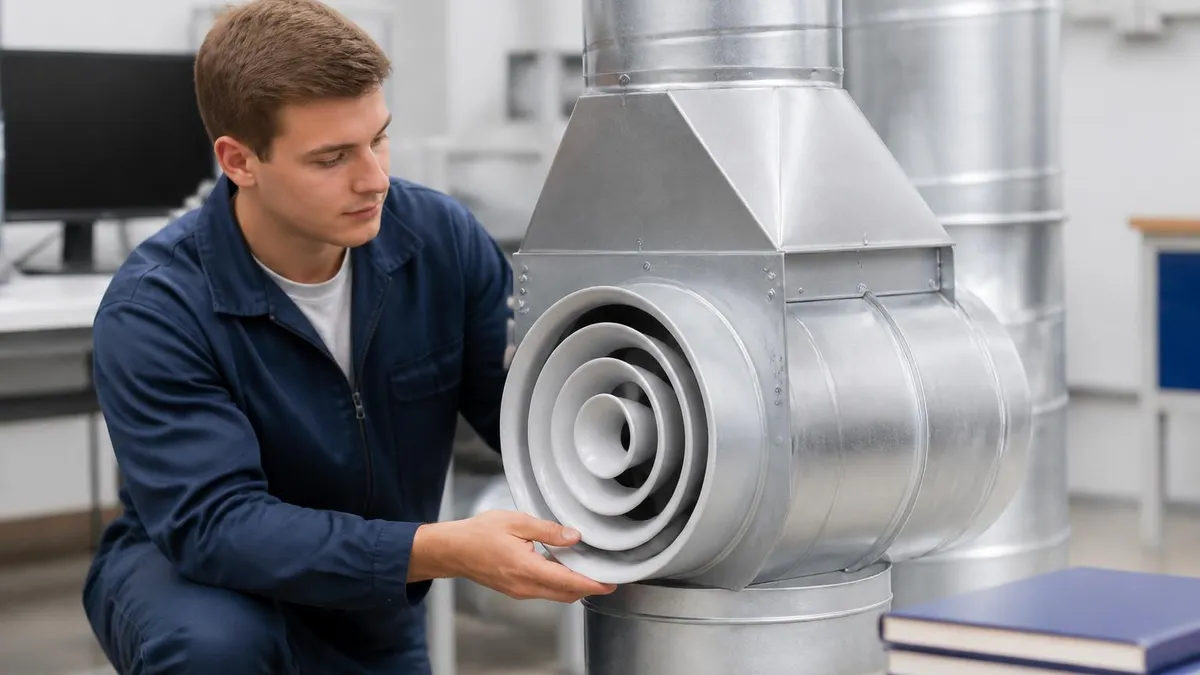
Air Conditioning Repair Companies: What Real Service Looks Like
- State License: verifiable on state board site
- General Liability: $1M minimum coverage
- Workers Comp: required by most states
- Bonded: $10K-$50K typical bond
- EPA Section 608: universal type recommended
- NATE Service: specialization in AC or heat pump
- HVAC Excellence: manufacturer-agnostic credential
- Brand Training: Carrier, Trane, Lennox factory certs
- Flat Diagnostic Fee: $89-$189 disclosed upfront
- Written Estimate: before any work begins
- Parts Markup: 1.5x to 2.0x trade cost is normal
- Labor Rate: stated by hour or by job
- Parts Warranty: 1 year minimum on replaced parts
- Labor Warranty: 90 days minimum, 1 year better
- Manufacturer Honors: registered as authorized dealer
- Callback Policy: free return if issue persists
HVAC Repair Companies: The Four Credentials That Actually Matter
Walk into any hardware store parking lot and you will see five trucks claiming to do hvac repair. Most are legitimate. A few are not. Sorting the two takes ninety seconds if you know which credentials to check. The four that matter, in priority order, are state contractor license, EPA Section 608 universal certification, NATE specialization, and Better Business Bureau accreditation with an A or A-plus rating.
State licensing is the legal baseline. Forty-six states require HVAC contractors to hold a license to perform installation or repair work for hire, and the rules differ wildly by state. Texas requires a Class A or Class B license issued by the TDLR with a passed mechanical exam. California requires a C-20 specialty contractor license. Florida requires a Class A air conditioning license for commercial work. You can verify any contractor in 30 seconds by Googling "[state] contractor license lookup" and entering the company name. If the result returns nothing or shows expired status, do not hire them.
EPA Section 608 is federal law, not optional. Anyone who opens a refrigerant circuit on any system using HCFCs or HFCs must hold this credential. The four types are Type I (small appliances), Type II (high-pressure), Type III (low-pressure), and Universal, which covers all three. A working tech needs Universal at minimum. Ask to see the laminated card. If they cannot produce it, walk away. The EPA published 2.4 million Section 608 certifications between 1995 and 2025, so any legitimate tech has one.
NATE is the gold-standard voluntary credential. North American Technician Excellence administers exams in Core competency plus specializations like Air Conditioning, Heat Pumps, Gas Furnaces, Oil Heating, Hydronics, and Commercial Refrigeration. NATE-certified techs earn 15 to 30 percent more on average and resolve issues in fewer return visits. Roughly 65,000 active NATE techs work across North America. If you are weighing two quotes, the company that staffs NATE techs is worth a 15 percent premium. Our nate hvac certification guide explains how the exam pathway works for techs and what to look for as a consumer.
BBB accreditation is the social-proof layer. The Better Business Bureau is not a regulator, but it tracks consumer complaints and how the business responds. An A-plus rating with fewer than 5 complaints over 3 years is excellent. A B or lower rating, or an unresolved complaint pattern, is a hard no. Cross-check with Google Reviews (look for 4.5 stars over 100+ reviews), Yelp, and Angi. If reviews mention surprise charges, no-shows, or pushy upselling, move on.
One bonus credential: manufacturer-authorized dealer status. Carrier Factory Authorized Dealer, Trane Comfort Specialist, and Lennox Premier Dealer designations require ongoing training, customer satisfaction scores, and warranty performance. Brands publish dealer lookups on their websites. If a company claims to install Lennox but is not in the Lennox dealer locator, the warranty may not be honored on a new install. That is a big deal on $8,000 to $15,000 equipment.
Insurance is the invisible credential most homeowners skip. A legitimate hvac repair company carries general liability ($1 million minimum), workers compensation, and commercial auto. Ask for a Certificate of Insurance (COI) emailed before the visit. Reputable firms send it within an hour. If a tech damages your home and the company has no liability coverage, you cover the loss yourself. Workers comp matters too: if an uninsured tech gets hurt on your property, you can be personally liable for medical bills under most state laws. The $40-per-month premium savings a sketchy operator passes through is your risk.
One final layer: trade association membership. ACCA (Air Conditioning Contractors of America), PHCC (Plumbing-Heating-Cooling Contractors), and ASHRAE (American Society of Heating, Refrigerating, and Air-Conditioning Engineers) maintain member directories. Membership requires adherence to industry standards and codes of ethics. ACCA Quality Installation (QI) standard is the most rigorous benchmark for new equipment installs. A QI-certified install includes Manual J load calculation, Manual D ductwork sizing, refrigerant line set inspection, and full commissioning with documented startup readings. Customers who pay for QI installs see 18 to 25 percent better seasonal efficiency.
Air Conditioning Repair Company Credential Comparison
What it is: Federal certification required for anyone working with refrigerants. Established under Section 608 of the Clean Air Act in 1990.
Four types: Type I (small appliances under 5 lbs charge), Type II (high-pressure HCFC/HFC systems like split AC), Type III (low-pressure chillers), and Universal (all three combined).
Exam format: 25 questions per type plus 25 core questions. Closed-book proctored exam. Passing score 70%. No expiration once earned.
Cost: $20 to $150 depending on proctor. Online practice tests free.
Why it matters to homeowners: If your tech is recovering or charging refrigerant without 608, they are committing a federal violation and the EPA can fine up to $50,000 per day. Ask to see the card.
Before you let any tech walk through your door, run through these questions on the phone. A real company answers all of them clearly in under 90 seconds. A sketchy one stumbles.
- What is your state contractor license number? (Should be ready instantly. Look it up while they answer.)
- Are your techs EPA 608 certified, and what type? (Universal is best. Type II minimum for residential split systems.)
- Do you have NATE-certified technicians on staff? (Yes is a strong plus. Ask which specializations.)
- What is your diagnostic fee, and is it applied to repair cost if I hire you? (Typical range $89-$189. Many credit toward repair.)
- What warranty do you offer on parts and labor? (1 year parts and 1 year labor is the credible floor.)
- Are you insured for at least $1M liability, and can you email the certificate? (A pro emails it before arrival.)
Best HVAC Repair for Air Conditioning Bandon: Seven Red Flags
- ✓Refuses to provide written estimate before starting work — verbal quotes change
- ✓Cannot or will not produce EPA 608 card on request — federal violation
- ✓Recommends full system replacement without first diagnosing the failed component
- ✓Quote is significantly lower than three competitors — usually missing labor or warranty
- ✓Demands cash payment or large deposit upfront — legitimate firms accept cards
- ✓No physical business address listed, only a cell phone and PO Box
- ✓Pushes 'today only' pricing or high-pressure closing tactics on diagnostic visit
- ✓Cannot provide three local customer references from the past 90 days
- ✓Trucks have no signage, technicians wear no uniforms or visible ID
- ✓Reviews show repeated complaints about surprise charges or unfinished work
Trusted Bandon HVAC for Air Conditioning Repair: Real 2026 Cost Ranges
Bend Air Conditioning Repair Companies with Best Reviews: Reading Between the Stars
Review platforms tell a story if you read them properly. A 5.0-star average over 12 reviews is meaningless; a 4.6-star average over 340 reviews is gold. The skill is filtering signal from noise. Start with the negative reviews, because they reveal patterns the company cannot hide. Are complaints clustered around one tech, one season, or one type of job? That is information you need.
Look for specific themes. "Showed up on time and explained the diagnosis clearly" is a strong positive signal. "Quoted $400, charged $1,200" is a deal-breaker pattern. "Tried to sell us a whole new system when our 8-year-old unit just needed a capacitor" reveals an upsell-driven sales culture. Three independent reviews making the same complaint is not coincidence; it is a process problem.
The platforms each have biases. Google Reviews skews to recent and high-volume. Yelp filters aggressively and can hide legitimate reviews under spam classification. Angi (formerly Angie's List) requires verified service history but has a smaller sample. HomeAdvisor pre-screens but its lead-generation model creates conflicts of interest. The best signal is consistency: a 4.5-plus average across at least three independent platforms with at least 50 reviews each.
Pay special attention to how the company responds to negative reviews. A professional response acknowledges the issue, offers to investigate, and provides a direct contact. A defensive or angry response, or no response at all, predicts how they will treat you when something goes wrong. Companies that respond to 90 percent or more of their reviews (positive and negative) usually have customer service systems that actually function. Our roundup of hvac companies portland includes review-pattern analysis you can apply elsewhere.
Regional variation matters more than most homeowners realize. Labor rates in major metros like New York, San Francisco, and Boston run $145 to $225 per hour. Mid-sized cities like Charlotte, Denver, and Austin sit in the $95 to $150 range. Rural areas can be $65 to $95 per hour. The same capacitor replacement that runs $180 in Tennessee can hit $450 in Manhattan. Always benchmark against three quotes from your specific market, not national averages.
Seasonal demand pricing is real but bounded. The peak summer AC season (June through August) and the peak winter heating season (December through February) command 15 to 25 percent premiums on labor and same-day service. Off-season scheduled maintenance (April-May for cooling, September-October for heating) gets you the best techs at the lowest rates. This is also when annual maintenance contracts are most worth signing, since the company has spare capacity to honor priority dispatch commitments. The hvac tune up service guide breaks down what should be on every maintenance checklist.

Best Air Conditioning Repair Bandon HVAC: Big Chain vs Local Shop
- +National chains have 24/7 dispatch centers and guaranteed response times
- +Standardized pricing, warranty terms, and complaint escalation paths
- +Manufacturer factory training is more consistent across techs
- +Background-checked employees with company-branded uniforms and vehicles
- +Financing partnerships (GoodLeap, Synchrony) for major repairs and replacements
- +Easier to resolve issues because corporate compliance team exists
- −Hourly rates run 20 to 40 percent higher than local independents
- −Aggressive upselling culture rewards sales over honest repair recommendations
- −Techs sometimes lack autonomy to negotiate on price or warranty terms
- −High employee turnover means inconsistent expertise from visit to visit
- −Membership clubs ($15-$30/month) lock you into preferred-customer pricing
- −Local emergency response can be slower than nearby independent operator
Best-Rated Air Conditioning Repair Service Grants Pass: The Service Call Process
Initial Phone Screen
Confirmation and ETA
Arrival and System Walk
Diagnosis (15-45 min)
Written Estimate
Repair Work
System Verification
Warranty Paperwork
True emergencies justify the $100-$300 after-hours surcharge. Non-emergencies do not. Use this triage list:
Call emergency service immediately:
- Gas smell near furnace — leave the house first, then call
- Carbon monoxide detector alarm with no obvious cause
- Water pouring from indoor unit and damaging ceiling or floor
- No heat with outside temperature below 35F, especially with young children, elderly, or medical needs in the home
- No AC with indoor temperature above 85F for vulnerable household members
- Burning smell from furnace or AC handler with visible smoke
- Electrical breaker repeatedly tripping when HVAC engages
Wait for next-day scheduled service:
- AC running but not cooling adequately during mild weather
- Furnace short-cycling but still producing some heat
- Strange noises that started recently but system still functions
- Thermostat behaving oddly but house remains comfortable
Most credible emergency repair companies define genuine emergencies the same way and will counsel you honestly on the phone if your issue can safely wait. The ones that always insist on emergency dispatch are gaming you.
Best Air Conditioning Repair in Redmond: The Repair-versus-Replace Decision
At some point every system crosses the line from "worth fixing" to "throw money at it." The classic rule of thumb is the multiplication test: multiply the repair cost by the age of the system in years. If the result exceeds $5,000, replace the system instead of repairing it. A $1,200 repair on a 5-year-old unit is $6,000 — replace. A $400 capacitor on a 4-year-old unit is $1,600 — repair. The math is rough but useful.
Beyond the multiplication test, consider three other factors. First, refrigerant type. Systems still running R-22 (banned new in 2020) are increasingly uneconomical because R-22 prices have climbed past $200 per pound and recovery is mandatory. If you need to recharge an R-22 system, replacement usually wins. Second, efficiency. Modern SEER2 18+ heat pumps consume 30 to 50 percent less energy than 10-year-old 13 SEER equipment. Utility rebates and Inflation Reduction Act tax credits up to $2,000 federal plus state programs can make replacement effectively cheaper over 5 years.
Third, recurring failures. If you have paid for two or more repairs in the past 18 months and a third is now being recommended, the system is telling you it is done. The compressor, coil, and control board are the three components that tend to fail in sequence. Replacing one buys time; replacing all three approaches the cost of a new system.
Smart contractors will tell you this honestly because their warranty exposure on a half-replaced system is bad business. Push back hard on any company that recommends a third major repair on aging equipment without modeling the replacement option side by side.
Financing has changed the calculus too. Most reputable hvac repair companies partner with GoodLeap, Synchrony, or in-house lenders to offer 0% APR for 12 to 18 months on new system installs. That means a $9,500 heat pump install can become $528 per month with no interest for 18 months. Compare that against $1,500 in recurring repairs over the next two years plus rising energy bills, and replacement often wins on cash-flow grounds even when the multiplication test is borderline.
One final consideration: who you hire for the install. The biggest predictor of new-system reliability is installation quality, not the brand on the cabinet. A $14,000 Trane installed by a mediocre crew will underperform a $9,500 Goodman installed perfectly. Look for Manual J load calculations, Manual D ductwork sizing review, refrigerant line set inspection, and proper system commissioning with documented startup readings. Companies that perform hvac replacement using ACCA Quality Installation standards deliver dramatically better outcomes than crews who skip those steps to finish faster.
For HVAC students reading this, here is the takeaway: customers value diagnostic skill, transparent communication, and clean installation work above almost everything else. Pass your hvac certifications, develop a reputation for explaining problems clearly, and learn the manufacturer ACCA standards inside out.
That combination is what separates a $25-an-hour helper from a $45-an-hour lead tech, and eventually a $75-an-hour service manager who runs their own crew, manages parts inventory, mentors apprentices, schedules maintenance routes, handles warranty escalations, and reviews technician callback rates every Monday morning before dispatch routes go out to keep customer satisfaction scores climbing toward ninety-five percent quarter over quarter for years.
HVAC Questions and Answers
Related HVAC Career and Service Resources
Certified HVAC Contractors: How to Find, Vet, and Hire the Right Professional for Your Home or Business
Best HVAC Emergency Services Dallas Texas Peak Summer: How to Find Fast, Reliable Help When Your AC Fails in 100-Degree Heat
NATE HVAC Certification: The Complete 2026 Guide to Requirements, Exams, Costs, and Career Impact for Technicians
EPA Certification for HVAC: The Complete Guide to Section 608 Requirements, Exam Prep, and Career Impact
HVAC Tune Up Service: The Complete Guide to Professional HVAC Maintenance and Why It Pays for Itself

HVAC Companies Portland: The Complete Guide to Finding, Vetting, and Hiring the Best Heating and Cooling Contractors in the Rose City
About the Author

Registered Nurse & Healthcare Educator
Johns Hopkins University School of NursingDr. Sarah Mitchell is a board-certified registered nurse with over 15 years of clinical and academic experience. She completed her PhD in Nursing Science at Johns Hopkins University and has taught NCLEX preparation and clinical skills courses for nursing students across the United States. Her research focuses on evidence-based exam preparation strategies for healthcare certification candidates.