
HVAC Manufacturers: Top Brands, Quality Tiers, and How to Choose in 2026 September
📝 Compare top HVAC manufacturers by tier, warranty, parts availability, and reliability. Find the right brand for residential or commercial systems.

When homeowners and contractors shop for heating and cooling equipment, the list of HVAC manufacturers can feel overwhelming. Carrier, Trane, Lennox, Goodman, Rheem, York, American Standard, Daikin, Mitsubishi, and Bryant dominate U.S. shelves, but each brand serves a different price point, climate, and reliability profile. Understanding who actually builds these systems, where the parts come from, and which warranties hold up in the field is the first step to making a buying decision you will not regret five years from now.
The North American HVAC market is roughly $30 billion in annual revenue, and three parent companies — Carrier Global, Trane Technologies, and Daikin Industries — control more than 60% of residential split-system shipments. That consolidation means many "competing" brands actually share compressors, coils, and control boards under the hood. Knowing those relationships helps you compare apples to apples instead of paying a premium for a badge.
This guide breaks down the major HVAC manufacturers by tier, country of origin, warranty length, parts availability, and typical price range. We cover residential split systems, packaged units, mini-splits, geothermal, and light commercial rooftop units. Whether you are a homeowner replacing a 20-year-old furnace or a contractor deciding which line to stock, the comparisons below give you the information dealers usually keep to themselves.
We also dig into how manufacturers are responding to the 2023 refrigerant transition from R-410A to R-454B and R-32, the new SEER2 efficiency standards, and the federal tax credits available through the Inflation Reduction Act. These regulatory shifts have reshuffled the leaderboard, and brands that adapted early — Daikin, Mitsubishi, and Bosch in particular — have gained share against legacy U.S. names. For more on system economics, see our breakdown of HVAC Installation Cost in 2026: Real Prices by System Type.
Before you sign a quote, remember that the equipment brand is only half the story. Installation quality drives 70% of long-term system performance, according to ENERGY STAR field studies. A premium Lennox installed poorly will fail faster than a mid-tier Goodman installed by a certified technician. So while this article ranks manufacturers, treat the brand as a baseline and the contractor as the multiplier.
We will also touch on emerging players — LG, Samsung, Gree, and Midea — that have moved aggressively into U.S. ductless and heat pump markets. Their warranty terms, parts networks, and dealer support still lag the incumbents, but the price-to-feature ratio is closing the gap fast. By the end of this guide you will know which HVAC manufacturers belong on your shortlist and which to leave on the showroom floor.
HVAC Manufacturers by the Numbers
Major HVAC Manufacturer Tiers
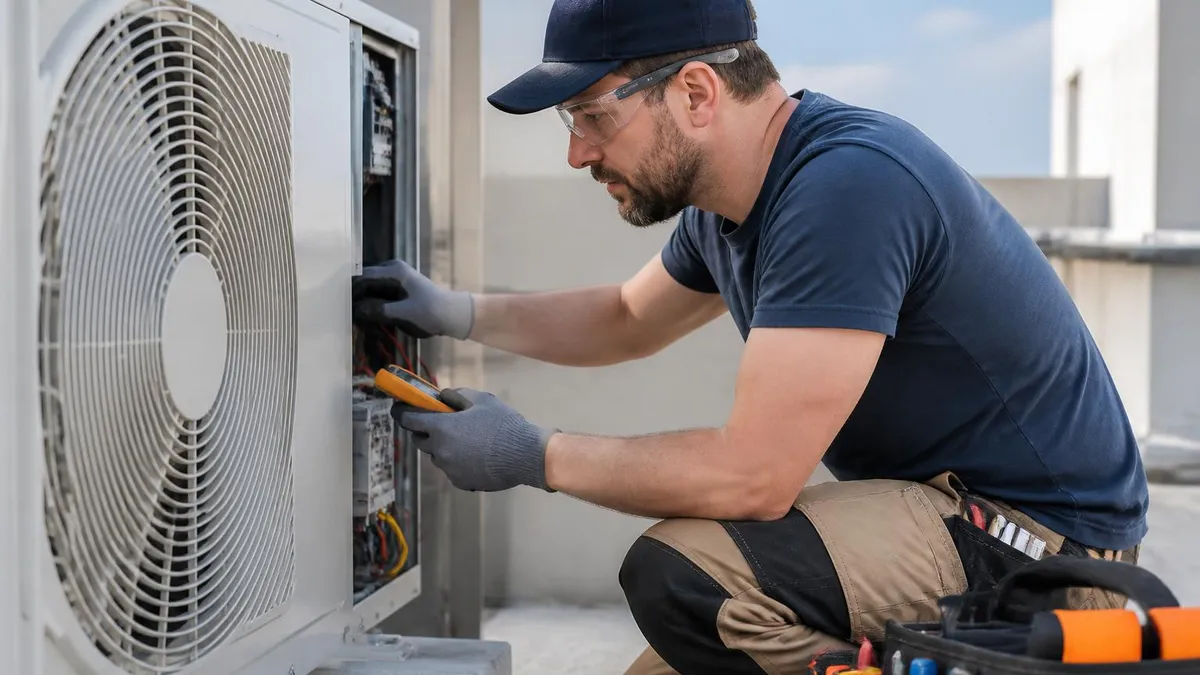
Carrier, Trane, Lennox, and American Standard lead the premium segment with variable-speed compressors, communicating controls, and 12-year warranties. Expect $9,000–$15,000 installed for a 3-ton system. Build quality and dealer support are the strongest in the industry.
Rheem, Ruud, Bryant, York, and Heil compete in the value-premium space with solid two-stage equipment and 10-year warranties. Installed prices run $7,000–$11,000 for a 3-ton split. Performance is excellent for most U.S. climates.
Goodman, Amana, Payne, and Daikin Fit deliver reliable single and two-stage equipment at $5,000–$8,500 installed. Warranties remain strong (10-year parts on Goodman) but features and quiet operation lag premium lines slightly.
Mitsubishi Electric, Daikin, Fujitsu, and LG dominate mini-split and VRF systems. Mitsubishi's Hyper-Heat performs to -13°F. Expect $4,500–$7,000 per indoor head installed, with 12-year compressor warranties.
Bosch, Gree, Midea, and Samsung have gained U.S. share with competitive heat pumps and inverter technology. Parts networks are still maturing, so verify local dealer support before buying.
One of the most confusing aspects of shopping HVAC manufacturers is that many "different" brands roll up to the same parent company. Carrier Global owns Carrier, Bryant, Payne, Heil, Tempstar, Comfortmaker, and Day & Night. Trane Technologies owns Trane and American Standard. Daikin Industries owns Daikin, Goodman, and Amana. United Technologies, Lennox International, and Johnson Controls (York, Coleman, Luxaire, Champion) round out the major holding companies. Knowing this map prevents you from paying premium-tier money for mid-tier hardware in a different paint scheme.
Within a parent company, the differences usually come down to control boards, cabinet sheet-metal thickness, coil coatings, and warranty length. A Bryant Evolution and a Carrier Infinity share the same compressor and most internal components — the badge and dealer network change, but the bones do not. Likewise, Goodman and Amana use identical Daikin-engineered platforms; Amana simply adds a longer compressor warranty and a slightly upgraded cabinet finish for about $400–$700 more installed.
This matters when a contractor pushes a specific brand. If your installer is a Carrier dealer but the Bryant quote comes in $1,200 cheaper from another contractor, the equipment is functionally identical. The decision should hinge on installation quality, post-sale service, and warranty registration support — not the logo. Ask the contractor which platform a unit is built on; reputable installers will tell you.
Daikin's 2012 acquisition of Goodman reshuffled the value tier dramatically. Daikin engineering and Japanese inverter technology now flow into Goodman's Houston manufacturing line, which is why Goodman heat pumps have improved noticeably in the past decade. The Daikin Fit slim-profile heat pump, launched in 2019, is essentially a premium-engineered product sold at a mid-tier price — one of the best deals on the market today.
Mitsubishi Electric and Fujitsu sit outside the U.S. consolidation game and operate as independent specialists in ductless and VRF systems. Their inverter compressors and zoning controls remain the industry benchmark, and contractors who train on these systems often command higher hourly rates. If you are going ductless, factory-trained Diamond or Elite dealers are worth seeking out specifically.
Johnson Controls owns York, Coleman, Luxaire, Champion, and several commercial lines including Hitachi VRF in the Americas. York's residential lineup has improved significantly since 2018 with the LX and Affinity series, but the brand still trades at a discount to Carrier and Trane in most markets — useful leverage when negotiating quotes. For installers preparing duct connections that fit any of these systems, our HVAC Duct Installation: Materials, Sizing, Sealing and Best Practice guide is a good companion read.
Finally, watch for OEM relationships in heat pumps. Bosch sells inverter heat pumps manufactured by Midea in China, while LG and Samsung build their own. Trane and Mitsubishi formed a joint venture in 2018 (Trane Mitsubishi Hyper-Heat) that gives Trane dealers access to Mitsubishi's cold-climate inverter technology under the Trane badge. Knowing these relationships helps you spot value plays the brochures will not advertise.
HVAC Practice Test Questions
Prepare for the HVAC - Heating Ventilation and Air Conditioning exam with our free practice test modules. Each quiz covers key topics to help you pass on your first try.
HVAC Air Conditioning
HVAC Exam Questions covering Air Conditioning. Master HVAC Test concepts for certification prep.
HVAC Code Compliance
Free HVAC Practice Test featuring Code Compliance. Improve your HVAC Exam score with mock test prep.
HVAC Electrical Controls
HVAC Test Prep for Electrical Controls. Practice HVAC Quiz questions and boost your score.
HVAC Energy Efficiency
HVAC Questions and Answers on Energy Efficiency. Free HVAC practice for exam readiness.
HVAC Heating Systems
HVAC Mock Test covering Heating Systems. Online HVAC Test practice with instant feedback.
HVAC Load Calculations
Free HVAC Quiz on HVAC Load Calculations. HVAC Exam prep questions with detailed explanations.
HVAC Tools and Equipment
HVAC Practice Questions for HVAC Tools and Equipment. Build confidence for your HVAC certification exam.
HVAC Refrigeration
HVAC Test Online for Refrigeration. Free practice with instant results and feedback.
HVAC Safety Practices
HVAC Study Material on Safety Practices. Prepare effectively with real exam-style questions.
HVAC System Design
Free HVAC Test covering System Design. Practice and track your HVAC exam readiness.
HVAC Thermodynamics
HVAC Exam Questions covering Thermodynamics. Master HVAC Test concepts for certification prep.
Residential vs Commercial HVAC Manufacturers
Residential split systems are the bread and butter of Carrier, Trane, Lennox, Goodman, and Rheem. These manufacturers dominate the 1.5- to 5-ton outdoor condenser market that fits most U.S. single-family homes. Lineups typically span single-stage budget models around 14.3 SEER2 up to variable-speed flagship units rated 20–23 SEER2 with communicating thermostats and inverter compressors.
Within this segment, the spec sheets converge tightly. Compressor brands (Copeland, Bristol, Hitachi, GMCC) appear across multiple labels. Differentiation comes from coil coatings (gold-fin or e-coated for coastal applications), sound blankets, fan motor type (ECM vs PSC), and warranty registration windows. Premium residential lines from any major manufacturer will easily last 15–20 years with proper maintenance.
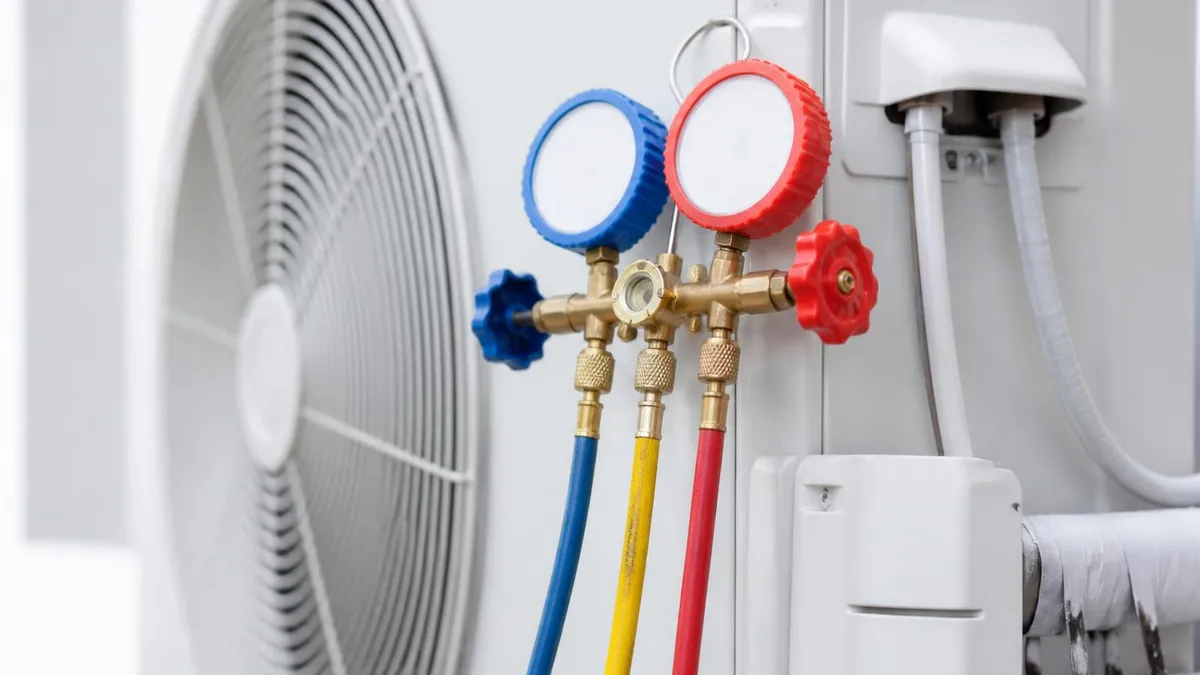
Premium vs Value Tier Manufacturers — Which Should You Buy?
- +Premium tiers offer 12-year parts and compressor warranties when registered
- +Variable-speed inverter compressors deliver quieter, more even comfort
- +Communicating thermostats unlock zoning and diagnostic features
- +Higher SEER2 ratings (20+) qualify for federal IRA tax credits
- +Stronger dealer networks mean faster service callouts in storms
- +Better cabinet construction and coil coatings extend coastal lifespan
- −Premium systems cost $3,000–$6,000 more than equivalent value-tier installs
- −Communicating controls lock you into a single manufacturer's ecosystem
- −Repair labor on inverter boards is higher than single-stage systems
- −Parts availability for proprietary controls can be slower in rural areas
- −Payback period on highest-SEER2 models can exceed 10 years in mild climates
- −Goodman, Rheem, and Bryant offer 90% of premium performance for less money
Buyer's Checklist for Choosing HVAC Manufacturers
- ✓Verify the manufacturer has at least three certified dealers within 30 miles of your home
- ✓Confirm parts availability with a local supply house, not just the manufacturer website
- ✓Register the equipment within 60–90 days of installation to activate full warranty terms
- ✓Compare SEER2, EER2, and HSPF2 ratings — not the legacy SEER number on old marketing
- ✓Ask whether the unit uses R-454B or R-32 refrigerant (required after 2025) or legacy R-410A
- ✓Check Consumer Reports and ACCA member reliability data, not just dealer testimonials
- ✓Get at least three contractor bids quoting equivalent tonnage and SEER2 ratings
- ✓Request a Manual J load calculation before accepting any sizing recommendation
- ✓Verify the contractor is factory-trained for the specific brand they are installing
- ✓Read the warranty fine print for labor coverage limits and exclusions on coastal corrosion
Installation quality beats brand prestige every time
ENERGY STAR and ACCA field studies consistently show that installation defects — incorrect refrigerant charge, undersized ductwork, and wrong sizing — reduce real-world efficiency by 30–40%. A mid-tier Goodman or Rheem system installed by a Manual J–certified contractor will outperform a premium Carrier installed by an unqualified crew. Choose the contractor first, then choose the brand they install best.
Warranty terms are where HVAC manufacturers separate themselves on paper, but the real story lives in the registration fine print. Carrier, Trane, and Lennox all advertise 10-year parts warranties on residential equipment, yet that coverage only activates if the homeowner registers the unit within 60–90 days of installation. Miss the window, and the warranty drops to 5 years on parts. Roughly 30% of homeowners never register, which is one reason brands look more reliable on paper than in practice.
Goodman and Amana take a different approach. Goodman offers a 10-year parts and 10-year compressor warranty automatically — no registration required — which is one of the cleanest warranty programs in the industry. Amana extends that to a lifetime compressor warranty on select premium models, transferable once to a subsequent homeowner. For buyers who do not want to chase paperwork, these unregistered-default warranties are a genuine value advantage.
Labor coverage is the silent killer of HVAC warranties. Almost no manufacturer covers labor beyond the first year, which means a $400 compressor replacement labor bill in year seven comes out of your pocket even though the part itself is free. Some dealers sell extended labor warranties for $300–$800 that cover diagnostic and replacement labor for 10 years — worth considering if you plan to stay in the home long-term and value predictable maintenance costs. For broader maintenance economics see HVAC Maintenance.
Parts availability is another differentiator that brochures will not tell you. Carrier and Trane have the deepest parts distribution networks in North America — most major metros stock factory parts within a 50-mile radius. Lennox runs a more proprietary parts ecosystem with limited third-party distribution, which can extend repair times in rural markets. Goodman and Rheem benefit from broad supply-house availability, while emerging brands like Gree and Midea sometimes require multi-week part orders for control boards.
For ductless systems, Mitsubishi and Daikin maintain strong parts networks through factory-trained dealers (Diamond and Comfort Pro programs). Fujitsu and LG parts are available but generally take 2–5 business days to source. If your home depends on a single ductless head for primary heat, a brand with same-day parts availability is worth a small premium.
Commercial buyers face an entirely different parts and service equation. RTU compressors and OEM control boards from Carrier, Trane, and Daikin Applied can have lead times of 4–12 weeks for legacy models. Stocking spare contactors, capacitors, and igniters on-site is standard practice for facility managers running multiple units. Service contracts with the original installer often include guaranteed parts response times that DIY purchases cannot replicate.
Finally, watch for warranty transferability if you might sell the home. Lennox and Trane permit a one-time transfer to a new homeowner if the unit is registered. Goodman and Carrier transfers reduce the warranty to a shorter base term. This detail matters more for real estate value than most homeowners realize — a fully transferable warranty can add $500–$1,500 to a home's listing appeal in competitive markets.
As of January 1, 2025, new residential split systems must use R-454B or R-32 refrigerant instead of R-410A. Older R-410A inventory is still legal to install through 2025 but will become increasingly expensive to service. If you are buying new equipment, confirm the model uses the next-generation refrigerant to avoid orphaned-parts risk in 2030 and beyond.
Country of origin matters more in HVAC than most buyers realize, both for build quality perception and for tariff exposure. Carrier manufactures most U.S. residential equipment in Indianapolis, Indiana and Tyler, Texas. Trane operates major plants in Tyler, Texas and Pueblo, Colorado, plus its commercial chiller line in La Crosse, Wisconsin. Lennox builds in Marshalltown, Iowa and Stuttgart, Arkansas. These domestic operations supply roughly 70% of U.S. premium-tier residential equipment.
Goodman and Amana share a 4.2-million-square-foot megafactory in Waller, Texas (just outside Houston) that consolidates Daikin North American production. Rheem builds in Fort Smith, Arkansas and Montgomery, Alabama. York manufactures in Norman, Oklahoma and Wichita, Kansas. The American manufacturing base for HVAC is geographically concentrated in the South and Midwest, which keeps freight costs reasonable for U.S. dealers but exposes the industry to severe weather disruptions.
Mitsubishi Electric residential ductless equipment is manufactured in Thailand and Japan, with U.S. distribution through Mitsubishi Electric Trane HVAC US (METUS) — a joint venture launched in 2018. Daikin imports premium VRV/VRF equipment from Japan but manufactures most U.S.-market mini-splits in Mexico and Texas. Fujitsu equipment ships from Thailand and Japan. LG and Samsung produce most U.S. HVAC equipment in South Korea, with some assembly in Mexico to qualify for USMCA trade preferences.
Chinese-built equipment has grown substantially in the U.S. market over the past decade. Midea (the world's largest residential HVAC manufacturer by volume) supplies private-label units to Carrier, Lennox, and Bosch, in addition to selling under its own brand. Gree manufactures for Trane, Daikin, and several private labels. Tariff exposure on Chinese-built compressors and condensers has been a moving target since 2018, and contractors increasingly favor Mexican and U.S. assembly to insulate quotes from tariff shocks.
For HVAC professionals planning a career around installing and servicing these brands, manufacturer training programs are increasingly important. Carrier University, Trane Technologies College, Lennox PROS, and the Mitsubishi Diamond Contractor program all offer factory certifications that increase service rates and warranty labor reimbursements. If you are early in the trade, our guide to HVAC Trade School: How to Choose the Right Program covers how to combine school training with manufacturer-specific certifications.
From a buyer's standpoint, U.S.-manufactured equipment typically carries a small price premium over imported equivalents but benefits from faster warranty parts shipping and lower freight delays. For coastal or remote installations where freight costs matter, domestic brands have a meaningful logistics advantage. Premium dealers also tend to stock U.S.-built parts more deeply in their service vans, which translates to faster same-day repairs during peak summer service calls.
One emerging trend worth watching: U.S. manufacturers are reshoring production of inverter components and control boards in response to the CHIPS Act and Inflation Reduction Act incentives. Expect more communicating thermostats, inverter drives, and ECM motor controllers to be assembled domestically by 2027, which should improve parts lead times for premium variable-speed equipment industry-wide.
Once you have narrowed the HVAC manufacturer shortlist, the next step is translating brand selection into a sharp purchase decision. Start by collecting three quotes from contractors who each represent a different manufacturer — for example, one Carrier dealer, one Trane dealer, and one Goodman or Rheem dealer. This gives you genuine price discovery across tiers and prevents a single dealer from steering you toward the brand that benefits them most.
Insist on detailed equipment specifications in writing. Every quote should list the exact model number of the outdoor condenser, indoor air handler or coil, and thermostat. With model numbers in hand, you can cross-reference SEER2, EER2, HSPF2, capacity, and warranty terms on the AHRI directory (ahridirectory.org), the only authoritative U.S. database of matched system performance ratings. Without an AHRI certificate number, you cannot verify the system meets advertised efficiency or qualifies for tax credits.
Federal tax credits under the Inflation Reduction Act offer up to $2,000 for qualified heat pump installations and 30% of geothermal system cost with no cap. State and utility rebates often stack on top — Massachusetts, New York, California, and Washington offer some of the most generous incentives, frequently $4,000–$10,000 for cold-climate heat pump conversions. Ask each contractor to itemize available rebates on the quote rather than leaving them as a vague selling point.
Manual J load calculations should accompany every quote for residential replacement work. A Manual J calculation sizes the system to the actual home, accounting for insulation, window area, infiltration, and orientation. Oversized HVAC systems — common when contractors simply replace like-for-like without recalculating — short-cycle, waste energy, and dehumidify poorly. If a contractor refuses to provide a Manual J, find another contractor.
Pay attention to ductwork condition during the bidding process. A premium variable-speed Carrier or Lennox system performing poorly is almost always running through undersized, leaky, or unbalanced ductwork. Quality contractors will inspect the duct system and quote sealing, resizing, or replacement separately. Plan for $1,500–$4,000 in duct improvements on most retrofits to unlock the full performance of premium equipment.
Negotiate the warranty registration as part of the contract. The cleanest contractors will register the equipment on your behalf within the registration window and email you the confirmation. If a contractor offloads registration onto the homeowner, set a calendar reminder for 30 days post-install — missed registration is the single most common cause of denied warranty claims years later.
Finally, build a relationship with the service department, not just the sales department. After the install, schedule a paid maintenance visit in the opposite season (spring tune-up for heating systems, fall tune-up for cooling). This puts a tech back in the home, validates installation quality, and establishes a service record that strengthens any future warranty claim. Brand prestige fades; consistent maintenance and a trusted service relationship are what keep an HVAC system running 20-plus years.
HVAC Questions and Answers


About the Author

NATE Certified HVAC Technician & Licensing Exam Trainer
Universal Technical InstituteMike Johnson is a NATE-certified HVAC technician and EPA 608 universal-certified refrigerant handler with a Bachelor of Science in HVAC/R Technology. He has 19 years of commercial and residential HVAC installation and service experience and specializes in preparing technicians for NATE certification, EPA 608, A2L refrigerant safety, and state HVAC contractor licensing examinations.