
HVAC Fan Relay: The Complete Guide to Types, Wiring, Diagnostics, and Replacement for Residential and Commercial Systems
🔎 Learn how HVAC fan relays work, common failure signs, wiring diagrams, and step-by-step troubleshooting tips to keep your heating and cooling system
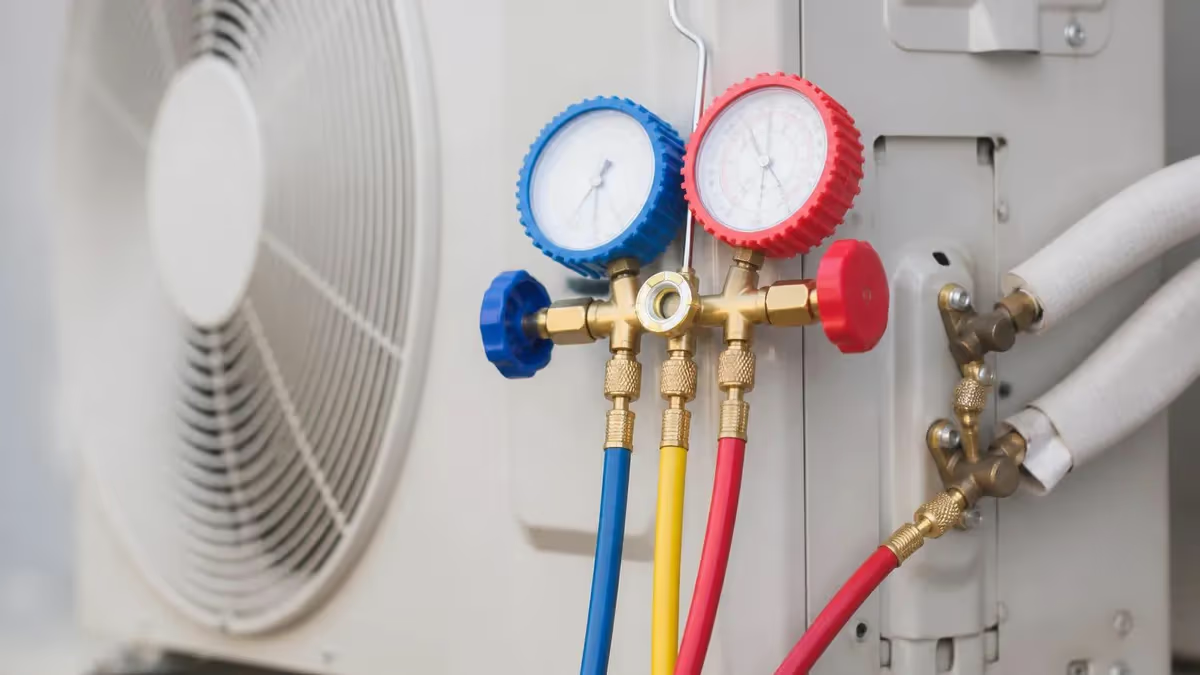
The HVAC fan relay is one of the most critical yet frequently overlooked components in residential and commercial heating, ventilation, and air conditioning systems. This small electromagnetic switching device controls when the blower fan turns on and off, ensuring proper airflow through your ductwork and maintaining consistent indoor temperatures throughout your living or working space. When the fan relay fails, your entire system can stop distributing conditioned air, leading to uncomfortable temperatures, frozen evaporator coils, and even compressor damage that could cost thousands of dollars to repair.
Understanding how an HVAC fan relay works is essential for homeowners who want to troubleshoot common problems and for technicians preparing for certification exams. The relay functions as an intermediary between the thermostat's low-voltage control signal and the high-voltage blower motor circuit. When your thermostat calls for heating or cooling, it sends a 24-volt signal to the relay coil, which creates a magnetic field that closes the relay contacts. Those contacts then complete the 120-volt or 240-volt circuit powering the blower motor directly.
Fan relays come in several configurations, including single-pole single-throw, single-pole double-throw, and double-pole double-throw designs used across various equipment types. The specific type your system requires depends on the manufacturer, the complexity of the control circuit, and whether your system uses multi-speed blower motors. Most residential systems use a single-pole relay mounted on the circuit board or near the blower compartment, while commercial systems often employ more robust relays rated for higher amperages and demanding duty cycles.
The lifespan of a typical HVAC fan relay ranges from ten to fifteen years under normal operating conditions, though several factors can shorten that timeline considerably. Electrical surges, excessive cycling caused by short-cycling compressors, and exposure to moisture or extreme heat within the air handler cabinet all accelerate relay degradation significantly. Dust and debris accumulation on relay contacts can cause arcing, which gradually pits the contact surfaces and increases electrical resistance until the relay either sticks closed or fails to energize altogether.
One of the most common signs of a failing fan relay is a blower that refuses to turn on when the thermostat calls for heating or cooling from the system. Conversely, a relay with welded contacts may cause the blower to run continuously regardless of thermostat settings or system demands. Other warning signs include intermittent blower operation, a clicking or buzzing sound coming from near the air handler, and unusual electrical odors that suggest overheating contacts inside the unit.
This comprehensive guide covers everything you need to know about HVAC fan relays, from their internal construction and wiring configurations to step-by-step diagnostic procedures and replacement techniques. Whether you are a homeowner trying to understand why your blower stopped working, an apprentice technician studying for your NATE certification, or an experienced contractor looking for a quick troubleshooting reference, this article provides the detailed technical information and practical advice you need to resolve fan relay issues.
By the end of this guide, you will understand relay operating principles, know how to test a suspect relay with basic tools, and be able to select the correct replacement part for your specific system. We also cover advanced topics like sequencing relays, time-delay relays, and the impact of modern variable-speed motors on relay design, giving you a complete foundation of knowledge for any fan relay situation you encounter in the field or at home.
HVAC Fan Relay by the Numbers

How an HVAC Fan Relay Works: Step by Step
Thermostat Sends Control Signal
Relay Coil Energizes
Magnetic Field Closes Contacts
Blower Motor Activates
System Reaches Temperature Setpoint
Blower Continues or Shuts Down
Diagnosing a faulty HVAC fan relay requires a systematic approach that starts with verifying the thermostat is functioning correctly and sending the proper control signal to the equipment. Begin by setting your thermostat to the fan-on position rather than auto to determine whether the blower responds to a direct fan command independently of heating or cooling. If the blower operates in the on position but not during heating or cooling calls, the issue likely lies in the relay, the control board, or the wiring path between the thermostat and the relay coil.
Using a multimeter is the most reliable method for testing an HVAC fan relay accurately and safely in the field. First, disconnect all power to the system at the circuit breaker and the disconnect switch near the outdoor unit if applicable to your installation. Locate the relay on the control board or in the blower compartment and identify the coil terminals and the contact terminals using the wiring diagram printed on the inside panel of the air handler door for reference.
Next, measure the coil resistance with your multimeter set to the ohms scale, which should typically read between 10 and 100 ohms depending on the specific relay model installed. Apply 24 volts to the coil terminals using a transformer or the system's own control voltage while monitoring the contact terminals with your meter set to continuity mode. You should hear an audible click as the relay engages, and your meter should show near-zero resistance across the normally open contacts confirming proper function.
Intermittent fan relay failures present a particular diagnostic challenge because the relay may test perfectly at room temperature but fail under the elevated temperatures inside an operating air handler during actual use. Heat-related failures occur because thermal expansion changes the gap between contact surfaces or weakens the coil's magnetic field strength at higher temperatures. To test for thermal sensitivity, use a heat gun to carefully warm the relay while monitoring contact continuity. If the contacts open or become intermittent under heat, replacement is required.
Another common diagnostic scenario involves a relay that chatters or buzzes instead of clicking cleanly into its engaged position during operation. This chattering typically indicates insufficient control voltage reaching the relay coil from the transformer. Check the transformer output voltage, which should measure between 24 and 28 volts AC under load. Low transformer output, excessive voltage drop through long thermostat wire runs, or corroded connections at terminal blocks all reduce voltage below the relay's minimum pull-in threshold causing the buzzing behavior.
Before replacing a suspected bad relay, inspect the wiring connections carefully for signs of overheating, corrosion, or loose terminals that could mimic relay failure. A loose wire at the relay terminal can create an intermittent connection that prevents the coil from energizing consistently during system operation. Tighten all connections, clean any corrosion with electrical contact cleaner, and verify that wire gauge matches the system requirements specified by the equipment manufacturer in the installation documentation.
Always document the existing wiring configuration before removing a relay by taking photographs or drawing a detailed diagram of every connection. Incorrect wiring during relay replacement can damage the new relay, blow the low-voltage transformer fuse, or create a serious safety hazard for occupants. Match the replacement relay's voltage rating, contact configuration, and amperage capacity to the original specifications found in the equipment installation manual or printed directly on the relay housing label.
HVAC Practice Test Questions
Prepare for the HVAC - Heating Ventilation and Air Conditioning exam with our free practice test modules. Each quiz covers key topics to help you pass on your first try.
HVAC Air Conditioning
HVAC Exam Questions covering Air Conditioning. Master HVAC Test concepts for certification prep.
HVAC Code Compliance
Free HVAC Practice Test featuring Code Compliance. Improve your HVAC Exam score with mock test prep.
HVAC Electrical Controls
HVAC Test Prep for Electrical Controls. Practice HVAC Quiz questions and boost your score.
HVAC Energy Efficiency
HVAC Questions and Answers on Energy Efficiency. Free HVAC practice for exam readiness.
HVAC Heating Systems
HVAC Mock Test covering Heating Systems. Online HVAC Test practice with instant feedback.
HVAC Load Calculations
Free HVAC Quiz on HVAC Load Calculations. HVAC Exam prep questions with detailed explanations.
HVAC Tools and Equipment
HVAC Practice Questions for HVAC Tools and Equipment. Build confidence for your HVAC certification exam.
HVAC Refrigeration
HVAC Test Online for Refrigeration. Free practice with instant results and feedback.
HVAC Safety Practices
HVAC Study Material on Safety Practices. Prepare effectively with real exam-style questions.
HVAC System Design
Free HVAC Test covering System Design. Practice and track your HVAC exam readiness.
HVAC Thermodynamics
HVAC Exam Questions covering Thermodynamics. Master HVAC Test concepts for certification prep.
Types of HVAC Fan Relays Explained
General purpose HVAC fan relays are the most commonly encountered type in residential heating and cooling systems across the United States. These relays feature a simple single-pole single-throw or single-pole double-throw contact configuration that switches one circuit on or off in response to a 24-volt AC coil signal from the thermostat. They are typically rated for 10 to 20 amps at 120 or 240 volts, which is sufficient for most standard residential blower motors found in furnaces and air handlers.
These relays are available in plug-in, PCB-mount, and panel-mount configurations depending on the equipment manufacturer and model year. Plug-in relays are the easiest to replace because they simply pull out of a socket and snap back in, requiring no soldering or special tools beyond basic hand tools. Panel-mount relays attach with screws and use spade or screw terminals for wiring connections. General purpose relays are inexpensive, widely available at HVAC supply houses, and typically cost between ten and thirty dollars for quality replacement units.
DIY vs Professional HVAC Fan Relay Replacement
- +Relay parts cost only $15–$50, making it an affordable repair if you have basic electrical skills
- +Online tutorials and manufacturer wiring diagrams provide step-by-step guidance for common relay replacements
- +No specialized HVAC tools required beyond a multimeter, screwdrivers, and basic hand tools
- +Eliminates the $150–$300 service call fee charged by most HVAC contractors for diagnostic visits
- +Allows immediate repair without waiting for technician availability during peak heating or cooling season
- +Builds practical knowledge of your HVAC system that helps with future troubleshooting and maintenance
- −Working with 120V and 240V circuits creates serious electrocution risk without proper training and precautions
- −Incorrect wiring can damage the control board, transformer, or blower motor costing hundreds in additional repairs
- −Misdiagnosing a relay problem when the actual issue is elsewhere wastes time and money on unnecessary parts
- −Voiding manufacturer warranty is possible if unauthorized repairs are performed on equipment still under coverage
- −No professional verification that the underlying cause of relay failure has been identified and corrected
- −Lack of proper testing equipment and experience may result in intermittent problems that seem fixed but return quickly
HVAC Fan Relay Troubleshooting Checklist
- ✓Verify thermostat is set correctly and calling for heating, cooling, or fan operation.
- ✓Confirm power is reaching the air handler by checking the circuit breaker and disconnect switch.
- ✓Set thermostat fan switch to ON to test whether the blower responds to a direct fan command.
- ✓Measure 24V AC control voltage at the relay coil terminals with the system calling for operation.
- ✓Check relay coil resistance with a multimeter, expecting 10–100 ohms on a functioning coil.
- ✓Listen for an audible click when the relay energizes, indicating the armature is moving properly.
- ✓Test continuity across relay contacts while the coil is energized to confirm contacts are closing.
- ✓Inspect all wiring connections for signs of discoloration, corrosion, or loose terminals.
- ✓Verify the transformer output is between 24V and 28V AC under load conditions.
- ✓Check for blown fuses on the control board that may prevent voltage from reaching the relay coil.
Always Disconnect Power Before Testing or Replacing Any Relay
HVAC fan relays switch high-voltage circuits of 120V or 240V, which can cause fatal electrocution. Before touching any relay, disconnect power at the circuit breaker and verify with a non-contact voltage tester. Even the 24V control circuit can deliver a painful shock under certain conditions. If you are not confident working with electrical components, contact a licensed HVAC technician rather than risking injury.
Advanced HVAC fan relay configurations are common in modern systems that feature variable-speed blower motors and multi-stage heating and cooling capabilities. These systems often use multiple relays or a combination of relays and electronic speed controllers to manage different blower speeds for each operating mode precisely. For example, a two-stage cooling system may use one relay to engage the blower at medium speed for first-stage cooling and a second relay to switch to high speed when the compressor shifts to second-stage operation for maximum output.
Integrated circuit boards in contemporary air handlers frequently incorporate relay functions directly onto the printed circuit board rather than using standalone plug-in relays that are easily replaceable. These onboard relays are typically smaller and more difficult to replace individually, often requiring full board replacement when they fail at costs ranging from 150 to 500 dollars. However, some experienced technicians successfully replace individual onboard relays by desoldering the failed component and soldering a new one in its place, saving significant cost.
Sequencing relays play a specialized role in electric heating systems where they stagger the activation of multiple heating elements to prevent massive inrush current that would trip circuit breakers. Each sequencing relay contains a bimetallic heater element that gradually warms and closes the contacts in a timed sequence, typically activating one heating element every fifteen to thirty seconds after the previous element. When a sequencing relay fails, one or more heating elements may not energize, reducing heating capacity proportionally and causing longer run times.
Fan limit switches and fan relays serve related but distinct functions that are sometimes confused during diagnosis by less experienced technicians working on equipment. The fan limit switch is a temperature-activated safety device that turns the blower on when the heat exchanger reaches a preset temperature and shuts it off when the exchanger cools down after the thermostat is satisfied. The fan relay, by contrast, responds to an electrical signal from the thermostat or control board rather than temperature directly.
The growing adoption of electronically commutated motors, commonly called ECM or variable-speed motors, has changed how fan relays function in modern residential and commercial equipment significantly. ECM motors receive a low-voltage communication signal directly from the control board and manage their own speed internally without requiring separate relay-switched power circuits for different speed settings. However, the control board itself still uses relays to manage other system functions, and understanding relay operation remains essential for troubleshooting.
Relay coil suppression is an important consideration that many technicians overlook during installation and replacement procedures in the field. When a relay coil is de-energized, the collapsing magnetic field generates a voltage spike that can damage sensitive electronic components on the control board nearby. Quality relays include built-in suppression diodes or varistors across the coil to absorb this spike, but some aftermarket replacement relays lack this protection. Always verify that the replacement includes coil suppression circuitry.
Understanding the role of time-delay relays in HVAC systems adds another important dimension to fan relay knowledge for technicians and informed homeowners. Time-delay relays introduce a programmed pause between the thermostat signal and the blower activation, allowing the heat exchanger to warm up before the fan blows air across it to the living space. This prevents the uncomfortable sensation of cold air blowing from vents during the initial minutes of a heating cycle and improves overall system efficiency by delivering warmer supply air from the start.

All HVAC relay replacements must comply with local electrical codes and the National Electrical Code (NEC). Using relays with insufficient amperage ratings creates a fire hazard and violates code requirements. If your jurisdiction requires permits for HVAC electrical work, obtain proper permits before beginning. Unpermitted work can void homeowner insurance coverage and create liability issues during property sales or insurance claims.
Replacing an HVAC fan relay is a straightforward procedure for qualified technicians but demands careful attention to safety protocols and wiring accuracy throughout the process. Before beginning any work, disconnect all electrical power to the system including both the indoor air handler circuit and the outdoor unit circuit at the main electrical panel. Verify that power is truly disconnected by testing with a non-contact voltage detector at the air handler wiring connections. Never rely solely on flipping a switch or pulling a disconnect handle.
When selecting a replacement relay, match the following specifications exactly to the original component installed in your system. Verify the coil voltage, which is typically 24 volts AC for residential systems. Confirm the contact voltage and amperage ratings, which must meet or exceed the blower motor's full-load amperage. Match the contact configuration such as single-pole single-throw or single-pole double-throw. Finally, ensure the physical form factor including mounting style and terminal arrangement is compatible with your equipment.
Universal replacement relays are widely available at HVAC supply houses and can work in many applications, but they require careful matching of specifications and may need wiring adapters or bracket modifications for installation. Original equipment manufacturer relays are always the safest choice because they are designed and tested specifically for your system model. The price difference between an OEM relay at twenty to fifty dollars and a universal relay at ten to twenty dollars is small enough that added reliability justifies the extra cost.
During installation, connect the coil terminals first to the low-voltage control wiring, then connect the contact terminals to the high-voltage blower motor wiring in the correct sequence. Ensure all wire connections are secure using properly sized wire nuts or crimp connectors rated for the wire gauge being used. Route all wiring away from sharp edges, hot surfaces, and moving parts inside the cabinet. After completing the wiring, restore power and test the system through complete heating and cooling cycles to verify operation.
Preventive maintenance can significantly extend the life of HVAC fan relays and reduce the likelihood of unexpected failures during extreme weather when you need the system most. During annual system maintenance, inspect relay connections for signs of discoloration, which indicates overheating at the terminal point. Check that all terminal screws are tight and free of corrosion. Clean the relay and surrounding area of dust accumulation, which can insulate heat and accelerate component degradation over time.
For commercial HVAC systems, relay maintenance is even more critical because the consequences of unexpected failure extend beyond personal discomfort to include potential loss of business revenue and inventory damage. Commercial maintenance contracts should include semi-annual relay inspection, thermal imaging of electrical connections to detect hot spots before they cause failure, and proactive replacement of relays that show signs of wear or degradation even if they are currently still functioning within acceptable parameters.
Keeping a spare relay on hand is a practical recommendation for both residential and commercial customers who depend on their HVAC systems for comfort and business operations. A replacement relay costs a fraction of an emergency service call fee, and having the correct part available allows rapid repair rather than waiting for parts delivery during extreme weather events when HVAC supply houses may be overwhelmed with orders from other customers experiencing similar component failures across the region.
Understanding HVAC fan relay wiring diagrams is a fundamental skill that every technician must master for efficient troubleshooting and safe repair work on residential and commercial equipment. Wiring diagrams for HVAC systems use standardized symbols to represent relays, contactors, motors, and other components, with lines indicating the electrical connections between them clearly. The relay is typically shown as a coil symbol for the electromagnetic element and a switch symbol for the contacts, with dotted lines connecting them to indicate they are part of the same device.
Color coding in HVAC wiring follows general industry conventions, though specific colors may vary between manufacturers and sometimes between different model lines from the same company. Red wires typically carry 24-volt control power from the transformer, white wires connect to the heating circuit, yellow wires connect to the cooling circuit, and green wires connect to the fan relay coil for manual fan operation from the thermostat. Blue or common wires complete the 24-volt control circuit back to the transformer secondary terminal.
When studying wiring diagrams, trace the complete circuit path for each function rather than focusing on individual components in isolation to understand the full picture. For the fan relay circuit specifically, start at the transformer secondary terminal, follow the wire through the thermostat fan terminal, continue to the relay coil, and return to the other transformer terminal through the common wire. Then trace the high-voltage circuit from the power supply through the relay contacts to the blower motor and back to fully map the circuit.
Ladder diagrams and schematic diagrams are the two primary formats used for HVAC wiring documentation by equipment manufacturers and contractors. Ladder diagrams display circuits as horizontal rungs between two vertical power rails, making it easy to see the sequence of components in each individual circuit path. Schematic diagrams show the same information but arrange components to represent their physical location within the actual system. Both formats provide identical electrical information, and skilled technicians should be comfortable reading either.
Modern HVAC systems increasingly incorporate communicating technology where the control board sends digital signals rather than simple on-off relay commands to manage system operation. In these advanced systems, understanding the communication protocol between the thermostat and the equipment becomes just as important as understanding relay wiring for complete diagnostic capability. However, even communicating systems still use physical relays for high-power switching functions, so relay knowledge remains relevant and essential for troubleshooting all systems.
Practice reading wiring diagrams regularly to build the pattern recognition skills that allow experienced technicians to diagnose problems quickly and accurately under pressure. Start with simple single-stage systems and progress to multi-stage, multi-zone, and heat pump systems as your confidence grows over time. Many manufacturers publish their wiring diagrams online as downloadable PDF files, and studying different brands exposes you to various conventions and layouts that prepare you for any system encountered in the field.
Preparing for HVAC certification exams requires thorough understanding of fan relay principles along with broader electrical theory and practical troubleshooting skills that span all equipment types. Relay questions appear frequently on EPA Section 608 exams, NATE certification tests, and state licensing examinations because they test fundamental knowledge about control circuits, safety devices, and electrical principles that apply universally across all HVAC equipment types, brands, and system configurations found in residential and commercial applications today.
HVAC Questions and Answers

HVAC Air Duct Sealing: The Complete Homeowner and Contractor Guide to Sealing Ductwork for Efficiency, Comfort, and Indoor Air Quality

HVAC Replacement Services: Complete Guide to System Replacement, Costs, and What to Expect
HVAC Heating: The Complete Guide to Furnaces, Heat Pumps, Boilers, and Modern Home Heating Systems
HVAC Solutions: The Complete Guide to Heating, Cooling, and Indoor Air Quality Systems for Homes and Buildings

Commercial HVAC Repair: Systems, Costs, and Service Strategies
About the Author

NATE Certified HVAC Technician & Licensing Exam Trainer
Universal Technical InstituteMike Johnson is a NATE-certified HVAC technician and EPA 608 universal-certified refrigerant handler with a Bachelor of Science in HVAC/R Technology. He has 19 years of commercial and residential HVAC installation and service experience and specializes in preparing technicians for NATE certification, EPA 608, A2L refrigerant safety, and state HVAC contractor licensing examinations.