
Commercial HVAC Company: How to Choose the Right Contractor for Your Building
Picking a commercial HVAC company? Compare licensing, service capabilities, pricing models, and contract types to find the right contractor for your 🟢

Choosing a commercial HVAC company is one of the most consequential decisions a facility manager, building owner, or property administrator can make. The right contractor protects tenants from sweltering summers and freezing winters, keeps energy bills predictable, and extends the life of equipment that often costs six figures to replace. The wrong one leaves you with surprise breakdowns, voided warranties, and emergency invoices that wreck the operating budget. Commercial systems are simply not residential systems scaled up — they involve different codes, controls, and risk profiles.
The commercial HVAC market in the United States is enormous, generating over $30 billion in annual service revenue across rooftop units, chillers, boilers, VRF systems, and building automation platforms. Within that market, contractor quality varies wildly. Some firms specialize in light commercial work on small retail spaces, while others handle 500-ton chiller plants for hospitals and data centers. Knowing which tier of contractor matches your building type, square footage, and equipment inventory is the first filter most buyers fail to apply correctly.
This guide walks through how to evaluate a commercial HVAC company across the dimensions that actually matter: licensing and insurance, technical certifications, service capabilities, response-time guarantees, pricing structure, preventive maintenance programs, and warranty terms. We will also cover the red flags that signal a contractor will overpromise and underdeliver, the contract clauses you should never sign, and the questions that separate experienced vendors from generalists who happen to own a service van.
A well-run commercial HVAC partner pays for itself many times over. Independent studies from ASHRAE and the Department of Energy consistently show that properties with structured maintenance agreements spend 15-25% less on energy and experience roughly 70% fewer emergency callouts than properties on a break-fix model. Yet most building owners still pick contractors based on the cheapest quote, then wonder why the relationship sours within eighteen months. There is a smarter way to do this.
Before signing anything, it helps to understand the technical realities your contractor will face. Commercial systems run longer hours, handle higher static pressures, integrate with fire-life-safety systems, and live or die by their ductwork. If you want a primer on the airside fundamentals that drive system performance, the article on HVAC Duct Installation: Materials, Sizing, Sealing and Best Practice is a good starting point — it explains why so many "HVAC problems" are actually duct problems.
The stakes go beyond comfort. Indoor air quality affects employee productivity, tenant retention, and in some industries — healthcare, food service, life sciences — regulatory compliance. Modern commercial HVAC also intersects with sustainability reporting, ESG disclosures, and local energy benchmarking ordinances in cities like New York, Boston, Seattle, and Denver. Your contractor is no longer just a mechanical vendor; they are a compliance partner, an energy advisor, and frequently the bridge between your building and your utility's rebate programs.
By the end of this article you will have a concrete framework for vetting commercial HVAC companies, a checklist of questions to bring to every site walk, and a clear sense of what fair pricing looks like in 2026. Whether you manage a 5,000-square-foot retail strip or a 1.2-million-square-foot office tower, the same fundamentals apply — they just scale differently.
Commercial HVAC by the Numbers
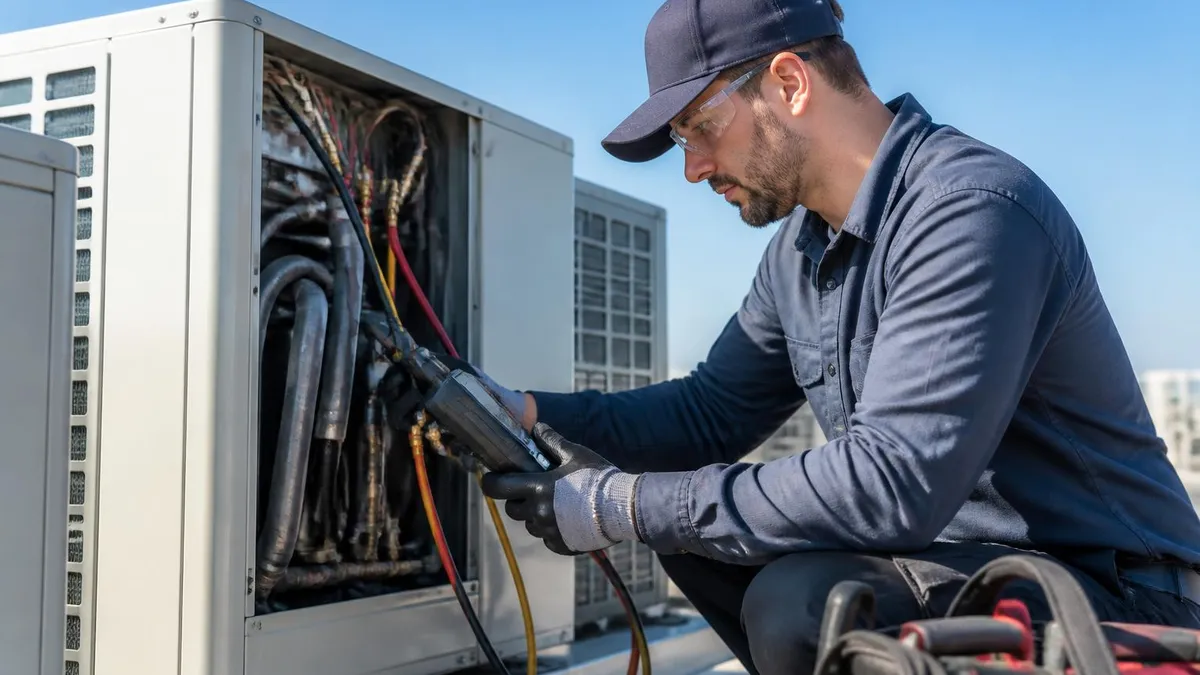
Core Services a Commercial HVAC Company Provides
Scheduled inspections, filter changes, coil cleaning, refrigerant checks, belt tensioning, and control calibration. Typically quarterly or semi-annually for rooftop units, monthly for chiller plants in critical environments.
24/7 response for no-cooling, no-heat, refrigerant leaks, compressor failures, and control board issues. Quality contractors guarantee response times of 2-4 hours for contract customers, often with stocked service trucks.
New construction installs, equipment replacement, energy-efficiency retrofits, controls upgrades, and refrigerant transitions (R-410A to A2L). Includes load calculations, equipment sizing, and commissioning.
BACnet, LonWorks, and Modbus integration, BMS programming, sensor calibration, fault detection, and analytics. Increasingly critical for energy benchmarking and tenant comfort optimization.
MERV upgrades, UV-C installation, bipolar ionization, ventilation audits, ASHRAE 62.1 compliance, and post-occupancy IAQ testing. Especially relevant for healthcare, schools, and Class A office buildings.
Licensing is the non-negotiable starting point. Every legitimate commercial HVAC company must hold a mechanical contractor's license in the states where it operates, and many municipalities require additional local registrations. A company quoting work in your building should be able to produce a current state license number, a master mechanic's license for whoever pulls permits, and proof of any specialty certifications (refrigeration, boiler, sheet metal). Ask for the actual license numbers and verify them yourself through the state board's online database — do not accept screenshots or photocopies.
Insurance requirements scale with project size, but the floor for any commercial HVAC contractor is $1 million per-occurrence general liability, $1 million automobile liability, statutory workers' compensation, and ideally a $5 million umbrella policy. For larger buildings or campuses, demand $5-10 million primary limits plus pollution liability coverage. Refrigerants, condensate, and combustion gases all create environmental exposure that standard CGL policies sometimes exclude. Request a Certificate of Insurance naming your entity as Additional Insured before any work begins.
EPA Section 608 certification is mandatory for any technician who handles refrigerants in commercial systems. Type II covers high-pressure equipment (most rooftop units, split systems), Type III covers low-pressure chillers, and Universal certifies for all categories. Every technician on your job site must hold the appropriate certification card — ask to see them. Companies that cannot produce them on request are either operating illegally or relying on uncertified labor, both of which expose you to liability if something goes wrong.
Beyond the legal minimums, look for industry credentials that signal genuine technical depth. NATE (North American Technician Excellence) certification is the gold standard for individual technicians. The Refrigeration Service Engineers Society (RSES) credentials similarly indicate ongoing education. At the company level, membership in the Mechanical Contractors Association of America (MCAA) or Sheet Metal and Air Conditioning Contractors' National Association (SMACNA) indicates a contractor invested in industry best practices, training programs, and standards compliance.
Manufacturer certifications matter when your equipment is brand-specific. A Trane Comfort Specialist, Carrier Factory Authorized Dealer, or Daikin Pro is trained on the manufacturer's specific control systems, has access to factory technical support, and can perform warranty repairs without voiding coverage. For VRF systems especially, only manufacturer-trained installers should touch the equipment — warranty terms typically require it, and the troubleshooting protocols are proprietary. Do not let a generalist contractor work on equipment they are not factory-trained on.
Background-check policies, OSHA 30 training, and drug-testing programs separate professional commercial outfits from light-duty residential firms moonlighting in commercial work. Ask specifically about OSHA 30 (the longer construction-safety course), fall-protection training for rooftop work, lockout-tagout procedures, and confined-space entry protocols. If your contractor sends a technician onto a 6-story rooftop without proper fall arrest, both you and the contractor share liability. Reputable firms can produce written safety programs, EMR (Experience Modification Rate) data, and OSHA 300 logs on request.
Finally, verify financial stability. A contractor with cash-flow problems will cut corners on parts quality, delay warranty work, and may disappear mid-project. Pull a Dun & Bradstreet report, request bonded bid capacity letters from the contractor's surety, and check for liens or judgments in court records. For projects over $250,000, requiring a performance and payment bond is standard practice. The premium is roughly 1-3% of contract value and is well worth it. For ongoing system care, consider reading our guide on HVAC Inspection: What's Included and Why It Matters to know what a thorough visit should look like.
HVAC Practice Test Questions
Prepare for the HVAC - Heating Ventilation and Air Conditioning exam with our free practice test modules. Each quiz covers key topics to help you pass on your first try.
HVAC Air Conditioning
HVAC Exam Questions covering Air Conditioning. Master HVAC Test concepts for certification prep.
HVAC Code Compliance
Free HVAC Practice Test featuring Code Compliance. Improve your HVAC Exam score with mock test prep.
HVAC Electrical Controls
HVAC Test Prep for Electrical Controls. Practice HVAC Quiz questions and boost your score.
HVAC Energy Efficiency
HVAC Questions and Answers on Energy Efficiency. Free HVAC practice for exam readiness.
HVAC Heating Systems
HVAC Mock Test covering Heating Systems. Online HVAC Test practice with instant feedback.
HVAC Load Calculations
Free HVAC Quiz on HVAC Load Calculations. HVAC Exam prep questions with detailed explanations.
HVAC Tools and Equipment
HVAC Practice Questions for HVAC Tools and Equipment. Build confidence for your HVAC certification exam.
HVAC Refrigeration
HVAC Test Online for Refrigeration. Free practice with instant results and feedback.
HVAC Safety Practices
HVAC Study Material on Safety Practices. Prepare effectively with real exam-style questions.
HVAC System Design
Free HVAC Test covering System Design. Practice and track your HVAC exam readiness.
HVAC Thermodynamics
HVAC Exam Questions covering Thermodynamics. Master HVAC Test concepts for certification prep.
Commercial HVAC System Types Your Contractor Should Handle
Packaged rooftop units (RTUs) dominate light commercial and mid-rise applications because they consolidate compressor, condenser, evaporator, heat exchanger, and economizer into a single curb-mounted package. Typical capacities range from 3 to 50 tons, with multi-zone variable air volume designs serving larger footprints. Every credible commercial HVAC company should service the major brands — Trane, Carrier, Lennox, York, Daikin — and stock common parts for them.
RTUs are workhorses but have predictable failure points: condenser fan motors, compressor contactors, gas valve assemblies, and economizer linkages. A good contractor catches these on quarterly PMs, not at 2 a.m. on the hottest day of July. Ask whether their PM checklist includes amp readings on all motors, superheat and subcooling measurements, and economizer damper stroke verification — those are the diagnostics that prevent emergencies.
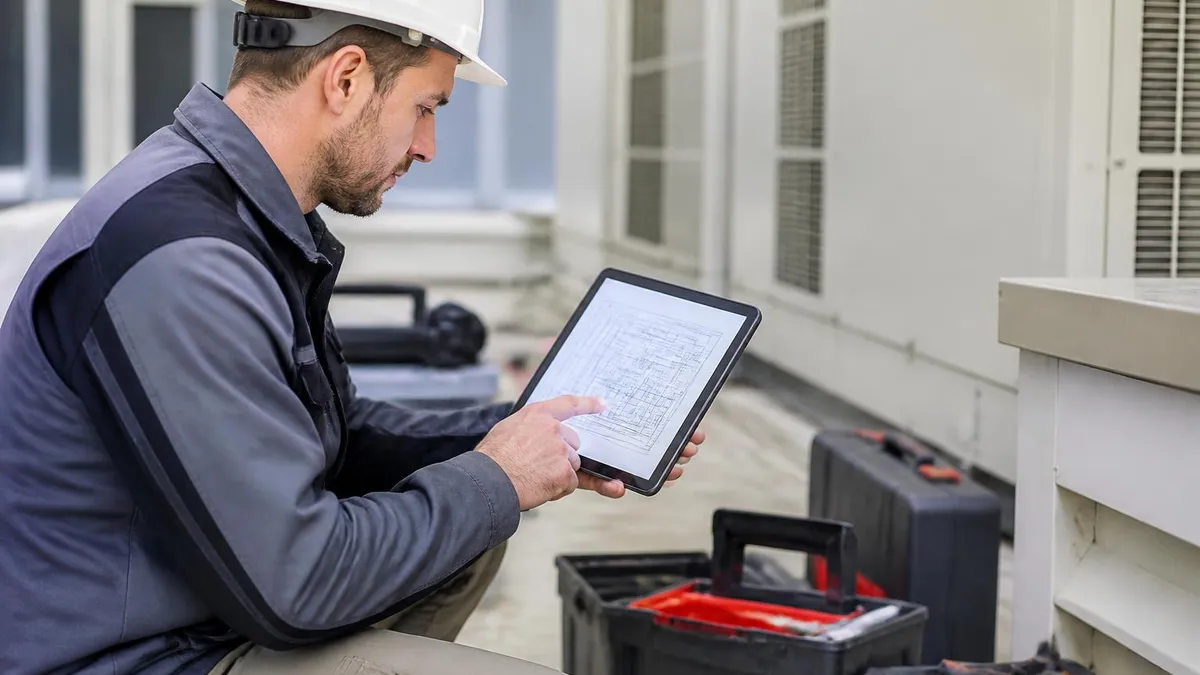
National Chain vs. Local Commercial HVAC Company: Which Is Better?
- +Local firms typically offer faster response times because dispatch and warehouse are nearby
- +Owners are accessible and decisions get made quickly without corporate layers
- +Pricing tends to be more competitive on small-to-mid jobs and ongoing service
- +Technician turnover is usually lower, so the same crew learns your building
- +Stronger community ties create accountability — reputation is everything in a regional market
- +Easier to negotiate custom contract terms and flexible scheduling
- −Local firms may lack 24/7 coverage on holidays or major weather events
- −Bench depth is limited — if your lead chiller tech leaves, recovery takes time
- −Manufacturer relationships and parts pricing can be weaker than national chains
- −Less likely to carry specialty insurance like pollution liability above $5M
- −Multi-site portfolios with locations across regions get inconsistent service
- −Technology investments (mobile dispatch, IoT, customer portals) often lag national competitors
Commercial HVAC Company Vetting Checklist
- ✓Verify state mechanical contractor license number through the state licensing board
- ✓Request and review Certificate of Insurance with your entity listed as Additional Insured
- ✓Confirm EPA 608 certifications (Type II and Type III) for every technician on site
- ✓Ask for three references from buildings of similar size, age, and equipment type
- ✓Tour the contractor's parts warehouse and verify in-stock inventory for your equipment
- ✓Confirm 24/7 emergency dispatch with documented response-time guarantees
- ✓Review sample PM checklist — should include amp readings, superheat/subcooling, IAQ checks
- ✓Request OSHA 300 logs and EMR (Experience Modification Rate) from last three years
- ✓Verify manufacturer certifications for any brand-specific equipment in your building
- ✓Ask whether they self-perform sheet metal, controls, and refrigerant work or subcontract
- ✓Confirm written warranty terms — labor and parts separately stated, in writing
- ✓Require itemized proposals so you can compare line-item pricing across bidders
Walk Their Service Truck Before You Sign
The best predictor of a commercial HVAC company's quality is the state of their service trucks. Ask to inspect one. A professional truck has organized bins, calibrated gauges, current torch tanks, micron gauges, and stocked common parts. A messy truck with mismatched tools means messy diagnostics in your building.
Commercial HVAC pricing comes in three primary structures: time-and-materials (T&M), flat-rate, and contract-based service agreements. T&M is the simplest — you pay a published hourly rate plus parts at a marked-up cost. Typical commercial labor rates run $135 to $225 per hour in 2026 depending on market, with overtime and emergency premiums of 1.5x to 2x. Parts markups range from 20% to 50%, and many contractors charge a separate truck or trip fee of $75 to $150 per visit.
Flat-rate pricing assigns a fixed price to specific repairs regardless of how long they take. A condenser fan motor replacement might be $850 flat, whether the tech finishes in 45 minutes or 2 hours. Flat rate protects you from inefficient labor but typically costs more on average than T&M with a known-good contractor. The benefit is predictability — facilities teams can approve repairs faster because there is no clock running. Some contractors offer flat-rate menus for contract customers and T&M for everyone else.
Preventive maintenance contracts are where the real value lives. A planned-service agreement (PSA) typically costs $0.15 to $0.40 per square foot per year and includes a defined number of inspection visits, filter changes, and basic diagnostic checks. Premium agreements bump that to $0.40-$0.80 per square foot and may include refrigerant top-offs, minor parts (capacitors, contactors, fuses), and priority dispatch. Full-coverage or guaranteed-maintenance contracts can run $1+ per square foot and effectively transfer breakdown risk to the contractor — they are insurance, not just service.
Choosing the right contract level depends on equipment age, building criticality, and internal staffing. Buildings with mission-critical loads (data centers, hospitals, life sciences) generally justify full-coverage agreements because the cost of downtime far exceeds the contract premium. Class B office buildings with aging equipment often save money on premium PSAs because the maintenance catches issues before they become $15,000 emergencies. Newer Class A buildings on warranty may only need basic inspections until year five or six.
Watch for cost traps in long contracts. Annual price escalators tied to CPI are reasonable; flat 5-7% annual increases are aggressive. Auto-renewal clauses with 90-day cancellation windows favor contractors — push for 30-day cancellation rights. Carefully define what counts as "covered" versus "excluded" work; many contracts exclude parts over $500 or any work involving refrigerant recovery, which guts the value of the agreement. Ask for sample invoices from existing customers to see how the contract actually plays out in billing practice.
Equipment replacement pricing is another minefield. A 10-ton rooftop unit costs $14,000-$22,000 installed in most US markets in 2026, but quotes can vary 40% between contractors for the same SKU. Variations come from crane fees, electrical work, curb adapters, controls, code upgrades, and warranty terms. Insist on apples-to-apples bids with identical equipment models, identical scope, and clearly stated allowances for unforeseen conditions. If a quote omits crane costs or curb adapters, you will pay for them later — usually at premium rates with no use.
Finally, do not ignore energy incentives. Utility rebates, federal tax credits, and state programs can offset 10-30% of equipment replacement costs. A good commercial HVAC company has a dedicated team or partner that handles paperwork, performs energy modeling, and stacks incentives. Our guide on the tax credit for installing new HVAC walks through the federal 179D deduction and Section 25C credits that apply to qualifying commercial work in 2026 — make sure your contractor brings these to the table without being asked.
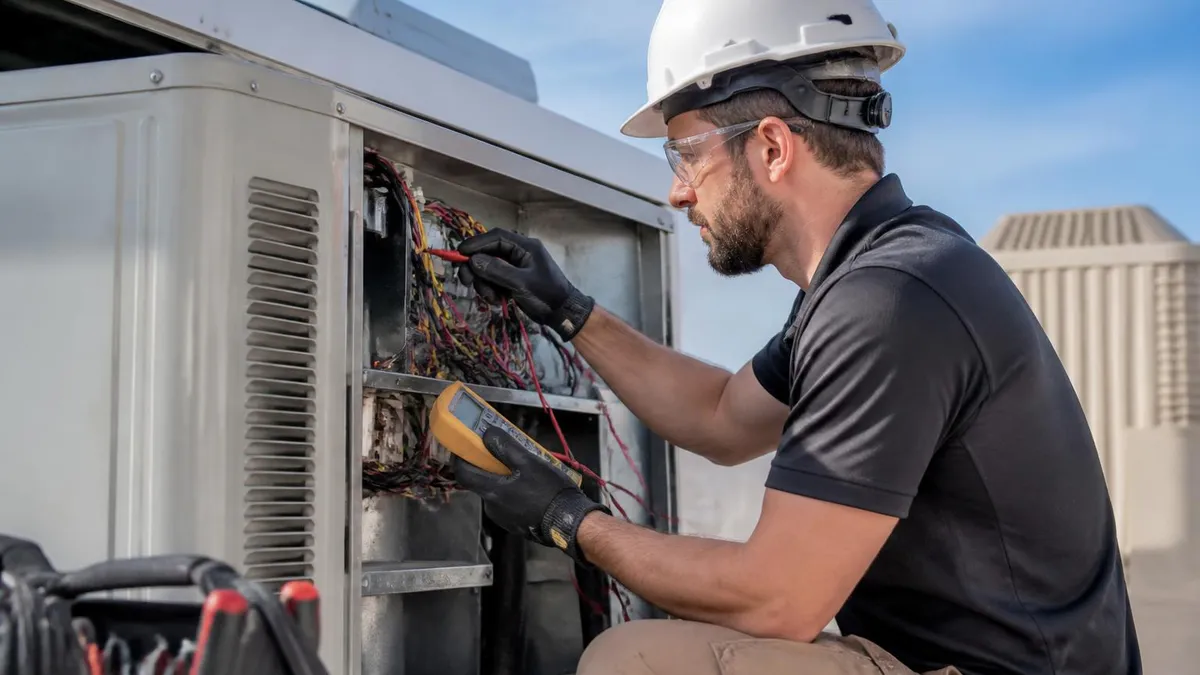
If one bid comes in 30%+ below the others, something is being omitted — almost certainly crane fees, code upgrades, controls, or warranty length. Always require written, itemized proposals and reject verbal change-order promises. The cheap bid usually costs the most after change orders, and you will have no contractual use when the surprises hit.
The red flags that predict a bad commercial HVAC relationship are remarkably consistent. The biggest is contractors who cannot or will not provide written documentation — licenses, insurance certificates, technician certifications, PM checklists, or itemized quotes. If basic paperwork is a struggle in the sales process, expect the same friction every time you need warranty work, refrigerant logs, or capital-planning data for your owner. Documentation discipline reflects operational discipline.
Another common warning sign is high technician turnover. Ask how long the company's average technician has been employed. Reputable commercial HVAC firms have technicians with 5, 10, even 20 years of tenure. A revolving door of new faces in your mechanical rooms means institutional knowledge of your building never accumulates — every service call starts from scratch, diagnostic time balloons, and small issues turn into expensive learning experiences for the new tech who took the call.
Pay attention to how the contractor handles your initial site walk. A serious commercial HVAC company brings a senior technician or service manager — not just a salesperson — to the walk-through. They take photos, log model and serial numbers, identify code or maintenance deficiencies, and ask questions about tenant complaints, energy bills, and operational priorities. A salesperson who walks the roof in dress shoes, asks no technical questions, and emails a quote the next afternoon is selling commodity work and treating you like a commodity customer.
Communication discipline matters enormously after the contract is signed. The right contractor provides a written service report after every visit — including readings, photos, parts replaced, recommendations, and the technician's signature. Many now use mobile platforms that email PDFs the same day. Compare this to contractors who hand you an illegible paper ticket or, worse, no report at all. You cannot manage what you cannot see, and you cannot prove maintenance compliance to manufacturers, insurers, or auditors without records.
Beware contractors who push specific brands without asking about your existing equipment mix. A vendor that recommends only one manufacturer is either factory-locked or financially incentivized. The right commercial HVAC company is brand-agnostic on advice, helps you weigh trade-offs between Trane, Carrier, Daikin, and others based on your actual building and budget, and is honest about which manufacturers have current quality issues or supply chain delays. Independence equals trust.
For ongoing system care, especially in the airside portion of your HVAC, do not overlook the small details. Many premature failures trace back to bad duct sealing, poor support, or the wrong sealant choice. Ask your contractor what they use and why — the article on HVAC tape types and common misuses explains why mastic and UL-181 foil tapes are preferred over the gray duct tape most people picture. A contractor who reaches for cloth duct tape on commercial work is telling you everything you need to know.
Finally, trust your instincts about the people. You will spend years working with this contractor through emergencies, change orders, and capital projects. The lead technician, account manager, and dispatcher will know your building intimately. If those people seem disorganized, evasive, or arrogant during the sales process, the relationship will not improve under stress. A great commercial HVAC company feels like an extension of your facilities team — same priorities, same urgency, same standards.
Once you have selected a commercial HVAC company, the first six months of the relationship set the tone for everything that follows. Schedule a formal kickoff meeting that includes your facilities staff, the contractor's account manager, the lead service technician, and ideally the operations manager. Walk every mechanical space together, document equipment inventory with model and serial numbers, agree on access procedures, set after-hours contact protocols, and establish how change orders and emergency authorizations will be handled. This investment of two or three hours upfront prevents months of confusion.
Build a shared digital record of your HVAC assets. The best contractors maintain a customer portal with equipment lists, service history, warranty status, and PM schedules. If yours does not, create your own spreadsheet or use a CMMS like UpKeep, Limble, or FacilityDude. Track every visit, every part replaced, every refrigerant top-off, and every recommendation. Five years from now, when you need to justify a $200,000 chiller replacement, that documentation is the difference between approval and rejection.
Calibrate expectations around emergency response. Even with a top-tier contractor, true 24/7 dispatch is not magic — there are dispatchers, on-call technicians, and travel times. Push for written response-time SLAs (2 hours during business hours, 4 hours after-hours is typical for contract customers) and track performance monthly. If the contractor consistently misses targets, raise it formally in quarterly business reviews. Quality firms expect to be held accountable and will appreciate the structured feedback.
Use the maintenance program as a strategic tool, not a checkbox. Quarterly PM visits should generate written reports with photos, readings, and recommendations. Treat those reports as a capital-planning input — not just a service ticket. Equipment trending toward failure, refrigerant levels dropping repeatedly, motor amperage climbing year over year — these are early warnings that let you plan replacements in the off-season, avoid emergency premiums, and budget capital expenses with lead time. The PM program is the cheapest engineering consulting you will ever buy.
Invest in tenant communication if you run multi-tenant property. The most common reason facilities teams fire HVAC contractors is unrelated to mechanical performance — it is poor communication during outages. Establish a notification protocol with your contractor: when systems go down, who notifies tenants, what the message says, and when updates are delivered. Many contractors will draft tenant communications as part of their service if you ask. Smooth communication during a four-hour cooling outage is the difference between a routine event and a leasing crisis.
Conduct quarterly business reviews with your contractor's leadership. These should cover service-call volume, response-time performance, top recurring issues, energy-trend data, capital recommendations, and budget forecasts. Bring data — utility bills, work-order summaries, tenant complaints — and expect the contractor to bring their own. The contractors who welcome these reviews are the ones who view your account as a long-term partnership. The ones who avoid them are running on autopilot and will be easy to replace when a competitor with better discipline knocks on your door.
Finally, plan for the long game. A commercial HVAC company is not a one-year decision. The relationships, institutional knowledge, and documentation built over five or ten years are difficult to replicate with a new vendor. Switching costs are real — new vendors spend their first year learning your building, which is your time and budget.
Choose carefully, manage actively, and renew thoughtfully. The right contractor becomes one of the most valuable vendor relationships in your real-estate portfolio. If you are also marketing your own HVAC services, you may find our piece on HVAC SEO for contractors useful for understanding how commercial buyers find vendors online.
HVAC Questions and Answers


How this page was made: written with AI tools and published by Nathan Beja, founder of Practice Test Geeks, who is responsible for its content. We have not yet matched this exam's facts to an official source, so confirm fees, dates and rules with the exam body. Not reviewed by a subject-matter expert. Editorial policy