
HVAC Control Systems: The Complete Guide to Thermostats, Sensors, and Building Automation
Master HVAC control systems with this complete guide to thermostats, sensors, zoning, and building automation. Real specs, wiring tips, and pro insights. 🆕
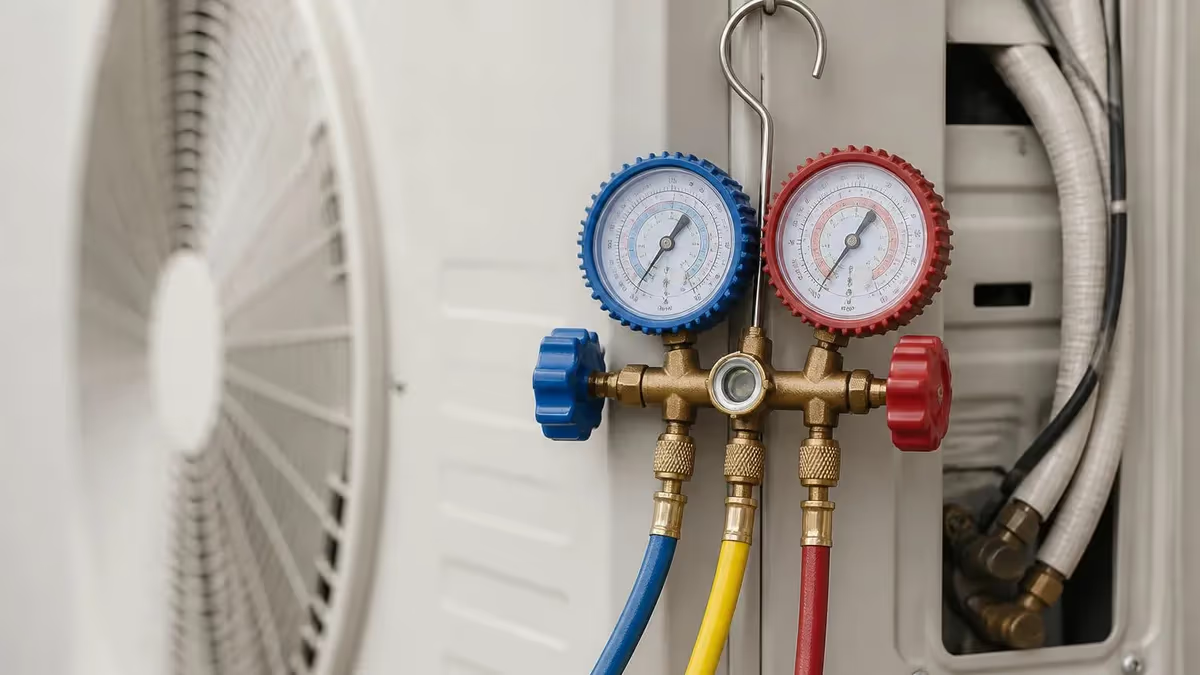
An effective hvac control system is the brain behind every comfortable building, telling equipment when to heat, when to cool, how fast to move air, and how much outdoor ventilation to introduce. Without intelligent controls, even the most expensive furnace or chiller is just an oversized appliance burning energy without purpose. Modern control packages range from a simple wall thermostat in a 1,200-square-foot ranch home to multi-tier direct digital control networks managing 200 rooftop units across a hospital campus.
The fundamentals stay surprisingly consistent across that range. Every system needs a sensor that reads conditions, a controller that compares the reading to a setpoint, and an actuator that opens a valve, energizes a relay, or modulates a damper. What changes between residential and commercial work is the number of inputs, the speed of the response loop, and how those signals travel — a single 24-volt wire in a townhouse versus a BACnet/IP trunk carrying thousands of points in a Class A office tower.
Technicians who understand controls deeply earn premium wages because the work blends mechanical knowledge with electrical theory, low-voltage wiring, and increasingly, networking and cybersecurity skills. A residential service tech who can troubleshoot a communicating two-stage heat pump board is worth substantially more than one limited to single-stage gas furnaces. On the commercial side, building automation specialists routinely bill $145 to $185 per hour for programming work.
This guide walks through the full landscape: thermostats and zone controllers, sensors and transducers, relays and contactors, low-voltage transformers, communicating protocols like ModBus, BACnet, and LonWorks, and the rapid shift toward IoT-enabled smart thermostats with cloud dashboards. You will learn how to read a control diagram, diagnose a stuck damper, choose the right sensor placement, and avoid the most common installation mistakes that destroy equipment warranties.
Whether you are studying for a journeyman exam, planning a retrofit on a 1990s VAV system, or simply trying to figure out why your Nest keeps short-cycling the heat pump, the principles below apply. We will cover both the field side — physical wiring, terminal designations, and voltage checks — and the design side, including PID loop tuning, deadbands, and sequence of operations. Pair this article with the CFM HVAC basics guide for airflow context that controls assume.
One quick framing note before diving in. Controls is the discipline where bad assumptions cost the most money. A thermostat set 3 degrees too low in a server room can dump $40,000 of unnecessary cooling into the atmosphere over a year. A reversing valve solenoid wired to the wrong terminal will run a heat pump in cooling mode all winter. The information that follows is precise on purpose — treat it as a working reference rather than a casual read.
By the end of this guide you should be able to identify the major control component families, understand how signals propagate from sensor to actuator, evaluate whether a building needs a simple programmable stat or full direct digital control, and confidently approach a service call where the symptom is not mechanical failure but a misbehaving control sequence. That last skill alone separates apprentices from seasoned techs.
HVAC Controls by the Numbers

Main Layers of an HVAC Control System
Sensors, switches, transmitters, and end devices that physically read conditions or move components. Includes thermistors, pressure transducers, CO2 sensors, damper actuators, and modulating valves with 0-10V or 4-20mA outputs.
Dedicated boards that manage a single piece of equipment — rooftop unit, fan coil, VAV box. They run pre-programmed logic, handle staging, and report status upward via BACnet MS/TP or proprietary buses.
JACE, Niagara, or similar gateways that coordinate dozens of unitary controllers, run optimization routines like demand reset, and translate between protocols. The traffic cop of any mid-sized building automation system.
Web-based dashboards where facility staff view trends, adjust setpoints, schedule occupancy, and acknowledge alarms. Tridium Niagara, Honeywell WEBs, Distech EC-Net, and Schneider EcoStruxure dominate.
Ethernet switches, fiber backbone, and increasingly cellular gateways that carry control traffic. Cybersecurity hardening — VLAN isolation, certificate-based auth, signed firmware — is now a mandatory layer.
Thermostats remain the most common interface between humans and HVAC equipment, and they have evolved from bimetallic mercury switches into Wi-Fi connected microcontrollers running real-time operating systems. The terminal designations on a residential subbase have stayed remarkably stable, however. R supplies 24-volt power from the transformer, C is the common return, W energizes heating, Y energizes cooling, G runs the indoor fan, O reverses the valve on cooling for heat pumps, B does the same for heating, and E calls emergency heat.
Color coding is conventional but not regulated. Red is almost always R, white is W, yellow is Y, green is G, but the rest depend on the installer. Always verify with a meter rather than trusting wire color, especially in older homes where the same conductor has been reterminated five times. The single most common service call in winter is a frozen thermostat traced back to a missing C-wire that powered a smart thermostat from battery until the cell died during a cold snap.
Heat pumps add wiring complexity because the reversing valve must be continuously energized in either heating or cooling mode depending on manufacturer. Carrier, Trane, and most modern equipment use O — energize in cooling. Rheem and some older Ruud units use B — energize in heating. Wire to the wrong terminal and the system will dutifully cool the house all winter while the homeowner cranks the thermostat higher. Always read the installation manual before commissioning.
Two-stage and variable-speed equipment require communicating thermostats that match the brand, or properly configured multi-stage conventional stats with separate Y1, Y2, W1, W2 terminals. Mixing a single-stage stat with a two-stage condenser locks the system into low capacity mode permanently. On the inverter-driven side — Mitsubishi, Daikin, Fujitsu mini-splits — the indoor head and outdoor unit communicate over a proprietary serial bus and a generic thermostat simply cannot drive the equipment without a relay-based interface module.
Programmable and smart thermostats have shifted from luxury to standard. Energy Star data shows properly configured setback schedules cut heating costs 10 to 15 percent in moderate climates. Learning thermostats like Nest and Ecobee add geofencing, remote sensors for room-by-room averaging, and utility demand response participation that pays homeowners $20 to $75 per summer to allow brief setpoint adjustments during peak grid events. Before recommending one, check that the system has a C-wire or that a proper add-a-wire adapter is installed — see hvac installation leeds for retrofit guidance.
Commercial spaces typically replace wall thermostats with space sensors that report to a central controller. A standard wall sensor is just a thermistor in a plastic housing, often with a setpoint adjustment slider and an override button. The actual logic lives in a VAV controller or fan coil controller in the ceiling, programmed for a specific sequence of operations. Removing or damaging these sensors during a tenant fit-out is a leading cause of comfort complaints in office space.
Wireless thermostat solutions using Zigbee, Z-Wave, or proprietary 900 MHz radios have matured to the point where battery-powered space sensors are now routinely specified in tenant improvement projects to avoid running new low-voltage wire. Battery life of three to five years is typical, and the sensors mesh through repeaters to a gateway. Range and interference still require care — never assume a wireless sensor will work without a site survey.
HVAC Practice Test Questions
Prepare for the HVAC - Heating Ventilation and Air Conditioning exam with our free practice test modules. Each quiz covers key topics to help you pass on your first try.
HVAC Air Conditioning
HVAC Exam Questions covering Air Conditioning. Master HVAC Test concepts for certification prep.
HVAC Code Compliance
Free HVAC Practice Test featuring Code Compliance. Improve your HVAC Exam score with mock test prep.
HVAC Electrical Controls
HVAC Test Prep for Electrical Controls. Practice HVAC Quiz questions and boost your score.
HVAC Energy Efficiency
HVAC Questions and Answers on Energy Efficiency. Free HVAC practice for exam readiness.
HVAC Heating Systems
HVAC Mock Test covering Heating Systems. Online HVAC Test practice with instant feedback.
HVAC Load Calculations
Free HVAC Quiz on HVAC Load Calculations. HVAC Exam prep questions with detailed explanations.
HVAC Tools and Equipment
HVAC Practice Questions for HVAC Tools and Equipment. Build confidence for your HVAC certification exam.
HVAC Refrigeration
HVAC Test Online for Refrigeration. Free practice with instant results and feedback.
HVAC Safety Practices
HVAC Study Material on Safety Practices. Prepare effectively with real exam-style questions.
HVAC System Design
Free HVAC Test covering System Design. Practice and track your HVAC exam readiness.
HVAC Thermodynamics
HVAC Exam Questions covering Thermodynamics. Master HVAC Test concepts for certification prep.
Sensors, Relays, and Actuators in HVAC Controls
HVAC uses three main temperature sensor families. Thermistors are inexpensive negative-temperature-coefficient resistors with 10K ohms at 77°F being the universal residential standard. They are accurate within about 1°F and cost under $5. RTDs — resistance temperature detectors — offer ±0.2°F accuracy using a platinum element, typically 100 or 1000 ohms, and dominate commercial duct and supply air applications.
The third family is integrated digital sensors like the Sensirion SHT series that output temperature and humidity over I2C with factory calibration. These show up in modern smart thermostats and BACnet space sensors. Whichever type you use, mounting location matters more than absolute accuracy — a thermistor on an exterior wall behind a curtain will misreport room temperature by 4 to 6°F regardless of its lab precision.
Smart Thermostats vs Traditional Controls
- +Remote access from phone reduces wasted energy when schedules change
- +Learning algorithms automatically optimize setpoints based on occupancy
- +Detailed runtime data helps identify failing equipment before total breakdown
- +Geofencing automatically adjusts when household members leave the area
- +Utility demand response programs offer real cash rebates to participants
- +Voice control integration with Alexa and Google Home improves accessibility
- +Cloud diagnostics let contractors troubleshoot remotely, saving truck rolls
- −Wi-Fi outages or router changes can disable scheduling features entirely
- −Require a C-wire that many older homes lack, complicating retrofits
- −Privacy concerns since usage data is uploaded to manufacturer servers
- −Subscription fees for premium features increase total cost of ownership
- −Battery backup is limited so power outages may erase schedules
- −Compatibility issues with heat pumps and multi-stage systems persist
- −Useful lifespan of 5-7 years versus 15+ for mechanical thermostats
HVAC Control Installation Checklist
- ✓Verify transformer VA rating meets total connected load with 25% safety margin
- ✓Run a dedicated C-wire to every thermostat, including spare cable for future devices
- ✓Mount space sensors 5 feet above the floor, away from supply diffusers and exterior walls
- ✓Label every terminal on subbases and controller boards with permanent marker or printed tags
- ✓Set proper anticipator or cycles-per-hour on multi-stage thermostats to prevent short cycling
- ✓Test reversing valve operation in both modes before declaring a heat pump commissioned
- ✓Confirm sequence of operations matches design intent by walking through every setpoint
- ✓Document IP addresses, BACnet device IDs, and login credentials in a commissioning binder
- ✓Verify all safeties — high-limit, low-limit, freezestat — interrupt control regardless of software
- ✓Train building staff on dashboard navigation, alarm acknowledgment, and override procedures
The Single Wire That Breaks Smart Thermostat Installs
Roughly 40% of US homes built before 2000 lack a dedicated common wire at the thermostat. Smart thermostats parasitically steal power through the heating or cooling circuits when no C-wire exists, which can damage furnace control boards over time. Always install a proper C-wire or factory add-a-wire adapter — never rely on power-stealing alone.
Commercial buildings have shifted almost entirely to direct digital control, with BACnet now the dominant open protocol. BACnet — Building Automation and Control Networks — was ratified as ASHRAE Standard 135 in 1995 and has expanded to cover everything from a single light fixture to enterprise-scale energy management. Its open object model lets a Trane chiller controller talk to a Johnson Controls VAV box and a Schneider lighting panel without translation, which was impossible in the proprietary protocol era of the 1980s.
BACnet runs over several physical media. BACnet MS/TP uses twisted-pair RS-485 cabling at speeds of 9.6 to 115.2 kbps and remains the workhorse for connecting field devices like VAV boxes, fan coils, and unitary rooftops. BACnet/IP runs over standard Ethernet at typical speeds of 100 Mbps and connects supervisory controllers, dashboards, and integration to enterprise IT systems. Increasingly, projects deploy BACnet Secure Connect — BACnet/SC — which encrypts traffic over WebSockets.
The supervisory layer is dominated by Niagara Framework, a Java-based platform originally developed by Tridium and now licensed by dozens of manufacturers including Honeywell, Distech, JCI, and Siemens. A Niagara JACE — Java Application Control Engine — acts as a multi-protocol gateway, running supervisory logic and serving web dashboards. Knowing Niagara is roughly equivalent to knowing Microsoft Office for commercial controls technicians — it appears on most projects regardless of the underlying mechanical brand.
Optimization sequences layered on top of basic equipment control deliver the largest energy savings. Supply air temperature reset adjusts the AHU discharge temperature higher when no zone calls for maximum cooling, reducing reheat energy in dual-duct or VAV-with-reheat systems. Static pressure reset opens VAV dampers wider before increasing fan speed, saving fan kWh that compounds over thousands of operating hours per year. Demand-controlled ventilation modulates outdoor air based on CO2 sensors.
Cybersecurity has become a first-class concern. The 2013 Target breach famously originated through an HVAC contractor's remote-access credentials, and modern projects require VLAN segmentation, certificate-based authentication, signed firmware updates, and disabled BACnet broadcast traffic outside the controls VLAN. Federal buildings now require FIPS 140-2 compliant cryptography and zero-trust architecture per the 2022 OMB memo. If you are pricing commercial controls work, factor cybersecurity hardening into the bid.
Smaller commercial projects under 50,000 square feet often deploy lighter-weight platforms like KMC Conquest, Tracer SC+, or Honeywell Spyder rather than full Niagara stacks. These bundle BACnet/IP supervision with built-in graphics and trending at lower price points. The tradeoff is less flexibility for third-party integration and fewer trained technicians in any given market. Selecting a platform should weigh local technician availability as heavily as feature lists. Buildings inherit their controls platform for 15-20 years.
Residential and light commercial buyers occasionally ask about "BACnet-compatible" thermostats. True BACnet thermostats exist — Distech ECY, KMC FlexStat, Honeywell TB-PUP — but they cost $300 to $600 and provide value only when integrated into a larger BAS. For a standalone home or small office, a quality Wi-Fi thermostat like Ecobee Premium or Honeywell T10 delivers more user-facing value at a quarter of the price. Working with experienced HVAC contractors helps match platform to scale.
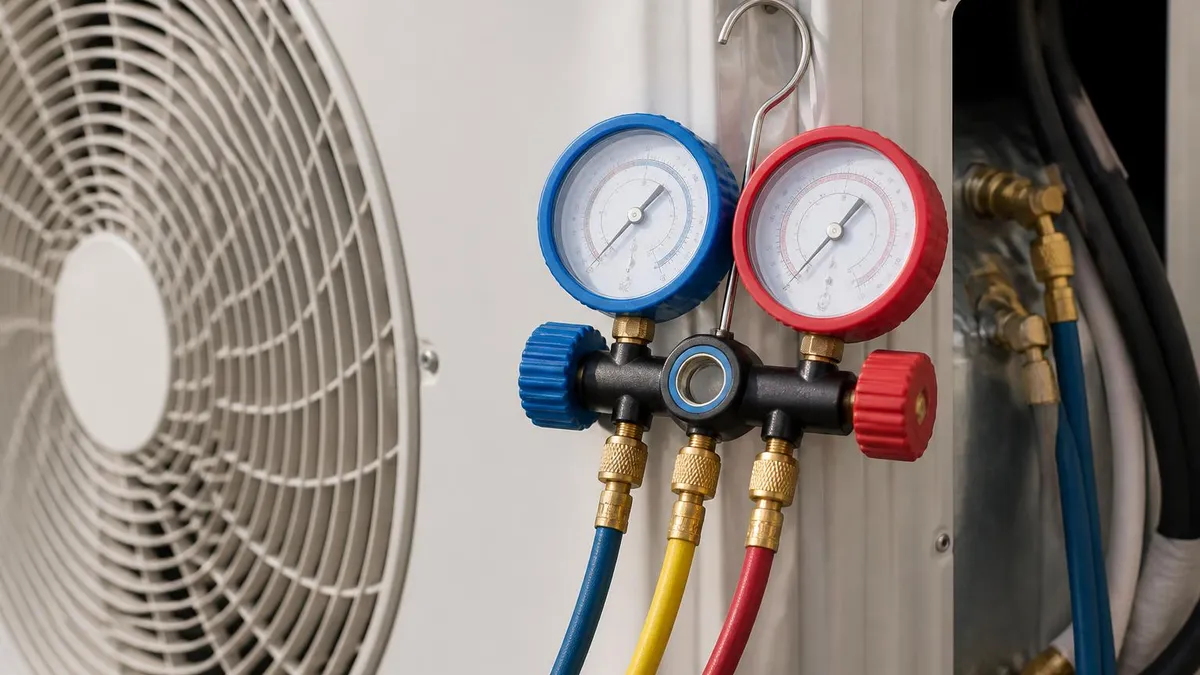
Jumpering out a high-limit switch, freezestat, or condensate overflow switch to isolate a control problem is one of the fastest ways to destroy a $40,000 piece of equipment or trigger a flood claim. Diagnose the safety first and only restore operation after the underlying cause — clogged filter, frozen coil, blocked drain — is corrected.
Troubleshooting control problems requires a disciplined methodology because symptoms often mislead. A homeowner reports "the AC stopped working," but the actual fault could be a stuck contactor, a tripped float switch, a failed transformer, a corroded thermostat wire, a control board lockout, or a cloud server outage at the smart thermostat manufacturer. Start at the thermostat with a digital multimeter and confirm 24 VAC between R and C — if voltage is missing, the problem is upstream of the room control.
If R-to-C reads correctly, jumper R to Y at the subbase and listen for the outdoor contactor. If it pulls in, the thermostat or its wiring is suspect. If nothing happens, move to the equipment and check Y at the air handler control board. Continue this divide-and-conquer pattern, halving the suspect circuit at each step, until you isolate the faulty component. Most control faults yield to this approach in under 30 minutes once the technician trusts the meter over the symptoms.
Communicating systems require a different toolset. Two-stage and inverter equipment from Carrier Infinity, Trane ComfortLink, Lennox iComfort, and similar communicating platforms talk to their thermostats over a serial bus, not discrete 24 VAC signals. Jumpering R to Y will not start the compressor and may trigger fault codes. These systems require the manufacturer's service tool or proprietary thermostat-based diagnostics menu to view raw data and force outputs. Always carry the service manual or app for any communicating brand you regularly encounter.
Commercial DDC troubleshooting starts at the dashboard, not the equipment. Pull up the relevant graphic, check current sensor values against expected values, and review the alarm log. Many problems are visible immediately — a discharge air sensor reading 32°F on a 75°F summer day is clearly failed and likely has been spamming alarms for weeks while staff ignored them. Trending tools that log values every minute over 24 hours reveal short cycling, hunting, and improperly tuned PID loops that no spot check would catch.
Network problems disguise themselves as equipment problems regularly. A BACnet MS/TP trunk with a single mis-terminated cable can corrupt every device on the bus, presenting as intermittent VAV box failures across an entire floor. Always confirm proper trunk topology — daisy-chained with 120 ohm terminators at each end, no T-taps, total length under 4,000 feet — before chasing individual device failures. A handheld BACnet sniffer like the IRIS Discoverer pays for itself on the first stalled commissioning.
Documentation is the unglamorous secret weapon. Every truck should carry common 24V transformers, control boards for top-selling residential brands, generic VAV controllers, BACnet test devices, and at minimum a printed copy of the sequence of operations for each commercial site under contract. The expensive part of a controls service call is not the parts, it is the time spent reverse-engineering what the system is supposed to do because no one wrote it down.
Finally, do not underestimate user error. A surprising fraction of "control problems" trace back to a custodian who taped over a CO2 sensor, a tenant who set their thermostat to permanent hold, or an after-hours override that no one disabled. Always check the override and schedule status before assuming hardware failure. Talk to building occupants. The ten minutes spent listening usually saves an hour of diagnostics.
Becoming proficient with HVAC controls is a multi-year journey, but the curve has well-marked checkpoints. Year one: master 24 VAC residential thermostat wiring, basic relay logic, and the symbols on a ladder diagram. Carry a meter, an alligator-clip jumper set, and a pocket reference for thermostat terminal designations. By the end of the first year you should be able to wire any residential single-stage or two-stage system from scratch and diagnose 80 percent of homeowner thermostat complaints in under an hour.
Year two and three: layer on heat pump wiring including reversing valve logic, variable-speed ECM motor controls, communicating residential systems, light commercial rooftop unit controls, and BACnet basics. Take a Niagara N4 Technical Certification course — typically 5 days and $2,500 — which is the universal commercial controls credential. Add hands-on time with at least three different BAS brands so you build pattern recognition rather than memorizing one manufacturer's quirks.
Year four and beyond: specialize. Commercial controls programmers using Niagara Workbench or Distech ECx Tools regularly bill $145-$185 per hour as W-2 employees and $225+ per hour as independent contractors. Energy management specialists with measurement and verification skills under IPMVP earn similar premiums on retrofit projects. Cybersecurity-aware controls engineers are scarce and command consulting rates that rival pure IT security work, particularly for government and healthcare clients.
Stay current. Subscribe to ASHRAE Journal, Engineered Systems magazine, and the Automated Buildings monthly newsletter. Join the Niagara Forum, the BACnet International LinkedIn group, and at least one manufacturer's tech community. Manufacturers update firmware and sequences of operations frequently — a Carrier ComfortLink board released this year is fundamentally different from one shipped in 2020. Continuous learning is not optional in this trade.
Tools matter. A quality clamp meter with low-current capability (Fluke 376 or 902 FC), a digital manometer with 0.001 inch w.c. resolution (Testo 510 or Dwyer), a portable BACnet scanner (CAS Modbus Scanner or Polarsoft tools), a laptop with Putty, Wireshark, and Niagara Workbench, and a smartphone loaded with manufacturer apps — these tools transform troubleshooting from guesswork into structured diagnosis. Budget $2,500-$4,000 to outfit yourself properly and replace tools as they wear.
Document everything. Build a personal reference library of wiring diagrams, sequence of operations templates, and known-good configurations. Cloud sync the library so you can access it from any job site. The senior technicians who command top wages all carry essentially the same intellectual capital: a few thousand reference documents accumulated over a career, indexed in their head and on their phone. Start your library on day one and curate it weekly. Find local opportunities through HVAC technician jobs.
Soft skills close the loop. Building owners and facility managers do not care about MS/TP termination resistors. They care about comfort, energy bills, and avoiding emergency callbacks. Translate technical work into business outcomes — "reset sequence cut your reheat energy 22 percent, saves you $14,000 a year" — and you become indispensable rather than replaceable. The technicians who get the corner office credentials all combine deep technical mastery with clear communication. Both halves are learnable, but only with deliberate practice.
HVAC Questions and Answers
HVAC Technician Jobs Near Me: How to Find, Land, and Grow in Local HVAC Careers
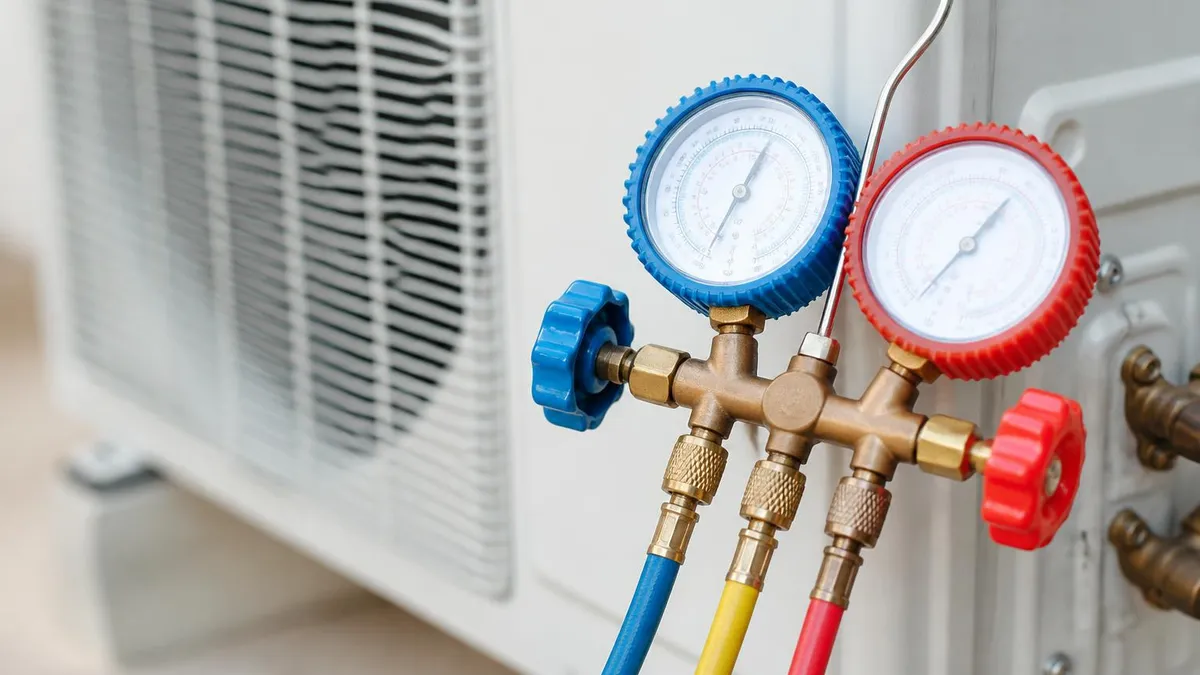
CFM HVAC Basics: How Airflow, Sizing, and System Performance Work Together
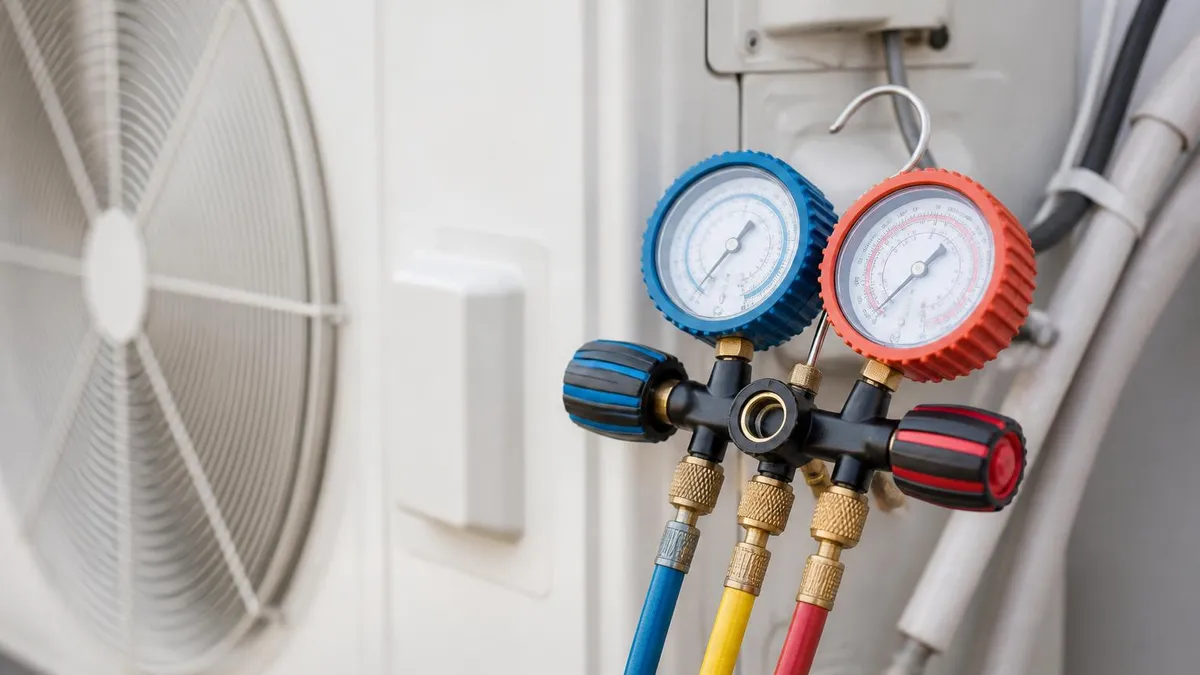
Certified HVAC Contractors: How to Find, Vet, and Hire the Right Professional for Your Home or Business
Best HVAC Repair in Bandon, OR: Local Services Near Me Guide
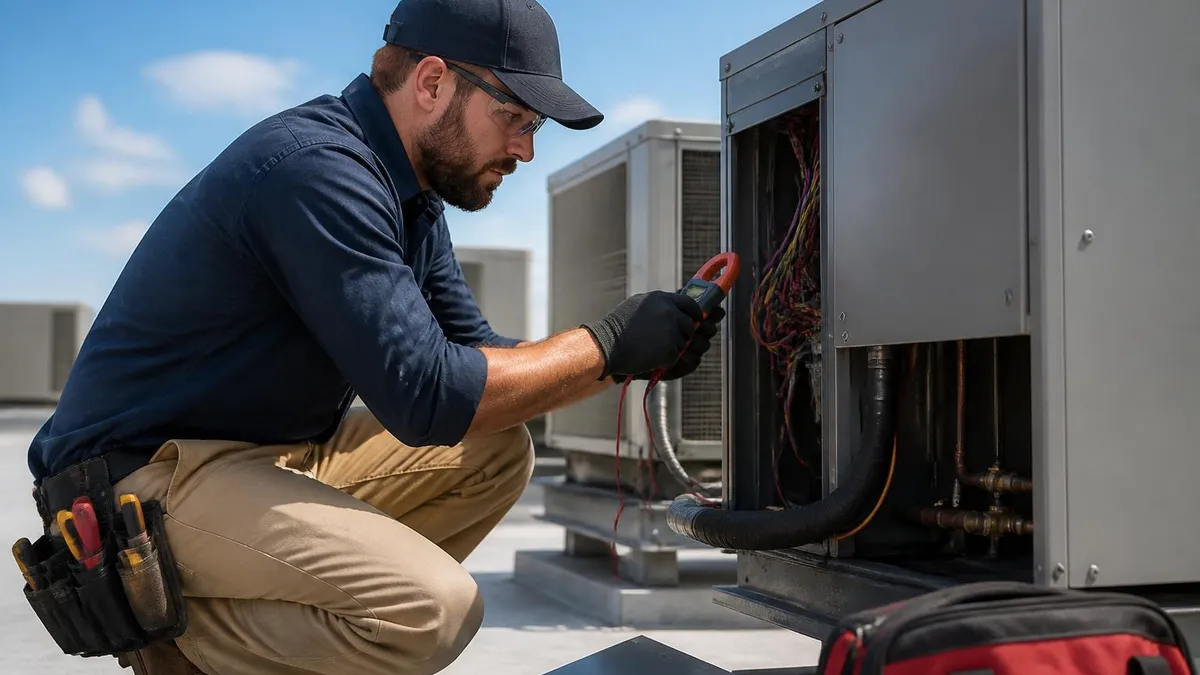
HVAC Installations: The Complete Guide to Planning, Pricing, and Getting It Right the First Time
About the Author

NATE Certified HVAC Technician & Licensing Exam Trainer
Universal Technical InstituteMike Johnson is a NATE-certified HVAC technician and EPA 608 universal-certified refrigerant handler with a Bachelor of Science in HVAC/R Technology. He has 19 years of commercial and residential HVAC installation and service experience and specializes in preparing technicians for NATE certification, EPA 608, A2L refrigerant safety, and state HVAC contractor licensing examinations.