
HVAC Control Systems: The Complete Guide to Thermostats, Sensors, BAS, and Smart Building Automation
HVAC control systems explained — thermostats, sensors, actuators, BAS, DDC, and smart automation. Learn how modern HVAC controls work and save energy. 💯
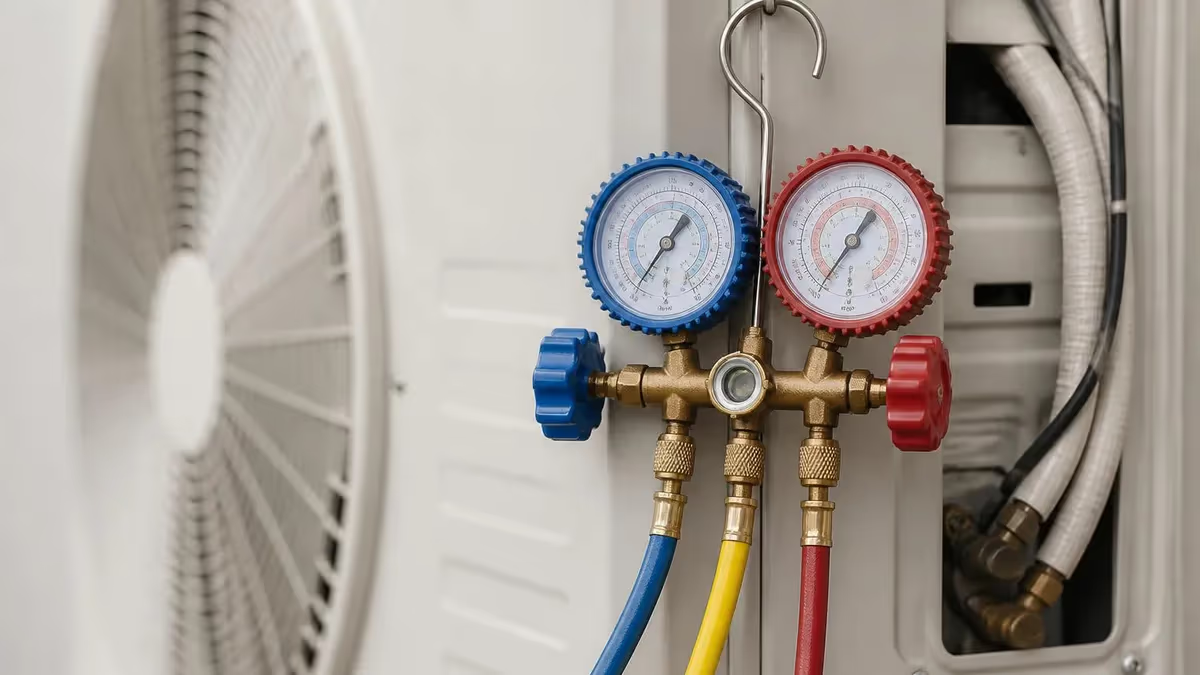
HVAC control systems are the brains behind every heating, ventilation, and air conditioning installation, translating temperature, humidity, and air quality data into the precise mechanical actions that keep buildings comfortable and efficient. Whether you are working with a single residential thermostat or a sprawling commercial building automation system (BAS) controlling hundreds of zones, the underlying logic is the same: sense a condition, compare it to a setpoint, and command equipment to respond. Understanding this loop is the foundation of modern HVAC work.
For technicians entering the field today, mastery of controls is no longer optional. The Bureau of Labor Statistics projects HVAC technician employment will grow 9% through 2033, and nearly every new system installed includes digital controls, smart sensors, or network connectivity. Employers consistently rank controls knowledge among the top three skills they look for when hiring, and the wage premium for controls specialists often runs $5 to $12 per hour above general service technicians in most US markets.
This guide walks through every layer of HVAC controls, starting with the simple bimetal thermostats that defined the 20th century and working up through programmable controllers, direct digital control (DDC), and the cloud-connected platforms that now dominate new construction. Along the way, we will cover sensors, actuators, control valves, dampers, variable frequency drives, communication protocols like BACnet and Modbus, and the troubleshooting workflows that separate competent technicians from great ones.
We will also look at how controls integrate with the rest of the building. A modern CFM HVAC basics understanding still matters because controls cannot fix undersized ductwork or a fundamentally flawed airflow design. Controls amplify good engineering and expose bad engineering, which is why the best controls technicians are also fluent in airside design, refrigeration, and electrical fundamentals.
Energy efficiency is the other major driver pushing controls forward. ASHRAE 90.1 and the International Energy Conservation Code now require demand-controlled ventilation, economizers, and setback strategies on most commercial systems. Properly commissioned controls routinely cut HVAC energy use by 15 to 30 percent compared with constant-volume legacy systems, which is why utility rebate programs increasingly target controls upgrades rather than equipment replacement alone.
Finally, controls are where HVAC meets information technology. Today's technicians need to understand IP networking, basic cybersecurity, and how to safely connect a BAS to a corporate network without exposing critical infrastructure. This guide will give you a working framework for all of it, with practical detail you can use on the next call, the next install, or the next certification exam you sit for.
By the end of this article, you will know how to read a control sequence of operations, identify the major component categories, troubleshoot common failures, and speak the language of building automation with confidence. Bookmark it, share it with apprentices, and use it as a reference whenever a control problem lands on your service ticket.
HVAC Controls by the Numbers

Core Components of an HVAC Control System
Devices that measure temperature, humidity, CO2, pressure, occupancy, and airflow. Common types include thermistors, RTDs, thermocouples, and capacitive humidity sensors. Sensor accuracy directly determines control accuracy, so calibration matters.
The decision-making brain — thermostats, unitary controllers, programmable logic controllers (PLCs), and direct digital controllers (DDC). They compare sensor inputs to setpoints and issue commands to outputs based on programmed sequences of operation.
Devices that physically move dampers, valves, and louvers in response to controller signals. Available in electric, pneumatic, and electronic varieties with 0-10V, 4-20mA, or floating-point modulation depending on the control system design.
Valves regulate water and steam flow to coils, while dampers regulate airflow through ducts and mixing boxes. Variable frequency drives (VFDs) modulate fan and pump speeds for precise capacity matching and major energy savings.
Wall-mounted thermostats, touchscreen room sensors, web-based BAS front ends, and mobile apps. These let occupants and operators view system status, override setpoints, schedule equipment, and trend historical data over weeks or months.
Every HVAC control system, no matter how sophisticated, runs on the same fundamental control loop. A sensor measures a process variable like return air temperature. The controller compares that measurement to a setpoint stored in memory. If there is a deviation, the controller calculates an output signal and sends it to a final control element such as a valve, damper, or compressor stage. The system responds, the sensor measures again, and the loop repeats — often dozens of times per minute in a well-tuned system.
The simplest form of this loop is two-position control, where a device is either on or off. A residential single-stage furnace with a basic thermostat is the classic example: at 68°F it fires, at 70°F it shuts down, and the differential keeps it from short-cycling. This works fine for small loads but wastes energy and creates uncomfortable temperature swings in larger spaces where thermal mass and lag are significant factors.
Modulating control is the next step up. Instead of just on or off, the controller can command an output anywhere from 0 to 100 percent. Modulating gas valves, variable-speed compressors, ECM blower motors, and modulating water valves all use this approach. The math behind it is usually proportional-integral-derivative (PID) control, which adjusts output based on the size of the error, how long the error has persisted, and how fast it is changing. Properly tuned PID loops are nearly invisible — they hold setpoint within a fraction of a degree.
Sequence of operations (SOO) is the written description of how a control system should behave under every condition. A good SOO covers normal occupied operation, unoccupied setback, morning warmup, economizer enable, dehumidification, freeze protection, smoke control, and alarm thresholds. Technicians often inherit systems with no documented SOO, which is why developing the ability to reverse-engineer one from observed behavior and wiring diagrams is a hugely valuable skill in the field.
Setpoint management is where comfort and efficiency intersect. ASHRAE Standard 55 defines comfortable conditions for most occupants as roughly 68–76°F with 30–60 percent relative humidity. Setting back temperatures during unoccupied hours, widening the deadband between heating and cooling setpoints, and using occupancy sensors to disable ventilation in empty zones can all save significant energy without affecting comfort during occupied hours.
Integration with the building envelope and load profile is the final piece. A control system that fights a leaky building envelope or oversized equipment will never perform well, which is why hiring qualified certified HVAC contractors for both design and commissioning is essential. The best controls in the world cannot compensate for ductwork that delivers half the design CFM or coils that are 30 percent oversized for the actual load.
Data logging and trending close the loop on system performance. Modern BAS platforms can record thousands of points at one-minute intervals and store months of history, making it possible to spot drift, sensor failures, and inefficient operation long before they become comfort complaints. Reviewing trends weekly is one of the highest-use habits an operator or service technician can build.
HVAC Practice Test Questions
Prepare for the HVAC - Heating Ventilation and Air Conditioning exam with our free practice test modules. Each quiz covers key topics to help you pass on your first try.
HVAC Air Conditioning
HVAC Exam Questions covering Air Conditioning. Master HVAC Test concepts for certification prep.
HVAC Code Compliance
Free HVAC Practice Test featuring Code Compliance. Improve your HVAC Exam score with mock test prep.
HVAC Electrical Controls
HVAC Test Prep for Electrical Controls. Practice HVAC Quiz questions and boost your score.
HVAC Energy Efficiency
HVAC Questions and Answers on Energy Efficiency. Free HVAC practice for exam readiness.
HVAC Heating Systems
HVAC Mock Test covering Heating Systems. Online HVAC Test practice with instant feedback.
HVAC Load Calculations
Free HVAC Quiz on HVAC Load Calculations. HVAC Exam prep questions with detailed explanations.
HVAC Tools and Equipment
HVAC Practice Questions for HVAC Tools and Equipment. Build confidence for your HVAC certification exam.
HVAC Refrigeration
HVAC Test Online for Refrigeration. Free practice with instant results and feedback.
HVAC Safety Practices
HVAC Study Material on Safety Practices. Prepare effectively with real exam-style questions.
HVAC System Design
Free HVAC Test covering System Design. Practice and track your HVAC exam readiness.
HVAC Thermodynamics
HVAC Exam Questions covering Thermodynamics. Master HVAC Test concepts for certification prep.
Types of HVAC Control Systems
Pneumatic controls use compressed air, typically at 15–20 psi, as the signal medium. Thermostats modulate the air pressure to actuators that drive valves and dampers. From the 1940s through the 1980s, pneumatic systems dominated commercial buildings because they were rugged, intrinsically safe in hazardous areas, and required no electricity at the actuator. Many older schools, hospitals, and government buildings still operate on pneumatic backbones.
The drawbacks are significant by modern standards. Pneumatic controls drift with temperature and humidity, require an oil-free compressed air system with dryers and filters, and offer essentially no data, alarms, or remote monitoring. Most pneumatic-to-DDC retrofits pay back within five to seven years through energy savings alone, which is why pneumatic system overhauls remain a steady source of work for controls contractors today.
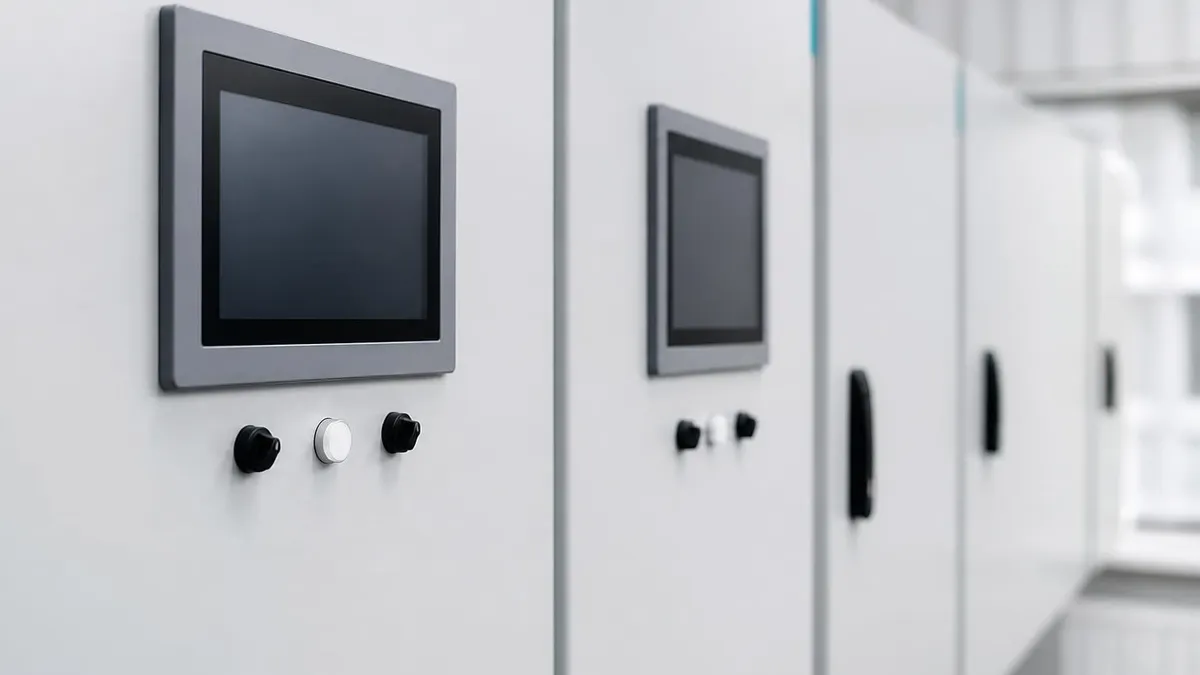
DDC and Smart Controls vs. Legacy Thermostats
- +Energy savings of 15-30% through optimized sequences and setbacks
- +Remote monitoring and diagnostics reduce truck rolls and service costs
- +Detailed trending data exposes problems before occupants complain
- +Demand-controlled ventilation cuts outdoor air loads while improving IAQ
- +Integration with lighting, security, and metering creates true smart buildings
- +Utility rebates often cover 30-70% of controls upgrade project costs
- +Predictive maintenance algorithms extend equipment life significantly
- −Higher upfront cost — DDC retrofits run $3-$8 per square foot in commercial
- −Requires trained operators or service contracts to realize full benefits
- −Cybersecurity exposure if BAS is improperly connected to corporate networks
- −Proprietary protocols can lock owners into single-vendor service relationships
- −Software updates and end-of-life hardware create long-term cost obligations
- −More complex troubleshooting requires laptops, software keys, and training
Pros and Cons at a Glance
| Pros | Cons |
|---|---|
| Remote monitoring and diagnostics reduce truck rolls and service costs | Requires trained operators or service contracts to realize full benefits |
| Detailed trending data exposes problems before occupants complain | Cybersecurity exposure if BAS is improperly connected to corporate networks |
| Demand-controlled ventilation cuts outdoor air loads while improving IAQ | Proprietary protocols can lock owners into single-vendor service relationships |
| Integration with lighting, security, and metering creates true smart buildings | Software updates and end-of-life hardware create long-term cost obligations |
| Predictive maintenance algorithms extend equipment life significantly | More complex troubleshooting requires laptops, software keys, and training |
HVAC Control System Installation Checklist
- ✓Review the sequence of operations and confirm it matches the mechanical design intent
- ✓Verify all sensor locations are away from drafts, sunlight, and direct equipment exhaust
- ✓Pull low-voltage control wire in dedicated conduits separate from line-voltage power
- ✓Label every wire at both ends with point names matching the controller submittal
- ✓Calibrate temperature sensors against a NIST-traceable reference thermometer
- ✓Stroke every damper and valve actuator from 0 to 100 percent and confirm full travel
- ✓Verify failure positions — normally open or normally closed — match the design
- ✓Document all controller IP addresses, BACnet MAC addresses, and software passwords
- ✓Test alarm notifications by simulating sensor failures and verifying operator receipt
- ✓Walk the owner through the BAS graphics and provide written training documentation
Commissioning typically pays back in 12-18 months
Studies by Lawrence Berkeley National Laboratory show that retro-commissioning existing building controls delivers a median 16% energy savings with a payback under 1.5 years. New construction commissioning catches an average of 11 deficiencies per building before turnover. Skip commissioning and you are essentially flying blind — controls will appear to work while quietly wasting energy for years.
Troubleshooting HVAC controls starts with a disciplined approach: verify the complaint, observe the system in real time, isolate the loop, and never assume the control system is wrong until mechanical and electrical fundamentals have been ruled out. A surprising number of "control problems" turn out to be dirty filters, low refrigerant charge, failed contactors, or tripped breakers. Always start at the equipment and work backward toward the controller.
The first diagnostic tool is the system itself. Modern BAS front ends display live values, setpoints, output commands, and alarms in real time. Compare the commanded output to the actual feedback — if the controller is calling for 100% cooling but the chilled water valve feedback shows 0%, the problem is downstream of the controller. If the call and feedback match but the space is not responding, the problem is mechanical or airside.
Multimeters remain essential. Verify 24V at the thermostat terminals, check transformer output under load, and confirm continuity through limit switches, pressure switches, and float switches that are wired in series with the control circuit. A failed safety switch will silently keep equipment off no matter what the controller commands, and these are among the most common service complaints in light commercial work.
Sensor failures are easy to spot if you know the signatures. Open thermistors typically read maximum or minimum scale values like -40°F or 250°F depending on wiring. Shorted sensors lock at a single value regardless of conditions. Drifted sensors read within range but disagree with a handheld reference by several degrees. Always check sensor wiring shield grounding — improperly grounded shields create noise that drives erratic control behavior.
Actuator problems usually fall into three buckets: stuck mechanically, electrically failed, or commanded incorrectly. Stroke the actuator manually if it has a manual override, command it from the BAS, and measure the control signal at the actuator terminals. A 0-10V signal that reads 5V at the controller but 1V at the actuator points to a wiring fault or end-of-line termination problem on long runs.
Communication issues on BACnet, Modbus, or LonWorks networks require their own toolkit. Check polarity on twisted-pair networks, verify termination resistors at both ends of the bus, and confirm baud rates and MAC addresses match the submittal. Free tools like YABE (Yet Another BACnet Explorer) let you scan a network and identify devices that have dropped offline, often pointing directly to a failed power supply or damaged cable.
Document everything you find and everything you do. Good troubleshooting notes are gold for the next technician who works on the system, and they protect you if the same complaint comes back later under different conditions. Photograph wiring before you change it, save BAS configuration backups before you push updates, and always confirm the system is back in normal operation before you leave the site.

Even on low-voltage control circuits, the equipment they command runs on line voltage. Before opening any control panel, follow your employer's lockout/tagout procedure on the disconnect serving the unit. Capacitors on VFDs and ECM motors retain dangerous voltage for minutes after power is removed — always verify zero energy with a meter before touching terminals.
Smart and networked controls represent the cutting edge of HVAC, and the pace of change has accelerated dramatically in the last five years. What used to require a dedicated supervisory PC and proprietary software now runs in the cloud, with operators accessing their buildings from a phone or laptop anywhere in the world. This shift has profound implications for installation, service, and the career path of every HVAC technician working today.
Wi-Fi thermostats like Nest, Ecobee, and Honeywell T-series brought smart features to residential and light commercial markets. They use machine learning to predict occupancy, integrate with utility demand-response programs, and deliver detailed monthly energy reports. For technicians, these devices have changed the residential service call — homeowners arrive with app screenshots showing exactly when the heat ran short or the AC failed to reach setpoint, and they expect technicians to engage with that data.
On the commercial side, supervisory platforms like Niagara, Tridium, JCI Metasys, and Schneider EcoStruxure now sit on top of traditional BAS controllers, normalizing data from multiple vendors and protocols into a single web-based interface. The same platform might pull from BACnet-IP rooftop units, Modbus VFDs, and LonWorks lighting controls, presenting it all on unified graphics for the operator.
Fault detection and diagnostics (FDD) software is the next layer. Tools like SkySpark, Clockworks, and BuildingIQ analyze BAS trend data continuously, flagging issues like simultaneous heating and cooling, economizers stuck closed when they should be open, and sensors that have drifted out of tolerance. A good FDD deployment catches issues weeks or months before they would surface through occupant complaints, dramatically reducing reactive service calls.
Cybersecurity is now a first-class concern. BAS networks have been used as entry points in major data breaches, and the FBI has issued specific advisories about HVAC controls being targeted by ransomware groups. Modern best practice keeps BAS on a separate VLAN with firewall rules, uses strong unique passwords on every controller, and requires VPN access for remote connections. Default passwords like "admin/admin" are inexcusable in 2026.
For homeowners and facility managers, working with qualified hvac installation leeds professionals who understand both the mechanical and the controls side has never been more important. A beautifully installed VRF system tied to a poorly programmed thermostat will underperform compared to a properly commissioned legacy system. Controls are not an afterthought — they should be specified, designed, and commissioned with the same rigor as the mechanical equipment they serve.
Looking ahead, expect tighter integration with utility grids through OpenADR demand-response signaling, more on-board machine learning that adapts sequences to a specific building's behavior, and continued consolidation of vendor platforms into vertically integrated portfolios. The technicians who thrive in this environment will be those who can move fluently between a refrigerant gauge set and a network sniffer without missing a beat.
Practical career advice for technicians wanting to specialize in controls: start by mastering the basics of single-zone equipment before moving up to multi-zone VAV systems, then chillers, then central plants. Each layer builds on the previous one, and trying to skip ahead leaves dangerous gaps in your understanding. Most controls specialists trace their development through three to five years on the mechanical side before adding the controls layer on top.
Manufacturer training is the single highest-use investment you can make. Johnson Controls, Honeywell, Siemens, Schneider, Distech, and ALC all run multi-day technician courses that include hardware, software, and protocol training. These courses typically cost $1,500-$3,500 but employers usually cover them, and the certifications they grant directly translate into higher pay and a wider range of jobs you can bid on.
Vendor-neutral certifications matter too. The BACnet International certification, the Niagara Certified Technician (NCT) program, and ASHRAE's Building Energy Modeling Professional (BEMP) credential all signal seriousness to employers. The Building Commissioning Association's CBCP credential is increasingly required on public-sector commissioning work and opens up high-value consulting opportunities.
Tools matter. Beyond the standard service tech kit, controls specialists carry a laptop with vendor software installed, USB-to-serial adapters, BACnet test tools, a network cable tester, and a multimeter capable of measuring milliamp loops. Many also carry a small Ethernet switch and a few patch cables for setting up isolated networks during commissioning. A portable handheld BACnet device explorer can pay for itself on a single complex troubleshooting call.
Documentation discipline separates good controls techs from great ones. Keep a personal library of sequences you have written or rewritten, screenshots of well-built graphics, and notes on every quirky vendor behavior you encounter. Five years into the work, this library becomes a competitive advantage that lets you walk into unfamiliar buildings and quickly diagnose what is going on. Many specialists eventually use that body of knowledge into consulting roles.
Stay connected to the mechanical side. The best controls technicians never lose the ability to read a schematic, brazes a copper joint, or diagnose a refrigerant problem. Controls knowledge is most valuable when paired with mechanical fluency, because that combination is rare in the labor market and commands a substantial wage premium. Pursuing both HVAC technician jobs near me that emphasize controls work and ongoing mechanical training is the strongest path forward.
Finally, embrace continuous learning. Protocols change, vendor platforms get acquired and rebranded, and new energy codes drive new sequences every cycle. The technicians who thrive treat learning as part of the job, not as an extra burden. Subscribe to ASHRAE Journal, follow controls-focused YouTube channels, join Reddit's r/BuildingAutomation community, and attend at least one major industry show like AHR Expo each year if you possibly can.
Sample HVAC Practice Questions
Try these questions from our free HVAC practice tests. The correct answer and an explanation follow each question.
What does DDC stand for in building automation and HVAC controls?
- A. Dual Digital Control
- B. Direct Digital Control
- C. Dynamic Data Control
- D. Distributed Device Control
Answer: B. Direct Digital Control
DDC (Direct Digital Control) uses microprocessors to directly monitor and control HVAC equipment using digital signals and algorithms.
What communication protocol, standardized by ASHRAE, was specifically designed for building automation systems?
- A. Modbus
- B. BACnet
- C. LonWorks
- D. Profibus
Answer: B. BACnet
BACnet (Building Automation and Control Networks) is the ASHRAE standard 135 communication protocol designed specifically for HVAC and building automation interoperability.
What condition results when a building's HVAC system creates a negative pressure differential relative to the outdoors?
- A. Stack effect reversal
- B. Backdrafting of combustion appliances
- C. Increased filtration efficiency
- D. Reduced volatile organic compound levels
Answer: B. Backdrafting of combustion appliances
Negative building pressure can cause combustion gases from furnaces or water heaters to be drawn back into the living space instead of exhausted outside.
What is 'hunting' in an HVAC control system?
- A. Searching for the optimal setpoint value
- B. Continuous oscillation of the controlled variable above and below setpoint due to overcorrection
- C. Increasing system capacity to find the maximum output
- D. Locating a refrigerant leak using electronic detectors
Answer: B. Continuous oscillation of the controlled variable above and below setpoint due to overcorrection
Hunting occurs when a control system repeatedly overcorrects, causing the controlled variable to swing continuously above and below the setpoint without stabilizing.
HVAC Questions and Answers
HVAC Technician Jobs Near Me: How to Find, Land, and Grow in Local HVAC Careers
CFM HVAC Basics: How Airflow, Sizing, and System Performance Work Together
Certified HVAC Contractors: How to Find, Vet, and Hire the Right Professional for Your Home or Business
Best HVAC Repair in Bandon, OR: Local Services Near Me Guide
HVAC Installations: The Complete Guide to Planning, Pricing, and Getting It Right the First Time
About the Author

NATE Certified HVAC Technician & Licensing Exam Trainer
Universal Technical InstituteMike Johnson is a NATE-certified HVAC technician and EPA 608 universal-certified refrigerant handler with a Bachelor of Science in HVAC/R Technology. He has 19 years of commercial and residential HVAC installation and service experience and specializes in preparing technicians for NATE certification, EPA 608, A2L refrigerant safety, and state HVAC contractor licensing examinations.