
Questions to Ask Home Inspector: The Complete Buyer's Guide 2026 September
🎓 Discover the best questions to ask home inspector pros near you. Learn what inspectors check, how much they charge, and how to use the report.
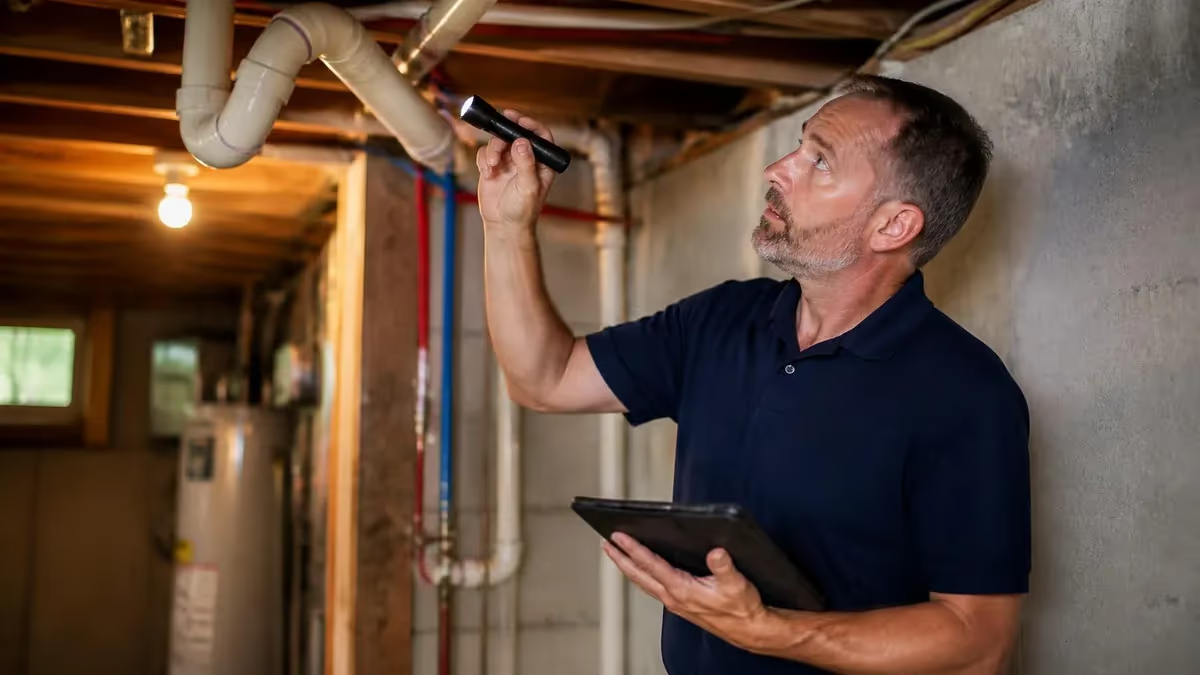
When searching for home inspectors near me, most buyers focus entirely on price — but the questions you ask before and during an inspection are just as important as the report you receive afterward. A great home inspection can save you thousands of dollars in unexpected repairs, help you negotiate a better purchase price, and give you the confidence to walk away from a money pit. Knowing what to ask transforms you from a passive observer into an informed participant in one of the biggest financial decisions of your life.
The inspection process typically lasts two to four hours for an average-sized home, and a qualified inspector will evaluate hundreds of components — from the foundation to the roof, electrical panels to plumbing supply lines. But inspections are only as thorough as the communication between the buyer and the professional performing the work. Arriving with a prepared list of questions to ask your home inspector ensures nothing critical gets overlooked and that you fully understand every finding in the written report.
Many first-time buyers assume the inspector works for them, but in some transactions the lines can blur. Before hiring anyone, confirm that the inspector carries errors-and-omissions insurance, holds a valid state license, and operates independently from your real estate agent. Some agents have preferred vendor lists that benefit their own referral networks rather than your best interests. Your inspector should be someone you selected after independent research.
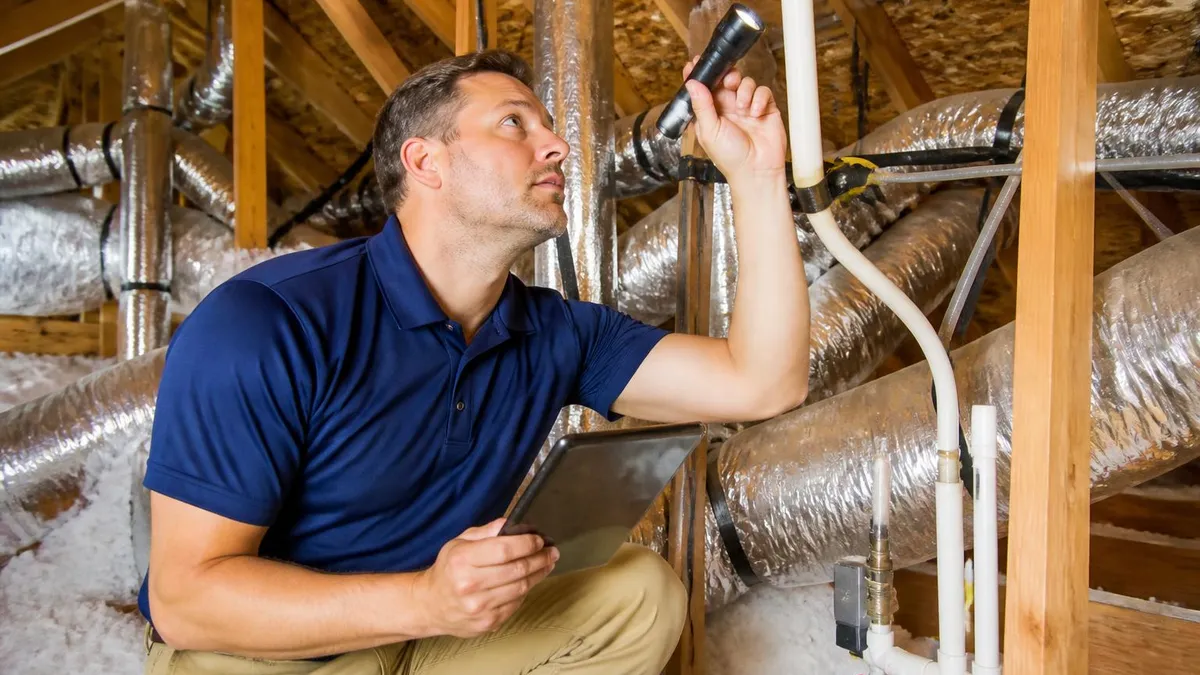
Understanding what do home inspectors look for helps you have a smarter conversation during the walkthrough. Inspectors evaluate structural components, roofing systems, HVAC equipment, electrical wiring, plumbing, insulation, windows, doors, and drainage. Each of these categories carries its own set of common defects, expected lifespans, and repair cost ranges. Knowing the categories in advance lets you ask targeted follow-up questions when the inspector flags an issue.
The national average cost of a home inspection runs between $300 and $500, though prices vary significantly by region, home size, and add-on services like radon testing, sewer scope, mold screening, or thermal imaging. Always ask for an itemized quote so you understand exactly what is and is not included. Some inspectors bundle ancillary tests into a discounted package, which can be a worthwhile investment depending on the age and location of the home you are purchasing.
Inspectors are not required to move furniture, lift rugs, or dismantle systems to conduct their evaluation. They perform a visual, non-invasive assessment of accessible components. This limitation means that certain hidden defects — concealed mold behind drywall, deteriorated pipe interiors, or failing HVAC heat exchangers — may not surface during a standard inspection. Asking your inspector about the limitations of their assessment helps you decide whether additional specialized testing is warranted before closing.
This guide covers every important question to ask a home inspector — before you hire them, during the walkthrough, and after you receive the written report. Whether you are buying your first home or your fifth, this resource will help you use the inspection process to its full potential and ensure you move forward with clear, accurate information about the property's true condition.
Home Inspection Industry by the Numbers
Key Questions to Ask Before You Hire a Home Inspector
Confirm the inspector holds a valid state license and carries both general liability insurance and errors-and-omissions (E&O) coverage. E&O protects you if the inspector misses a defect that later costs you money. Never hire an unlicensed inspector, even if they offer a lower price.
Experience matters enormously in home inspection. Ask how many inspections the professional has completed and whether they have a background in construction, engineering, or a related trade. Inspectors with 500 or more completed inspections typically catch subtler defects that newer inspectors might overlook.
Request a written scope of services before booking. Confirm which systems are included — HVAC, plumbing, electrical, roofing, foundation — and ask specifically about add-ons like radon, sewer scope, mold, and thermal imaging. Knowing the scope prevents surprise exclusions from appearing in the final report.
Any reputable inspector will welcome your presence during the walkthrough. Attending in person allows you to ask questions in real time, observe defects firsthand, and better understand the severity of each finding. If an inspector discourages attendance, consider that a significant red flag.
Most inspectors deliver digital reports within 24 hours of completing the walkthrough. Some provide same-day reports using tablet-based software. Ask about the report format — ideally it includes photos, defect descriptions, and recommended next steps — so you can evaluate it thoroughly before your contingency deadline.
Once you arrive at the property for the walkthrough, the real value of the inspection comes from your active participation. Start by introducing yourself to the inspector and confirming the planned sequence of evaluation — many inspectors begin outside with the roof and foundation before moving through the interior systems. Understanding the order helps you stay out of the way during technically complex assessments while positioning yourself to observe and ask questions at the right moments.
Ask the inspector to point out every defect they document in real time, even minor ones. Seeing a cracked vent pipe, a reverse-polarized outlet, or a compromised soffit in person gives you a much clearer sense of its severity than reading about it later in a written report. Photos in reports are helpful, but a firsthand view allows you to gauge spatial context — is that moisture stain on the basement ceiling directly below a bathroom, or is it near an exterior wall where groundwater intrusion is more likely?
One of the most important questions to ask during the walkthrough is: "Is this a safety issue, a maintenance item, or a major defect?" Inspectors are trained to report what they observe without necessarily prioritizing findings by urgency. Making that distinction yourself — or asking the inspector to help you make it — is critical to understanding which items should be addressed before closing and which can be handled as routine homeowner maintenance after you move in.
Pay special attention to the electrical panel. Ask the inspector to open the panel cover and walk you through what they see. Common issues include double-tapped breakers, aluminum branch wiring, undersized service capacity, and missing knockout covers. Panel problems can be expensive to correct and may affect your homeowner's insurance eligibility. If the inspector finds any Federal Pacific Stab-Lok or Zinsco panels, ask specifically about replacement costs, as insurers in many states refuse to cover homes with those brands.
When evaluating the roof, ask the inspector to estimate the remaining useful life of the roofing material. A roof with two to three years of life left is a very different negotiating point than one with ten years remaining. Ask whether the inspector physically walked the roof or evaluated it from ground level or a ladder. Some slopes and roofing materials make walking unsafe, but inspectors using drone technology or ladder-only assessment may miss edge flashing issues or hidden soft spots that a walking inspector would detect underfoot.
For home inspectors chicago and other major metropolitan markets, it is common to encounter older homes with original cast iron drain lines, knob-and-tube wiring, or galvanized supply pipes. Ask the inspector to comment specifically on the age and condition of these systems and whether they recommend a sewer scope as a supplemental test. A sewer camera inspection costs roughly $150 to $350 and can reveal root intrusion, collapsed sections, or offset joints that would otherwise only surface after you move in and experience a catastrophic backup.
As the walkthrough concludes, ask the inspector to give you a verbal summary of the three most significant findings before you leave the property. This helps you begin processing the implications immediately rather than waiting for the written report. It also opens a dialogue about whether any findings warrant bringing in a specialist — a structural engineer, an HVAC technician, or a licensed electrician — for a more detailed second opinion before you proceed with the purchase.
What Do Home Inspectors Look for by System
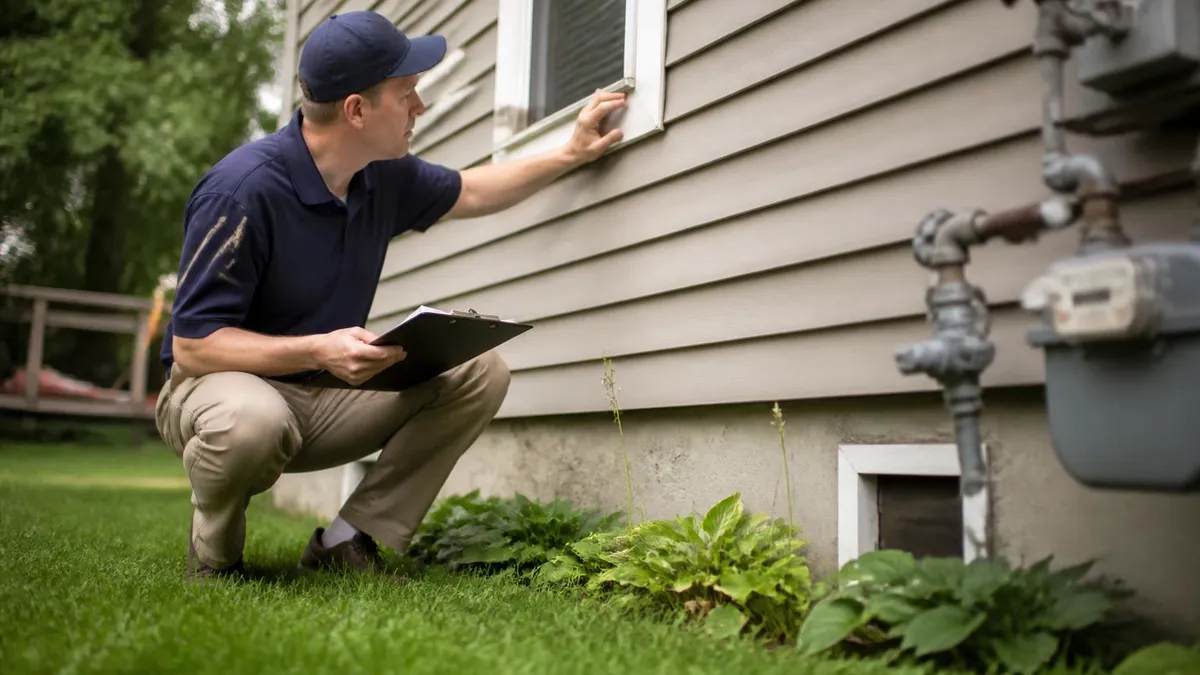
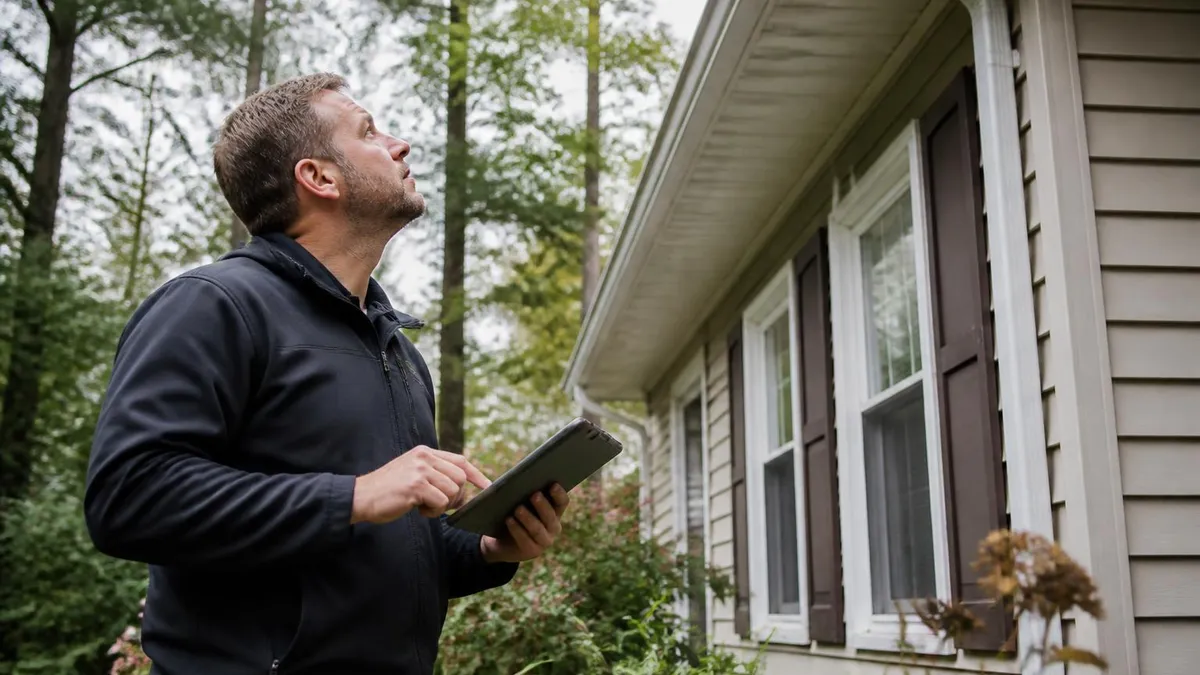
Home inspectors evaluate the foundation, framing, walls, roof structure, and exterior cladding for signs of settlement, moisture intrusion, and deterioration. They look for cracks in masonry foundations, sagging ridge lines, damaged fascia and soffits, improper grading that directs water toward the structure, and compromised window and door flashing. Inspectors also check decks and attached structures for ledger board attachment, post footing adequacy, and railings that meet current safety height requirements.
Exterior drainage is one of the most commonly flagged issues in residential inspections. Inspectors note whether the grade slopes away from the foundation, whether downspout extensions adequately carry water away from the perimeter, and whether window wells have proper drainage. In cold climates they also look for ice dam evidence on the roof and interior water staining near exterior walls that suggests chronic freeze-thaw moisture problems. These findings frequently drive post-inspection negotiation.
Attending the Inspection vs. Reviewing the Report Only
- +See defects firsthand and gauge severity in real time
- +Ask follow-up questions immediately as issues are discovered
- +Understand spatial context that photos rarely capture fully
- +Build a direct relationship with the inspector for future questions
- +Learn basic home maintenance insights the inspector points out
- +Receive a verbal summary of priority findings before leaving
- −Requires 2–4 hours away from work or other obligations
- −Can cause emotional reactions that cloud objective decision-making
- −Some buyers ask too many questions and slow the inspector down
- −Being present during an unfavorable inspection can be stressful
- −Out-of-town buyers often cannot attend inspections in person
- −Remote buyers must rely entirely on the written report and photos
Post-Report Questions Checklist
- ✓Ask the inspector to clarify any finding you do not fully understand before your contingency expires.
- ✓Request that the inspector rank findings by severity: safety hazard, major defect, or routine maintenance.
- ✓Ask which defects require licensed contractor repair versus DIY-appropriate fixes.
- ✓Inquire whether any findings suggest further evaluation by a structural engineer or specialist.
- ✓Ask the inspector to estimate repair cost ranges for the three most significant defects.
- ✓Confirm whether any systems are at or near the end of their expected service life.
- ✓Ask if the inspector has seen similar defects in other homes of this age and neighborhood.
- ✓Request clarification on any photo in the report where the issue is not immediately obvious.
- ✓Ask whether the seller's disclosure matches what was observed during the inspection.
- ✓Confirm which items the inspector would personally prioritize if they were the buyer.
Never Waive the Inspection Contingency
In competitive markets, buyers sometimes waive inspection contingencies to make offers more attractive. This is one of the riskiest decisions a buyer can make. Even a cursory pre-offer inspection — sometimes called an informational inspection — gives you critical data without formally making the contingency part of the contract. Spending $350 before making a $400,000 decision is always worth it.
Understanding home inspector salary and career economics helps buyers appreciate why inspection quality varies so significantly across providers. The median annual salary for a licensed home inspector in the United States is approximately $64,000, but earnings range widely from around $35,000 for part-time inspectors just entering the field to more than $100,000 for experienced professionals running high-volume solo practices or multi-inspector firms. Inspectors in high cost-of-living markets like California, New York, and the Pacific Northwest typically earn more than those in rural markets.
When buyers ask how much do home inspectors make per individual inspection, the answer is typically $200 to $500 per standard residential inspection, with the national average hovering around $350. Inspectors in dense urban markets often complete four to six inspections per week, while those in rural areas may do fewer but charge comparable rates per visit due to longer drive times. Many inspectors supplement their income by offering ancillary services — radon testing, sewer scoping, mold air sampling, pool and spa inspection, and infrared thermal imaging — each adding $75 to $400 to the base fee.
The discussion around minnesota home inspectors pricing reddit and similar community forums reveals that buyers in colder climates often pay premium rates because harsh winters create more complex inspection scenarios: ice dam damage, frost heave in foundations, condensation problems in unventilated attic spaces, and HVAC systems that run at maximum capacity for six months of the year. Inspectors in these markets develop specialized expertise that justifies higher fees. Use community forums as a starting point for understanding local pricing, but always verify credentials independently before booking.
For buyers searching for cheap general liability for home inspectors, it is worth understanding what this insurance actually protects. General liability covers property damage an inspector might accidentally cause during a walkthrough — a broken window, a damaged fixture, a tripped circuit breaker that causes a data loss on a plugged-in device. Errors-and-omissions insurance is a separate policy that covers financial claims arising from inspection mistakes or missed defects. Both types of coverage matter to buyers, because they determine whether you have recourse if the inspector damages the property or fails to identify a significant defect.
The home inspector certification landscape in the United States is governed primarily at the state level, with requirements varying enormously by jurisdiction. Some states require 100 to 200 hours of classroom education, a supervised field inspection requirement, and passage of a standardized exam such as the National Home Inspector Examination (NHIE). Other states have minimal or no licensing requirements, which means buyers in those markets must rely entirely on voluntary professional credentials from organizations like ASHI (American Society of Home Inspectors) or InterNACHI (International Association of Certified Home Inspectors).
When evaluating inspectors in markets with competing chicago area home inspectors, look beyond price and focus on credentials, sample report quality, and online reviews from verified past clients. Ask to see a sample report before booking — a high-quality inspection report should include clear photographs, defect descriptions written in plain language, severity ratings, and recommended action steps. Reports that consist of vague checkboxes with minimal narrative offer little practical value for negotiating repairs or budgeting for future maintenance.
Inspectors who invest in continuing education, attend industry conferences, and hold specialty certifications in areas like radon measurement, mold assessment, or energy auditing bring additional value to the inspection process. These credentials indicate a professional who is actively engaged in their field rather than one who obtained a basic license and stopped learning. When two inspectors have similar pricing, the one with more advanced credentials and ongoing professional development is almost always the better choice for a high-stakes purchase decision.
Most purchase contracts give buyers just 5 to 10 business days to complete inspections and submit repair requests. Missing this deadline can mean forfeiting your right to negotiate based on inspection findings — or even losing your earnest money deposit. Book your inspector within 24 hours of signing the purchase agreement, and confirm report delivery timing before the inspection begins.
For anyone considering how to become a home inspector as a career, the pathway typically involves completing a state-approved pre-licensing education program, passing a licensing examination, completing a required number of field inspections under the supervision of a licensed professional, and submitting an application to your state's regulatory board. The entire process takes between three months and one year depending on your starting knowledge, the pace of your education program, and how quickly supervised inspection hours can be accumulated in your local market.
The National Home Inspector Examination (NHIE) is the most widely accepted standardized licensing exam in the industry, recognized in more than 30 states. The NHIE consists of 200 questions covering property and building inspection, analysis of findings, and professional practice. Candidates have four hours to complete the exam, and the pass rate hovers around 54 percent for first-time test takers. Thorough preparation using practice tests, study guides, and hands-on field experience is essential for passing on the first attempt.
InterNACHI offers one of the most accessible pathways to entering the profession. Their online coursework covers structural systems, roofing, plumbing, electrical, HVAC, insulation, exterior components, and professional report writing. Upon completing the curriculum and passing their qualifying exam, candidates earn the Certified Professional Inspector (CPI) designation, which is recognized by real estate professionals and buyers across the country. InterNACHI members also benefit from continuing education resources, legal forms, business development tools, and a referral network that helps new inspectors build their client base.
ASHI (American Society of Home Inspectors) represents the other major professional credential in the industry. ASHI membership requires candidates to complete 250 paid home inspections and pass both the NHIE and the ASHI Standards of Practice exam before earning the Certified Home Inspector designation. This higher threshold means that ASHI-certified inspectors have substantially more field experience than those holding entry-level credentials, which is a meaningful quality signal for buyers choosing between candidates with similar pricing and geographic coverage.
Business costs are a significant consideration for anyone entering the profession. Beyond licensing fees, new inspectors must invest in professional liability (E&O) insurance, a reliable vehicle for travel to inspection sites, inspection tools (moisture meters, electrical testers, gas sniffers, infrared cameras, and roof drones), and report-writing software. Many inspectors use platforms like Spectora, HomeGauge, or Horizon for professional digital reports with photos. Total startup costs typically range from $5,000 to $15,000, with insurance being the largest recurring annual expense.
Marketing is another critical factor in building a successful home inspection practice. Most inspectors derive the majority of their business from real estate agent referrals, which creates a potential conflict of interest worth understanding. Buyers should be aware that an inspector who depends heavily on agent referrals for income may feel subtle pressure not to be too aggressive about flagging issues that could kill a transaction. The most independent and trustworthy inspectors tend to market directly to buyers through online reviews, social media, and community engagement rather than relying exclusively on agent networks.
If you are studying for the minnesota home inspectors pricing reddit community discussions or preparing for a state licensing exam, understanding the real-world business context behind the inspection profession gives your knowledge important depth. Knowing why inspectors make the choices they do — which systems they prioritize, which defects they report versus monitor, how they write findings to minimize liability — helps you become a more effective professional and a more informed buyer.
After receiving your inspection report, the negotiation phase begins. Buyers have several options: request that the seller repair specific items before closing, ask for a price reduction equivalent to the estimated repair cost, request a closing credit that allows you to manage repairs yourself after taking possession, or — in cases of severe findings — exercise the inspection contingency to exit the contract entirely. Each strategy carries different risks and benefits depending on your market, your financing, and the seller's flexibility.
Repair requests are most effective when they focus on safety hazards, major mechanical failures, and significant structural defects rather than cosmetic issues or routine maintenance items. Asking a seller to fix a cracked electrical panel, a failed HVAC heat exchanger, or active roof leaks is reasonable and typically well received. Asking them to repaint, recaulk, or address minor cosmetic wear signals to sellers that you may be difficult to work with and can poison an otherwise productive negotiation dynamic.
Price reductions and closing credits are often more practical than repair requests because they eliminate the uncertainty of how well a seller's contractor will perform the work. When sellers make repairs, they frequently choose the lowest bidder, use substandard materials, or make cosmetic fixes that don't address the underlying problem. Receiving a $5,000 closing credit and hiring your own licensed contractor gives you control over quality and material selection — a meaningful advantage for major repairs like roofing, HVAC replacement, or foundation waterproofing.
In some markets, buyers commission a second specialist inspection after the general inspector flags a concern. This is particularly common for foundation issues, where a structural engineer's report provides a definitive assessment of severity and recommended remediation. A general home inspector can note that stair-step cracking in a block foundation is present, but only a structural engineer can tell you whether that cracking represents normal settlement or an active movement problem requiring underpinning. That distinction can mean the difference between a $2,000 epoxy injection and a $40,000 foundation repair.
When reviewing the written report with your real estate attorney or buyer's agent, pay attention to the difference between items that the inspector observed directly and items that the inspector was unable to assess due to access limitations or concealment. Areas described as "not inspected" due to snow cover, personal property, or structural limitations represent unknown risks. Your attorney can help you craft a specific disclosure request asking the seller to represent the condition of those inaccessible areas, providing you additional contractual protection if hidden defects emerge after closing.
Finally, remember that the inspection report is a snapshot of the property's condition on one specific day. Seasonal conditions affect what an inspector can and cannot observe — frozen ground makes assessing drainage patterns difficult, heavy snow prevents roof walking, and air conditioners cannot be tested when outside temperatures are below 60 degrees Fahrenheit. If you are buying in a season that limits inspection scope, ask the inspector what follow-up items you should verify at a different time of year, and build those re-evaluations into your post-move-in maintenance schedule.
The goal of the entire inspection process is not to find a perfect home — those rarely exist — but to ensure you make an informed decision with full awareness of the property's current condition, its deferred maintenance backlog, and its estimated capital improvement timeline. Armed with the right questions to ask home inspector professionals before, during, and after the walkthrough, you can navigate this process with confidence and close on a home that meets your expectations and your budget.
Home Inspector Questions and Answers
About the Author

Licensed Real Estate Broker & Licensing Exam Specialist
University of Wisconsin School of BusinessSandra Taylor is a Graduate Realtor Institute (GRI) and Accredited Buyer's Representative (ABR) designee with an MBA in Real Estate from the University of Wisconsin School of Business. She has 18 years of residential and commercial real estate brokerage experience and coaches real estate license candidates through state salesperson and broker pre-license examinations across multiple states.