
Home Health Aide Jobs Philadelphia: Your Complete Career Guide 2026 October
Find home health aide jobs Philadelphia, learn HHA certification steps, training programs, and salary data. 🎓 Start your HHA career today.

Home health aide jobs Philadelphia are among the fastest-growing healthcare positions in the entire Delaware Valley region. Philadelphia's aging population, expanding Medicaid waiver programs, and strong network of home care agencies have created thousands of openings for qualified HHAs every single year. Whether you are just starting out or transitioning from another caregiving role, the Philadelphia market offers entry-level positions, full-time benefits, flexible scheduling, and clear pathways to advancement — all without requiring a four-year college degree or previous clinical experience.
The HHA Exchange platform has become a central hub for Pennsylvania home care workers, connecting certified aides with agencies, managing schedules, and tracking HHA Exchange login credentials for time-sheet verification. Understanding how that system works — alongside your official HHA certification — gives you a significant advantage when applying to the major agencies operating across Philadelphia, Montgomery, Delaware, Bucks, and Chester counties. Employers increasingly rely on the platform to verify compliance, so familiarity with the HHA login portal signals professionalism from day one.
Philadelphia is home to nationally recognized health systems including Jefferson, Penn Medicine, Temple Health, and Einstein Healthcare Network, all of which contract with or directly operate home health divisions. Beyond those giants, dozens of independent agencies compete fiercely for qualified aides, which means job seekers with a valid certified home health care aide credential enjoy strong negotiating power on pay rate, shift preference, and service territory. Understanding that competitive landscape puts you in a position of strength before you even apply.
To work legally as a home health aide in Pennsylvania, you must complete a state-approved home health aide training program totaling at least 75 hours of instruction, pass a competency evaluation, and appear on the Pennsylvania nurse aide registry or the equivalent HHA registry. Philadelphia County has several community-based organizations, community colleges, and agency-sponsored programs that allow you to complete this requirement for free or at very low cost, especially if you qualify for workforce development funding through the Philadelphia Works initiative.
Salary data from the Bureau of Labor Statistics and local employer surveys consistently show Philadelphia HHA wages above the national median, largely driven by Pennsylvania's minimum wage requirements for Medicaid-funded home care, Philadelphia's city wage floor, and union contracts negotiated by SEIU 32BJ and 1199C. Full-time aides working 40 hours per week with a reputable agency can reasonably expect to earn between $30,000 and $38,000 annually, with overtime opportunities pushing total compensation higher during peak demand periods such as winter months when hospitalization and post-acute discharge volumes rise sharply.
If you want to understand exactly what employers in Philadelphia expect, reviewing a detailed home health aide job description will show you the specific clinical tasks, documentation duties, and behavioral competencies that agencies evaluate during the interview and probationary period. Knowing this information in advance lets you tailor your resume and prepare specific examples from past caregiving experience — formal or informal — that demonstrate you already meet the role's core requirements before you set foot in an interview room.
This guide walks you through every step of breaking into or advancing within the Philadelphia home health aide job market, from choosing the right home health aide training program and navigating the HHA Exchange login system to negotiating pay, understanding client assignment policies, and preparing for the competency exam that makes your credential official and portable across Pennsylvania agencies.
Philadelphia HHA Jobs by the Numbers

HHA Certification Requirements in Philadelphia
Pennsylvania law requires at least 75 hours of state-approved home health aide training, covering personal care, safety, infection control, and client rights. Philadelphia programs often exceed this minimum, offering 100–120 hours for a stronger job market advantage.
After training, candidates must pass a written knowledge test and a hands-on skills demonstration observed by a qualified evaluator. Both components must be passed within three attempts. Failing either section requires additional supervised practice hours before retesting.
Upon passing, your name is entered on the Pennsylvania Department of Health's home health aide registry. Philadelphia-area agencies are legally required to verify registry status before you begin client assignments, making registration a non-negotiable employment prerequisite.
Pennsylvania requires three clearances for anyone working with vulnerable adults: PA State Police Criminal History, PA Child Abuse History, and an FBI fingerprint check. Processing takes 1–3 weeks and fees total roughly $40–$75, though some agencies reimburse upon hire.
Most Philadelphia agencies require a two-step tuberculin skin test or IGRA blood test within the past 12 months, along with proof of influenza vaccination each season. Some agencies also require a basic physical exam confirming the ability to perform lifting and mobility tasks.
Home health aide training programs in Philadelphia vary widely in cost, format, and duration. The cheapest option — and often the fastest route to employment — is an agency-sponsored training program where the employer covers all tuition costs in exchange for a commitment to work with that agency for a set period after certification, typically six to twelve months. This arrangement is extremely common in Philadelphia's competitive labor market, with agencies like BrightSpring, Elara Caring, and Bayada Home Health Care all running their own accredited programs at no cost to the trainee.
Community colleges represent another strong option, particularly for students who want a portable credential not tied to a single employer. Community College of Philadelphia offers allied health pathways that include HHA content, and Delaware County Community College runs similar programs accessible to Philadelphia residents via public transit. These programs typically take six to eight weeks for the core HHA curriculum and cost between $300 and $800 after financial aid, making them affordable for most applicants even without agency sponsorship.
The HHA Exchange platform has fundamentally changed how Philadelphia home care agencies manage their workforce. Originally developed as a scheduling and time-tracking tool, HHA Exchange now serves as a comprehensive compliance management system. When you complete your home health aide training and join an agency that uses the platform, you will receive login credentials and be required to clock in and out of client visits through the mobile app. Understanding this workflow before your first day saves significant frustration and signals to supervisors that you are tech-comfortable and prepared.
HHA Exchange login issues are one of the most common complaints from new aides in the Philadelphia market. The system requires a secure password, multi-factor authentication via SMS, and a stable mobile internet connection to function at client locations. If you are applying to positions and know the agency uses HHA Exchange, download the app before your orientation date, test your HHA login credentials, and familiarize yourself with the clock-in, task documentation, and messaging features. Many agencies grade aides partly on login compliance rates, so a strong start matters enormously for your performance record.
Workforce development funding through Philadelphia Works can cover tuition, books, and even a small living stipend for eligible applicants pursuing home health aide certification. Eligibility generally requires being unemployed or underemployed and residing in Philadelphia County. The application process takes two to four weeks, but the payoff is a fully funded training experience that leaves you debt-free and ready to work. Community organizations like the Nationalities Service Center, Impact Services, and PathWays PA also help applicants navigate these funding streams at no cost to the job seeker.
If you prefer self-paced preparation before committing to a full training program, reviewing hha jobs near me resources can help you understand what local employers are looking for and what the competency exam actually tests. Combining that self-study with official classroom instruction gives you the strongest possible foundation for both the written test and the hands-on skills evaluation, reducing the risk of a costly second attempt and shortening your overall timeline to first paycheck.
Once certified, many Philadelphia HHAs discover that maintaining their credential requires annual in-service training, typically 12 hours per year for agency-employed aides and more if you work independently. Topics often include updated infection control protocols, dementia care techniques, and medication management changes. Agencies that use HHA Exchange typically track this continuing education within the platform itself, automatically flagging aides whose compliance hours are falling behind and sending reminders well before renewal deadlines — a genuinely useful feature that takes administrative pressure off the individual worker.
Home Health Aide Certification: What Philadelphia Employers Look For
The largest employers of certified home health care aides in the Philadelphia area include Bayada Home Health Care, Elara Caring, BrightSpring Health Services, Comfort Keepers, Home Instead, and Right at Home. Each operates multiple branch offices across the five-county region and collectively employ thousands of full-time and part-time aides. These agencies offer structured onboarding, consistent client matching, paid orientation, and access to employee benefits including health insurance and 401(k) plans for full-time staff.
Smaller independent agencies like Liberty Home Care, Accolade Home Care, and First Choice Home Health often pay competitive per-hour rates and provide more flexibility in scheduling but may offer fewer formal benefits. Many experienced Philadelphia HHAs work for one large agency as their primary employer while picking up supplemental shifts through a smaller agency or staffing platform, effectively building a diversified income stream while maintaining the stability of a primary employment relationship.
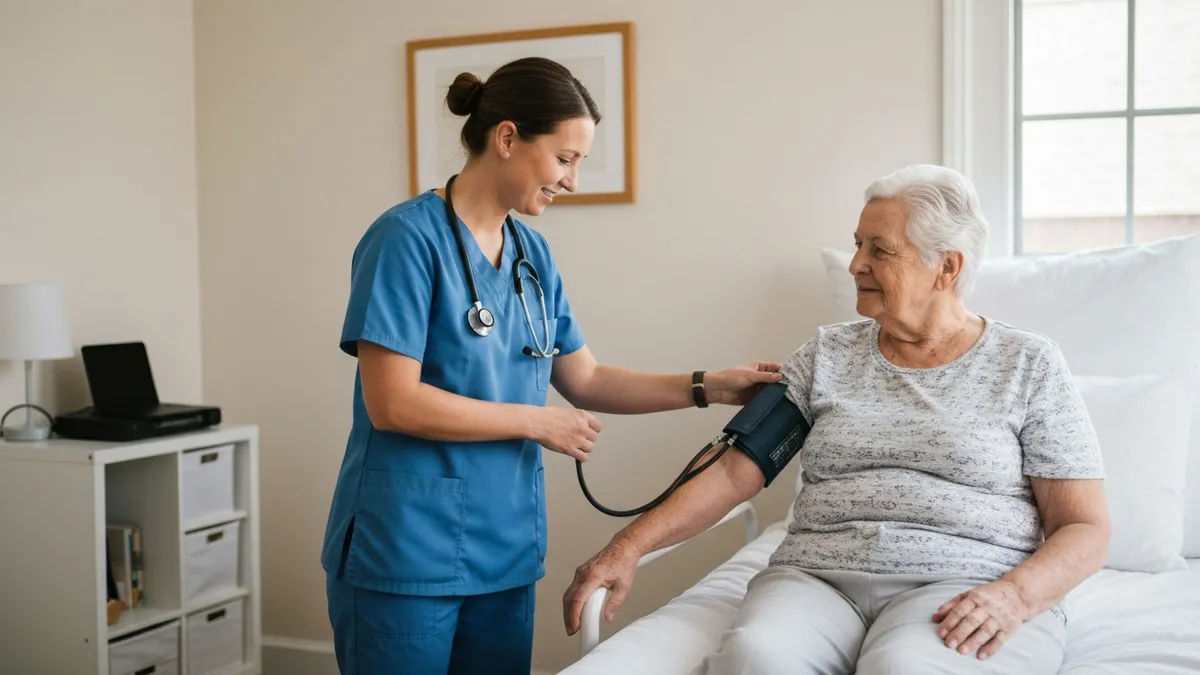
Is a Philadelphia HHA Career Right for You?
- +High demand means fast job placement — most certified HHAs in Philadelphia receive multiple job offers within two weeks of passing their competency evaluation
- +Flexible scheduling options including part-time, full-time, weekend-only, and live-in assignments accommodate diverse life situations and family obligations
- +Low barrier to entry — a 75-hour training program is all you need, and many agencies in Philadelphia offer it free with an employment commitment
- +Union representation through SEIU 1199C provides negotiated pay scales, paid sick leave, and formal grievance procedures that protect workers' rights
- +Emotionally rewarding work with direct, measurable impact on clients' quality of life, independence, and dignity in their own homes
- +Clear pathway to advancement into LPN, RN, or care coordinator roles with tuition reimbursement programs offered by many Philadelphia agencies
- −Physically demanding work involving lifting, transferring, and repositioning clients can lead to musculoskeletal injuries if proper body mechanics are not consistently practiced
- −Pay rates, while competitive locally, still lag behind hospital-based clinical roles and do not always reflect the complexity and emotional labor involved
- −Travel between client homes in Philadelphia traffic adds unpaid time to the workday and increases vehicle wear-and-tear for aides without access to public transit routes
- −Emotional burnout is a recognized occupational risk, particularly when caring for clients with advanced dementia, terminal illness, or complex family dynamics
- −Client cancellations and last-minute schedule changes can create income instability for aides who depend on consistent hours and cannot quickly fill gaps
- −HHA Exchange and EVV compliance requirements add administrative burden, and technical issues with the app or connectivity can create documentation stress at client locations
Pros and Cons at a Glance
| Pros | Cons |
|---|---|
| High demand means fast job placement — most certified HHAs in Philadelphia receive multiple job offers within two weeks of passing their competency evaluation | Physically demanding work involving lifting, transferring, and repositioning clients can lead to musculoskeletal injuries if proper body mechanics are not consistently practiced |
| Flexible scheduling options including part-time, full-time, weekend-only, and live-in assignments accommodate diverse life situations and family obligations | Pay rates, while competitive locally, still lag behind hospital-based clinical roles and do not always reflect the complexity and emotional labor involved |
| Emotionally rewarding work with direct, measurable impact on clients' quality of life, independence, and dignity in their own homes | Travel between client homes in Philadelphia traffic adds unpaid time to the workday and increases vehicle wear-and-tear for aides without access to public transit routes |
| Clear pathway to advancement into LPN, RN, or care coordinator roles with tuition reimbursement programs offered by many Philadelphia agencies | Emotional burnout is a recognized occupational risk, particularly when caring for clients with advanced dementia, terminal illness, or complex family dynamics |
Steps to Land Your First HHA Job in Philadelphia
- ✓Enroll in a Pennsylvania-approved home health aide training program — check with Philadelphia Works for free or subsidized options first
- ✓Complete all 75+ required training hours and obtain your certificate of completion from the program director
- ✓Schedule and pass both components of the HHA competency evaluation: written knowledge test and hands-on skills demonstration
- ✓Verify your name appears on the Pennsylvania Home Health Aide Registry before applying to any agency
- ✓Obtain all three Pennsylvania background clearances: State Police, Child Abuse History, and FBI fingerprint check
- ✓Schedule a TB test and any required health screenings and compile documentation in a single certification folder for interviews
- ✓Download the HHA Exchange app, create an account if possible, and familiarize yourself with the interface before your first agency orientation
- ✓Build a simple one-page resume highlighting caregiving experience (paid or unpaid), client populations served, and any relevant certifications
- ✓Apply to at least three Philadelphia agencies simultaneously to compare pay rates, benefit packages, and territory assignments
- ✓Negotiate your starting wage — cite your registry status, clean background, and immediate availability to justify a rate at or above the agency's posted range
Agency-Sponsored Training Saves You Time and Money
The fastest and cheapest path to a home health aide job in Philadelphia is almost always an agency-sponsored training program. Major employers like Bayada and Elara Caring offer fully paid training with guaranteed job placement upon passing the competency exam. You can go from zero experience to first paycheck in as little as five weeks — without spending a single dollar on tuition.
Preparing for the HHA competency evaluation is one of the most important investments you can make in your Philadelphia job search, because failing the exam delays your employment timeline and may cost you a retesting fee of $50–$150 depending on the testing organization used by your training program. The written component typically covers 50 to 100 multiple-choice questions drawn from categories including client rights, safety and emergency procedures, infection control, basic anatomy and physiology, nutrition and hydration, personal care procedures, and the role and scope of the home health aide within the broader care team.
The skills demonstration component is where many candidates struggle, not because they lack knowledge but because they become flustered performing procedures under direct observation. Common tested skills include hand hygiene technique, bed bath procedure, oral care, ambulation assistance with gait belt, transfer from bed to wheelchair, range of motion exercises, vital signs measurement, and proper donning and doffing of personal protective equipment.
Each skill is evaluated against a standardized checklist, and missing any critical safety step — such as raising side rails after repositioning a client — constitutes an automatic failure of that individual skill, requiring the evaluator to mark the entire section as not completed.
The most effective preparation strategy combines classroom review with hands-on practice. Many Philadelphia training programs include practice lab sessions in the weeks before the evaluation, and taking full advantage of those sessions is far more valuable than any amount of passive reading. Ask your instructor to observe you performing each skill multiple times, request specific corrective feedback on technique and sequencing, and practice the verbal communication components that evaluators look for — announcing what you are about to do, asking for client consent, and narrating safety checks as you perform them.
Practice tests are a proven method for building confidence and identifying weak areas before the real evaluation. Working through exam-format questions simulating the written component helps you internalize the correct terminology for procedures you may already perform intuitively, and it exposes gaps in knowledge that classroom instruction may have covered too quickly for full absorption. Free resources such as those available through hha jobs preparation materials can supplement your formal training and give you the repetition needed to answer confidently under time pressure on exam day.
Infection control and safety questions appear at a disproportionately high rate on competency exams across all testing vendors, which reflects their importance in the actual clinical environment. Understanding the chain of infection, the correct order of personal protective equipment removal, when to use standard versus transmission-based precautions, and how to handle and dispose of contaminated materials safely will serve you both on the exam and in every single client visit for the rest of your career.
Philadelphia's home care agencies operate under OSHA's bloodborne pathogen standards and the Centers for Disease Control's healthcare infection prevention guidelines — knowing these frameworks shows examiners and future employers that your knowledge goes beyond rote memorization.
Time management during the written exam matters more than most candidates anticipate. Most testing vendors allocate 90 minutes for a 75-question written test, which sounds generous until you encounter questions with two seemingly correct answers that require careful analysis. A useful technique is to answer every question you are confident about on a first pass, mark uncertain questions for review, and return to them with remaining time rather than spending disproportionate time on difficult questions early and rushing through easier ones at the end. This approach consistently produces better aggregate scores than sequential answering.
After passing both components, your results are typically submitted to the Pennsylvania Department of Health within five to seven business days. Registry appearance is automatic upon submission, but you should verify it yourself by searching the state's online registry lookup tool before notifying employers that your credential is active. Some training programs provide a printed certificate immediately after the evaluation, which you can present during the interview process, but the registry entry is the official verification that agencies rely on before assigning you to clients.
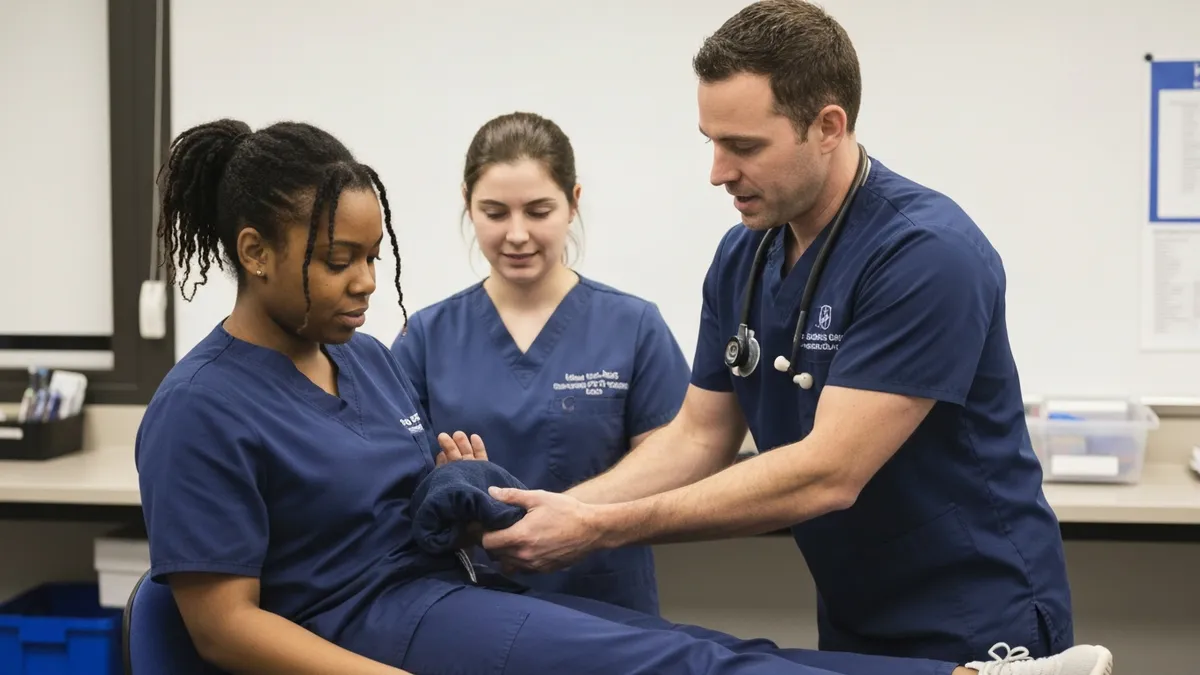
Pennsylvania FBI fingerprint clearances can take 6–8 weeks during peak processing periods, significantly delaying your employment start date. Submit all three background clearances on the same day you complete your training enrollment — do not wait until you have passed your competency evaluation. Starting the clearance process early keeps your total timeline under six weeks and ensures you are cleared and ready the moment your registry entry appears.
Career advancement beyond the entry-level HHA role is more accessible in Philadelphia than in most mid-sized American cities, largely because of the concentration of healthcare institutions willing to invest in workforce development for caregiving staff. Many of the city's largest home health agencies have formal tuition reimbursement programs that pay for Licensed Practical Nurse (LPN) or Registered Nurse (RN) coursework while you continue working as an HHA.
Community College of Philadelphia's LPN program, for instance, accepts HHA clinical hours as partial credit toward its nursing assistant prerequisite, compressing the total credential timeline for candidates who enter with home health aide experience.
Specialization is another route to higher pay without pursuing a full nursing license. Philadelphia's home care market has particularly strong demand for aides with documented competency in dementia and Alzheimer's care, pediatric home care, ventilator-dependent client management, and behavioral health support.
Each of these specializations commands a pay premium of $1.50 to $3.00 per hour above the standard HHA rate, and the additional training required is typically 16 to 40 hours — a modest investment given the multi-year earnings impact. Several Philadelphia-area agencies offer this specialty training internally at no cost as a retention tool for experienced aides they want to keep on staff.
The care coordinator or field supervisor role is the most common promotion track within home care agencies, moving an experienced HHA into a position that combines occasional direct care with administrative responsibilities such as client intake assessments, aide matching, schedule management, and quality assurance visits.
These roles are typically salaried, eliminating the income variability of hourly caregiving, and they often include vehicle allowances to offset the travel costs inherent in supervising aides across multiple Philadelphia neighborhoods. Care coordinators with clinical judgment and strong communication skills are genuinely difficult for agencies to recruit, giving experienced HHAs significant use when making the case for promotion.
For HHAs interested in owning their own business, Philadelphia's Consumer-Directed Care programs under Pennsylvania Medicaid allow individuals who qualify for home care services to hire and direct their own aides, including family members who meet training requirements. This creates an opportunity for entrepreneurial HHAs to establish small private-pay home care businesses serving clients who do not qualify for Medicaid or who prefer the flexibility of private arrangements.
The regulatory requirements for operating independently are more complex than working for an agency, but organizations like the Philadelphia Small Business Development Center offer free consulting to help healthcare entrepreneurs navigate licensing and liability requirements.
Networking within Philadelphia's healthcare community accelerates every aspect of career development for HHAs. The Delaware Valley Home Care Association holds regular events, the SEIU 1199C training fund offers free professional development workshops, and Penn Medicine's Center for Community Health Workers provides career coaching services specifically for frontline healthcare workers seeking to advance. These networks surface job openings before they are publicly posted, connect you with supervisors at agencies with better pay or conditions, and provide mentorship from people who have navigated the same career path you are now beginning.
Digital credentials are increasingly important in Philadelphia's home care market. Some agencies now accept or prefer candidates who have completed supplemental online modules in areas such as HIPAA compliance, cultural competency, or CPR certification renewal through accredited platforms. Maintaining an organized digital portfolio — a simple PDF or cloud-shared folder containing your registry printout, clearance letters, training certificate, CPR card, and any specialty certifications — makes it effortless to apply quickly when attractive positions open up, which in a fast-moving market like Philadelphia can mean the difference between landing an interview and arriving after the position is already filled.
For a comprehensive look at how to use your credentials once you have earned them, reviewing information about your home health aide certificate and what it unlocks across different employment settings gives you a clearer picture of the full landscape available to you beyond the standard agency employment model — including hospital-based home health divisions, hospice organizations, adult day programs, and assisted living facilities that value HHA certification as a baseline hiring credential.
Practical success as a Philadelphia home health aide depends heavily on factors that no training program fully prepares you for: navigating difficult client relationships, managing unexpected clinical situations in a home environment without immediate clinical backup, and maintaining your own physical and emotional health through what can be an intensely demanding caregiving workload. Experienced HHAs consistently identify a few specific strategies that separate those who thrive in the role long-term from those who burn out within the first year.
Building a strong communication relationship with your agency's care coordinator from day one is one of the highest-use habits you can develop. Coordinators handle dozens of aides and hundreds of clients simultaneously, which means the aides who communicate proactively — reporting changes in client condition promptly, flagging safety concerns at client homes before they become incidents, and requesting schedule adjustments with sufficient notice — receive disproportionately favorable treatment in client matching, shift allocation, and performance evaluations. Being the aide your coordinator trusts and relies on is the most reliable path to consistent hours and desirable assignments.
Documentation accuracy directly affects your agency's Medicaid reimbursement and, by extension, its financial health and your job security. In Philadelphia, where many agencies operate on thin margins due to Medicaid reimbursement rate pressures, accurate and timely documentation through the HHA Exchange system or paper backup forms is treated as a core job responsibility equivalent to the clinical care itself.
Developing the habit of documenting completed tasks, client condition observations, and any incidents or refusals of care immediately after each visit — rather than at the end of a long shift when memory fades — protects both your clients and your professional record.
Personal safety in client homes is a practical reality that urban HHAs must take seriously. Philadelphia neighborhoods vary enormously in environmental conditions, and aides are sometimes assigned to homes with structural hazards, pest infestations, domestic conflict, or neighborhood safety concerns.
Most agencies have formal processes for reporting unsafe client environments, and you should never feel pressured to continue providing care in a setting where your own safety is genuinely at risk. Document concerns in writing, report them to your coordinator immediately, and understand that your agency is legally and ethically obligated to address legitimate safety concerns rather than simply reassigning a different aide to the same unsafe situation.
Physical self-care is not optional in this occupation. Back injuries from improper lifting and transfer technique are the single leading cause of occupational injury among home health aides nationally, and Philadelphia HHAs are not immune. Investing 10 minutes in reviewing proper body mechanics before your first client assignment, always requesting a gait belt before assisting with ambulation, and refusing to perform two-person transfers alone are non-negotiable safety practices that protect your long-term ability to work. Many Philadelphia agencies offer ergonomics refresher training through their in-service programs, and SEIU 1199C members have access to occupational health resources specifically addressing these risks.
Building a small emergency financial buffer becomes critical within the first few months of HHA employment because client cancellations, sick days, and agency paperwork delays can temporarily reduce your paycheck below expectations. Most experienced aides recommend maintaining at least two weeks of living expenses in savings before relying entirely on HHA income, which is easier to achieve when you start in an agency-sponsored training program that begins paychecks sooner. The Philadelphia Unemployment Compensation Assistance Center can provide guidance on what HHA income disruptions may qualify for partial unemployment benefits in cases of significant involuntary hours reductions.
Finally, taking your HHA certification exam preparation seriously — even if your training program is straightforward and you feel confident — is one of the highest-return activities available to you before starting employment. Every week of delayed certification is a week of lost income in a market that is genuinely hungry for qualified aides.
Use every available practice resource, schedule your evaluation at the earliest possible date, and arrive on exam day having already rehearsed the skills multiple times to the point where they feel automatic rather than deliberate — that is the state of preparation that produces first-attempt passes and gets you into Philadelphia's workforce as fast as possible.
Sample HHA Practice Questions
Try these questions from our free HHA practice tests. The correct answer and an explanation follow each question.
A home health aide is assigned to assist in taking care of Mrs. Amos, an 87yearold woman who is a widow and lives alone. Mrs. Amos needs help with bathing, dressing, making meals, and cleaning her apartment. Mrs. Amos says, “I hate not being able to take care of myself.” To show Mrs. Amos that the home health aide understands her feelings, what should the aide say?
- A. “You shouldn’t feel that way.”
- B. “You should like being taken care of.”
- C. “It is hard to have someone help you when you are used to taking care of yourself.”
- D. “You make me unhappy when you talk like that.”
Answer: C. “It is hard to have someone help you when you are used to taking care of yourself.”
This response demonstrates empathy and validates Mrs. Amos's feelings by acknowledging the difficulty of her situation. It shows the aide understands her perspective and respects her past independence, fostering trust and open communication. Empathetic responses help build rapport and make the client feel heard and understood.
How should a home health aide handle contaminated materials?
- A. Throw them in regular trash.
- B. Dispose of them in proper biohazard containers
- C. Leave them in the patient’s room for later disposal.
- D. Reuse them after cleaning.
Answer: B. Dispose of them in proper biohazard containers
Contaminated materials, such as soiled dressings or used gloves, should be disposed of in proper biohazard containers to prevent the spread of infection.
What should a home health aide do if a patient expresses discomfort with their care?
- A. Ignore the patient’s concerns to avoid confrontation.
- B. Listen, acknowledge, and work with the patient to address their concerns
- C. Tell the patient to accept the care without questions.
- D. Force the patient to accept the care plan.
Answer: B. Listen, acknowledge, and work with the patient to address their concerns
When a patient expresses discomfort with their care, the home health aide must listen attentively to their concerns without judgment and acknowledge their feelings. This validates the patient's experience and builds trust. Working collaboratively with the patient to address their concerns ensures that care is adjusted to meet their needs and preferences, promoting patient satisfaction and a positive care experience.
How should a home health aide assist a patient with standing up from a seated position?
- A. By pulling the patient abruptly.
- B. By guiding the patient to stand slowly while offering support
- C. By letting the patient stand on their own.
- D. By allowing the patient to stand without assistance.
Answer: B. By guiding the patient to stand slowly while offering support
A home health aide should assist a patient with standing up from a seated position by guiding them to stand slowly and offering steady support. This allows the patient time to adjust their balance and prevents dizziness or falls. Providing verbal cues and physical assistance as needed ensures a safe and controlled transition.
HHA Questions and Answers



About the Author

Registered Nurse & Healthcare Educator
Johns Hopkins University School of NursingDr. Sarah Mitchell is a board-certified registered nurse with over 15 years of clinical and academic experience. She completed her PhD in Nursing Science at Johns Hopkins University and has taught NCLEX preparation and clinical skills courses for nursing students across the United States. Her research focuses on evidence-based exam preparation strategies for healthcare certification candidates.
Join the Discussion
Connect with other students preparing for this exam. Share tips, ask questions, and get advice from people who have been there.
View discussion (8 replies)