
Home Health Aide Jobs Cincinnati Ohio: Your Complete Career Guide 2026 October
Find home health aide jobs Cincinnati Ohio. HHA certification, training programs, salary data & hha exchange login tips. 🏆 Start your HHA career today.

If you are searching for home health aide jobs Cincinnati Ohio, you are entering one of the fastest-growing healthcare sectors in the entire Midwest. Cincinnati's aging population, expanding hospital networks, and increasing preference for in-home care over nursing facilities have created a surge in demand for certified home health aides. Whether you are brand new to healthcare or transitioning from another field, understanding how hha exchange platforms, certification pathways, and local employers connect will give you a serious competitive edge in this market.
The hha exchange system is a widely used scheduling and communication platform that most Cincinnati-area home health agencies rely on to manage caregiver assignments, track visit documentation, and process payroll. Familiarizing yourself with hha exchange login procedures before your first day on the job signals professionalism and reduces onboarding friction. Many agencies now list hha exchange proficiency as a preferred skill in their job postings, making it a worthwhile tool to understand early in your career search.
Cincinnati sits in Hamilton County and draws healthcare workers from across the tri-state area of Ohio, Kentucky, and Indiana. Major employers including Visiting Nurse Association of Greater Cincinnati, Gentiva Health Services, Kindred at Home, and dozens of independent agencies actively recruit certified home health aides year-round. The city's strong network of hospitals — including UC Health, TriHealth, and Cincinnati Children's — also creates referral pipelines that funnel patients directly to home health agencies upon discharge, keeping demand consistently high.
Home health aide certification is a non-negotiable requirement for most positions in this market. Ohio requires HHAs working with Medicare or Medicaid-funded patients to complete a state-approved hha certification program, pass a competency evaluation, and maintain their credentials through continuing education. Programs are offered through community colleges, vocational schools, and agency-based training — many of which can be completed in as little as four to six weeks, making this one of the fastest entry points into professional healthcare work available anywhere.
Salary and compensation for certified home health care aide professionals in Cincinnati vary based on experience, employer type, and patient complexity. Entry-level HHAs typically earn between $14 and $17 per hour, while experienced aides with specialized skills such as dementia care, wound care monitoring, or pediatric home health can command $19 to $23 per hour. Many Cincinnati agencies also offer mileage reimbursement, health insurance after 90 days, and opportunities for paid overtime, particularly for aides willing to take weekend or overnight shifts.
Understanding the full scope of what this career entails before you apply is critical. The home health aide job description typically covers personal care tasks such as bathing, grooming, and dressing assistance; light housekeeping and meal preparation; medication reminders; vital sign monitoring; and companionship for isolated seniors. HHAs also serve as the eyes and ears of the clinical care team, reporting any changes in a client's condition to supervising nurses or therapists — a responsibility that requires strong communication skills and attention to detail.
This guide covers everything you need to know about launching or advancing your HHA career in Cincinnati, from finding and completing accredited home health aide training programs to navigating the hha exchange platform and landing your first job offer. You will also find salary benchmarks, employer profiles, certification requirements, and study resources to help you pass your competency evaluation on the first attempt.
Cincinnati HHA Job Market by the Numbers
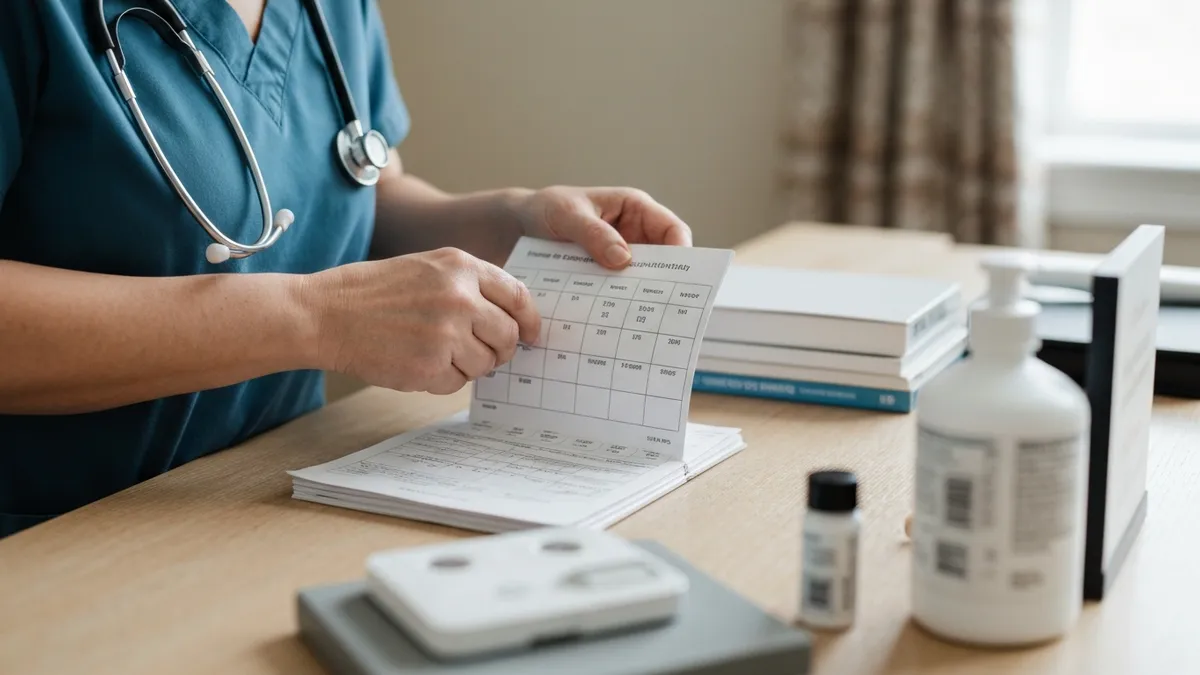
HHA Certification Requirements in Ohio
Ohio requires a minimum of 75 clock hours in a state-approved home health aide training program. At least 16 of those hours must be supervised practical or clinical training with actual patients, covering personal care, infection control, and safety procedures.
After training, candidates must pass a written knowledge test and a skills demonstration exam. The skills portion typically covers 5 randomly selected tasks from a pool of 25 common HHA procedures, evaluated by a registered nurse examiner.
Ohio law requires all prospective HHAs to pass a criminal background check through the Ohio Bureau of Criminal Investigation. Disqualifying offenses include certain felonies and misdemeanors related to abuse, neglect, or financial exploitation of vulnerable adults.
Certified HHAs in Ohio must complete 12 hours of in-service training annually to maintain their credentials. Topics typically include updated infection control protocols, client rights, emergency procedures, and specialty care areas such as dementia or fall prevention.
Compensation for home health aide jobs in Cincinnati Ohio follows a clear pattern tied to certification level, years of experience, and the type of agency you work for. Entry-level positions at private-pay agencies or adult day programs typically start between $14.00 and $15.50 per hour. Medicare-certified home health agencies — which must meet stricter federal staffing and quality standards — generally pay $15.75 to $17.50 per hour for starting HHAs. With two or more years of documented clinical experience, many Cincinnati aides move into the $18 to $22 range, particularly when they specialize in high-acuity cases.
Beyond base hourly wages, Cincinnati-area agencies compete aggressively for qualified HHAs by offering benefit packages that can significantly increase total compensation. Common benefits include paid time off accruing from day one, health insurance eligibility after 60 to 90 days, dental and vision coverage, 401(k) with employer matching, and mileage reimbursement at or above the IRS standard rate. Some agencies — particularly those owned by national chains like LHC Group or Amedisys — offer tuition reimbursement programs that cover up to $3,000 per year toward nursing or allied health degrees, creating a genuine career ladder for motivated HHAs.
Shift differentials add meaningful income for aides willing to work non-standard hours. Most Cincinnati agencies pay an additional $1.00 to $2.50 per hour for evening shifts (typically defined as 3 p.m. to 11 p.m.), overnight shifts (11 p.m. to 7 a.m.), weekend assignments, and holiday coverage. For full-time aides consistently working evenings and weekends, these differentials can translate to an effective annual wage of $38,000 to $44,000 — well above the base rate equivalent of roughly $33,000 for standard daytime hours.
Geographic variation within the Cincinnati metro area also affects pay rates. Suburban Hamilton County communities like Blue Ash, Hyde Park, and Anderson Township tend to have higher concentrations of affluent private-pay clients, and agencies serving these areas often pay slightly above market to attract reliable aides. Northern Kentucky suburbs such as Covington and Florence, though across the state line, are commonly served by Cincinnati-based agencies and typically fall within the same wage bands, though Kentucky does not require the same 75-hour training standard as Ohio.
For those seeking hha jobs near me in the Cincinnati region, staffing agencies such as Staff Leasing and HomeTeam Care offer flexible per-diem arrangements that can yield higher effective hourly rates — sometimes $19 to $25 per hour — in exchange for reduced benefits and less schedule predictability. This arrangement suits aides who have family obligations or who are supplementing income from another part-time role. Many experienced Cincinnati HHAs work a combination of a core permanent position and per-diem shifts to maximize both income stability and earnings potential.
Private-duty home care — arranging direct employment with a family rather than working through an agency — is another income option that exists in Cincinnati's HHA market. Private-duty rates for experienced, certified home health care aide professionals in affluent Cincinnati neighborhoods can reach $20 to $28 per hour, though these arrangements lack agency benefits and require the aide to manage their own taxes, insurance, and scheduling. The Ohio Department of Aging's Passport program and some county-based PASSPORT waiver services also provide publicly funded home care placements that operate on fixed rate schedules, typically around $15 to $18 per hour.
Understanding the full compensation landscape before accepting a position helps you negotiate effectively and avoid underselling your credentials. Certified aides who have completed specialized training in Alzheimer's care, ventilator-dependent patient support, or pediatric home health should expect and ask for compensation at the upper end of market ranges. Documenting your continuing education, language skills — Spanish, Somali, and Arabic are in particular demand in Cincinnati — and any specialty certifications will strengthen your negotiating position with any Cincinnati-area employer.
Using HHA Exchange & Top Cincinnati Employers
The hha exchange platform is a cloud-based workforce management system used by hundreds of home health agencies nationwide, including many of Cincinnati's largest employers. After you are hired, your agency will create your login credentials and walk you through the hha exchange login process. The platform allows you to view your daily schedule, clock in and out of visits electronically, document care notes, review client care plans, and communicate securely with your care coordinator — all from a smartphone app or web browser.
Mastering hha login and documentation workflows quickly is important because timely, accurate visit notes directly affect your agency's Medicare reimbursement and compliance standing. Late or incomplete documentation can trigger audits and create friction with supervisors. Most Cincinnati agencies offer a brief onboarding session on the platform, but proactively exploring the app's interface before your first patient visit will help you focus on care rather than technology during those early shifts. Several YouTube tutorials specifically covering hha exchange navigation are freely available and worth watching during your pre-employment week.
Is a Cincinnati HHA Career Right for You?
- +Strong and growing job demand with 18% projected growth through 2034 in the Cincinnati metro area
- +Fast entry pathway — certification achievable in 4–6 weeks with minimal upfront cost through agency-sponsored programs
- +Flexible scheduling options including part-time, full-time, per-diem, and live-in arrangements to fit personal needs
- +Meaningful work with direct, visible impact on vulnerable clients' quality of life and independence
- +Clear career ladder from HHA to CNA, LPN, and RN for motivated individuals pursuing advancement
- +Competitive shift differentials and overtime opportunities that substantially increase total annual earnings
- −Physical demands including lifting, bending, and extended standing can cause musculoskeletal strain over time
- −Emotional labor of caring for seriously ill or dying clients can lead to compassion fatigue and burnout
- −Variable and unpredictable scheduling, with last-minute client cancellations affecting take-home pay
- −Mileage reimbursement gaps — driving time between clients is often unpaid, reducing effective hourly earnings
- −Limited peer interaction since most work is performed alone in private homes without coworker support
- −Entry-level wages at the lower end of the Cincinnati healthcare market despite high physical and emotional demands
Pros and Cons at a Glance
| Pros | Cons |
|---|---|
| Flexible scheduling options including part-time, full-time, per-diem, and live-in arrangements to fit personal needs | Physical demands including lifting, bending, and extended standing can cause musculoskeletal strain over time |
| Meaningful work with direct, visible impact on vulnerable clients' quality of life and independence | Emotional labor of caring for seriously ill or dying clients can lead to compassion fatigue and burnout |
| Clear career ladder from HHA to CNA, LPN, and RN for motivated individuals pursuing advancement | Variable and unpredictable scheduling, with last-minute client cancellations affecting take-home pay |
| Competitive shift differentials and overtime opportunities that substantially increase total annual earnings | Mileage reimbursement gaps — driving time between clients is often unpaid, reducing effective hourly earnings |
Cincinnati HHA Job Application Checklist
- ✓Complete an Ohio state-approved home health aide training program with at least 75 clock hours including 16 supervised clinical hours.
- ✓Pass both the written knowledge test and skills demonstration portion of the Ohio HHA competency evaluation.
- ✓Obtain fingerprint-based background check clearance through the Ohio Bureau of Criminal Investigation (BCI).
- ✓Gather proof of current CPR/First Aid certification — most Cincinnati agencies require American Heart Association BLS level.
- ✓Obtain a current negative tuberculosis (TB) test result dated within the past 12 months before submitting applications.
- ✓Create or update your resume to highlight any caregiving experience, clinical training hours completed, and patient population familiarity.
- ✓Set up your hha exchange login credentials or practice with the HHA Exchange app before your first scheduled shift.
- ✓Research at least five Cincinnati-area home health agencies and tailor your cover letter to each employer's specialty population.
- ✓Prepare three professional references — ideally including a clinical instructor, a prior supervisor, and a personal character reference.
- ✓Complete any agency-specific skills competency forms or orientation paperwork before your scheduled start date to expedite onboarding.
Agency-Sponsored Training Can Eliminate Your Certification Costs
Several Cincinnati-area agencies — including VNA of Greater Cincinnati and Kindred at Home — offer fully funded HHA training programs that cover tuition, textbooks, and exam fees in exchange for a 6–12 month employment commitment. For candidates without the $400–$900 typical cost of private training programs, these sponsored pathways are the fastest route to a paying job with zero out-of-pocket certification expense.
Career advancement for home health aides in Cincinnati follows several well-defined pathways that can significantly increase both your earning potential and professional fulfillment over time. The most direct route is transitioning from HHA to Certified Nursing Assistant (CNA), which requires completing an additional state-approved program of approximately 75 additional training hours and passing the Ohio Nurse Aide Registry examination. CNAs in Cincinnati earn $16 to $21 per hour on average, with hospital-based positions reaching $23 or more, representing a meaningful wage increase over typical HHA rates.
Beyond CNA certification, many Cincinnati healthcare employers actively support HHAs pursuing Licensed Practical Nurse (LPN) or Registered Nurse (RN) licensure through tuition assistance programs. Cincinnati State, Northern Kentucky University, and the University of Cincinnati all offer nursing programs with flexible evening and weekend formats designed for working healthcare aides. Some Cincinnati hospital systems — including TriHealth and UC Health — operate formal bridge programs that give priority admission consideration to employees with two or more years of home health or CNA experience, recognizing that field-based caregivers bring irreplaceable practical knowledge to the nursing role.
Specialty certification is another powerful career lever within the HHA role itself. The National Association for Home Care and Hospice (NAHC) offers a Home Care Aide credential that demonstrates advanced competency and is increasingly recognized by Cincinnati employers as a premium qualification. Dementia Care Specialist certification through the Alzheimer's Association, which has an active Cincinnati chapter, is in exceptionally high demand given the region's growing older adult population and the prevalence of memory care home health referrals from hospital discharge planners.
Hospice and palliative care is a specialty area where Cincinnati HHAs with strong interpersonal skills and emotional resilience can find deeply meaningful work and above-average compensation. Organizations like the Hospice of Cincinnati and Mount Auburn Hospice employ HHAs specifically to support patients in the final phase of life, assisting with comfort care, family support, and coordination with hospice nurses and social workers. Hospice HHA positions often include additional paid training, smaller caseloads, and slightly higher base wages to reflect the emotional intensity and specialized skill set required.
Leadership pathways within the home health field also exist for experienced aides interested in moving off the direct-care floor. Scheduler and care coordinator roles — typically earning $20 to $28 per hour — recruit heavily from experienced field staff who understand client needs, caregiver skill sets, and the logistical realities of community-based care. Field supervisor roles, in which senior HHAs mentor and quality-review newer staff, are another common step up that keeps experienced workers engaged while building management skills transferable to clinical leadership roles.
For those interested in entrepreneurship, Cincinnati's strong home care market creates opportunities for experienced, well-networked HHAs to launch independent caregiving businesses. Ohio's Medicaid waiver programs — particularly the PASSPORT waiver and the Assisted Living Waiver — allow approved individual providers to enroll as Medicaid-funded home care providers, enabling self-employed HHAs to build their own client roster and set their own rates within state-established fee schedules. This path requires additional administrative work but offers the highest potential autonomy and income ceiling in the direct-care field.
Explore the full range of hha jobs available to credentialed aides in Ohio and understand exactly how your certification opens doors to these advancement tracks. The investment you make in completing your HHA program and passing your competency evaluation is not just a ticket to an entry-level job — it is the foundational credential that unlocks every higher-paying, more specialized opportunity in this career path.

Before submitting job applications, confirm that your name appears correctly on the Ohio Nurse Aide Registry maintained by the Ohio Department of Health. Agencies conducting background checks will verify your registry status, and discrepancies — including name misspellings or missing competency evaluation records — can delay your start date by weeks. Contact the registry directly if your certification does not appear within 30 days of passing your competency exam.
Preparing for and passing the Ohio HHA competency evaluation is the pivotal milestone between completing your training and landing your first job. The evaluation consists of two distinct parts: a written or oral knowledge test covering the theoretical content from your training program, and a hands-on skills demonstration in which you perform five randomly selected tasks in front of an evaluating registered nurse. Both portions must be passed — failing either component requires retesting that specific section before your certification is issued.
The written test portion typically contains 50 to 75 multiple-choice questions drawn from core HHA competency domains. These include basic care and comfort, infection control and safety, communication and interpersonal skills, client rights and legal issues, mental health and cognitive impairment care, basic restorative services, and specialized care topics. Questions are written at a practical application level — they test whether you can recognize a correct or incorrect action in a described care scenario, not simply whether you can recite a definition from a textbook.
The skills demonstration is where many first-time candidates experience unexpected difficulty. Evaluators are looking for precise procedural technique, not just the correct general approach. For example, when demonstrating hand hygiene, the evaluator will check that you wet your hands before applying soap, scrub for a full 20 seconds including between fingers and under nails, and dry with a clean paper towel that you also use to turn off the faucet. Missing any single critical step on a skills task results in automatic failure of that specific skill — even if the rest of your performance was flawless.
Effective preparation combines classroom review with hands-on repetition. If your training program offers additional supervised practice time in the skills lab before your evaluation date, take full advantage of it. Practice each of the 25 testable skills until the step-by-step procedure feels automatic under mild pressure. Enlist a study partner who can play the role of evaluator and call out specific steps to confirm you are verbalizing and performing each one in the correct sequence — evaluators give credit for verbal cues as well as physical actions.
Online practice resources are valuable supplements to in-person preparation. The home health aide certificate study materials at PracticeTestGeeks include video-based explanations of tested skills and question banks organized by competency domain, allowing you to identify and focus on your weakest areas before test day. Spending 30 to 45 minutes per day on targeted practice questions in the two weeks leading up to your evaluation significantly improves first-time pass rates based on candidate self-reporting data collected through our platform.
Test-day logistics matter more than many candidates anticipate. Arrive at the testing site at least 15 minutes early to complete any required paperwork and calm pre-exam anxiety. Bring two forms of government-issued identification, your training program completion certificate, and your BCI background check clearance documentation. Wear comfortable, professional clothing that allows full range of motion for skills demonstration tasks — avoid jewelry or long nails that could interfere with glove application or patient handling procedures evaluated during the skills portion.
If you do not pass on your first attempt, Ohio allows candidates to retest the failed component up to three times within 24 months of completing their training program. If you exhaust all attempts or exceed the 24-month window without passing, you must repeat the full training program before retesting. For this reason, taking your first attempt seriously and giving yourself adequate preparation time is far preferable to banking on a second-chance retest. With consistent, structured practice using quality study materials, most candidates who take their preparation seriously achieve a passing score on the first attempt.
Once you have passed your competency evaluation and confirmed your placement on the Ohio Nurse Aide Registry, the practical work of finding and securing home health aide jobs in Cincinnati begins in earnest. The most effective job search in this market combines online platforms with direct agency outreach. Indeed, ZipRecruiter, and Care.com all carry substantial Cincinnati HHA listings, but the most competitive positions — those with the best pay, benefits, and caseloads — are often filled through direct referrals before they ever appear on public job boards.
Building relationships with the clinical instructors from your training program is one of the most underutilized job search strategies for new HHAs in Cincinnati. Instructors maintain active relationships with local agency hiring managers and often serve as direct referral sources for graduates who demonstrated strong clinical skills and professionalism during training. A personal phone call or brief thank-you note to your instructor after completing your certification exam, mentioning your job search, costs nothing and can yield a direct introduction that bypasses the standard application queue entirely.
Social media presence matters increasingly in the Cincinnati HHA job market. LinkedIn profiles listing your HHA certification, training program completion, and any specialty skills consistently attract recruiter outreach from agency hiring managers who proactively search for local candidates. A complete LinkedIn profile with a professional photo, accurate location settings for the Cincinnati metro area, and a clear summary mentioning your certification and availability takes approximately two hours to set up and can generate inbound interest with zero ongoing effort.
Interview preparation for HHA positions should focus on behavioral questions about specific care scenarios, your approach to client privacy and dignity, and how you handle emergency situations in a private home setting. Common interview questions include: Describe a time you dealt with a difficult or resistant client.
How do you respond when a client's condition changes unexpectedly during your visit? What steps do you take if a client falls while you are on duty? Practicing concrete, story-based answers to these questions using the STAR format — Situation, Task, Action, Result — will differentiate you from candidates who give only general or vague responses.
Negotiating your starting wage is appropriate and expected in the Cincinnati HHA market, particularly if you bring prior caregiving experience, bilingual capabilities, or specialty certifications to the table. Many agencies post a starting rate but have flexibility of $0.50 to $2.00 per hour for well-qualified candidates. The key is to make your case with specifics: years of relevant experience, particular patient populations you have worked with, any specialized training beyond the minimum certification requirements, and your geographic availability and flexibility to cover shifts in multiple service areas around Cincinnati.
Onboarding at most Cincinnati agencies includes a combination of agency-specific orientation sessions covering policies, documentation requirements, emergency procedures, and hha exchange platform training; skills competency verification performed by a staff RN; and a brief supervised field visit where you accompany an experienced aide on a patient visit before taking your own assignments solo. This supervised orientation period typically lasts one to five business days and is paid at your regular hourly rate. Taking thorough notes during orientation and asking questions early prevents procedural errors that could create problems after your supervised period ends.
Long-term success in the Cincinnati HHA market comes down to reliability, clinical competence, and communication. Agencies that trust their aides to show up on time, document accurately, and escalate client concerns promptly reward that reliability with the best case assignments, priority scheduling, and first consideration for advancement opportunities. Building a reputation as a dependable, skilled aide within your first six months creates a professional foundation that will support your Cincinnati healthcare career for years to come.
Sample HHA Practice Questions
Try these questions from our free HHA practice tests. The correct answer and an explanation follow each question.
Sometimes a client may share religious beliefs and opinions which the home health aide does not agree with. What is the correct approach in dealing with such a situation?
- A. Clients should be told not to discuss their religious beliefs with health aides
- B. Aides should patiently explain their beliefs to the client.
- C. Clients have a right to their own religious belief, and these rights should be respected.
- D. Aides should pretend to agree with the beliefs the client has.
Answer: C. Clients have a right to their own religious belief, and these rights should be respected.
Clients have a fundamental right to their own religious beliefs, and healthcare providers, including home health aides, must respect these rights. It is crucial to maintain professionalism and avoid imposing personal views or engaging in debates about religious matters. The aide's role is to provide care, not to judge or convert, ensuring a respectful and trusting client-provider relationship.
A home health aide should report to the supervisor if a patient's caregiver (family member):
- A. Prepares meals for the patient
- B. Appears exhausted, expresses inability to continue caregiving, or shows signs of caregiver burnout or neglect
- C. Asks questions about the care plan
- D. Accompanies the patient to medical appointments
Answer: B. Appears exhausted, expresses inability to continue caregiving, or shows signs of caregiver burnout or neglect
Caregiver burnout can lead to patient neglect. Identifying and reporting caregiver stress allows the care team to arrange respite care, counseling, or care plan modification before neglect or abuse occurs.
How can a home health aide assist a patient with walking?
- A. By letting the patient walk without any assistance.
- B. By supporting the patient’s balance and using walking aids
- C. By pushing the patient quickly to move faster.
- D. By preventing the patient from moving independently.
Answer: B. By supporting the patient’s balance and using walking aids
A home health aide can assist a patient with walking by providing steady support to maintain their balance and by correctly utilizing any prescribed walking aids, such as walkers or canes. This assistance helps prevent falls, builds the patient's confidence, and encourages safe ambulation. The goal is to facilitate mobility while ensuring maximum safety and independence.
If a home health aide has bad breath or body odors, who is LEAST likely to be aware of it?
- A. The client.
- B. The client’s visitors.
- C. The nurse.
- D. The aide.
Answer: D. The aide.
Individuals often become accustomed to their own body odors and breath, making them less likely to notice these issues compared to others. Clients, visitors, and nurses, who interact with the aide, are more likely to perceive such odors. This phenomenon is known as olfactory adaptation.
HHA Questions and Answers



About the Author

Registered Nurse & Healthcare Educator
Johns Hopkins University School of NursingDr. Sarah Mitchell is a board-certified registered nurse with over 15 years of clinical and academic experience. She completed her PhD in Nursing Science at Johns Hopkins University and has taught NCLEX preparation and clinical skills courses for nursing students across the United States. Her research focuses on evidence-based exam preparation strategies for healthcare certification candidates.
Join the Discussion
Connect with other students preparing for this exam. Share tips, ask questions, and get advice from people who have been there.
View discussion (8 replies)