
Home Health Aide Jobs in Kennewick, WA — HHA Certification, Training & Career Guide 2026 October
Find home health aide jobs in Kennewick, WA. HHA certification, training programs, salary data & the HHA Exchange login guide. ✅ Start your career today.
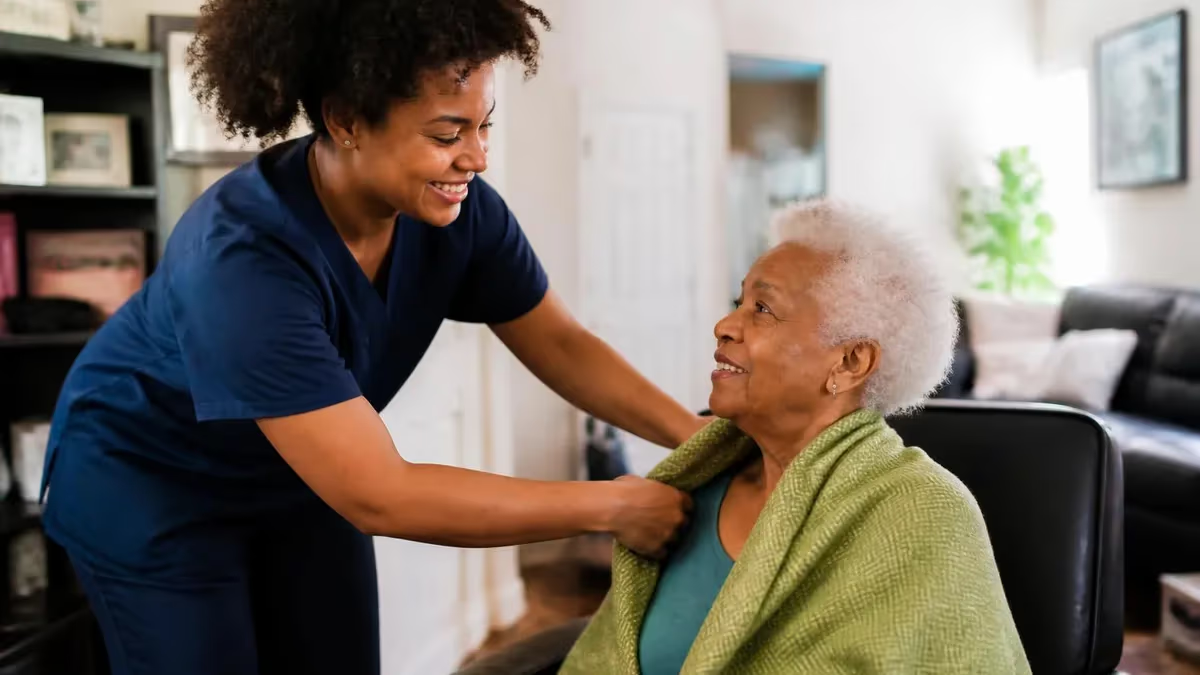
If you are searching for home health aide jobs in Kennewick, Washington, you have chosen one of the fastest-growing healthcare roles in the Tri-Cities region. The demand for qualified, certified home health aides is rising sharply as the Kennewick-Richland-Pasco metro area ages and more families seek in-home care alternatives to nursing facilities.
Whether you are brand new to healthcare or transitioning from another field, understanding how the HHA Exchange platform works, what hha certification requires, and where to find open positions can significantly shorten your path from applicant to employed caregiver. This guide covers everything you need to launch your career in Kennewick's growing home care sector.
The HHA Exchange is a digital platform used widely across Washington State by home health agencies to manage scheduling, timesheets, EVV (Electronic Visit Verification), and caregiver communications. If you land a job with a Medicaid-contracted agency in Kennewick, there is a good chance your employer will require you to log into the HHA Exchange login portal on a daily basis. Knowing how this system works before your first day on the job makes you a more attractive candidate and reduces onboarding friction once you are hired. Many agencies openly prefer applicants who are already familiar with EVV workflows.
Kennewick sits in Benton County, which has seen consistent population growth over the past decade. The 65-and-older cohort in the Tri-Cities area is projected to expand considerably through 2030, which translates directly into sustained hiring demand for certified home health care aides. Local agencies including those affiliated with large national networks post openings regularly, and wages in Kennewick compare favorably to state averages once you factor in the lower cost of living relative to the Puget Sound corridor. Starting pay for entry-level HHAs in the area typically ranges from $16 to $20 per hour.
To work as a home health aide with any Medicare- or Medicaid-certified agency in Washington State, you must complete an approved home health aide training program and pass a competency evaluation. Washington State requires a minimum of 75 hours of training, which aligns with the federal OBRA standard, though many programs offer 120 or more hours to give graduates a competitive edge in the job market. Training covers personal care, infection control, nutrition, communication, safety, and basic clinical observations — the same topics tested on the HHA competency exam administered through state-approved evaluators.
Your hha certification is the credential that proves to employers you have met the legal training and competency benchmarks required under state and federal law. In Washington, certified home health aides are listed on the Home Care Aide Registry maintained by the Department of Health. Employers are required by law to verify your registry status before placing you with clients, so obtaining and maintaining your certification is non-negotiable if you want to work for a licensed agency in Kennewick. The registry check takes seconds online, and employers run it on every candidate as a standard background step.
Beyond the basic certificate, many Kennewick-area agencies offer specialized training tracks in dementia care, pediatric home health, and medically complex cases. These specialty credentials can increase your hourly rate by $2 to $5 and open doors to higher-acuity clients whose care reimbursement rates are substantially higher.
If you are serious about building a long-term career in home health, completing at least one specialty track within your first year of employment puts you in a significantly stronger position for raises, promotions to lead aide, and eventual transition into nursing or therapy support roles. Explore a home health aide training program near Kennewick to get your certification journey started quickly.
This guide is organized to walk you through the entire process — from choosing a training program and passing your competency exam to navigating the HHA Exchange platform, understanding your paycheck, and positioning yourself for long-term success in the Kennewick home care market. Along the way you will find practice quiz resources, salary benchmarks, and a checklist of concrete steps to take this week. Whether your timeline is two months or six, the information here will help you move forward with confidence and clarity.
Kennewick HHA Jobs by the Numbers

HHA Certification Requirements in Washington State
Washington State requires a minimum of 75 hours of HHA training through a state-approved program. Courses cover personal hygiene assistance, vital sign monitoring, fall prevention, nutrition support, and infection control protocols.
After training, you must pass a written knowledge test and a hands-on skills demonstration. The skills evaluation is conducted by a registered nurse at a testing site or approved agency facility in the Kennewick area.
Upon passing the competency exam, your training provider submits your information to the Home Care Aide Registry. You receive a registry number that employers verify before you begin working with clients.
Washington requires a WATCH background check for all home care aides. Certain criminal convictions may disqualify applicants. Processing typically takes 5–10 business days and costs approximately $12 through the state portal.
Certified HHAs in Washington must complete 12 hours of continuing education each year to keep their registry status active. Many Kennewick agencies provide these trainings at no cost to current employees.
Understanding the Kennewick home health aide salary landscape is essential before you invest time and money in training. According to Bureau of Labor Statistics data and regional wage surveys, home health aides in the Kennewick-Richland-Pasco metropolitan statistical area earn a median hourly wage of approximately $18.40, which translates to roughly $38,270 annually for full-time workers.
That figure sits about 8 percent above the national median for the same role, reflecting Washington's higher minimum wage and the competitive labor market in the Tri-Cities healthcare corridor. Understanding the full home health aide salary picture — including overtime, mileage reimbursement, and benefits — helps you evaluate job offers accurately rather than comparing base wages alone.
Entry-level positions in Kennewick for newly certified HHAs typically start between $16.00 and $17.50 per hour. However, wages rise quickly with experience: aides who have been working for two or more years commonly earn $19 to $22 per hour, and those with specialty certifications in dementia care or pediatric home health can exceed $24 per hour at agencies that serve high-complexity clients. Some agencies also offer shift differentials of $1 to $3 per hour for evening, overnight, and weekend assignments, which can meaningfully boost your take-home pay if you have schedule flexibility.
Beyond hourly wages, many Kennewick agencies offer benefits packages that add significant value to the total compensation picture. Full-time HHAs at mid-sized and larger agencies often receive employer-sponsored health insurance, paid time off starting at 40 hours per year, mileage reimbursement at the IRS standard rate, and access to employee assistance programs.
Some agencies also offer tuition reimbursement for HHAs who pursue nursing assistant (CNA) or licensed practical nurse (LPN) credentials — a valuable perk if your long-term goal is to advance in healthcare. When comparing job offers, always factor in the full benefits package rather than evaluating hourly rates in isolation.
The Kennewick home care market includes a mix of national franchise agencies, regional nonprofit providers, and small owner-operated firms. National brands like Visiting Angels, Home Instead, and BrightSpring Health Services maintain offices in the Tri-Cities area and offer consistent scheduling systems, standardized training, and career ladder programs.
Regional providers and nonprofits sometimes offer more personalized work environments and may serve niche populations such as veterans through VA Home and Community Based Services programs. Washington's ALTSA (Aging and Long-Term Support Administration) also funds home care through the COPES and Medicaid Personal Care programs, and agencies contracted under these programs hire regularly in Benton and Franklin counties.
Part-time and live-in positions are also available in Kennewick for aides who prefer non-traditional schedules. Live-in arrangements, where the HHA resides in the client's home and provides care over an extended shift structure, can pay $200 to $280 per day depending on the client's care level and the agency's rate structure.
These arrangements suit caregivers who prefer fewer commutes and deeper relationships with individual clients. However, they also require strong emotional resilience and clear communication about rest periods, which are mandated under Washington labor law even in live-in situations. Make sure any live-in agreement you sign complies with the state's mandatory rest period rules.
Geographic flexibility within the Tri-Cities metro can also increase your earning potential. While this guide focuses on home health aide jobs Kennewick specifically, many agencies cover Richland, Pasco, West Richland, and unincorporated Benton County as well. Clients in rural areas or on the outskirts of the metro may command slightly higher hourly rates because fewer aides are willing to travel.
If you have a reliable vehicle and are comfortable driving 15 to 20 miles for a shift, you can often negotiate a higher base rate or guaranteed mileage reimbursement that effectively increases your per-hour earnings well above the median figures quoted above.
Shift availability in Kennewick skews heavily toward morning and midday care windows — think 7 a.m. to noon and 9 a.m. to 2 p.m. — because most clients need help with morning routines including bathing, dressing, and breakfast preparation. Evening and overnight shifts are less common but often pay more.
If you are entering the market as a new HHA and want to build your schedule quickly, being open to early morning starts will dramatically increase your options. Most agencies in Kennewick can get a newly certified, fully background-checked HHA onto their schedule within one to two weeks of completing the credentialing process.
Understanding the HHA Exchange Login & Platform
HHA Exchange is a web-based home health management platform used by hundreds of agencies across the United States, including many Medicaid-certified providers operating in Washington State. It handles scheduling, Electronic Visit Verification (EVV), caregiver timesheets, care plan delivery, and compliance reporting in a single integrated system. Agencies in Kennewick that contract with ALTSA or accept Medicaid personal care funding are required by federal law to use EVV, and HHA Exchange is one of the approved EVV vendors in Washington.
For the caregiver, the HHA Exchange login process is straightforward: you visit the portal URL provided by your agency, enter your assigned username and temporary password, and then set a permanent password on your first login. Once inside, your dashboard displays your upcoming shifts, client care plans, required documentation, and any agency announcements. Many agencies also offer a mobile app version of HHA Exchange that allows you to clock in and clock out directly from a client's home using GPS verification, eliminating the need to call a telephony timekeeping line.

Is a Home Health Aide Career in Kennewick Right for You?
- +High and growing local demand means strong job security through at least 2030
- +Kennewick wages average $18.40/hr — above the national HHA median
- +Flexible scheduling options including part-time, full-time, and live-in arrangements
- +Short training pathway — certification achievable in 4 to 8 weeks
- +Meaningful one-on-one work that directly improves clients' quality of life
- +Clear stepping stone toward CNA, LPN, or home health nurse roles
- −Physically demanding work involving lifting, transferring, and prolonged standing
- −Exposure to illness risk, particularly for immunocompromised clients
- −Inconsistent client availability can create unpredictable weekly hours at some agencies
- −Emotional toll from working with clients who have serious or terminal conditions
- −Mileage reimbursement may not fully offset vehicle wear on multi-client schedules
- −Limited advancement within the HHA role itself without additional nursing credentials
Pros and Cons at a Glance
| Pros | Cons |
|---|---|
| Flexible scheduling options including part-time, full-time, and live-in arrangements | Physically demanding work involving lifting, transferring, and prolonged standing |
| Meaningful one-on-one work that directly improves clients' quality of life | Exposure to illness risk, particularly for immunocompromised clients |
| Clear stepping stone toward CNA, LPN, or home health nurse roles | Inconsistent client availability can create unpredictable weekly hours at some agencies |
Kennewick HHA Certification — Your Step-by-Step Action Checklist
- ✓Research state-approved HHA training programs in Kennewick or online and confirm they are WA Dept. of Health approved
- ✓Enroll in a 75-hour minimum program and complete all classroom and clinical hours
- ✓Schedule your competency evaluation (written + skills) with a state-approved testing coordinator
- ✓Submit your WATCH background check application through the WA State Patrol portal and pay the $12 fee
- ✓Confirm your name appears on the WA Home Care Aide Registry within 2 weeks of passing your evaluation
- ✓Create a professional resume highlighting your training hours, clinical skills, and any prior caregiving experience
- ✓Apply to at least three Kennewick-area agencies simultaneously to maximize your interview opportunities
- ✓Set up your HHA Exchange login credentials during agency onboarding and practice navigating the dashboard
- ✓Complete all agency-specific orientation modules including client rights, abuse prevention, and emergency protocols
- ✓Sign up for CPR and First Aid certification — many Kennewick agencies require it before your first solo client visit
Apply to Multiple Agency Types at the Same Time
Do not limit your Kennewick job search to a single agency type. Apply simultaneously to Medicare-certified home health agencies, Medicaid personal care providers, and private-pay agencies. Each category has different client acuity levels, pay structures, and scheduling patterns, and you will quickly learn which environment matches your strengths. Many aides work part-time for two agencies during their first year, which builds experience faster and protects your income if one employer reduces your hours seasonally.
Finding open home health aide positions in Kennewick requires a multi-channel approach rather than relying on a single job board. The most effective strategy combines direct applications to local agencies, monitoring state job boards like WorkSourceWA, and using national platforms such as Indeed, ZipRecruiter, and Care.com with Kennewick or 99336/99337 zip code filters.
National boards aggregate postings from dozens of regional agencies and often list roles that agencies have not promoted through their own websites. Setting up email alerts for searches like "home health aide Kennewick" or "caregiver Benton County" ensures you see new postings within hours of publication rather than days later. Searching for hha jobs near me can also surface geo-targeted resources and video walkthroughs of what local employers actually expect from new hires.
WorkSource Kennewick, located at 2917 W. Court Street, is a particularly valuable resource for job seekers in Benton County. WorkSource offers free resume review services, interview coaching, and direct connections to employers who post exclusively through the state workforce system.
Many home health agencies in the Tri-Cities area participate in WorkSource hiring events and submit job orders through the system because it connects them with candidates who have already been assessed for workforce readiness. Visiting WorkSource in person once during your job search is well worth the time investment, especially if you are a first-time job seeker or are re-entering the workforce after a gap.
Networking within Kennewick's healthcare community is another underutilized job search strategy for aspiring HHAs. If you completed your training at a local community college or vocational school, your program coordinator almost certainly has relationships with area agencies and may be able to make a direct introduction on your behalf. Columbia Basin College in Pasco and Carrington College in Spokane (which serves the broader Eastern Washington market) both offer HHA and CNA training programs with active employer partnerships. Alumni of these programs report that instructor referrals significantly accelerate the hiring timeline compared to cold applications through job boards.
Once you have identified agencies you want to work for, take the time to research each one before submitting your application. Review the agency's Medicare quality ratings on the Care Compare tool at Medicare.gov, check the WA Dept. of Social and Health Services for any licensing violations, and look for employee reviews on Glassdoor and Indeed.
Agencies with high caregiver turnover sometimes offer sign-on bonuses to attract applicants, but the underlying turnover is often a signal about management culture, scheduling practices, or inadequate field support. A slightly lower base wage at a well-managed agency is often a better long-term choice than a sign-on bonus at one with chronic scheduling problems.
The application and interview process for HHA positions in Kennewick is typically faster than in many other healthcare fields. Because agencies need to fill caregiver slots quickly, many schedule phone screens within 24 to 48 hours of receiving an application and can move from first interview to conditional job offer in under a week.
The conditional offer will be contingent on your background check clearing and your registry status being verified, both of which should already be complete if you followed the checklist in the previous section. Having these credentials ready before you start applying is the single most effective way to shorten the time between application and your first paid shift.
During the interview, expect questions about your comfort level with personal care tasks, your experience handling difficult behavioral situations, how you manage stress, and your availability for different shift types. Some agencies also conduct brief scenario-based assessments — for example, asking how you would respond if a client fell while you were present, or what you would do if a client refused to take their medications as directed in the care plan.
These questions are designed to evaluate your clinical judgment and communication skills simultaneously. Reviewing a solid home health aide job description before your interview helps you frame your answers using the language agencies use internally, which signals professionalism and preparation.
After your interview, send a brief thank-you email within 24 hours referencing something specific from the conversation — a particular client population the agency serves, a scheduling approach they described, or a training resource they mentioned. In a field where candidates often skip this step, a well-written follow-up email stands out. Agencies in Kennewick hire frequently but carefully, and the candidates who communicate clearly and professionally throughout the process are consistently more likely to receive offers — and better initial scheduling assignments — than those who treat the application process as a formality.
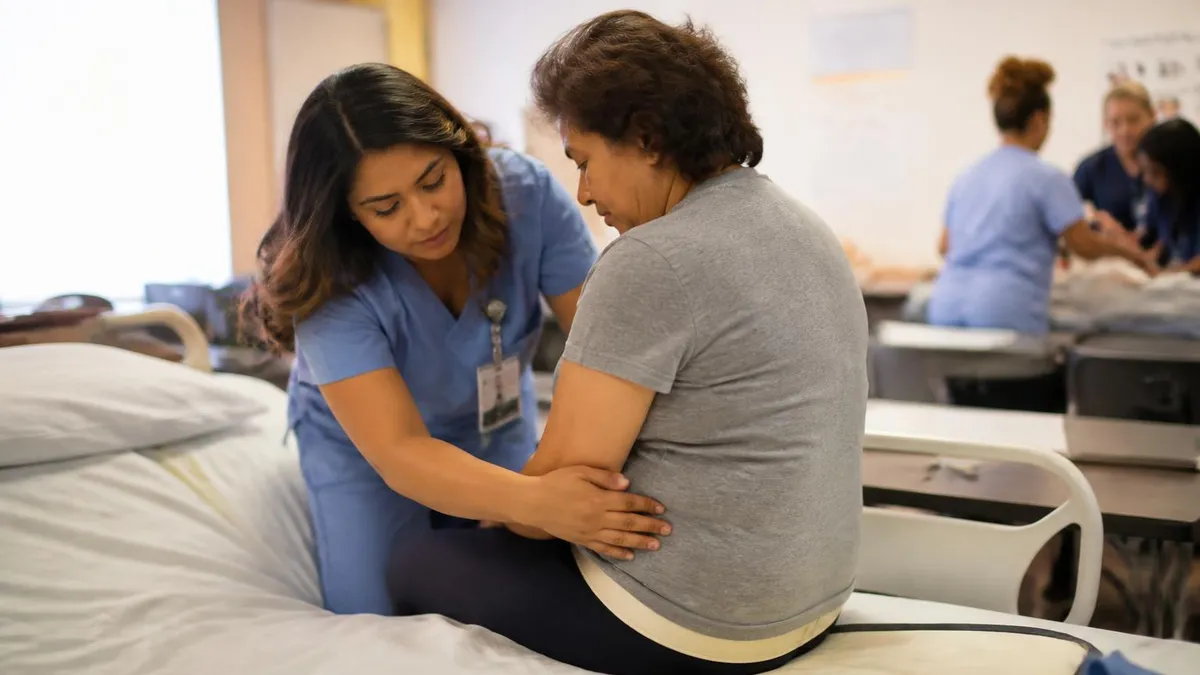
Every employer in Washington State is legally required to verify your Home Care Aide Registry status before assigning you to any client. If your registry entry is missing, expired, or shows a disciplinary action, agencies cannot legally place you with clients regardless of how your interview went. Check your own registry status at the WA Dept. of Health website before applying to ensure there are no discrepancies — errors do occur and can take 2 to 4 weeks to correct if caught late in the hiring process.
Career growth for HHAs in Kennewick is more structured and accessible than most people entering the field realize. The entry-level HHA position is not a dead end — it is a gateway into a broad ecosystem of healthcare roles that include certified nursing assistant (CNA), medication aide, home health nurse, and community health worker.
Washington State's workforce development programs, including the DSHS Career Pathways for Home Care Workers initiative, provide funding that helps working HHAs pay for additional training without taking on debt. If you are working at a DSHS-contracted agency, you may qualify for training grants that cover CNA coursework, skills testing fees, and even temporary wage replacement while you are in school.
The CNA credential is the most common first step up from HHA in Kennewick. CNAs earn $19 to $26 per hour in Benton County settings ranging from skilled nursing facilities to home health agencies, and the training requirement is approximately 120 hours — building directly on your HHA foundation. Many HHA-to-CNA transition programs in Washington waive certain prerequisite hours for candidates who have already been working as certified home health aides, recognizing that practical experience covers material that classroom-only candidates must study from scratch. Check with Columbia Basin College's Allied Health department for their current articulation agreements with regional employers.
For HHAs who prefer to stay in the home care environment rather than transition to a facility setting, the route to higher earnings runs through specialty certifications and supervisory roles. Dementia care certification through the Alzheimer's Association, palliative care aide training, and pediatric home health specialty credentials are all valued in Kennewick's market.
Several agencies in the Tri-Cities area operate dedicated memory care units or serve medically complex pediatric clients on ventilator support, and these programs pay specialized aides meaningfully more than standard personal care rates. Completing a specialty track typically requires 8 to 16 additional training hours beyond your basic HHA credential.
Lead aide and field supervisor positions represent another advancement pathway within the home care structure. Lead aides typically carry a smaller client caseload while also mentoring newly hired HHAs, conducting quality assurance check-ins, and serving as the first point of contact for client concerns that fall below the clinical threshold for nurse involvement.
In Kennewick, lead aide compensation usually falls between $20 and $25 per hour depending on the agency, and the role typically becomes available to experienced HHAs with 18 or more months of strong performance. If advancement interests you, communicate that goal clearly during your initial hiring conversation so your supervisor knows to include you in mentorship opportunities as they arise.
For HHAs interested in the administrative or policy side of home care, the Kennewick market also offers pathways into care coordination, scheduling management, and quality assurance roles at agency offices. These positions typically require at least two years of field experience plus demonstrated proficiency with platforms like the HHA Exchange, scheduling software, and basic electronic health record systems. Schedulers and care coordinators at mid-sized agencies in the Tri-Cities earn $40,000 to $55,000 annually and often work standard weekday hours, which is attractive for aides whose caregiving responsibilities or health considerations make field shifts increasingly difficult over time.
Continuing education is the backbone of every successful HHA career trajectory. Washington State's mandatory 12 hours of annual continuing education is a floor, not a ceiling.
The most career-mobile HHAs in Kennewick consistently report completing 20 to 30 hours of training annually through a combination of employer-provided modules, community college courses, and national webinars through organizations like the National Association for Home Care and Hospice (NAHC). This investment of roughly one extra training day per month builds a documented skills profile that supports both internal promotions and competitive applications when you decide to move to a higher-paying agency or a more advanced role. Bookmark a reliable home health aide training program resource now so you can return to it as your career goals evolve.
Finally, do not underestimate the value of professional community in shaping your long-term success as a Kennewick home health aide. Connecting with other HHAs through agency peer groups, SEIU 775 union activities (Washington's major home care worker union), and online communities gives you access to wage comparison data, employer reputation information, and peer support during emotionally difficult cases.
Washington home care workers have been represented by SEIU 775 since 2002, and the union negotiates the wage floor and benefit standards for Individual Provider (IP) HHAs who work directly through DSHS — including many workers serving Kennewick-area clients. Understanding your rights and protections as a worker in this system is just as important as mastering your clinical skills.
Preparing for your HHA competency evaluation is a process that rewards consistency more than cramming. The skills portion of the Washington State competency exam tests hands-on procedures including handwashing technique, bed bath procedures, range-of-motion exercises, positioning and transfer methods, vital sign measurement, and catheter care.
Each skill is evaluated against a specific checklist of critical steps, and missing even one critical step on a skill results in automatic failure of that skill item. The practical implication is that you should practice each skill from the correct starting point — narrating your infection control steps aloud just as you will during the evaluation — until the sequence is automatic and effortless.
The written knowledge portion of the exam covers client rights, abuse and neglect recognition and reporting, nutrition and hydration basics, medication awareness (HHAs observe and report but do not administer medications), safety and emergency response, and communication principles. Questions are typically scenario-based and require you to identify the most appropriate caregiver action from among four options.
Studying with practice questions that mirror this format is far more effective than reading textbook chapters passively. Time yourself on practice sets to build the pacing discipline that prevents rushing or second-guessing on exam day, and review every question you got wrong to understand the underlying clinical reasoning — not just the correct answer.
In the weeks before your exam, establish a daily study routine of 45 to 60 minutes rather than attempting marathon sessions on weekends. Research consistently shows that distributed practice produces stronger long-term retention than massed practice, which is especially important for clinical content that you will need to recall accurately on the job for years after your exam.
Use the last three days before your evaluation for light review of weak areas and skills rehearsal rather than introducing new material. Getting adequate sleep, eating a balanced meal the morning of your evaluation, and arriving at the test site 15 minutes early are straightforward interventions that meaningfully reduce performance anxiety and support your best effort.
Study groups are another high-value preparation strategy that many aspiring HHAs overlook. If you completed your training program with a cohort of classmates, organizing two or three weekly study sessions in the weeks before your evaluation gives everyone a chance to quiz each other on written content and observe each other's skills technique.
Watching a peer perform a bed bath or transfer and providing specific feedback from the skills checklist trains your eye and your hand simultaneously, which transfers directly to stronger performance during the actual evaluation. Many Kennewick-area HHA programs help these groups informally through their student communication channels — ask your instructor to connect you with classmates who are on the same exam timeline.
On evaluation day, remember that the nurse evaluator is not trying to fail you — they are trying to confirm that you are safe to work with vulnerable clients. If you make a small error that does not involve a critical step, you can often self-correct by stating aloud what you are doing and continuing the skill properly.
Do not freeze or apologize repeatedly — evaluators respond well to composure and the demonstration that you can identify and correct your own technique in real time. If you are unsure about a critical step during the evaluation, it is better to pause and think aloud about your reasoning than to perform the step incorrectly. Evaluators note the difference between carelessness and thoughtful problem-solving.
After passing your evaluation and entering the WA Home Care Aide Registry, your first 90 days on the job are the most important period for building your reputation as a reliable, skilled caregiver. Show up on time for every shift, communicate proactively with your agency coordinator if any issue arises at a client's home, document your visit notes completely and promptly within the HHA Exchange system, and never exceed your scope of practice regardless of what a client or family member asks you to do.
Aides who establish this foundation in their first three months consistently receive the best scheduling assignments, the most hours, and the first consideration for pay increases at annual review time.
Test preparation resources are widely available and many are free. The practice quizzes linked throughout this guide on PracticeTestGeeks.com cover the content domains most frequently tested on HHA competency evaluations in Washington and surrounding states. Working through multiple full-length practice sets in the two weeks before your evaluation is one of the highest-return study activities available to you because it simultaneously reviews content, builds test-taking confidence, and trains your pacing. Approach each practice session as if it were the real evaluation — quiet environment, no phone distractions, timed responses — so that the actual exam feels familiar rather than foreign.
Sample HHA Practice Questions
Try these questions from our free HHA practice tests. The correct answer and an explanation follow each question.
How should a home health aide handle a situation where a patient refuses care?
- A. By ignoring the refusal and continuing the care.
- B. By respecting the refusal, explaining the consequences, and documenting the refusal
- C. By forcing the patient to accept care.
- D. By reporting the refusal to family members.
Answer: B. By respecting the refusal, explaining the consequences, and documenting the refusal
Patients have the right to refuse care, even if it is deemed beneficial. A home health aide must respect this decision, as it upholds the patient's autonomy. It is important to clearly explain the potential consequences of their refusal to ensure it is an informed choice, and then meticulously document the refusal and the discussion for legal protection and continuity of care within the healthcare team.
Why is it important for a home health aide to maintain patient privacy?
- A. It is not important to maintain privacy.
- B. It helps maintain trust and comply with regulations
- C. It only applies to medical staff.
- D. It reduces the need for family involvement.
Answer: B. It helps maintain trust and comply with regulations
Maintaining patient privacy is essential to ensure confidentiality, build trust, and comply with legal and ethical standards of care.
How does a home health aide ensure a safe environment for patients?
- A. By ignoring safety hazards and focusing on care.
- B. By checking for hazards and ensuring accessibility
- C. By allowing the patient to move freely without assistance.
- D. By leaving the patient unattended while working.
Answer: B. By checking for hazards and ensuring accessibility
A home health aide ensures safety by checking for hazards, such as clutter or wet floors, and by ensuring that the patient's living space is accessible and free of risks.
A home health aide notices that an elderly patient has not eaten or drunk anything in the past 24 hours and appears confused. The aide should:
- A. Prepare a large meal to encourage the patient to eat
- B. Document the observation and immediately report it to the supervising nurse
- C. Assume the patient is tired and let them rest without disturbing them
- D. Administer oral fluids forcefully to prevent dehydration
Answer: B. Document the observation and immediately report it to the supervising nurse
Changes in eating, drinking, or mental status can signal serious medical deterioration. The aide's role is to observe, document, and report findings to the nurse promptly — not to diagnose or independently intervene.
HHA Questions and Answers



About the Author

Registered Nurse & Healthcare Educator
Johns Hopkins University School of NursingDr. Sarah Mitchell is a board-certified registered nurse with over 15 years of clinical and academic experience. She completed her PhD in Nursing Science at Johns Hopkins University and has taught NCLEX preparation and clinical skills courses for nursing students across the United States. Her research focuses on evidence-based exam preparation strategies for healthcare certification candidates.
Join the Discussion
Connect with other students preparing for this exam. Share tips, ask questions, and get advice from people who have been there.
View discussion (8 replies)