
Home Health Aide (HHA): Complete Career and Certification Guide (2026 September)
✏️ Pass your Home Health Aide exam on the first attempt. Practice questions with detailed answer explanations, hints, and instant scoring.
What Is a Home Health Aide?
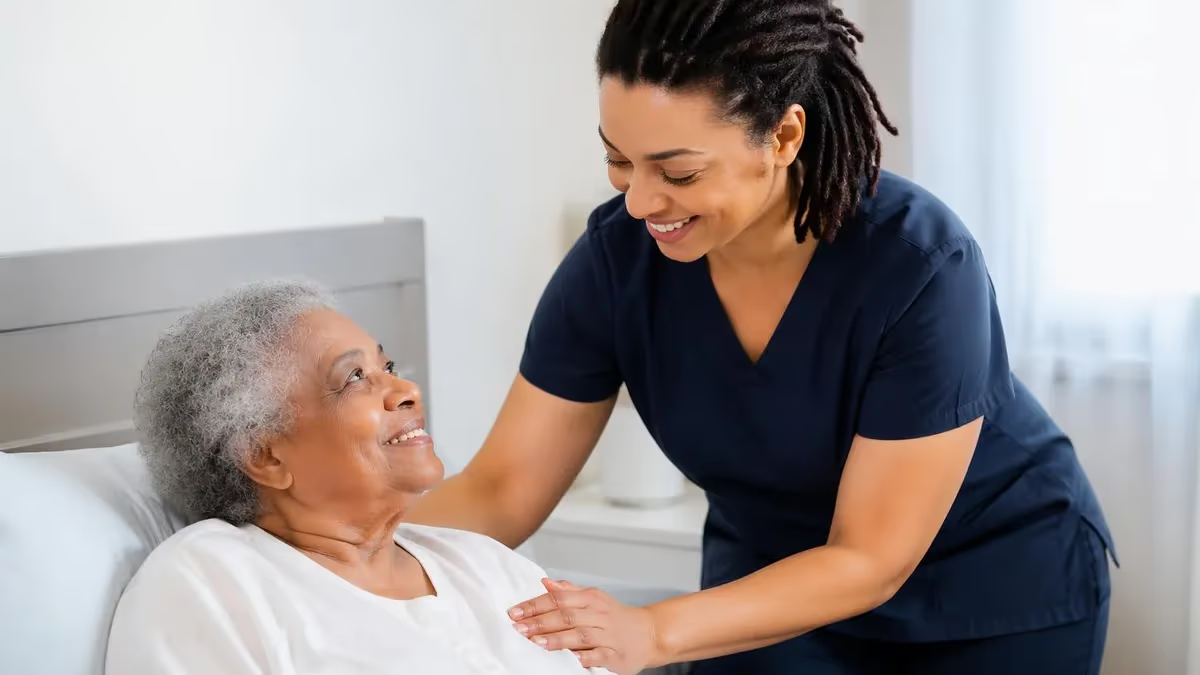
A home health aide (HHA) is a trained healthcare worker who provides personal care, assistance with daily activities, and basic health monitoring to clients in their homes or residential settings. Unlike hospital-based nurses, HHAs deliver care where clients feel most comfortable — in their own residences.
HHAs work with elderly individuals, people recovering from surgery or illness, and those with physical or cognitive disabilities. They operate under the supervision of a registered nurse (RN) or licensed practical nurse (LPN) and follow an individualized care plan for each client.
The U.S. Bureau of Labor Statistics projects a 22% growth in home health aide positions through 2032 — much faster than average — driven by an aging Baby Boomer population preferring home-based care over nursing facilities.

HHA Duties and Responsibilities
Understanding home health aide duties is essential before entering this field. Day-to-day responsibilities vary by client but typically include the following categories:
Core HHA Responsibilities
- ✓Assisting with bathing, grooming, dressing, and personal hygiene
- ✓Helping clients move safely (transfers, ambulation, range-of-motion exercises)
- ✓Preparing meals according to dietary requirements and restrictions
- ✓Monitoring and recording vital signs (temperature, pulse, blood pressure, respiration)
- ✓Administering medications as directed by the supervising nurse
- ✓Providing companionship and emotional support
- ✓Performing light housekeeping and laundry
- ✓Accompanying clients to medical appointments
- ✓Reporting changes in a client's condition to the supervising RN
- ✓Documenting all care provided in the client's record
How to Become a Home Health Aide
The path to becoming an HHA is faster than most healthcare careers. Here's the standard pathway:

HHA Certification and Training Options
One of the most common questions from aspiring home health aides HHA seekers is: 'How do I get certified, and does it cost money?' The good news is that there are multiple low-cost and free pathways available.
Home Health Aide Certificate
Your home health aide certificate proves you have completed the required training and passed the competency evaluation. Most state certifications are valid for 24 months and require renewal through continuing education or work hours.
Home Health Aide Certification Online Free
Several options exist for earning home health aide certification online free or at very low cost:
HHA Salary and Pay — What Can You Expect?
Understanding home health care aide pay is critical when evaluating this career. Compensation varies by state, experience, employer type, and hours worked. Here's a breakdown of typical earnings:
To learn more about home health aide salary by state and specialty, check our dedicated salary guide with current BLS data and agency vs. private-pay comparisons.
Finding HHA Jobs and Home Health Aide Agencies
Once certified, most HHAs find work through a home health aide agency. Agencies handle scheduling, client matching, malpractice insurance, and payroll — making them the easiest starting point for new HHAs.
How to Find Home Health Aide Agencies Near You
When searching for a home health aide agency near me, consider the following factors:

What to Look for in a Home Health Agency
- ✓Medicare/Medicaid certification (required for insurance reimbursement)
- ✓Positive reviews on Google, Indeed, and Glassdoor
- ✓Flexible scheduling options (part-time, live-in, overnight shifts)
- ✓Competitive hourly rates and benefits (health insurance, paid training)
- ✓Strong supervisor support and nurse oversight
- ✓Clear policies on client assignments and cancellations
- ✓Access to continuing education and career advancement
HHA Hiring: What Employers Look For
Home health aide hiring managers consistently prioritize candidates with:
- Valid state HHA certification or registry listing
- CPR and First Aid certification
- Experience with specific populations (elderly, pediatric, post-surgical)
- Reliable transportation (most HHAs travel between client homes)
- Strong references from previous caregiving experience
Many home health aide positions are available immediately — the nationwide shortage of HHAs means certified aides often receive multiple job offers within days of passing their competency exam.
HHA vs CNA: Key Differences
A common question from those entering caregiving is understanding the difference between CNA and HHA. While both provide personal care, several important distinctions affect scope of practice, training requirements, and employment settings.
HHA vs CNA Comparison
- +Faster and less expensive to certify (75–120 hours vs 75–175 hours)
- +Work in clients' homes — familiar, comfortable settings
- +Greater schedule flexibility for work-life balance
- +Strong job availability — fastest-growing healthcare occupation
- +Entry point into healthcare with low upfront cost
- −CNAs can work in hospitals and nursing facilities (more settings)
- −CNAs generally earn $2–$5/hr more on average
- −CNA certification opens more pathways to LPN/RN advancement
- −CNAs perform more clinical tasks (catheter care, vital sign charting)
- −CNAs eligible for more employer-sponsored tuition benefits
For those unsure which path to take, read our full comparison of difference between CNA and HHA — it covers scope of practice, state-by-state variations, and which credential pays more in your area.
If you're already working as an HHA and want to advance, transitioning to CNA is straightforward — most states allow HHAs to apply their existing training hours toward CNA certification.
HHA Training Online — What to Expect
Home health aide training online has expanded dramatically since 2026. Many states now allow the theory (classroom) portion to be completed online, with in-person clinical hours completed separately at a local facility or agency. A typical online HHA program includes:
- Video lectures on anatomy, medical terminology, and care procedures
- Interactive quizzes on client rights, infection control, and safety
- Practice scenarios for handling common client situations
- Preparation for the state competency written exam
After completing online coursework, you'll need to schedule and complete your hands-on clinical hours (typically 16–40 hours depending on your state) at an approved site.
Looking to how to become a home health aide with step-by-step guidance including state-specific requirements? Our dedicated guide walks through every step of the application and training process.
HHA Questions and Answers
Related HHA Resources
About the Author

Registered Nurse & Healthcare Educator
Johns Hopkins University School of NursingDr. Sarah Mitchell is a board-certified registered nurse with over 15 years of clinical and academic experience. She completed her PhD in Nursing Science at Johns Hopkins University and has taught NCLEX preparation and clinical skills courses for nursing students across the United States. Her research focuses on evidence-based exam preparation strategies for healthcare certification candidates.
Join the Discussion
Connect with other students preparing for this exam. Share tips, ask questions, and get advice from people who have been there.
View discussion (8 replies)