
Ham Radio for Beginners: Everything You Need to Know to Get Started
New to ham radio? Learn how to get your ham radio license, choose equipment, understand frequencies, and pass the Technician exam in 2026 September. 💡
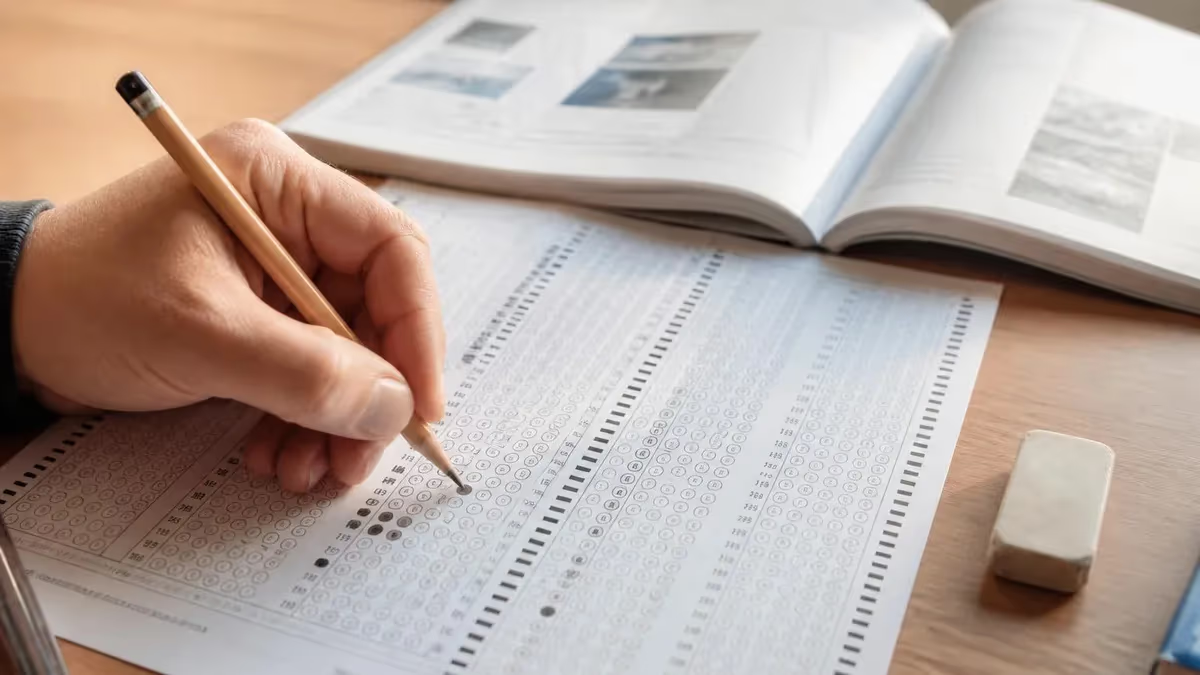
If you've been curious about ham radio for beginners, you're entering one of the most rewarding hobbies in the world — one that combines electronics, communication, emergency preparedness, and global community into a single license. Amateur radio operators can talk to astronauts on the International Space Station, make contacts on every continent, and provide critical communications when cell towers fail. The first step for every new operator is earning a ham radio license, and it's more achievable than most people expect.
The Technician class license is the entry-level credential issued by the FCC and tested by volunteer examiner teams across the United States. Once licensed, you gain legal access to all amateur radio frequencies above 30 MHz and limited privileges on a few high-frequency (HF) bands. There are over 750,000 licensed amateur radio operators in the United States today, and the hobby continues to grow as more people discover its practical and recreational value.
Getting started requires understanding three things: the license structure, the equipment you'll need, and the frequencies you'll be allowed to use. The good news is that the FCC no longer requires Morse code proficiency for any license class, and the written exam covers material that most dedicated beginners can learn in two to four weeks of focused study. Many online resources, including free practice exams, make preparation straightforward and even enjoyable.
Ham radios come in an enormous variety of form factors — from handheld transceivers (called HTs) that fit in your shirt pocket to powerful base stations capable of reaching the other side of the planet. Beginners typically start with an inexpensive handheld radio that covers the 2-meter and 70-centimeter bands, which are the most popular frequencies for local and regional communication. These radios often cost less than $30 and are available at any major what is a ham radio outlet.
One question new operators sometimes encounter when researching the hobby is the oddly viral trivia question about whether did ed gein talk to ilse on a ham radio — a reference to the Netflix series "Monster: The Jeffrey Dahmer Story," which depicted a dramatized ham radio scene. While pop culture occasionally brushes up against amateur radio, the real-world hobby is far more interesting: it's a technical skill with genuine life-saving applications and a global community of millions of enthusiasts.
This guide will walk you through every stage of getting started: understanding the license classes, studying for the Technician exam, choosing your first radio and antenna, learning which frequencies you can use, and building the skills that will make you an effective and confident operator. Whether your goal is emergency communications, contesting, satellite operation, or simply chatting with neighbors across the city, the path begins with one decision — to pursue your ham radio license and join a community that has been serving the public since the earliest days of wireless transmission.
The amateur radio service is self-governed by a culture of technical excellence and public service. Operators are expected to know and follow FCC regulations, maintain their equipment properly, and conduct themselves courteously on the air. This culture of mutual respect and continuous learning is one of the reasons ham radio operators form such tight-knit communities worldwide, and it makes the hobby uniquely fulfilling for people of all ages and technical backgrounds.
Ham Radio in the US by the Numbers

The Three Amateur Radio License Classes
The entry-level license for all new ham radio operators. Grants full operating privileges on all amateur bands above 30 MHz plus limited HF access. The 35-question written exam covers basic electronics, FCC regulations, and operating procedures.
The intermediate license that unlocks HF (shortwave) privileges for worldwide communication. Requires passing the Technician exam first, then an additional 35-question General exam covering more advanced regulations and operating practices.
The highest amateur radio license, granting full privileges on all amateur bands and frequencies. Requires passing both previous exams and a challenging 50-question Extra exam covering advanced technical topics and international regulations.
Choosing your first ham radio equipment can feel overwhelming given the sheer number of options available, but beginners have several clear paths depending on their budget and goals. The most practical starting point for nearly every new Technician licensee is a dual-band handheld transceiver (HT) that operates on the 2-meter (144 MHz) and 70-centimeter (440 MHz) bands. These radios cover the frequencies most commonly used for local communication through repeaters — relay stations that extend your range dramatically from just a few watts of power.
Budget dual-band handhelds from brands like Baofeng, Yaesu, and Kenwood start at around $25 to $30 for entry-level models and climb to $150 to $300 for more feature-rich options. The Baofeng UV-5R is enormously popular among beginners because of its extremely low price, but more established brands like Yaesu (the FT-65R) and Kenwood (the TH-D74A) offer better build quality, clearer audio, and more intuitive programming. For most beginners, any dual-band HT from a reputable manufacturer will serve well during the learning phase.
Beyond the handheld, mobile radios mount in a vehicle and typically output 50 watts of power compared to the 4–5 watts of most HTs. This additional power makes a significant difference in range, especially in hilly terrain where VHF and UHF signals travel by line-of-sight. Popular mobile radios for new operators include the Yaesu FT-7900R and the Kenwood TM-V71A, both of which offer dual-band capability and simple operation. A mobile radio paired with a good mag-mount antenna on your car roof can reliably hit repeaters 20 to 40 miles away.
Base station radios represent a larger investment but offer the best performance for home operations. Many operators start with a mobile radio mounted on a desk and connected to an outdoor antenna — this hybrid approach gives you mobile-class power output with the comfort of a home installation. Ham radio equipment for base stations also includes antenna tuners, power supplies, coaxial cable, and various accessories that become more relevant as you advance through license classes and expand your operating capabilities.
Understanding the ham radio antenna is just as important as choosing the radio itself. A good antenna will dramatically outperform a mediocre one, and experienced operators often say that money spent on antennas provides a better return than money spent on radios. For a beginner at home, a simple J-pole antenna or a quarter-wave ground plane antenna built from copper wire and a SO-239 connector can be constructed for under $20 and will outperform the rubber duck antenna that ships with most HTs by a factor of three or four in real-world range.
Don't overlook accessories when budgeting for your first station. A quality headset or speaker-microphone improves comfort during long operating sessions, particularly at public service events where ambient noise is high. Programming cables and software (such as CHIRP, which is free and open-source) are essential for easily loading repeater frequencies into your HT rather than manually entering them one by one. A handheld radio case or holster protects your investment at events and during portable operations like hiking or camping.
When shopping for ham radio equipment, visiting a local ham radio outlet or club can be invaluable. Experienced operators are generally happy to let beginners handle different radios, explain the pros and cons of various models, and share their personal recommendations based on local operating conditions. Many clubs also host "Elmer" programs — informal mentorship relationships where experienced operators guide newcomers through the equipment selection, licensing, and early operating phases of the hobby.
Ham Radio Frequencies and Bands Explained
VHF (Very High Frequency, 30–300 MHz) and UHF (Ultra High Frequency, 300–3000 MHz) are the primary playgrounds for new Technician licensees. The 2-meter band (144–148 MHz) and the 70-centimeter band (420–450 MHz) are the most active, hosting hundreds of local repeaters in most metropolitan areas. These frequencies travel by line-of-sight, so elevation and antenna height have a significant impact on achievable range from any given location.
Technician operators have full access to all VHF and UHF amateur ham radio bands, including 6 meters (50–54 MHz), which occasionally opens for long-distance propagation during summer sporadic-E events. The 1.25-meter band (222–225 MHz) is less commonly used but available. UHF frequencies are excellent for weak-signal digital modes and are used extensively for amateur satellite communication and the International Space Station cross-band repeater, which Technician operators can legally access.

Is Ham Radio Worth Pursuing as a Hobby?
- +Emergency communications capability that works when cell and internet infrastructure fails
- +A global community of millions of friendly, technically skilled operators ready to help newcomers
- +No monthly fees — after the one-time license application cost, operating is essentially free
- +Unlimited technical learning opportunities across electronics, antennas, propagation, and digital modes
- +Portable and outdoors-friendly — satellite contacts, hiking activations, and field day events are popular
- +Exam question pool is publicly available, making focused study highly efficient and predictable
- −Initial equipment investment can reach $100–$500 depending on goals and radio choices
- −FCC regulations must be learned and followed — violations can result in fines or license revocation
- −VHF/UHF repeater activity has declined in some areas as digital messaging apps have grown
- −HF operation requiring worldwide contacts is locked behind the General class upgrade
- −Programming older radio models can be technically challenging without the right software and cables
- −Finding an exam session in rural areas may require driving to a larger city or attending a club event
Ham Radio License Test Preparation Checklist
- ✓Download the current FCC Technician question pool from the ARRL website or NCVEC.org — it contains all 423 possible exam questions.
- ✓Create a free account on HamStudy.org or use the ARRL Ham Radio License Manual as your primary study resource.
- ✓Study for at least 30 minutes per day and use spaced-repetition flashcard software to retain regulations and definitions.
- ✓Take at least five full 35-question practice exams before scheduling your test session to gauge readiness.
- ✓Locate your nearest volunteer examiner session using the ARRL's exam session finder at arrl.org/find-an-amateur-radio-license-exam-session.
- ✓Bring a government-issued photo ID, your FRN number from the FCC website, payment for the exam fee (typically $15), and a calculator if needed.
- ✓After passing, register your license on the FCC's Universal Licensing System to receive your official callsign within one to two weeks.
- ✓Join a local amateur radio club immediately after licensing — clubs offer Elmer mentoring, equipment loans, and operating opportunities.
- ✓Program your first radio with local repeater frequencies using the RepeaterBook.com directory and the free CHIRP programming software.
- ✓Make your first on-air contact within 48 hours of receiving your callsign — introduce yourself as a new operator and most hams will warmly welcome you.
You Only Need to Score 74% to Pass the Technician Exam
The Technician license exam consists of 35 questions drawn randomly from the public question pool of 423 questions. You need to answer at least 26 correctly — that's 74% — to pass. Because the entire question pool is publicly available in advance, dedicated beginners who study with practice exams consistently achieve pass rates well above 90%. There is no reason to fail if you use the available study resources for even two to three weeks.
Once you have your callsign and your first radio programmed, the most important next step is getting on the air — actually transmitting and having real conversations with other operators. Many new hams experience a brief period of anxiety before making their first call, often called "mic fright." This is completely normal and disappears quickly with practice. The amateur radio community is genuinely welcoming to newcomers, and announcing yourself as a new operator almost always results in patient, encouraging responses from experienced hams who remember their own early days.
Repeater operation is where most beginners start. Tune to a local repeater output frequency, listen for a few minutes to understand the ongoing traffic, wait for a pause, then key your radio and say your callsign followed by a brief reason for calling — something like "W1XYZ, monitoring" or "W1XYZ, looking for a contact." If the repeater is active, someone will typically respond within seconds.
If it's quiet, you can call CQ (a general call for any station) and wait. Most metropolitan areas have multiple active repeaters, and at least one will have regular activity during morning and evening drive times when commuters use ham radio to pass the time.
The ham radio antenna you use has a larger impact on your range and signal quality than virtually any other factor in your station. The rubber duck antenna that ships with most handheld radios is notoriously poor — it's compact and convenient, but it sacrifices significant performance. Upgrading to a half-wave whip antenna or a roll-up J-pole made of twin-lead cable instantly extends your reach by several miles in most environments. For home use, even a simple vertical antenna mounted in an attic or on a roof can dramatically improve your ability to hit distant repeaters and make simplex contacts.
Repeaters are the backbone of local ham radio communication, and understanding how to find and use them effectively is an essential skill. The RepeaterBook.com website and app maintain a crowdsourced database of tens of thousands of repeaters across the United States, searchable by location, frequency, and mode.
When traveling, you can look up repeaters along your route and preprogram them into your radio so you always have a way to make contact in an emergency. Many repeaters are linked to regional or nationwide systems — including the popular EchoLink and AllStar networks — that connect operators across thousands of miles using internet relay between repeater nodes.
Digital voice modes are growing rapidly in the amateur radio world and offer significant advantages over traditional FM voice. Systems like DMR (Digital Mobile Radio), D-STAR, and System Fusion (C4FM) provide clearer audio, longer range at equivalent power levels, and the ability to connect to worldwide talk groups through internet-linked networks.
Many affordable dual-band radios now support at least one digital mode, and some areas have dense networks of digital repeaters that make these modes highly practical for everyday use. As a beginner, you don't need to dive into digital modes immediately, but awareness of them prepares you for where the hobby is heading.
Emergency communications (EmComm) is one of the most socially valuable aspects of amateur radio, and most local clubs participate in ARES (Amateur Radio Emergency Service) or RACES (Radio Amateur Civil Emergency Service). These organizations train operators to support served agencies like the Red Cross, FEMA, and local emergency management offices during disasters when commercial communications infrastructure fails. Joining your local ARES group as a new operator is an excellent way to develop practical skills, meet experienced mentors, and contribute meaningfully to your community even at the Technician license level.
Explore the ham radio bands available to you systematically — don't just stick with the repeaters you initially programmed. Try simplex on 146.520 MHz, experiment with weak-signal modes on 6 meters during summer, and if you can access any HF privileges, monitor the 10-meter band during the day when solar conditions are favorable. Each new mode and frequency you explore adds depth to your understanding of radio propagation, expands your operating skills, and makes the hobby progressively more engaging and rewarding over time.
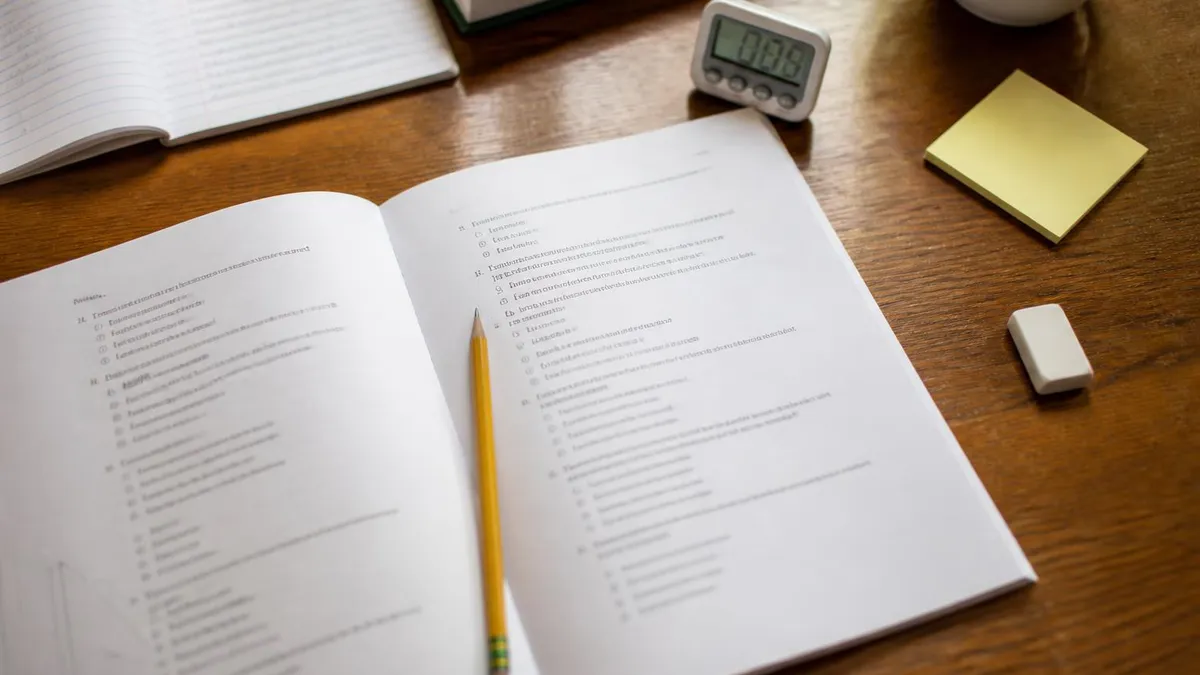
Operating an amateur radio transmitter on any amateur frequency without a valid FCC license is illegal and can result in substantial fines — up to $10,000 per violation in serious cases. You must have your callsign officially assigned by the FCC before you transmit, even if you've passed your exam. The callsign typically appears in the FCC database within one to two weeks of your exam session. Until then, you may listen freely — just don't transmit.
Effective ham radio prep goes beyond simply memorizing answers from the question pool. The operators who become most capable and confident are those who take time to understand the underlying principles — why antennas are measured in wavelengths, how repeater offset frequencies are determined, what electrical safety practices prevent RF burns and shock hazards. This conceptual foundation not only helps you pass the exam more reliably but also makes you a safer, more effective operator from your very first day on the air.
The ARRL (American Radio Relay League) is the national organization for amateur radio in the United States and produces the most widely used study materials for the Technician exam. Their "Ham Radio License Manual" covers the complete question pool with plain-language explanations of every concept tested. At around $30, it's one of the best investments a beginner can make, though free online resources like HamStudy.org, KB6NU's No-Nonsense Technician Study Guide (available as a free PDF), and Gordon West's radio school materials are also excellent options for self-studiers.
Practice exams are the single most effective study tool for the ham radio license test. Because the FCC question pool is entirely public and the actual exam draws from it randomly, repeated practice exam sessions directly simulate the real testing experience. Most online platforms track your performance by topic area, making it easy to identify weak spots — whether that's electrical principles, FCC regulations, or antenna theory — and focus your remaining study time where it will have the greatest impact on your final score.
Many beginners find that joining a club or taking a formal license class accelerates their preparation significantly. Local clubs frequently offer free or low-cost Technician license courses that run four to six weeks and combine classroom instruction with hands-on radio demonstrations. These courses culminate in an on-site exam session, meaning you can study, learn, and get licensed all in one organized program. Check the ARRL's club finder at arrl.org/find-a-club to locate groups near you that offer licensing programs.
Time management during the actual exam matters more than most beginners expect. You have 35 questions to answer, and most testing environments allow you approximately 45 minutes. Read each question carefully, eliminate obviously wrong answers first, and don't spend more than 90 seconds on any single question.
If you're unsure, mark your best guess and move on — you can return to flagged questions if time allows. Arriving at the exam site well-rested and having eaten a proper meal beforehand has a measurable impact on cognitive performance, so treat your exam day with the same seriousness as any important professional test.
After passing your exam, the learning truly accelerates. Operating real radios in real conditions teaches you things no study guide can fully convey — how propagation changes throughout the day, how to handle interference or a crowded repeater, when to use a directional antenna to improve signal, and how to troubleshoot audio issues or SWR problems. Every operating session builds skills that compound over time, and the amateur radio community's culture of continuous learning means there will always be experienced operators willing to share knowledge and help you grow.
The ham radio prep journey culminates not at the exam table but on the air, where the practical application of everything you've studied becomes real. Whether you're passing a welfare message for a family member during a hurricane evacuation, making a satellite contact on an ISS pass, participating in a national contest, or simply chatting with a friend across town, every transmission connects you to a tradition of technical excellence and public service that stretches back over a century. Starting this journey is one of the best decisions any technically curious person can make.
Building practical operating skills requires deliberate practice beyond simply turning on the radio and hoping for contacts. One of the most effective exercises for new operators is participating in nets — organized on-air meetings where a net control station manages traffic and participants check in using their callsigns. Nets occur on scheduled frequencies at scheduled times and cover topics ranging from emergency preparedness to technical discussions to simple ragchewing. Participating in nets teaches proper operating procedures, phonetic alphabet fluency, and the rhythm of structured amateur radio communication.
Public service events represent another excellent opportunity for new operators to develop real-world skills under experienced supervision. Many clubs staff amateur radio communication teams at marathons, parades, bicycle races, and community festivals. These events require operators to pass formal messages, coordinate logistics, and maintain communication discipline for hours at a time — all skills directly applicable to emergency communications. Most clubs welcome new Technician licensees at these events, often pairing them with experienced operators for their first few activations.
Field Day, held annually on the fourth full weekend of June, is the most popular amateur radio operating event in the United States. Clubs set up portable stations in parks, parking lots, and other public spaces and operate for 24 hours under simulated emergency conditions, using generators or battery power instead of commercial electricity. Field Day is explicitly designed to welcome newcomers and is one of the best single experiences available for someone new to the hobby — you'll operate multiple radios, learn antenna setup, experience HF propagation firsthand, and meet dozens of local operators in a festive, low-pressure environment.
Digital modes have opened entirely new dimensions of amateur radio for operators at every license level. FT8, a weak-signal digital mode developed by Nobel Prize–winning physicist Joe Taylor (K1JT), has become enormously popular because it allows contacts over thousands of miles with extremely low power levels and modest antennas.
Even Technician licensees with limited HF privileges can use FT8 on the 10-meter band to make worldwide contacts under the right propagation conditions. The mode requires a computer with free software (WSJT-X), a radio with a data port, and an interface cable — total additional investment of under $50 for most setups.
Portable operation — taking your radio into the field away from home — is one of the fastest-growing segments of amateur radio and is particularly popular among hikers, campers, and outdoor enthusiasts. The SOTA (Summits on the Air) program awards points for activating mountain summits from a portable station, while the POTA (Parks on the Air) program similarly recognizes contacts made from national and state parks. These programs give outdoor-oriented operators a structured reason to combine their hobby with their love of nature, and the logbooks kept by activators and chasers create a permanent record of achievements.
Battery technology and solar power have made portable and emergency operations more capable than ever. A modern lithium iron phosphate (LiFePO4) battery pack weighing less than three pounds can power a 100-watt HF radio for several hours or a 5-watt handheld for days. Pairing a battery pack with a foldable solar panel allows truly self-sufficient operation anywhere with sunlight. This self-sufficiency is not just convenient — it's the core value proposition of amateur radio in emergency scenarios, where the ability to communicate independently of commercial infrastructure saves lives.
As you grow beyond the beginner stage, consider upgrading to the General class license to unlock the full spectrum of HF frequencies. With General privileges, you can make contacts on 80, 40, 20, 15, and 10 meters — reaching every corner of the globe on a regular basis.
The General exam uses the same format as the Technician exam (35 questions from a public pool) and covers more advanced regulations, operating procedures, and technical concepts. Most Technician operators who study seriously for four to six weeks can pass the General exam on their first attempt, and the expanded operating privileges are immediately transformative for the hobby experience.
Ham Radio Technician Questions and Answers
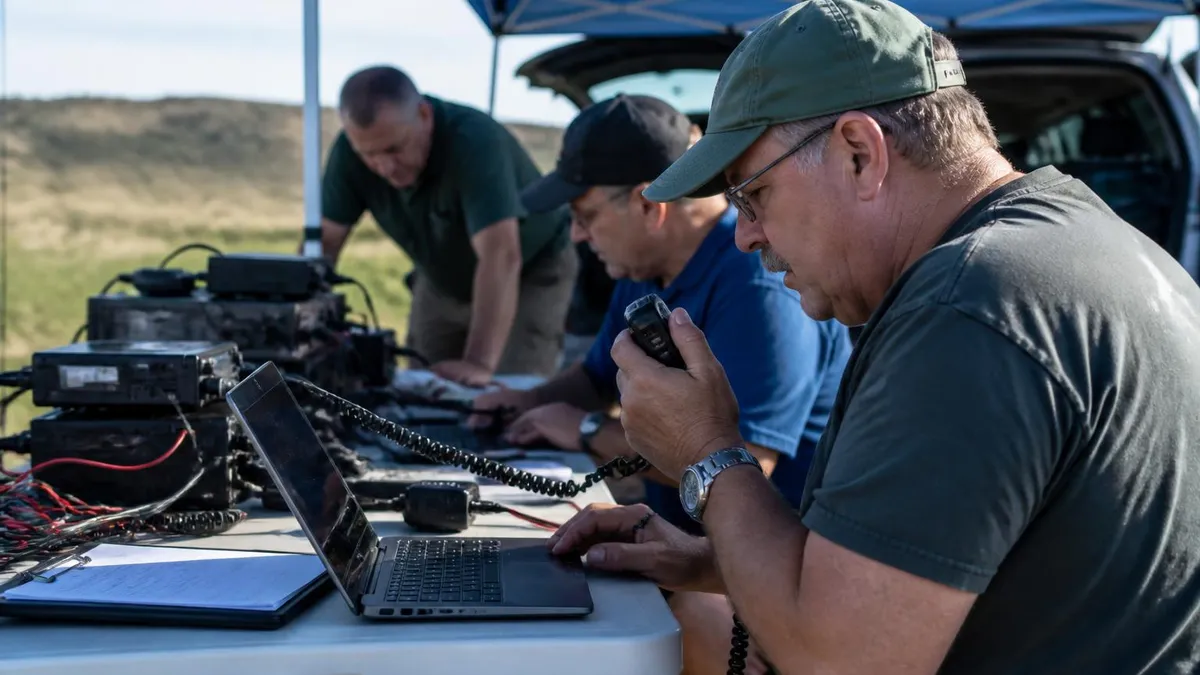
Ham Radio Test Online: Complete Study Guide for the Technician License Exam
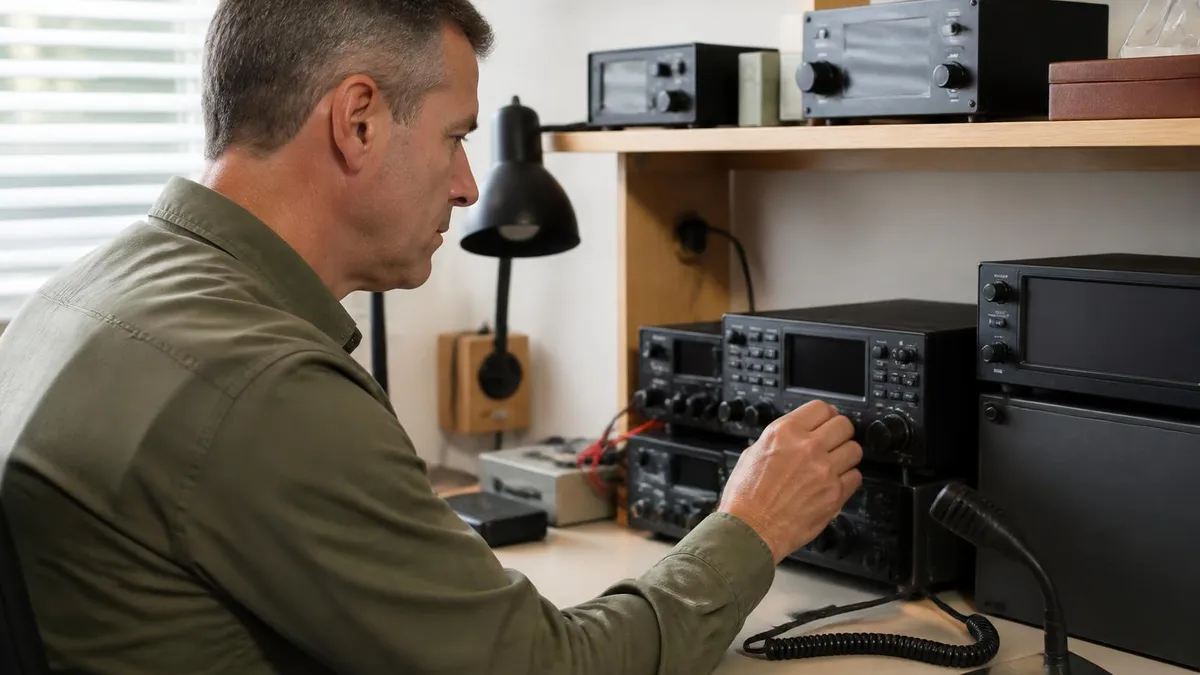
Ham Radio License Online: The Complete Guide to Getting Licensed in 2026
Ham Radio Technician
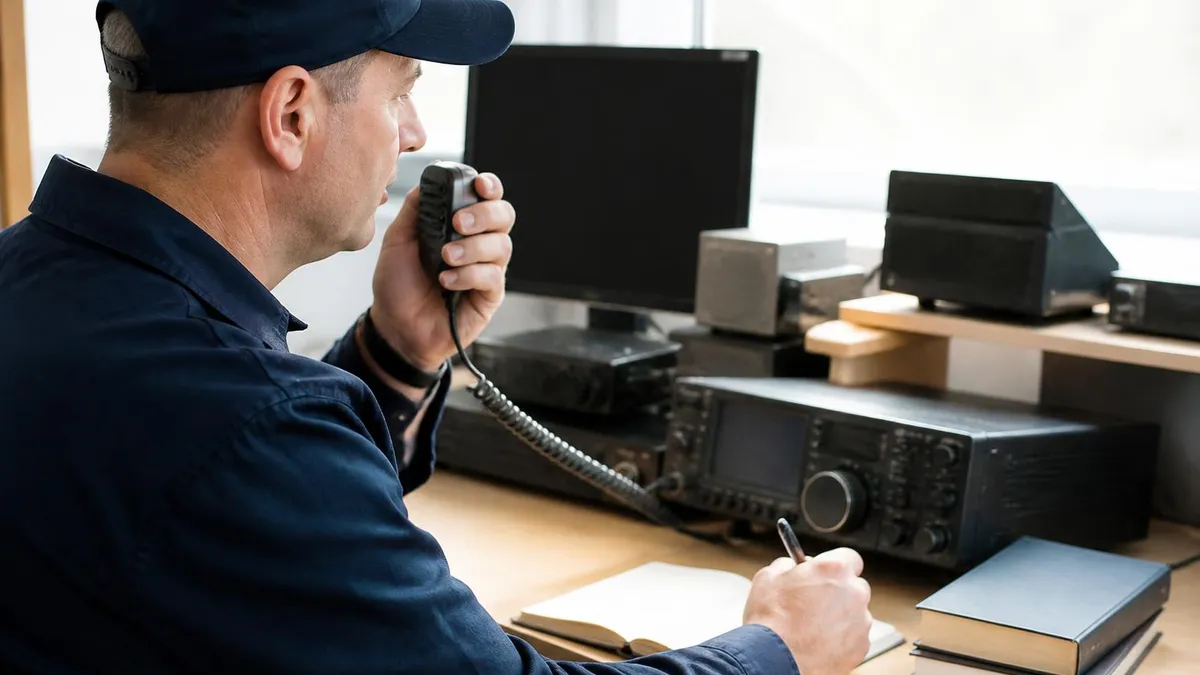
Ham Radio Repeaters: Complete Guide for Technician License Holders
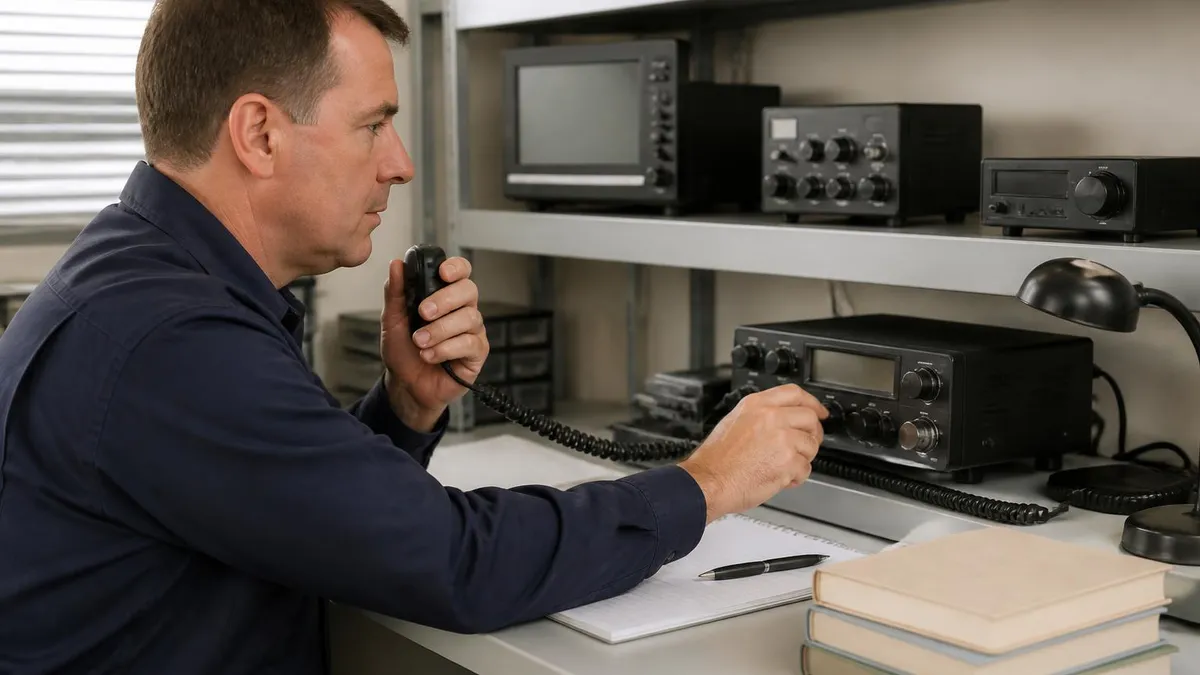
Ham Radio Stores: Where to Buy Ham Radio Equipment, Gear, and Get Your License
About the Author

Educational Psychologist & Academic Test Preparation Expert
Columbia University Teachers CollegeDr. Lisa Patel holds a Doctorate in Education from Columbia University Teachers College and has spent 17 years researching standardized test design and academic assessment. She has developed preparation programs for SAT, ACT, GRE, LSAT, UCAT, and numerous professional licensing exams, helping students of all backgrounds achieve their target scores.
Join the Discussion
Connect with other students preparing for this exam. Share tips, ask questions, and get advice from people who have been there.
View discussion (3 replies)