
FSC Test Answer Sheet: Complete California Firearm Safety Certificate Practice Guide
Master the FSC test with our answer sheet, practice questions, and study guide. Prep for your California firearm safety certificate today! ✅
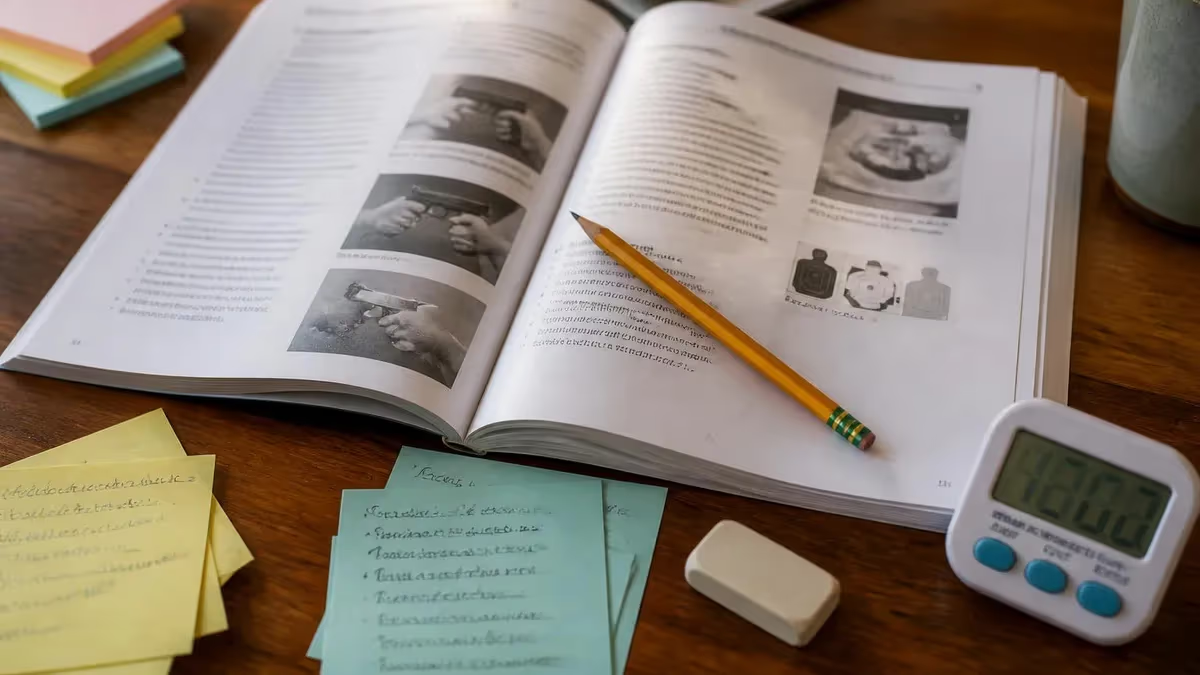
If you are preparing to purchase a handgun in California, understanding the fsc test answer sheet format and what to expect on exam day is your most important first step. The Firearm Safety Certificate, commonly called the FSC, is a mandatory credential issued by the California Department of Justice. Every prospective handgun buyer must pass a 30-question written test administered by a DOJ-certified instructor before completing any private-party or dealer transfer. Our fsc test practice resources are designed to mirror the real exam so you know exactly what to expect.
The California firearm safety certificate exam covers three broad content areas: safe storage and handling of firearms, California gun laws and legal transfer requirements, and the safe use of firearms in self-defense situations. Questions are drawn from an official question pool maintained by the DOJ, which means dedicated practice with representative questions dramatically increases your chance of passing on the first attempt. Most test-takers who study for even a few hours report feeling confident walking in, whereas those who go in cold frequently fail one or more sections.
Many people searching for an fsc test answer sheet are really looking for a reliable bank of practice questions they can study repeatedly. While the DOJ does not publish the exact exam questions in advance, the tested concepts are well-documented in the official FSC Study Guide booklet that every certified instructor is required to provide. This article walks you through those concepts in plain language, gives you a breakdown of question topics, and links you to the best free practice quizzes available online so you can self-test before your appointment.
Scoring on the FSC exam requires a minimum of 23 correct answers out of 30, which translates to roughly 77 percent. That threshold is achievable with focused preparation, but it is not a given. The questions are multiple-choice with three answer options each, and several are intentionally worded to test whether you understand the reasoning behind a safety rule rather than just memorizing a phrase. Tricky wording is a common stumbling block for first-time test-takers who rely solely on memorization without understanding the underlying principles.
The cost of the FSC is $25, payable directly to the DOJ-certified instructor who administers the test. The certificate itself is valid for five years from the date of issuance. If you let it lapse and need to purchase another firearm, you will need to retake and pass the test again. Knowing the timeline, the cost, and the score requirements ahead of time helps you plan your visit efficiently and avoid surprise delays when you are ready to complete your transfer.
Finding a location to take the test is straightforward. Most licensed firearms dealers in California are also DOJ-certified FSC testing locations. You can search the DOJ's online directory or simply call your local gun shop to confirm they offer testing. Walk-in testing is available at many locations, though calling ahead to confirm availability and hours is always a smart move. If you are wondering about a fsc test near me, the dealer directory on the DOJ website is the fastest way to find a certified site close to home.
This guide is designed to serve as your one-stop preparation resource. Below you will find a statistical breakdown of the exam, a structured look at every topic area, tabbed study notes, a comprehensive checklist, detailed prose explanations of the hardest concepts, and a full FAQ section answering the most common questions test-takers have. Work through each section in order, take the embedded practice quizzes as you go, and you will walk into your FSC appointment fully prepared to pass on the first try.
Free Firearm Safety Certificate (FSC) Study Tools
Interactive Firearm Safety Certificate (FSC) resources on PracticeTestGeeks, free to start:
- Firearm Safety Certificate (FSC) practice test — 300+ questions with instant scoring and answer explanations
- Firearm Safety Certificate (FSC) flashcards — review key terms and concepts card by card
- Firearm Safety Certificate (FSC) study guide — topic-by-topic overview of what the exam covers
- Firearm Safety Certificate (FSC) cheat sheet — one-page printable summary for last-minute review
California FSC Test by the Numbers
Key Facts at a Glance
| Item | Value | Details |
|---|---|---|
| Total Questions | 30 | Multiple choice, 3 options each |
| Passing Score | 77% | 23 of 30 correct required |
| Test Fee | $25 | Paid to DOJ-certified instructor |
| Certificate Validity | 5 Years | Renewal required after expiration |

FSC Exam Format & Structure
| Section | Questions | Time | Weight | Notes |
|---|---|---|---|---|
| Safe Storage & Handling | 10 | ~10 min | 33% | Includes child safety and locking devices |
| California Firearms Laws | 10 | ~10 min | 33% | Transfer rules, prohibited persons, waiting period |
| Safe Use of Firearms | 10 | ~10 min | 33% | Handling, cleaning, self-defense principles |
| Total | 30 | 30 minutes | 100% |
Understanding what the FSC test actually covers is the foundation of effective preparation. The California firearm safety certificate exam is divided into three equal topic areas, each contributing ten questions to the 30-question total. The first area focuses on safe storage and handling, including the correct use of California-approved locking devices, trigger locks, and gun safes. You will be expected to know not only what storage options exist but also which scenarios legally require them — for example, when children under 18 are present in the home.
The second topic area examines California firearms law. This section is often the most intimidating for first-time buyers because California gun law is more detailed than federal law in many respects. Topics include the 10-day waiting period that applies to all firearm transfers, the one-handgun-per-30-days rule, the Dealer Record of Sale (DROS) process, and the list of persons who are prohibited from possessing firearms under California Penal Code. Knowing these rules cold is essential because they appear in multiple question forms and with subtle wording variations.
The third topic area covers the safe use of firearms. Questions here address fundamental safety rules such as always treating a firearm as if it is loaded, keeping the finger off the trigger until ready to shoot, and never pointing a firearm at anything you are not willing to destroy. The section also touches on safe cleaning practices, proper ammunition selection, and the legal and ethical considerations that apply when using a firearm in self-defense. These questions reward understanding over rote memorization because they often describe scenarios and ask what the correct action is.
One of the most common misconceptions about the FSC exam is that it is purely multiple-choice with obvious answers. In reality, the DOJ question pool includes several distractor-heavy questions where two of the three answer choices look plausible at first glance. These are designed to separate test-takers who truly understand safety principles from those who are guessing. The best preparation strategy is to read each practice question carefully, eliminate the clearly wrong answer, and then reason through why one of the remaining two choices is definitively better than the other.
Time pressure is generally not a major factor on the FSC exam — most test-takers complete all 30 questions in well under the available window. However, rushing through questions without careful reading is a leading cause of avoidable errors. Budget a few seconds per question to read every word, including the answer choices, before selecting your response. If you are unsure about a question, mark it and return to it at the end rather than leaving it blank or guessing impulsively.
Practice quizzes that mirror the real exam format are by far the most effective study tool available. Working through a california fsc practice test that covers all three topic areas helps you identify your weak spots before exam day. If you consistently miss questions about prohibited persons, for example, you know to spend extra time reviewing California Penal Code Section 29800 and related statutes. Targeted review of weak areas is almost always more efficient than re-reading the entire study guide from start to finish.
Instructors who administer the FSC test report that the most commonly missed questions fall into two clusters: the specifics of the 10-day waiting period and the conditions under which a person becomes a prohibited person. Both topics involve nuanced rules that go beyond common sense, which is why they trip up otherwise prepared test-takers. Make these your priority review topics, run through multiple practice questions on each, and you will close the gap between your practice scores and your real exam performance significantly.
Firearm Safety Certificate Study Guide: Topic Breakdowns
California law requires that firearms be stored in a locked container or equipped with a trigger lock whenever a child under 18 might access them. The FSC exam tests your knowledge of which storage devices meet the DOJ's definition of a "DOJ-approved firearm safety device." Approved options include gun safes, lock boxes, cable locks, and trigger locks that have passed DOJ-approved testing by an accredited laboratory. Knowing the difference between a compliant and non-compliant device is critical for this section.
Beyond the basic storage requirement, the exam also covers situations where a firearm is temporarily set down — for example, when answering the door or moving between rooms. California law does not require a firearm to be locked at all times when it is in the immediate control of an authorized adult, but the moment it leaves that control in a home where minors are present, secure storage requirements apply immediately. Understanding this distinction helps you answer scenario-based storage questions accurately.

Online Practice Tests vs. Just Reading the Study Guide
- +Active recall through practice questions dramatically improves retention compared to passive reading
- +Timed practice sessions build the pace and focus needed for real test conditions
- +Instant feedback on wrong answers reveals knowledge gaps before they cost you on exam day
- +Multiple quiz formats expose you to different ways the same concept can be tested
- +Repeated exposure to distractor answer choices trains you to spot misleading options
- +Practice quizzes are free and available 24/7, making study flexible around your schedule
- −Some online practice questions are not sourced from the official DOJ question pool and may contain inaccuracies
- −Over-reliance on practice tests without reading the study guide can leave conceptual gaps
- −Screen fatigue from back-to-back quiz sessions can reduce focus on later questions
- −Practice tests cannot replicate the exact wording the DOJ uses on the live exam
- −Some test-takers mistake a high practice score for guaranteed exam success without reviewing missed questions
- −Free online resources vary widely in quality and some contain outdated California law information
FSC Test Prep Checklist: Everything to Do Before Exam Day
- ✓Download and read the official California DOJ Firearm Safety Certificate study guide booklet from start to finish
- ✓Complete at least three full 30-question FSC practice tests before scheduling your appointment
- ✓Review every question you missed on practice tests and read the explanation for the correct answer
- ✓Memorize the four universal firearm safety rules and be able to apply them to scenario questions
- ✓Study the 10-day waiting period rules and the one-handgun-per-30-days purchase limit
- ✓Learn which categories of persons are prohibited from possessing firearms under California law
- ✓Understand the difference between DOJ-approved firearm safety devices and non-compliant storage options
- ✓Locate a DOJ-certified FSC testing site near you and confirm their hours and walk-in availability
- ✓Bring valid government-issued photo ID to your testing appointment — no ID means no test
- ✓Have $25 cash or an accepted payment method ready to pay the DOJ FSC fee to the instructor
The 10-Day Waiting Period Applies Even If You Already Own Firearms
One of the most frequently missed FSC exam concepts is that California's 10-day waiting period applies to every single firearm transfer — including purchases by current gun owners and law enforcement officers in most cases. There is no exemption based on prior ownership history. This rule appears multiple times in the official question pool with different scenario wording, so make sure you understand it from every angle before your exam.
California's firearm laws form the backbone of the FSC exam, and a thorough understanding of these statutes will account for approximately one-third of your score. The most foundational concept is the Dealer Record of Sale process. When you purchase a firearm from a licensed California dealer, the dealer submits a DROS form to the DOJ, which runs a background check through the Automated Firearms System. This check verifies that you are not a prohibited person and that the firearm is being transferred legally. The 10-day waiting period begins the moment the DROS is submitted, not the moment payment is made.
The one-handgun-per-30-days rule is another critical statutory concept. California law limits most buyers to acquiring no more than one handgun or semiautomatic centerfire rifle from a dealer within any 30-calendar-day period. This rule applies separately from private-party transfers in some contexts, and there are exceptions for certain law enforcement personnel and curio and relic collectors licensed by the ATF. The FSC exam typically tests whether you can identify who is subject to the rule and what the rule's time parameters are, rather than asking about obscure exceptions.
Prohibited persons law is consistently one of the hardest-scoring sections for first-time test-takers. California Penal Code 29800 prohibits felons from possessing firearms, but California also adds categories that go beyond the federal prohibitions in 18 U.S.C. 922(g). For example, persons convicted of certain California misdemeanors — including misdemeanor domestic violence under Penal Code 273.5 and misdemeanor assault or battery against a police officer — face a 10-year firearm prohibition.
The FSC exam will often present a character with a specific criminal history and ask whether they may legally own a firearm, requiring you to know not just the categories but also the duration of each prohibition.
The Unsafe Handgun Act, often called the UHA or the handgun roster, limits which models of handguns may be sold by California licensed dealers to the general public. Handguns must be submitted by manufacturers for testing and approval before they can appear on the roster.
This means that many newer models available in other states are simply not available through California dealers. The FSC test may ask you to identify the purpose of the UHA or to recognize that certain handgun models not on the roster can still be legally possessed — they just cannot be purchased new from a dealer.
Magazine capacity restrictions are a frequently tested California-specific rule. California generally prohibits the possession of magazines capable of holding more than ten rounds. This restriction has had a complicated legal history with multiple court challenges and injunctions, but for FSC exam purposes you should know the general 10-round limit as California law's standard position. Questions about magazine capacity on the FSC exam are typically straightforward — they ask what the California limit is rather than asking about the ongoing litigation.
Assault weapon restrictions under California law are broader than federal definitions and include certain semi-automatic rifles and pistols that accept detachable magazines and have certain features. The FSC exam does not go deeply into assault weapon classifications because the certificate covers handgun purchases specifically, but you may see one or two questions that touch on feature restrictions or the general concept of California's assault weapon laws. A basic familiarity with the concept — that California restricts certain features on semi-automatic rifles and pistols — is generally sufficient for these questions.
Finally, California requires that most handguns sold by licensed dealers be "microstamping-capable" under a law that has significantly reduced the number of new handgun models available in the state. The FSC exam may reference this technology in passing, asking what it does: microstamping technology causes a firearm to imprint a unique alphanumeric code onto the primer of a cartridge case when the firearm is fired, allowing law enforcement to trace a fired casing back to the specific firearm. Understanding this concept at a basic level is enough to answer any related exam question correctly.
Websites that claim to offer the complete FSC test answer sheet with all 30 real exam answers are misleading you. The DOJ maintains a rotating question pool and instructors are prohibited from sharing actual exam questions. Memorizing alleged answer keys exposes you to learning wrong information that may cause you to fail. Use official DOJ study materials and reputable practice quizzes that explain the reasoning behind each answer rather than just listing letters.
Practical test-day preparation is just as important as content mastery, and many otherwise well-prepared candidates stumble due to logistics rather than knowledge. Your first task is to confirm the specific location where you will take the FSC test. Most California licensed firearms dealers are also DOJ-certified testing sites, but not all of them administer the test on a walk-in basis.
Call ahead to confirm that testing is available, ask whether an appointment is needed, and verify the hours. Some smaller gun shops only offer testing on specific days of the week, and arriving to find testing unavailable will cost you a wasted trip.
On the day of your test, bring your valid, government-issued photo identification. A California driver's license or ID card is the most straightforward option, but a U.S. passport or military ID is also generally accepted. The instructor administering the test is required to verify your identity before allowing you to sit for the exam, and there is no alternative if you arrive without acceptable ID. Do not leave the house without it. Additionally, bring $25 in cash or another payment form the location accepts, as the testing fee is non-negotiable and paid at the time of testing.
When you sit down with the exam, take a moment to read the instructions fully before answering question one. The printed instructions will confirm the number of questions, the passing score, and any specific rules for the session such as whether you can use scratch paper. Once you begin, pace yourself at roughly one minute per question, which leaves comfortable buffer time to review flagged questions. Do not change an answer unless you have a specific, concrete reason to do so — first instincts on well-studied material are usually correct.
Scenario-based questions deserve special attention during the exam. These questions describe a situation involving a firearm and ask what the correct action is. Read the entire scenario before looking at the answer choices, form your own answer based on your preparation, and then match your answer to the closest option provided. This approach prevents the answer choices from anchoring your thinking before you have considered the situation independently. It is also a useful way to avoid the trap of choosing an answer that sounds reasonable in isolation but does not fit the specific facts of the scenario.
If you do not pass on your first attempt, do not be discouraged. California allows you to retake the FSC test, and each retake requires payment of the $25 fee. There is no mandatory waiting period between attempts, so you can study your weak areas and return the next day if the testing site permits it. The most effective approach after a failed attempt is to review every wrong answer, understand exactly why the correct answer was right, and then take several more practice quizzes targeting those specific topic areas before attempting the real exam again.
Once you pass the FSC exam, the instructor will provide you with your Firearm Safety Certificate, which is a yellow card bearing your name, photo, and a unique certificate number. Keep this certificate safe — you will need to present it when completing any handgun purchase in California for the next five years.
The DOJ also maintains a digital record of your FSC, so if you lose the physical card you can contact the DOJ to request a replacement or verify your certificate status through the official verification system. You can look up your certificate number and expiration date using the california fsc practice test and verification resources on our site.
Finally, remember that the FSC is a legal requirement but also a genuine learning opportunity. The concepts covered in the exam — safe storage, California law, and safe handling — are the exact knowledge base that responsible gun owners draw on every day. Taking the exam seriously, studying the material fully, and understanding the reasoning behind each rule makes you not just a compliant buyer but a genuinely safer and more informed gun owner. That is the real purpose behind California's Firearm Safety Certificate program, and treating it as such will make the entire experience more rewarding.
Building a structured study routine in the days leading up to your FSC exam appointment is the single most reliable way to maximize your score. Rather than cramming everything into one session the night before, spread your preparation across three to five days with focused sessions of 30 to 45 minutes each.
Begin with a full read-through of the official DOJ FSC study guide booklet, which is typically 40 to 50 pages and covers every concept the exam tests. Do not take notes on the first pass — just read for general comprehension and let the material form a framework in your mind before you start drilling details.
On your second study session, take a full 30-question practice test under timed conditions to establish your baseline. Treat this exactly as you would the real exam: no looking up answers, no pausing mid-question, no external help. When you finish, score yourself honestly and categorize every wrong answer by topic area. This diagnostic step is invaluable because it transforms your remaining study time from general review into targeted remediation. If you miss seven questions and five of them are about prohibited persons law, you now have a specific and efficient study target.
Your third and fourth sessions should focus almost entirely on the topic areas where you missed questions. Return to the relevant sections of the DOJ study guide and read them more carefully this time, taking brief notes on key rules, numbers, and scenarios. Then run topic-specific practice quizzes — for example, a quiz focused entirely on California firearms law or one focused entirely on safe storage. The goal is to achieve consistent accuracy on your weak topics before you return to full-length practice tests.
In the 24 hours before your exam, shift from intensive study to light review and confidence-building. Run through one more full practice test, but focus your post-test review only on any questions you missed rather than re-reading all the material from scratch. Avoid studying so intensely that you are mentally fatigued on exam day. Sleep is more valuable than an extra two hours of cramming the night before — cognitive fatigue is a real factor in test performance and resting your brain ensures you bring your sharpest thinking to the actual exam.
On the morning of your exam, eat a solid meal and arrive at the testing location at least 10 minutes early. Rushing into the test site stressed and out of breath is not the mindset you want walking into the exam.
Use the brief wait before the instructor begins to mentally review the four universal safety rules and the key numbers you know the exam tests: 30 questions, 23 correct to pass, 10-day waiting period, one handgun per 30 days, 10-round magazine limit. Anchoring these numbers in your mind right before the exam helps ensure you do not second-guess them when they appear in question form.
After your exam is complete and you have your FSC in hand, consider taking a formal firearm safety course even though California does not require one for the FSC itself. Organizations such as the National Rifle Association, the United States Concealed Carry Association, and many local shooting ranges offer beginner courses that cover safe handling, storage, and shooting fundamentals in a hands-on environment. The FSC exam teaches you the rules; a safety course teaches you how to apply them with an actual firearm in your hands, which is a profoundly different and more valuable learning experience.
Whether you are a first-time buyer or returning after your certificate has expired, the preparation process for the California firearm safety certificate exam is the same: read the official material, practice under realistic conditions, identify and fix your weak spots, and show up rested and on time. The exam is challenging enough that under-prepared candidates do fail, but well-prepared candidates pass at high rates on their first attempt. Treat it seriously, use the free practice resources available on this site, and you will earn your FSC with confidence and keep it current for years to come.
Sample Firearm Safety Certificate (FSC) Practice Questions
Try these questions from our free Firearm Safety Certificate (FSC) practice tests. The correct answer and an explanation follow each question.
A parent decides their child is 'mature enough' and shows them exactly where the loaded home-defense firearm is kept 'so they know in an emergency.' Under California child firearm safety principles, this approach is:
- A. Unsafe, because knowledge of a loaded firearm's location without secure storage still creates serious access risk
- B. Safe, because educating children about the firearm's location reduces dangerous curiosity
- C. Safe, as long as the child is a teenager and has been taught the four rules of firearm safety
- D. Unsafe only if the child has previously shown behavioral problems
Answer: A. Unsafe, because knowledge of a loaded firearm's location without secure storage still creates serious access risk
Telling a child where a loaded, unsecured firearm is kept does not replace safe storage — it compounds the risk. California's storage laws require physical security regardless of whether a child has been educated. Secure storage must accompany any age-appropriate firearm safety education.
Where must a person go to take the California Firearm Safety Certificate written test?
- A. Any California DMV office
- B. A licensed California firearms dealer
- C. The local county courthouse
- D. Online through the California DOJ website
Answer: B. A licensed California firearms dealer
The FSC test is administered exclusively at licensed California firearms dealers (FFLs). Dealers are certified by the DOJ to administer the test and issue certificates to applicants who pass.
How much does it cost to take the California Firearm Safety Certificate test?
- A. $15
- B. $20
- C. $25
- D. $35
Answer: C. $25
The California Department of Justice sets the FSC test fee at $25, which is collected by the licensed dealer who administers the test. This fee is non-refundable regardless of whether the applicant passes or fails.
According to the California DOJ's recommendations for maximum safety, which of the following is the most comprehensive method for storing a firearm in a home with children?
- A. Storing the firearm unloaded in a locked container, with ammunition stored separately in another locked container.
- B. Hiding the unloaded firearm in a hard-to-reach location.
- C. Using a DOJ-approved trigger lock on a loaded firearm.
- D. Keeping the firearm in a gun sock on a high closet shelf.
Answer: A. Storing the firearm unloaded in a locked container, with ammunition stored separately in another locked container.
The California DOJ study guide recommends a multi-layered approach for maximum safety: store the firearm unloaded, locked with a firearms safety device, inside a locked container, with the ammunition stored in a separate, locked location. [2, 18, 21]
Take the full Firearm Safety Certificate (FSC) practice test
FSC Questions and Answers

FSC Certificate Verification: Complete Guide to Your California Firearm Safety Certificate

How Do I Renew My Firearm Safety Certificate? Complete California FSC Renewal Guide
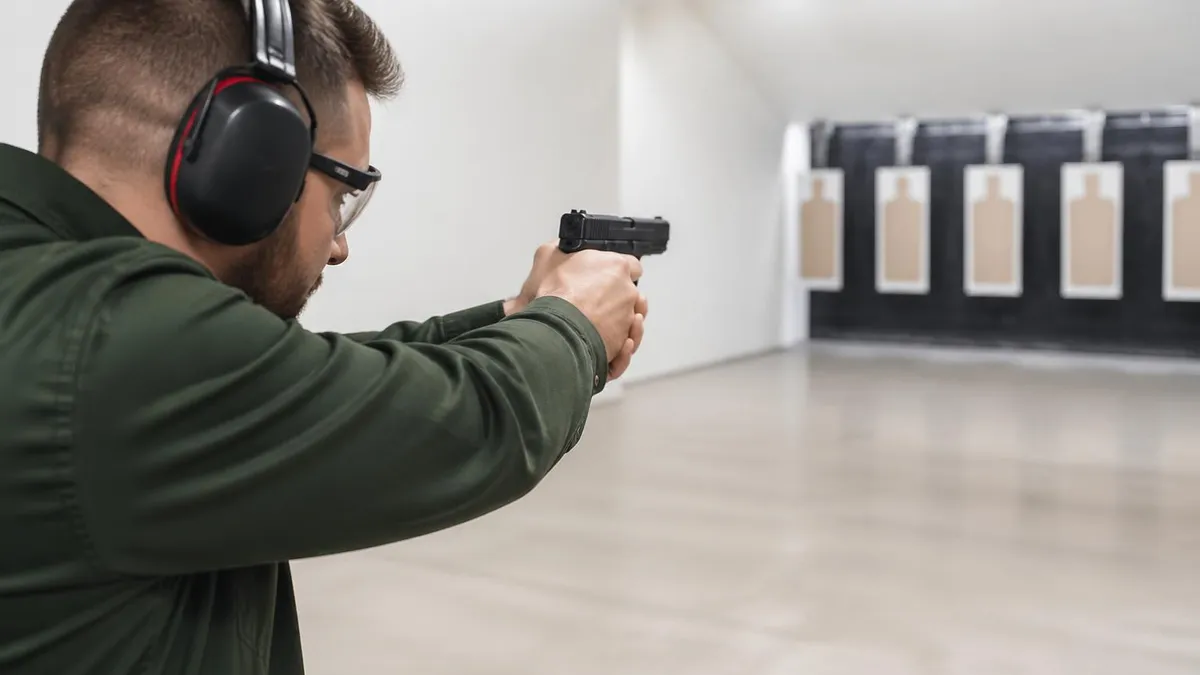
FSC Study Guide: California Firearm Safety Certificate Complete Prep
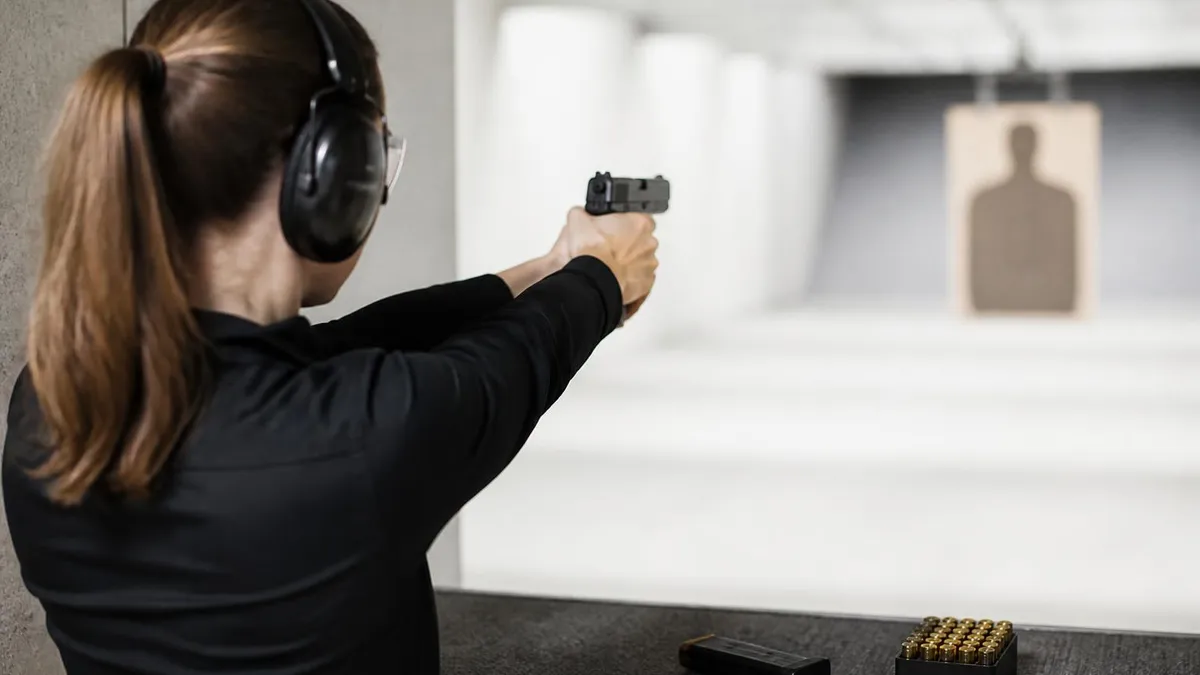
What Does FSC Stand For? FSC Meaning in Firearms
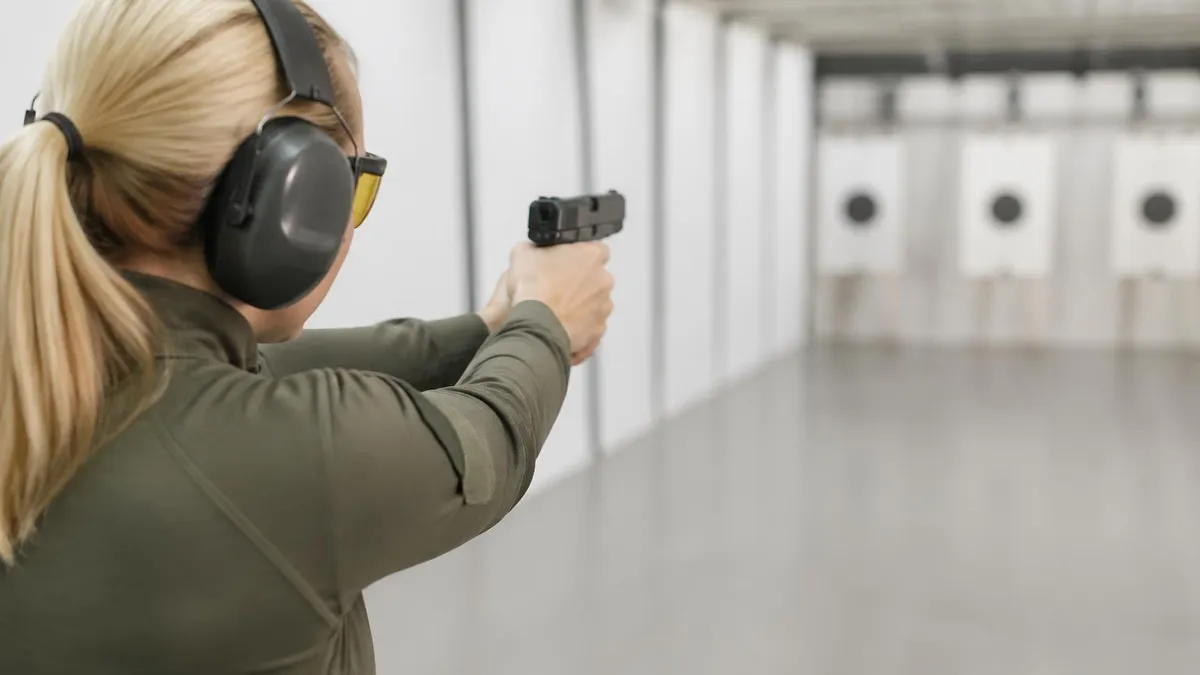
California FSC Practice Test: Free Questions and Complete Prep Guide
About the Author

Educational Psychologist & Academic Test Preparation Expert
Columbia University Teachers CollegeDr. Lisa Patel holds a Doctorate in Education from Columbia University Teachers College and has spent 17 years researching standardized test design and academic assessment. She has developed preparation programs for SAT, ACT, GRE, LSAT, UCAT, and numerous professional licensing exams, helping students of all backgrounds achieve their target scores.
Join the Discussion
Connect with other students preparing for this exam. Share tips, ask questions, and get advice from people who have been there.
View discussion (7 replies)