
FSC Certificate Verification: Complete Guide to Your California Firearm Safety Certificate
Master the FSC cert check process with our complete guide. Practice tests, study tips & verification steps for your California firearm safety certificate. ✅

If you need to complete an FSC cert check or prepare for the firearm safety certificate exam in California, understanding exactly what the process requires can save you time, stress, and money. The Firearm Safety Certificate — commonly called the FSC — is a mandatory credential for purchasing most firearms in California, and verifying its status is something both buyers and dealers need to handle correctly. Whether you are a first-time buyer or a returning gun owner whose certificate has lapsed, this guide covers every aspect of the verification and preparation process from start to finish.
The California Firearm Safety Certificate program was established to ensure that every firearm purchaser demonstrates a baseline level of knowledge about safe handling, storage, and legal responsibilities. Before you walk into a licensed dealer, it pays to understand what an fsc practice test looks like, how the exam is scored, and what documentation you will receive upon passing. Dealers are required by law to inspect a valid FSC before transferring most handguns and many long guns, which means your certificate needs to be current and legible every time you make a purchase.
One of the most common questions new buyers ask is whether their certificate is still valid after a period of time away from the firearm purchase process. FSC certificates issued in California are valid for five years from the date of issuance. After that window closes, you will need to retake the written test and pay the applicable fee to obtain a new certificate. Keeping track of your expiration date is straightforward — the date is printed directly on the card — but many gun owners lose track after years have passed since their last purchase.
Verification works differently depending on who is doing the checking. Licensed dealers in California have access to the California Department of Justice (DOJ) Dealer Record of Sale (DROS) system, which allows them to cross-reference certificate numbers against the official database. Private individuals cannot access this system directly, but they can confirm the physical details on the card itself — the certificate number, the holder's name, and the expiration date — to make sure nothing looks altered or fraudulent. If you suspect a certificate may be counterfeit, reporting it to the DOJ or local law enforcement is the appropriate step.
Preparing for the written test is the most effective way to guarantee a smooth FSC cert check experience on purchase day. The exam consists of 30 multiple-choice questions drawn from the California DOJ's official FSC booklet, and you must answer at least 23 correctly — a 77 percent passing score — to earn your certificate. Topics range from safe storage requirements and handling procedures to the specific laws governing transportation of firearms in California. A solid firearm safety certificate study guide will walk you through each topic area systematically so that nothing catches you off guard on test day.
Many test-takers underestimate the breadth of legal knowledge the exam covers. Questions about who may lawfully possess a firearm, prohibited person categories, and required waiting periods appear regularly. Other questions probe your understanding of the three rules of safe gun handling, proper storage to prevent access by children, and what to do if a firearm malfunctions. Reviewing these areas thoroughly before your appointment with a licensed instructor — the only person authorized to administer the FSC exam — will give you a decisive advantage and reduce the likelihood of needing to retest.
This guide is organized to take you from basic certificate verification all the way through advanced exam preparation strategies. You will find a breakdown of the exam format, study schedules, practice quiz links, a full checklist of what to bring on test day, and answers to the questions California gun buyers ask most often. Bookmark this page and return to it as your exam date approaches — consistent review is the single best predictor of first-attempt success.
California FSC by the Numbers
Key Facts at a Glance
| Item | Value | Details |
|---|---|---|
| Exam Questions | 30 | Multiple choice format |
| Passing Score | 77% | 23 out of 30 correct |
| Certificate Validity | 5 Years | From date of issuance |
| Exam Fee | $25 | Paid to licensed instructor |
FSC Exam Format & Structure
| Section | Questions | Time | Weight | Notes |
|---|---|---|---|---|
| Safe Handling & Operation | 10 | ~10 min | 33% | Loading, unloading, malfunction procedures |
| Safe Storage & Children | 8 | ~8 min | 27% | Locking devices, preventing unauthorized access |
| California Firearms Laws | 7 | ~7 min | 23% | Prohibited persons, waiting periods, transport rules |
| Preventing Accidents & Theft | 5 | ~5 min | 17% | Safe storage, reporting theft, four rules of safety |
| Total | 30 | Untimed (typical 20-30 min) | 100% |
Understanding what the california firearm safety certificate exam actually covers in depth is the foundation of effective preparation. The California DOJ publishes an official study booklet — available in print from licensed instructors and as a downloadable PDF from the DOJ website — that contains every concept, law, and safety principle the exam draws from. Serious test-takers read this booklet at least twice before sitting for the exam, taking notes on rules they find counterintuitive or difficult to remember.
The safe handling section of the FSC exam focuses on the mechanical basics of firearm operation and the habits that prevent accidents. Questions in this section ask you to identify the correct way to check whether a firearm is loaded, describe the proper direction to point a firearm while checking, and explain what to do if a cartridge fails to fire.
The four fundamental rules of firearm safety — treat every firearm as loaded, never point it at anything you are not willing to destroy, keep your finger off the trigger until ready to shoot, and know your target and what is beyond it — appear directly or indirectly across multiple questions.
The safe storage and children category is weighted heavily because California law takes child access prevention seriously. Questions in this area probe your knowledge of which storage devices are approved as safe storage, what constitutes leaving a firearm in a place accessible to a minor, and the criminal penalties a gun owner faces if a child gains access to an improperly stored firearm and harm results. The California Penal Code defines specific lock requirements, and many test-takers are surprised to discover how strict these standards are compared to the informal storage habits they may have grown up observing.
California firearms law questions cover a surprisingly broad range of topics given that they occupy fewer than a quarter of the exam. You will encounter questions about the mandatory ten-day waiting period for all firearm purchases, the definition of a prohibited person under California law, the rules for transporting firearms in a vehicle, and what happens if a firearm is lost or stolen. Knowing the difference between a handgun and a long gun for regulatory purposes also comes up, as does the definition of assault weapons and certain magazine capacity restrictions.
The theft and accident prevention segment brings together concepts from the other three areas to test your practical judgment. A typical question in this category might describe a scenario — a loaded firearm left on a kitchen counter while guests arrive — and ask what the firearm owner should have done differently. Scenario-based questions tend to trip up test-takers who have memorized rules in isolation but have not practiced applying them to real-world situations. This is precisely where fsc practice test questions add value: they expose you to the scenario format under low-stakes conditions before the real exam.
Licensed instructors who administer the FSC exam are spread throughout California, typically at licensed firearms dealers. You do not need to purchase anything from a dealer to take the exam there; the $25 fee covers the administration of the test and the issuance of your certificate upon passing. Some instructors offer the test by appointment only, while others run walk-in sessions during business hours. Calling ahead to confirm availability and any documentation requirements — such as a valid government-issued photo ID — is always a smart move before making the trip.
After you pass the exam, the instructor issues your physical FSC card on the spot. This card is your proof of compliance and must be presented to any dealer when you purchase a firearm subject to the FSC requirement. Keep it in a safe, easily accessible location — a wallet or firearm purchase folder works well — and make a note of the expiration date so you can plan to renew before it lapses. Losing the physical card means contacting the DOJ to request a replacement, a process that can take several weeks and may delay an upcoming purchase.
Firearm Safety Certificate Quiz Strategies by Topic
Safe handling questions test whether you can apply the four fundamental safety rules to practical scenarios. When studying, practice visualizing each rule in a real setting — imagine holding a firearm and walking through each step out loud. Pay close attention to questions about muzzle direction, trigger discipline, and the correct procedure for clearing a malfunction. These procedural questions reward test-takers who have internalized the rules rather than simply memorized them as abstract statements.
A common mistake is confusing the unloading procedure for semi-automatic pistols with that for revolvers. The FSC exam may present both in scenario form and ask which step comes first. For semi-automatics, removing the magazine before clearing the chamber is the standard sequence — but many beginners reverse this. Practice quiz questions that simulate these scenarios will build the muscle memory you need to answer correctly under exam pressure without second-guessing yourself at the last moment.
FSC Practice Tests vs. Reading the Study Booklet Alone
- +Practice tests expose you to the exact question format used on the real FSC exam
- +Immediate feedback on wrong answers helps you fix misconceptions before test day
- +Scenario-based questions build applied judgment, not just rote memorization
- +Timed practice sessions simulate exam conditions and reduce test anxiety
- +Repeated exposure to high-frequency topics reinforces retention over days of study
- +Free online practice tests let you study anywhere without scheduling a session
- −Practice tests alone may miss obscure topics if the question bank is too narrow
- −Without the study booklet, you may not understand why an answer is correct
- −Over-reliance on practice tests can create false confidence if the questions are too easy
- −Some free practice tests online contain outdated or inaccurate information
- −Practice questions cannot replicate every nuance of the official DOJ exam wording
- −Skipping the study booklet means missing diagrams and examples that clarify storage rules
FSC Test Day Checklist — What to Bring and Do
- ✓Bring a valid, unexpired government-issued photo ID (driver's license, passport, or state ID card).
- ✓Confirm the testing location accepts walk-ins or bring your appointment confirmation if required.
- ✓Arrive at least 15 minutes early to complete any dealer paperwork before the exam begins.
- ✓Bring exact change or an accepted payment method for the $25 FSC exam fee.
- ✓Review the four fundamental rules of firearm safety one final time the morning of the exam.
- ✓Mentally rehearse the correct unloading sequence for both semi-automatic pistols and revolvers.
- ✓Re-read the California transportation rules — unloaded, locked container, separate from ammunition.
- ✓Review child access prevention penalties and the definition of an approved firearm safety device.
- ✓Bring a pen or pencil in case the instructor requires written responses on any intake form.
- ✓After passing, store your FSC card in a secure, memorable location and note the expiration date.

The Most Common Reason Test-Takers Fail: Skipping Scenario Questions
Most FSC exam failures come not from forgetting facts, but from misreading scenario-based questions. The exam presents a situation and asks what the firearm owner should have done — and the correct answer often hinges on a single legal detail, such as whether the container was locked or the firearm was loaded. Practicing with scenario-format questions before test day is the single highest-use study activity you can do in your final 48 hours of preparation.
The FSC certificate verification process matters most at the moment of purchase, but understanding how to confirm your certificate's validity before you arrive at the dealer can prevent frustrating delays. The simplest self-check is to locate your physical card and confirm that the expiration date has not passed.
California FSC cards display the issue date and expiration date in plain text — a certificate issued on July 11, 2021, for example, expires on July 11, 2026. If you are within 90 days of expiration, it is worth scheduling a renewal exam before making any planned purchases so that you do not run out of time mid-transaction.
If you have lost your FSC card, you will need to contact the California Department of Justice Firearms Division to request a replacement or determine whether your record can be retrieved. The DOJ maintains a database of issued certificates, and licensed dealers can query this system through the DROS process.
However, private individuals cannot look up their own certificate status through a public portal — you must either locate the physical card or contact the DOJ directly. Processing times for replacement documentation can range from a few days to several weeks depending on current DOJ workload, so do not wait until the last minute before a planned purchase.
For the california firearms safety certificate renewal process, the procedure is essentially identical to the initial certification. You must locate a licensed instructor, pay the $25 fee, and pass the 30-question exam with a score of at least 77 percent. There is no renewal exam that is easier or shorter than the original — California treats each FSC issuance as a fresh demonstration of knowledge. This is by design: firearm laws and safety standards evolve over time, and the renewal requirement ensures that long-term gun owners stay current with any statutory changes that have occurred since their previous certification.
One situation that causes confusion is the question of whether an FSC is required for every firearm purchase or only for handguns. Under current California law, the FSC requirement applies to all handgun purchases and to most semiautomatic centerfire rifle purchases.
Long guns that do not fall into the semiautomatic centerfire category may be exempt in some circumstances, but the safest assumption is that you will need a valid FSC for any firearm purchase at a California licensed dealer. When in doubt, call the dealer in advance and ask — they will confirm whether the specific firearm you intend to purchase requires a valid certificate.
Military and law enforcement personnel have specific exemptions and accommodations under California firearms law, but these do not eliminate the FSC requirement for civilian purchases made outside of official duty channels. Similarly, private-party transfers conducted through a licensed dealer — which are required for most firearm transfers in California — still require the receiving party to present a valid FSC before the transfer is completed. Understanding these rules in advance prevents surprises on the day you plan to pick up a transferred firearm from a friend or family member.
For buyers who are preparing to purchase their first firearm and have never held a certificate before, the timeline from study to purchase can be compressed significantly with the right resources. Reading the DOJ study booklet once, completing two or three sets of practice questions, and reviewing the answers to any missed questions is a realistic one-week preparation plan for most adults.
The exam itself takes most test-takers between 15 and 25 minutes to complete. Once you pass, the instructor issues your certificate immediately, and you can proceed with your DROS application at the same dealer the same day if the firearm you want is in stock.
If you are searching for a firearm safety certificate near me, the California DOJ website maintains a searchable list of licensed instructors by county. Most populated areas of California have multiple licensed instructors within a reasonable driving distance, and urban areas like Los Angeles, San Diego, and the San Francisco Bay Area have dozens of options.
Rural counties may have fewer instructors, making it important to call ahead and confirm hours before making a long drive. Some instructors also serve multiple locations on a rotating schedule, so asking about upcoming visit dates to a location closer to you is always worth the phone call.
If your FSC expires between the time you initiate a DROS application and the time the ten-day waiting period ends, the dealer cannot legally complete the transfer. Always verify your certificate's expiration date before starting any firearm purchase, and renew at least 30 days in advance if expiration is approaching. A lapsed certificate means restarting the entire purchase process from the beginning, including a new DROS fee.
Advanced preparation for the FSC exam goes beyond reading the booklet and taking a practice quiz once. The test-takers who consistently pass on their first attempt share a set of study habits that are worth adopting regardless of how confident you feel heading into the exam.
Chief among these is active recall — the practice of testing yourself on material rather than simply re-reading it. Every time you flip through the DOJ booklet, close it after each section and try to summarize the key rules from memory before moving on. This technique has been shown repeatedly in cognitive science research to produce stronger retention than passive reading alone.
Spacing out your study sessions over multiple days rather than cramming the night before also pays significant dividends. The human brain consolidates memories during sleep, which means that studying for 30 minutes on each of three consecutive days produces better long-term retention than 90 minutes of studying on a single evening. Given that the FSC exam covers a mixture of procedural rules, legal definitions, and scenario applications, distributed practice gives each category of information time to solidify before you layer the next one on top of it.
One area where many self-studiers underinvest is the legal definitions section. The California Penal Code uses precise language that sometimes differs meaningfully from everyday usage. The word "loaded," for instance, has a specific legal definition that includes having ammunition in the magazine even if no round is chambered — a distinction that matters enormously when answering transportation questions.
Similarly, the definition of a "minor" in the context of child access prevention laws follows California's standard age threshold of under 18, but questions about when certain safety devices are legally required may reference different age benchmarks depending on the specific statute involved.
Practice tests work best when you treat wrong answers as learning opportunities rather than discouraging setbacks. After each quiz session, review every question you answered incorrectly and trace the error back to its source — was it a misreading of the question, a gap in your knowledge of the underlying rule, or confusion between two similar concepts? Categorizing your errors this way allows you to build a targeted list of weak areas to revisit before the next session, rather than simply repeating the same broad-coverage quiz and hoping for improvement through repetition alone.
The night before your exam, resist the temptation to cram new material. Instead, do a light review of your weak-area notes and then get a full night of sleep. Cognitive performance on multiple-choice exams is meaningfully affected by sleep deprivation — tired test-takers misread questions more frequently, second-guess correct first instincts, and struggle to retrieve information they have successfully memorized. Arriving at the exam well-rested and having eaten a normal meal will put you in the best possible physiological state to demonstrate the knowledge you have worked to build.
On the day of the exam, read each question completely before looking at the answer choices. Many FSC exam questions include qualifiers — "which of the following is NOT correct," or "which storage method satisfies California law" — that fundamentally change what a correct answer looks like. Skimming to the answer choices before fully processing the question stem is the fastest route to choosing a plausible-sounding wrong answer. Slow, careful reading of each question takes only a few extra seconds per item but prevents the most common category of avoidable mistakes on the FSC exam.
After you receive your certificate, the relationship between preparation and the FSC does not end. California firearm laws are amended periodically by the legislature, and staying current with any changes that affect storage requirements, prohibited person categories, or transportation rules is part of being a responsible gun owner.
Bookmarking the California DOJ Firearms Division website and checking it annually for updates is a lightweight habit that ensures your knowledge stays as current as your certificate. The five-year renewal cycle provides a formal checkpoint, but responsible owners do not wait five years to revisit the rules that govern safe and legal firearm ownership in California.
Practical preparation strategies for the FSC exam extend beyond solo study sessions. Many licensed instructors offer informal group study sessions or informational seminars at their dealerships before scheduled exam dates. These sessions provide an opportunity to ask questions about confusing topics, hear common misconceptions corrected in real time, and connect with other first-time buyers who are navigating the same process. If your local instructor offers this option, it is worth attending even if you feel well-prepared — the questions other students ask often illuminate angles of the material you had not considered.
Another practical tip is to read the California DOJ FSC booklet in both English and, if applicable, your primary language. The DOJ publishes the official study material in multiple languages, including Spanish. If English is not your strongest language and you are preparing in English, switching to the translated booklet for your review sessions can help you grasp nuances that may be obscured when reading in a second language. The exam itself is administered in English, but building conceptual understanding in your strongest language first makes it much easier to answer questions accurately in translation.
When it comes to practice questions, quality matters more than quantity. A set of 30 well-written, accurately sourced practice questions that mirror the DOJ exam's format and difficulty level is more valuable than 200 questions assembled from unreliable sources.
Before committing to a practice resource, check whether the questions align with the current version of the California DOJ FSC booklet — laws and regulations do change, and outdated practice material can teach you rules that are no longer accurate. PracticeTestGeeks.com updates its FSC question bank regularly to reflect current California law, making it a reliable preparation resource for both initial certification and renewal.
The physical logistics of the exam day are worth planning carefully. Most licensed instructors require you to present your photo ID before the exam begins and will not administer the test without it. If your ID has an address different from your current residence — for example, if you recently moved and have not yet updated your driver's license — bring a secondary document that confirms your current address, such as a utility bill or bank statement.
While California law does not require your ID address to match your current residence for FSC purposes, some instructors have their own administrative policies, and calling ahead eliminates uncertainty.
After passing the exam and receiving your FSC card, the next immediate step is the DROS application if you plan to purchase a firearm that day. DROS stands for Dealer Record of Sale, and it is the state's background check and waiting period initiation system.
The dealer will enter your information — including your FSC number — into the DROS system, collect the DROS fee (currently $31.19), and submit the application. The mandatory ten-day waiting period begins on the date and time the DROS is submitted. You cannot pick up the firearm until both the ten-day period has elapsed and the DOJ has approved the transfer.
Understanding the full sequence from study to purchase helps you plan realistically for when you will have your firearm in hand. Allowing three weeks from when you start studying to when you plan to complete your purchase gives you one week to study, one day for the exam, and ten days for the mandatory waiting period.
This timeline assumes you pass on your first attempt and that the specific firearm you want is in stock at the dealer where you take your exam. Building a small buffer into your timeline — especially if your purchase is for a planned activity like a hunting season opener — is always prudent.
The FSC program ultimately serves a protective function that most California gun owners come to appreciate once they understand the stakes. Firearm accidents and unauthorized access by children are among the most preventable categories of gun-related harm, and the FSC exam ensures that every new buyer has at least been exposed to the knowledge needed to prevent them. Approaching the exam not as a bureaucratic hurdle but as an opportunity to genuinely internalize lifesaving practices will make you a safer firearm owner — and a more confident one on exam day.
Sample Firearm Safety Certificate (FSC) Practice Questions
Try these questions from our free Firearm Safety Certificate (FSC) practice tests. The correct answer and an explanation follow each question.
At what minimum age may a person purchase a handgun from a licensed dealer in California?
- A. 18
- B. 19
- C. 20
- D. 21
Answer: D. 21
California law requires purchasers to be at least 21 years old to buy a handgun from a licensed dealer.
What is 'brandishing' a firearm in California?
- A. Displaying a firearm at a licensed gun show
- B. Drawing or exhibiting a firearm in a threatening manner
- C. Carrying a firearm in a locked case
- D. Showing a firearm to a licensed dealer for appraisal
Answer: B. Drawing or exhibiting a firearm in a threatening manner
Brandishing is drawing or exhibiting a firearm in a rude, angry, or threatening manner and is a misdemeanor or felony depending on circumstances.
Under what circumstance should you fire a warning shot in California?
- A. When confronting an intruder to discourage them without harming them
- B. Warning shots are generally not recommended or legally justified — every bullet fired must be accounted for, and a warning shot creates uncontrolled risk to others
- C. Only as a last resort before deadly force
- D. When you are legally carrying a firearm and feel threatened
Answer: B. Warning shots are generally not recommended or legally justified — every bullet fired must be accounted for, and a warning shot creates uncontrolled risk to others
Warning shots are generally discouraged by law enforcement and legal experts. Every round fired must be accounted for — a warning shot fired into the air will come down somewhere; one fired into the ground can ricochet. Legally, discharging a firearm in a populated area is itself a crime in California unless justified, and warning shots rarely meet the justification standard.
When an individual purchases a firearm from a licensed dealer in California, what is the mandatory waiting period before they can take possession of the firearm?
- A. 72 hours
- B. 10 days
- C. 30 days
- D. There is no waiting period.
Answer: B. 10 days
California law generally requires a 10-day waiting period for all firearm purchases, during which the Department of Justice (DOJ) conducts a background check. This applies to both handguns and long guns.
Take the full Firearm Safety Certificate (FSC) practice test
FSC Questions and Answers

How Do I Renew My Firearm Safety Certificate? Complete California FSC Renewal Guide
FSC Study Guide: California Firearm Safety Certificate Complete Prep
What Does FSC Stand For? FSC Meaning in Firearms
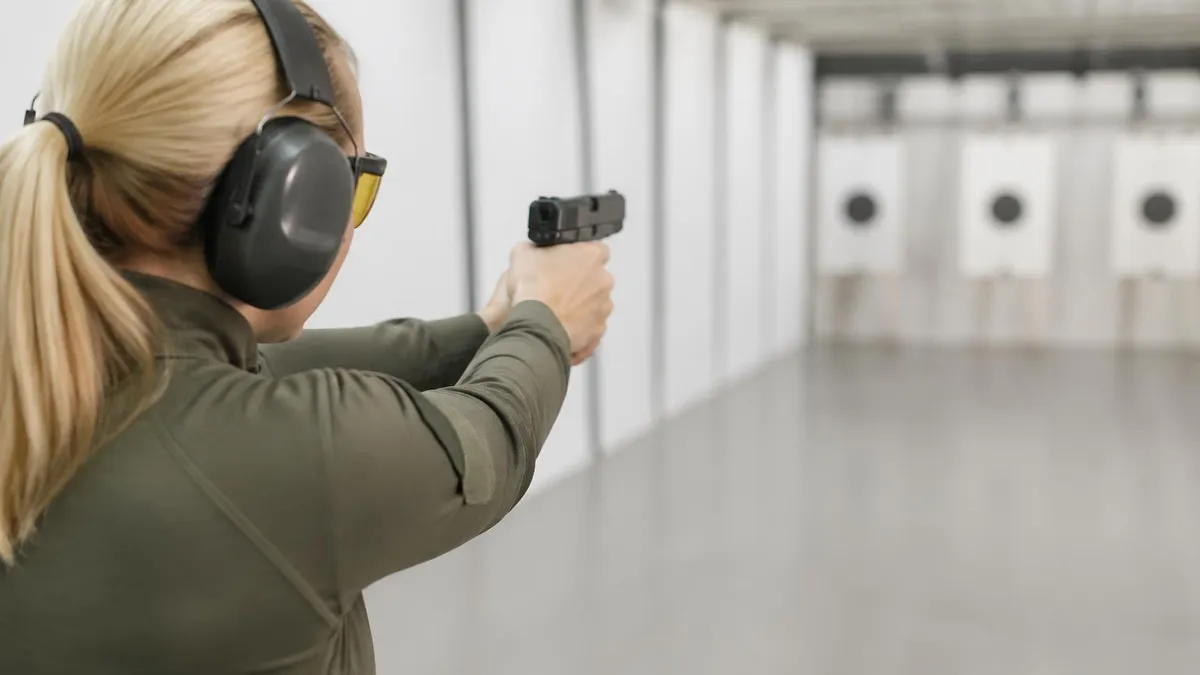
California FSC Practice Test: Free Questions and Complete Prep Guide

Where to Get Your FSC in California: Complete Firearm Safety Certificate Guide
About the Author

Educational Psychologist & Academic Test Preparation Expert
Columbia University Teachers CollegeDr. Lisa Patel holds a Doctorate in Education from Columbia University Teachers College and has spent 17 years researching standardized test design and academic assessment. She has developed preparation programs for SAT, ACT, GRE, LSAT, UCAT, and numerous professional licensing exams, helping students of all backgrounds achieve their target scores.
Join the Discussion
Connect with other students preparing for this exam. Share tips, ask questions, and get advice from people who have been there.
View discussion (7 replies)