
Firefighter Skills: Complete Guide to Core Competencies, Training & Career Success
Master essential firefighter skills — salary facts, how to become a firefighter, physical & technical requirements. 🏆 Full US career guide.
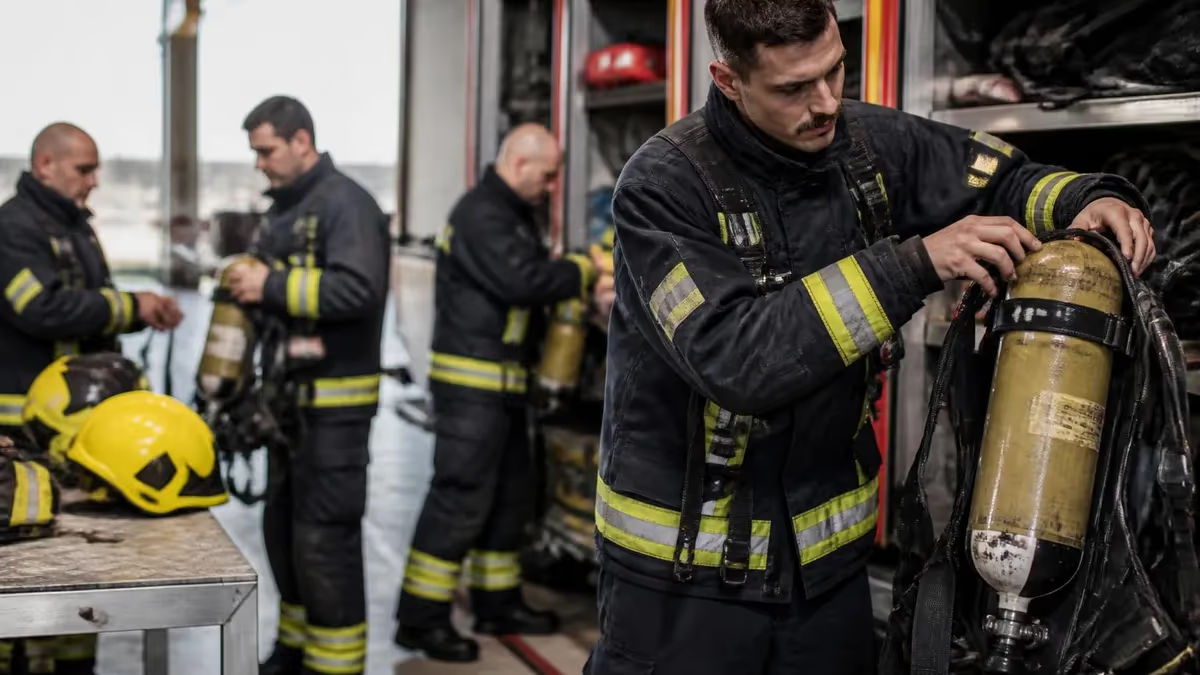
Firefighter skills form the backbone of one of the most demanding and respected careers in public service. Whether you are drawn to the profession by recent headlines like the tragic idaho firefighter shooting that reminded the nation of the dangers first responders face every day, or by a lifelong passion for community protection, understanding exactly what skills you need is the essential first step. From physical fitness and technical rescue operations to medical response and hazmat management, the modern firefighter must be a master of many disciplines simultaneously.
The physical demands placed on firefighters are extraordinary. Candidates must be able to carry heavy equipment up multiple flights of stairs, drag unconscious victims through smoke-filled corridors, and operate hydraulic rescue tools — all while wearing gear that weighs upward of 50 pounds and breathing through a self-contained breathing apparatus. The Candidate Physical Ability Test (CPAT) is specifically designed to screen for this baseline level of physical readiness, and departments across the United States use it as a standardized benchmark. Training for these demands requires months of disciplined preparation before even applying.
Beyond raw physical strength, firefighters must possess a sophisticated array of cognitive and technical skills. Building construction knowledge is critical because a firefighter who does not understand how a wood-frame structure behaves differently from a steel-reinforced concrete building during a fire may make a fatal decision about where to advance a hose line or whether to enter a compromised structure. Emergency medical care skills are equally vital — the majority of 911 calls that fire departments respond to are medical emergencies, not structure fires, making EMT or paramedic certification nearly as important as fire suppression training in most jurisdictions.
Communication skills are often underestimated by candidates who focus exclusively on physical preparation. Firefighters must relay complex information quickly and clearly on the radio under extreme stress, follow orders from incident commanders without hesitation, and coordinate seamlessly with law enforcement and emergency medical services during multi-agency responses. The kind of coordinated response required during something like a swat firefight scenario — where police and fire must operate in the same dangerous environment — demands crystal-clear communication protocols and mutual trust between agencies.
Mechanical aptitude and problem-solving ability set excellent firefighters apart from average ones. Every fire scene is unique, and no two rescues unfold identically. A firefighter must assess a rapidly changing environment, identify the most effective tools and techniques for the situation, and adapt when initial plans fail. This creative problem-solving ability, combined with deep technical knowledge of fire behavior, hydraulics, ventilation principles, and rescue systems, is what allows experienced firefighters to make life-saving decisions in seconds.
Leadership and teamwork skills are developed over years of service but must be cultivated from day one in the academy. Firefighting is an inherently team-based activity — no single person can safely advance a hose line into a structure fire, perform a roof ventilation cut, and monitor for structural collapse simultaneously. Understanding how to function effectively within a crew, support your officer's decisions, and eventually lead your own team is a career-long journey that begins with your very first shift as a probie.
For those exploring how to become a firefighter, this guide covers every essential skill category you need to master, from the physical standards tested at the academy to the soft skills that determine who gets promoted to captain and beyond. Read on to discover what hiring departments are actually looking for and how to position yourself as the strongest possible candidate in a highly competitive field.
Firefighter Career by the Numbers
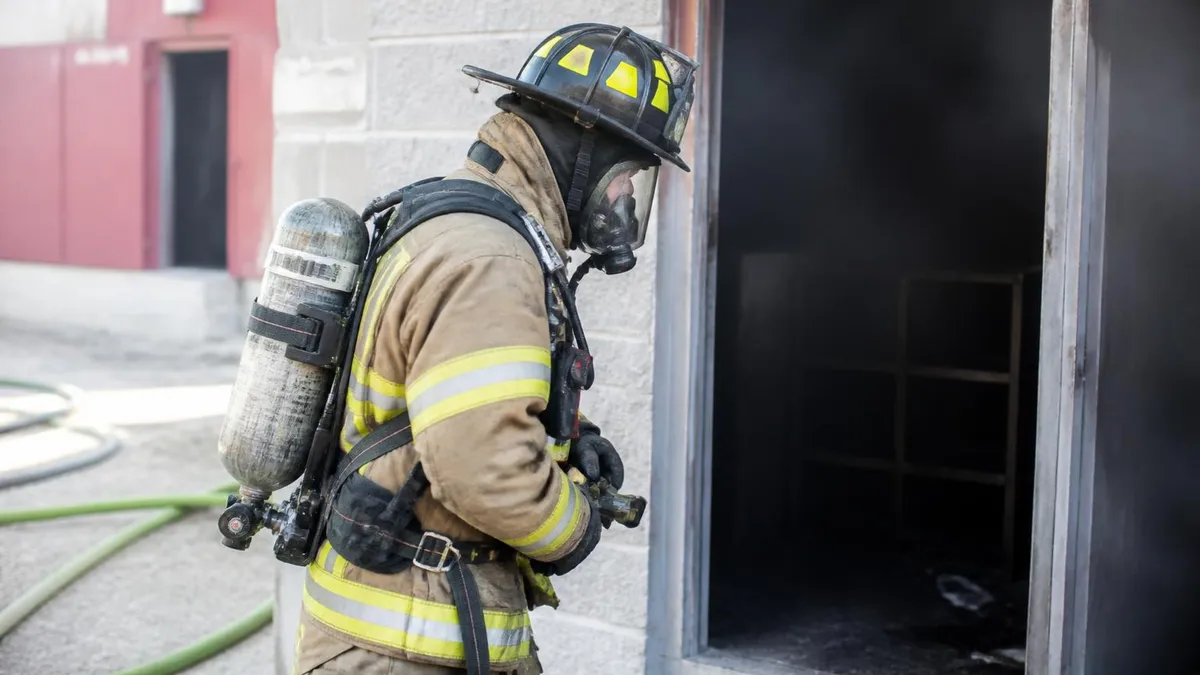
Core Firefighter Skill Categories
Mastering hose advancement, nozzle techniques, water supply calculations, and pump operations is fundamental. Firefighters must understand friction loss, flow rates, and how to effectively knock down fires in residential, commercial, and industrial settings.
Most departments require at minimum an EMT-Basic certification. Firefighters respond to cardiac arrests, traumatic injuries, overdoses, and pediatric emergencies. Advanced departments require paramedic-level skills including IV therapy, intubation, and medication administration.
Rope rescue, confined space rescue, trench rescue, and structural collapse response require specialized training beyond basic firefighting. FEMA and NFPA standards govern these disciplines, and many departments fund specialized team memberships for qualified personnel.
Hazmat awareness and operations-level training is required for most career firefighters. Recognizing chemical, biological, radiological, and nuclear hazards and understanding decontamination procedures protects both the public and first responder crews on scene.
Understanding how Type I through Type V building construction responds to fire determines tactical decisions like ventilation timing, hose line placement, and safe operating zones. This knowledge is tested extensively on written firefighter exams nationwide.
When candidates ask about firefighter salary, the answer varies significantly based on location, department size, rank, and whether the position is career or volunteer. The Bureau of Labor Statistics reports a national median salary of approximately $64,000 per year for career firefighters, but this figure masks enormous geographic variation. Firefighters in California, New York, and New Jersey routinely earn $80,000 to $120,000 annually including base pay, overtime, and benefits, while firefighters in rural Southern and Midwestern states may earn $35,000 to $45,000 in the same role.
Understanding how much do firefighters make requires looking beyond the base salary to total compensation packages. Most career firefighter positions include exceptionally generous benefits that substantially increase total compensation. Defined-benefit pension plans, which have become increasingly rare in the private sector, remain standard in most municipal fire departments. A firefighter who serves 25 years may retire at 50% to 75% of their final salary for life. Add in fully-paid health insurance coverage for the firefighter and their family, and the total compensation package can easily exceed $100,000 annually even for firefighters earning a $60,000 base.
Overtime pay is another major component of firefighter compensation that newcomers often overlook. The Fair Labor Standards Act's Section 207(k) exemption allows fire departments to calculate overtime differently than standard employers, but most firefighters still accumulate significant overtime hours, particularly those working at busy urban stations. A firefighter earning $65,000 in base pay may realistically earn $80,000 to $90,000 in a high-call-volume year once overtime is factored in. Specialty pay for hazmat certification, paramedic licensure, and technical rescue team membership can add another $3,000 to $10,000 on top of that base.
Rank and seniority drive salary progression throughout a firefighter's career. Most departments have clearly defined pay steps that increase automatically with years of service, regardless of performance, up to a top-of-the-scale rate typically reached after 5 to 10 years. Promotion to Engineer or Driver/Operator, Lieutenant, Captain, Battalion Chief, and beyond each brings additional compensation. The salary gap between a new recruit and a Battalion Chief with 20 years of service is typically 80% to 120%, creating strong long-term financial incentives for career advancement.
Geographic cost-of-living adjustments mean that raw salary figures can be misleading when comparing departments across different regions. A firefighter earning $75,000 in a rural Midwestern department may actually have higher purchasing power than a colleague earning $95,000 in the San Francisco Bay Area. When evaluating a department's compensation offer, candidates should research local housing costs, state income tax rates, and cost of living indices alongside the stated salary figures to get a true picture of financial attractiveness.
Federal firefighters working for agencies like the US Forest Service and Bureau of Land Management follow the General Schedule (GS) pay system, which is entirely separate from municipal pay structures. Federal wildland firefighters have received significant salary increases in recent years following advocacy efforts and legislative action, with starting salaries now beginning around GS-5 level ($35,000 to $40,000) with rapid advancement potential. The federal system also offers different benefit structures including the Federal Employees Retirement System (FERS) and Thrift Savings Plan matching, which appeals to candidates who value portability over the richness of traditional municipal pensions.
Volunteer firefighter compensation is a complex topic that varies enormously by jurisdiction. True volunteers receive no pay for their service, but many departments classified as volunteer or combination departments pay per-call stipends ranging from $5 to $25 per response, annual stipends of $1,000 to $5,000, or LOSAP (Length of Service Award Programs) retirement benefits. Some states also offer property tax exemptions, college tuition assistance, and workers' compensation coverage for volunteers, making service financially meaningful even without traditional wages.
How to Become a Firefighter: Training & Certification Paths
Fire academy programs typically run 12 to 20 weeks for career firefighters and cover NFPA 1001 Firefighter I and II standards. Recruits train in live fire evolutions, search and rescue, ventilation, salvage and overhaul, and ladder operations. Physical conditioning is integrated throughout, with candidates expected to meet progressively demanding fitness benchmarks as training advances. Failure to meet academy standards results in termination from the program.
Most municipalities run their own academies, though some regions operate regional training centers shared by multiple departments. The curriculum blends classroom instruction covering fire chemistry, building construction, hydraulics, and emergency medical theory with extensive hands-on practical skills sessions. Written examinations at each module test cognitive retention while practical evaluations assess safe and effective tool and equipment use. Graduating recruits typically receive Firefighter I and II certifications recognized statewide.
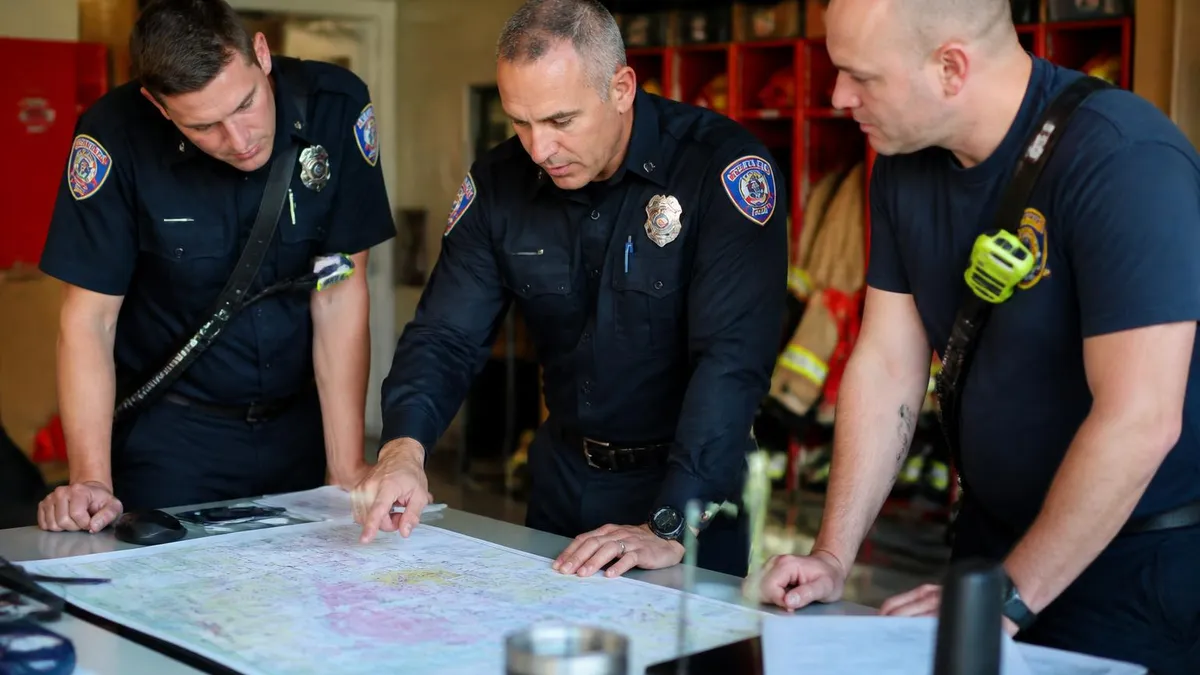
Career Firefighting vs. Volunteer Firefighting: Key Differences
- +Career firefighters receive competitive salaries with strong pension and benefit packages
- +Full-time training and professional development opportunities are employer-funded
- +Consistent shift schedules provide predictable work-life structure despite unusual hours
- +Access to specialized equipment, apparatus, and technical rescue teams
- +Union representation in most departments provides grievance procedures and negotiated contracts
- +Clear promotional pathway from Firefighter through Captain to Chief Officer level
- −Entry is extremely competitive — some departments receive 1,000+ applications for 10 openings
- −Physical and medical standards are rigorous and disqualify many otherwise qualified candidates
- −Shift work including nights, weekends, and holidays disrupts family and social life
- −Cumulative exposure to trauma, toxic combustion products, and occupational carcinogens poses long-term health risks
- −Geographic limitations — desirable departments may require relocation to high cost-of-living areas
- −Probationary periods of 12 to 18 months leave new hires vulnerable to termination without cause
Pros and Cons at a Glance
| Pros | Cons |
|---|---|
| Career firefighters receive competitive salaries with strong pension and benefit packages | Physical and medical standards are rigorous and disqualify many otherwise qualified candidates |
| Full-time training and professional development opportunities are employer-funded | Shift work including nights, weekends, and holidays disrupts family and social life |
| Consistent shift schedules provide predictable work-life structure despite unusual hours | Cumulative exposure to trauma, toxic combustion products, and occupational carcinogens poses long-term health risks |
| Access to specialized equipment, apparatus, and technical rescue teams | Geographic limitations — desirable departments may require relocation to high cost-of-living areas |
Firefighter Skills Checklist: Are You Ready to Apply?
- ✓Complete a minimum of 6 months of structured cardiovascular and strength training before the CPAT
- ✓Obtain EMT-Basic certification from an accredited program before submitting applications
- ✓Study NFPA 1001 Firefighter I and II standards to understand what academy will require
- ✓Practice the written firefighter exam covering mechanical aptitude, reading comprehension, and spatial reasoning
- ✓Earn Firefighter I certification through a community college or fire academy program if available
- ✓Volunteer with a local fire department or EMS agency to gain documented emergency response experience
- ✓Develop proficiency with basic firefighting tools including irons, hooks, saws, and hoselines
- ✓Complete ICS-100 and ICS-200 online courses through FEMA's Emergency Management Institute
- ✓Build a clean background and driving record — criminal history and moving violations are automatic disqualifiers
- ✓Practice structured oral interview techniques including STAR-format behavioral response examples
The Written Exam Is as Important as the Physical Test
Many candidates focus exclusively on physical preparation while neglecting the written examination, yet written test scores often determine whether you advance past initial screening. Top departments in competitive markets like Los Angeles and Chicago use written exam scores to rank thousands of applicants — a single percentile point can mean the difference between getting a call to the physical agility test or waiting for the next hiring cycle, which may be three to five years away.
The volunteer firefighter pathway offers an accessible entry point into the fire service and is the primary model serving roughly 70% of US communities by geography. Volunteer departments protect small towns, rural areas, and suburban communities that cannot justify the taxpayer cost of full-time staffing. Volunteers typically respond from home or work when their pager or phone alert sounds, assembling at the station within minutes to staff apparatus and respond to emergencies. The availability, dedication, and skill of volunteer members directly determines the quality of emergency response their neighbors receive.
Training requirements for volunteers have increased substantially over the past two decades. Where volunteers were once expected to show up and learn on the job, modern fire service standards require volunteers to complete the same NFPA 1001 Firefighter I and II curriculum as their career counterparts in most states. The delivery model differs — volunteers complete this training over weekends and evenings spanning several months rather than in full-time academies — but the content and certification standards are identical. This trend toward standardization benefits both the volunteers and the communities they protect.
Combination departments, which employ a core of career firefighters supplemented by volunteers, represent a growing model that attempts to capture the cost efficiency of volunteerism while ensuring consistent around-the-clock coverage. In combination departments, career staff typically cover daytime weekday hours when volunteer availability is lowest, while volunteers provide the surge capacity needed for major incidents and can backfill coverage during nights and weekends. The organizational dynamics between career and volunteer members in combination departments require skilled leadership to manage effectively.
The recruitment and retention crisis in volunteer fire service has reached critical proportions in many regions of the United States. The National Volunteer Fire Council reports that the volunteer firefighter population has declined by roughly 50% since the 1970s, when approximately 300,000 career firefighters served alongside 1.5 million volunteers. Today, many rural departments struggle to maintain enough active members to staff a single engine company, leading some communities to consolidate departments, contract with neighboring jurisdictions, or transition to paid staff at significant taxpayer expense.
Green firefighter programs — aimed at new recruits who are just entering the fire service — have proliferated across state fire training systems as departments work to attract and retain the next generation of firefighters. These programs often feature accelerated training tracks, mentorship pairings with experienced members, and stipend programs that partially compensate volunteers for their training time investment. Some states have enacted college tuition assistance programs specifically for volunteer firefighters as a recruitment incentive, recognizing that financial support is a meaningful draw for young adults choosing between service and other pursuits.
The firefighter costume and public image of the profession play an interesting role in recruitment psychology. The iconic turnout gear, the gleaming apparatus, and the cultural archetype of the firefighter as heroic rescuer attract enormous numbers of candidates to initial information sessions, but the actual work of recruiting involves converting interest into committed action. Departments that invest in open houses, ride-along programs, and junior firefighter companies consistently outperform those relying on passive recruitment in building strong volunteer membership bases.
Mental health and peer support programs have emerged as critical components of both career and volunteer fire service culture. Firefighters face cumulative exposure to traumatic events including pediatric fatalities, mass casualty incidents, and the deaths of colleagues — as vividly illustrated by the devastating firefighters shot in Idaho incident that shook the entire fire service community nationwide. Progressive departments now invest in critical incident stress management, peer support teams, employee assistance programs, and mental health days specifically designed to help firefighters process trauma and maintain long-term psychological wellness alongside their physical fitness.
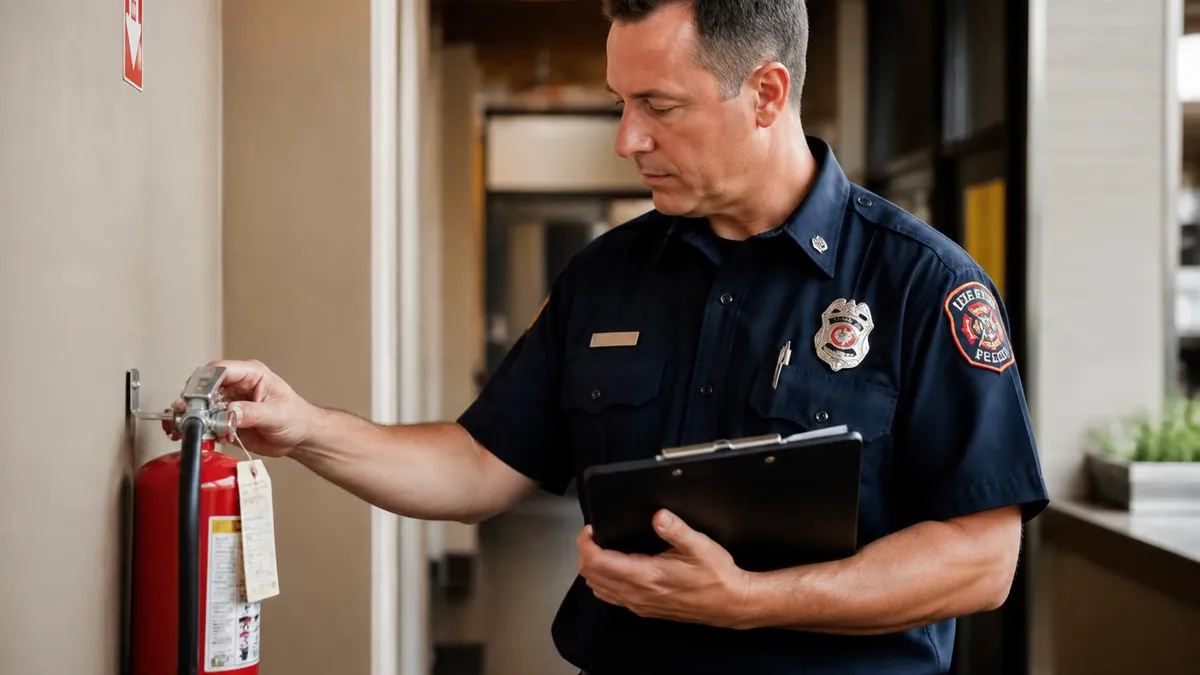
Most fire departments conduct thorough background investigations that include criminal history checks, credit checks, social media reviews, drug testing, and polygraph examinations. Felony convictions are universally disqualifying. Misdemeanor convictions, past drug use, excessive debt, or a history of dishonesty can disqualify candidates even years after the incident. Be prepared to disclose your complete history accurately — investigators will discover discrepancies, and dishonesty during the background process is often considered more disqualifying than the underlying issue itself.
Advancing your firefighter career beyond the entry level requires a deliberate strategy that combines operational excellence, academic preparation, and political awareness within your organization. Promotional processes vary widely between departments, but most combine some mix of written examination, oral board interview, personnel record review, and assessment center exercises. Understanding exactly how your department's promotional system works — and beginning to prepare for it years before you are eligible — is the hallmark of an ambitious firefighter with leadership potential.
Educational credentials have become increasingly important for firefighter promotion at the officer and chief officer levels. While a high school diploma or GED remains the formal minimum for entry-level positions in most departments, a significant percentage of candidates hold associate or bachelor's degrees — and departments promoting to upper management frequently prefer or require a fire science, emergency management, or business administration degree. The National Fire Academy's Executive Fire Officer Program is the gold standard for fire service leadership development and is completed over four years through a combination of residential coursework and applied research projects.
The role of physical fitness in career longevity cannot be overstated. Firefighters who maintain elite fitness throughout their careers experience fewer injuries, recover faster when injuries do occur, and perform at higher levels during the physically demanding tasks that define emergency response. Departments that implement mandatory annual physical fitness testing and offer on-duty time for fitness activities see dramatically lower workers' compensation costs and higher member retention. For the individual firefighter, a commitment to lifelong physical wellness is both a professional obligation and a personal investment in a long, healthy post-retirement life.
Technical expertise in specialized areas creates opportunities for lateral advancement and career diversification. Firefighters who develop deep expertise in hazmat response, technical rescue, wildland firefighting, or fire investigation open doors to assignment in specialized units, regional task forces, and federal response teams that offer expanded professional experiences and sometimes enhanced compensation. The FEMA Urban Search and Rescue (USAR) system, for example, fields 28 national task forces staffed by career firefighters who deploy to major domestic and international disaster responses — an assignment that requires specialized certification and represents a meaningful career milestone.
Mentorship relationships with senior firefighters and officers accelerate career development in ways that formal training programs cannot replicate. A mentor can share institutional knowledge about how decisions get made, introduce a junior firefighter to key stakeholders, provide candid feedback about professional blind spots, and advocate for opportunities that might otherwise pass unnoticed. Finding a mentor requires intentionality — most senior firefighters respond positively to direct, respectful requests for guidance from junior members who demonstrate genuine commitment and initiative in their daily work.
Networking beyond your own department through state fire associations, the International Association of Fire Chiefs (IAFC), the International Association of Fire Fighters (IAFF), and regional mutual aid organizations builds professional relationships that open doors throughout a career. Fire service is a remarkably small professional community in which reputation travels quickly — being known as reliable, skilled, and professional among peers across jurisdictions creates opportunity when leadership positions open at other departments or when specialty team slots are advertised regionally.
The written examination remains the central gatekeeper at every stage of the firefighter career from initial hiring through chief officer selection. Whether you are preparing for your first firefighter written exam or studying for a battalion chief promotional test, the fundamentals are the same: systematic study of relevant standards and textbooks, practice testing under timed conditions, identification and remediation of knowledge gaps, and consistent review until mastery is achieved. Online practice resources, including the comprehensive materials available at PracticeTestGeeks, provide the structured repetition needed to build both knowledge and test-taking confidence before examination day.
Practical preparation for the firefighter exam and academy requires a structured approach that addresses both knowledge acquisition and test-taking strategy simultaneously. Many candidates make the mistake of reading textbooks linearly without actively testing their retention, only to discover during the exam that passive reading created an illusion of understanding that did not translate to reliable recall under pressure. Active learning strategies — self-testing with flashcards, working through practice questions, teaching concepts to others, and writing summaries from memory — produce dramatically better long-term retention than passive reading alone.
Building construction knowledge is one of the highest-yield study areas for the firefighter written examination because it is tested heavily, has significant practical implications for firefighter safety, and requires memorization of specific classification criteria that many candidates find difficult to distinguish. The five construction types defined by NFPA 220 — Type I (fire resistive), Type II (non-combustible), Type III (ordinary), Type IV (heavy timber), and Type V (wood frame) — each have distinct structural characteristics, expected fire behavior patterns, and tactical implications that must be thoroughly understood rather than superficially memorized.
Emergency medical care content on firefighter exams tests candidates' knowledge of patient assessment, respiratory emergencies, cardiac arrest management, trauma, shock, and pediatric emergencies. Candidates who hold active EMT certification have a significant advantage on this portion of the exam because they have already mastered the cognitive content and can confirm understanding through clinical and field experience. Candidates without EMT certification should consider enrolling in an EMT course before their target exam date, as the dual benefit of exam preparation and operational credential makes the investment highly worthwhile.
Time management during the written examination is a skill that requires deliberate practice. Most firefighter written exams allocate 2 to 3 hours for 100 to 150 questions, giving candidates approximately 60 to 90 seconds per question. Candidates who have never practiced under timed conditions often discover during the actual exam that anxiety slows their processing speed significantly, leading to rushed final sections and poor performance on questions they actually knew well. Completing full-length timed practice exams under realistic conditions — quiet room, no distractions, strict time limits — is the best possible preparation for the real examination environment.
The oral board interview component of firefighter hiring deserves as much preparation as the written exam. Oral boards typically feature a three to five person panel including fire officers, HR representatives, and sometimes community members who score candidates on a standardized rubric covering communication skills, judgment, motivation, and professional demeanor. Common question categories include behavioral questions about past experience, situational questions about how you would handle hypothetical fire service scenarios, and motivational questions about why you want to serve this specific department. Preparing structured STAR-format responses (Situation, Task, Action, Result) for likely question categories dramatically improves performance.
Physical preparation for the CPAT should begin at least 6 months before your target test date, with 12 months being ideal for candidates who are not already in excellent cardiovascular condition. The CPAT consists of eight events — stair climb, hose drag, equipment carry, ladder raise and extension, forcible entry, search, rescue, and ceiling breach and pull — each of which requires a combination of cardiovascular endurance, upper body strength, grip strength, and functional movement competency.
Working with a CPAT-specific training program that simulates the weighted vest and event sequence produces better results than general fitness training that does not account for the specific demands of the test.
Consistency and long-term commitment separate candidates who succeed in firefighter hiring from those who give up when they face rejection. Statistical reality is that the most competitive departments in the country hire classes once every 2 to 5 years and select only a tiny fraction of applicants.
A candidate who applies to multiple departments simultaneously, continues developing skills and certifications between testing cycles, and treats each rejection as diagnostic feedback rather than a final verdict dramatically improves their overall probability of ultimately succeeding. The firefighters who ultimately get hired are not always the most naturally gifted candidates — they are the ones who wanted it enough to keep preparing and applying.
Sample Firefighter Practice Questions
Try these questions from our free Firefighter practice tests. The correct answer and an explanation follow each question.
You're working on a project that requires skills you don't have. You'll need assistance from coworkers who have the necessary abilities. How would you approach these employees in order to collaborate?
- A. Seek about other team members' opinions on the best course of action.
- B. Make a thorough examination of all the variables at play and take decisive action.
- C. Fail to act in any way.
- D. Without hesitation, take action.
Answer: A. Seek about other team members' opinions on the best course of action.
When collaborating and needing assistance, the most effective approach is to engage coworkers by asking for their input and expertise. This demonstrates respect for their skills and fosters a collaborative environment, leading to better solutions. Simply taking decisive action or failing to act would be counterproductive and not leverage the team's collective knowledge.
Specialized knowledge, skills, and equipment used to safely resolve unusual and/or complex rescue situations?
- A. Technical rescue
- B. Discipline specific
- C. Situational awareness
- D. Strategic Plan
Answer: A. Technical rescue
Technical rescue refers to specialized operations that go beyond standard firefighting or EMS responses, requiring advanced training, unique skills, and specialized equipment. These situations include confined space rescue, trench rescue, high-angle rescue, and structural collapse. Such incidents demand a higher level of expertise to safely resolve complex and unusual rescue situations where conventional methods are insufficient.
What is the recommended action if turnout gear becomes contaminated with hazardous chemicals?
- A. Continue wearing it until shift ends
- B. Decontaminate or remove it from service
- C. Spray it with water and reuse immediately
- D. Store it in the apparatus cab
Answer: B. Decontaminate or remove it from service
Contaminated gear must be decontaminated or taken out of service to prevent exposure.
The components of personal protective equipment must be compatible with one another. Each component is intended to safeguard you against a certain _____.
- A. Hazard
- B. Problem
- C. Stress
- D. Barrier
Answer: A. Hazard
Personal Protective Equipment (PPE) is designed as a system where each component serves a specific purpose in protecting the wearer. Each piece of PPE, whether a helmet, gloves, or turnout gear, is engineered to mitigate a particular type of hazard, such as heat, impact, cuts, or chemical exposure. This ensures comprehensive safety when all components are used correctly and are compatible with one another.
Firefighter Questions and Answers

Firefighter CPAT Test: Complete Guide to Passing the Candidate Physical Ability Test
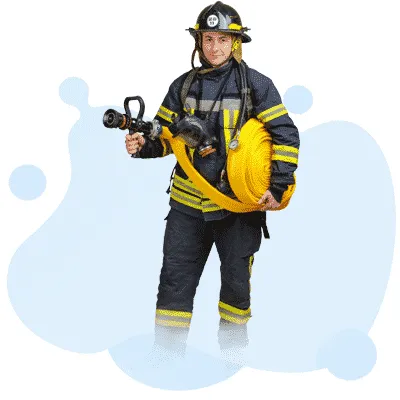
What is the Firefighter Exam?

Online Firefighter Training: Complete Guide to Courses, Certification & Career Prep
Firefighter Video Questions and Answers

Training Props for Firefighters: Complete Guide to Simulation Equipment & Career Prep
About the Author
Emergency Manager & FEMA Certification Specialist
Naval Postgraduate SchoolCommander Lisa Foster holds a Master of Science in Emergency Management from the Naval Postgraduate School and is a FEMA-certified emergency manager and Certified Emergency Manager (CEM). With 18 years of emergency response coordination experience across federal and state agencies, she coaches emergency management professionals through ICS, NIMS, and FEMA Independent Study certification programs.
Join the Discussion
Connect with other students preparing for this exam. Share tips, ask questions, and get advice from people who have been there.
View discussion (6 replies)