
How Can You Pass Your Driving Test: The Complete UK Guide 2026 September
Learn how can you pass your driving test first time. Expert tips on theory, hazard perception, and practical skills for UK learners. 🎯
Understanding how can you pass your driving test is the first step every UK learner needs to take seriously. The DVSA driving test is a two-part process — a theory test and a practical driving test — and both require dedicated preparation, genuine understanding of the Highway Code, and consistent practice behind the wheel. Thousands of learners sit their tests each month across the UK, yet the first-time pass rate hovers around 47%, which means more than half of candidates fail on their first attempt. With the right strategy, you can avoid becoming part of that statistic.
The theory test itself consists of 50 multiple-choice questions drawn from topics including road signs, rules of the road, vehicle safety, and environmental responsibility. You need to score at least 43 out of 50 to pass. Alongside the multiple-choice section, you must also complete a hazard perception section involving 14 video clips, scoring at least 44 out of 75. Both sections must be passed in the same sitting. Many learners underestimate the hazard perception element and lose vital marks through over-clicking or slow reactions, so targeted practice on this component is essential.
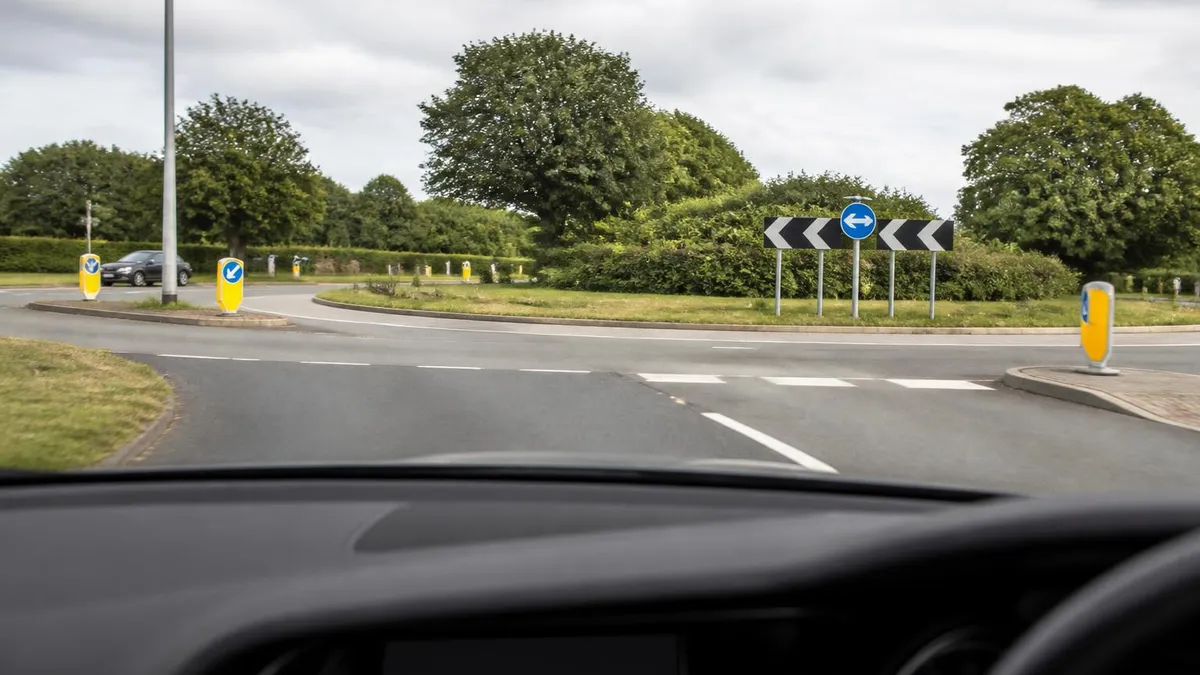
Once you have cleared the theory test, you can focus entirely on the practical. The practical driving test lasts around 40 minutes and assesses your ability to drive safely and independently. An examiner will observe how you manage junctions, roundabouts, dual carriageways, and residential streets. You are also asked to perform one of three vehicle safety questions — the 'show me, tell me' routine — before setting off. If you want to find out more about booking and preparing, check out our guide on how to pass driving test preparation and booking steps.
One of the biggest mistakes candidates make is treating the driving test as a performance rather than a demonstration of habitual safe driving. Examiners are not looking for robotic perfection; they want to see that you can handle real-world traffic situations sensibly and with confidence. This means your mirror checks should be natural and consistent, your speed choices should reflect the road conditions rather than just the posted limit, and your positioning should be correct for every manoeuvre from the moment you pull away from the test centre.
Preparation for the driving test should be systematic. A structured programme of lessons with an approved driving instructor (ADI) gives you the foundation, but private practice with a supervising driver is equally important for building confidence and mileage. Many instructors recommend at least 45 hours of professional tuition supplemented by 22 hours of private practice, though individual needs vary considerably. The key is to ensure that every hour of practice is purposeful — not just driving around familiar routes on autopilot, but actively challenging yourself with new roads, varying weather conditions, and different times of day.
Revision materials have never been more accessible. Official DVSA resources, reputable practice test websites, and dedicated smartphone apps all allow you to work through mock theory questions at your own pace. Using these tools regularly in the weeks leading up to your theory test significantly improves your recall under exam conditions. Spreading revision over several weeks rather than cramming the night before produces far better long-term retention and reduces test-day anxiety. Aim to complete at least five full mock tests under timed conditions before booking your real theory test appointment.
Finally, understanding the common reasons for failure gives you a clear roadmap for what to prioritise during your preparation. Not making effective use of mirrors, incorrect speed on approach to hazards, poor positioning, and failure to act on traffic signals are consistently cited by DVSA examiners as the top causes of test failure. By studying these patterns and practising specific corrections in your lessons, you can give yourself a significant advantage before you even arrive at the test centre.
UK Driving Test by the Numbers
Step-by-Step Path to Passing Your Driving Test
Meet the Eligibility Requirements
Study and Pass the Theory Test
Build Your Practical Driving Skills
Book and Prepare for the Practical Test
Pass Your Practical Driving Test
Receive Your Full Driving Licence
Preparing effectively for the DVSA theory test demands more than casual reading of the Highway Code. The test draws questions from a bank covering fourteen topic areas, including alertness, attitude, safety and your vehicle, safety margins, hazard awareness, vulnerable road users, other types of vehicle, vehicle handling, motorway rules, rules of the road, road and traffic signs, documents, accidents, and vehicle loading.
Each area carries equal importance, and gaps in knowledge about any single topic can cost you the marks needed to pass. A systematic approach — working through each topic area in sequence before moving to full mock tests — is far more effective than random revision.
The multiple-choice section of the theory test is delivered on a touchscreen computer at an official DVSA test centre. You have 57 minutes to answer 50 questions, which gives you just over a minute per question. In practice, most candidates finish well within the time limit, but it is important to read each question carefully and consider all four answer options before selecting your response. Some questions are deliberately worded to catch out candidates who rely on keywords rather than reading the full scenario. Practising with high-quality mock questions trains you to read carefully and think critically rather than pattern-matching.
Hazard perception is the section most commonly underestimated by learners. The 14 video clips each show a real driving scenario filmed from the driver's perspective, and your task is to click the mouse whenever you spot a developing hazard — something that would cause a driver to change speed or direction.
One clip contains two scoreable hazards. Timing is everything: the earlier you identify a genuine hazard, the higher your score for that clip, with a maximum of five points per hazard. However, clicking randomly or repeatedly in a short window triggers a zero score for that clip, as the system detects cheating patterns.
To improve your hazard perception score, watch each clip as if you are the driver. Scan constantly — check mirrors, junctions ahead, parked vehicles, pedestrian crossings, and blind spots. Hazards typically develop over several seconds, so look for early warning signs: a pedestrian stepping towards the kerb, a vehicle pulling out from a side road, a cyclist wobbling ahead. Official DVSA hazard perception practice clips are available online and are the best preparation tool, as they use the same filming style and scoring methodology as the real test.
Booking your theory test strategically can also reduce anxiety. Choose a test centre that is convenient and familiar, and book for a time of day when you are naturally alert and focused. Test centres are typically open Monday to Saturday, and appointment slots are often available within two to three weeks at most locations, though demand increases around school holiday periods and at popular urban centres. Bring both parts of your provisional licence — the photocard and, if applicable, the paper counterpart — along with your booking confirmation.
On the day of your theory test, arrive at least fifteen minutes early to allow time to check in and settle your nerves. You will be asked to store all personal belongings in a locker before entering the testing room. The invigilator will explain the format and give you a brief tutorial on the computer system before your test begins. You are allowed to flag questions for review and return to them before submitting, which is a useful strategy if you encounter any questions you are unsure about on first reading.
After passing the theory test, your certificate is valid for two years. This means you must pass your practical driving test within that two-year window, or you will need to sit the theory test again. Most candidates book their practical test within six to twelve months of passing the theory, once their driving skills have reached test standard. If your theory certificate is approaching its expiry and you have not yet passed the practical, prioritise booking your practical test as soon as possible to avoid the additional cost and time of retaking the theory.
DVSA Practice Test Questions
Prepare for the DVSA - UK Driving Theory Test exam with our free practice test modules. Each quiz covers key topics to help you pass on your first try.
DVSA Eco-Friendly Driving and Vehicle Loading
DVSA Exam Questions covering Eco-Friendly Driving and Vehicle Loading. Master DVSA Test concepts for certification prep.
DVSA Hazard Awareness
Free DVSA Practice Test featuring Hazard Awareness. Improve your DVSA Exam score with mock test prep.
DVSA Incidents, Accidents and First Aid
DVSA Mock Exam on Incidents, Accidents and First Aid. DVSA Study Guide questions to pass on your first try.
DVSA Motorway Rules and Smart Motorways
DVSA Test Prep for Motorway Rules and Smart Motorways. Practice DVSA Quiz questions and boost your score.
DVSA Rules of the Road (Highway Code)
DVSA Questions and Answers on Rules of the Road (Highway Code). Free DVSA practice for exam readiness.
DVSA - UK Driving Theory Hazard Awareness ...
DVSA Mock Test covering - UK Driving Theory Hazard Awareness and Perception. Online DVSA Test practice with instant feedback.
DVSA - UK Driving Theory Motorway Rules an...
Free DVSA Quiz on - UK Driving Theory Motorway Rules and Regulations. DVSA Exam prep questions with detailed explanations.
DVSA - UK Driving Theory Road and Traffic ...
DVSA Practice Questions for - UK Driving Theory Road and Traffic Signs. Build confidence for your DVSA certification exam.
DVSA - UK Driving Theory Rules of the Road
DVSA Test Online for - UK Driving Theory Rules of the Road. Free practice with instant results and feedback.
Key Skills for Passing the Practical Driving Test
Developing strong hazard awareness on real roads is fundamentally different from the video-based theory test component. On the practical test, examiners observe whether you identify and respond to developing hazards in good time — adjusting your speed early, positioning your vehicle correctly, and making smooth, progressive decisions rather than late, sharp reactions. Practise scanning junctions, monitoring parked vehicles for opening doors, and reading pedestrian behaviour at crossings. Commentary driving, where you narrate everything you observe as you drive, is one of the most effective techniques for building this skill rapidly.
Dual carriageways and faster roads require a heightened awareness of relative speeds and safe following distances. The two-second rule is a minimum in dry conditions; in wet weather, double that gap. Examiners also pay attention to how you approach and exit motorway-style slip roads, whether you check your mirrors before every speed change, and whether you maintain appropriate lane discipline throughout. Candidates who struggle with faster roads should specifically request lessons on dual carriageways from their instructor well before their test date, as this is one of the areas where serious faults are most frequently awarded.

Intensive Course vs. Weekly Lessons: Which Is Better for Passing?
- +Weekly lessons allow skills to consolidate between sessions, improving long-term retention
- +Spreading lessons over months gives time for varied weather and road condition experience
- +Regular lessons are typically less expensive per hour than intensive course packages
- +Gradual progression reduces test anxiety by building confidence incrementally
- +More time to address specific weak areas identified by your instructor
- +Better opportunity to accumulate private practice hours alongside professional tuition
- −Weekly lessons take longer overall — typically 6 to 12 months from start to test
- −Skills can deteriorate between widely-spaced lessons if no private practice is done
- −Scheduling conflicts and cancellations can extend the learning timeline significantly
- −Motivation can wane over a long learning period, particularly after a failed test
- −Higher total cost when factoring in test rebooking if the process takes longer than expected
- −Less immersive experience means some learners plateau without the intensity of daily practice
Practical Test Preparation Checklist
- ✓Confirm your theory test certificate is still valid and will not expire before your practical test date
- ✓Bring both your photocard provisional licence and your booking confirmation to the test centre
- ✓Ensure the test vehicle has a valid MOT, up-to-date road tax, and appropriate insurance for a learner driver
- ✓Check that the test car has a working rear-view mirror, functioning horn, and clean windows for good visibility
- ✓Practice the 'show me, tell me' vehicle safety questions until you can answer all 19 confidently
- ✓Complete at least three full mock tests on your local test centre routes with your instructor before the real test
- ✓Practise all three reversing manoeuvres until you can complete each one smoothly and with full observation
- ✓Drive on dual carriageways and faster roads at least five times before your test to build confidence at speed
- ✓Review the most common serious fault categories — junctions, mirrors, signalling, and speed management
- ✓Get a full night's sleep before your test day and avoid scheduling the test during high-stress periods in your life
The Most Failed Manoeuvre Is Not What You Think
Many learners assume parallel parking causes the most test failures, but DVSA data consistently shows that junction errors — particularly emerging without adequate observation — account for far more serious faults. Spend at least a third of your practice time specifically on T-junctions, crossroads, and roundabouts. Getting these right will do more for your pass rate than perfecting any single manoeuvre.
Understanding why candidates fail the driving test is just as instructive as knowing what the pass criteria are. DVSA publishes annual data on the most common serious and dangerous faults, and year after year, the same categories dominate the list. Junctions — specifically emerging without adequate observation — account for the single highest number of serious faults recorded.
Candidates pull forward from side roads and minor junctions without fully clearing the view both ways, or they judge the speed of approaching vehicles incorrectly and cause other drivers to brake or swerve. This is not a knowledge failure; it is a habit failure, and it requires deliberate practice to correct.
Mirror use is the second major area of failure, and it affects candidates at almost every point in the test. The DVSA expects drivers to use the mirror-signal-manoeuvre (MSM) routine consistently throughout the drive. This means checking interior and relevant door mirrors before signalling, before changing speed, before changing direction, and before pulling up.
Many candidates check mirrors at the correct moments in lessons but become inconsistent under the pressure of the test, particularly when navigating unfamiliar roads. The solution is to make mirror checks so automatic that they happen without conscious effort — which only comes from thousands of repetitions across many hours of driving.
Incorrect speed management is consistently in the top five failure reasons. This includes both driving too slowly for the conditions — which can be just as dangerous as speeding — and failing to reduce speed appropriately when approaching hazards, junctions, or pedestrian crossings.
Examiners look for a candidate who understands that the speed limit is a maximum, not a target, and who adjusts speed smoothly and progressively rather than braking sharply at the last moment. Candidates who creep along at 20mph on a clear 40mph road are demonstrating a lack of confidence rather than safe driving, and this can attract as many minor faults as a candidate who approaches too fast.
Signalling errors are another common cause of minor — and occasionally serious — faults. Signals must be given in good time, maintained until the manoeuvre is complete, and cancelled immediately after. Failing to signal when leaving a roundabout, giving a misleading signal that confuses other road users, or signalling too late to be useful to following traffic all count against a candidate.
Conversely, giving unnecessary signals when no other road user could benefit from them is also noted as a fault. The key is to signal whenever it would be useful to communicate your intentions to others, and not to signal as a purely mechanical habit disconnected from the traffic context.
Positioning faults cover a wide range of scenarios, from straddling lane markings on a two-lane road to taking incorrect approach positions at roundabouts. Correct positioning means being in the right lane for your intended direction well in advance of the junction, not cutting corners when turning left, and not crossing the centre line unnecessarily on narrow roads.
Many positioning faults arise from candidates focusing too narrowly on the vehicle immediately ahead rather than reading the road further in the distance — a skill that develops naturally with experience but can be actively trained by asking your instructor to work on forward planning during lessons.
Vehicle control faults — stalling, harsh braking, and jerky steering — are also recorded, particularly at the start of the test when nerves are highest. A stall at a junction or traffic lights is recorded as a minor fault if the candidate recovers quickly and calmly without causing a hazard, and will not automatically fail the test.
However, repeated stalls or stalling in a dangerous position can escalate to a serious fault. Practising clutch control and smooth pull-aways on hills and at traffic lights until they feel entirely natural will minimise the risk of this kind of fault on test day.
One underappreciated failure risk is the response to examiner instructions. If an examiner asks you to turn left at the next junction and you miss it, simply continue safely — do not make a sudden or dangerous turn to correct the mistake. If you pull up in an unsafe location or misunderstand a direction, the examiner will redirect you. These moments can feel catastrophic during the test, but a single navigation error does not cause a fail. Keeping calm, continuing to drive safely, and following the next instruction correctly is the correct response to any minor mishap during the test.
Your DVSA theory test certificate is valid for only two years from the date you passed. If you do not pass your practical driving test within this window, your theory certificate expires and you must sit the theory test again before booking a new practical test. Check your certificate expiry date as soon as you pass, and book your practical test well in advance to avoid this costly delay.
Test day itself requires as much preparation as the weeks of study and practice that precede it. Many candidates who are technically ready to pass fail because of test-day anxiety rather than a lack of driving skill. Managing nerves effectively is therefore a legitimate part of your preparation strategy. In the days before your test, reduce revision intensity and focus on consolidating what you already know rather than trying to learn new material. Cramming new information the night before rarely helps and often increases anxiety by highlighting gaps in knowledge at exactly the wrong moment.
Sleep is a non-negotiable factor in test-day performance. Cognitive functions including reaction time, decision-making, and spatial awareness are all significantly impaired by sleep deprivation, and these are precisely the functions you need to perform well on a driving test. Aim for at least seven to eight hours of sleep the night before. If test anxiety makes it difficult to sleep, focus on relaxation rather than trying to force sleep — lying still and resting has many of the same restorative benefits as light sleep and will leave you far better prepared than staying up to revise.
On the morning of your test, eat a proper breakfast. Driving on an empty stomach can cause light-headedness and reduced concentration, particularly if your test is in the morning or early afternoon. Avoid excessive caffeine, which can amplify anxiety symptoms and cause physical jitteriness that affects fine motor control. Arrive at the test centre with enough time to park, check in, and sit quietly for a few minutes before being called. Rushing to arrive at the last minute creates unnecessary physiological stress that can take twenty minutes to subside — time you do not have to spare.
During the test, focus entirely on your driving rather than trying to evaluate how you are performing. Many candidates make errors worse by dwelling on a fault they think they have just committed, which pulls their attention away from the road ahead and creates a cascade of additional errors.
Treat every junction, every roundabout, and every pedestrian crossing as a fresh opportunity to demonstrate your skills. A single minor fault has no effect whatsoever on your result, and even a cluster of minor faults in the same area does not automatically mean failure — you can accumulate up to 15 minor faults and still pass.
If the examiner asks you to stop at the side of the road during the test, do not assume you have failed. Examiners routinely stop candidates to give instructions for the independent driving section, to carry out a manoeuvre, or to address vehicle-specific issues. Some candidates also experience an examiner stopping the test early in cases of serious or dangerous faults, but this is far less common than stopping for normal test administration. Regardless of the reason, respond calmly, find a safe and legal place to stop, apply the handbrake, and wait for the examiner to speak.
After completing the test route, the examiner will drive back to the test centre and deliver the result. If you pass, they will briefly explain any minor faults recorded and then ask for your licence details to process the pass certificate. If you do not pass, the examiner is required to provide a detailed explanation of every serious or dangerous fault recorded.
Listen carefully to this feedback — it is genuine, professional assessment that will help you prepare more effectively for your next attempt. Most candidates who fail come very close to passing, and targeted work on the specific faults recorded leads to high success rates on subsequent attempts.
For those who want to maximise their chances before test day, working through structured practice tests covering all DVSA theory topics is one of the most effective uses of revision time. Whether you are still preparing for the theory component or consolidating your knowledge while completing practical lessons, regular practice test sessions keep the material fresh and build the exam confidence that reduces test-day anxiety across both components of the driving test.
Building the right mindset for your driving test takes time and deliberate effort. Many learners focus almost exclusively on technical skills — clutch control, steering smoothness, mirror checks — while neglecting the cognitive and attitudinal dimensions of driving that examiners are equally trained to assess. Safe driving attitude means yielding appropriately at junctions even when you technically have priority, slowing for potential hazards before they develop into actual ones, and making decisions that prioritise safety over convenience or speed. This attitude cannot be faked for 40 minutes; it must become your genuine default behind the wheel.
Consistency is the hallmark of a test-ready driver. In lessons, many candidates perform well on familiar roads but become hesitant or erratic on new routes. If you notice this pattern in yourself, ask your instructor to take you to areas of town you have never driven before. The ability to apply your skills confidently on unfamiliar roads is exactly what the independent driving section of the practical test is designed to assess, and building this adaptability during lessons means you are genuinely prepared rather than route-dependent.
Your relationship with your instructor is a significant factor in your test readiness. A good instructor will give you honest, specific feedback after every lesson — not reassurance for its own sake, but precise identification of the areas that still need work. If you feel your instructor is being vague about your progress or avoiding difficult conversations about your weaknesses, raise this directly.
You are investing significant time and money in your driving education, and you deserve candid guidance about where you are in relation to test standard. Most instructors will tell you honestly when you are ready; trust that assessment rather than booking a test prematurely out of impatience.
Mock driving tests are an underused but highly effective tool. Many instructors offer a formal mock test session — a full 40-minute drive assessed exactly as the real test would be, including a manoeuvre and independent driving section — in the weeks before your test date. This experience is invaluable for identifying how your driving changes under assessment conditions versus normal lesson conditions. Candidates who have completed at least one mock test report significantly lower anxiety on their real test day because they know exactly what to expect and have already experienced the format without the consequences of failure.
Post-test reflection is important regardless of whether you pass or fail on your first attempt. If you pass, spend a few minutes reviewing the minor faults recorded with your examiner. Even one or two minors in the same category — say, three mirror-use minors — suggests an area that could become a serious fault in more demanding traffic conditions, and addressing it early makes you a safer driver for life.
If you fail, read the DL25 test report form carefully. This document lists every fault recorded, categorised as minor, serious, or dangerous, and is your roadmap to passing on the next attempt.
The cost of test failure extends beyond the rebooking fee. Candidates who fail typically need additional lessons to address the recorded faults, adding further expense to the overall learning journey. This financial reality is one more reason why thorough preparation before your first test attempt is a sound investment. Research consistently shows that candidates who take the recommended minimum hours of professional tuition have significantly higher pass rates than those who attempt the test with fewer lessons, and the money saved by passing first time more than offsets the cost of those additional preparation hours.
Remember that passing your driving test is not the end of your development as a driver — it is the beginning. New drivers are significantly over-represented in road casualty statistics during the first two years after passing, which is why the DVSA recommends that new drivers consider post-test training such as Pass Plus. This six-module course covers driving in town, in all weathers, on rural roads, at night, on dual carriageways, and on motorways. Completing Pass Plus can also reduce your car insurance premium, making it a practical as well as a safety-conscious choice for newly qualified drivers.
DVSA Questions and Answers
DVLA Theory Test Booking: Complete Step-by-Step Guide for UK Learners
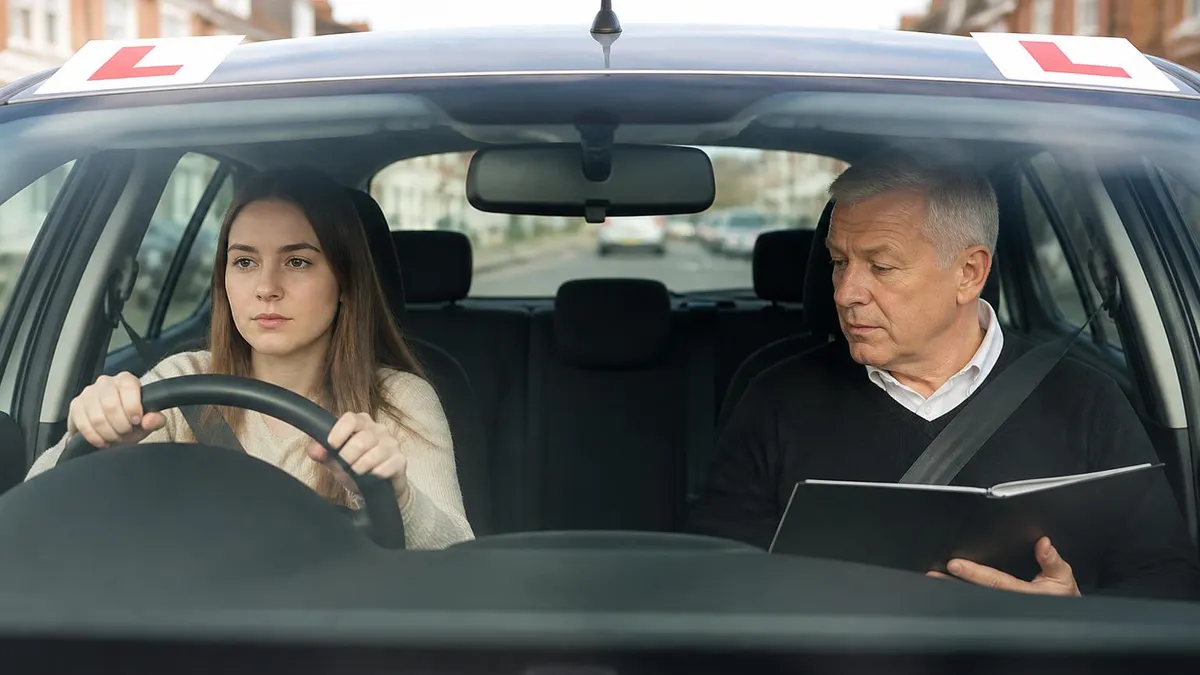
Driving Theory Test App: The Complete Study Guide for UK Learners
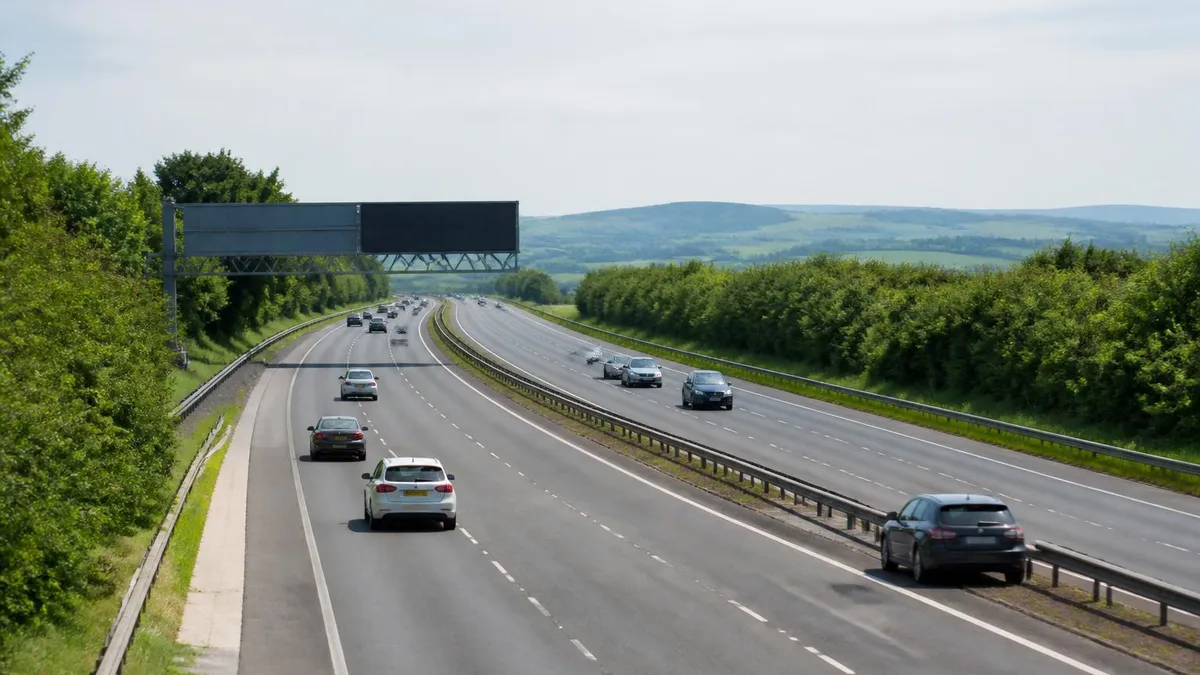
How to Book Your DVSA Practical Driving Test: Complete UK Guide

Learn to Drive in the UK: Complete Beginner's Guide to Getting Your Licence

DVSA Car Practical Test: Complete Guide to Passing First Time
About the Author

Licensed Driving Instructor & DMV Test Specialist
Penn State UniversityRobert J. Williams graduated from Penn State University with a degree in Transportation Management and has spent 20 years as a certified driving instructor and DMV examiner consultant. He has personally coached thousands of applicants through written knowledge tests, skills assessments, and commercial driver licensing programs across more than 30 states.