
Driving Test Date: How to Book, Change, and Prepare for Your DVSA Test
✅ Everything about your driving test date — how to book, reschedule, what to expect, and how to prepare to pass first time in the UK.
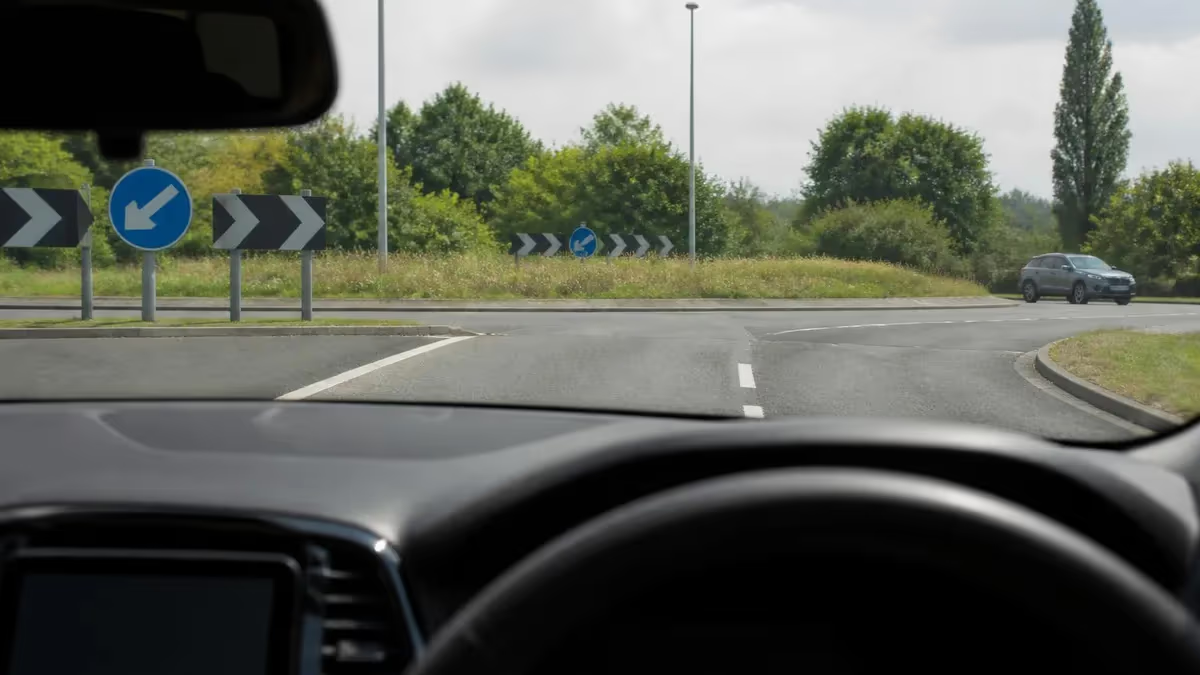
Securing your driving test date is one of the most important milestones on your journey to becoming a licensed driver in the UK. Once you have passed your theory test and completed enough practical lessons, booking a practical test with the Driver and Vehicle Standards Agency (DVSA) is the natural next step. Understanding how the booking system works, what dates are available, and how to choose the right test centre can make a significant difference to your experience and your chances of passing first time.
The DVSA manages all driving test bookings through its official online portal, and demand for test slots is consistently high — especially in urban areas and during school holiday periods. Many learner drivers are surprised to find waiting times of several weeks or even months at popular test centres. Planning ahead and knowing when to book, how early to search for available slots, and whether cancellation services can help you find an earlier date are all essential pieces of knowledge for any serious learner.
Your driving test date is not just an administrative appointment — it is the culmination of many hours of practice, theory study, and road experience. Choosing a date that gives you adequate preparation time is crucial. Booking too early can leave you underprepared and anxious, while booking too late may mean waiting longer than necessary once you feel ready. Most driving instructors recommend booking your practical test once you are consistently passing mock tests and feeling confident on a variety of road types.
One detail many learners overlook is the importance of checking test centre availability across multiple locations. If your nearest centre has a long waiting list, a slightly less convenient centre just a few miles away may have slots available much sooner. The DVSA portal allows you to search by postcode and compare multiple centres, so it is always worth spending a few minutes exploring your options before committing to a booking at the first centre you find.
Understanding the costs involved is also important when planning your driving test date. As of 2025, a weekday practical car test costs £62, while a weekend or bank holiday test costs £75. These fees are non-refundable if you cancel within three clear working days of your test, so timing your booking carefully around your availability and readiness is genuinely important from a financial perspective as well as a preparation perspective.
This guide covers everything you need to know about your driving test date in the UK — from the initial booking process and what documents you need to bring, to strategies for finding earlier slots, what to do if you need to reschedule, and how to make the most of the days leading up to your test. Whether you are booking for the first time or looking for an earlier appointment, the information here will help you navigate the process with confidence.
UK Driving Test by the Numbers

How to Book Your Driving Test Date
Pass Your Theory Test First
Gather Your Details
Visit the DVSA Booking Portal
Choose Your Date and Centre
Pay and Confirm
Changing or cancelling your driving test date is a straightforward process through the DVSA booking portal, but it is essential to understand the rules around timing to avoid losing your test fee. You must give at least three clear working days' notice if you want to reschedule or cancel without financial penalty. Clear working days means that weekends and public holidays do not count, so if your test is on a Thursday, you must make changes by the end of Monday at the latest to avoid forfeiting your fee.
To change your booking, log into the DVSA booking system using your driving licence number and booking reference. You can then select a new date from the available slots, and the system will transfer your booking without any additional charge, provided you are within the permitted cancellation window. If you need to move your test to a different test centre entirely, the same rules apply — the change must be made with sufficient notice and the fee difference for weekday versus weekend slots will be applied automatically.
If you need to cancel entirely and you are within the three clear working days window, you will unfortunately lose your full test fee. The DVSA does make exceptions in cases of genuine emergency, such as serious illness or a bereavement, but these exceptions require supporting documentation and are handled on a case-by-case basis. It is always worth contacting the DVSA directly if you believe your circumstances warrant an exception, as many learners do not realise this option exists.
One useful strategy for securing an earlier driving test date is to use the DVSA's own cancellation checker, which lets you set up alerts for test slots that become available at your preferred centre. When another candidate cancels their appointment, those slots are released back into the system and can be snapped up quickly. Checking the portal frequently — ideally at different times of day — increases your chances of finding an earlier slot without needing to pay for a third-party cancellation service.
Third-party cancellation apps and services do exist and can automate the process of monitoring for available slots, but the DVSA has warned that some services use bot technology that violates the terms of use for the booking system. Before using any such service, check that it operates within DVSA guidelines. The safest approach remains regularly checking the official portal yourself, particularly early in the morning and late in the evening when newly released cancellations tend to appear.
If your circumstances change significantly — for example, your driving instructor identifies a specific weakness that needs more work — it is always better to reschedule proactively than to sit a test you are not ready for. A failed test means paying for a new booking, waiting for another available slot, and dealing with the emotional setback of failure. The time and money spent on an extra few weeks of practice is almost always a better investment than rushing to a test date you have not adequately prepared for.
DVSA Practice Test Questions
Prepare for the DVSA - UK Driving Theory Test exam with our free practice test modules. Each quiz covers key topics to help you pass on your first try.
DVSA Eco-Friendly Driving and Vehicle Loading
DVSA Exam Questions covering Eco-Friendly Driving and Vehicle Loading. Master DVSA Test concepts for certification prep.
DVSA Hazard Awareness
Free DVSA Practice Test featuring Hazard Awareness. Improve your DVSA Exam score with mock test prep.
DVSA Incidents, Accidents and First Aid
DVSA Mock Exam on Incidents, Accidents and First Aid. DVSA Study Guide questions to pass on your first try.
DVSA Motorway Rules and Smart Motorways
DVSA Test Prep for Motorway Rules and Smart Motorways. Practice DVSA Quiz questions and boost your score.
DVSA Rules of the Road (Highway Code)
DVSA Questions and Answers on Rules of the Road (Highway Code). Free DVSA practice for exam readiness.
DVSA - UK Driving Theory Hazard Awareness ...
DVSA Mock Test covering - UK Driving Theory Hazard Awareness and Perception. Online DVSA Test practice with instant feedback.
DVSA - UK Driving Theory Motorway Rules an...
Free DVSA Quiz on - UK Driving Theory Motorway Rules and Regulations. DVSA Exam prep questions with detailed explanations.
DVSA - UK Driving Theory Road and Traffic ...
DVSA Practice Questions for - UK Driving Theory Road and Traffic Signs. Build confidence for your DVSA certification exam.
DVSA - UK Driving Theory Rules of the Road
DVSA Test Online for - UK Driving Theory Rules of the Road. Free practice with instant results and feedback.
Waiting Times and Finding Earlier Test Slots
Waiting times for driving test dates vary enormously across the UK. In major cities like London, Manchester, and Birmingham, candidates can face waits of eight to twelve weeks or more at the busiest test centres. This reflects the high demand for tests in urban areas where large numbers of learners are competing for a limited number of daily test slots at each centre.
In smaller towns and rural areas, waiting times tend to be significantly shorter — sometimes as little as two to three weeks from the date of booking. If you are based near a city but have flexible transport options, it is well worth searching for test centres in neighbouring towns. A drive of twenty to thirty minutes to a less popular centre can cut your waiting time by several weeks, giving you more control over when you sit your test.
Early vs Later Driving Test Date: What Works Best?
- +Booking early reduces anxiety — having a firm date motivates structured practice
- +Earlier dates mean you can start driving independently sooner, saving on lesson costs
- +Booking ahead of peak periods gives you more choice of test centres and times
- +A fixed date encourages you and your instructor to set clear preparation milestones
- +Early booking means you can reschedule if needed without a long wait for a new slot
- +Passing earlier opens up employment and independence opportunities without further delay
- −Booking too early may leave you underprepared and increase the likelihood of failure
- −A failed test costs money — the fee for a new booking plus potential extra lessons
- −Nerves can build the longer you know about a fixed test date, affecting mental preparation
- −Long gaps between booking and test day can lead to skills going stale without regular practice
- −Early slots at peak times may be unavailable, forcing compromises on location or time of day
- −Pressure from a fixed date can cause rushed decision-making during the test itself
Test Day Checklist: Everything You Must Bring and Do
- ✓Bring your valid UK photocard driving licence — both parts if you have an older-style licence with a paper counterpart.
- ✓Carry your theory test pass certificate, as examiners may ask to see it.
- ✓Arrive at the test centre at least ten minutes before your scheduled appointment time.
- ✓Wear comfortable shoes that allow full, unobstructed control of all pedals.
- ✓Ensure your vehicle is roadworthy — valid MOT, current road tax, and working lights and indicators.
- ✓Confirm your car has L-plates displayed front and rear (or D-plates if in Wales).
- ✓Check that you are insured to drive the vehicle being used for the test.
- ✓Let your examiner know about any medical conditions that may be relevant before you start.
- ✓Switch your mobile phone to silent or off before entering the test vehicle.
- ✓Tell your examiner if you need any adjustments due to a disability or learning need.
Over one-third of test failures are caused by just five manoeuvres
According to DVSA data, the most common reasons for failing a practical driving test are not signalling correctly at junctions, failing to observe properly at roundabouts, incorrect mirror use when changing lanes, poor positioning on the road, and not responding appropriately to traffic lights. Focusing extra practice time on these specific areas in the weeks before your driving test date can substantially improve your chances of passing first time.
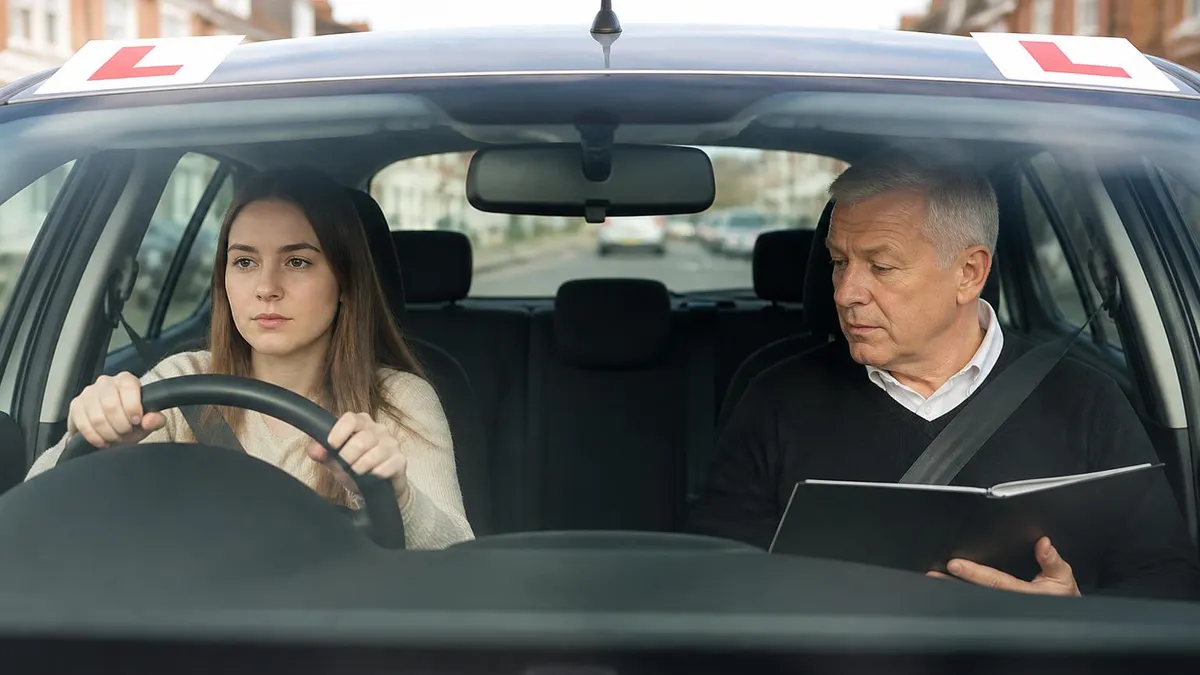
Understanding exactly what happens on your driving test day helps reduce anxiety and ensures you arrive prepared. The practical driving test is conducted by a DVSA-approved examiner and typically lasts around forty to forty-five minutes, though the actual driving portion is approximately forty minutes. You will be assessed continuously throughout the test and marked on a range of driving skills across different road conditions, including residential streets, A-roads, dual carriageways where available, and town centres.
The test begins with an eyesight check — you must be able to read a number plate from a distance of twenty metres. If you fail this check, the test will end immediately and you will be marked as having failed. Most candidates who wear glasses or contact lenses know to bring them, but it is worth double-checking your vision in daylight conditions before your test day to ensure there are no surprises. Your examiner will then ask you to complete the 'show me, tell me' vehicle safety questions before you set off.
The 'show me, tell me' questions consist of two parts. First, you will be asked to identify and explain how to check a specific vehicle safety feature — for example, how to check the engine oil level or how to test that the brakes are working. Second, you will be asked to demonstrate a safety feature while driving — such as operating the rear windscreen demister or adjusting the headrests. These questions carry one driving fault if you answer incorrectly, so it is well worth spending a few minutes reviewing all possible questions before your test date.
Once you are on the road, the examiner will direct you using clear verbal instructions, typically giving you enough notice to prepare for turns and manoeuvres. For around twenty minutes of the test, you will be asked to drive independently, following either a sat-nav system provided by the examiner or a series of road signs. You are not penalised for taking a wrong turn during the independent driving section — what matters is how you respond to the situation and whether you continue to drive safely.
During the test you will be asked to carry out one reversing manoeuvre from a set list that includes parallel parking, pulling up on the right and reversing, or pulling into and reversing out of a bay. There is a one-in-three chance you will also be asked to perform an emergency stop. The examiner scores your driving in real time, categorising any faults as either minor (driving faults), serious, or dangerous. You are allowed up to fifteen minor faults, but a single serious or dangerous fault results in an automatic fail.
At the end of the test, you will be asked to pull up safely and the examiner will inform you of the result. If you pass, they will explain the next steps for receiving your full licence. If you fail, you will receive a debrief explaining exactly which faults you accumulated and why each one was categorised as it was. This debrief is genuinely valuable — take notes if you can, as the information will directly inform what to focus on before your next driving test date.
Many candidates find that managing nerves is the hardest part of the test day experience. Feeling nervous is completely normal and expected, but the key is to channel that nervous energy into heightened concentration rather than letting it undermine your confidence. Breathing steadily, maintaining a comfortable speed, and talking yourself through manoeuvres silently can all help. Remember that your examiner wants you to pass — their role is to assess you fairly, not to catch you out.
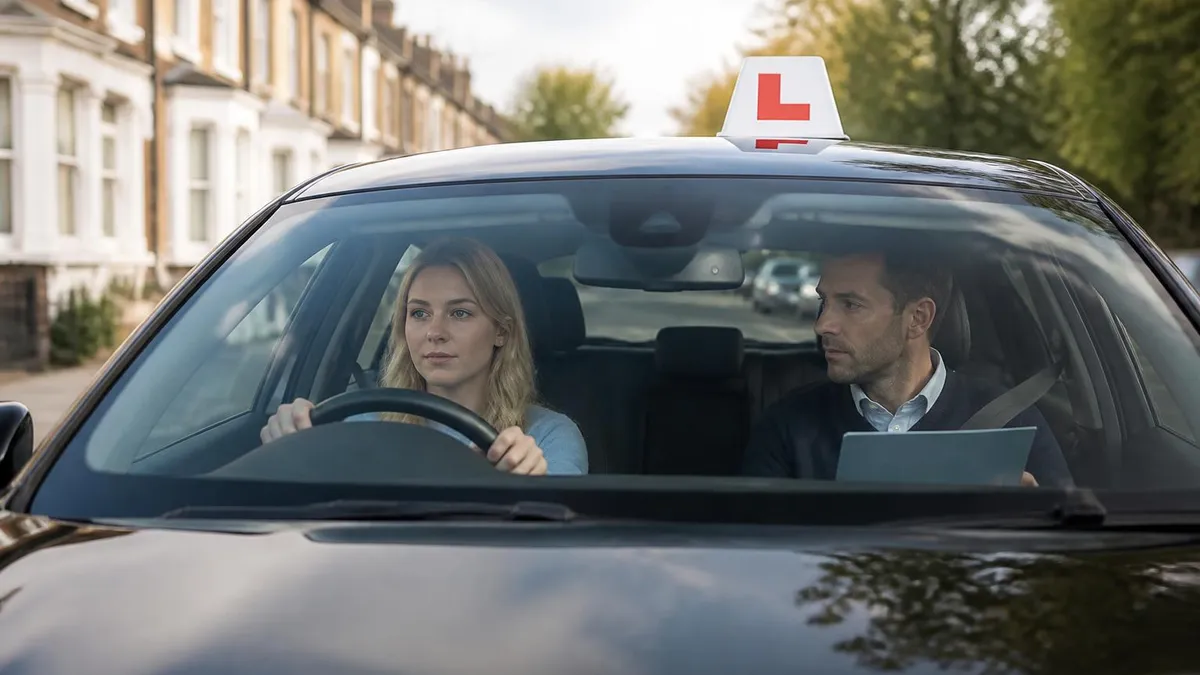
Your theory test pass certificate is only valid for two years from the date you passed. If your practical driving test date falls after this two-year window, your theory pass will be invalid and you will need to sit and pass the theory test again before you can take your practical test. Always check your theory certificate expiry date when booking your practical test slot to make sure you have enough time.
Preparing effectively in the final weeks before your driving test date requires a structured approach that goes beyond simply accumulating hours behind the wheel. Your preparation should be targeted, addressing any specific weaknesses your instructor has identified while also building the kind of calm, methodical driving habits that examiners reward. This is the period to focus on quality over quantity — short, purposeful practice sessions with clear goals are more effective than long drives without specific aims.
Mock driving tests with your instructor are one of the most valuable preparation tools available. Ask your instructor to conduct a full, uninterrupted mock test under realistic conditions — starting from a test centre, covering a variety of road types, and including all the elements of the real test. This experience acclimates you to the format, helps you identify any remaining weaknesses, and builds the mental stamina needed to maintain focus for the full forty-minute duration. Most instructors recommend at least two full mock tests in the fortnight before your actual test.
Route familiarisation is another often-overlooked preparation strategy. While you cannot know exactly which roads your examiner will use, many test centres have well-known routes that are commonly used. Practising on roads near the test centre — including the approach roads, any nearby roundabouts, and common junctions — means you will encounter familiar landmarks and road layouts during the real test, reducing cognitive load and helping you drive more naturally. Your instructor should know the local area well and can guide you on which roads to prioritise.
In the days immediately before your driving test date, it is important to consolidate your preparation rather than trying to cram in as many new techniques as possible. Stick to driving in familiar conditions, reinforce your strongest skills, and allow your mind to rest. Avoid making significant changes to your driving style at this late stage — consistency and confidence are what you need, not new habits that have not yet bedded in. A light practice session the day before your test, followed by a relaxed evening, is usually the ideal final preparation.
Sleep is genuinely important in the twenty-four hours before your test. Studies consistently show that reaction times and decision-making are impaired by fatigue, both of which are critical skills during a driving test. Aim for at least seven to eight hours of sleep the night before, and avoid consuming alcohol in the days leading up to your test. If you feel unwell on your test day, contact the DVSA promptly — you may be able to reschedule without penalty depending on the notice given and the circumstances.
On the morning of your test, eat a balanced meal and stay well hydrated. Avoid excessive caffeine, which can increase anxiety and cause your hands to tremble. Give yourself plenty of time to reach the test centre without rushing — arriving stressed and breathless is not the ideal start to one of the most important driving assessments of your life. Plan your journey to the test centre in advance and allow extra time for unexpected traffic or delays, particularly if your test is in an unfamiliar area.
Once you have secured your driving test date and are in the final phase of preparation, your theory knowledge remains just as important as your practical skills. Many candidates underestimate the extent to which theory underpins practical performance — knowing the rules of the road deeply and instinctively frees up mental capacity during the test, allowing you to focus on vehicle control, observation, and responding to your examiner's instructions rather than trying to recall speed limits or right-of-way rules under pressure.
Continuing to review theory material in the weeks before your practical test is a worthwhile habit. Focus particularly on areas that directly relate to the practical test: speed limits on different road types, safe following distances, motorway driving rules, pedestrian crossing procedures, and the rules governing overtaking. These are areas where misunderstanding could cause a serious or dangerous fault during your test, so they are worth reviewing carefully even if you already passed your theory test comfortably.
It is also worth familiarising yourself with the DVSA's official guidance documents, particularly 'The Highway Code' and 'The Official DVSA Guide to Driving — the Essential Skills'. These publications set out exactly what examiners expect to see and provide clear explanations of the techniques you will need to demonstrate. Reading through relevant sections in the final few weeks before your test can clarify any grey areas in your understanding and reinforce best practices that may have become slightly casual during your training.
Your relationship with your driving instructor in the final weeks is crucial. Be honest with them about your anxieties and the specific situations where you feel least confident. A good instructor will tailor your final lessons to address these weaknesses directly, and will also help you develop coping strategies for the test itself — such as how to handle making a minor mistake mid-test without letting it spiral into more faults. Many failures result not from a single mistake but from the candidate losing focus and composure after an initial error.
Consider the practical logistics of your test day well in advance. If you will be using your instructor's car for the test, confirm this arrangement clearly and ensure the car will be available and in test-ready condition on the day.
If you plan to use your own car or a family member's vehicle, double-check all safety and legal requirements well ahead of time — valid MOT, current road tax, correct insurance for the purpose of a driving test, and L-plates securely attached. A car being rejected as unroadworthy at the test centre would mean losing your fee and waiting for another slot.
After your test, whether you pass or fail, take time to reflect on the experience. If you pass, make sure to complete the process of exchanging your provisional licence for a full licence promptly, as this unlocks significant freedoms and responsibilities. If you do not pass on this occasion, use the examiner's debrief notes to build a targeted plan for your next attempt.
The vast majority of drivers who fail their first practical test go on to pass at a subsequent attempt — treat it as valuable feedback rather than a permanent setback, and approach your next driving test date with the lessons learned clearly in mind.
The path to passing your practical driving test is ultimately one of consistent effort, honest self-assessment, and smart preparation. By understanding the booking system, planning your test date carefully, preparing thoroughly in the final weeks, and arriving on the day calm and well-rested, you give yourself the best possible chance of joining the millions of licensed drivers on UK roads. Every experienced driver started exactly where you are now — the road ahead is well worth the effort it takes to get there.
DVSA Questions and Answers
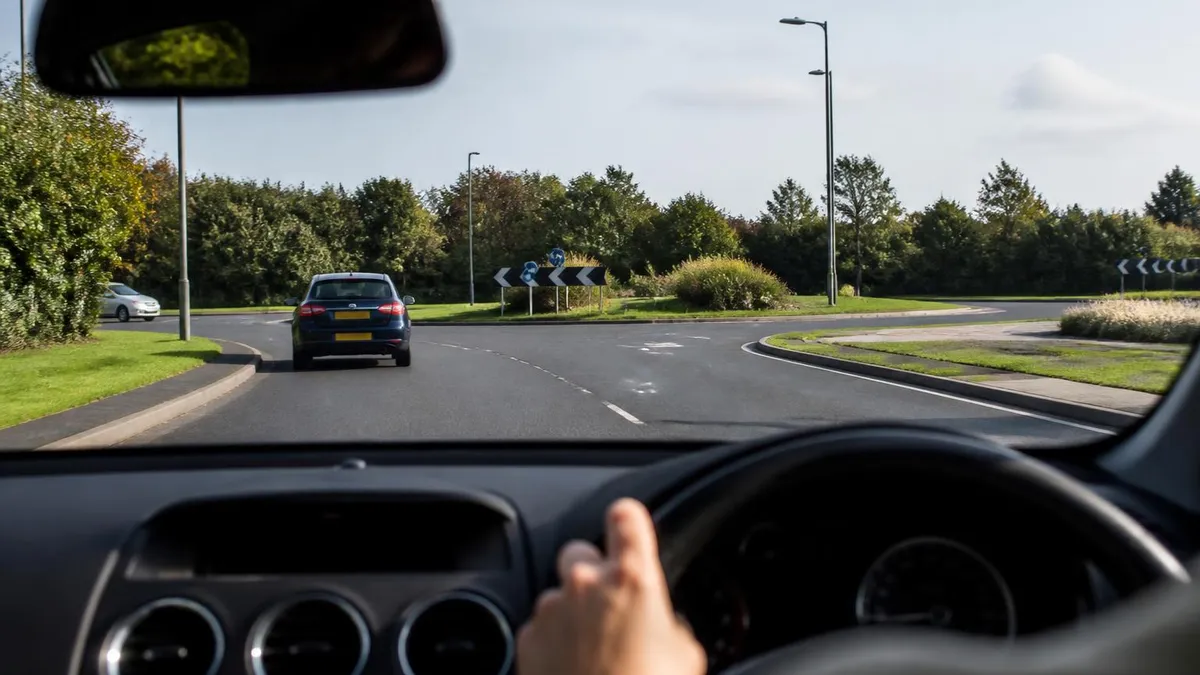
DVLA Theory Test Booking: Complete Step-by-Step Guide for UK Learners
Driving Theory Test App: The Complete Study Guide for UK Learners
How to Book Your DVSA Practical Driving Test: Complete UK Guide

Learn to Drive in the UK: Complete Beginner's Guide to Getting Your Licence

DVSA Car Practical Test: Complete Guide to Passing First Time
About the Author

Licensed Driving Instructor & DMV Test Specialist
Penn State UniversityRobert J. Williams graduated from Penn State University with a degree in Transportation Management and has spent 20 years as a certified driving instructor and DMV examiner consultant. He has personally coached thousands of applicants through written knowledge tests, skills assessments, and commercial driver licensing programs across more than 30 states.