
Driving School UK: How to Choose, Costs, and What to Expect 2026 October
Find the right driving school in the UK. Compare costs, lesson types, independent vs franchise schools, and how to pick a DVSA-approved instructor. 🗨️
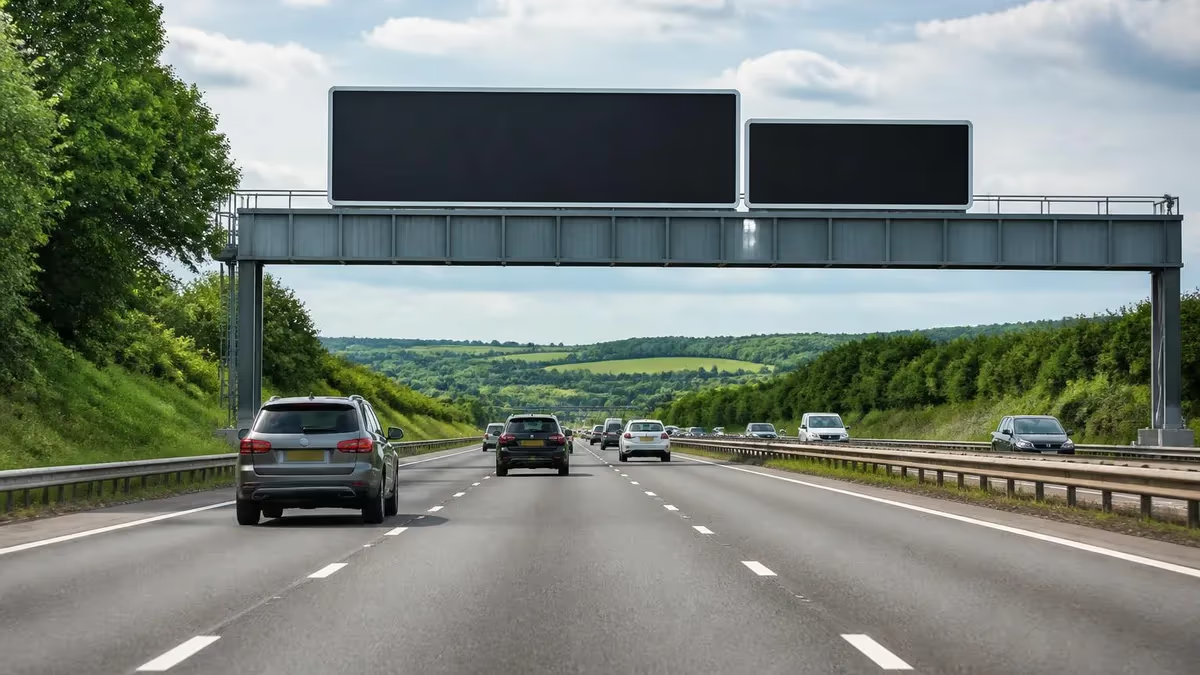
What Is a Driving School?
A driving school is an organisation or sole trader that provides structured driving tuition to learner drivers. In the UK, every driving school must use DVSA-approved instructors — officially called Approved Driving Instructors (ADIs) — who've passed a three-part qualifying exam and appear on the DVSA's official ADI register. If an instructor isn't on that register, they can't legally charge money to teach you to drive. That distinction matters: it's the primary quality control mechanism that separates legitimate driving schools from unlicensed operators who may have failed the qualifying exam or simply never attempted it.
The term "driving school" covers a wide range of businesses. You might use a national franchise like BSM (British School of Motoring), the AA, or RED Driving School. You might go with a local independent school with one or two instructors. Or you might book directly with a sole-trader ADI who teaches under their own name rather than a school brand. All three options can produce excellent results — the type of school matters far less than the quality of your specific instructor and whether their teaching style works for you.
What driving schools actually provide, beyond the instructor's time, varies considerably. Some offer structured lesson progressions that follow the DVSA's recommended learning outcomes, written into a lesson plan book that tracks your progress through each skill. Others take a more informal approach, responding to where you are in each session.
Neither is inherently better — your learning preferences determine which works. If you like a clear roadmap showing exactly what you've covered and what's next, look for a school that uses structured lesson records. If you prefer flexibility, an instructor who adapts each session to your current confidence level might suit you better.
A key decision before booking any lessons is verifying your instructor's ADI status. You can check the DVSA's ADI register online for free. Enter the instructor's name or badge number and it confirms whether they're currently registered, whether they're a trainee instructor (PDI) on a trainee licence, and whether there are any restrictions on their licence. This five-minute check is worth doing before your first lesson with any new instructor.
- All paid instructors must be DVSA-registered ADIs — check the official ADI register before booking
- Average lesson cost: £30–£45 per hour in most UK regions; London and South East typically £40–£55
- Average lessons needed: 45 hours of professional tuition + 22 hours of private practice (DVSA estimate)
- Pass rate: UK practical test first-attempt pass rate is approximately 48–52% nationally
- Green badge vs pink badge: Green = fully qualified ADI; Pink = trainee instructor (PDI) on supervised licence
- Intensive courses: 30–40 hours over 1–2 weeks — works for some learners but not all
How to Choose a Driving School in the UK
Verify ADI Registration
Check Reviews and Pass Rates
Ask About Lesson Structure
Compare Costs Transparently
Consider Location and Test Centre
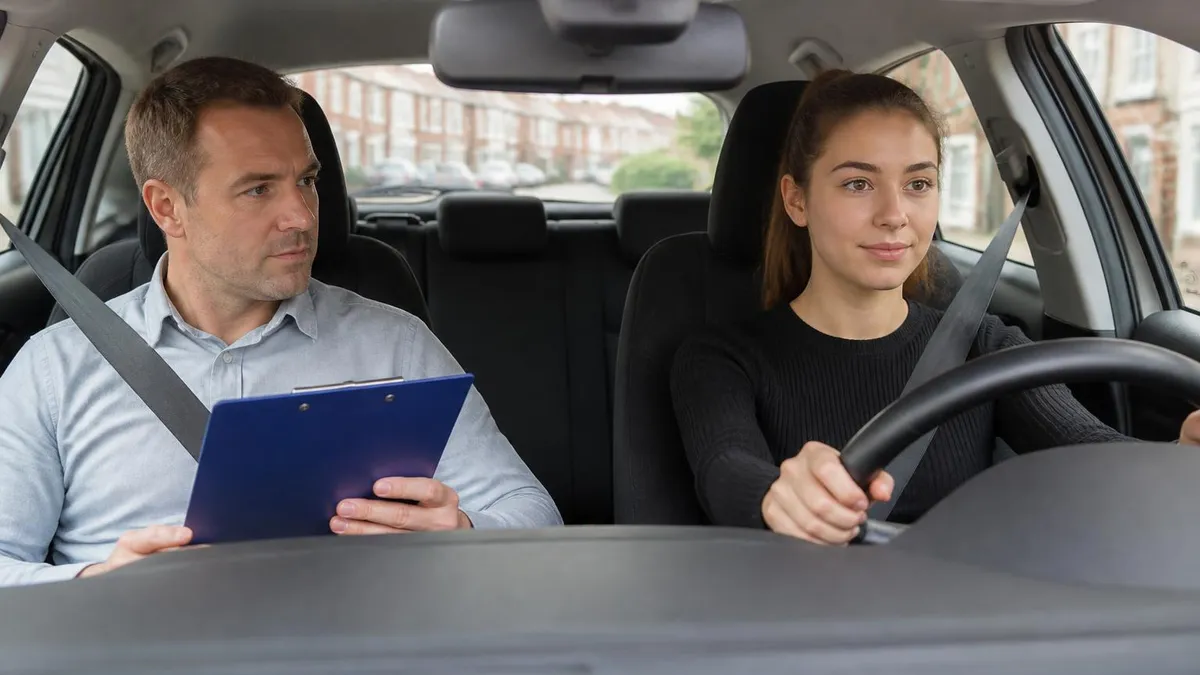
Types of Driving Schools in the UK
The UK driving school market broadly divides into three categories, each with different pricing structures, lesson approaches, and advantages for different types of learners. Understanding the differences before you commit helps you make a choice that fits your budget, schedule, and learning style — rather than defaulting to the first result that appears in a Google search or the school a friend happened to use.
National franchise schools (BSM, AA Driving School, RED Driving School, Bill Plant) operate large networks of independently-franchised instructors who pay a fee to use the brand name and booking platform. The brand doesn't guarantee quality — individual instructor quality still varies — but franchise schools typically offer standardised lesson structures, detailed lesson record books, and centralised booking systems that make it easier to find a replacement instructor if yours is unavailable.
They often offer block-booking deals and introductory lesson packages. The trade-off is that per-lesson rates tend to be 10–20% higher than comparable independent instructors, partly because the franchise fee gets passed on to you.
Independent driving schools range from small local businesses with three or four instructors to sole-trader ADIs operating entirely alone. Independent instructors often have lower hourly rates, more flexibility on lesson times, and a more personal relationship with their learners. Many of the best instructors in any area are independents who built their reputation entirely on word-of-mouth and learner referrals. The downside is less backup — if your instructor is ill, you'll likely lose your lesson slot rather than being transferred to another available instructor in the network.
Intensive driving courses (sometimes called crash courses) are offered by both franchises and independents. These compress 30–40 hours of instruction into one or two weeks, followed immediately by the practical test. They work well for learners who already have significant driving experience — through private practice with a supervising driver, or who learned abroad — and need to consolidate skills quickly.
For complete beginners with no prior experience, the intense pace of an intensive course can slow learning rather than accelerate it. Research on driving skill retention also suggests that longer learning periods produce safer drivers — spreading lessons over several months lets skills embed more naturally than cramming them into one week. See our guide to intensive driving courses for a detailed breakdown of when this format works and when it doesn't.
A fourth emerging category is electric vehicle (EV) lessons. Several driving schools now offer instruction specifically in EVs or PHEV vehicles. The driving skills are nearly identical, but learners who know they'll be driving an EV after passing sometimes prefer to learn in one from the start — particularly for getting comfortable with regenerative braking behaviour and the absence of engine noise as a gear-change cue.
Driving School Types Compared
Standardised lesson structure, easier rebooking if instructor unavailable, centralised booking system. Typically 10–20% higher per-lesson cost. Best for learners who value consistency and backup cover.
Often cheaper per lesson, more flexible scheduling, more personal instructor relationship. No backup cover if instructor unavailable. Best for learners who prioritise value and instructor rapport.
30–40 hours over 1–2 weeks. Works best for learners with prior experience. Not recommended for complete beginners. Higher upfront cost but faster route to test for those who are ready.
Practice with a supervising driver between lessons — significantly reduces total lesson count needed. Requires a car with L-plates and a supervising driver aged 21+ who's held a full UK licence for 3+ years.
Driving School Costs, Lessons, and Pass Rates
Driving lesson costs vary significantly by region:
- London and South East: £40–£55 per hour
- Midlands and North: £30–£40 per hour
- Scotland, Wales, and rural areas: £28–£38 per hour
Additional costs to budget for:
- DVSA theory test fee: £23
- DVSA practical test fee (weekday): £62
- DVSA practical test fee (evening/weekend): £75
- Test car hire from instructor (if you don't have own vehicle): £35–£60 additional on test day
Block booking (typically 10+ lessons in advance) usually offers 5–15% savings. Some schools offer introductory packages — 6 lessons for the price of 5, for example — but verify the per-lesson rate applies to normal lessons going forward.
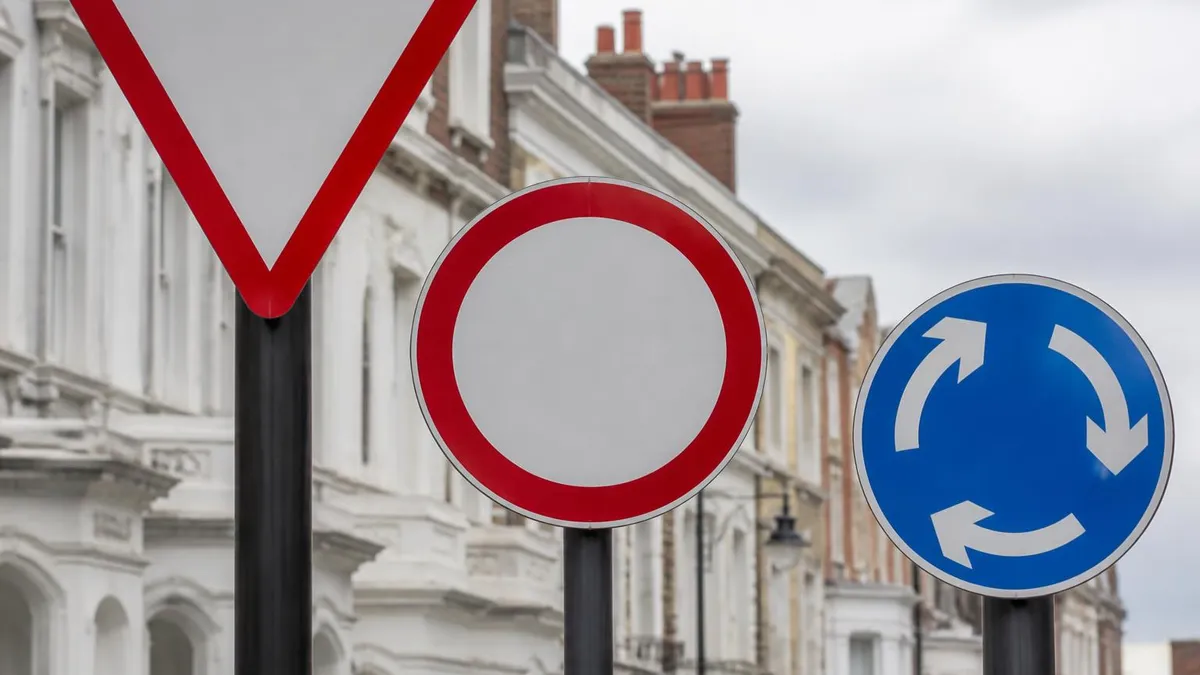
What to Expect from Driving Lessons
Your first lesson with any instructor should start with a conversation, not just getting in the car. A good ADI will ask about your previous experience (even if it's none), any anxiety or nervousness about driving, what car you'll be driving after you pass, and your timeline goals.
This information shapes how they structure early lessons — a very anxious first-time driver needs a different approach than someone who's been driving abroad for three years and just needs to adapt to UK road rules. If your first lesson jumps straight from the car park to a busy road without any conversation, that's a sign the instructor isn't adapting their approach to you specifically.
During lessons themselves, you'll typically be in a dual-control car — one with a second set of brake and clutch pedals on the passenger side for the instructor to use if needed. The presence of dual controls doesn't mean you'll rely on them: a good instructor rarely needs to intervene. Their purpose is safety insurance, not a crutch. Some automatic-transmission instructors teach in vehicles without dual controls (since automatics only have one pedal requiring instructor intervention), which is perfectly legal.
Expect your early lessons to feel overwhelming. There's a lot of information to process simultaneously — clutch control, mirror checks, steering, road positioning, observing for hazards — and it takes time for these actions to become automatic. Most learners find that around lesson 8–12, something clicks and tasks that previously required conscious effort start feeling more natural. That shift is normal and doesn't mean anything was wrong before it happened.
Your instructor should give you structured feedback at the end of each lesson: what went well, what to work on before next time, and what you'll focus on in the next session. If your instructor just thanks you and says "same time next week" without any substantive feedback, that's a red flag. Feedback is how learning consolidates between lessons, especially when you're doing private practice alongside your driving lessons.
Driving School Selection Checklist
- ✓Verified instructor appears on the DVSA ADI register (green or pink badge confirmed)
- ✓Checked Google Reviews, Trustpilot, or Facebook Reviews for recent learner feedback
- ✓Asked about local pass rate data at your specific test centre
- ✓Confirmed per-lesson cost, block booking rates, and cancellation policy
- ✓Asked whether instructor uses a structured lesson record or informal progression
- ✓Checked that lessons take place in a dual-control vehicle
- ✓Confirmed instructor is familiar with roads and test routes around your local DVSA test centre
- ✓Clarified whether test day car hire is included or charged separately
- ✓Asked about their policy if they're unavailable for a scheduled lesson
- ✓Confirmed lesson length (1 hour vs 2 hours) and how lessons are structured
Independent Instructor vs. Franchise School
- +Independents typically charge 10–20% less per lesson than franchise schools
- +Independent instructors often have more flexible scheduling and less rigid booking systems
- +Franchise schools offer backup cover — another instructor if yours is unavailable
- +Franchise schools often have standardised lesson records and structured skill progressions
- +Top-rated independents often have shorter waiting lists than oversubscribed franchise networks
- −Independent instructors have no backup cover if ill or unavailable — your lesson is simply lost
- −Franchise quality varies significantly — the brand doesn't guarantee instructor quality
- −Franchise schools often charge higher per-lesson rates to cover franchise fees
- −Some independent instructors take on too many learners and become difficult to book consistently
- −Both types require the same due diligence — ADI registration check, reviews, local pass rate
Pros and Cons at a Glance
| Pros | Cons |
|---|---|
| Independent instructors often have more flexible scheduling and less rigid booking systems | Independent instructors have no backup cover if ill or unavailable — your lesson is simply lost |
| Franchise schools offer backup cover — another instructor if yours is unavailable | Franchise quality varies significantly — the brand doesn't guarantee instructor quality |
| Franchise schools often have standardised lesson records and structured skill progressions | Franchise schools often charge higher per-lesson rates to cover franchise fees |
| Top-rated independents often have shorter waiting lists than oversubscribed franchise networks | Some independent instructors take on too many learners and become difficult to book consistently |
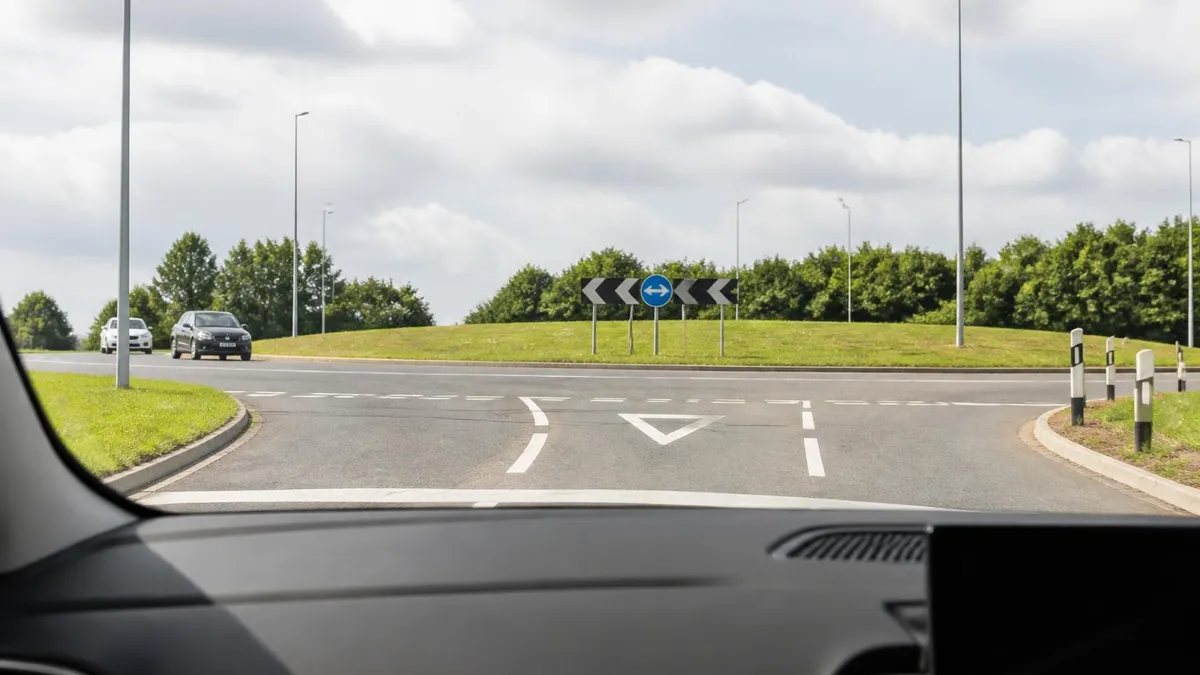
How Driving Schools Prepare You for the DVSA Practical Test
The DVSA practical driving test is 40 minutes long. It includes independent driving (following a satnav or road signs for 20 minutes without instructor direction), at least one driving manoeuvre (bay parking, parallel parking, or pulling up on the right), and an emergency stop (in approximately one in three tests). You're allowed up to 15 minor faults.
Any serious or dangerous fault is an immediate fail. Understanding the test format before you experience it removes a lot of test-day anxiety — knowing exactly what the examiner will ask for, and when, lets you focus on driving rather than guessing what comes next.
Good driving schools structure their lessons to systematically develop each skill the test examines, usually in a progression that mirrors how complexity builds on itself. You won't practice independent driving in lesson three — but by lesson 30, it should be a routine part of every session. Mock test drives, where the instructor observes silently while you complete a full 40-minute route, are particularly valuable in the final preparation phase. These simulate the test environment and reveal how your driving changes when you're being assessed without moment-to-moment feedback.
The decision about when you're ready to book the DVSA practical test should be a conversation between you and your instructor, not a unilateral decision. Some learners book too early because they feel pressure to pass quickly, which results in test-day anxiety or genuine skill gaps. Some book too late because their confidence is artificially low despite being test-ready. A good instructor gives you honest, evidence-based feedback about your readiness — based on mock test performance, not just gut feeling — rather than telling you what you want to hear in either direction.
After a failed test, most driving schools offer a debrief session where the instructor reviews your test result sheet with you. The examiner's feedback is specific: they note every fault and where it occurred. Working through that feedback with your instructor in the lesson immediately following a test is one of the most targeted and efficient ways to address specific weaknesses before your next attempt rather than guessing what to improve.
UK Driving School Statistics
How Many Lessons Do You Need?
The DVSA's own research suggests learners who pass need an average of 45 hours of professional instruction plus around 22 hours of private practice with a supervising driver. Those are averages — your actual number depends on how much prior experience you have, how often you practice between lessons, how anxious you are behind the wheel, and how consistent your instructor's teaching is. Some learners pass in 30 hours; others take 70. Neither outcome reflects general intelligence or ability — it mostly reflects prior exposure to driving and how effectively they practice between sessions.
People who take lessons every week consistently tend to pass faster than those who take lessons sporadically with weeks-long gaps between sessions. The skills involved in driving have a significant motor memory component that degrades without practice. If you leave a four-week gap between lessons, expect the first 20 minutes of the next session to feel like you're relearning things you thought were automatic. Weekly lessons — or more frequent if your budget allows — keep that degradation from undermining your progress.
Private practice between lessons can meaningfully reduce your total lesson count, but only if you're practicing correctly. A supervising driver who corrects bad habits and encourages good road positioning helps. One who says "you're doing fine" regardless of what you actually do can entrench poor habits that your ADI then has to spend lesson time correcting. If you're doing private practice, brief your supervising driver on what your instructor said to work on after your last lesson.
Once you're consistently achieving clean mock test drives — completing a 40-minute route with fewer than five minor faults — you're likely ready to book the DVSA practical test. Don't let a single excellent mock drive convince you to book immediately; look for consistency across three or four mock drives before committing to a test date. One good day doesn't mean you're reliably at that standard yet.
It's illegal for anyone to charge money for driving lessons unless they're a registered ADI (green badge) or a PDI on a current trainee licence (pink badge). Taking lessons from an unregistered instructor isn't just a legal issue — it's a safety one. Unregistered instructors haven't passed the DVSA's three-part qualifying exam, which tests their driving standard, their theory knowledge, and their ability to actually teach. You can check any instructor's status for free on the DVSA website. If an instructor can't produce their ADI badge or their name doesn't appear in the register, don't get in the car with them.
Using Theory Practice Alongside Your Driving School
Your driving school handles your practical skills, but the theory test is entirely your own responsibility to prepare for. Most instructors don't teach theory content during lessons — they expect you to have passed the theory test (or be actively preparing for it) before or during your practical lessons.
You need a theory test pass certificate to book the practical test, so it makes sense to sit the theory test relatively early in your learning journey, ideally within the first 10–15 lessons. Passing your theory early also removes one source of scheduling pressure — you won't be holding off booking your practical test while you resit the theory.
The theory test has two parts: a multiple-choice section (50 questions, 43 correct needed to pass) and a hazard perception video section (14 clips, scoring hazards on a 0–5 scale). The hazard perception test in particular benefits from practice — understanding how the scoring works and practising the click-timing on developing hazards is different from general driving observation. You can't pass it purely on instinct without understanding how the test assesses your responses.
Many learners make the mistake of treating theory preparation and practical lessons as completely separate endeavours. They're not. Every concept you understand clearly in the theory — the stopping distances, the give-way rules at different junction types, the meaning of road markings — reinforces what your instructor is teaching you on the road. If you're studying your Highway Code alongside your lessons, you'll find explanations for why your instructor is asking you to do specific things, which accelerates understanding rather than pure mimicry.
After passing the theory test, you have two years to pass the practical test before needing to resit the theory. If your practical lessons are progressing normally, that two-year window is usually more than sufficient. But if you take a long break from lessons (several months), factor in whether your theory certificate will still be valid by the time you're ready to sit the practical, and plan your theory test booking accordingly.
Sample DVSA UK Driving Theory Practice Questions
Try these questions from our free DVSA UK Driving Theory practice tests. The correct answer and an explanation follow each question.
You are driving and an emergency vehicle approaches with blue flashing lights. What should you do?
- A. Stop immediately wherever you are
- B. Speed up to get out of its way
- C. Take appropriate action to let it pass without endangering others
- D. Flash your headlights to acknowledge it
Answer: C. Take appropriate action to let it pass without endangering others
When an emergency vehicle approaches, you should take appropriate action to let it pass. Do not panic, do not mount the kerb, do not brake harshly, and do not go through a red light. Only move aside when it is safe to do so.
What effect does tiredness have on your driving ability?
- A. It improves concentration as you try harder to focus
- B. It has no effect if you keep the window open
- C. It significantly increases your reaction time and impairs judgement
- D. It only affects you on long motorway journeys
Answer: C. It significantly increases your reaction time and impairs judgement
Tiredness significantly increases reaction times, impairs judgement, and can cause microsleeps where you briefly lose consciousness. It is a major factor in road collisions. The only effective countermeasure is to stop and rest.
You are driving on a 'smart motorway' and see a red 'X' displayed on the overhead gantry above your lane. What does this mean?
- A. The national speed limit applies to this lane.
- B. You should move into another open lane as soon as it is safe to do so.
- C. A temporary speed limit is in force for this lane.
- D. You should stop and wait for further instructions.
Answer: B. You should move into another open lane as soon as it is safe to do so.
A red 'X' shown on an overhead gantry on a motorway indicates that the lane is closed. You MUST NOT drive in a lane that is closed by a red 'X'. You should move into an open lane safely and promptly. Ignoring this sign is dangerous and illegal.
What is the minimum engine size of a vehicle permitted to use a motorway in the UK?
- A. There is no minimum engine size — the restriction is based on vehicle type and capability
- B. 500 cc
- C. 50 cc
- D. 1000 cc
Answer: A. There is no minimum engine size — the restriction is based on vehicle type and capability
There is no minimum engine size requirement for motorways. However, vehicles must be capable of maintaining a reasonable speed. Learner drivers, pedestrians, cyclists, horse riders, and certain slow-moving vehicles are prohibited from using motorways.
DVSA Questions and Answers
About the Author

Licensed Driving Instructor & DMV Test Specialist
Penn State UniversityRobert J. Williams graduated from Penn State University with a degree in Transportation Management and has spent 20 years as a certified driving instructor and DMV examiner consultant. He has personally coached thousands of applicants through written knowledge tests, skills assessments, and commercial driver licensing programs across more than 30 states.