
Mississippi Drivers License Test Questions and Answers 2026 September
Free Mississippi Drivers License practice test with questions and answer explanations. Prepare for the 2026 September exam with instant scoring. 🟢

Mississippi Drivers License Test Questions and Answers
What to Expect on the Mississippi Knowledge Test
The Mississippi DPS knowledge test has 30 questions. You need 24 correct — that's 80% — to pass. Miss more than 6 and you'll have to reschedule and try again. The test covers traffic laws, road signs, and safe driving practices drawn directly from the Mississippi Driver's Manual. It's not hard if you study the right material, but walking in without prep is a gamble you don't want to take.
Questions come from three broad areas: traffic control (signs, signals, pavement markings), rules of the road (right-of-way, speed limits, lane changes), and safe driving principles (stopping distances, DUI laws, weather driving). Road sign identification alone makes up a large chunk of the test — know your warning signs, regulatory signs, and guide signs cold before you sit down at that computer terminal.
You take the test on a computer at any Mississippi DPS Driver Services station. There's no timer counting down on screen. Read each question carefully, pick your answer, and move on. You can't skip and return to a question, so commit to each answer before advancing. If you fail, you must wait one business day before retesting. Mississippi doesn't publish an official first-time pass rate, but DMV instructors consistently report that unprepared test-takers fail at high rates — even people who've been driving for years.
Want to understand how the dmv practice test format compares across all states? Most follow the same 20–46 question structure, though passing scores vary. Mississippi's 80% requirement is on the tougher end — some states allow 70% or lower. That means you genuinely need to know the material here, not just guess your way through it. The questions are specific: exact speed limits, exact following distances, exact BAC thresholds. Vague general knowledge won't cut it.
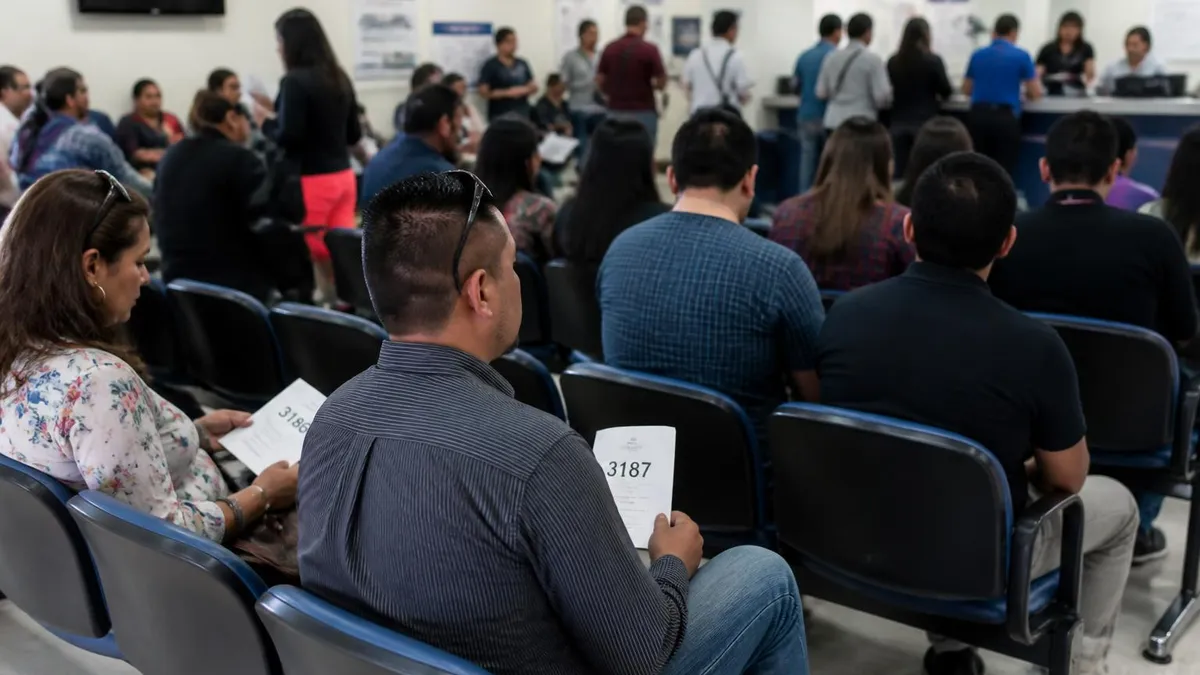
One thing worth knowing upfront: Mississippi doesn't offer the knowledge test online. You have to show up in person at a DPS office. Bring your documents — more on that in a later section — and expect a wait, especially at larger locations like Jackson, Gulfport, or Hattiesburg. Arriving early in the week and in the morning typically cuts your wait time by 30–60 minutes compared to afternoons or Fridays. The DPS system also lets you check estimated wait times via their website before heading out.
The questions you'll face cover both state-specific rules and universal traffic principles. You're not just being tested on whether you can memorize a manual — the test checks whether you understand how those rules apply in real situations. Scenario-style questions like "a car is approaching from your left at a four-way stop — who has the right of way?" appear frequently.
Knowing the rule is step one. Applying it correctly under mild test pressure is step two. That's why practice tests are so valuable: they simulate the decision-making process, not just the recall process. Use them as your primary study tool alongside the manual, and you'll go in ready.
Mississippi Road Signs You Must Know
Road sign questions show up constantly on the Mississippi knowledge test. The DPS tests both sign recognition (what does this shape or color mean?) and sign meaning (what action should you take when you see this sign?). Don't just memorize what signs look like — understand what behavior they require from you. There's a big difference between a warning sign and a regulatory sign, and the test exploits that difference repeatedly.
Regulatory signs are white with black or red text. Stop, yield, speed limit, no U-turn, do not enter — these tell you what you must or must not do. Ignoring a regulatory sign isn't just a wrong test answer — it's a moving violation in real life. Warning signs are yellow (or fluorescent yellow-green for pedestrian crossings and school zones) with black symbols. They alert you to hazards ahead: sharp curves, merges, school zones, railroad crossings, and road surface changes. Yellow means conditions ahead require caution. Slow down.
Guide signs are green with white text — the freeway exit signs and route markers you follow every day without thinking. Blue signs indicate motorist services: rest areas, hospitals, fuel, food, lodging. Brown signs mark recreational and cultural sites like state parks and historic areas. Get this color-coding system into your memory and half the sign questions answer themselves without reading the full text. Shape matters too: octagon means stop. Triangle (inverted) means yield. Pentagon means school. Diamond means warning.
Mississippi-specific signs worth extra study time: the Move Over law warning signs (orange and black in work zones, indicating law enforcement or construction equipment ahead), school zone signs (fluorescent yellow-green pentagon shape, always pentagon), and railroad advance warning signs (round yellow with an X and the letters RR). The flashing red light at a railroad crossing means come to a full stop and proceed only when the tracks are clear — not yield, not slow down. Full stop.
Use our dmv permit test practice bank to drill sign recognition with actual images, not just text descriptions. The computer-based DPS test displays sign images directly — you'll see the sign and answer what it means. Studying from a list of text descriptions trains the wrong skill. Find resources that show you the actual sign alongside the question, and you'll score much better on this section.

Mississippi Traffic Laws — Test Topics
Mississippi default speed limits: urban streets 25 mph unless posted otherwise, rural two-lane highways 65 mph, interstates 70 mph (up to 80 mph on designated rural interstates). School zones drop to 15–20 mph when children are present. Residential areas default to 25 mph. Always follow the posted limit — speeding is among the top violations in Mississippi, and speed limit questions appear regularly on the knowledge test.
Mississippi Graduated License Law for Teen Drivers
If you're under 18, Mississippi's graduated driver's license (GDL) program applies to you specifically. It has three stages — learner's permit, restricted license, and full license — and moving through them takes time. There's no fast-tracking it. The knowledge test comes at the very beginning, Stage 1, and it covers the exact same 30 questions that adult applicants face.
Stage 1 begins at age 15. You go to a DPS office, pay the application fee, pass the vision screening, and then take the written knowledge test. Pass it — that means 24 out of 30 correct — and you get a learner's permit. With the permit, you can only drive when a licensed driver who's at least 21 years old sits in the front passenger seat with you.
No exceptions. You must log at least 50 hours of supervised driving before you can advance to Stage 2 — and Mississippi requires that 10 of those 50 hours happen at night. Keep a driving log. DPS can ask to see it.
Stage 2 kicks in at age 16, after you pass the road skills test. Your restricted license comes with real restrictions: no driving between midnight and 6 AM unless you're traveling to or from school, a job, or an emergency. For the first six months, you can't carry more than one passenger under 21 who isn't a family member.
Seatbelts are mandatory for every person in the vehicle, every time. Any violation during the restricted phase resets your waiting period — you don't want that. Stage 3 is the full unrestricted license at age 17, when all GDL restrictions fall away.
Parents often ask about the teen knowledge test specifically. It's the same test. No separate teen version exists. The 30 questions cover traffic laws, road signs, and safe driving principles — the same topics covered in the Mississippi Driver's Manual, the same ones adult applicants study. Teens who study the manual carefully and run through practice questions consistently pass on the first attempt. Those who don't — fail at higher rates than adults, according to state driving education instructors.
The 50-hour supervised driving requirement is strict, and DPS can audit your driving log. Build up real experience in different conditions: daytime, nighttime, highway, residential streets, wet roads. The skills test at Stage 2 will test your ability to handle a vehicle confidently — not just pass a written exam.

What to Bring to the Mississippi DPS Office
- ✓Proof of identity — U.S. birth certificate, valid passport, or permanent resident card
- ✓Social Security card or a W-2 showing your full Social Security number
- ✓Two proofs of Mississippi residency — utility bill, bank statement, or signed lease agreement
- ✓Proof of lawful presence if foreign-born (visa, I-94 arrival record, or Employment Authorization Card)
- ✓Cash or money order for fees — many DPS offices don't accept credit or debit cards
- ✓Parent or legal guardian must be present if you're under 18 — they sign the application
- ✓Proof of school enrollment or legal exemption from school (GDL requirement for teens)
- ✓Corrective lenses if you need them — vision minimum is 20/200 corrected; the examiner tests it
How to Study for the Mississippi Knowledge Test
Most people who fail the Mississippi knowledge test made the same mistake: they skipped the manual and assumed their years of driving experience would carry them through. It won't. The DPS writes test questions directly from the Mississippi Driver's Manual — the specific numbers, the exact thresholds, the precise rules. You need the manual. It's 100+ pages and free at dps.ms.gov.
Start with road signs. They're typically 25–30% of the test, and they're the fastest section to master if you drill them. Don't just read about signs — look at them. Find images of actual Mississippi road signs and test yourself on recognition and meaning. The DPS test displays sign images on screen, not text descriptions. Training on text only means training for the wrong format.
Next, focus on Mississippi-specific laws. The hands-free phone law. The Move Over law. The graduated license rules if you're under 18. The DUI BAC thresholds — 0.08% for adults, 0.02% for minors, 0.04% for commercial drivers. These state-specific rules appear regularly on the test, and you can't rely on knowledge from another state's laws. Mississippi's rules have specific numbers and conditions that differ from neighboring states like Alabama, Louisiana, and Tennessee.
Then work through right-of-way scenarios. Who goes first at a four-way stop? What do you do when an emergency vehicle approaches from behind? Who yields when two cars reach an uncontrolled intersection at the same time? Scenario questions trip up people who know sign names but haven't thought through real-world situations. Practice with scenario-based questions specifically — not just fact recall.
A practical study plan: read the manual section by section over three to five days. After each section, take a short practice quiz focused on that topic. Flashcards work well for sign recognition. After covering the whole manual, take full 30-question practice tests and track your score. Don't stop when you hit 80%. Stop when you can consistently score 27 or 28 out of 30 — leaving yourself real buffer for test-day nerves.
One more tip: the practice test format matters. Questions on the Mississippi knowledge exam are multiple choice with four options, and two options are often close. Distractors test whether you know the exact number — is it 15 mph below the limit or 20 mph? Is the BAC threshold 0.08% or 0.10%? Those details come from the manual, not from intuition. Use our dmv handbook study guide to drill the exact numbers the DPS tests on, section by section.
After You Pass: Getting Your Mississippi Driver's License
Pass the knowledge test and you're either done (if you're getting a learner's permit) or halfway there (if you're upgrading to a full license). For the full license, you still need to pass the road skills test — a separate appointment, usually at the same DPS location where you took your written test. Book it before you leave the office if you can.
The road skills test runs 15 to 20 minutes. An examiner rides with you and scores your vehicle control: starting, stopping smoothly, turning without swinging wide, backing in a straight line, lane changes with mirror checks, and parking. Common failure points are predictable — rolling stops at stop signs (you need a full, complete stop with zero forward movement), not checking mirrors before lane changes, and wide turns that cross lane lines. Practice each of these deliberately before your test date. Rolling stops fail more people than any other single element. Not even close.
Pass both tests and you pay the license fee, get a temporary paper license at the counter the same day, and receive your plastic card in the mail within 7 to 10 business days. Keep the paper temp license with you — it's valid as your license while you wait. Mississippi licenses are valid for 8 years for most drivers (4 years for drivers 65 and older). Renewal can be handled online through dps.ms.gov or in person — no knowledge or road test required for renewal unless your license has been expired for more than one year.
If your license gets lost or stolen before the plastic card arrives, report it to DPS immediately. A replacement can be issued at any driver services office. You'll pay a small replacement fee, but you'll get another temporary license on the spot while the new card prints and ships. Don't drive without a valid license in hand — even with a Mississippi DPS record on file, a traffic stop without documentation creates unnecessary complications.
If you move within Mississippi after getting your license, update your address with DPS within 30 days. You can do it online or in person. It takes five minutes and costs nothing. Driving with a mismatched address doesn't automatically generate a fine, but it creates complications if you're pulled over — officers will notice the discrepancy, and it raises questions you don't want to answer on the side of the road.
One final note for new drivers: passing the tests is the beginning, not the finish line. Mississippi roads carry real risks — the state consistently ranks among the top 10 in the country for traffic fatalities per mile driven. Defensive driving, consistent seat belt use, and zero tolerance for distracted or impaired driving aren't just test topics. They're the habits that will determine whether your driving record stays clean for the next eight years and well beyond.
DMV Practice Test Questions
Prepare for the DMV - Department of Motor Vehicles exam with our free practice test modules. Each quiz covers key topics to help you pass on your first try.
DMV Alabama Permit Test
DMV Exam Questions covering Alabama Permit Test. Master DMV Test concepts for certification prep.
DMV Alaska Permit Test
Free DMV Practice Test featuring Alaska Permit Test. Improve your DMV Exam score with mock test prep.
DMV Alaska Roads & Signs Test
DMV Mock Exam on Alaska Roads & Signs Test. DMV Study Guide questions to pass on your first try.
DMV Alaska Written Test
DMV Test Prep for Alaska Written Test. Practice DMV Quiz questions and boost your score.
DMV Arizona Roads & Signs Test
DMV Questions and Answers on Arizona Roads & Signs Test. Free DMV practice for exam readiness.
DMV California Drug and Alcohol Test
DMV Mock Test covering California Drug and Alcohol Test. Online DMV Test practice with instant feedback.
DMV General Drug and Alcohol Test
Free DMV Quiz on General Drug and Alcohol Test. DMV Exam prep questions with detailed explanations.
DMV Permit Test
DMV Practice Questions for Permit Test. Build confidence for your DMV certification exam.
DMV Practice Test
DMV Test Online for Practice Test. Free practice with instant results and feedback.
Mississippi Knowledge Test — Easier vs. Harder Than Other States
- +Only 30 questions — shorter than many other states which use 40–46 questions
- +Computer-based with no time limit — take as long as you need per question
- +Study material is free — Mississippi Driver's Manual available online at dps.ms.gov
- +Test covers predictable, well-defined categories from the manual
- +Practice tests mirror the actual format closely — prep translates directly
- +Can retake the next business day if you fail — fast turnaround
- −80% passing score is above the national average — you need 24 of 30 correct
- −No online testing option — must appear in person at a DPS location
- −Wait times at busy locations like Jackson can exceed 2 hours
- −Appointment availability is limited and often 1–2 weeks out
- −Teens must log 50 supervised driving hours (10 at night) before upgrading
- −REAL ID upgrade requires additional documentation beyond the standard set
Mississippi DMV Questions and Answers

Michigan Driving Test Questions and Answers: Full Prep Guide

Virginia DMV Test Questions and Answers: Free Practice Guide

Georgia Driving Test Questions and Answers: Study Guide for the DDS Knowledge Test

Illinois Driving Test Questions and Answers: What to Expect and How to Pass

DMV Practice Test: Free 2026 Driver's License Study Guide
About the Author

Licensed Driving Instructor & DMV Test Specialist
Penn State UniversityRobert J. Williams graduated from Penn State University with a degree in Transportation Management and has spent 20 years as a certified driving instructor and DMV examiner consultant. He has personally coached thousands of applicants through written knowledge tests, skills assessments, and commercial driver licensing programs across more than 30 states.
Join the Discussion
Connect with other students preparing for this exam. Share tips, ask questions, and get advice from people who have been there.
View discussion (9 replies)